Introduction
Heavy-duty diesel truck engines operate under consistently harsh working conditions. Unlike light-duty vehicles that run intermittently under light loads, commercial trucks endure sustained heavy stress, including full-load cargo hauling, long-haul highway travel, steep mountain climbing, and extreme seasonal temperature fluctuations all year round.
At the core of this high-intensity engine operation is the cylinder liner. As a precision cylindrical component, it forms the primary cavity for combustion and piston movement. It supports the full reciprocating motion of pistons and piston rings while tightly sealing internal combustion pressure to ensure stable engine power output.
Even so, most fleet managers and independent truck drivers overlook this critical component. While routine maintenance is regularly performed on filters, turbo assemblies, and brake systems, cylinder liners are mistakenly viewed as permanent parts that require no scheduled inspection or upkeep.
This misconception is the leading cause of gradual engine performance degradation and unexpected truck downtime. It also results in avoidable overhaul expenses that could be eliminated with basic preventive maintenance protocols.
Every engine cycle subjects cylinder liners to extreme mechanical and thermal stress. They withstand intense combustion heat, continuous piston friction, cyclic pressure impacts, and repeated thermal expansion and contraction throughout every operation hour.
Over hundreds of thousands of miles, microscopic defects gradually accumulate on liner inner surfaces. Without timely inspection and maintenance, these minor issues escalate progressively, triggering oil burning, coolant leakage, power attenuation, and excessive exhaust emissions. In severe cases, abrupt cylinder seizure occurs, forcing complete engine disassembly and costly repairs.
A key reason liner failures lead to expensive downtime is their latent failure characteristics. Early-stage liner defects rarely trigger onboard fault codes or produce noticeable abnormal noises, meaning damage often progresses to an irreversible state before drivers or technicians detect any issues.
Compounding this problem, many repair technicians only replace faulty liners without identifying the root causes of premature wear. This reactive repair approach leads to recurring failures within short mileages, resulting in wasted spare parts, repeated labor costs, and prolonged fleet downtime.
This practical industry guide comprehensively covers heavy-duty truck cylinder liner maintenance essentials, including real-world failure symptoms, verified root causes, standardized inspection procedures, targeted repair solutions, and long-term fleet preventive maintenance strategies.
All guidance applies to mainstream heavy-duty diesel engine models, including Cummins, Detroit, Caterpillar, Weichai, and Sinotruk. Unlike generic textbook knowledge, every insight in this article is derived from hands-on fleet operation and on-site repair experience.
To stabilize overall engine performance and reduce collateral damage to interconnected components, technicians must pair qualified cylinder liners with premium, compatible truck chassis system parts. Precise accessory matching guarantees consistent power output and long-term operational stability, with full-series genuine and high-quality aftermarket parts available for Sinotruk, Foton, Dongfeng, and other mainstream heavy-duty truck brands.
Basic Understanding of Heavy-Duty Truck Cylinder Liners: Dry Liner vs Wet Liner
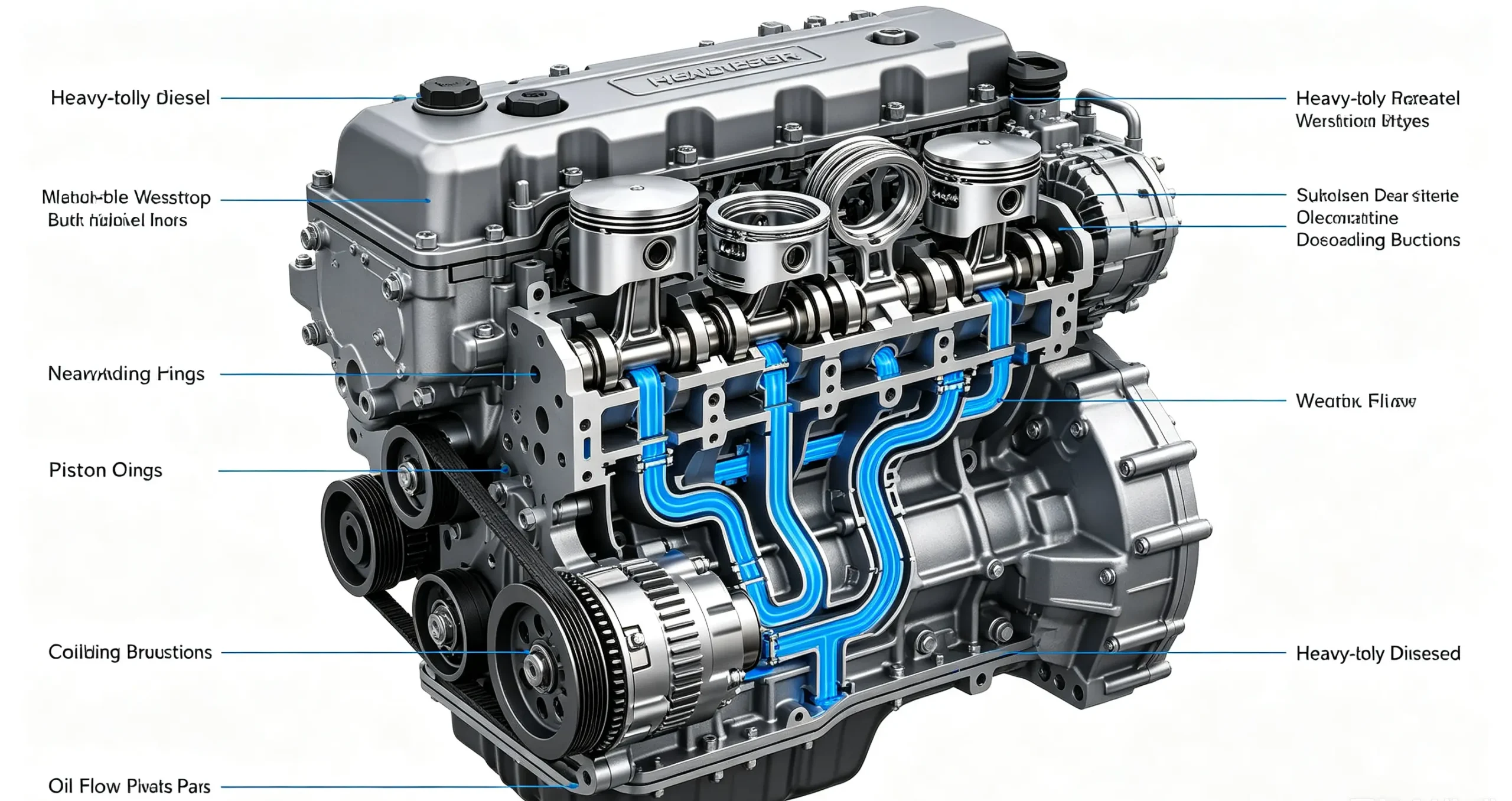
Before troubleshooting and resolving cylinder liner faults, technicians must distinguish the two primary liner types used in heavy-duty engines. Dry and wet cylinder liners feature distinct structural designs, leading to different failure mechanisms, inspection criteria, and repair specifications.
Improper liner identification is a common mistake among entry-level mechanics, frequently resulting in incorrect repairs and secondary engine damage. As such, mastering the differences between these two structures is the foundation of accurate, effective maintenance.
Dry cylinder liners are widely adopted in mid-to-high power Cummins and Detroit engines. True to their name, dry liners have no direct contact with engine coolant and mount tightly against the cylinder block outer wall.
Heat dissipation relies entirely on solid heat conduction through the cylinder block. Featuring thin walls, high structural rigidity, and minimal thermal deformation, dry liners deliver exceptional stability during long-distance, constant-speed highway cruising.
However, their indirect cooling structure has inherent limitations. Under sustained overload or high-temperature operating conditions, dry liners are prone to localized overheating, which gradually causes surface ablation and heavy carbon deposit buildup over time.
Wet cylinder liners serve as the standard configuration for Weichai, Sinotruk, and Caterpillar heavy-duty engines. Unlike dry liners, their outer walls are fully immersed in engine coolant, enabling fast, direct heat exchange for efficient temperature control.
Wet liners offer superior cooling performance, effectively stabilizing cylinder temperatures during heavy climbing, long-hour continuous operation, and frequent load fluctuations. Even so, their unique structural design introduces exclusive vulnerability points.
Wet liners depend entirely on rubber sealing rings to isolate coolant and prevent fluid crossover. This makes them susceptible to seal aging, coolant leakage, liner vibration, and cavitation erosion. Real fleet maintenance data shows that wet liner failures account for over 70% of all cylinder liner-related repair cases.
Despite their structural differences, both liner types bear identical core operational loads. Inner walls withstand continuous friction from pistons and piston rings, while outer walls endure thermal stress and mechanical extrusion from cooling media and the cylinder block.
Even minor surface wear or structural distortion can disrupt the engine’s lubrication and combustion balance, triggering a chain of secondary faults. Furthermore, cylinder liner failures differ significantly from truck cylinder head failures. The cylinder head integrates intake/exhaust valves, fuel injectors, and cooling/lubrication passages, with failures primarily stemming from thermal fatigue, head gasket damage, and cooling system faults that cause gas leakage, oil-coolant mixing, and persistent overheating. In contrast, cylinder liner faults mainly stem from friction wear, structural deformation, cooling system failure, and long-term material fatigue, forming two independent core failure modes in heavy-duty engine maintenance.
Eight Common Cylinder Liner Failure Types and On-Site Manifestations
After analyzing tens of thousands of heavy-duty truck maintenance records, all cylinder liner failures can be categorized into eight typical types, each with unique symptoms, failure logic, and contributing factors.
Classifying faults accurately eliminates blind part replacement and enables targeted repairs that resolve root causes rather than just surface symptoms. Below are field-verified failure types and their corresponding real-vehicle performance manifestations.
1. Inner Wall Uniform Wear (Normal Fatigue Wear)
Uniform inner wall wear is the mildest and most prevalent cylinder liner issue, classified as normal aging after long-term engine operation. Typically, fine, consistent friction marks appear vertically on liner inner walls after 300,000 to 500,000 miles of stable driving.
These vertical abrasion marks form from prolonged reciprocating friction between piston rings, pistons, and liner walls under standard lubrication conditions.
No obvious driving abnormalities emerge in the early stages of uniform wear. As the wear clearance gradually expands, however, the piston-liner fitting gap exceeds factory tolerance standards.
The first noticeable symptom is increased engine blow-by gas, characterized by excessive gas discharge from the crankcase ventilation pipe and minor oil vapor overflow at the oil filler cap.
Progressive wear triggers slow engine performance degradation, including a 5%–10% rise in fuel consumption and slightly unstable idle operation.
Since this failure develops gradually, most fleet operators overlook subtle changes until severe oil burning and obvious power loss become apparent.
Uniform wear features smooth, consistent surface abrasion with no localized pits, scratches, or deformation, confirming it as normal service life attenuation rather than an abnormal mechanical or maintenance fault.
2. Local Scuffing and Groove Scratches (Dry Friction Damage)
Liner scuffing, commonly referred to as cylinder scratching, is a sudden and frequent mechanical failure that ranks among the most common urgent repairs for heavy-duty truck engines.
This fault occurs due to instantaneous lubrication failure. When the engine’s protective oil film collapses, pistons and piston rings rub directly against the liner wall without lubrication, creating irregular strip-shaped scratches and rough scuffing damage.
Symptoms are distinct and easy to diagnose. Mild scuffing causes sudden power drops during acceleration and climbing, intermittent blue exhaust smoke, and a sharp increase in oil consumption.
Severe scuffing leads to obvious engine jitter and harsh friction noises from the cylinder block. In extreme cases, temporary piston jamming may occur, causing sudden engine stalling during travel.
In practical repair scenarios, scuffing usually affects single or individual cylinders rather than the entire engine, a key feature for accurate root cause diagnosis.
Single-cylinder scuffing typically results from localized lubrication blockage or individual cylinder overheating, while full-cylinder scuffing is generally caused by systemic oil system failure or prolonged severe overloading.
Scuffing damage is far more destructive than uniform wear. Scratched liner surfaces cannot form a stable protective oil film, creating a deteriorating friction environment that accelerates piston ring aging and overall cylinder assembly failure.
3. Cylinder Liner Cavitation Erosion (Unique Fault of Wet Liners)
Cavitation erosion is an exclusive failure mode for wet cylinder liners, occurring frequently on Weichai and Sinotruk engines. Inexperienced technicians often misdiagnose this issue as conventional coolant corrosion.
Unlike inner-wall friction wear, cavitation erosion targets the liner’s coolant-contacting outer wall, forming scattered, irregular pits of varying sizes on the metal surface.
The failure mechanism is closely tied to engine vibration and dynamic coolant pressure changes. During operation, high-frequency piston movement generates subtle liner vibration.
This vibration creates instantaneous pressure fluctuations in the surrounding coolant, producing countless microscopic vacuum bubbles along the liner outer wall. The violent instantaneous collapse of these bubbles generates powerful impact force against the metal surface.
After thousands of operating hours, repeated bubble impact causes metal fatigue and peeling, gradually forming the characteristic pitted cavitation damage on liner outer walls.
Cavitation produces no obvious driving symptoms in its early stages. However, once pits deepen or extend to sealing areas, coolant penetrates into the cylinder interior.
Advanced cavitation presents typical recognizable symptoms: unexplained coolant loss, engine oil emulsification, white exhaust smoke, and significant power insufficiency.
Fleet operational data verifies that road conditions heavily influence cavitation risk. Trucks operating on bumpy roads or with frequent start-stop cycles have three times higher cavitation rates than vehicles cruising steadily on highways.
Frequent engine speed fluctuations amplify liner vibration and bubble formation, drastically accelerating the progression of cavitation erosion.
4. Thermal Deformation and Out-of-Round Distortion
Heavy-duty truck engines endure extreme temperature cycling during daily operation. Prolonged heavy loads sharply raise cylinder temperatures and trigger thermal expansion.
Conversely, sudden cold water refills, rapid load reduction, and cold winter startups cause rapid cooling and contraction. Repeated thermal expansion and contraction induce permanent irreversible structural changes.
Over time, cylinder liners lose their standard circular geometry, developing out-of-round inner bores and tapered wear patterns that differ entirely from normal uniform abrasion.
Deformed liners feature uneven directional wear, creating inconsistent piston-liner fitting gaps that disrupt stable engine operation.
Common vehicle symptoms include unstable idle speed, irregular engine vibration, sluggish acceleration response, and excessive exhaust emissions.
In severe deformation cases, piston rings fail to fit tightly against the liner wall, allowing massive combustion gas leakage into the crankcase, which elevates internal pressure and causes oil seepage at engine sealing joints.
Many inexperienced technicians misdiagnose liner deformation as piston ring aging and replace only the piston rings without inspecting liner geometry, leading to rapid fault recurrence due to unresolved root causes.
Statistical data shows trucks operating in high-temperature environments have the highest deformation rates, with summer mountain routes and desert haulage lines classified as high-risk operating scenarios.
5. Sealing Ring Failure Caused Coolant Leakage
Wet cylinder liners rely entirely on upper and lower rubber sealing rings to isolate coolant and engine oil, preventing fluid mixing and internal/external leakage.
Though sealing rings are small vulnerable components, their failure triggers comprehensive liner system faults. Ring aging, structural deformation, dislocation, or cracking all result in coolant leakage.
Leaking coolant typically seeps into the crankcase or combustion chamber, causing a series of linked engine abnormalities with highly recognizable symptoms for professional technicians.
Key signs include frequent coolant level drops with no external leakage traces, milky white emulsified engine oil, white smoke during startup and acceleration, and abnormal rises in overall engine oil level.
Mild leakage degrades engine oil quality and impairs lubrication performance. Severe leakage allows large volumes of coolant to enter the combustion chamber.
This leads to incomplete combustion, excessive carbon buildup, and power loss. In worst-case scenarios, coolant ingress causes piston jacking and catastrophic engine structural damage.
During routine maintenance, most technicians only replace damaged sealing rings while ignoring residual coolant erosion marks on liner outer walls and sealing grooves.
These hidden wear defects prevent new sealing rings from achieving a tight fit, resulting in repeated leakage shortly after simple replacement.
6. Carbon Deposition Aggravated Local Wear
Carbon deposition is a common byproduct of incomplete diesel combustion, primarily caused by low-grade fuel, faulty fuel injector atomization, and prolonged low-load engine operation.
Hard carbon deposits accumulate gradually on piston tops and the upper section of cylinder liners. During piston reciprocation, these rigid carbon particles act as abrasive agents.
They continuously scratch the liner’s upper inner wall, causing localized wear concentrated exclusively within the piston’s top dead center movement range.
Long-term abrasion creates distinct stepped wear on the upper liner bore, preventing full piston ring contact with the liner wall at maximum stroke.
This structural defect drastically reduces cylinder sealing performance, increases crankcase blow-by gas, and worsens progressive oil burning issues.
Affected trucks exhibit consistent operational symptoms: thick black exhaust smoke during acceleration, weak power output, and abnormally high fuel consumption.
Most drivers incorrectly attribute these issues to fuel system malfunctions and overlook carbon-induced liner wear, resulting in ineffective fuel system repairs and worsening core faults.
7. Corrosion and Pitting Wear
Diesel combustion produces trace acidic compounds, including sulfides and nitrides. When the engine cools down after operation, internal water vapor condenses into liquid droplets.
These droplets mix with acidic combustion residues to form weak corrosive fluid, which adheres to liner inner walls and causes slow electrochemical corrosion.
This corrosion pattern predominantly threatens short-haul fleet vehicles with frequent start-stop cycles, which cannot complete full heat dissipation and combustion purification cycles.
Repeated accumulation of acidic condensate inside cylinders creates significantly higher corrosion risks compared to continuously operating long-haul trucks.
Corrosion initially forms microscopic pits on liner inner walls. Continuous piston friction expands these pits, breaking the integrity of the protective oil film and accelerating overall liner wear.
In addition to internal corrosion, substandard antifreeze causes external liner damage. Low-quality coolant contains excessive acidic impurities and corrosive components.
These impurities erode liner outer walls and cooling system passages, forming widespread pitting damage that reduces liner structural strength and indirectly induces deformation and leakage faults.
8. Assembly Stress Induced Hidden Cracks
Non-standard manual assembly during engine overhaul is one of the most concealed and destructive causes of premature liner failure. Most microscopic liner cracks stem from improper installation rather than defective part quality.
Common improper operations include excessive pressing force during dry liner installation, uneven torque tightening during wet liner fixation, and residual foreign debris on fitting surfaces.
These errors leave residual mechanical stress trapped inside the liner. Over prolonged engine vibration and thermal cycling, concentrated stress expands to form microscopic hidden cracks.
Micro cracks remain invisible to the naked eye and produce no symptoms in early stages. As operating mileage accumulates, cracks extend progressively.
Advanced cracking causes coolant seepage, combustion gas channeling, and unstable cylinder pressure. In extreme cases, complete liner cracking forces emergency full engine overhaul.
Statistically, this fault typically manifests within 10,000 to 50,000 miles post-repair, causing secondary disassembly losses and severe disruptions to fleet transportation schedules.
Core Root Causes of Cylinder Liner Premature Failure (Field Verified)
After analyzing over 8,000 real-world liner maintenance cases, all non-natural premature failures fall into four core categories: improper operating habits, non-standard maintenance, inferior replacement accessories, and interconnected engine system faults.
Each cause corresponds to specific fleet operating scenarios. Clarifying these root triggers enables fleets to develop targeted prevention plans and eliminate recurring failures fundamentally.
1. Unreasonable Vehicle Operation and Load Habits
Prolonged overloaded operation ranks first among all causes of premature liner failure. Many fleets prioritize freight revenue and operate trucks under continuous overloaded conditions.
Excessive cargo weight exponentially increases cylinder combustion pressure, amplifies piston impact force on liner walls, and drastically elevates frictional operating temperatures.
This disrupts the engine’s normal lubrication and heat dissipation balance, significantly accelerating liner wear and thermal deformation.
Aggressive driving habits also accelerate liner fatigue. Frequent rapid acceleration and high-speed cruising generate irregular lateral piston forces.
These forces cause unilateral liner friction, resulting in uneven wear and localized scuffing, while frequent sudden speed and load changes intensify destructive thermal stress cycling.
Unpreheated cold startups in winter represent another harmful operating habit. Low ambient temperatures increase engine oil viscosity and slow circuit circulation.
The engine fails to form a complete protective oil film during initial startup, resulting in dry friction wear on liner inner walls with every blind cold start.
2. Substandard Maintenance and Irregular Operation
Non-standard daily maintenance is a major inducer of early liner damage. Extended oil change intervals lead to severe engine oil deterioration.
Aged engine oil accumulates massive metal abrasives, soot particles, and acidic substances that circulate continuously throughout the engine.
These hard impurities repeatedly abrade liner inner walls, accelerating mechanical wear and electrochemical corrosion. Similarly, long-term use of low-grade diesel fuel exacerbates carbon deposition and internal impurity buildup.
Neglected cooling system maintenance also causes hidden thermal damage. Most truck owners prioritize oil maintenance while overlooking coolant system upkeep.
Stale antifreeze, radiator scale buildup, and clogged water passages reduce heat dissipation efficiency, triggering localized liner overheating, thermal deformation, and aggravated cavitation erosion.
Non-standard overhaul procedures leave persistent assembly hazards. Incomplete cleaning of cylinder block fitting surfaces, arbitrary sealing ring replacement, and omitted pre-installation inspections lay the groundwork for future failures.
Uneven bolt torque and uncalibrated surface flatness create residual stress that gradually evolves into liner deformation, cracking, and leakage during vehicle operation.
3. Inferior Accessories and Unqualified Matching Parts
Cost-cutting on replacement parts is a prevalent issue among small repair shops and independent truck operators. Many owners opt for low-cost, inferior liners, piston rings, and sealing components.
These unqualified aftermarket parts feature substandard material hardness, inconsistent wall thickness, and poor surface finish, with loose, impure internal metal structures.
As a result, their wear resistance, high-temperature stability, and deformation resistance are far inferior to genuine OEM parts.
Post-installation, inferior liners wear rapidly and deform easily, while mismatched piston rings cause poor surface fitting and increased scratch damage.
Additionally, low-grade antifreeze and engine oil contain corrosive compounds and insufficient lubrication additives, directly damaging liner oil films and eroding metal surfaces.
While cheap aftermarket parts reduce short-term maintenance expenses, they trigger frequent recurring failures, ultimately raising long-term fleet operational costs significantly.
4. Engine System Linkage Failure Indirect Damage
Most cylinder liner failures are not independent mechanical faults but secondary damage caused by abnormalities in interconnected engine systems.
For example, faulty fuel injectors produce poor atomization and incomplete combustion, generating excessive carbon deposits that abrade liner walls and degrade cylinder sealing performance.
Damaged turbochargers cause insufficient intake air and abnormal combustion states, while faulty thermostats disrupt cooling circulation and induce localized overheating.
Worn connecting rod bearings lead to piston deflection and irregular movement. All these systemic faults indirectly increase liner operating loads and frictional loss.
Abnormal vehicle vibration also impacts engine component health. Faulty truck chassis system parts cause persistent body jitter during travel.
This vibration transmits to the engine compartment, worsening liner high-frequency fatigue and significantly increasing cavitation and cracking risks for wet liners.
Accordingly, simply replacing damaged liners without repairing underlying systemic faults cannot resolve issues permanently, leading to endless fault recurrence.
Professional Step-by-Step Cylinder Liner Inspection and Judging Standards
Accurate fault diagnosis is the prerequisite for effective repair. Over-reliance on subjective visual experience often leads to misdiagnosis, under-repair, or unnecessary over-repair.
This standardized inspection workflow integrates pre-disassembly performance testing, visual observation, precision instrument measurement, and comprehensive data analysis, compatible with all mainstream heavy-duty diesel engines.
Step 1: Pre-Disassembly Vehicle Performance Detection
Complete full-vehicle fault diagnosis before engine disassembly to narrow down fault ranges and avoid blind teardown.
Technicians must evaluate key operational indicators, including engine blow-by volume, exhaust smoke color, idle stability, and acceleration power response.
Simultaneously, record real-time oil consumption rates and coolant loss status, and use professional diagnostic tools to detect individual cylinder pressure data.
If single-cylinder pressure falls significantly below factory specifications, the corresponding cylinder liner assembly has confirmed sealing or wear faults.
Document all abnormal data in detail to provide accurate references for subsequent disassembly inspections and targeted repair plan formulation.
Step 2: Visual Inspection After Disassembly
After removing the cylinder head, piston assembly, and oil pan, inspect each cylinder liner individually with comprehensive checks of both inner and outer walls.
Focus on identifying obvious scratches, scuffing marks, carbon buildup, corrosion pits, cavitation holes, and microscopic crack defects.
Distinguish normal uniform wear from abnormal faulty wear, and clearly mark the fault type and specific location of each defective liner.
For wet liners, prioritize outer wall cavitation inspection and sealing groove wear assessment. For dry liners, focus on inner wall uniformity and cylinder block fitting tightness.
Step 3: Precision Tool Measurement and Data Verification
Visual inspection only identifies superficial faults. Precision instrument measurement is mandatory for accurate quantitative verification.
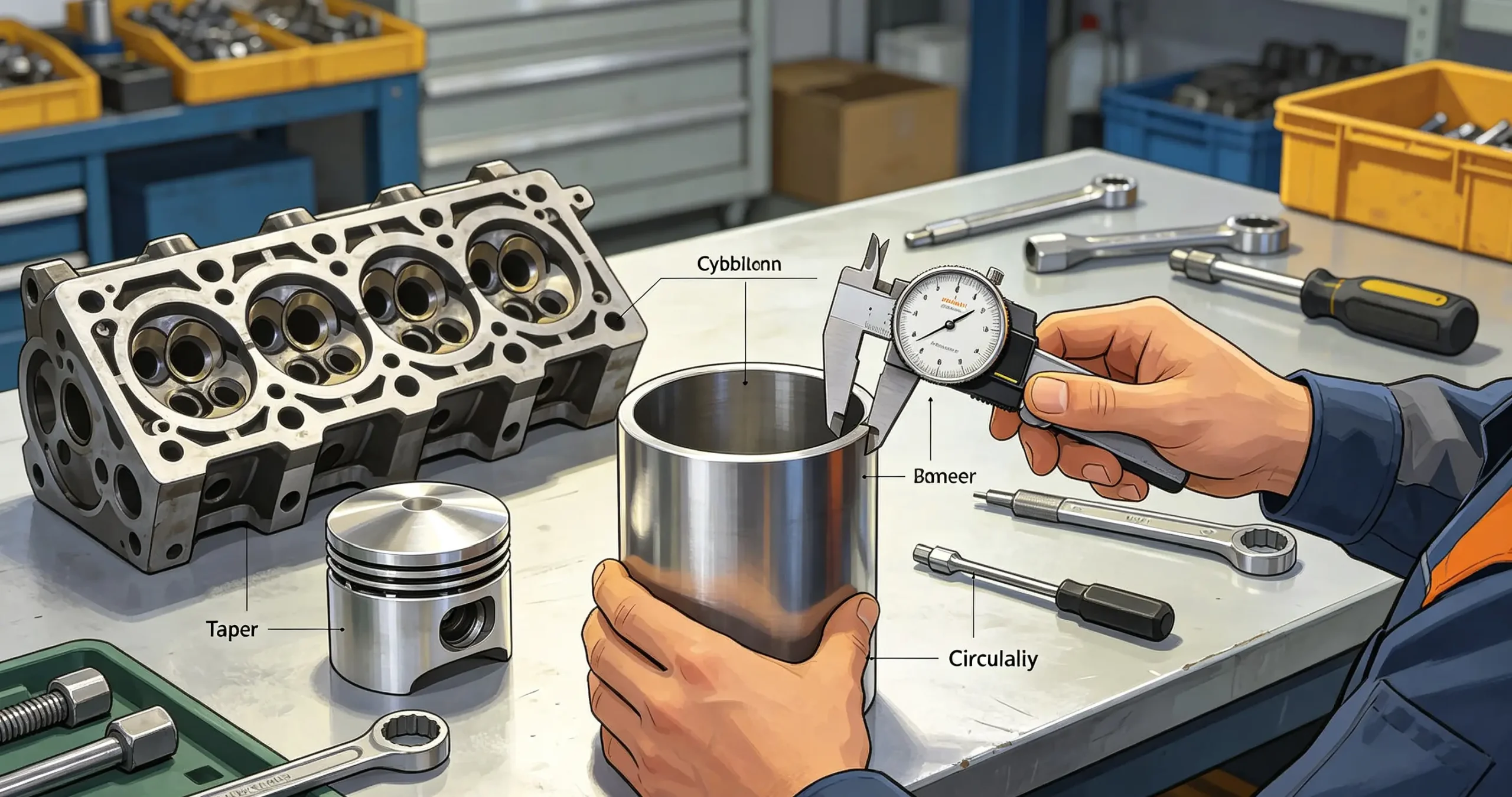
Use a cylinder dial gauge and micrometer to measure liner inner diameters at multiple heights and angles, then calculate circularity and taper errors accurately.
Compare measured data against factory tolerance standards to form objective repair judgments.
As a standard rule, liners require repair or replacement if wear clearance exceeds 0.15mm. Immediate replacement is necessary for circularity error over 0.05mm or taper error over 0.10mm.
For wet liners, measure residual wall thickness to assess cavitation severity. Replace liners immediately if localized thickness loss exceeds one-fifth of the original wall thickness to prevent penetrating leakage.
Step 4: Comprehensive Fault Classification and Repair Plan Formulation
Integrate visual observations and precision measurement data to classify fault severity and formulate hierarchical repair solutions, eliminating unnecessary part replacement and cost waste.
Mild uniform wear within tolerance limits only requires routine maintenance and piston ring replacement. Moderate abnormal wear and localized scuffing warrant selective single-cylinder liner replacement.
Severe deformation, penetrating cavitation, and crack faults require full-set liner replacement, paired with overall engine condition calibration to ensure balanced multi-cylinder operation.
Targeted Repair Solutions for Different Cylinder Liner Failures
Different liner failure types require customized repair strategies. Universal blind replacement increases fleet maintenance costs and fails to eliminate hidden operational risks.
The following targeted solutions are summarized from massive on-site repair experience, perfectly matching the eight common failure types with high practicability and operability.
1. Solution for Uniform Fatigue Wear
Mild uniform wear with qualified dimensional data and no deformation or scuffing does not require liner replacement, and can be resolved through optimized maintenance.
Replace the full set of piston rings, thoroughly clean internal engine carbon deposits, and install high-quality engine oil and filter elements.
Shorten oil change intervals appropriately during the engine running-in period, and perform idle running-in to restore tight piston ring and liner wall fitting.
For moderate to severe wear exceeding tolerance standards, replace full-set cylinder liners and piston rings, calibrate cylinder pressure balance, and test engine sealing performance to restore factory-standard operating conditions.
2. Solution for Liner Scuffing and Groove Damage
Mild shallow scuffing without deep groove damage can be repaired via professional cylinder polishing to eliminate scratch marks and restore smooth liner surface finish.
After polishing, thoroughly clean the entire oil circuit to remove abrasive metal particles, and replace piston rings and engine oil simultaneously.
Inspect oil pump pressure and oil pipeline patency to eliminate potential lubrication failures and prevent secondary scuffing post-repair.
Deep groove scuffing and large-area dry friction damage require direct replacement of the faulty liner and matching piston ring group.
Meanwhile, inspect connecting rod bearing condition, as abnormal bearing wear causes piston deflection — a common hidden trigger for recurring scuffing faults.
3. Solution for Wet Liner Cavitation Erosion
Mild cavitation with non-penetrating micro pits can be resolved through maintenance optimization instead of part replacement. Thoroughly clean liner outer walls and cooling system channels.
Replace degraded old antifreeze with high-quality standard coolant and add dedicated cavitation inhibitors to reduce vacuum bubble generation.
Optimize cooling system circulation efficiency and reduce liner vibration amplitude to effectively curb further cavitation development.
Severe cavitation with large-area pitting or penetrating wall damage requires complete replacement of the wet liner and full-set sealing rings.
Post-installation, calibrate liner flatness to minimize operational vibration, and schedule regular cooling system scale cleaning to prevent future cavitation recurrence.
4. Solution for Thermal Deformation and Out-of-Round Distortion
Minor thermal deformation that stays within marginal tolerance ranges can be corrected through professional cylinder honing and calibration processing. This procedure restores standard circularity and eliminates tapered wear, rebuilding a uniform piston-liner fitting gap.
After honing, match upgraded piston rings with better heat resistance and fitting performance to adapt to corrected cylinder wall geometry. Meanwhile, inspect and rectify cooling system defects, including blocked water channels and inefficient heat dissipation, to eliminate repeated thermal stress.
For severe out-of-round distortion and irreversible thermal deformation, liner correction cannot restore original engine performance. Full cylinder liner replacement is mandatory. Technicians must also check cylinder block flatness and rectify residual deformation to avoid repeated liner distortion after assembly.
5. Solution for Sealing Ring Failure and Coolant Leakage
For minor sealing ring aging and slight seepage without liner groove wear, simply replace full sets of high-quality heat-resistant sealing rings. Conduct strict coolant pressure testing after installation to verify sealing tightness.
If sealing grooves suffer erosion, wear, or deformation, replace the corresponding liner together with sealing accessories. Worn grooves cannot provide stable compression for new seals, leading to persistent leakage even after repeated ring replacement.
After repairing coolant leakage, fully replace contaminated engine oil and filters to remove emulsified fluid and acidic residues. Test engine operation at varying speeds to confirm no recurring fluid mixing or seepage issues.
6. Solution for Carbon Deposition Induced Local Wear
Address carbon-related liner wear with a two-step repair strategy: thorough carbon cleaning and fault source elimination. Use professional engine carbon cleaning equipment to remove hardened carbon deposits on piston tops, combustion chambers, and upper liner walls.
For mild stepped wear within acceptable limits, replace piston rings and optimize fuel quality to stop further abrasive damage. Rectify faulty fuel injectors with poor atomization to eliminate incomplete combustion and recurring carbon buildup.
For obvious stepped wear that exceeds service tolerance, replace the damaged liner and matching ring set. Adjust engine operating habits to avoid prolonged low-load idling, fundamentally reducing carbon deposition formation.
7. Solution for Corrosion and Pitting Wear
Light corrosion with tiny surface pits requires comprehensive engine cleaning and coolant system upgrades. Flush the entire cooling system to eliminate residual acidic condensate and corrosive impurities.
Replace with high-quality, anti-corrosion antifreeze suitable for heavy-duty diesel engines, and adhere to regular coolant replacement cycles. Avoid mixed use of different coolant models to prevent chemical reactions and secondary corrosion.
For deep pitting corrosion that damages the liner’s structural integrity, replace the faulty liner immediately. Corroded liners lose original wear resistance and pressure tolerance, easily triggering oil burning and air leakage under load.
8. Solution for Assembly Stress and Hidden Cracks
Liner hidden cracks caused by assembly stress belong to latent structural damage with no repair value. Once microscopic cracks are detected via inspection tools, direct replacement is the only reliable solution.
During reinstallation, standardize all assembly procedures: clean fitting surfaces completely to remove foreign debris, control pressing force precisely for dry liners, and apply uniform torque for wet liner fixation.
After installation, conduct idle running-in and pressure testing to release residual assembly stress. Verify cylinder tightness and vibration stability to eliminate post-overhaul crack risks.
Long-Term Fleet Preventive Maintenance Tips to Avoid Liner Failure
Most cylinder liner premature failures stem from neglected daily maintenance and irregular operation. Fleets can drastically reduce liner-related overhaul costs by implementing standardized long-term maintenance specifications.
Adopt Scientific Driving and Load Management
Avoid long-term overloaded transportation and aggressive driving behaviors including frequent rapid acceleration and sudden braking. Standardize winter startup procedures with 3–5 minutes of idle preheating to build complete oil film protection before heavy-load operation. Reduce frequent start-stop cycles for short-haul vehicles to cut down acidic condensate accumulation.
Strictly Standardize Oil and Coolant Maintenance
Follow factory-specified oil change intervals and use genuine or high-grade fully synthetic engine oil matched for heavy-duty diesel engines. Replace filter elements synchronously to ensure effective impurity filtration. Regularly inspect coolant quality, flush cooling system scale every 1–2 years, and use dedicated anti-cavitation antifreeze to protect wet liner outer walls.
Regular Engine System Full Inspection
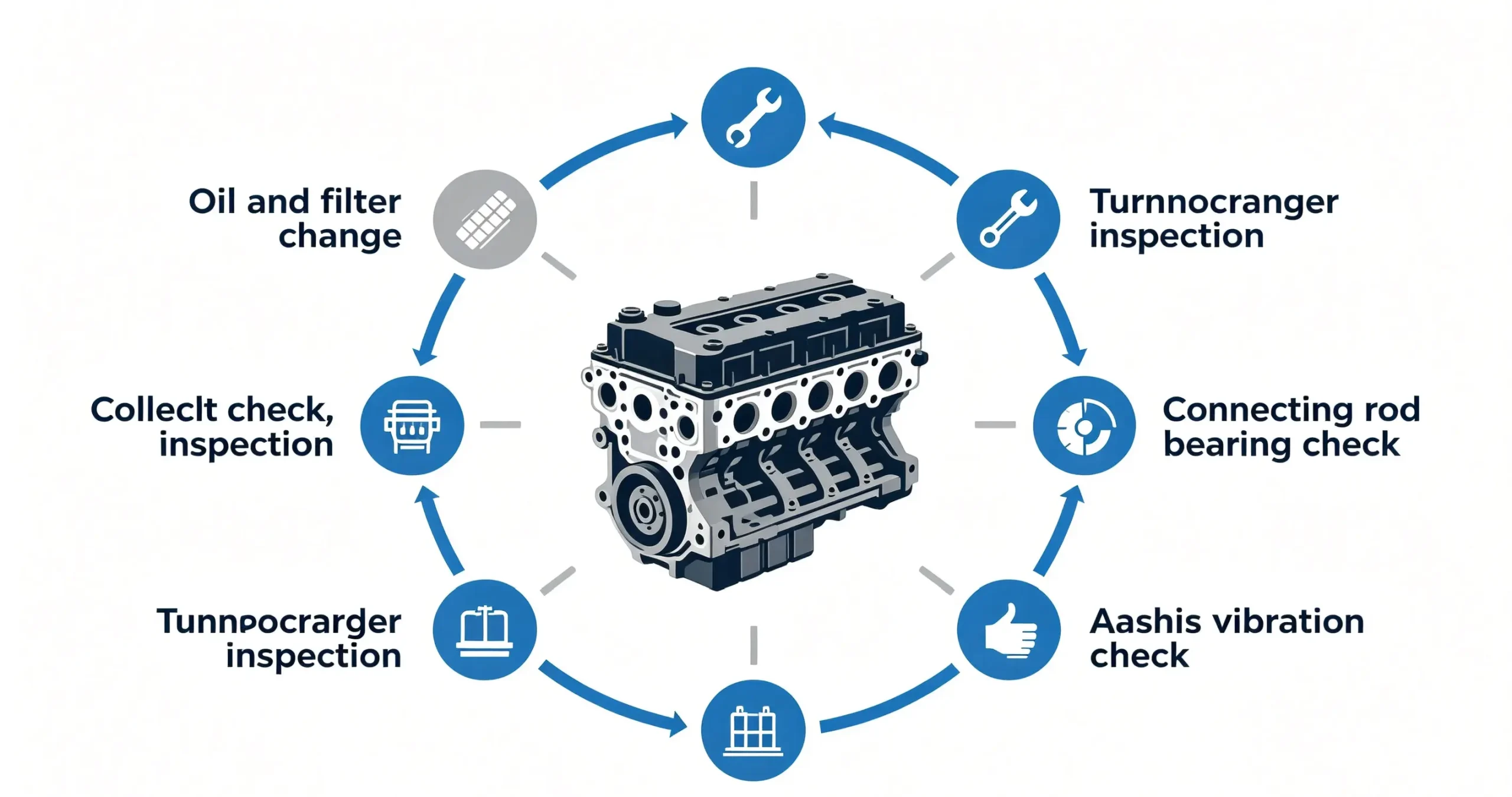
Arrange monthly inspections of fuel injector atomization, turbocharger intake efficiency, and thermostat operation status. Check crankcase blow-by volume and exhaust conditions regularly to detect early liner wear signs. Inspect chassis system stability to eliminate persistent vibration that aggravates liner fatigue damage.
Choose Qualified Matching Spare Parts
Avoid inferior low-cost liners, piston rings, and sealing accessories during repairs. Select high-quality OEM or reliable aftermarket parts with stable material properties and precise dimensional accuracy. Reasonably match professional truck chassis system parts and engine accessories to maintain overall vehicle operating stability and reduce linkage component wear.
Conclusion
The cylinder liner acts as the core bearing component of heavy-duty truck diesel engines, directly determining engine power performance, fuel economy, and service life. Most liner failures develop gradually from subtle neglect, rather than sudden quality faults.
Distinguishing between dry and wet liner characteristics, accurately identifying eight typical failure symptoms, and targeting root causes including improper operation, substandard maintenance, inferior parts, and system linkage faults are the keys to precise repair.
By adopting standardized inspection processes, targeted repair schemes, and scientific long-term fleet maintenance strategies, drivers and fleet managers can effectively avoid premature cylinder liner failure, reduce unplanned vehicle downtime, and cut long-term engine overhaul costs significantly. Stable engine operation and standardized parts matching ultimately maximize fleet transportation efficiency and economic benefits.


