Why Equipment Downtime Is the Hidden Cost Killer
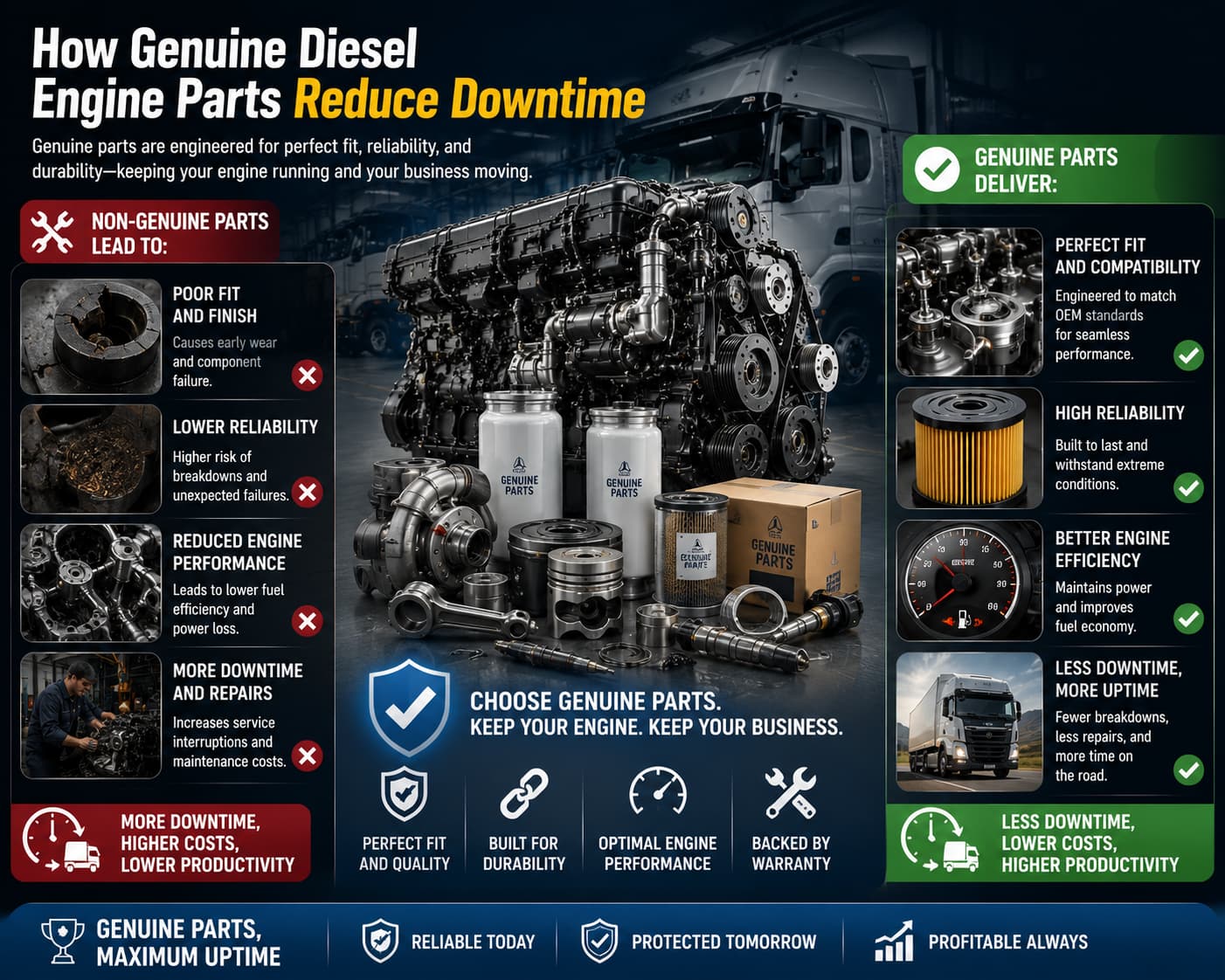
Unplanned equipment failures drain revenue faster than most fleet managers realize. According to a 2025 report by the American Trucking Associations, the average cost of a single hour of unscheduled downtime for a Class 8 truck exceeds $760 when factoring in lost productivity, towing, and emergency labor. For operations running compression-ignition powertrains, selecting the right replacement components is the most controllable variable in preventing these costly interruptions.
A diesel engine relies on precise tolerances and engineered material specifications to deliver consistent power over hundreds of thousands of miles. When aftermarket or counterfeit components enter the equation, those tolerances break down—often silently—until a catastrophic failure forces the vehicle off the road. This article examines the fault pathways, diagnostic thinking, and sourcing strategies that keep fleets moving.
Common Fault Causes Linked to Non-Genuine Components
Fuel Injection System Failures
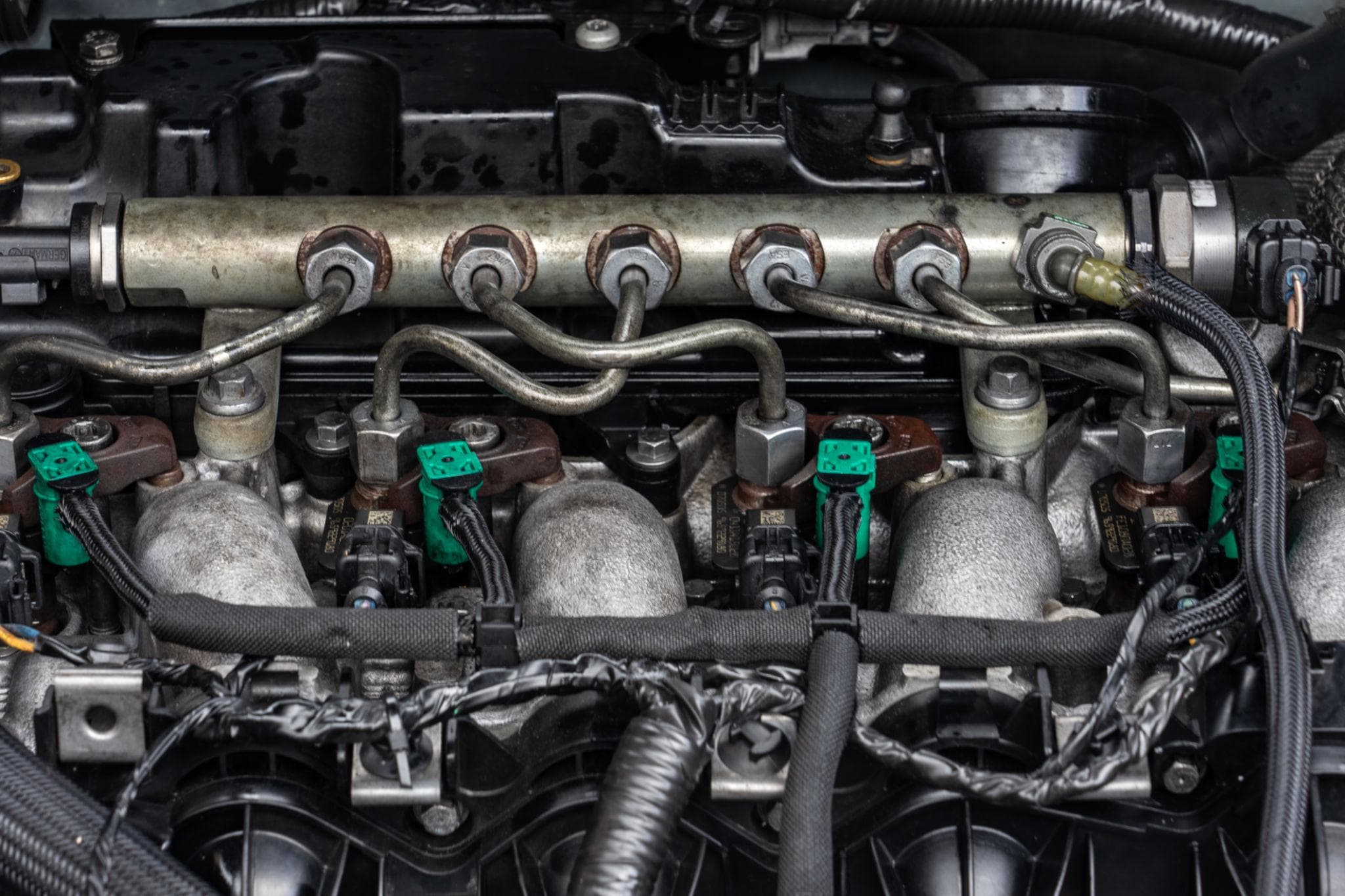
The fuel injection system explained in its simplest terms is a precision hydraulic circuit operating at pressures above 30,000 PSI in modern common-rail setups. Non-OEM injector nozzles frequently exhibit bore tolerances 3–8 microns outside specification. This seemingly minor deviation causes uneven spray patterns, incomplete combustion, and accelerated carbon buildup on piston crowns.
Over time, these micro-failures cascade into turbocharger fouling, exhaust aftertreatment poisoning, and eventual injector seat erosion that requires a full cylinder head rebuild. Genuine components maintain spray geometry within ±1 micron across their rated service life.
Cooling and Lubrication Circuit Breakdowns
Counterfeit water pumps represent one of the most dangerous substitution risks. Inferior impeller alloys erode within months, reducing coolant flow by up to 25%. The result is localized hot spots in the cylinder liner area that warp head gasket surfaces. Once a gasket breach occurs, contamination between oil and coolant circuits can destroy bearings within minutes of continued operation.
Authentic OEM pumps use investment-cast impellers with surface hardness ratings matched to specific coolant chemistries, ensuring product category system compatibility across the entire thermal management circuit.
Electrical and Sensor Malfunctions
Modern heavy-duty powertrains depend on dozens of sensors feeding real-time data to the ECM. Aftermarket sensors may report values within an acceptable range during bench testing but drift under thermal cycling. A crankshaft position sensor that drifts 0.5° at operating temperature can cause timing errors that simultaneously reduce fuel economy and increase NOx emissions beyond compliance thresholds.
Diagnostic Approach: From Symptom to Root Cause
Effective troubleshooting follows a structured path rather than a parts-swapping gamble. The methodology below reflects industry best practice for compression-ignition powertrains in commercial applications.
| Diagnostic Stage | Actions | Tools Required |
|---|---|---|
| 1. Symptom Documentation | Record fault codes, operating conditions, mileage since last service | OEM diagnostic scanner, service log |
| 2. Data Analysis | Compare live sensor readings against OEM baseline values | Oscilloscope, fuel pressure gauge |
| 3. Component Isolation | Cylinder contribution test, leak-down test, flow bench verification | Injector flow bench, compression tester |
| 4. Root Cause Verification | Cross-reference failed part specifications against OEM engineering drawings | Micrometer, part number database |
| 5. Corrective Action | Replace with verified genuine components; validate repair with loaded road test | Dynamometer or GPS-logged road test |
This systematic process prevents the common trap of replacing a symptomatic component while the true cause—often a non-genuine part installed during a previous service event—remains hidden upstream.
The Reliability Case for Genuine Parts: Data Comparison
A fleet study conducted across 340 long-haul trucks in North America between 2023 and 2025 compared unscheduled downtime events between vehicles maintained exclusively with OEM components versus those using a mixed sourcing strategy. The results were unambiguous.
| Metric | OEM-Only Fleet | Mixed-Source Fleet | Difference |
|---|---|---|---|
| Unscheduled stops per 100,000 miles | 1.4 | 4.1 | −66% |
| Average repair duration (hours) | 3.2 | 7.8 | −59% |
| Annual parts cost per truck | $4,200 | $3,600 | +17% |
| Annual downtime cost per truck | $2,100 | $6,800 | −69% |
| Net total cost of ownership | $6,300 | $10,400 | −39% |
The 17% higher parts expenditure for genuine components was more than offset by the dramatic reduction in revenue-losing downtime events. This aligns with broader industry findings on diesel engine lifespan and reliability—authentic parts preserve the engineered service intervals that OEMs design into their powertrains.
How Diesel Engine Maintenance Tips for Trucks Translate to Uptime
Preventive maintenance only works when the components installed during service intervals match the engineering intent of the original design. Here are the practices that deliver measurable uptime improvements:
- Oil analysis every 250 hours or 15,000 miles: Detects wear metal patterns that indicate non-genuine bearing or ring materials failing prematurely.
- Fuel filter replacement at OEM intervals with OEM media: Aftermarket filters often use coarser media (12-micron vs. OEM 4-micron), allowing abrasive particles to reach injection components.
- Coolant chemistry testing quarterly: Verifies Supplemental Coolant Additives remain within spec, protecting genuine water pump seals and liner cavitation barriers.
- Valve lash adjustment at prescribed intervals: Ensures the fuel injection system explained earlier maintains correct timing relationships with valve events.
For fleet operators seeking comprehensive diesel engine maintenance guidance, our technical support library provides model-specific procedures and torque specifications.
Diesel Engine vs Gasoline Engine Efficiency: Why Tolerances Matter More
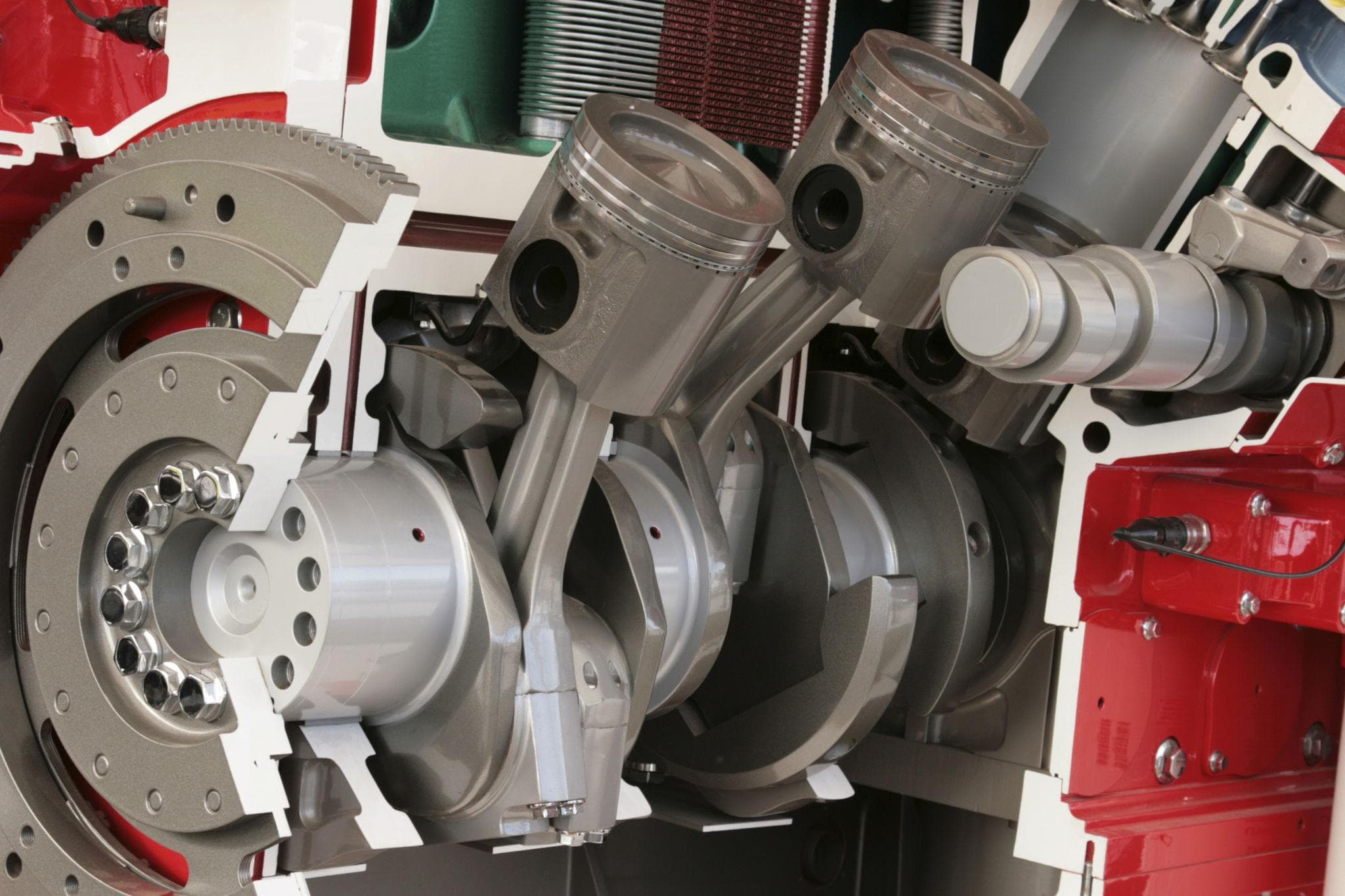
Compression-ignition powertrains operate at substantially higher mechanical and thermal loads than their spark-ignition counterparts. Compression ratios of 16:1 to 23:1 mean cylinder pressures exceed 2,000 PSI during combustion—roughly double that of a gasoline equivalent. This fundamental difference in the diesel engine working principle means that component quality has an outsized impact on reliability.
A connecting rod bearing that would survive 200,000 miles in a gasoline application may fail at 80,000 miles under heavy-duty compression-ignition loads if manufactured with inferior overlay plating. Genuine OEM diesel parts reliability depends on metallurgical specifications that aftermarket suppliers frequently cannot replicate without access to proprietary alloy formulations and heat-treatment processes.
Real-World Case: Fleet Recovery Through Genuine Part Standardization
A logistics company operating 85 trucks across the U.S. Southeast experienced a 340% increase in roadside breakdowns over an 18-month period. Root cause investigation revealed that a procurement policy change had shifted 60% of replacement parts to non-OEM sources to reduce per-unit costs.
The most common failure mode involved turbocharger bearing seizures traced to oil feed line fittings manufactured with incorrect internal diameters. These fittings restricted oil flow by 15%, starving the bearing journal at high-RPM cruising conditions. After reverting to product category brand authentic components, the fleet recorded zero turbo-related failures over the subsequent 12 months.
This experience mirrors findings documented across multiple fleets in our cooperative case studies, where diesel part compatibility issues with aftermarket components consistently emerged as the primary downtime driver.
Equipment Downtime Prevention: A Strategic Framework
Preventing unscheduled outages requires more than just buying quality parts. It demands a systems-level approach integrating procurement, maintenance execution, and failure analysis into a continuous improvement loop.
Procurement Controls
Establish approved vendor lists that require traceability documentation back to the original manufacturer. Verify holographic labels, serialized packaging, and batch codes against manufacturer databases. When sourcing Truck parts, prioritize suppliers who maintain direct distribution agreements with OEMs.
Installation Verification
Require technicians to photograph part numbers and packaging before installation. Cross-reference against OEM parts catalogs to confirm genuine diesel engine components are entering the vehicle. Document torque values and fluid specifications applied during installation for warranty validation.
Failure Pattern Monitoring
Track every unscheduled event by component category, supplier source, and miles since installation. Statistical process control charts reveal when a batch of suspect parts enters the supply chain—often before catastrophic failure rates emerge. This data-driven approach transforms reactive maintenance into predictive asset management.
Conclusion: The Economics Are Clear
Every dollar saved on cheap replacement parts typically costs three to five dollars in downstream downtime, collateral damage, and emergency service premiums. For compression-ignition powertrains operating under severe duty cycles, genuine components are not a luxury—they are the minimum viable standard for profitable operations.
Whether you manage a single truck or an entire fleet, the path to maximum uptime runs through verified, OEM-specification parts installed by trained technicians following manufacturer procedures. To explore sourcing options or discuss your specific application, contact us for a consultation. You can also learn more about us and our commitment to delivering authentic heavy-duty components worldwide.
Frequently Asked Questions
How do I verify whether a replacement part is genuinely OEM-manufactured?
Check for holographic security labels, serialized packaging, and batch traceability codes. Most major manufacturers maintain online verification portals where you can enter part serial numbers to confirm authenticity. Additionally, genuine components typically include detailed installation instructions and warranty registration cards.
What is the most common failure caused by counterfeit components in heavy-duty powertrains?
Fuel system failures represent the highest-frequency issue. Non-genuine injectors and high-pressure pump components frequently exhibit premature wear due to inferior material hardness, causing progressive performance degradation before eventual catastrophic failure. These failures often damage downstream components like turbochargers and aftertreatment systems.
Can aftermarket parts void my manufacturer warranty?
While regulations like the Magnuson-Moss Warranty Act prevent blanket warranty denial solely for using aftermarket parts, manufacturers can deny specific claims if they demonstrate that a non-OEM component directly caused the failure. Maintaining documentation of all installed parts protects your warranty position regardless of sourcing decisions.
How much downtime can I realistically avoid by switching to authentic components?
Fleet data consistently shows 50–70% reductions in unscheduled maintenance events when transitioning from mixed-source procurement to OEM-exclusive strategies. The exact improvement depends on your current failure baseline, operating conditions, and maintenance discipline. Most operators achieve payback within two to three service intervals.
Are there specific components where genuine specification matters most?
Fuel injection components, turbocharger assemblies, and cooling system parts represent the highest-risk categories for counterfeit substitution. These systems operate under extreme pressure, temperature, and rotational speed conditions where even minor material or dimensional deviations cascade into major failures. Prioritize OEM sourcing for these categories first if budget constraints prevent a complete transition.


