
Why Long-Haul Fleets Face Persistent Powertrain Problems
Long-haul trucking places extraordinary demands on heavy-duty powertrains. A diesel engine operating continuously over thousands of kilometers endures thermal cycling, vibration stress, and contamination in ways that shorter routes simply cannot replicate. According to a 2025 American Trucking Associations report, unscheduled downtime costs fleets an average of $760 per truck per day—making reliability a financial imperative, not just a maintenance preference.
This guide draws on over a decade of experience in commercial vehicle engineering to walk you through the most common failure modes, systematic diagnostic approaches, and actionable solutions. Whether you manage a single owner-operator rig or coordinate a large fleet, understanding these challenges helps you reduce costs and extend service life.
How Compression-Ignition Powertrains Operate Under Load
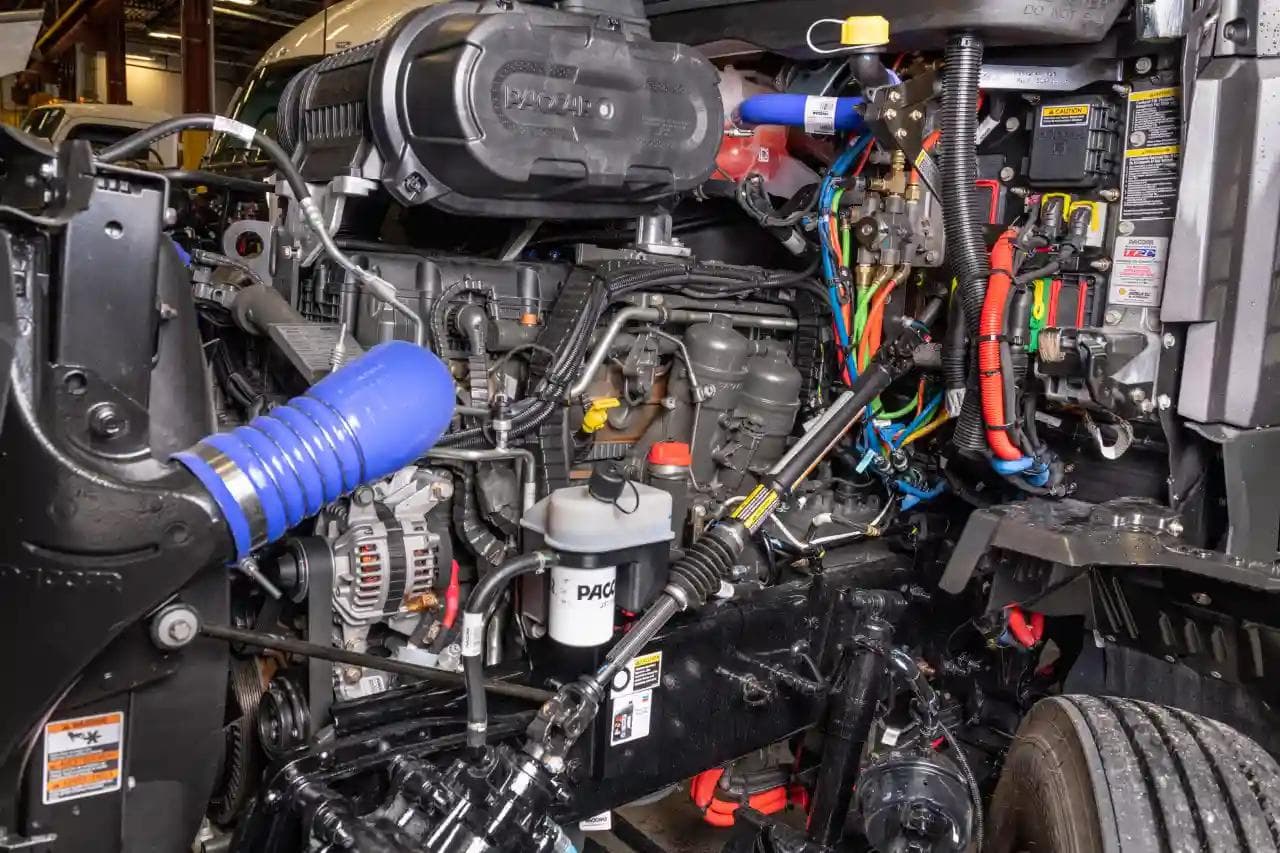
Before diagnosing faults, it helps to understand how does a diesel engine work step by step. Air enters the intake manifold, gets compressed to extremely high pressure inside the cylinder, and reaches temperatures above 500 °C. Atomized fuel is then sprayed directly into this superheated air through the fuel injection system, igniting spontaneously without a spark plug—a process known as compression ignition.
Under sustained highway loads, the powertrain operates near peak thermal and mechanical stress for hours. The turbocharger forces additional air mass into the combustion chamber, boosting output but also amplifying wear on bearings, seals, and intercooler plumbing. These operating conditions create a unique failure profile that differs significantly from lighter-duty applications.
Top Five Failure Modes in Over-the-Road Applications
1. Fuel System Degradation
High-pressure common-rail injectors operate at pressures exceeding 2,000 bar. Microscopic contaminants in fuel—water, wax crystals, or biological growth—erode injector nozzles and check valves over time. Symptoms include rough idle, white smoke at startup, and measurable power loss under load.
2. Turbocharger Failure
Turbo bearings spin at over 100,000 RPM and rely entirely on clean oil for lubrication and cooling. Extended drain intervals or degraded oil quality leads to shaft play, compressor wheel contact, and catastrophic failure. Oil starvation during hot shutdowns accelerates the problem.
3. Exhaust Aftertreatment Faults
Modern emissions systems—DPF, DOC, and SCR—require precise operating temperatures. Short regeneration cycles, sensor drift, or DEF crystallization trigger fault codes that derate the truck. Chronic exhaust emissions issues often trace back to upstream combustion imbalances rather than the aftertreatment hardware itself.
4. Cooling System Breakdown
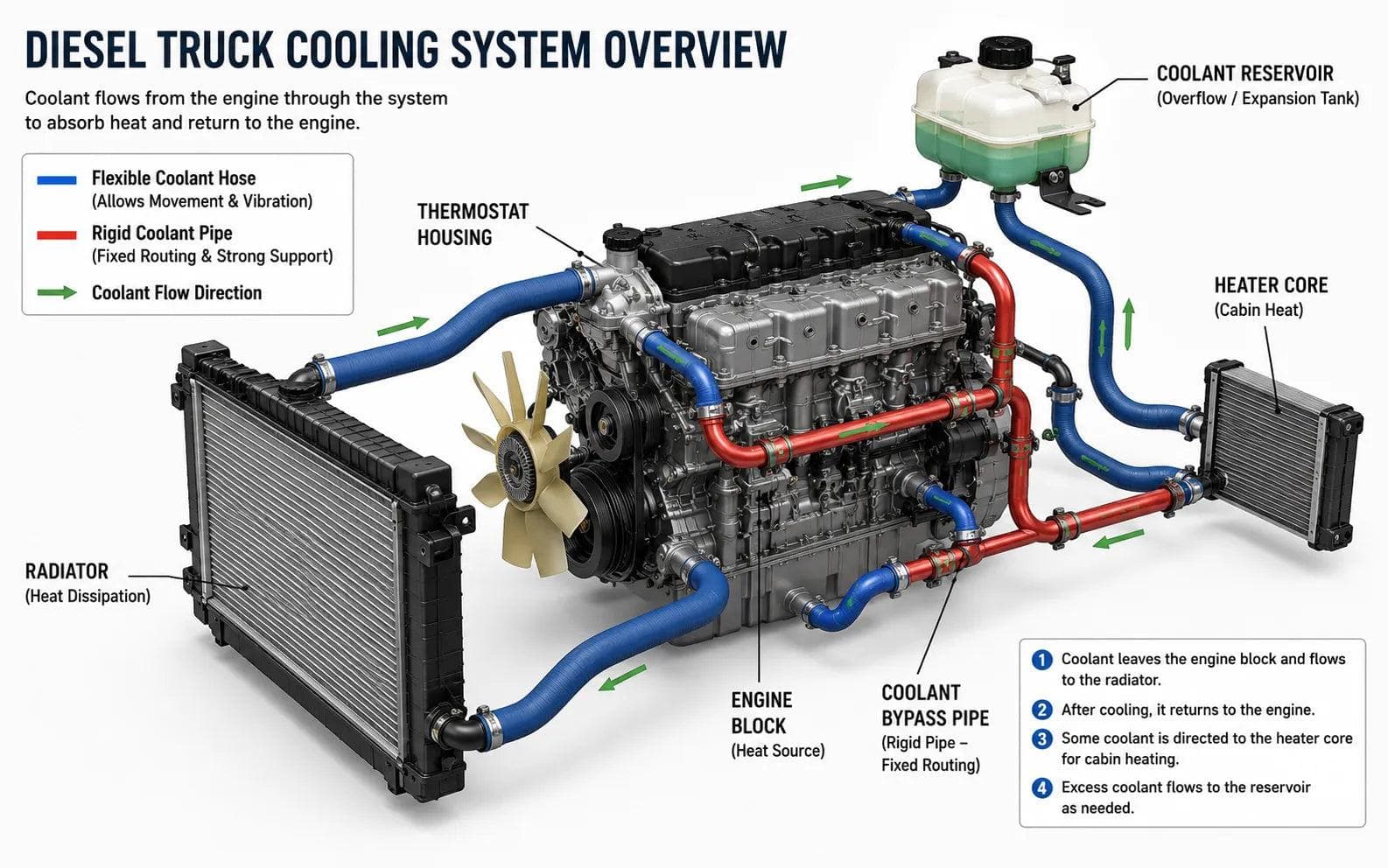
Thermal fatigue cracks EGR coolers, warps cylinder heads, and degrades coolant hoses. A 2025 TMC benchmarking study found that cooling-related failures account for 18% of all roadside breakdowns in Class 8 trucks—second only to tire issues.
5. Cylinder Block and Bottom-End Wear
The cylinder block endures millions of combustion events over its service life. Liner scoring, main bearing wear, and crankshaft fatigue eventually require major overhaul. Contaminated oil or extended service intervals accelerate this degradation significantly.
Diagnostic Approach: From Symptom to Root Cause
| Symptom | Likely System | Initial Diagnostic Step |
|---|---|---|
| White/blue smoke at cold start | Fuel injection | Check injector return flow rates |
| Loss of boost pressure | Turbocharger / intake | Inspect intercooler boots, measure shaft play |
| Derate / limp mode | Aftertreatment / sensors | Read active fault codes, check DPF differential pressure |
| Overheating under load | Cooling circuit | Pressure test system, inspect EGR cooler |
| Excessive oil consumption | Bottom end / liners | Perform blowby test, analyze oil sample |
A structured approach prevents expensive guesswork. Start with electronic diagnostics, validate with physical inspection, and confirm with measured data before replacing components. For fleet-level guidance, our technical support resources provide manufacturer-specific troubleshooting trees.
Diesel vs. Gasoline: Why Heavy-Duty Prefers Compression Ignition
When evaluating diesel engine vs gasoline engine fuel efficiency, the thermodynamic advantage of compression ignition becomes clear. Higher compression ratios extract more energy per unit of fuel, delivering 25–40% better thermal efficiency. This translates directly into lower cost-per-mile for loaded trailers covering continental distances.
However, this efficiency comes with trade-offs: higher component stress, more complex emissions controls, and greater sensitivity to fuel and lubricant quality. These trade-offs define the maintenance challenges discussed throughout this article.
Proven Solutions and Preventive Strategies
Fuel Quality Management
Install bulk fuel filtration at depot level. Use 2-micron final filters at the vehicle, and drain water separators on a strict schedule. For operations in cold climates, fuel heaters and anti-gel additives prevent wax-related injector starvation. Following diesel engine maintenance tips 2026 best practices, many fleets now perform quarterly fuel-system health checks using injector balance rate analysis.
Oil Analysis Programs
Trending oil sample data over multiple intervals reveals wear patterns long before symptoms appear. Track iron, copper, silicon, and soot loading. This data-driven approach identifies failing components early and supports condition-based drain intervals rather than arbitrary time-based schedules.
Thermal Management
Encourage drivers to idle briefly before shutdown after sustained high-load operation. This allows the turbo and EGR system to stabilize thermally. Auxiliary coolant pumps—available on many newer platforms—automate this process.
Choosing the Right Replacement Components
Selecting the best diesel engine for heavy duty trucks starts with matching OE specifications—but aftermarket quality varies dramatically. Low-cost components often fail prematurely, creating cascading damage. Reliable truck parts sourced from verified suppliers prevent repeat failures and protect the broader powertrain investment.
When sourcing components by manufacturer, our product category brand page organizes parts by OEM reference. For system-level browsing—fuel, cooling, intake, exhaust—the product category system view simplifies cross-referencing.
Real-World Fleet Case: Reducing Unplanned Stops by 34%
A Southeast Asian logistics operator running 120 Class 8 tractors experienced chronic injector and turbo failures averaging 6.2 unplanned events per truck per year. After implementing structured oil analysis, upgrading to OE-spec replacement parts, and adopting condition-based maintenance intervals, unplanned stops dropped to 4.1 per truck within 12 months—a 34% reduction. Full details of this engagement are available in our cooperative case library.
The financial impact was substantial: estimated savings of $312,000 annually across the fleet, primarily from avoided towing, reduced driver downtime pay, and fewer cascading component failures.
The Diesel Engine Problems and Solutions Guide: Summary Table
| Problem | Root Cause | Solution | Prevention |
|---|---|---|---|
| Injector erosion | Fuel contamination | Replace injectors, flush rail | Bulk filtration, water separator drain |
| Turbo bearing failure | Oil starvation / degradation | Replace turbo, inspect oil supply line | Oil analysis, proper shutdown procedure |
| DPF clogging | Incomplete regeneration | Forced regen, sensor replacement | Avoid excessive idle, fix upstream faults |
| EGR cooler crack | Thermal fatigue | Replace cooler, inspect head gasket | Coolant maintenance, avoid overloading |
| Liner scoring | Contaminated lube oil | Major overhaul / liner replacement | Strict oil change intervals, air filter service |
When to Seek Expert Help
Not every fault can be resolved at depot level. Complex ECU calibration issues, repeated aftertreatment failures, or unexplained oil consumption patterns may indicate deeper engineering problems requiring OEM-level diagnostics. If your team needs direct assistance with part identification, failure analysis, or sourcing, contact us for one-on-one support.
Our engineering team brings decades of combined experience across Cummins, Detroit, Volvo, and PACCAR platforms. Learn more on our about us page.
Frequently Asked Questions
What is the most common cause of power loss in heavy-duty trucks?
Fuel system degradation—particularly injector nozzle erosion and high-pressure pump wear—is the leading cause. Contaminated fuel accelerates this process. Regular fuel-system health checks and quality filtration are the most effective preventive measures.
How often should oil analysis be performed on long-haul rigs?
Industry best practice recommends sampling every oil change interval, typically every 40,000–60,000 km for Class 8 over-the-road applications. Trending results across multiple samples provides far more insight than a single snapshot.
Can aftermarket parts match OE reliability in heavy-duty powertrains?
Yes—when sourced from reputable suppliers who verify dimensional tolerances, material specifications, and performance testing. Low-cost unverified components often cause repeat failures and collateral damage that far exceeds the initial savings.
Why do modern trucks go into derate or limp mode so frequently?
Stricter emissions regulations require complex aftertreatment systems with numerous sensors. When any sensor reads outside parameters, the ECU protects the system by limiting power. The root cause often lies upstream—combustion imbalances, injector drift, or EGR faults—rather than in the aftertreatment hardware itself.
What role does driver behavior play in powertrain longevity?
Significant. Proper shutdown procedures protect turbocharger bearings, progressive warm-up reduces thermal shock, and avoiding sustained overloading prevents premature bottom-end wear. Driver training programs consistently correlate with reduced maintenance costs across fleet studies.


