How a Dirty Air Filter Kills Your Engine Power?
How a Dirty Air Filter Affects Engine Performance and Fuel Economy
Every internal combustion engine requires a precise mixture of fuel and clean air to operate efficiently. The filtration element responsible for removing contaminants from incoming air plays a critical role in maintaining this balance. When this component becomes clogged with dust, debris, and particulate matter, the consequences extend far beyond a simple maintenance oversight — they directly impact power output, fuel consumption, emissions, and long-term engine health.
In this comprehensive guide, we explore the specific mechanisms through which a contaminated intake filter degrades engine performance. We also provide diagnostic approaches, real-world data, and practical solutions to help fleet operators, vehicle owners, and maintenance professionals address this common but often overlooked issue.
Understanding the Role of Engine Intake Filtration
The engine's intake filtration system serves as the first line of defense against airborne contaminants. Modern engines require approximately 10,000 liters of air for every liter of fuel burned. This enormous volume of air must be cleaned of dust particles, pollen, insects, road debris, and other pollutants before entering the combustion chamber.
A clean filtration element allows unrestricted airflow while capturing particles as small as 5-10 microns. As the element accumulates debris over time, the restriction increases progressively. The engine's electronic control unit (ECU) attempts to compensate for reduced airflow, but beyond a certain threshold, performance degradation becomes unavoidable.
Reduced Airflow to the Engine
The most immediate and fundamental consequence of a contaminated intake element is restricted airflow. The engine operates as an air pump — it draws in air, mixes it with fuel, compresses and ignites the mixture, and expels exhaust gases. Any restriction in the intake pathway directly limits the engine's breathing capacity.
The Mechanics of Air Intake Restriction
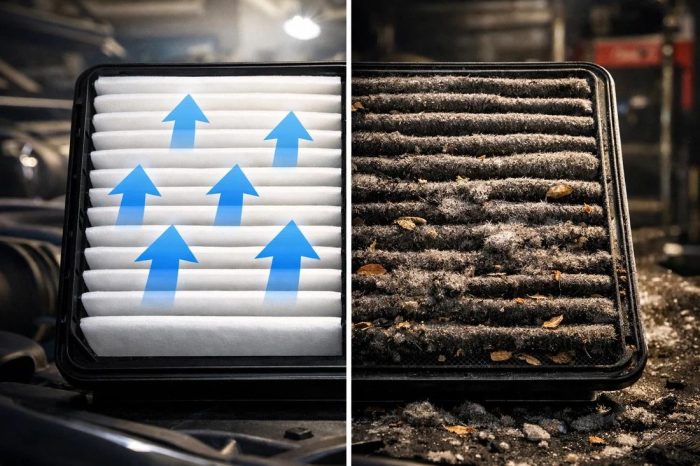
When the filtration media becomes saturated with particulate matter, air molecules must navigate an increasingly tortuous path through the clogged fibers. This creates a measurable pressure drop between the ambient atmosphere and the intake manifold. In severe cases, this restriction can reduce airflow by 20-40% compared to a clean element.
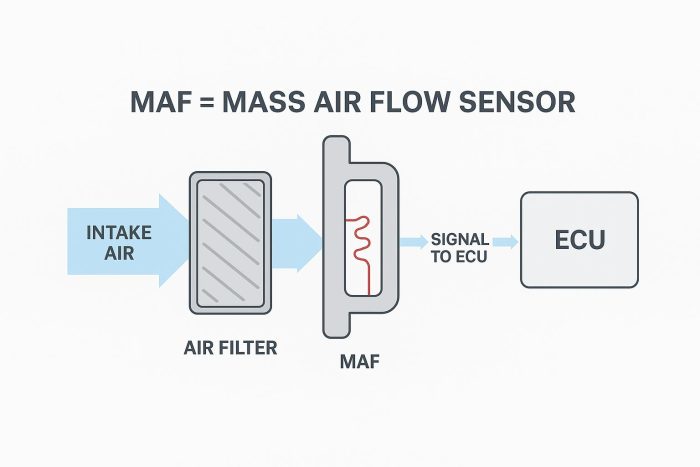
The mass airflow sensor (MAF) or manifold absolute pressure (MAP) sensor detects this reduction and signals the ECU. The engine management system responds by adjusting fuel delivery and ignition timing, but these compensations come at the cost of optimal performance.
Measurable Impact on Volumetric Efficiency
Volumetric efficiency refers to the ratio of actual air entering the cylinder versus the theoretical maximum. A clean intake system typically achieves 80-90% volumetric efficiency in naturally aspirated engines. Research conducted by the Society of Automotive Engineers (SAE) demonstrates that a heavily contaminated element can reduce this figure by 10-15 percentage points.
| Filter Condition | Pressure Drop (kPa) | Airflow Reduction (%) | Volumetric Efficiency (%) |
|---|---|---|---|
| New/Clean | 0.5 - 1.0 | 0% | 85 - 90% |
| Moderately Used (50% life) | 1.5 - 2.5 | 5 - 10% | 78 - 85% |
| Heavily Clogged | 3.0 - 5.0 | 15 - 25% | 65 - 75% |
| Severely Blocked | 5.0 - 8.0+ | 25 - 40% | 50 - 65% |
Symptoms of Restricted Airflow
Drivers and operators may notice several telltale signs of air intake restriction. The engine may feel sluggish during acceleration, particularly at higher RPM ranges where air demand peaks. Idle quality may deteriorate slightly, though modern ECU calibrations often mask this symptom until restriction becomes severe.
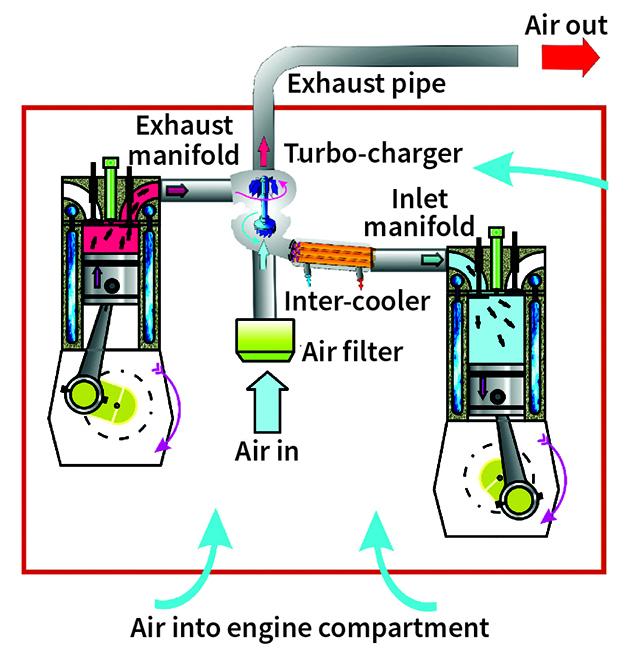
In turbocharged applications, the turbocharger must work harder to overcome the increased intake restriction. This places additional stress on the compressor wheel and bearings, potentially shortening turbo service life. The audible whistle or whine from the turbo may change in pitch as the system compensates for reduced airflow.
Increased Fuel Consumption
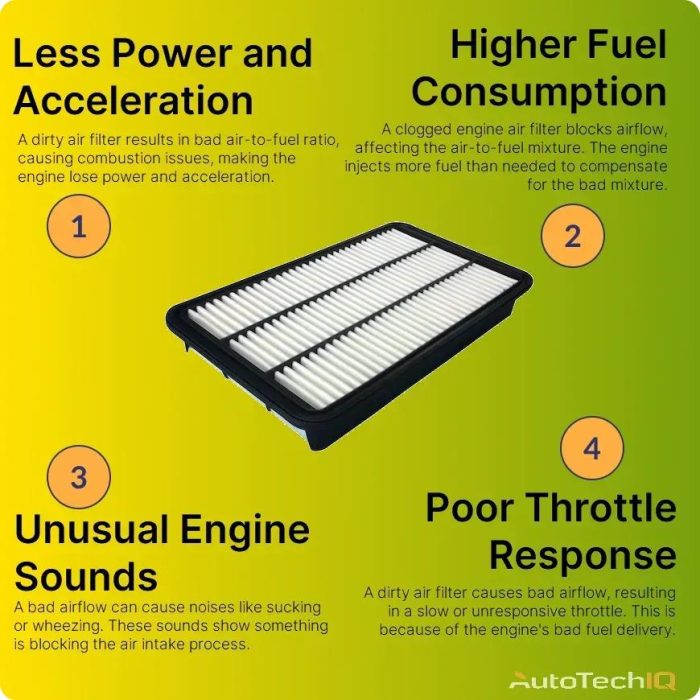
One of the most costly consequences of a contaminated intake element is elevated fuel consumption. The relationship between clean air delivery and fuel efficiency is well-documented, with studies showing consumption increases of 2-10% depending on severity of contamination and engine type.
The Air-Fuel Ratio Connection
Optimal combustion requires a stoichiometric air-fuel ratio of approximately 14.7:1 by mass for gasoline engines and approximately 14.5:1 for diesel engines at full load. When airflow is restricted, the ECU must adjust fuel delivery to maintain safe operating parameters. In many cases, the mixture becomes richer than optimal, meaning more fuel is injected relative to the available air.
This enrichment occurs because the oxygen sensors detect lower oxygen content in the exhaust stream and the ECU interprets this as a lean condition requiring more fuel. The result is incomplete combustion, wasted fuel, and reduced thermal efficiency.
Real-World Fuel Economy Data
A study published by the U.S. Department of Energy's Oak Ridge National Laboratory examined the relationship between intake element condition and fuel consumption across multiple vehicle platforms. The findings revealed consistent patterns of increased consumption as element contamination progressed.
| Vehicle Type | Clean Filter MPG | Dirty Filter MPG | Fuel Economy Loss |
|---|---|---|---|
| Compact Sedan (Gasoline) | 32.5 | 30.1 | 7.4% |
| Full-Size Pickup (Gasoline) | 22.0 | 20.2 | 8.2% |
| Medium-Duty Truck (Diesel) | 12.5 | 11.3 | 9.6% |
| Heavy-Duty Truck (Diesel) | 6.8 | 6.0 | 11.8% |
Poor Gas Mileage Causes Beyond the Obvious
While many drivers attribute declining fuel economy to aging engines or fuel quality issues, a restricted intake element remains one of the most common poor gas mileage causes that goes undiagnosed. Unlike mechanical wear, which progresses slowly over many years, filter contamination can reach critical levels within months in dusty or polluted environments.
The insidious nature of gradual fuel economy loss means many operators never connect the dots. A 2-3% monthly decline in efficiency is difficult to perceive without careful tracking, yet over six months it compounds into a significant financial burden.
Loss of Engine Power
Beyond fuel economy concerns, a restricted intake system directly impacts the engine's ability to produce power. This manifests as reduced acceleration capability, diminished towing capacity, and overall sluggish performance that worsens progressively.
How Power Loss Occurs
Engine power output is fundamentally limited by the mass of air available for combustion. The formula is straightforward: less air means less fuel can be burned efficiently, which means less energy is released per combustion cycle. For a naturally aspirated engine, peak power can decline by 5-15% with a severely restricted intake element.
The power loss becomes most apparent during high-demand situations — highway merging, hill climbing, towing heavy loads, or operating at high altitudes where air density is already reduced. Drivers may unconsciously compensate by applying more throttle, which further increases fuel consumption without meaningfully restoring lost performance.
Throttle Response Issues and Driveability
In addition to absolute power loss, throttle response issues become apparent with a contaminated element. The time between pressing the accelerator pedal and feeling the engine respond increases because the restricted intake creates a lag in air delivery to the cylinders.
This delayed response is particularly noticeable in drive-by-wire throttle systems where the ECU must calculate appropriate fuel delivery based on available airflow. When the intake system cannot deliver air at the rate requested by the throttle position sensor, a perceptible hesitation occurs.
Impact on Different Engine Configurations
The severity of power loss varies based on engine design and forced induction systems:
- Naturally Aspirated Engines: These are most sensitive to intake restriction since they rely entirely on atmospheric pressure to fill the cylinders. Power losses of 10-15% are common with severely clogged elements.
- Turbocharged Engines: While the turbocharger can partially compensate for upstream restriction by increasing boost pressure, this places the compressor outside its efficiency island, reducing overall system efficiency and increasing thermal stress.
- Supercharged Engines: Similar to turbocharged applications, the supercharger must consume more engine power (parasitic loss) to overcome increased intake restriction, resulting in net power reduction.
- Diesel Engines: Particularly sensitive due to their reliance on excess air for efficient combustion. Reduced air supply directly impacts injection timing optimization and combustion quality.
Increased Black Smoke Emissions
One of the most visible indicators of a contaminated intake element — particularly in diesel engines — is the presence of black smoke in the exhaust stream. This smoke consists primarily of unburned carbon particles (soot) and represents both wasted fuel and environmental pollution.
The Chemistry Behind Black Smoke
Black smoke occurs when the combustion process lacks sufficient oxygen to completely oxidize all the fuel injected into the cylinder. Under normal conditions, diesel engines operate with excess air (lean of stoichiometric) to ensure complete combustion. When intake restriction reduces available oxygen, pockets of rich mixture form within the combustion chamber where fuel cannot find enough oxygen to burn completely.
The resulting incomplete combustion produces carbon particulates that are expelled through the exhaust system. In engines equipped with diesel particulate filters (DPF), these excess soot particles accelerate filter loading and trigger more frequent regeneration cycles — further reducing fuel economy.
Emissions Compliance Concerns
Modern emissions regulations impose strict limits on particulate matter (PM) and nitrogen oxide (NOx) emissions. A vehicle with a restricted intake system may exceed regulatory thresholds during emissions testing, potentially resulting in failed inspections and costly repairs. According to the Environmental Protection Agency (EPA), vehicles with compromised intake filtration can produce 2-5 times the normal particulate emissions.
For commercial fleet operators, emissions non-compliance carries additional risks including fines, vehicle downtime, and reputational damage. Maintaining clean intake elements is among the simplest and most cost-effective ways to ensure ongoing emissions compliance.
Impact on Aftertreatment Systems
Turbocharged engines face unique and potentially expensive consequences when operating with a restricted intake system. The turbocharger is designed to operate within specific aerodynamic parameters, and upstream restriction pushes the compressor outside its optimal efficiency range.
- DPF Loading: Increased soot production means more frequent regeneration cycles, consuming additional fuel and exposing the filter to higher thermal stress.
- DOC Contamination: Heavy soot accumulation on the catalyst surface reduces oxidation efficiency and can permanently damage precious metal coatings.
- SCR Efficiency: Altered exhaust gas composition affects the SCR system's ability to convert NOx, potentially triggering derating or limp-mode conditions.
- Exhaust Gas Recirculation (EGR): Increased particulate loading accelerates EGR valve and cooler fouling, creating a cascading maintenance burden.
Turbocharger Performance Problems
Modern diesel engines employ sophisticated aftertreatment systems including diesel oxidation catalysts (DOC), diesel particulate filters (DPF), and selective catalytic reduction (SCR) systems. Excessive soot production from a restricted intake accelerates degradation of all these components:
Compressor Surge and Stall
When intake restriction reduces the mass flow rate through the compressor, it can push the operating point toward the surge line on the compressor map. Compressor surge creates destructive pressure oscillations that subject the turbo shaft, bearings, and compressor wheel to extreme cyclic loading. Repeated surge events can cause fatigue cracking of the compressor wheel blades and premature bearing failure.
Even without reaching full surge, operating near the surge boundary reduces compressor efficiency significantly. The turbocharger must spin faster to deliver the same boost pressure, increasing shaft speed and bearing temperatures beyond design limits.
Increased Turbocharger Temperatures
A restricted intake forces the turbocharger to work harder for the same result. This additional work manifests as increased compressor outlet temperatures, which raises charge air temperatures entering the intercooler. Higher intake temperatures reduce air density, partially negating the purpose of forced induction and further reducing engine efficiency.
On the turbine side, restricted intake (and the resulting rich combustion) produces higher exhaust gas temperatures (EGT). Sustained elevated EGT can damage turbine wheel materials, degrade housing coatings, and accelerate oil coking within the bearing housing — a leading cause of turbocharger failure.
Increased Engine Wear
Beyond immediate performance impacts, operating with a degraded intake element accelerates long-term mechanical wear throughout the engine. Contaminants that bypass a damaged or overwhelmed filtration system act as abrasive compounds within the engine's precision-machined components.
Abrasive Wear Mechanisms
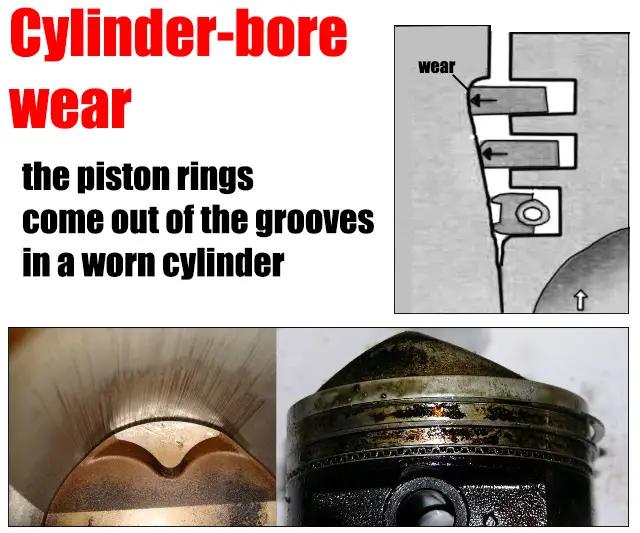
Airborne contaminants that enter the engine include silica (sand), calcium carbonate, aluminum oxide, and various metalite particles. These substances are significantly harder than the steel and aluminum alloys used in engine construction. When drawn into the cylinder, they become embedded in the oil film on cylinder walls, creating an abrasive lapping action against pistons and rings.
The wear pattern is insidious because it accelerates exponentially. Initial contamination creates microscopic scoring on cylinder walls, which traps additional particles, which creates deeper scoring. This positive feedback loop can reduce engine life by 30-50% in severe cases, according to research published by the American Society of Mechanical Engineers (ASME).
Components Most Vulnerable to Contaminant Damage
- Cylinder Walls and Piston Rings: Fine abrasive particles create micro-grooves that increase oil consumption and reduce compression. Ring gaps widen, allowing combustion gases to bypass into the crankcase (blow-by).
- Valve Guides and Stems: Abrasive particles accelerate wear in valve guides, causing increased oil burning and eventual valve sealing problems.
- Bearings: Contaminants that enter the oil system via blow-by gases or direct ingestion cause bearing surface degradation, leading to increased clearances and potential failure.
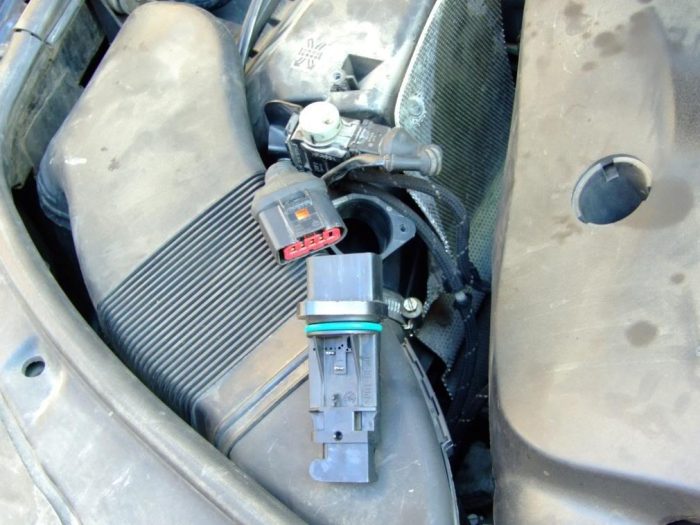
- Mass Airflow Sensor: The delicate hot-wire or hot-film element in the MAF sensor becomes coated with debris, causing inaccurate readings and further exacerbating fuel trim issues.
- Throttle Body: Carbon deposits accelerated by incomplete combustion accumulate on throttle plates and bores, affecting idle control and low-speed driveability.
Oil Contamination and Accelerated Degradation
Contaminants that enter the combustion chamber eventually find their way into the engine oil through blow-by gases and cylinder wall washdown. Once in the oil system, abrasive particles circulate throughout the engine, causing wear on every lubricated surface including camshafts, lifters, timing chains, and oil pump gears.
Oil analysis data from fleet maintenance programs consistently shows elevated silicon and aluminum content in engines operating with compromised intake filtration. These elements serve as reliable indicators of dust ingestion and are often the first quantitative evidence of filtration failure before physical symptoms become apparent.
Check Engine Light and Sensor Problems
Modern engines rely on an array of sensors to maintain optimal operation. A restricted intake element can trigger various diagnostic trouble codes (DTCs) and illuminate the check engine light (CEL/MIL), often leading to expensive diagnostic procedures when the root cause is simply a clogged filtration element.
Common Diagnostic Trouble Codes
The following codes are frequently associated with intake restriction and the resulting air-fuel ratio imbalances:
| DTC Code | Description | Relationship to Intake Restriction |
|---|---|---|
| P0101 | MAF Sensor Range/Performance | Reduced airflow causes MAF readings outside expected range |
| P0171/P0174 | System Too Lean (Bank 1/Bank 2) | ECU detects insufficient fuel relative to measured air |
| P0172/P0175 | System Too Rich (Bank 1/Bank 2) | Over-compensation by fuel trims creates rich condition |
| P0299 | Turbo/Supercharger Underboost | Compressor cannot achieve target boost due to upstream restriction |
| P0401 | EGR Flow Insufficient | Altered intake vacuum affects EGR valve operation |
| P2263 | Turbo Boost System Performance | Overall boost system unable to meet calibrated targets |
| P0106 | MAP Sensor Range/Performance | Manifold pressure readings inconsistent with expected values |
The Diagnostic Cascade Problem
One of the most frustrating aspects of intake restriction for both vehicle owners and technicians is the diagnostic cascade effect. A single root cause — a clogged filtration element — can trigger multiple seemingly unrelated trouble codes. Without systematic troubleshooting that begins with the basics, technicians may chase expensive sensor replacements or ECU recalibrations that fail to resolve the underlying issue.
A disciplined diagnostic approach should always begin with visual inspection of the intake system. Checking the condition of the filtration element takes less than five minutes on most vehicles and costs nothing. Yet industrydata suggests that 15-20% of check engine light diagnoses involving the codes listed above could be resolved simply by replacing the intake element — saving hundreds of dollars in unnecessary parts and labor.
Sensor Contamination and Failure
Beyond triggering false codes, a degraded filtration element allows fine particulate matter to reach sensitive electronic sensors. The mass airflow sensor is particularly vulnerable because it sits directly in the intake air stream downstream of the element. Contamination of the MAF sensor's hot-wire or hot-film sensing element causes it to under-report airflow, leading the ECU to deliver insufficient fuel and creating a lean operating condition.
Long-Term ECU Adaptation Issues
Modern engine management systems continuously adapt fuel delivery through learned fuel trim values. When operating with a restricted intake for extended periods, the ECU's long-term fuel trim (LTFT) shifts significantly from baseline to compensate for reduced airflow. Even after installing a new element, it may take dozens of drive cycles for the ECU to fully relearn optimal fuel trim values.
In some cases, technicians recommend performing an ECU reset after element replacement to accelerate the relearning process. This forces the system to rebuild its adaptive memory from scratch using the now-correct airflow data, restoring optimal fuel delivery more quickly than waiting for gradual adaptation.
How to Know When an Air Filter Needs Replacement
Recognizing the clogged air filter symptoms early prevents the cascade of performance issues described above. While manufacturer-recommended replacement intervals provide a baseline, actual service life varies dramatically based on operating conditions, environment, and driving patterns.
Visual Inspection Guidelines
The most reliable assessment method remains direct visual inspection. Remove the element from its housing and hold it up to a strong light source. A serviceable element will allow light to pass through the media evenly. An element requiring replacement will appear uniformly dark with little or no light transmission, particularly in the central areas where airflow concentration is highest.
Color alone is not a definitive indicator. An element operating in a dusty environment may appear dirty on the surface while still providing adequate filtration and airflow. Conversely, an element that appears relatively clean may have internal media degradation that compromises its function. Always consider both appearance and service hours when making replacement decisions.
Recommended Replacement Intervals
| Operating Environment | Passenger Vehicle Interval | Commercial Vehicle Interval | Key Factors |
|---|---|---|---|
| Urban/Suburban (Clean) | 15,000 - 30,000 miles | 25,000 - 40,000 miles | Low dust, paved roads |
| Rural/Agricultural | 10,000 - 15,000 miles | 15,000 - 25,000 miles | Harvest dust, gravel roads |
| Construction/Mining | 5,000 - 10,000 miles | 8,000 - 15,000 miles | Heavy particulate loading |
| Desert/Arid Climate | 7,000 - 12,000 miles | 10,000 - 20,000 miles | Fine sand, wind-blown dust |
| Wildfire-Affected Areas | 3,000 - 8,000 miles | 5,000 - 12,000 miles | Ash, soot, heavy particulates |
For those living in regions prone to seasonal wildfires, understanding air filter options designed for wildfire smoke protection becomes especially important. High-capacity elements with activated carbon layers provide superior protection during smoke events while maintaining acceptable airflow characteristics.
Monitoring Tools and Indicators
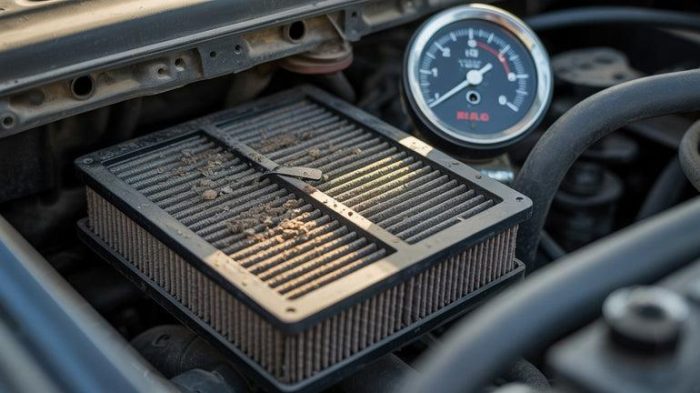
- Restriction Gauges: Mechanical gauges mounted on the intake housing display maximum recorded vacuum. When the indicator reaches the red zone (typically 20-25 inches of water), replacement is required.
- Electronic Monitoring: Advanced fleet management systems track intake restriction trends over time, enabling predictive maintenance scheduling based on actual element loading rates.
- OBD-II Data: Monitoring MAF sensor readings and fuel trim values through an OBD-II scanner provides indirect evidence of intake restriction. Declining MAF values at consistent throttle positions indicate progressive element loading.
- Differential Pressure Sensors: Some heavy-duty applications use dedicated sensors measuring pressure drop across the element, providing the most accurate real-time condition assessment.
For those living in regions prone to seasonal wildfires, understanding air filter options designed for wildfire smoke protection becomes especially important. High-capacity elements with activated carbon layers provide superior protection during smoke events while maintaining acceptable airflow characteristics.
Seasonal and Environmental Considerations
How often to change home air filter systems follows predictable seasonal patterns, and vehicle intake elements behave similarly. Spring pollen seasons, autumn leaf debris, winter road salt dust, and summer construction activity all increase particulate loading rates. Operators should adjust inspection frequency based on seasonal conditions rather than relying solely on mileage-based intervals.
Vehicles frequently operating behind other traffic (convoy driving, rush-hour commuting) ingest significantly more particulate matter from exhaust emissions and tire debris than those operating in clean-air conditions. Similarly, vehicles parked outdoors accumulate debris in their intake systems even when not operating, as wind-blown dust settles into exposed intake ducting.
Choosing the Right Replacement Element
Not all replacement filtration elements deliver equivalent performance. The market offers a range of options from basic economy replacements to premium high-performance elements, each with distinct characteristics suited to different applications and operating conditions.
Filtration Media Types Compared
The debate between HEPA air filter vs regular air filter performance often arises in discussions about intake filtration, though true HEPA-rated media is typically reserved for cabin air systems rather than engine intake applications. Engine elements must balance filtration efficiency against airflow resistance — a tradeoff that HEPA media resolves too heavily in favor of filtration for engine use.
| Media Type | Filtration Efficiency | Airflow Resistance | Service Life | Best Application |
|---|---|---|---|---|
| Cellulose (Paper) | 95 - 99% | Moderate | Standard | Normal passenger vehicle use |
| Synthetic Blend | 97 - 99.5% | Low-Moderate | Extended | Mixed driving conditions |
| Nanofiber Technology | 99.5 - 99.9% | Low | Extended | Severe duty, dusty environments |
| Oiled Cotton Gauze | 92 - 98% | Very Low | Reusable (cleanable) | Performance applications |
| Foam/Pre-Filter | 80 - 95% | Very Low | Reusable (cleanable) | Off-road, supplemental use |
Quality Considerations and Standards
When selecting a replacement element, look for products tested to recognized industry standards including ISO 5011 (which defines test procedures for automotive intake elements) and SAE J726. These standards evaluate initial efficiency, dust holding capacity, and restriction characteristics under controlled conditions.
Premium elements from reputable suppliers undergo rigorous quality control including burst pressure testing, media uniformity verification, and seal integrity assessment. Economy elements may use lower-grade media, thinner pleat counts, or inferior sealing materials that allow bypass leakage — effectively negating the filtration function entirely. Explore options by product category brand to find trusted manufacturers with proven performance records.
Subscription Services and Maintenance Planning
Many vehicle owners wonder whether an air filter subscription service worth it investment makes sense for their situation. These services deliver replacement elements at predetermined intervals, ensuring timely replacement without requiring owners to remember maintenance schedules. For fleet operators managing multiple vehicles, subscription programs simplify procurement and help ensure consistent maintenance across the fleet.
The value proposition depends on individual circumstances. High-mileage drivers, fleet operators, and those in harsh environments typically benefit most from automated delivery programs. Casual drivers with low annual mileage may find that standard retail purchases better match their actual replacement needs.
The Diagnostic and Troubleshooting Process
When engine performance issues arise, a systematic approach to diagnosis prevents wasted time and money. The intake filtration system should be among the first items checked in any performance complaint investigation due to its simplicity, low cost, and high frequency as a root cause.
Step-by-Step Diagnostic Approach
Follow this structured process when investigating reduced engine efficiency or other performance concerns potentially related to intake restriction:
- Visual Inspection: Remove and examine the filtration element. Look for heavy contamination, physical damage, moisture saturation, or evidence of bypass (clean streaks indicating unfiltered air paths).
- Restriction Measurement: If available, check the intake restriction gauge or use a manometer to measure pressure drop across the element at idle and under load.
- Scan Tool Diagnosis: Connect an OBD-II scanner to check for stored trouble codes. Record MAF sensor readings, fuel trim values, and boost pressure data (if applicable).
- Intake Ducting Inspection: Examine all ducting between the element and throttle body for cracks, loose clamps, or deteriorated seals that might allow unfiltered air entry.
- Housing Seal Verification: Ensure the element housing is properly sealed with no gaps around the element sealing surfaces. Check that the housing is free of debris in the clean-air side.
- Comparative Testing: Install a known-good element and perform a road test comparing performance, fuel consumption, and sensor readings against the suspect element.
Common Misdiagnoses to Avoid
Technicians and vehicle owners frequently misattribute symptoms of intake restriction to other, more expensive causes. The following conditions are commonly diagnosed before checking the intake element:
- Fuel pump weakness or failing fuel injectors (when the actual cause is rich operation from reduced airflow)
- Catalytic converter failure (when the actual cause is excess soot from incomplete combustion)
- Turbocharger failure (when reduced performance stems from upstream restriction, not turbo mechanical issues)
- MAF sensor failure (when the sensor is reading correctly but reporting low values due to actual low airflow)
- Engine mechanical wear (when compression tests reveal low numbers due to accelerated ring wear from contaminant ingestion)
For detailed diagnostic procedures and troubleshooting flowcharts, visit our technical support resource library, which provides application-specific guidance for various engine platforms.
Preventive Maintenance Best Practices
Establishing a proactive maintenance routine for the engine's intake system delivers returns far exceeding the modest investment required. The following practices represent industry best standards for maximizing engine protection and performance.
Developing a Maintenance Schedule
Rather than relying solely on manufacturer-recommended intervals, develop a customized maintenance schedule based on actual operating conditions. Document element condition at each inspection to establish loading rate trends specific to your application. This data-driven approach enables predictive replacement before performance degradation occurs.
For fleet operations, centralizing element condition data across all vehicles reveals patterns related to routes, seasons, and driver behavior. This intelligence enables proactive inventory management and scheduled replacements during planned downtime rather than reactive responses to performance complaints.
Pre-Filter and Intake System Enhancements
In severe-duty applications, consider supplemental filtration measures to extend primary element life and enhance protection:
- Pre-Cleaners: Centrifugal or inertial pre-cleaners remove large particles before they reach the primary element, extending service life by 2-4x in dusty environments.
- Intake Snorkels: Elevated intake points draw air from above vehicle-level dust clouds, reducing particulate loading significantly.
- Rain Caps and Debris Screens: Simple protective measures prevent large debris, water, and insects from entering the intake system.
- Sealed Intake Housings: Upgrading from open-style housings to fully sealed units prevents dust ingestion through housing joints during element replacement.
Selecting the right system configuration depends on your specific application. Browse options by product category system to find filtration solutions matched to your operating environment.
Record Keeping and Trend Analysis
Maintaining detailed records of element replacements, condition observations, and associated performance metrics creates valuable maintenance intelligence. Key data points to track include:
- Date and mileage/hours at each replacement
- Element condition at removal (photographing is ideal)
- Fuel economy trends between replacements
- Any associated trouble codes or performance complaints
- Operating environment notes (construction zones, wildfire events, seasonal changes)
- Oil analysis results showing silicon and aluminum trends
Real-World Case Studies
The following examples from actual fleet operations demonstrate the tangible financial and operational impact of intake filtration management — both the costs of neglect and the benefits of proactive maintenance programs.
Case Study: Long-Haul Trucking Fleet
A regional trucking company operating 75 Class 8 tractors experienced a pattern of declining fuel economy and increasing turbocharger failures over an 18-month period. Initial investigations focused on fuel quality, driver behavior, and engine mechanical condition. After extensive and expensive diagnostic work, the root cause was traced to a procurement change that had substituted economy-grade intake elements with inferior dust-holding capacity.
After reverting to premium filtration elements and implementing a condition-based replacement program, the fleet documented:
- 8.3% improvement in average fleet fuel economy
- 73% reduction in turbocharger warranty claims over the following year
- Estimated annual savings of $312,000 in fuel costs alone
- Reduced DPF regeneration frequency by 40%, further improving fuel efficiency
This cooperative case illustrates how even experienced fleet operations can overlook filtration quality as a significant performance variable.
Case Study: Construction Equipment Fleet
A construction company operating in arid conditions experienced chronic engine failures in their excavator and loader fleet, with average engine life falling 35% below manufacturer projections. Oil analysis consistently showed elevated silicon levels indicating dust ingestion, despite regular element replacement at recommended intervals.
Investigation revealed that the recommended intervals were calibrated for moderate conditions and proved inadequate for the extreme dust loading encountered on their sites. Implementing restriction-based replacement monitoring (using differential pressure gauges) resulted in elements being replaced 2-3x more frequently but reduced engine failures by 80% and extended average engine life to within 10% of manufacturer projections.
Case Study: Municipal Vehicle Fleet
A city public works department managing 200+ vehicles of various types implemented a comprehensive intake filtration management program after analysis revealed that 22% of their annual check engine light repair costs were ultimately traced to restricted or failed intake elements. The program included standardized inspection protocols, condition-based replacement criteria, and quality-controlled element procurement.
First-year results showed a 31% reduction in unscheduled maintenance events related to engine performance complaints, a 12% improvement in fleet-wide fuel economy, and estimated annual savings exceeding $180,000 in combined fuel and repair costs. Best air filter for allergies 2026 considerations also factored into their cabin filtration upgrades for operator health protection during seasonal pollen events.
Selecting a Reliable Filtration Partner
The quality of replacement elements directly impacts all the performance and longevity factors discussed throughout this article. Partnering with a supplier who provides consistent quality, broad application coverage, and technical support ensures optimal results from your maintenance program.
What to Look for in a Supplier
When evaluating filtration element suppliers, consider the following criteria that separate premium partners from commodity vendors:
- Application Coverage: Comprehensive catalog covering your specific vehicle and equipment models with cross-reference data for easy identification.
- Technical Support: Access to filtration engineers who can recommend optimal solutions for unusual operating conditions or performance requirements.
- Consistent Supply: Reliable inventory management and logistics to prevent stockouts that might force use of inferior alternatives.
- Warranty Backing: Confidence in product quality demonstrated through meaningful warranty coverage against defects.
Getting Started with a Filtration Assessment
Whether you operate a single vehicle or manage a large fleet, optimizing your intake filtration strategy begins with understanding your specific operating conditions and requirements. A professional filtration assessment evaluates your current maintenance practices, identifies opportunities for improvement, and recommends solutions tailored to your environment and performance goals.
Ready to discuss your filtration requirements with an experienced team? Contact us for a consultation on selecting the right products and maintenance approach for your application. Our technical team can analyze your operating conditions and recommend optimal filtration solutions that balance protection, performance, and cost-effectiveness.
Conclusion
The engine's intake filtration system represents one of the simplest yet most consequential maintenance items on any vehicle or piece of equipment. As this analysis demonstrates, a contaminated element creates a cascade of negative effects spanning immediate performance loss, increased fuel consumption, accelerated mechanical wear, emissions non-compliance, sensor failures, and potentially catastrophic turbocharger damage.
The economics are unambiguous: the cost of regular element replacement is negligible compared to the combined expense of wasted fuel, premature component failure, and unscheduled downtime. Whether managing a personal vehicle or an entire commercial fleet, prioritizing intake system maintenance delivers measurable returns in performance, reliability, and operating costs.
Implement condition-based monitoring, select quality replacement elements from trusted suppliers, and maintain records that enable continuous improvement of your maintenance program. These straightforward practices protect your engine investment and ensure it delivers optimal performance throughout its intended service life.


