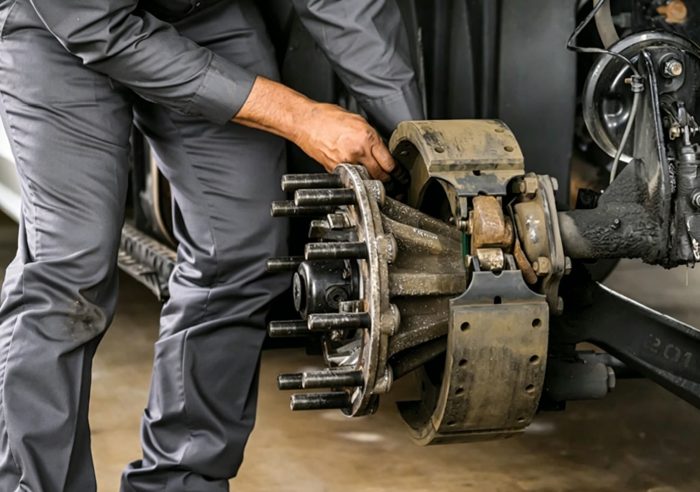
7 Signs Your Truck ABS Sensor Is Failing

Introduction

Modern heavy-duty trucks rely on advanced braking technology to ensure safety under demanding operating conditions. From long-haul highways to rugged construction sites, the Anti-lock Braking System (ABS) is essential for maintaining vehicle stability and control. Central to this system is the ABS Sensor, a small but crucial component that monitors wheel speed and transmits this data to the ABS control module.

The ABS Sensor continuously measures rotational speed at each wheel and communicates with the truck's braking control system. A malfunctioning sensor can compromise braking efficiency, traction control, and stability features, creating safety risks for both drivers and cargo. For fleet operators, failing ABS Sensors can lead to longer stopping distances, vehicle instability, and even regulatory non-compliance in regions where ABS systems are required.

This guide provides a comprehensive overview of the seven most common signs that an ABS Sensor is failing. Each section details symptoms, technical causes, practical inspection methods, and preventative measures. To support maintenance and replacement, visit our Technical Support page, and explore our real-world examples on the Customer Success page.

What Does an ABS Sensor Do in a Heavy-Duty Truck?

Wheel Speed Monitoring Principle

The ABS Sensor measures wheel rotation using either magnetic resistance or Hall effect technology. Mounted near the wheel hub, it detects changes in the tone ring teeth and converts rotational movement into an electrical signal. This signal represents real-time wheel speed, which is transmitted to the ABS control module for processing.

Communication With ABS Control Module

The ABS module receives data from all wheel sensors and continuously compares wheel speeds to detect potential lock-up scenarios. If a wheel decelerates faster than expected, the system modulates brake pressure to prevent skidding. Accurate communication is essential; even slight signal inconsistencies can lead to braking performance issues or unintended ABS activation.

Role in Truck Safety Systems

Beyond ABS, wheel speed data is integral to traction control, electronic stability systems, hill-start assistance, and load-sensing brake adjustments. A single faulty ABS Sensor can compromise multiple safety features, reducing vehicle stability and increasing accident risk. For high-quality replacement sensors, check our ABS Sensor products page.

What-Does-an-ABS-Sensor-Do-in-a-Heavy-Duty-Truck

Sign 1: The ABS Warning Light Stays On

How the ABS ECU Detects Failure

The ABS module monitors signals from all wheel sensors. If any sensor provides inconsistent or missing data, the system records a fault code and illuminates the ABS warning light. Drivers may notice this light intermittently or consistently, depending on the severity of the sensor malfunction.

Why the Light Stays On Intermittently

Some ABS Sensor failures are caused by wiring damage, corrosion, or loose connectors. These intermittent faults trigger the warning light only under certain driving conditions, such as high vibration or wet roads. Detecting and repairing these issues early prevents prolonged stress on the braking system.

Driving Risks When Ignored

Ignoring the ABS warning light can compromise emergency braking, especially under slippery conditions or when carrying heavy loads. Drivers may experience wheel lock-up, longer stopping distances, or reduced vehicle control. Fleet operators should follow preventive maintenance procedures and consult our Technical Support page.

Sign 2: Reduced Braking Performance

Loss of Wheel Speed Accuracy

When the ABS Sensor fails, the control module may not correctly detect wheel speed, reducing the system’s ability to modulate hydraulic pressure. This leads to uneven braking or wheel lock-up during emergency stops.

ABS Deactivation Behavior

A malfunctioning sensor can cause partial or full ABS deactivation. While the mechanical brakes remain functional, the anti-lock feature may not engage, reducing stopping efficiency and compromising safety during high-speed braking.

Heavy Load Impact on Braking Distance

For trucks carrying full payloads, the consequences are amplified. Reduced braking efficiency increases stopping distance, raises accident risk, and can lead to trailer instability. Replacement ABS Sensors can be found on our Brand and System pages.

Sign 3: Traction Control Stops Working Properly

How ABS Sensor Data Affects Traction Control

Traction control systems rely directly on wheel speed data provided by the ABS Sensor. When the sensor begins to fail, it sends delayed or inaccurate signals to the ECU, which misinterprets wheel slip conditions. As a result, the system may either overreact or fail to respond when wheel spin occurs.

Wheel Spin Under Real Driving Conditions

Drivers often notice excessive wheel spin during acceleration on wet roads, sandy surfaces, or icy highways. Instead of smoothly transferring torque, the truck may surge or lose traction unpredictably. This is especially dangerous for heavy-duty trucks carrying high loads, where stability is critical for safety.

Stability Risk in Fleet Operations

For long-haul fleets, traction inconsistency increases tire wear and reduces fuel efficiency. More importantly, it affects driver confidence and vehicle predictability. Preventive inspection through our System category can help identify early-stage sensor degradation before failure spreads to other systems.

Sign 4: Unexpected ABS Activation at Low Speeds

Another critical symptom of ABS Sensor failure is unexpected activation of the ABS system at low speeds. In this scenario, the sensor might incorrectly report that one wheel is decelerating too rapidly or even stopped, prompting the ABS module to engage unnecessarily. Drivers may experience pulsations in the brake pedal, audible clicking noises, or slight vibrations while slowing down or maneuvering in tight spaces, such as warehouse yards, loading docks, or parking areas.

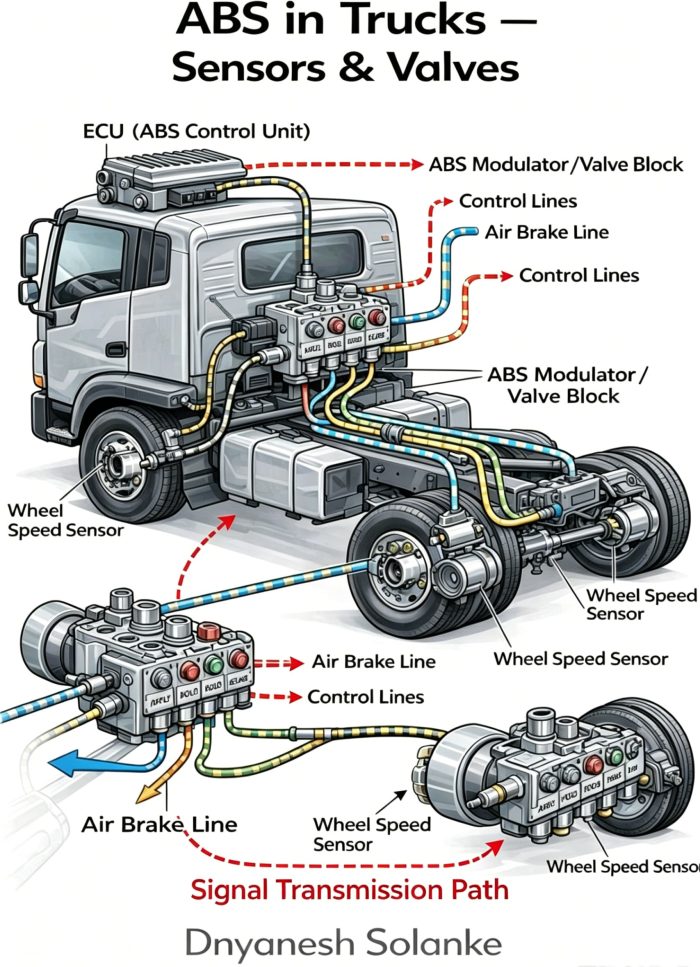
These false activations are often caused by sensor misalignment, debris accumulation, corrosion on the tone ring, or physical damage to the sensor itself. Ignoring these indicators may result in repetitive ABS activations that confuse the driver, reduce braking confidence, and lead to uneven wear of braking components. In worst-case scenarios, it can interfere with low-speed maneuvers that are critical in urban delivery or construction operations.

Routine inspection, cleaning, and calibration of ABS Sensors are essential to prevent this issue. High-quality replacements and guidance for installation can be found on our ABS Sensor page. Additionally, technical advice on sensor maintenance is available through our Technical Support resources.

Sign 5: Wheel Lock-Up During Emergency Braking

A complete failure of an ABS Sensor can have severe consequences during emergency braking. When the ABS control module does not receive valid data from a wheel, it may be unable to prevent wheel lock-up. Wheel lock-up occurs when a tire stops rotating while the vehicle continues moving forward, which drastically reduces steering control and increases the risk of skidding.

For fully loaded heavy-duty trucks, wheel lock-up is particularly dangerous. The sudden loss of wheel rotation can destabilize the trailer, shift cargo, or cause the truck to jackknife. Drivers may notice that the vehicle feels heavier than normal during hard braking, and the steering wheel may resist correction efforts. Frequent wheel lock-up events not only endanger drivers but also accelerate tire wear, brake pad degradation, and potential drivetrain damage.

Fleet managers must prioritize early detection and replacement of faulty ABS Sensors. Proper inspection includes checking the sensor, tone ring, wheel bearings, and associated wiring. For reliable replacement options, see our ABS Sensor products catalog. Our Technical Support page provides detailed guidance on diagnosing and preventing wheel lock-up issues.

Sign 6: Poor Stability on Wet or Slippery Roads

When an ABS Sensor begins to fail, one of the most noticeable impacts appears during driving on wet, icy, or loose road surfaces. Modern heavy-duty trucks rely heavily on accurate wheel speed data to maintain stability through ABS and electronic stability control systems. When sensor signals become inconsistent or delayed, the system can no longer correctly interpret wheel slip conditions, which leads to reduced vehicle stability.

Drivers often describe this condition as a “floating” or “loose” feeling when driving at highway speeds in rain or snow. The truck may still respond to steering inputs, but the precision and confidence normally provided by stability systems are noticeably reduced. In long-haul operations, especially for trucks carrying uneven or shifting cargo, this instability can become a serious safety concern. In extreme cases, minor steering corrections may result in overcompensation, increasing the risk of lane departure.

From a technical perspective, this issue occurs because stability control systems rely on synchronized data from all wheel speed sensors. If even one ABS Sensor provides incorrect signals, the system’s algorithm becomes less reliable. This is why preventive maintenance is critical. Fleet operators should include ABS diagnostics as part of seasonal inspections, especially before winter operations or rainy seasons. More maintenance guidance is available on our System page.

Sign 7: Multiple Dashboard Warning Lights Appear

A failing ABS Sensor rarely affects only one system. Because wheel speed data is shared across multiple electronic control systems, a single sensor failure can trigger several warning lights simultaneously on the dashboard. These may include ABS warning lights, traction control indicators, electronic stability control alerts, and even general brake system warnings.

When multiple warning lights appear at the same time, it usually indicates that the vehicle has lost confidence in one or more wheel speed signals. In modern trucks, electronic control units are designed to enter a protective mode when data becomes unreliable. While this helps prevent further system damage, it also reduces vehicle performance and safety features.

Drivers may also notice that cruise control becomes unavailable or that certain automated driving assistance features are disabled. This is because these systems depend on consistent wheel speed data to function properly. Ignoring these warnings can lead to increased downtime, higher repair costs, and potential safety risks during long-distance transport.

To properly diagnose the issue, technicians must perform a full ABS system scan rather than replacing parts blindly. This includes checking wiring harnesses, connectors, wheel bearings, and tone rings in addition to the sensor itself. Technical troubleshooting steps are available through our Technical Support page.

What Causes ABS Sensor Failure? (Extended Technical Analysis)

The ABS Sensor operates in one of the harshest environments on a heavy-duty truck. Unlike many electronic components, it is directly exposed to road debris, moisture, vibration, temperature fluctuations, and mechanical stress. Over time, these environmental factors gradually degrade sensor performance.

One of the most common causes of failure is contamination. Dirt, mud, and metallic particles from brake wear can accumulate around the sensor tip or tone ring. This buildup interferes with signal generation and leads to inconsistent readings. In regions where trucks operate in winter conditions, road salt can accelerate corrosion, damaging both the sensor housing and electrical connectors.

Another major factor is wiring degradation. Heavy-duty trucks experience constant vibration during operation, especially on rough roads or construction sites. Over time, this vibration can cause wiring insulation to crack or connectors to loosen. Even minor electrical interruptions can result in intermittent sensor failure, which is often more difficult to diagnose than complete failure.

Mechanical wear of wheel bearings and tone rings is also a critical contributor. When wheel bearings begin to loosen, the gap between the sensor and tone ring changes, affecting signal accuracy. Similarly, cracked or missing teeth on the tone ring can distort wheel speed readings, leading to false ABS activation or warning lights.

Understanding these root causes is essential for long-term reliability. Rather than simply replacing the sensor, technicians should inspect the entire wheel hub assembly to ensure system integrity. Real-world fleet repair cases demonstrating these failures can be found on our Customer Success page.

Preventive Measures to Extend Component Life

  • Inspect wiring harnesses and connectors during every brake service interval
  • Apply dielectric grease to connector pins to prevent moisture intrusion
  • Maintain proper air gap between the sensor tip and tone ring (consult manufacturer specs)
  • Replace any tone ring showing cracked, missing, or worn teeth
  • Route replacement wiring away from heat sources and moving suspension components

These steps take minimal time during scheduled service but can double or triple the operational lifespan of the speed-monitoring components on each wheel.

When to Act: A Decision Framework

Not every symptom demands immediate action, but some combinations should send you straight to the shop. Use this framework to prioritize your response.

Symptom SeverityIndicators PresentRecommended Action
LowIntermittent code, no drivability changeSchedule inspection within 2 weeks
MediumPersistent warning lamp, pedal pulsationDiagnose within 3–5 days
HighMultiple system warnings, longer stoppingStop driving until repaired

How to Diagnose a Faulty ABS Sensor (Professional Method)

Diagnosing an ABS Sensor issue requires a structured approach rather than guesswork. The first step is always a visual inspection. Technicians should examine the sensor body, wiring harness, and connectors for signs of physical damage, corrosion, or loose fittings.

The next step involves using a diagnostic scan tool compatible with heavy-duty truck ABS systems. This tool retrieves fault codes stored in the ABS control module and helps identify which wheel sensor is malfunctioning. However, fault codes alone are not always sufficient, as they may be triggered by related issues such as wiring faults or tone ring damage.

After identifying the affected wheel, technicians typically perform resistance and voltage testing using a multimeter. These tests help determine whether the sensor is generating proper signals. Any abnormal reading may indicate internal sensor failure.

Finally, mechanical inspection of the wheel hub assembly is required. This includes checking for excessive bearing play, inspecting the tone ring for cracks or rust, and ensuring correct sensor alignment. Only after completing all these steps should the sensor be replaced.

For detailed technical guidance and troubleshooting procedures, fleet operators can refer to our Technical Support resources.

How to Prevent ABS Sensor Problems (Fleet Maintenance Strategy)

Preventing ABS Sensor failure is significantly more cost-effective than repairing breakdowns after they occur. The most effective strategy is implementing regular inspection intervals as part of routine fleet maintenance schedules.

During brake service, technicians should clean the sensor area to remove dirt, dust, and metallic debris. Special attention should be given to trucks operating in mining, construction, or winter road conditions, where contamination levels are significantly higher.

Protecting wiring harnesses is equally important. Cable ties, protective sleeves, and proper routing can reduce vibration damage and extend sensor lifespan. Additionally, wheel bearing maintenance plays a crucial role in ensuring stable sensor operation.

Using high-quality replacement parts is another critical factor. Low-quality sensors may provide inconsistent signals or fail prematurely, leading to repeated downtime. For reliable replacement options, explore our ABS Sensor products page.

How-to-Prevent-ABS-Sensor-Problems

Conclusion

The ABS Sensor is a small but essential component that directly affects braking performance, traction control, and overall vehicle safety in heavy-duty trucks. When it begins to fail, the symptoms may appear gradually, but the impact on safety can be significant. From dashboard warning lights to wheel lock-up and stability issues, ignoring early signs can lead to costly repairs and increased operational risks.

By understanding the seven key warning signs and implementing proper diagnostic and maintenance procedures, fleet operators can significantly improve vehicle reliability and safety. High-quality replacement sensors, combined with regular inspections, ensure long-term performance and reduced downtime.

For product inquiries or technical support, please visit our Contact Us page or explore our full product ecosystem through the Homepage.

JINAN METTLEAD AUTO SALES CO.LTD.

SCAN CODE AND TALK TO US DIRECTLY

WhatsApp: +86 18653162432

Email:sinotruckctb@163.com

WeChat: +86-18653162432

+86-18653162432

Telegram: +86-18653162432

WhatsApp

WeChat

Telegram

LEAVE A MESSAGE FOR ANY QUESTIONS