
Introduction
Every heavy-duty diesel engine relies on precise, consistent fuel delivery to sustain stable power, reliable fuel economy, and long-term mechanical durability. While many truck owners focus on major engine service parts, the tiny fuel injector nozzle often flies under the radar despite its outsized impact on overall engine performance.
Even minor wear, carbon buildup, or slight sealing defects in this small precision component can disrupt the entire combustion process. This is why recognizing bad fuel injector nozzle symptoms early makes all the difference between routine maintenance and costly engine repairs.
Most fleet technicians and truck drivers prioritize injector assemblies, fuel pump servicing, and regular oil changes during scheduled maintenance. Still, the delicate nozzle tip rarely gets inspected unless obvious engine problems surface.
What many operators do not realize is just how harsh the operating environment is for injector nozzles. These small parts endure extreme high fuel pressure, repeated thermal cycling from engine heat, constant combustion exposure, and tiny abrasive particles present in standard road diesel every single day.
Over thousands of running hours, these harsh conditions gradually wear down nozzle surfaces, build up stubborn carbon deposits, block micro spray holes, and create slow internal leaks. Unlike sudden mechanical failures that trigger immediate fault codes, nozzle degradation progresses slowly and subtly over time.
Early warning signs are incredibly easy to dismiss. Most common nozzle-related issues get misdiagnosed as turbo lag, air intake restrictions, sensor malfunctions, or regular engine wear and tear from high-mileage operation.
Unfortunately, putting off nozzle inspections and minor repairs only lets small issues escalate into severe, expensive problems. Wasted fuel, diminishing engine torque, unstable idle operation, and irreversible internal engine damage all stem from unaddressed nozzle faults.
Beyond direct performance loss, faulty injector nozzles create a domino effect of secondary engine and exhaust system issues. Incomplete combustion leads to excess carbon accumulation, cylinder wall abrasion, piston damage, and frequent DPF clogging that disrupts daily truck operation.
For commercial fleets, these overlooked nozzle problems translate directly into higher operational overhead. Unplanned truck downtime, emergency repair bills, shortened engine lifespans, and reduced hauling efficiency all cut into long-term profitability.
This comprehensive guide covers every noticeable symptom of a failing diesel injector nozzle, breaks down all core root causes, walks through professional diagnostic workflows, and shares practical, field-tested repair and prevention strategies.
By the end of this guide, you will confidently spot early nozzle failure signs, accurately diagnose underlying issues, execute proper fixes, and implement maintenance habits that prevent repeated nozzle damage long-term.
What Is a Fuel Injector Nozzle & How It Functions in Diesel Engines
Before troubleshooting nozzle-related engine issues, it helps to understand exactly what this component does and why its precision design matters for diesel engine performance.
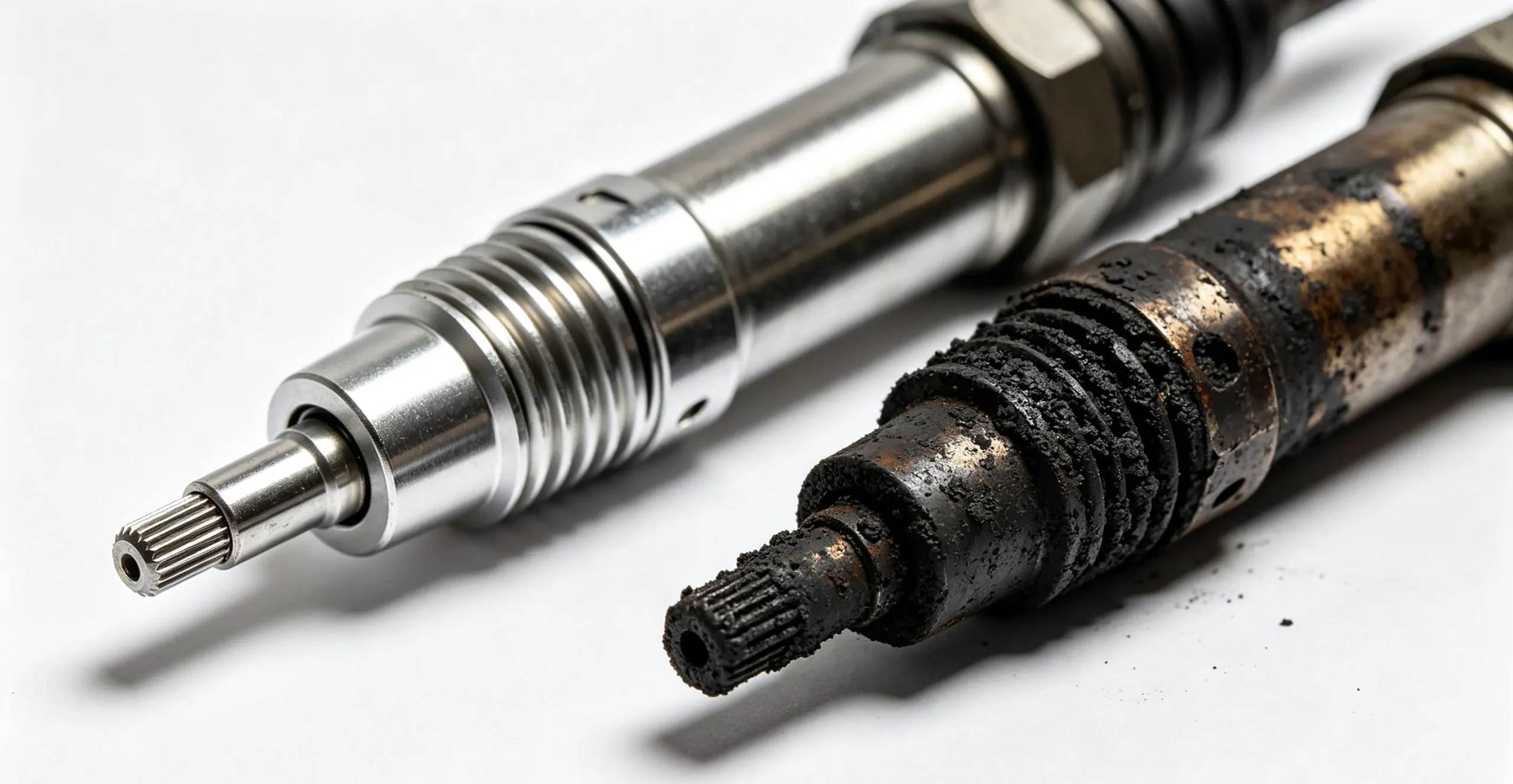
The fuel injector nozzle is the tapered precision tip mounted at the end of every diesel fuel injector unit. It features microscopic spray openings, a polished needle valve assembly, a small calibrated internal spring, and ultra-tight sealing surfaces built to strict OEM tolerances.
Literally every aspect of diesel combustion quality depends entirely on the condition of these tiny components. Even micron-level deformities or carbon blockages are enough to ruin proper fuel atomization and throw off entire engine operation.
During active engine operation, the high-pressure fuel pump pushes compressed diesel fuel toward each individual injector. Consistent system cleanliness from regular heavy-duty truck fuel system cleaning keeps circulating fuel free of heavy deposits that damage nozzle components over time.
Once internal fuel pressure hits the factory-calibrated threshold, the nozzle’s internal needle lifts upward. This opens the micro spray holes to release pressurized diesel fuel directly into the engine’s combustion chamber.
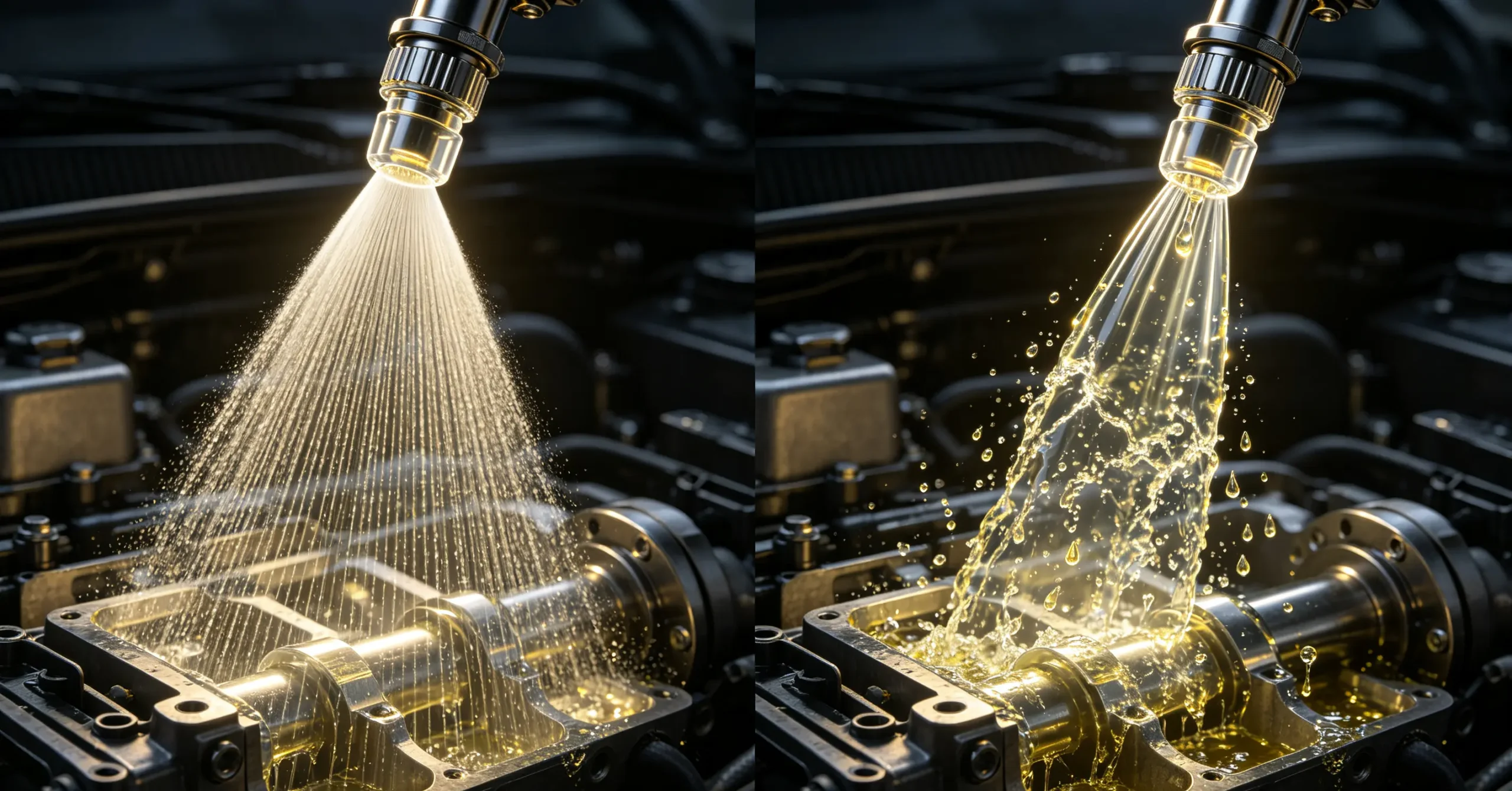
A fully functional nozzle breaks thick liquid diesel into an ultra-fine, evenly distributed mist. This fine fuel mist blends uniformly with hot compressed air inside each cylinder, burning completely to generate steady power and consistent torque output.
In practical terms, a healthy injector nozzle maintains three non-negotiable performance standards for reliable engine function: flawless fuel atomization, steady injection pressure, and zero post-cycle fuel leakage.
Proper atomization ensures every drop of fuel burns efficiently, eliminating unnecessary fuel waste and cutting down on harmful exhaust emissions that burden aftertreatment systems.
Stable injection pressure balances fuel delivery across all engine cylinders, preventing uneven power output, rough running, and persistent engine vibration under load.
Tight post-injection sealing stops residual fuel from dripping into cylinders after each combustion cycle. This prevents tip carbon buildup, wet fouling, and inconsistent fuel delivery on subsequent cycles.
When nozzles become clogged, worn, stuck, or leaky, the entire combustion cycle breaks down. Thick fuel streams, delayed injection timing, post-cycle dripping, and uneven fuel distribution become persistent issues that degrade daily driving performance.
For this reason, many unexplained diesel engine performance issues trace back to neglected nozzle wear. Even when other components test fine, faulty nozzles remain the hidden culprit behind most mild to moderate engine inefficiencies.
Most Common Bad Fuel Injector Nozzle Symptoms (Mild to Severe)
Nozzle failure symptoms develop gradually as carbon buildup accumulates and internal component wear worsens. Early-stage issues stay subtle during light cruising and idle, making them easy to ignore for months.
Still, these symptoms become extremely apparent during hard acceleration, heavy-load hauling, and cold winter starts. Below is a complete breakdown of all common nozzle failure signs, ordered from the earliest mild warnings to critical severe faults for simple field diagnosis.
1. Rough Idle and Persistent Engine Vibration
Rough idle and steady engine vibration are the very first signs of a degrading injector nozzle, often appearing long before smoke, power loss, or fault codes develop.
When one or multiple nozzles fail to spray fuel evenly, engine cylinders receive unbalanced fuel volumes. Some cylinders run lean on fuel while others run rich, creating inconsistent combustion across the engine block.
This uneven combustion leads to fluctuating idle RPM and noticeable engine shaking whenever the truck sits stationary with the engine running. The vibration typically feels subtle at first but grows more pronounced over weeks and months.
Most drivers overlook this issue because the truck still drives normally on the highway. Even so, prolonged unbalanced idle operation accelerates crankshaft bearing fatigue and wears internal engine components prematurely.
If left unaddressed, mild idle vibration consistently progresses into full engine misfires. Professional truck engine rough idle repair protocols always prioritize nozzle inspection first for persistent idle instability that rules out sensor and air system faults.
2. Noticeable Loss of Engine Power and Torque
Diminished engine power and weak pulling torque are classic indicators of poor nozzle atomization caused by wear or carbon blockages.
Worn or clogged nozzles can no longer break liquid diesel into a fine mist. Instead of atomizing evenly, they release large, heavy fuel droplets that cannot burn efficiently inside combustion chambers.
These oversized fuel droplets only partially combust, reducing cylinder compression efficiency and significantly lowering overall engine power output. The result is a noticeable drop in performance across all driving scenarios.
Drivers will feel clear sluggishness during acceleration, with the truck taking far longer to reach cruising speed even with full throttle input.
Performance struggles become even more obvious during uphill climbs and heavy-load hauling. The truck loses its usual pulling strength and requires more throttle to maintain consistent speed.
This power loss worsens steadily as nozzle damage advances. With multiple faulty nozzles, the truck becomes noticeably underpowered and nearly undrivable under maximum load conditions.
3. Unusual Spike in Fuel Consumption
Higher-than-normal fuel usage is one of the most measurable and consistent symptoms of bad injector nozzles, directly tied to poor fuel atomization efficiency.
Only fully atomized fuel converts into usable engine power. Large unatomized fuel droplets either burn incompletely or pass straight through the cylinder as wasted fuel with no performance benefit.
Real-world fleet maintenance data verifies consistent fuel loss trends. A single degraded injector nozzle increases overall fuel consumption by 8% to 15% on a regular running cycle.
When two or more nozzles suffer from clogging or wear, fuel waste can exceed 20% during daily operation. This creates massive cumulative financial losses for long-haul fleets running thousands of miles monthly.
Many fleet managers blame rising fuel costs on driving habits, heavy loads, or road conditions. In practice, degraded injector nozzles are the hidden cause behind most unexplained fuel efficiency drops.
4. Thick Black Exhaust Smoke Under Acceleration and Load
Black exhaust smoke is the most visible and recognizable sign of advanced nozzle failure, signaling severe incomplete combustion from distorted fuel spray patterns.
Faulty nozzles emit thick fuel streams instead of fine mist, leaving excess unburned diesel fuel trapped inside each cylinder during combustion cycles.
This surplus fuel partially burns and creates dense carbon particulate matter, which exits the exhaust system as thick black smoke. The smoke is most prominent during hard acceleration, uphill driving, and full-load cruising.
In later stages of nozzle degradation, black smoke will appear even during steady highway cruising and idle states, confirming significant spray pattern failure.
Consistent black smoke output overloads the truck’s aftertreatment system. It clogs DPF filters rapidly and triggers frequent regeneration errors that disrupt normal operation.
5. Hard Starting and Cold Start Failure
Failing injector nozzles severely compromise cold-start performance, with issues worsening dramatically during cold winter weather and low-temperature environments.
Damaged nozzles cause delayed fuel injection timing and poor atomization. Cold engine conditions already lower compressed air temperatures, which compounds incomplete combustion and makes starting far more difficult.
Instead of firing up instantly, the engine requires multiple cranking attempts to start. It often stutters, sputters, and struggles to hold a stable idle immediately after ignition.
In severe cases, repeated cranking fails to start the engine entirely. This creates costly downtime for logistics and delivery fleets dependent on daily truck operation.
Many mechanics misdiagnose cold-start issues as faulty glow plugs or weak batteries. In many field cases, however, nozzle spray defects are the true underlying cause of persistent hard starting.
6. Intermittent Engine Misfire and Driving Stuttering
Engine misfires develop once nozzle clogging, wear, or leakage reaches moderate to severe levels. For this reason, thorough diesel engine misfire troubleshooting always includes nozzle performance testing as a core diagnostic step.
Faulty nozzles prevent individual cylinders from receiving consistent, properly atomized fuel volumes. Affected cylinders cannot complete full, clean combustion cycles during engine rotation.
The result is intermittent engine stuttering and jerking while driving, most noticeable during partial throttle operation and mid-range acceleration on highways.
Unaddressed misfires eventually trigger official engine fault codes and create gradual wear on cylinder walls, piston rings, and internal engine bearings over time.
With prolonged operation, repeated misfires lead to permanent performance degradation and expensive major engine overhauls that could have been avoided with early nozzle service.
7. Nozzle Tip Leakage and Wet Carbon Accumulation
Internal nozzle wear scratches and deforms the precision needle valve sealing surfaces, eliminating the component’s ability to seal fully after each fuel injection cycle.
Slow residual fuel dripping occurs after injection ends, letting small amounts of unatomized diesel seep into the combustion chamber continuously.
This dripping fuel never burns cleanly. It builds up thick, wet black carbon deposits directly on nozzle tips, unlike dry surface carbon from normal engine operation.
Wet carbon accumulates layer by layer, gradually blocking micro spray holes and worsening existing spray pattern defects with every running hour.
Worse yet, persistent fuel dripping washes away protective lubricating oil on cylinder walls. This creates dry metal-on-metal friction between pistons and cylinders during operation.
This hidden issue is one of the leading causes of premature cylinder scoring and irreversible engine wear in high-mileage heavy-duty diesel trucks.
8. Abnormal Knocking and Ticking Engine Noises
Healthy diesel engines run with a smooth, consistent operational sound. Faulty injector nozzles create distinct, unnatural noises that stand out during active driving.
Uneven fuel spraying and delayed combustion timing create irregular cylinder explosions. These inconsistent combustion events generate sharp knocking and ticking sounds from the engine block.
The abnormal noise grows louder during acceleration and heavy-load operation, while remaining faintly audible during steady cruising speeds.
Many drivers mistake nozzle-related knocking for bad lifters or rod knock. Professional bench testing quickly verifies nozzle defects as the true source of the irregular engine noise.
9. Frequent DPF Clogging and Regeneration Failure
Unburned fuel and excess carbon particles created by faulty nozzles flow directly into the truck’s exhaust aftertreatment system during every drive cycle.
These contaminants overload the DPF filter far beyond its designed capacity, causing rapid clogging and forcing frequent manual regeneration cycles to clear buildup.
In advanced failure cases, the DPF cannot complete regeneration cycles successfully. Most DPF regeneration failure fixes require resolving underlying nozzle faults first to prevent repeated clogging.
Persistent DPF issues trigger engine derates and reduced power modes, creating unplanned downtime and raising routine maintenance costs for fleet operators.
10. Local Cylinder Overheating and Thermal Engine Damage
Incomplete combustion from bad nozzles creates uneven heat distribution inside engine cylinders. Certain cylinder zones develop extreme localized hot spots during regular operation.
These concentrated hot spots gradually raise overall engine operating temperatures, creating subtle overheating even with a fully functional cooling system.
Long-term thermal irregularities cause piston ablation, cylinder wall deformation, and head gasket damage. These thermal issues require major, costly engine repairs to resolve completely.
Core Root Causes of Injector Nozzle Failure
Injector nozzle damage never happens randomly. Every premature failure traces back to specific fuel quality issues, poor operational habits, or skipped routine maintenance tasks.
Understanding these root causes helps truck owners avoid repeat nozzle failures, extend fuel system lifespan, and maintain consistent engine performance year-round.
1. Low-Quality and Contaminated Diesel Fuel
Substandard, unregulated diesel fuel is the top cause of premature injector nozzle failure across commercial heavy-duty fleets worldwide.
Cheap road diesel often contains high levels of impurities, excess sulfur, wax residue, heavy carbon compounds, and microscopic metal sediment particles that damage precision engine parts.
Under extreme high injection pressure, these hard abrasive particles scratch and erode tiny nozzle spray holes. This gradually destroys factory-calibrated atomization geometry over time.
Additionally, wax and heavy carbon content stick to nozzle surfaces during operation, building up thick deposits that permanently block spray patterns.
Proactive diesel fuel contamination prevention practices remain the most effective way to preserve nozzle condition and maintain consistent engine performance long-term.
2. Overdue Fuel Filter Replacements
Fuel filters serve as the primary line of defense against dirt, sediment, water, and abrasive particles in diesel fuel, protecting delicate injector and nozzle components.
When operators exceed factory filter replacement intervals, filter media becomes fully saturated. It loses trapping ability and lets harmful contaminants pass freely into the fuel system.
Unfiltered abrasive particles travel directly into injector nozzles, causing gradual internal scratching, surface wear, and degraded sealing performance.
Strict adherence to scheduled diesel fuel filter maintenance eliminates over 60% of all preventable nozzle failures in heavy-duty diesel engines.
3. Fuel System Water Contamination
Water mixing with diesel fuel poses severe risks to precision nozzle components, commonly stemming from tank condensation, faulty fuel tanks, or contaminated fuel deliveries.
Water causes internal nozzle needle rust, surface corrosion, and mechanical sticking. It also strips diesel fuel of its natural lubricating properties required for smooth nozzle operation.
Without proper fuel lubrication, internal nozzle parts experience dry friction during every injection cycle. This accelerates wear and creates permanent spray pattern defects over time.
4. Excessive Unnecessary Engine Idling
Prolonged engine idling is an often-overlooked cause of progressive carbon buildup on injector nozzle tips and spray holes.
During idle operation, engine combustion temperatures stay relatively low. Fuel cannot achieve full combustion under these low-heat conditions, leaving partial-burn residue behind.
Soft carbon deposits accumulate layer by layer on nozzle tips and micro spray holes during repeated idle cycles, gradually restricting fuel flow.
Eventually, built-up carbon blocks spray openings entirely, distorting atomization and triggering the full range of nozzle failure symptoms.
5. Continuous Full-Load and Overload Operation
Heavy-duty trucks frequently run at maximum load for extended highway stretches, placing extreme sustained stress on fuel injector assemblies.
Full-load operation forces nozzles to operate at peak pressure and peak temperature continuously for hours at a time. Long-duration high heat causes metal fatigue in precision nozzle components.
Fatigued nozzle metal deforms slightly over time, enlarging or warping spray holes and breaking uniform fuel spraying geometry.
This type of thermal deformation is permanent and cannot be fixed through cleaning, requiring direct nozzle replacement to restore performance.
6. Low-Quality Aftermarket Repairs and Mismatched Nozzles
Many local repair shops install generic aftermarket nozzles to cut service costs, though these non-OEM parts rarely meet factory precision tolerances.
Generic nozzles feature inconsistent opening pressure, incorrect spray angles, and poor sealing integrity, leading to rapid failure shortly after installation.
Mismatched nozzles also create unbalanced cylinder performance across the engine block, triggering secondary faults that complicate future diagnostics and repairs.
7. Unstable Fuel System Pressure
Aging fuel pumps, worn pressure regulators, and partially clogged fuel lines create inconsistent fuel pressure delivery during engine operation.
Fluctuating pressure cycles stress nozzle internal components repeatedly, weakening internal spring tension and wearing sealing surfaces unevenly.
Over time, chronic pressure instability causes premature nozzle fatigue and irregular fuel injection patterns that degrade combustion quality.
Professional Nozzle Diagnosis Process (Step-by-Step Field Guide)
Many truck owners replace injectors and nozzles blindly without accurate testing, leading to unnecessary repair expenses and unresolved root issues. The following professional workflow ensures precise fault identification every time.
This step-by-step process eliminates guesswork, verifies nozzle health accurately, and confirms exactly which service or replacement parts the engine needs.
Step 1: Loaded Road Test and Fault Code Scanning
Start with a real-world road test under typical load conditions to confirm active symptoms. Pay close attention to idle stability, throttle response, acceleration smoothness, and exhaust smoke behavior.
After road testing, connect a professional diagnostic scanner to pull all active and stored engine fault codes. Document misfire codes, fuel trim deviations, and aftertreatment system errors for reference.
This initial step rules out sensor faults, turbo malfunctions, and air intake restrictions that mimic nozzle failure symptoms, narrowing down the true cause of poor engine performance.
Step 2: Cylinder Balance Performance Testing
Use advanced diagnostic equipment to run a full cylinder balance test. This test measures individual power output for every engine cylinder side by side.
Cylinders with significantly lower power output than others almost always correspond to faulty injector nozzles. This step pinpoints exactly which nozzle requires servicing or replacement.
Step 3: Injector Removal and Visual Inspection
Remove suspect injectors for hands-on visual inspection. Carefully examine nozzle tips for wet carbon buildup, residual fuel dripping, and physical tip deformation.
Wet, sooty nozzle tips and consistent post-idle fuel dripping are clear visual indicators of failed sealing and distorted spray patterns.
Step 4: Bench Testing (Most Accurate Verification Method)
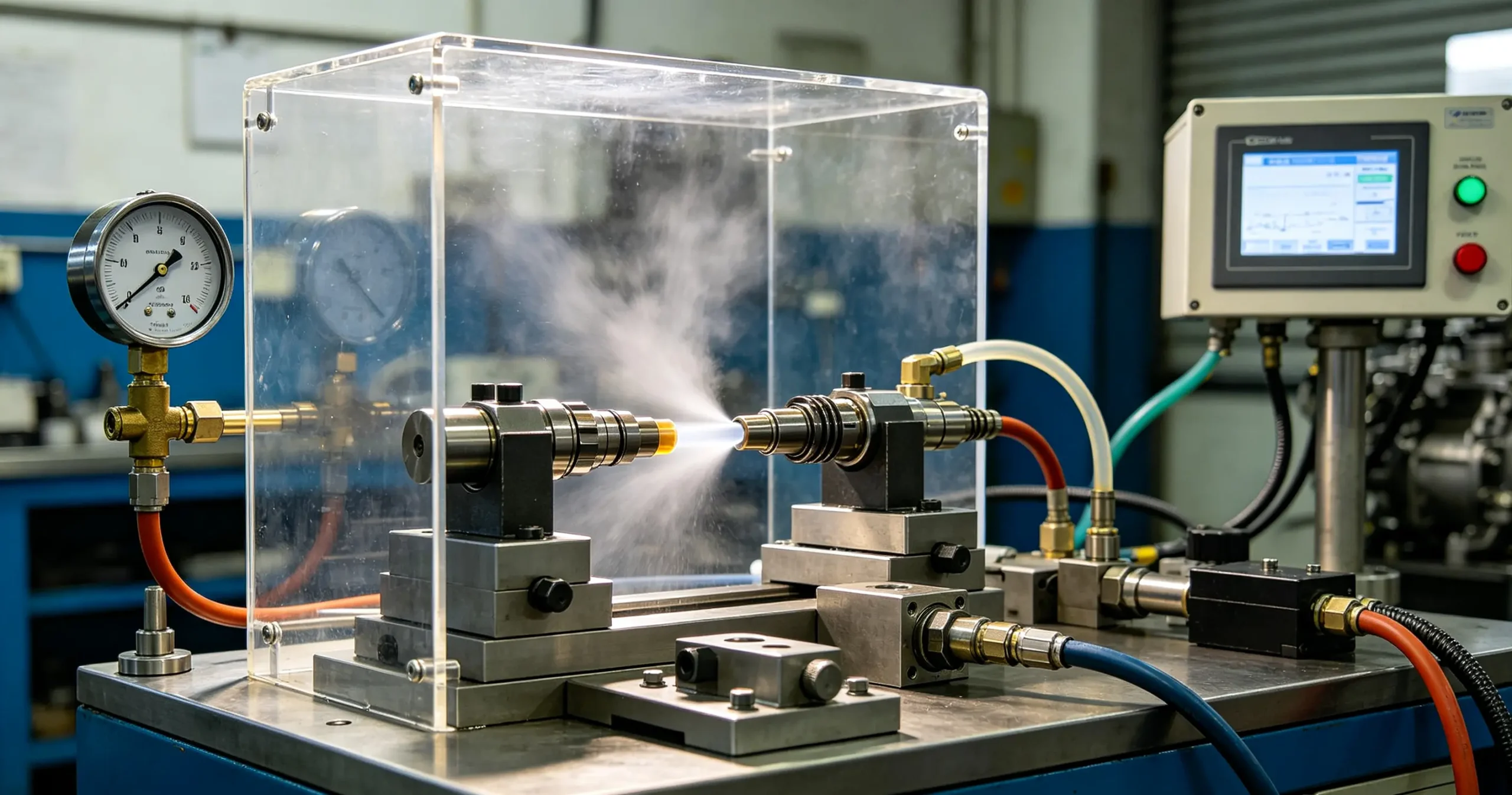
Install removed injectors on a professional test bench for precise numerical performance testing. Rigorous diesel injector bench testing delivers 100% accurate nozzle health data for definitive diagnosis.
Technicians test four critical performance metrics: calibrated opening pressure, spray uniformity, fuel atomization quality, and post-injection sealing integrity.
All test results compare directly to OEM factory specifications. Any deviation from standard tolerances confirms nozzle failure and defines the exact required repair solution.
Effective Solutions for Bad Injector Nozzles (By Damage Severity)
Not all faulty nozzles require full replacement. Matching your repair method to the exact type and severity of damage saves money and prevents repeat failures.
[Insert Image 5: New injector nozzle installation on heavy-duty truck engine]
1. Mild Carbon Clogging: Professional Ultrasonic Cleaning
For early-stage carbon buildup and minor spray hole blockages with zero physical wear or deformation, ultrasonic cleaning is the ideal cost-effective solution.
Industrial ultrasonic cleaning equipment dissolves hardened carbon deposits from microscopic spray holes without damaging precision nozzle geometry or sealing surfaces.
This process fully restores factory spray patterns and atomization performance for minimally clogged nozzles, eliminating symptoms without requiring new parts.
2. Moderate Spray Defects: Direct Nozzle Replacement
Bench testing that confirms distorted spray holes, weakened atomization, or slight sealing degradation requires direct nozzle replacement.
Always install genuine OEM-matched standard nozzles. Generic aftermarket alternatives fail quickly and create unbalanced cylinder performance issues.
New factory-spec nozzles restore precise injection pressure, correct spray angles, and perfect sealing performance to return combustion to factory standards.
3. Severe Internal Wear: Full Injector Overhaul or Replacement
Nozzles with severe internal needle wear, spring fatigue, or permanent pressure loss cannot be fixed with simple nozzle swaps.
In these cases, underlying internal injector component damage persists. A complete injector overhaul or full injector assembly replacement is necessary for full performance recovery.
4. Full Fuel System Cleaning and Maintenance Reset
After repairing or replacing faulty nozzles, complete a full fuel system cleaning to remove residual carbon, sediment, and contaminated fuel from lines and components.
Install brand-new fuel filters and drain degraded diesel fuel to eliminate contamination sources that would otherwise cause repeated nozzle damage.
Long-Term Nozzle Failure Prevention Tips
Consistent daily maintenance habits can double or triple injector nozzle service life, eliminating nearly all common premature failure causes.
Always use high-quality, certified commercial-grade diesel fuel. Avoid unregulated low-cost diesel with high impurity, wax, and sediment content.
Follow factory-recommended service intervals strictly for fuel pre-filter and fine-filter replacement to maintain full fuel system filtration capacity.
Minimize unnecessary prolonged engine idling to reduce carbon deposit formation on nozzle tips and spray holes.
Schedule periodic fuel system carbon cleaning and routine injector performance testing to catch minor degradation early.
Avoid continuous hours of maximum-load high-speed driving to reduce sustained peak-temperature stress on nozzle components.
Complete seasonal fuel system inspections to check for water contamination, line blockages, and pressure irregularities.
Pair regular nozzle maintenance with professional heavy-duty engine performance tuning to keep engine combustion efficient and consistent year-round.
Frequently Asked Questions
1. Can I keep driving with a bad fuel injector nozzle?
Short-distance emergency operation is possible, but long-term driving with faulty nozzles is extremely risky and costly.
Unaddressed nozzle damage causes progressive engine wear, DPF system failure, turbo degradation, and exponential fuel waste. Early inspection and repair always save significant long-term expenses.
2. What is the typical lifespan of diesel injector nozzles?
With premium fuel and strict scheduled maintenance, quality OEM nozzles last between 150,000 and 300,000 running miles.
Poor fuel quality and neglected maintenance shorten nozzle lifespan to under 50,000 miles. Consistent care drastically extends component durability.
3. Is cleaning better than replacing faulty nozzles?
Cleaning only works for pure carbon clogging with no physical wear, deformation, or sealing damage.
Any structural wear, distorted spray holes, or leaky sealing surfaces require full replacement, as cleaning cannot repair permanent mechanical damage.
4. Will bad nozzles cause permanent engine damage?
Yes. Prolonged operation with faulty nozzles leads to cylinder scoring, piston ablation, bearing wear, and irreversible power loss. Early repairs prevent major engine overhauls down the line.
Conclusion
Fuel injector nozzles are small yet indispensable components that define overall diesel engine combustion efficiency and long-term reliability. Most subtle, unexplained engine performance issues trace back to unaddressed nozzle clogging and gradual wear.
Common problems including rough idle, weak acceleration, excessive fuel consumption, and black exhaust smoke all stem from degraded nozzle spray performance and poor atomization.
By learning to spot early bad fuel injector nozzle symptoms, following professional diagnostic workflows, and applying targeted repairs, fleet owners and technicians can restore full engine performance efficiently.
Pairing repairs with consistent preventive maintenance eliminates recurring nozzle faults, cuts operational costs, minimizes unplanned downtime, and extends heavy-duty engine service life significantly.
Mastering nozzle troubleshooting and maintenance is essential for every diesel mechanic and fleet operator aiming to sustain peak engine efficiency and long-term vehicle reliability.


