
Introduction
Every diesel-powered heavy-duty truck depends on consistent engine lubrication to sustain long-haul travel, heavy payloads and repeated high-load operation. Unlike gasoline engines, diesel units generate greater compression heat and mechanical friction. Therefore, clean and stable oil circulation directly defines engine lifespan.
Most truck owners and fleet supervisors focus heavily on oil grade, service intervals and filter replacements. Even so, many overlook the oil filter housing. While small in appearance, this component controls the entire oil filtration workflow. It stabilizes pressure, regulates flow and holds critical safety valves in place.
What many operators do not realize is this: a brand-new oil filter cannot fix problems caused by a defective housing. If the housing leaks, warps, clogs or suffers valve failure, the engine will still face insufficient lubrication, dirty oil circulation and gradual internal damage.
This guide explains exactly how diesel truck oil filter housings function in real-world conditions. It covers structural details, step-by-step oil flow logic, failure symptoms, root causes, professional diagnosis and complete repair workflows. It also shares field-tested maintenance habits that prevent repeat failures. For more system-level truck component knowledge, check our guide on diesel truck engine lubrication system components explained.
What Is an Engine Oil Filter Housing in Heavy-Duty Diesel Trucks?
An engine oil filter housing is a precision-machined metal assembly mounted directly on the diesel engine block. It acts as the fixed base for oil filters and forms sealed passages that guide engine oil into the filtration cycle.
Unlike disposable oil filters, the housing is a permanent engine component. It is designed to endure high temperature, constant vibration and pressurized oil flow throughout the truck’s service life.
Modern heavy-duty trucks often integrate additional features into the housing. These include built-in bypass valves, oil cooler passages, sensor ports and reinforced sealing planes. Such integrated designs save engine space and improve lubrication efficiency.
Many truck maintenance errors happen because technicians confuse filter issues with housing faults. To avoid misdiagnosis, you can review our article about how to distinguish diesel truck filter faults from assembly failures.
Key Components Inside a Diesel Truck Oil Filter Housing
To fully understand how the housing works, it is necessary to break down its internal parts. Every section serves a unique role in stabilizing oil pressure, ensuring filtration and protecting the engine during component aging.
1. Inlet and Outlet Oil Passages
The housing contains precision-cast internal channels. Dirty engine oil enters through the inlet passage after being pumped out from the oil pump. After filtration, cleaned oil exits through the outlet passage and returns to engine friction parts.
These passages have strict size limits. Even minor sludge buildup or internal deformation can slow oil flow. In turn, slow circulation leads to delayed lubrication during startup and insufficient oil supply under load.
2. Integrated Bypass Valve
The bypass valve is the most safety-critical part of the entire housing structure. It serves as a backup oil passage when the filter becomes clogged with carbon, metal shavings or accumulated sludge.
When filter blockage increases pressure resistance beyond the factory threshold, the bypass valve opens automatically. This allows unfiltered oil to continue flowing. Although unfiltered oil offers less protection, it prevents catastrophic engine seizure caused by total oil starvation.
3. Sealing Surfaces and Gasket Grooves
Flat machined surfaces and molded gasket grooves ensure tight sealing between the housing, engine block and oil filter. The rubber gasket fills microscopic gaps and stops pressurized oil from escaping.
Over time, engine heat hardens rubber gaskets. Once elasticity decreases, slow seepage begins. Most oil leaks around the filter area originate from degraded gaskets rather than damaged filters.
4. Filter Mounting Thread and Reinforced Base
The threaded base firmly secures spin-on or cartridge filters. Heavy-duty trucks feature thickened thread structures to resist vibration loosening.
If over-tightened during service, threads can deform. Once the base warps, no new filter or gasket can fully stop leakage.
5. Optional Oil Cooler Ports
Many modern diesel truck engines combine the filter housing with an oil cooling module. Additional ports route oil to the external cooler before filtration. This design stabilizes oil temperature during continuous heavy-load driving.
How an Oil Filter Housing Works: Complete Step-by-Step Oil Flow Process
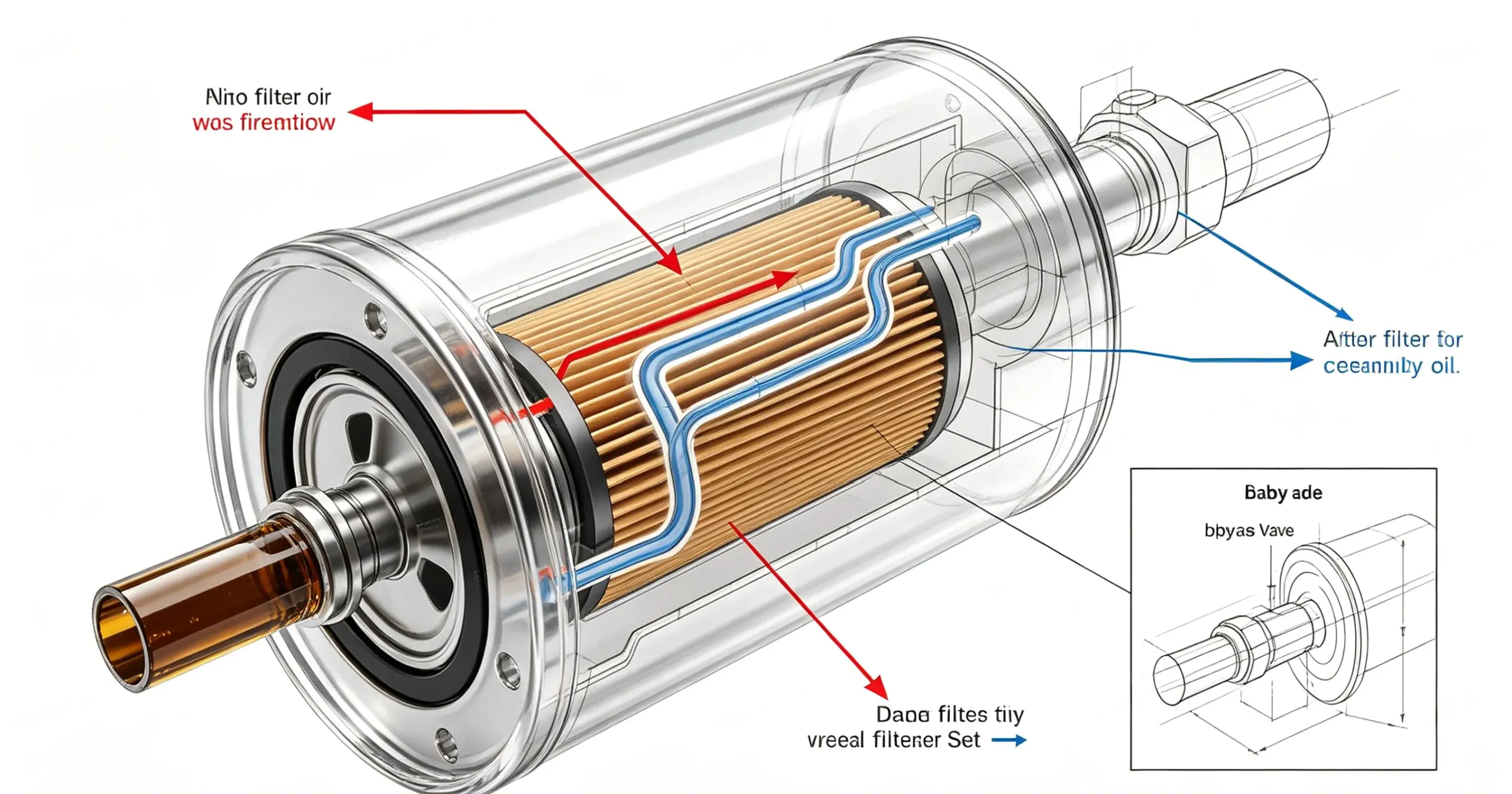
Oil filtration is not a simple one-way flow. The housing controls pressure differences, flow speed and emergency bypass activation. Understanding this process helps technicians accurately diagnose pressure fluctuations and leakage issues.
Step 1: Pressurized oil enters the housing inlet
After engine startup, the oil pump builds consistent hydraulic pressure. It pushes unfiltered engine oil toward the housing inlet channel. At this stage, the oil carries fine carbon particles, metal debris and combustion residue collected inside the engine.
Step 2: Oil distributes evenly across the filter exterior
Once inside the housing, oil spreads uniformly around the outer layer of the filter element. The housing’s internal guiding structure ensures balanced flow. This prevents uneven filter saturation and early clogging.
Step 3: Contaminants get trapped during filtration
As oil penetrates the filter media, solid contaminants adhere to the filter paper. Clean oil converges toward the center tube of the filter. The housing maintains stable pressure so filtration efficiency remains consistent at idle and cruising speeds.
Step 4: Filtered oil exits toward engine lubrication points
Purified oil flows through the housing outlet passage. It travels to the crankshaft, camshaft, piston rings, valve train and other high-friction components. This continuous oil film reduces metal wear and cools heated engine parts.
Step 5: Bypass valve activation during filter overload
After long mileage, filter media accumulates heavy pollutants. Flow resistance increases rapidly. When the pressure difference crosses the safety limit, the bypass valve opens.
This emergency mode guarantees uninterrupted oil flow. However, unfiltered oil accelerates internal engine wear. Therefore, bypass activation always indicates an urgent need for maintenance.
Why a Healthy Oil Filter Housing Is Critical for Diesel Truck Longevity
The oil filter housing acts as the central hub of the engine lubrication system. Every drop of circulating engine oil passes through this assembly during operation. For this reason, its structural integrity directly impacts overall engine reliability.
First and foremost, a functional housing maintains stable oil pressure. Diesel engines rely on precise oil pressure to form protective oil films on moving parts. Even minor internal leakage or channel deformation can cause pressure drops.
Fluctuating oil pressure leads to intermittent lubrication. During heavy-load climbing or highway cruising, insufficient oil supply causes metal-on-metal friction. Over months of operation, this leads to bearing scuffing, camshaft wear and piston ring degradation.
Secondly, a properly working bypass valve prevents sudden engine failure. Many roadside breakdowns occur due to clogged filters and stuck closed bypass valves. Without emergency oil flow, the engine suffers instant oil starvation and permanent damage.
Thirdly, intact housing structures reduce fleet operating costs. Persistent oil leaks waste expensive diesel engine oil. They also attract dust and road grime, which builds up thick sludge layers on engine surfaces. This accumulation traps heat and worsens engine overheating issues.
Finally, consistent filtration performance preserves fuel efficiency. Clean engine oil reduces internal friction, allowing the diesel engine to operate with less resistance. Compromised housing function leads to dirty oil circulation, increased friction and gradual fuel consumption rises. You can learn more about fuel-saving engine maintenance in our heavy-duty diesel truck fuel efficiency maintenance guide.
Common Warning Signs of a Failing Oil Filter Housing
Most housing faults develop gradually. Early warning signs are often subtle and easy to overlook for inexperienced drivers and junior technicians. Catching these symptoms early can avoid costly engine overhauls.
1. Slow oil seepage around filter housing base
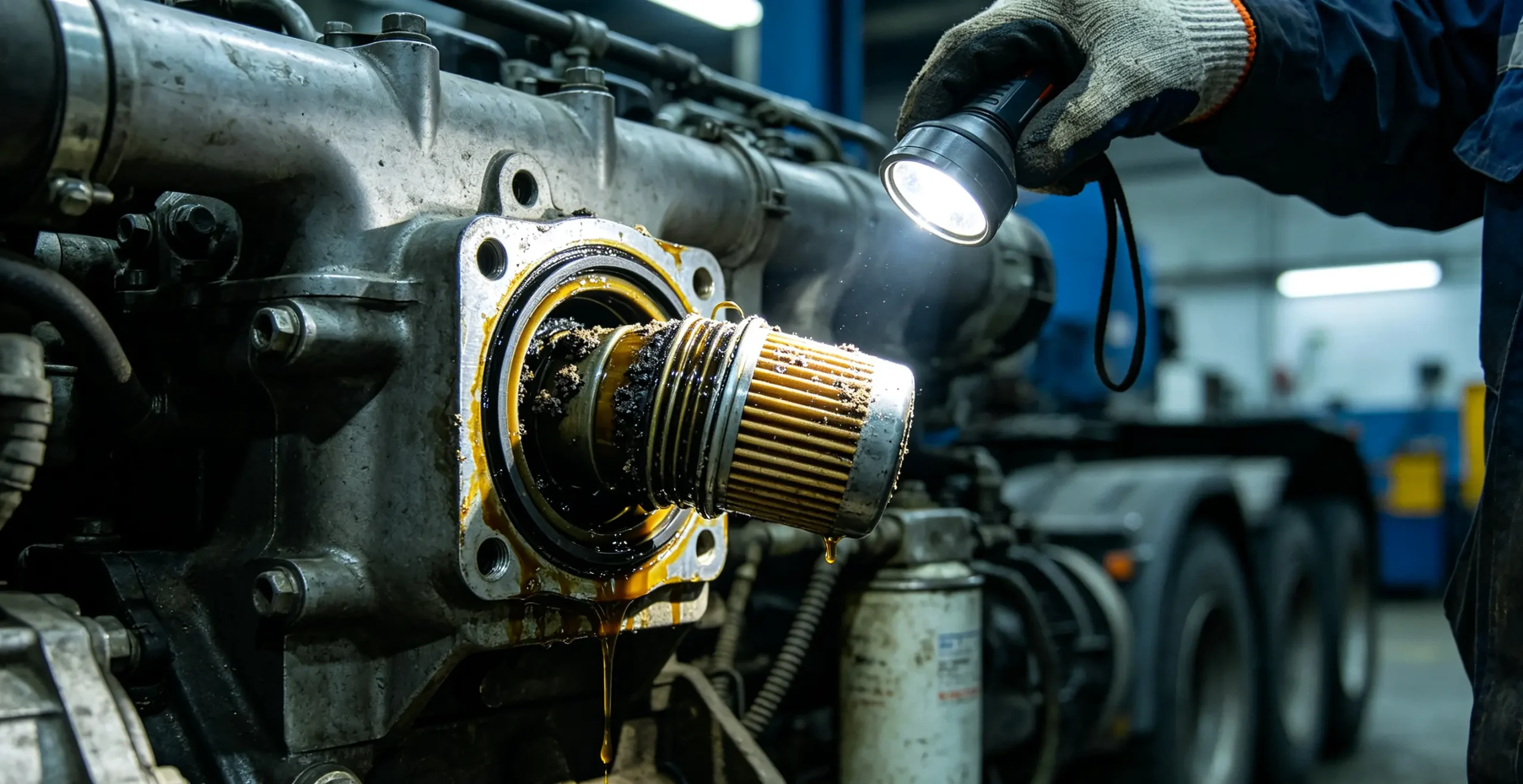
Persistent oil stains on the housing and engine block surface are the most common sign of housing degradation. Unlike sudden filter bursts, housing leakage usually starts as minor seepage.
This slow leakage occurs due to warped sealing surfaces, hardened gaskets or micro-cracks on the housing body. Simply replacing the oil filter will not resolve the issue. The leakage will reappear within hundreds of miles.
2. Erratic dashboard oil pressure readings
If you notice oil pressure spiking and dropping randomly during acceleration, idling or load changes, the housing is a prime suspect. Internal channel damage creates inconsistent oil flow resistance.
Many technicians immediately test the oil pump when pressure fluctuates. In reality, defective filter housings account for nearly 30% of low-pressure complaints on mid-mileage diesel trucks.
3. Repeated loose oil filters after service
If newly installed oil filters keep loosening under normal vibration, the housing mounting base is likely deformed. Warped threads cannot maintain consistent clamping tension.
This issue grows worse over time. Loose filters create gaps that allow unfiltered oil to bypass the media entirely, leading to severe engine contamination.
4. Elevated engine oil temperature under heavy load
For integrated oil cooler housing models, blocked internal passages reduce heat exchange efficiency. When the truck hauls heavy cargo or travels uphill for extended periods, oil temperature rises abnormally.
Overheated oil loses viscosity rapidly. Thin oil fails to form durable lubrication films, which accelerates wear on crankshaft bearings and valve train components.
5. Abnormally frequent filter clogging
Deformed internal housing channels disrupt the designed oil flow pattern. Turbulent oil flow stirs up settled sludge inside the engine, pushing more contaminants into the filter media.
As a result, filters clog far earlier than the manufacturer’s recommended service interval. Frequent filter replacement without identifying housing issues creates unnecessary fleet maintenance costs.
6. Engine ticking noise during cold startup
Damaged housings cause minor oil pressure loss during engine shutdown. Oil drains back into the oil pan overnight. On cold mornings, the engine experiences delayed oil circulation.
This temporary lack of lubrication creates ticking or tapping noises from the valve train. Consistent cold-start ticking is a clear indicator of housing sealing or flow issues.
Root Causes of Oil Filter Housing Damage on Diesel Trucks
Oil filter housings do not fail randomly. Almost all housing defects stem from long-term operational stress, improper maintenance or poor-quality replacement parts. Understanding these root causes helps fleets implement targeted prevention strategies.
1. Thermal cycling deformation
Diesel engines operate at high temperatures during work hours and cool down completely during downtime. Repeated hot and cold cycles create gradual metal fatigue on aluminum housing assemblies.
Over several years, the flat sealing surfaces warp slightly. Even microscopic warpage breaks the gasket seal and triggers slow oil seepage.
2. Improper filter installation torque
Over-tightening oil filters is one of the most common human errors in truck maintenance. Many technicians use excessive force to prevent filter loosening.
Excessive torque squeezes the housing threaded base, causing permanent deformation. Once the base bends, no gasket can create a full seal, resulting in permanent minor leakage.
3. Low-grade aftermarket gaskets
Budget gaskets lack heat-resistant rubber compounds formulated for diesel engine environments. They harden, shrink and crack quickly under continuous high-temperature exposure.
Degraded gaskets create tiny gaps between mating surfaces. These gaps allow pressurized oil to escape, forming consistent seepage around the housing perimeter.
4. Road vibration and minor collision damage
Trucks operating on construction sites, rural roads and rough terrain endure constant violent vibration. Long-term vibration fatigue creates invisible micro-cracks on housing edges.
Minor bottoming-out impacts and road debris strikes also damage housing structures. These hidden cracks slowly expand and eventually cause obvious oil leakage.
5. Extended oil change intervals
Skipping scheduled oil changes leads to massive carbon sludge buildup inside engine passages. Thick sludge accumulates inside housing inlet and outlet channels.
Narrowed channels increase oil flow resistance. This raises internal pressure and places extra stress on the bypass valve and sealing surfaces, accelerating overall housing aging.
6. Contaminated or incorrect engine oil
Using non-spec engine oil causes accelerated carbon formation and additive breakdown. Degraded oil forms abrasive residues that scratch internal housing passages.
Scratched channel surfaces disrupt smooth oil flow, create turbulence and speed up filter clogging cycles significantly.
Professional On-Site Diagnosis Methods for Oil Filter Housing Faults
Accurate diagnosis separates housing faults from filter faults, oil pump issues and line blockages. Professional technicians follow standardized steps to avoid unnecessary part replacement and reduce fleet maintenance costs.
1. Full external visual inspection
First, clean all oil sludge and dust from the housing assembly using a degreaser. A clean surface makes fresh oil traces easy to spot.
Start the engine and maintain idle speed for 10 to 15 minutes. Observe leakage carefully. If oil seeps from the gasket perimeter, the sealing plane or gasket is faulty. If oil leaks from the housing body itself, micro-cracks are present.
2. Real-time oil pressure data testing
Connect a professional truck diagnostic scanner to monitor live oil pressure data. Record readings at idle, 50% load and full load conditions.
Compare recorded data with the engine manufacturer’s official specifications. Unstable pressure across all load stages confirms internal housing flow defects rather than temporary filter clogging.
3. Bypass valve functional test
Most workshops can perform bench testing for bypass valve opening pressure. Factory preset pressure values ensure the valve opens only during extreme clogging.
If the valve opens too early, unfiltered oil circulates regularly. If it sticks closed, the engine faces total oil blockage risk during filter saturation.
4. Sealing surface flatness detection
Use a precision straightedge and feeler gauge to measure housing flatness. Even a 0.05mm warpage can cause persistent oil seepage.
Flatness testing eliminates guesswork. It confirms whether leakage requires gasket replacement or full housing assembly replacement.
5. Internal channel blockage inspection
Inspect internal passages for sludge buildup after housing removal. Thick uneven sediment confirms long-term poor oil maintenance habits.
Severe blockage requires thorough channel cleaning or direct housing replacement to restore normal oil flow efficiency.
Step-by-Step Oil Filter Housing Removal and Installation Guide
Replacing an oil filter housing requires standardized operation. Improper disassembly and installation cause repeated leakage, thread damage and even new engine faults. Follow this field-proven workflow for perfect results.
Step 1: Prepare safe working conditions
Park the truck on level ground and engage the parking brake fully. Turn off the engine and allow sufficient cooling time to avoid hot oil burns.
Place a large oil collection pan directly below the filter housing position to capture all residual lubricant. Prepare basic hand tools, new gaskets and a torque wrench for precise installation.
Step 2: Remove the oil filter and drain residual oil
Unscrew the existing oil filter slowly counterclockwise. Let all trapped oil inside the housing flow completely into the collection pan.
Wipe excess oil from the housing surface to create a clean working environment for disassembly.
Step 3: Disconnect auxiliary cooling lines and sensors
For integrated oil cooler housing models, carefully detach all cooling pipelines and electrical sensor connectors. Mark each line and connector position to avoid assembly errors.
Cover open pipeline ends with clean rags to prevent dust and debris from entering internal lubrication systems.
Step 4: Loosen mounting bolts and remove housing
Loosen housing fixing bolts gradually in a diagonal sequence. This avoids uneven stress that warps the engine block mounting surface.
Lift the housing assembly gently. Do not pry or twist the housing with screwdrivers, as brittle aluminum material cracks easily.
Step 5: Clean engine block mounting surface thoroughly
Scrape off all old gasket residue, carbon deposits and tiny metal particles from the engine block surface. Even minor leftover debris creates uneven sealing pressure.
Wipe the surface with clean lint-free cloths until completely smooth and spotless.
Step 6: Install new gasket and housing assembly
Place a brand-new high-quality gasket into the housing groove. Never reuse old gaskets under any circumstances.
Align the housing with mounting holes and place it flat against the engine block. Tighten bolts diagonally in multiple passes to ensure even pressure distribution.
Follow factory torque specifications strictly. Over-tightening warps the new housing, while under-tightening causes immediate leakage.
Step 7: Reconnect pipelines, sensors and new oil filter
Restore all cooling lines and sensor connectors to their original marked positions. Double-check every connection for tightness and alignment.
Coat the new filter gasket with a thin layer of clean engine oil. Hand-tighten the filter until the gasket seats firmly, then torque it to factory standards.
Step 8: Refill oil and perform full leakage test
Refill engine oil to the exact full mark on the dipstick. Start the engine and run at idle for 15 to 20 minutes.
Inspect the entire housing perimeter, filter base and pipeline connections for oil seepage. Complete a short road test under medium load to verify stable oil pressure and zero leakage.
Top Maintenance Mistakes That Cause Repeated Housing Failures
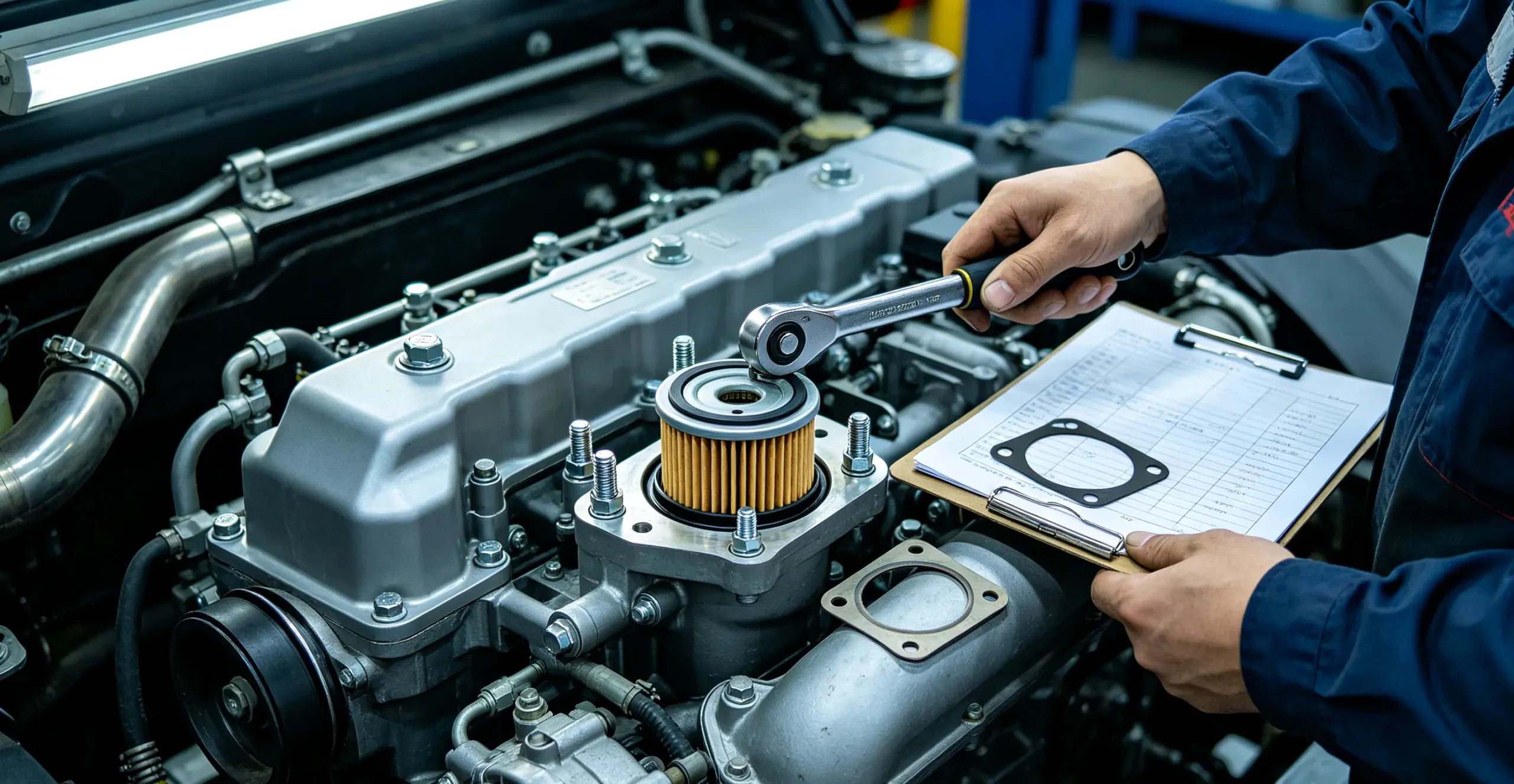
Most fleets experience recurring housing leakage and damage due to avoidable maintenance errors. These common mistakes shorten housing lifespan and increase long-term repair costs.
1. Reusing old gaskets during filter service
Many technicians reuse seemingly intact gaskets to save time and cost. Used gaskets have lost elasticity and compression resistance after heat cycling.
They cannot form reliable long-term seals, leading to slow seepage within weeks after service.
2. Ignoring housing surface warpage
Installing new gaskets on warped housing surfaces will never resolve leakage. The uneven plane creates persistent gaps no gasket can fill.
Continuing to replace filters and gaskets without replacing the housing wastes time and spare parts.
3. Random bolt tightening sequences
Tightening bolts in random order creates uneven clamping force. This bends the housing slightly during installation, causing permanent deformation.
Only diagonal multi-pass tightening guarantees flat, uniform sealing pressure.
4. Using mismatched aftermarket housing assemblies
Universal low-cost housings often feature incorrect bypass valve pressure settings and misaligned flow channels. These incompatible parts disrupt lubrication system balance.
Always use OEM or model-specific replacement housings. You can refer to our diesel truck spare part matching guide to avoid part mismatches.
5. Skipping post-installation road testing
Idle-only inspection misses load-dependent leakage. Some housing faults only appear under engine load and vibration during driving.
Short loaded road tests are essential to confirm successful repair results.
Long-Term Maintenance Tips to Extend Oil Filter Housing Service Life</h2>>
With proper daily maintenance, a diesel truck oil filter housing can last the entire engine service life. These practical field tips reduce failure rates and lower fleet operating expenses significantly.
First, strictly follow manufacturer oil change intervals. Timely oil changes eliminate heavy sludge accumulation inside housing channels. Clean internal passages maintain stable oil flow and reduce bypass valve workload.
Second, always install premium heat-resistant gaskets during every service. Low-quality seals are the leading cause of minor persistent leaks. Investing in high-grade gaskets prevents repeated repair work.
Third, standardize filter installation torque. Train all maintenance staff to use torque wrenches instead of manual tightening judgment. Consistent torque avoids thread damage and surface warpage.
Fourth, add housing visual inspection to every routine maintenance checklist. Early detection of minor seepage prevents crack expansion and sudden failure on highways.
Fifth, clean external housing dust and grease regularly, especially for off-road trucks. Thick dirt layers trap heat and accelerate metal fatigue and gasket aging.
Sixth, avoid using non-spec engine oil and cheap universal filters. Poor-quality consumables accelerate internal contamination and housing wear. For standardized fleet maintenance plans, check our commercial diesel fleet routine maintenance checklist.
Frequently Asked Questions About Diesel Truck Oil Filter Housings
1. Can I drive with minor oil seepage on the filter housing?
Minor seepage will inevitably worsen with rising engine temperature and continuous vibration. Short-distance driving is temporarily safe, but long-haul travel poses severe risks.
Gradual oil loss reduces system pressure and lubrication efficiency. Delayed repairs may lead to expensive engine wear or sudden roadside failure.
2. Is welding a viable fix for cracked aluminum housings?
Aluminum welding cannot restore original structural flatness and pressure resistance. Welded areas develop new cracks quickly under engine vibration and heat cycling.
For commercial trucks, full housing replacement is the only reliable long-term solution.
3. Why does my oil pressure fluctuate after filter replacement?
Fluctuating pressure after service usually indicates deformed housing surfaces, incorrect torque or trapped air inside housing channels. It rarely stems from the filter itself.
4. How often should I inspect the oil filter housing?
Visual inspections should occur during every oil change. Trucks operating in harsh mining, construction and rural road environments require inspection every 5,000 miles to catch defects early.
5. Do all diesel truck filter housings have bypass valves?
Nearly all modern heavy-duty integrated housings include built-in bypass valves. Older truck models may integrate the bypass valve inside the filter element instead of the housing assembly.
Conclusion
The engine oil filter housing stands as an unsung core component of diesel truck lubrication systems. While often overlooked in routine maintenance, it controls oil flow, stabilizes pressure, enables emergency protection and ensures consistent filtration performance.
Most housing-related engine issues stem from neglected minor faults, improper maintenance habits and low-quality replacement parts. Early diagnosis, standardized repair procedures and disciplined daily maintenance can eliminate nearly all housing failures.
By understanding its complete working principle, failure modes and repair logic, fleet managers and technicians can reduce breakdown rates, extend engine lifespan and cut long-term operational costs. For more professional diesel engine maintenance resources, explore our full library of heavy-duty truck engine system guides.


