
Introduction
Heavy-duty diesel trucks form the backbone of global freight and logistics networks. These workhorse vehicles travel hundreds of thousands of miles throughout their service life. They routinely operate under full load, extreme hot and cold temperatures, and rough road conditions that place constant stress on every engine component.
Unlike passenger car engines, commercial diesel truck engines endure continuous heavy mechanical strain. This ongoing stress creates internal gas buildup and gradual contamination inside the engine. Every diesel combustion cycle generates massive compression to power the engine. While most compressed gas drives the piston to produce torque, a small portion leaks past the piston rings. This leaked gas is known as engine blow-by gas, and every diesel engine produces it during normal operation.
Blow-by gas does not dissipate on its own. It collects inside the engine crankcase, the lower engine compartment that houses engine oil and rotating internal parts. Without proper ventilation, this trapped gas creates positive internal pressure inside the engine. This unregulated pressure disrupts normal engine operation and slowly damages gaskets, seals, and intake components over time.
Excess positive crankcase pressure is the root cause of most common minor and major diesel truck engine issues. It forces engine oil out of sealed joints, contaminates the air intake system, weakens combustion efficiency, and accelerates wear on turbochargers and critical sealing components. For fleet owners and owner-operators, these small, overlooked issues quickly turn into costly downtime and unexpected repair expenses.
The engine breather filter serves as the primary defense against dangerous crankcase pressure buildup. This compact yet essential component cleans blow-by gas, traps harmful oil mist, and maintains stable engine ventilation. Despite its vital role in engine health, the breather filter is one of the most frequently neglected service parts in the commercial truck industry.
Most routine truck service checklists prioritize oil changes, fuel filter swaps, and air filter maintenance. Breather filter inspection and replacement are almost always skipped. Since breather filter failure develops slowly over thousands of miles, drivers and fleet managers rarely notice early warning signs. By the time symptoms become obvious, permanent secondary engine damage has already occurred.
Compounding this issue is the lack of immediate warning indicators. Breather filter clogging does not trigger dashboard warning lights or engine fault codes on most modern trucks. Standard engine ECM systems do not monitor real-time crankcase pressure. This means a severely restricted breather system can operate undetected for months, worsening internal engine damage day by day.
Minor filter clogging gradually progresses into full system blockage. Rising crankcase pressure pushes oil through every weak engine seal and gasket. Slow, subtle oil seepage turns into heavy leaks. Oil consumption spikes, fuel economy declines, carbon builds up in the intake system, and turbo performance steadily deteriorates.
This detailed guide caters to fleet managers, independent diesel mechanics, owner-operators, and repair technicians. It breaks down breather filter functionality, failure symptoms, root causes, professional diagnostic techniques, step-by-step replacement procedures, and long-term maintenance strategies to prevent recurring issues. For more practical truck repair guides and professional technical resources, visit our technical support page.
What Is a Truck Engine Breather Filter?
A truck engine breather filter, also referred to as a crankcase breather filter or CCV (Crankcase Ventilation) filter, is a specialized filtration component designed exclusively for heavy-duty diesel engine ventilation systems. Unlike standard oil or air filters, it is purpose-built to filter a harsh mixture of oil mist, fine carbon soot, humid blow-by gas, and tiny engine wear particles.
New and inexperienced technicians often underestimate the importance of the breather filter, dismissing it as a minor accessory part. In reality, it is a core engine component that stabilizes internal crankcase pressure, preserves intake system cleanliness, reduces unnecessary oil waste, and extends overall engine lifespan. Even low-mileage engines experience premature wear and performance loss without a fully functional breather filter.
The core purpose of the breather filter is to treat blow-by gas before it recirculates back into the engine intake cycle. When diesel engines run under load, blow-by gas carries suspended oil droplets, unburned fuel residue, carbon soot, and water vapor. If these unfiltered contaminants enter the intake manifold directly, they coat sensitive engine parts and cause long-term, cumulative damage.
Key components including turbocharger compressor wheels, intercooler cores, intake manifold passages, throttle valves, and cylinder intake ports are highly vulnerable to oil and carbon contamination. Even small amounts of residual buildup disrupt airflow, reduce turbo boost efficiency, and create uneven combustion. Over time, soft residue hardens into stubborn carbon deposits that require professional disassembly to clean or repair.
Breather filters eliminate this risk through targeted physical filtration. They separate oil mist and solid debris from blow-by gas, allowing only clean gas to re-enter the intake system for secondary combustion. This process complies with modern diesel emission standards, eliminates raw crankcase gas emissions, and traps excess oil to drain back into the oil pan for reuse, cutting down on oil waste.
Heavy-duty truck breather filters are engineered far differently from passenger vehicle breather filters. Commercial diesel engines generate significantly higher blow-by volumes due to larger engine displacement, higher compression ratios, continuous full-load operation, and extended runtime. Truck-grade filters feature thick, multi-layer fiber media, reinforced housing construction, and high dirt-holding capacity to withstand harsh commercial operating conditions.
Two primary breather filter designs are standard on Chinese and European heavy-duty trucks. The first is a cartridge-style filter, installed inside a plastic or aluminum breather housing mounted on the valve cover or engine block. The second is a spin-on style filter, which threads directly onto the engine ventilation port, similar to a standard oil filter.
Both designs deliver identical core functionality, with minor differences in replacement steps and service intervals. Regardless of filter style, low-quality generic aftermarket filters are a leading cause of premature breather system failure. Budget filters use thin, low-density fiber media that fails to trap fine oil mist, allowing contaminants to pass through and damage expensive intake and turbo components.
Installing OEM-matched, model-specific breather filters ensures consistent crankcase pressure regulation and long-term engine protection. You can browse a full selection of genuine truck engine components in our truck engine system product category.
How a Truck Breather Filter Works (Full Working Principle)
To accurately diagnose breather filter faults and understand why clogging causes widespread engine issues, it is critical to learn the full working cycle of the truck crankcase ventilation system. This system operates non-stop whenever the engine runs, whether at idle, cruising speed, or full payload load.
![Breather system airflow diagram (blow-by gas flow path)]](https://mettlead.com/wp-content/uploads/2026/07/Breather-system-airflow-diagram-blow-by-gas-flow-path-scaled.webp)
Every diesel engine combustion cycle produces extreme internal cylinder pressure. Most of this pressure drives piston movement to generate engine power, but a small volume of gas leaks past the piston rings. This blow-by leakage is unavoidable in all internal combustion engines. It naturally increases as engines accumulate mileage and piston ring clearances widen from normal wear.
Once blow-by gas enters the crankcase, it mixes with a variety of internal engine substances. This mixture includes atomized oil mist created by the rotating crankshaft, fine carbon soot from incomplete diesel combustion, condensed water vapor from temperature fluctuations, and tiny metal particles from normal engine friction.
As engine runtime continues, trapped gas builds steadily inside the sealed crankcase, creating positive internal pressure. This pressure cannot dissipate naturally. Without a functional ventilation system, pressure continues rising until it forces gas and oil out through every weak seal, gasket, or opening in the engine assembly.
The crankcase ventilation system redirects this pressurized, contaminated gas mixture upward through internal engine passages and external rubber hoses to the breather filter housing. The filter acts as the final purification station before gas re-enters the engine intake system.
As the contaminated gas passes through the filter’s multi-layer fiber media, physical filtration takes place. Thick oil mist droplets adhere to the filter fibers. Fine carbon particles and microscopic metal debris become trapped within the dense filter layers. Only clean, dry gas continues flowing toward the intake manifold for combustion.
Gravity is a key part of this filtration process. Oil droplets that collect on the filter fibers merge over time to form larger liquid streams. These streams flow down the filter housing walls and drain back into the engine oil pan. This self-draining design minimizes oil waste and maintains stable filter efficiency throughout its service life.
Purified blow-by gas mixes with fresh intake air and enters the engine cylinders for secondary combustion. This closed-loop design eliminates harmful raw crankcase emissions, meets modern environmental regulations, and protects high-precision engine components from unfiltered contamination.
When the breather filter clogs, this entire ventilation cycle is restricted. Built-up sludge and oil residue block the filter pores, reducing airflow capacity. Blow-by gas can no longer exit the crankcase as quickly as it is produced, causing internal pressure to spike. This pressure buildup triggers all common breather filter failure symptoms in heavy-duty trucks.
Early-stage clogging only partially restricts airflow, creating subtle, easy-to-miss performance issues. Advanced clogging fully blocks ventilation pathways, leading to severe oil leaks, noticeable power loss, and accelerated component wear. This gradual failure progression is why regular filter inspections are far more effective than waiting for major breakdowns.
Most Common Truck Engine Breather Filter Failure Signs
Breather filter failure is progressive, meaning symptoms start mild and grow worse over thousands of miles. Early warning signs are often subtle and frequently misdiagnosed as turbo faults, injector issues, gasket wear, or fuel system problems. Misdiagnosis leads to unnecessary part replacements and leaves the root cause unaddressed.
Learning to recognize breather filter-specific symptoms allows technicians and truck owners to resolve issues early, avoiding costly secondary engine damage. Below are the most consistent, verified failure signs observed across all major heavy-duty diesel truck brands, including Sinotruk, Shacman, Foton, and FAW.
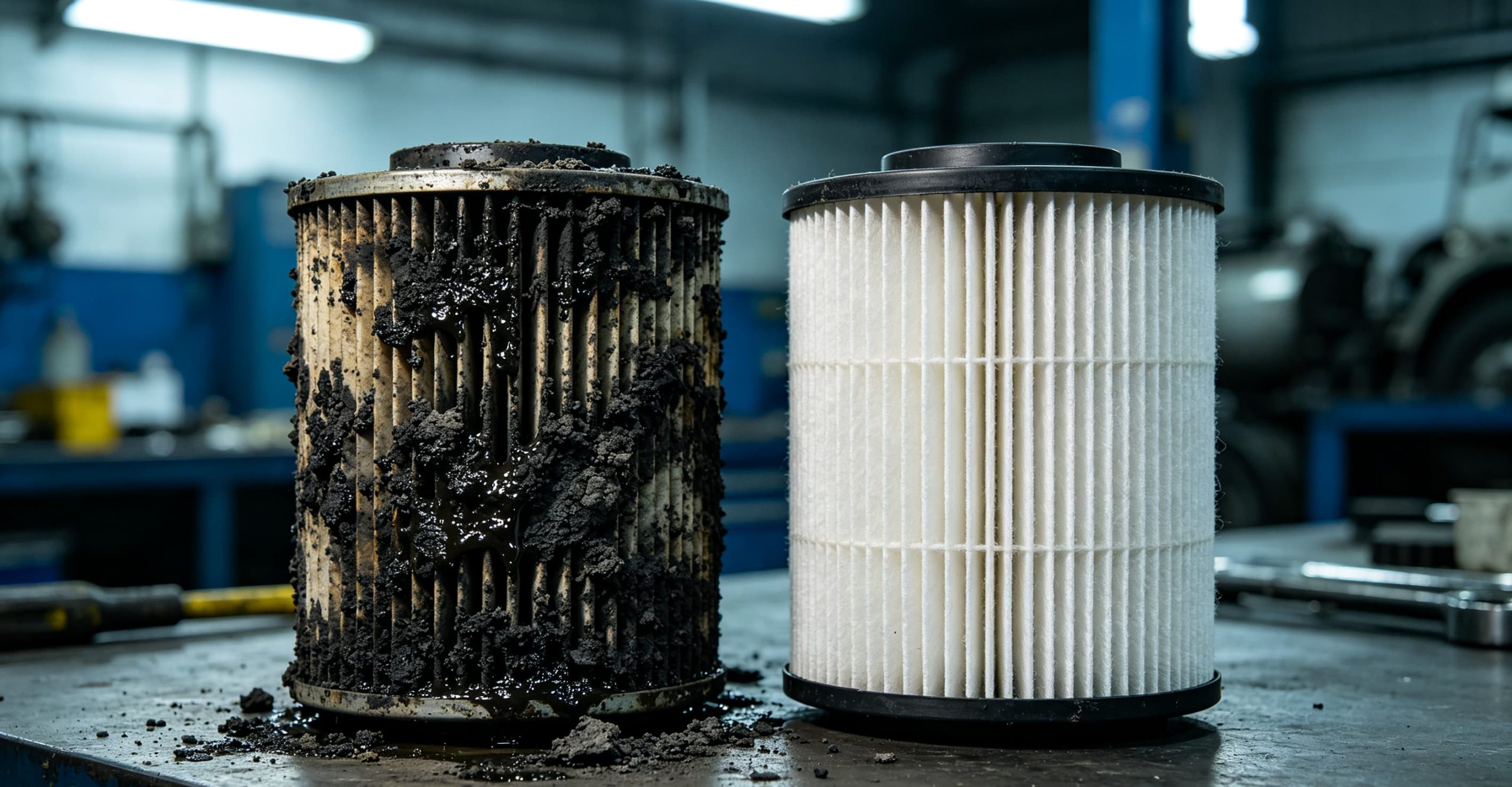
1. Repeated Engine Oil Leaks Despite New Gaskets
Persistent oil leakage is the most common and telltale sign of a restricted breather filter. Elevated crankcase pressure pushes engine oil outward through every low-pressure sealing point in the engine. Common leak points include valve cover gaskets, front and rear crankshaft seals, timing cover gaskets, oil pan seams, and turbo oil return lines.
A clear red flag for breather system failure is recurring leaks immediately after gasket replacement. Many repair shops only replace worn gaskets and seals without testing crankcase pressure or inspecting the breather filter. New gaskets temporarily stop leaks, but unrelieved internal pressure quickly damages the new seals, causing leaks to return within weeks.
In severe cases, continuous pressure buildup forces oil through electrical sensor ports and threaded fittings. This leaves oily residue on the exterior engine block, which attracts road dust and forms thick, stubborn sludge layers that complicate future engine inspections and repairs.
2. Abnormally High Engine Oil Consumption
Healthy heavy-duty diesel trucks consume very little oil between scheduled service intervals. A sudden or gradual increase in oil consumption almost always stems from a restricted breather filter and impaired crankcase ventilation.
When the breather filter can no longer effectively separate oil mist from blow-by gas, pressurized oil vapor flows directly into the intake system. This oil vapor travels through intake pipes, passes through the turbocharger, and enters the engine cylinders during normal operation, burning alongside diesel fuel.
Drivers will notice needing to top off engine oil far more frequently than normal. Severely clogged breather filters can require oil additions every few hundred miles. Excessive oil burning also increases carbon buildup inside combustion chambers, clogs injector nozzles, and reduces overall engine thermal efficiency over time.
3. Blue or Gray Exhaust Smoke Under Load
Blue or gray exhaust smoke is a universal sign of burning engine oil. While turbo seal failure is often blamed for this issue, a clogged breather filter is an equally common and far less costly cause to repair.
Breather-related exhaust smoke only appears under heavy operating conditions, such as uphill climbing, full-throttle acceleration, and highway cruising with a full payload. These scenarios spike engine blow-by volume, and restricted ventilation forces large amounts of oil mist into the intake stream, resulting in visible smoke.
You can easily distinguish breather-related smoke from turbo failure smoke. Breather smoke disappears completely during idle and light-load driving but reappears under engine stress. Faulty turbo seals produce consistent smoke at all engine speeds. This simple diagnostic check saves fleets from unnecessary and expensive turbo replacements.
4. Sluggish Acceleration and Reduced Engine Power
Unfiltered oil mist from a failing breather system creates layered carbon deposits inside intake manifolds, intercooler cores, and turbo inlet passages. These deposits narrow airflow channels and disrupt even air distribution to individual engine cylinders.
Insufficient clean intake air leads to incomplete diesel combustion. Incomplete burning reduces engine torque, weakens acceleration response, and lowers maximum highway speed. Drivers commonly describe the truck as feeling sluggish, heavy, or unresponsive compared to its normal operating performance.
Contaminated intake components also reduce turbo boost efficiency. Oil residue on turbo compressor blades disrupts aerodynamic balance, lowering boost pressure output. The combination of restricted airflow and reduced turbo boost creates significant power loss that directly lowers freight efficiency and increases trip times.
5. Visible Oil Sludge Inside Intake Hoses and Pipes
A quick visual inspection of intake components offers instant confirmation of breather filter health. Technicians can simply remove the main turbo inlet hose to check internal conditions in minutes.
A healthy breather system keeps intake pipe interiors clean and dry with negligible residue. A failing breather system leaves wet, sticky oil sludge coating the entire inner pipe surface. In advanced failure cases, liquid oil pools at the lowest points of the intake plumbing system.
This visible sludge confirms unfiltered oil mist is contaminating critical intake components. The longer this issue persists, the harder carbon deposits harden, eventually requiring professional deep cleaning or full component replacement to restore normal function.
6. Positive Crankcase Pressure During Diagnostic Testing
Professional crankcase pressure testing is the most accurate method to verify breather system restrictions. Fully functional diesel truck engines maintain neutral or slightly negative crankcase pressure during idle and cruising operation.
Clogged breather filters produce clear positive pressure readings on professional gauge tests. Any pressure value exceeding the engine manufacturer’s specifications confirms restricted airflow and unregulated internal engine pressure, eliminating all guesswork and confirming breather filter failure.
7. Frequent Turbo Fouling and Premature Turbo Wear
Turbochargers are the most expensive engine component damaged by neglected breather filter maintenance. Unfiltered oil mist continuously coats turbo compressor and turbine blades during every hour of engine operation.
Over time, oil residue hardens into carbon deposits that throw turbo rotor blades out of balance. Imbalanced rotors create inconsistent boost pressure, constant engine vibration, and premature bearing wear. Countless truck turbos fail thousands of miles early solely due to untreated breather filter clogging.
Many fleet breakdown and repair cases trace back to overlooked breather filter maintenance. You can explore real-world fleet repair scenarios and cooperation cases on our cooperative case page.
Root Causes of Early Breather Filter Clogging
Breather filters never fail prematurely without an underlying cause. Every early clog or service failure stems from avoidable operational habits, maintenance oversights, or low-quality component choices. Understanding these root causes allows fleet managers to build proactive maintenance routines that extend filter life and eliminate repeat failures.
1. Extended Oil Change Intervals
Stretching engine oil change intervals beyond manufacturer recommendations is the top cause of early breather filter failure. As engine oil ages, it accumulates high volumes of soot, carbon, metal debris, and chemical breakdown byproducts from repeated combustion and friction.
Old, degraded oil produces far thicker, heavier oil mist during engine operation. This dense contaminant-rich mist overloads breather filter media, clogging filter pores at a rapid rate. Fleets that consistently extend oil service intervals report 30–50% shorter breather filter lifespans compared to fleets that follow factory-recommended service schedules.
2. Low-Quality or Non-Spec Engine Oil
Many cost-focused fleets use generic, low-grade diesel engine oil that fails to meet OEM performance specifications. Cheap engine oil lacks critical heat resistance, anti-sludge additives, and stable viscosity required for heavy-duty diesel operation.
Under high engine operating temperatures, inferior oil breaks down quickly, forming heavy sludge and thick oil mist. This contaminated mist overwhelms standard breather filter capacity, causing rapid saturation and clogging. Even brand-new filters will fail quickly when paired with substandard engine oil.
3. Excessive Short-Run and Cold Operation
Trucks that frequently complete short trips or operate in cold climates struggle to reach and maintain optimal engine operating temperature. When engines run below full heat range, water vapor produced during combustion cannot fully evaporate or vent from the crankcase.
Trapped water vapor mixes with engine oil inside the crankcase, forming emulsified, sticky oil sludge. This thick sludge adheres directly to breather filter fibers, blocking airflow and drastically reducing filtration efficiency. Cold-weather and short-cycle operation consistently accelerate breather filter clogging for this reason.
4. Worn Piston Rings and Excessive Blow-by
High-mileage engines naturally develop piston ring wear over time. Worn ring gaps allow significantly larger volumes of blow-by gas and oil mist to enter the crankcase, exceeding the breather filter’s original design capacity.
In these scenarios, even new, high-quality breather filters saturate and clog quickly. Frequent, recurring breather filter clogging in high-mileage trucks is often a warning sign of underlying piston ring wear that requires comprehensive engine inspection.
5. Damaged Hoses and External Dust Ingress
Cracked, loose, collapsed, or degraded breather hoses allow road dust, dirt, and environmental debris to enter the crankcase ventilation system. Fine dust particles mix with oil mist to form highly abrasive sludge that rapidly clogs filter media.
Hose damage is frequently overlooked during routine service. Small, non-leaking cracks still let contaminants infiltrate the system, gradually shortening breather filter lifespan and accelerating internal engine contamination.
6. Low-Quality Aftermarket Breather Filters
Generic aftermarket breather filters use cheap, low-density fiber media with minimal oil separation and filtration capabilities. These budget filters either clog extremely quickly under normal operation or allow unfiltered oil mist and debris to pass through, rendering the entire ventilation system ineffective.
Always install OEM-spec, model-matched breather filters for your truck to ensure reliable ventilation and engine protection. You can find model-specific genuine breather parts for all major truck brands on our truck brand product page.
Step-by-Step Breather Filter Diagnosis Process
Accurate, systematic diagnosis eliminates unnecessary part replacements and ensures you address the true root cause of engine performance issues. Follow this professional multi-step diagnostic process to fully verify breather system health and confirm filter failure.
Step 1: Full External Visual Inspection
Begin with a complete visual check of all engine gasket surfaces, sealing joints, and breather hose connections. Look for fresh oil stains, wet residue, or built-up sludge around seals and hoses. Inspect every ventilation hose for cracks, brittleness, collapse, or loose clamps. Replace any damaged hoses before proceeding with further testing.
Step 2: Intake System Internal Inspection
Remove the turbo inlet hose to inspect the interior of the intake system. Clean, dry pipe interiors confirm a healthy, functional breather system. Heavy oily sludge or pooled liquid oil inside the pipes confirms severe breather filter restriction and widespread intake system contamination.
Step 3: Professional Crankcase Pressure Testing
Connect a professional crankcase pressure gauge to the engine’s dedicated ventilation test port. Test and record pressure readings at idle and under loaded engine conditions. Any consistent positive pressure reading confirms restricted airflow caused by a clogged or failed breather filter.
Step 4: Physical Filter Inspection
Remove the existing breather filter for direct physical inspection. Healthy filters appear clean, dry, and light-colored with intact fiber media. Failed filters are dark brown or black, fully saturated with oil, and coated in thick, sticky sludge residue.
Complete Breather Filter Replacement Guide (Professional Steps)
Proper replacement technique is critical to avoid repeat filter failure, housing warping, vacuum leaks, and ongoing engine issues. Many DIY and shop service errors cause new filters to fail prematurely. Follow these field-verified professional steps for perfect, long-lasting installation results.
Step 1: Prepare Safe Working Conditions
Park the truck on level ground and engage the parking brake securely. Allow the engine to cool completely to prevent burns from hot components. Gather all required tools, a new OEM-spec breather filter, and a brand-new housing gasket. Never reuse old gaskets, as they lose elasticity and create leaks.
Step 2: Disconnect Ventilation Hoses
Loosen hose clamps carefully and detach all ventilation lines connected to the breather housing. Label each hose position to avoid installation errors. Avoid aggressive pulling to prevent cracking brittle rubber or plastic hose components.
Step 3: Remove Housing Mounting Bolts
Loosen the housing mounting bolts in a diagonal crisscross sequence. This balanced loosening method prevents uneven pressure release that can warp plastic or aluminum housing surfaces. A warped housing will never seal properly, causing persistent pressure leaks.
Step 4: Remove Old Filter and Deep Clean Housing
Fully extract the old clogged filter from the housing. Use industrial-grade degreaser to remove all sludge, oil residue, and carbon buildup from the entire housing interior. Wipe all surfaces completely dry with clean lint-free rags. Even small residual contaminants can ruin a new filter quickly.
Step 5: Install New Filter and Fresh Gasket
Seat the new filter firmly in the correct factory orientation. Install a brand-new housing gasket to ensure a full, airtight seal. Double-check gasket alignment to prevent pinching, shifting, or gaps that cause pressure leakage.
Step 6: Torque Bolts to Factory Specifications
Tighten the mounting bolts evenly in a diagonal sequence, following OEM torque values exactly. Over-tightening cracks plastic housings and warps metal components. Under-tightening creates vacuum leaks and persistent crankcase pressure seepage.
Step 7: Reconnect All Ventilation Hoses
Reattach all ventilation hoses to their original positions and secure all clamps tightly. Gently wiggle each connection to confirm a firm, secure fit and eliminate loose connection points.
Step 8: Test Engine Operation and Pressure
Start the engine and let it idle for 15 minutes. Inspect the breather housing and hose connections for oil leaks or abnormal pressure buildup. Complete a short loaded road test to verify restored engine performance and proper breather system function.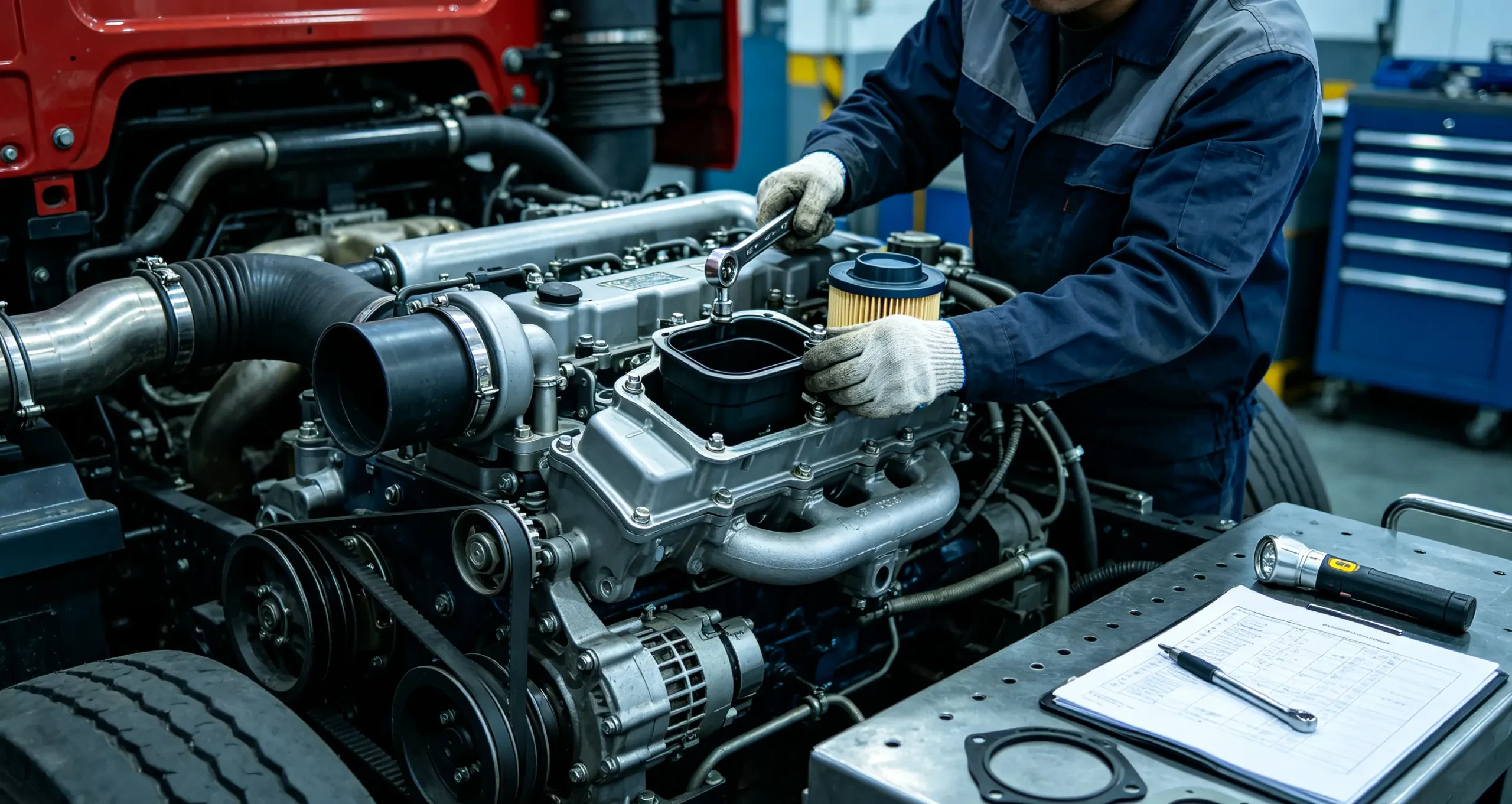
Common Mistakes During Breather Filter Service
Most recurring breather filter failures stem from simple, avoidable service mistakes. Professional fleets standardize service procedures to eliminate these errors, maximize filter lifespan, and reduce unnecessary repair costs.
Reusing old gaskets is the most common service error. Aged gaskets lose elasticity and cannot maintain airtight seals, leading to persistent pressure leaks and repeat filter contamination. Always install new gaskets with every filter replacement.
Installing low-quality aftermarket filters guarantees early clogging and poor oil separation performance. Only genuine OEM-spec components matched to your truck model deliver reliable ventilation protection.
Skipping housing deep cleaning contaminates new filters immediately after installation. Residual sludge and carbon from old filters ruin new filter media within hours of engine operation.
Uneven bolt torque warps breather housings, creating permanent sealing defects that cannot be fixed by simply replacing the filter again.
Long-Term Breather Filter Maintenance Tips
Consistent, proactive maintenance significantly extends breather filter service life and protects the entire engine system from secondary damage. Adopt these professional fleet maintenance habits for long-term engine reliability and minimal downtime.
Always follow the manufacturer’s recommended oil change intervals. Clean, fresh engine oil minimizes sludge production and reduces breather filter contamination at the source.
Inspect all breather hoses during every routine service. Replace cracked, deformed, loose, or brittle hoses immediately to prevent dust ingress and pressure loss.
Check intake pipe interiors for oil sludge buildup every 10,000 miles. Early detection of minor contamination prevents major engine and turbo damage down the line.
Only use high-quality OEM-spec filters and gaskets for all breather system service procedures.
If you need professional part matching, model-specific recommendations, or technical guidance for your truck, feel free to contact our team anytime.
Frequently Asked Questions
1. Can I drive with a clogged breather filter?
Short-distance emergency driving is possible, but long-haul operation is extremely risky. Continuous operation with a blocked breather filter causes progressive turbo damage, seal failure, excessive oil loss, and permanent internal engine wear. Immediate filter replacement is always recommended.
2. How often should truck breather filters be replaced?
Most heavy-duty trucks require breather filter replacement every 30,000 to 60,000 miles. Trucks operating in severe conditions, cold climates, or consistent heavy-load routes require shorter service intervals of 20,000 to 30,000 miles.
3. Does a bad breather filter affect fuel mileage?
Yes, the impact is significant. Restricted airflow and intake contamination reduce combustion efficiency, gradually increasing fuel consumption. Fixing a faulty breather filter consistently improves highway fuel economy and overall engine efficiency.
4. Is breather filter failure covered under normal engine warranty?
Manufacturers classify breather filters as routine wear-and-tear components. Completing all scheduled maintenance is required to preserve full engine warranty coverage for related parts.
Conclusion
The truck engine breather filter is one of the most underrated yet critical components in heavy-duty diesel engines. Its ability to regulate crankcase pressure, purify blow-by gas, and protect high-value engine systems is essential for long-term truck reliability.
Early failure detection, timely replacement, and consistent proactive maintenance eliminate oil leaks, power loss, turbo degradation, and costly secondary engine repairs. Simple, affordable routine service on this small component saves fleets thousands of dollars in avoidable repairs and unplanned downtime annually.
For more company insights, product advantages, and professional heavy-duty truck part solutions, visit our official about us page. To browse our full line of factory genuine truck parts, explore our official homepage at https://mettlead.com.


