
Introduction
Most truck and heavy equipment owners pay close attention to obvious engine issues. They monitor oil pressure, check coolant levels, and replace worn belts on a strict schedule. Even so, one small yet critical component often slips past routine inspections: the engine fan clutch. Although it looks simple on the surface, this part directly controls cooling fan operation and keeps engine temperature stable under all working conditions.
A healthy fan clutch adjusts fan speed automatically based on engine heat and ambient temperature. It engages firmly when the engine runs hot and disengages to save power during cool, low-load operation. When this part wears out, fails to engage, or seizes up, a long list of gradual and dangerous problems begins to appear. Unfortunately, most drivers do not notice these warning signs until their engine starts overheating on the highway or at a job site.
In fact, fan clutch failure ranks among the most misdiagnosed cooling system issues in commercial trucks and heavy machinery. Many people blame radiator clogging, water pump wear, or low coolant for overheating problems. While those parts do cause heating issues, a faulty fan clutch creates identical symptoms and often leads mechanics to replace unnecessary parts. This mistake wastes time, increases maintenance costs, and leaves the actual root cause unresolved.
To help you avoid unnecessary repairs and costly engine damage, this guide breaks down every major bad fan clutch symptom in detail. We will cover abnormal noise, inconsistent engine temperature, weak AC cooling, poor fuel mileage, and all hidden secondary issues caused by a failing fan clutch. Additionally, we will explain common failure causes, simple DIY diagnosis steps, and reliable solutions to restore your engine’s cooling performance.
Before diving into specific symptoms, it helps to understand exactly how this component works. If you are looking for high-quality replacement cooling parts that match your vehicle model perfectly, you can explore our full collection of truck cooling system parts for durable and OEM-matched components.
What Is a Fan Clutch and How Does It Work?
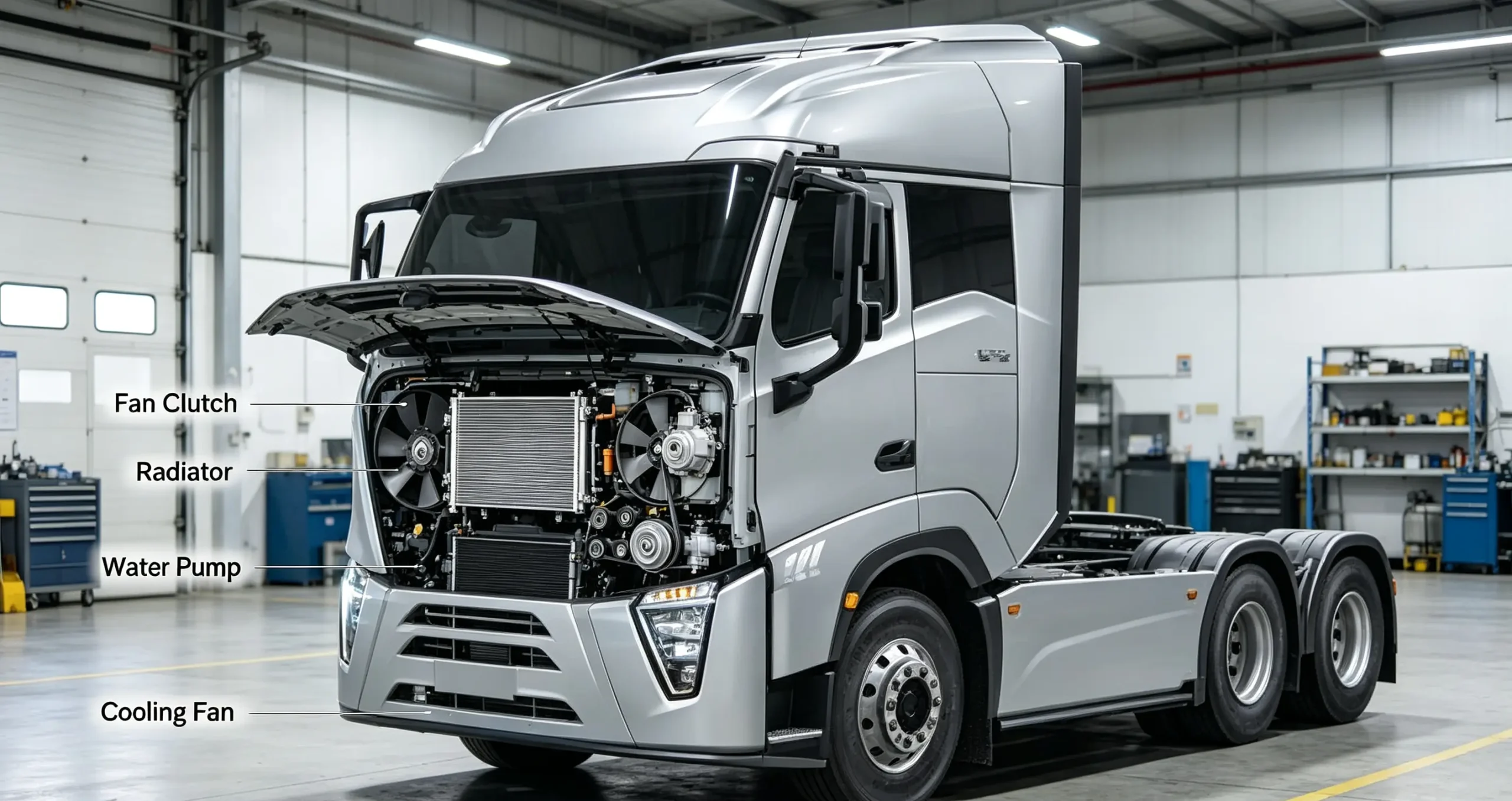
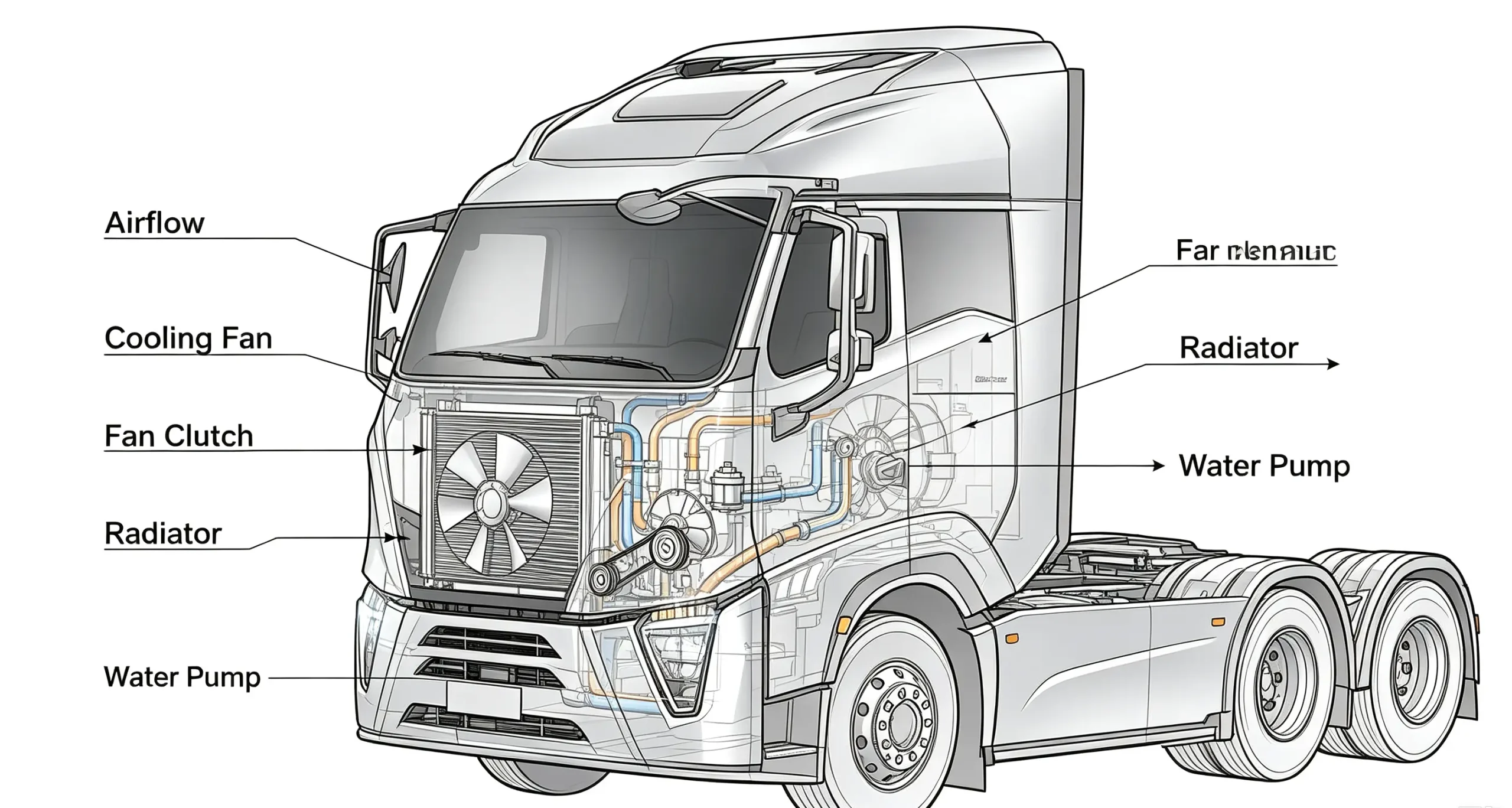
A fan clutch is a temperature-controlled coupling device mounted between the engine water pump and the cooling fan. Unlike a rigid fixed fan, a clutch-driven fan does not spin at full speed all the time. Instead, it uses thermal sensing technology or internal silicone fluid viscosity to adjust fan rotation speed dynamically. This smart design balances engine cooling efficiency, fuel economy, and noise control.
There are two primary types of fan clutches used in modern heavy-duty trucks and commercial vehicles: thermal fan clutches and non-thermal fan clutches. Thermal fan clutches represent the most common design. They feature a built-in thermal spring that reacts to ambient air temperature flowing through the radiator. When engine temperature rises, the spring expands and opens an internal valve. This action releases silicone fluid and locks the fan into full-speed operation.
On the other hand, non-thermal fan clutches rely purely on centrifugal force and internal fluid resistance. They operate based on engine RPM rather than temperature changes. While simpler in structure, non-thermal models provide less precise cooling adjustment. For this reason, most modern Euro-standard trucks and advanced fleet vehicles use upgraded thermal fan clutches for smarter temperature regulation.
Under normal working conditions, the fan stays disengaged during cold starts, idle warm-up, and highway cruising. At these stages, the engine requires minimal cooling, and natural airflow handles most temperature regulation. Disengaging the fan reduces engine drag, lowers unnecessary power consumption, and improves overall fuel efficiency.
Conversely, when the engine works under heavy load, climbs steep slopes, or runs in hot summer weather, coolant temperature rises rapidly. The thermal spring activates, fills the clutch housing with silicone oil, and locks the fan assembly. The fan then spins at full engine speed to pull massive airflow through the radiator. This process quickly lowers coolant temperature and prevents overheating.
Over thousands of operating hours, the internal silicone fluid gradually leaks out, thins out, or becomes contaminated with dust and metal debris. The thermal spring also loses sensitivity after years of repeated expansion and contraction. Once these internal components degrade, the fan clutch can no longer engage or disengage correctly. This small mechanical failure triggers a chain of obvious and hidden vehicle problems.
Since the fan clutch works closely with the water pump and radiator, faulty clutch performance often gets mistaken for water pump failure. If you suspect cooling system issues, you can learn more about related component failures and professional troubleshooting tips from our truck technical support resources to avoid misdiagnosis.
Most Common Bad Fan Clutch Symptoms (Complete List)
Fan clutch failure develops slowly over time. It starts with subtle, easy-to-ignore signs before escalating into severe engine overheating. Early symptoms only show up under specific conditions, such as hot weather, heavy loads, or low-speed driving. As internal wear gets worse, problems become constant and affect daily driving reliability.
To help you accurately identify a failing fan clutch, we have organized all symptoms from mild early-stage signs to critical late-stage failures. Each section includes unique traits that separate fan clutch faults from other common cooling system problems.
1. Engine Overheating Under Load or Hot Weather
Persistent engine overheating is the most classic and obvious symptom of a bad fan clutch. Still, this overheating follows a specific pattern that helps you tell it apart from radiator or water pump faults. A failing fan clutch almost always causes overheating only under working stress, not during idle or cool-weather cruising.
When you drive empty on flat roads or cruise steadily on highways, natural airflow passes through the radiator fast enough to cool the engine effectively. Even a weak fan clutch can keep temperatures stable in these scenarios. This is why many truck owners mistakenly believe their cooling system is working perfectly during regular trips.
Problems start as soon as the engine faces heavier workloads. Heavy cargo loads, long uphill climbs, slow-speed construction zone operation, and high summer temperatures all drastically increase engine heat output. In these situations, natural airflow is no longer enough, and the cooling fan must engage fully to provide forced cooling.
A worn or faulty fan clutch fails to lock the fan assembly properly. The fan spins lazily with low torque and cannot generate enough airflow to release excess engine heat. Within minutes, coolant temperatures spike, and the dashboard temperature gauge moves into the red zone. If you stop and idle the truck briefly, temperatures may drop slightly, but they will rise again immediately under heavy-load driving.
Many fleet operators waste time and money on temporary fixes like radiator flushing or coolant replacement to resolve overheating. These methods offer short-term relief but do not fix the root mechanical issue. If your truck only overheats under load but runs fine on steady highway cruises, you are almost certainly dealing with a defective fan clutch.
2. Loud Roaring Noise When Starting or Accelerating
Unusual fan noise is another clear sign of fan clutch malfunction, especially for seized or permanently engaged clutches. A healthy fan clutch operates quietly during engine warm-up. It only produces mild wind noise when fully engaged under high-heat conditions.
When the fan clutch seizes completely, it locks the fan rigidly to the water pump shaft. The fan spins at maximum engine speed at all times, regardless of coolant temperature. This creates a continuous, loud roaring noise similar to strong wind or jet engine operation, which is most noticeable during cold startups and low-speed driving.
Many inexperienced drivers incorrectly assume loud fan noise means the cooling system is working harder. In reality, constant full-speed fan operation is abnormal and harmful. It creates unnecessary engine drag, increases fuel waste, and speeds up wear on drive belts and pulleys.
On the opposite side, a slipping fan clutch produces almost no fan noise at all. If your engine remains unusually quiet during hot idle yet continues to overheat, your fan clutch is slipping and failing to engage when needed. Both excessive noise and abnormal silence count as critical warning signs.
3. Poor Air Conditioning Performance in Hot Weather
Most truck owners do not connect weak AC performance with a faulty fan clutch. In truth, the engine cooling fan plays a core role in helping the AC condenser dissipate heat efficiently. The condenser sits directly in front of the radiator and fully relies on the engine fan for forced airflow during idle and low-speed operation.
A slipping fan clutch prevents the fan from spinning fast enough to pull adequate air through the condenser. At highway speeds, natural wind provides enough cooling to keep the AC working normally. However, during idle, traffic jams, or slow delivery routes, the lack of forced airflow causes AC temperatures to rise quickly, blowing warm air into the cabin.
This creates a typical seasonal issue: the AC works perfectly in cool spring and fall weather but consistently underperforms in hot summer conditions. If you have already replaced refrigerant, checked compressor pressure, and cleaned the condenser without improvement, a faulty fan clutch is almost always the hidden root cause.
4. Decreased Fuel Economy and Sluggish Acceleration
A seized fan clutch creates constant, unnecessary mechanical drag on the engine. Since the fan runs at full speed nonstop, it consumes a large amount of engine power for no functional purpose. This wasted power directly translates into higher fuel consumption and slower throttle response.
Drivers commonly notice increased fuel costs even with identical load weights, road conditions, and driving habits. The truck also feels sluggish during acceleration and struggles to reach normal speeds as quickly as before.
This symptom is particularly misleading because no warning lights appear on the dashboard. The engine runs smoothly with no obvious errors, yet overall performance and fuel efficiency gradually decline. Many fleet companies endure unnecessary fuel waste for months before diagnosing the fan clutch problem.
5. Excessive Fan Spin After Engine Shutdown
You can perform a quick, reliable manual test by observing fan behavior after turning off a hot engine. A healthy fan clutch holds moderate resistance. The fan will spin freely for only two to three rotations before stopping completely.
A severely worn, slipping fan clutch loses internal silicone fluid resistance. After shutting down the engine, the fan will spin lazily for five or more rotations. This excessive free spin confirms internal fluid leakage and a loss of proper clutch engagement pressure.
In contrast, a seized fan clutch stops instantly with zero free movement. Both extreme behaviors confirm internal component failure and require timely replacement. This simple test helps you rule out other cooling system faults quickly.
6. Visible Fan Wobble and Vibration
After thousands of operating hours, fan clutch bearings gradually wear down. Worn bearings create excessive axial and radial play inside the fan assembly. At engine idle, you can easily observe obvious fan wobble and slight front-end vibration.
As bearing wear worsens, vibration intensifies during acceleration and high-RPM operation. Severe wobble creates a serious safety risk, as fan blades can collide with the radiator shroud. This collision can crack the radiator, bend or break fan blades, and damage surrounding plastic components, leading to costly secondary repairs.
Worn bearings often produce faint grinding or squeaking noises from the front engine bay. Ignoring these symptoms can lead to complete bearing failure, fan seizure, or even fan detachment while driving.
7. Fluctuating Engine Temperature Gauge
An intermittently failing fan clutch causes inconsistent, erratic temperature readings. Engine temperatures will randomly rise and fall without any changes in vehicle load, speed, or driving conditions.
This fluctuation occurs when the damaged clutch inconsistently engages and slips. Internal fluid degradation and weakened thermal spring response create unstable fan performance. Unlike thermostat issues that cause regular temperature cycling, fan clutch failure creates completely unpredictable temperature swings.
Top Causes of Fan Clutch Failure
Fan clutches rarely fail from natural aging alone. Most premature failures result from continuous operating stress, poor maintenance habits, and low-quality aftermarket parts. Understanding these root causes helps you extend the service life of new replacement components and avoid repeated faults.
1. Silicone Fluid Leakage and Degradation
Silicone fluid acts as the core working medium inside every thermal fan clutch. It controls engagement speed, torque transfer, and overall fan resistance. Over time, sealing gaskets thin out and develop micro cracks, causing slow fluid leakage. High engine bay heat also thins the silicone fluid and reduces its effective viscosity.
Once fluid levels drop below the standard threshold, the clutch cannot build enough internal pressure to lock the fan firmly. This results in constant slipping, insufficient cooling, and gradual engine overheating. Fluid leakage accounts for over 60% of all heavy-duty truck fan clutch failures.
2. Thermal Spring Fatigue
The thermal coil spring on the fan clutch activates hundreds of times weekly to regulate fan operation. Repeated heating and cooling cycles gradually reduce its temperature sensitivity. After years of use, the spring fails to expand fully under high heat, delaying fan engagement and reducing cooling efficiency.
A fatigued thermal spring causes slow fan response, delayed cooling, and random temperature spikes—even when silicone fluid levels remain normal.
3. Continuous High-Temperature Exposure
Heavy-load climbing, summer highway driving, and prolonged idle times trap extreme heat inside the engine bay. Sustained high temperatures accelerate gasket aging, fluid degradation, and internal component wear. Trucks operating in hot tropical regions face significantly shorter fan clutch lifespans.
4. Vibration and Road Shock Damage
Heavy-duty trucks regularly travel on bumpy construction roads and uneven terrain. Continuous engine vibration and road shock loosen internal clutch components over time. Minor misalignment leads to accelerated bearing wear, fan wobble, and uneven fluid distribution inside the clutch housing.
5. Low-Quality Aftermarket Components
Budget aftermarket fan clutches often use low-grade silicone fluid, weak thermal springs, and thin sealing gaskets. These cheap parts work temporarily but degrade rapidly under commercial truck operating stress. For long-term reliability, always choose high-quality, durable cooling system components from trusted manufacturers. You can browse reliable truck parts from our genuine truck part brands for stable performance.
How to Diagnose a Failing Fan Clutch (Step-by-Step DIY Test)
You do not need professional diagnostic tools to test your fan clutch. Simple visual and manual tests allow you to accurately confirm faults at home. Below is a field-verified diagnosis process suitable for all heavy-duty truck models.
Step 1: Cold Engine Fan Resistance Test
With the engine fully cold and powered off, manually spin the cooling fan by hand. A healthy clutch provides moderate resistance and stops after 2–3 rotations. Free, effortless spinning means severe internal fluid leakage and a slipping clutch.
Step 2: Hot Engine Engagement Observation
Start the engine and let it idle until it reaches normal operating temperature. At full operating heat, the fan clutch must engage firmly and produce noticeable airflow noise. A silent, inactive fan at operating temperature confirms clutch failure.
Step 3: Post-Shutdown Fan Spin Test
After turning off a hot engine, observe fan movement. A healthy fan stops quickly. Prolonged free spinning indicates worn internal components and fluid loss.
Step 4: Visual Inspection for Leaks and Dust Buildup
Check the clutch housing for oily residue, dust accumulation, and fluid seepage around seal edges. Oil stains are clear evidence of long-term leakage and internal degradation.
Step 5: Wobble and Bearing Check
Gently push and pull the fan blade radially and axially. Excessive movement, wobble, or grinding noises confirm worn bearings and structural damage.
For more practical cooling system troubleshooting and maintenance tips, explore our professional technical support guides to rule out related engine faults.
Fan Clutch Repair vs Replacement: Which Option Is Better?
Fan clutches are fully sealed, integrated mechanical units. Once internal fluid leaks out or precision components wear down, simple cleaning or minor repairs cannot restore original performance. Unlike belts or hoses, fan clutches are not serviceable long-term.
Continuing to drive with a faulty fan clutch risks severe engine overheating, blown head gaskets, and permanent engine damage that costs thousands of dollars in repairs. Full replacement is the only reliable, long-term solution for failed fan clutches.
When replacing your fan clutch, inspect adjacent parts like drive belts and tensioners to avoid premature wear on your new component. We provide matched, high-quality heavy-duty truck components for all major truck models. You can also check our customer cooperative cases to see how we help fleet clients solve common engine cooling issues.
Common Fan Clutch Mistakes That Lead to Repeat Failure
Many truck owners replace their fan clutch only to face the same failure within a few months. Almost all repeated failures stem from avoidable installation errors and neglected secondary issues.
Using incompatible fan clutch models causes mismatched engagement timing and resistance issues. Failing to clean mounting surface residue leads to uneven installation and early seal wear. Over-tensioned belts create constant axial pressure on clutch bearings, speeding up wear. A clogged radiator forces the fan to overwork daily, burning out new clutches quickly.
How to Extend Fan Clutch Service Life
With consistent, proper maintenance, a high-quality fan clutch can last 5–7 years in regular fleet operation. Small daily habits drastically reduce premature failure risks.
Always keep radiators and condensers clean to prevent heat buildup, which forces frequent fan engagement. Avoid prolonged hot idle whenever possible, as stationary heat accelerates fluid degradation. Inspect drive belt tension quarterly and check for clutch seal leakage during routine maintenance. Reducing excessive overloading and steep climbing also lowers long-term cooling system stress.
FAQs About Bad Fan Clutch Symptoms
Q1: Can I drive a truck with a bad fan clutch?
Short-distance driving on cool, flat roads is possible with a slipping clutch. However, heavy loads, hot weather, and long highway runs will cause rapid overheating. A seized clutch wastes fuel and accelerates component wear, raising major engine damage risks.
Q2: Will a bad fan clutch throw a fault code?
Traditional mechanical thermal fan clutches do not trigger ECU fault codes. Only electronic fan clutches generate error codes upon failure. Mechanical clutch issues rely entirely on physical symptom diagnosis.
Q3: Why does my AC blow warm air only when idling?
Idle conditions have no natural airflow through the AC condenser. The cooling fan must provide forced airflow to dissipate heat. A slipping fan clutch fails to spin fast enough, causing AC overheating and warm cabin air at idle.
Q4: What is the average fan clutch lifespan?
High-quality OEM fan clutches last 5–7 years with regular maintenance. Low-quality aftermarket units often fail within 1–2 years. Harsh operating conditions drastically shorten service life.
Q5: Is fan clutch replacement difficult?
Fan clutch replacement is a straightforward DIY repair for experienced technicians with basic hand tools. Always match the clutch model to your truck’s engine specs to avoid performance mismatch.
Conclusion
The fan clutch is an unsung yet indispensable component of heavy-duty truck cooling systems. Its performance directly controls engine temperature stability, AC efficiency, fuel economy, and overall driving safety. Early detection of bad fan clutch symptoms prevents sudden roadside breakdowns, costly engine repairs, and fleet downtime.
Loud fan roaring, idle-only warm AC, load-based overheating, poor fuel mileage, and excessive post-shutdown fan spin are all clear warning signs of internal clutch degradation. Most failures result from fluid leakage, thermal spring fatigue, high heat exposure, and low-quality aftermarket parts. Since repairs are ineffective, timely replacement remains the best solution.
Proactive maintenance and correct installation practices maximize fan clutch lifespan and keep your truck’s cooling system stable year-round. If you need premium matched fan clutches, professional cooling system solutions, or technical support, feel free to contact our professional team for customized service. Learn more about our company strength and product advantages on our about us page.


