
Heavy-duty commercial trucks depend on stable power transmission to handle long-haul transportation, mountain route driving, and heavy-load construction operations. Among all chassis components, the drive shaft acts as the core power transmission unit. It connects the transmission system and the rear drive axle. Without a fully functional drive shaft, trucks cannot transfer engine torque to the wheels.
For fleet companies, repair shops, and auto parts wholesalers, choosing a professional truck drive shaft supplier is extremely important. Many aftermarket failures happen simply because of low-quality drive shafts or mismatched replacement parts. Unqualified drive shafts cause vibration, abnormal noise, power loss, and even sudden shaft breakage during high-speed driving.
In addition, unstable suppliers often lead to delayed delivery, inconsistent batch quality, incomplete model coverage, and poor after-sales support. These problems greatly affect fleet operation efficiency and increase overall maintenance costs. Therefore, learning how to screen reliable heavy-duty drive shaft suppliers can help buyers avoid most procurement risks.
What Is a Heavy-Duty Truck Drive Shaft?
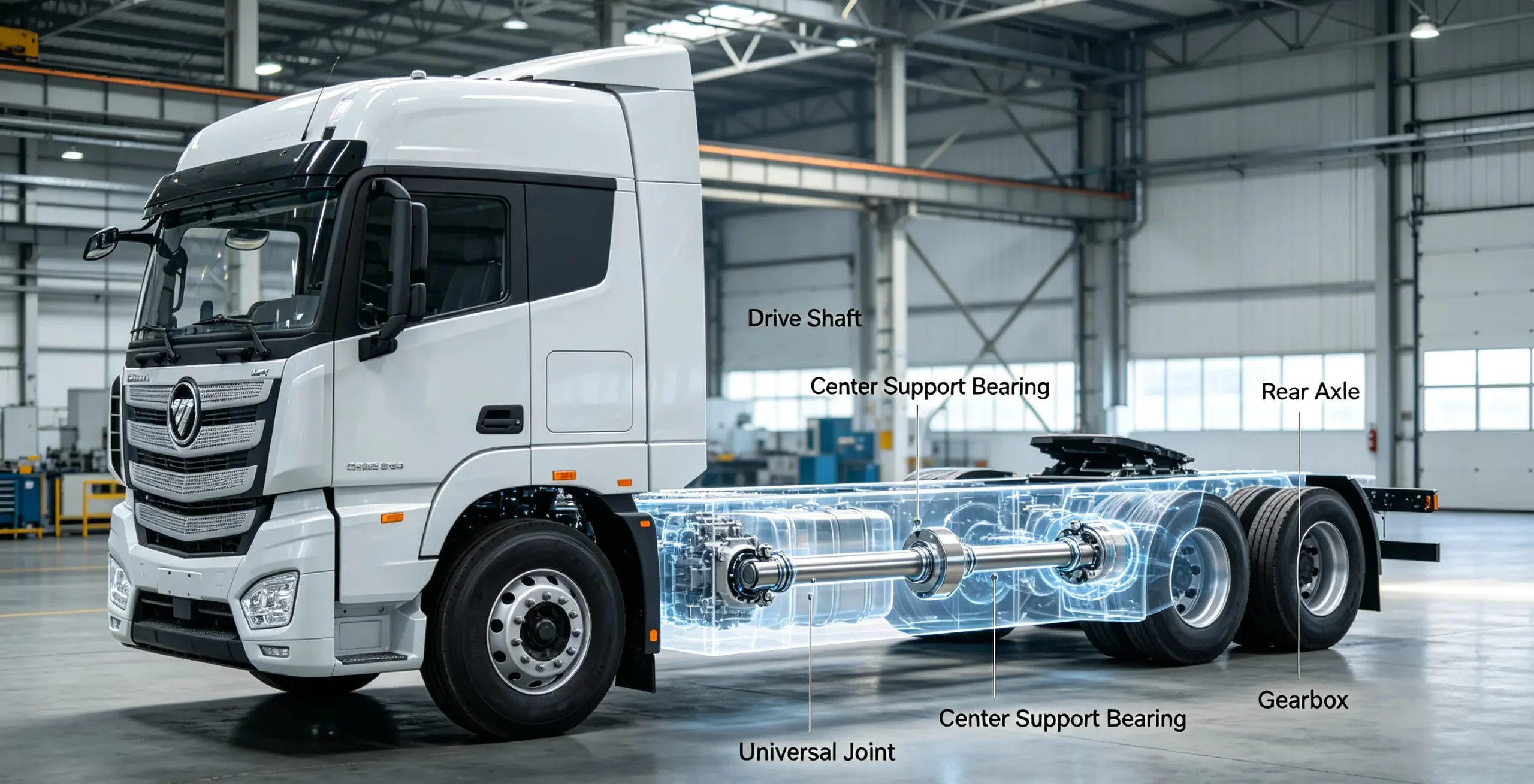
A heavy-duty truck drive shaft, also widely known as a propeller shaft, is a tubular metal transmission component. It is installed between the gearbox output flange and the rear drive axle input flange. Its main function is to transmit engine power and torque to the driving wheels.
Unlike light vehicle drive shafts, heavy-duty truck drive shafts face extremely harsh working conditions. They need to bear high torque, frequent vibration, variable angle displacement, and long-term alternating load. For this reason, genuine heavy-duty drive shafts adopt thickened seamless steel tubes, reinforced universal joints, and high-precision balancing technology.
Most 6×4 and 4×2 semi-trailer trucks use segmented drive shaft structures. The segmented design effectively buffers vibration during driving and adapts to the vertical jumping of the axle when passing bumpy roads. Each section of the drive shaft is equipped with universal joints and sliding sleeves to ensure flexible angle changes.
A complete drive shaft assembly includes multiple core accessories. These components consist of universal joints, center support bearings, flange plates, telescopic sleeves, and connecting bolts. As one of the most critical chassis transmission parts, every small accessory affects the overall stability of the entire assembly. Buyers can browse complete truck transmission system components to match full sets of supporting parts for replacement and maintenance.
Core Types of Heavy-Duty Truck Drive Shafts
Professional truck drive shaft suppliers classify products strictly according to truck models, load levels, and structural designs. For buyers, distinguishing different drive shaft types is the first step to avoid wrong purchases.
1. Single-section Integral Drive Shaft
Single-section drive shafts are mostly used on light and medium-duty trucks and short-wheelbase heavy trucks. The whole shaft body is an integrated steel pipe structure. It features simple structure, low failure rate, and stable high-speed balance performance.
This type of drive shaft is suitable for vehicles with short transmission distances and small axle jumping ranges. It is widely matched with urban delivery trucks and short-distance freight vehicles. Professional suppliers strictly control wall thickness and dynamic balance parameters for single-section products.
2. Two-section Segmented Drive Shaft
Two-section drive shafts are the most common type for long-wheelbase semi-trailer trucks. The segmented structure uses a middle support bearing to fix the middle shaft body. It effectively solves the problem of excessive length and easy vibration of a single shaft.
Under high-speed driving conditions, two-section drive shafts run more smoothly. They can adapt to large-angle changes during suspension jitter and road bumping. Most Sinotruk, FAW, Shaanxi Automobile, and Foton heavy trucks adopt this structure. All mainstream truck model drive shaft specifications can be found in Mettlead’s genuine OEM truck parts catalog.
3. Reinforced Heavy-Load Drive Shaft
Reinforced drive shafts are specially developed for engineering trucks, mining dump trucks, and overloaded transport vehicles. The shaft tube wall thickness, universal joint size, and bearing load capacity are comprehensively upgraded.
Ordinary drive shafts are prone to torsion deformation and shaft breakage under long-term overload conditions. In contrast, reinforced drive shafts maintain stable torsion resistance and structural strength under extreme load environments. Reliable suppliers will mark load parameters clearly on product labels to help customers distinguish specifications.
4. High-Balance Precision Drive Shaft
High-balance drive shafts are processed through secondary precision dynamic balancing correction. The residual unbalance value is far lower than ordinary aftermarket products. This type of drive shaft is suitable for high-speed highway long-haul trucks.
Trucks equipped with high-balance drive shafts have significantly reduced body vibration and tire wear. They also extend the service life of related chassis parts. Professional suppliers will provide balance test reports for batch orders.
Common Drive Shaft Failure Symptoms You Should Not Miss
Before replacing or purchasing new drive shafts, fleet managers and maintenance technicians need to master typical failure symptoms. Timely replacement can avoid secondary damage to gearboxes and axles.
1. Obvious Body Vibration at Medium and High Speeds
Drive shaft imbalance, bending deformation, or universal joint wear will cause obvious vehicle vibration. The vibration usually starts at 60km/h and becomes more severe as the speed increases.
Many truck owners mistakenly attribute body vibration to tire problems or suspension failure. In fact, more than 40% of high-speed truck vibration cases come from aging or unqualified drive shafts. For systematic troubleshooting of various truck component failures, you can refer to our professional truck technical support guides.
2. Abnormal Noise During Acceleration and Deceleration
Worn universal joints and loose telescopic sleeves will produce dull clicking sounds when accelerating or shifting gears. When the wear is serious, continuous buzzing and friction noise will appear during driving.
If you hear obvious metal impact sound when starting the vehicle, it means the drive shaft gap is too large. Continuing to drive will aggravate gearbox tooth impact and differential wear.
3. Power Transmission Delay and Weak Acceleration
When the drive shaft telescopic sleeve is severely worn or the universal joint is stuck, power transmission will be blocked. The driver will feel obvious delay when stepping on the accelerator.
The truck cannot release power instantly, resulting in poor climbing performance and reduced loading capacity. This kind of failure is easy to be ignored in the early stage but will seriously affect transportation efficiency.
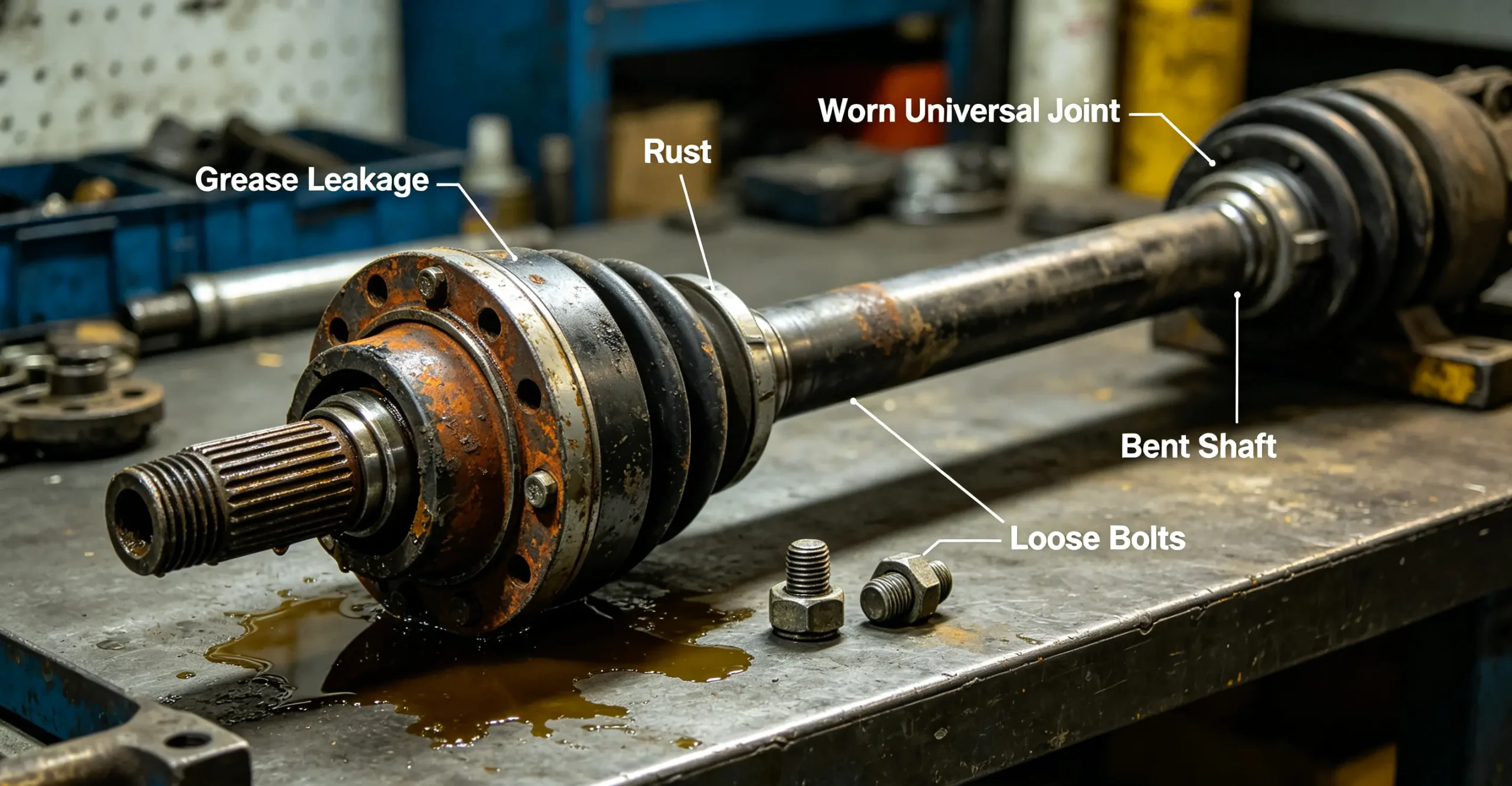
4. Grease Leakage and Rust on Shaft Surface
Damaged drive shaft oil seals will cause lubricating grease leakage. After the grease runs out, universal joints and bearings will work without lubrication. This leads to rapid wear, heating, and even shaft jamming.
Long-term outdoor parking and humid driving environments will also cause surface rust on drive shafts. Serious rust will corrode the shaft tube wall and reduce structural strength.
5. Shaft Bending and Visible Deformation
Road impact, overloading, and accidental collision will cause drive shaft bending deformation. Deformed drive shafts cannot run concentrically. They cause continuous eccentric friction and vibration during operation.
Once the drive shaft is bent, straightening repair can only solve temporary problems. The metal internal stress has changed permanently. Reuse will lead to repeated failure. The only reliable solution is direct replacement.
Why Choosing a Professional Drive Shaft Supplier Matters
Many small aftermarket suppliers focus only on low prices. They use thin-walled tubes, recycled materials, and uncalibrated balancing processes to reduce costs. Although the purchase price is low, the failure rate is extremely high.
Unqualified drive shafts may break suddenly during high-speed driving or heavy-load climbing. This will directly cause vehicle stalling, axle damage, and even serious traffic accidents. For fleet companies, the safety risk far exceeds the cost of parts.
In addition, regular suppliers provide complete model matching data and batch quality stability. For long-term wholesale customers, stable quality can greatly reduce repeated replacement rates and after-sales complaints.
Reliable suppliers also support customized processing and special model production. For special engineering vehicles and modified trucks, standard parts cannot meet the installation requirements. Professional manufacturers can customize shaft length, flange size, and load specifications. You can check our global fleet cooperation cases to learn about our customized bulk supply solutions.
Key Standards to Screen a Reliable Truck Drive Shaft Supplier
When global buyers source heavy-duty truck drive shafts, they need to evaluate suppliers from multiple dimensions. The following standards are the most practical screening indicators for bulk procurement.
1. Complete Production Qualifications and Testing System
Qualified drive shaft suppliers must have formal production licenses and ISO quality management system certification. All products need to pass dynamic balance testing, torsion resistance testing, and fatigue life testing before leaving the factory.
Regular manufacturers retain test data for each batch of products. They can provide test reports for customer inspection. Small workshops basically have no standardized testing procedures, resulting in unstable product quality. You can learn more about our factory strength and quality control system on Mettlead company introduction page.
2. Full Model Coverage for Heavy-Duty Trucks
Excellent suppliers cover mainstream heavy-duty truck models worldwide, including Sinotruk Howo, FAW J6, Foton Auman, Shaanxi Delong, Dongfeng Kinland, Volvo, Mercedes-Benz, and MAN trucks.
Complete product catalogs help buyers achieve one-stop procurement. It avoids the trouble of multiple suppliers and scattered orders. Meanwhile, sufficient inventory ensures fast delivery for urgent orders.
3. Strict Raw Material Selection Standards
High-quality drive shafts use national standard seamless steel tubes and high-strength alloy steel joints. The wall thickness is uniform, and the torsion resistance meets OEM standards.
Inferior products use welded pipes or recycled materials. The wall thickness is uneven, and hidden cracks exist inside. After a period of use, shaft breakage and deformation are very likely to occur. Strict material selection is the core premise to ensure long-term stable operation of truck transmission components.
4. Precision Dynamic Balance Processing Technology
Dynamic balance is the core process that determines drive shaft smoothness. Formal suppliers adopt high-precision automatic balancing machines. They perform multi-point correction for each finished drive shaft.
Products without precise balancing will vibrate severely at high speed. They accelerate the wear of bearings, suspensions, and tires. Long-term use will increase fleet fuel consumption significantly.
5. Complete After-Sales and Custom Service
Professional suppliers provide standardized after-sales warranty policies. For quality problems caused by production processes, they support free replacement and compensation.
At the same time, they support non-standard customization, length cutting, flange modification, and sample processing. It can meet the personalized needs of special vehicles and modified fleets. If you have customized procurement or technical consultation needs, feel free to contact our professional team anytime.
6. Stable Batch Quality and Reasonable Price System
Many low-end suppliers have large quality differences between different batches. The first batch of products may be qualified, while the next batch has unbalanced parameters and poor precision.
Excellent suppliers maintain consistent raw material sources and fixed production processes. The batch stability is high. The price is transparent and cost-effective, suitable for long-term cooperative wholesale customers.
Advantages of Mettlead Heavy-Duty Drive Shaft Supply
As a professional heavy-duty truck chassis parts supplier, Mettlead focuses on the R&D, production, and wholesale of heavy-duty drive shafts and supporting accessories. We serve global auto parts wholesalers, fleet maintenance companies, and repair shops. You can visit our official homepage to browse our full product line and overall service advantages.
All Mettlead drive shafts are manufactured in strict accordance with OEM standards. Every product undergoes dynamic balance detection, torsion test, and aging test before delivery. The failure rate is far lower than the industry average.
We support full model coverage for Chinese heavy trucks and European heavy trucks. Whether you need standard drive shafts, reinforced drive shafts, or customized special-size drive shafts, we can meet your procurement needs.
In terms of after-sales service, we provide long-term quality warranty and professional technical matching guidance. For customers who are not sure about model parameters, our technical team can quickly match the correct parts according to VIN codes and vehicle configurations.
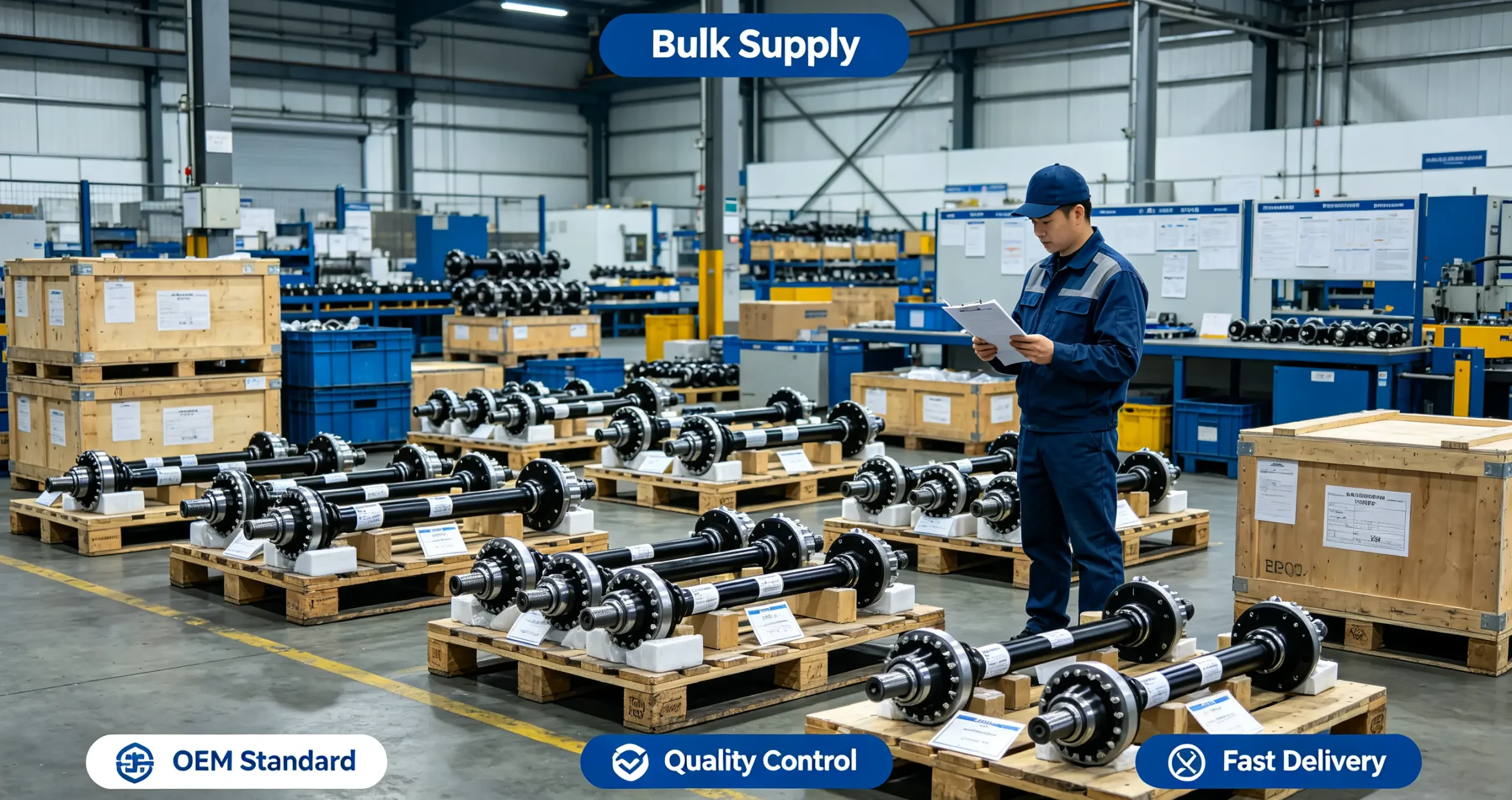
Bulk order customers can enjoy flexible MOQ, fast delivery, and customized packaging services. We have stable inventory throughout the year to ensure timely supply for peak procurement seasons.
Drive Shaft Matching and Installation Precautions
Even high-quality drive shafts will have problems if installed incorrectly. The following installation guidelines can help maintenance personnel ensure optimal operating status.
1. Strictly Match Original Vehicle Specifications
Do not install universal modified drive shafts blindly. Different truck models have strict requirements on shaft length, flange hole distance, tube diameter, and universal joint size. Mismatched parts will cause vibration and installation failure.
When purchasing, you must confirm parameters such as wheelbase, axle model, and transmission type. Professional suppliers provide one-to-one parameter matching service to avoid wrong orders.
2. Keep Horizontal Balance During Installation
The drive shaft must be installed horizontally. The angle difference between the two ends should meet the factory standard. Excessive tilt angle will cause eccentric wear and universal joint damage.
During installation, the bolts must be tightened diagonally to ensure uniform stress. Loose bolts are a common cause of driving noise and shaft displacement.
3. Replace Supporting Accessories Together
When replacing a new drive shaft, it is recommended to replace aging center support bearings, oil seals, and connecting bolts at the same time. Old accessories will affect the operating stability of the new drive shaft.
Many maintenance teams only replace the shaft body and ignore worn accessories. This leads to secondary failure in a short time. Complete assembly replacement is the most scientific maintenance method for truck transmission systems.
4. Refill High-Temperature Resistant Lubricating Grease
Before installation, fill the universal joint and telescopic sleeve with high-temperature resistant lithium-based grease. It reduces friction and avoids dry wear during initial operation.
Regular grease injection during daily maintenance can effectively extend the service life of the drive shaft assembly.
5. Avoid Overload Test Run After Replacement
Within 200 kilometers after installing a new drive shaft, avoid full-load driving and frequent rapid acceleration. The new shaft needs a certain running-in period to form stable friction coordination.
Daily Maintenance Tips to Extend Drive Shaft Service Life
Scientific daily maintenance can double the service life of heavy-duty drive shafts and reduce fleet operating costs.
First, strictly control overloading. Long-term overload will cause irreversible torsion fatigue of the drive shaft. It will also accelerate the aging of universal joints and bearings.
Second, avoid frequent rapid start and brutal driving. Instant high torque impact is the main cause of drive shaft deformation and fracture.
Third, regularly check bolt tightness, oil seal tightness, and grease status. Deal with grease leakage and loose bolts in time.
Fourth, clean the surface mud and rust regularly. Keep the drive shaft dry and clean to avoid corrosive wear.
Fleet vehicles need a comprehensive drive shaft inspection every three months. Professional inspection includes dynamic balance test, gap detection, and appearance defect screening.
How to Judge Whether to Repair or Replace the Drive Shaft
Many truck owners are confused about repairing old drive shafts or replacing new ones. The following judgment standards are suitable for most heavy-duty vehicles.
If only individual universal joints are worn and the shaft body is intact, you can replace the universal joint separately for maintenance. This method is cost-effective for minor failures.
If the shaft body is bent, deformed, cracked, or severely unbalanced, repair is meaningless. Straightened shafts will fail again soon. Direct replacement is the safest solution.
If the drive shaft has been used for more than 200,000 kilometers, the overall metal fatigue is serious. Even if there is no obvious failure, it is recommended to replace it preventively. Preventive replacement of aging chassis parts is an effective way to avoid sudden vehicle breakdowns during transportation.
Frequently Asked Questions About Truck Drive Shafts
Q1: How long does a heavy-duty truck drive shaft last?
A: Under standard load and normal driving conditions, the service life of a genuine qualified drive shaft can reach 150,000 to 300,000 kilometers. Vehicles often running on mountain roads and construction sites have a shorter service life due to harsh working conditions.
Q2: Can drive shaft vibration be fixed by repair?
A: Vibration caused by loose accessories and minor imbalance can be repaired. However, vibration caused by shaft bending and metal fatigue cannot be completely fixed. Replacement is required.
Q3: Why do new drive shafts vibrate after installation?
A: The main reasons include unqualified dynamic balance, inconsistent installation angle, loose fixing bolts, and mismatched supporting parts. Most vibration problems come from installation errors rather than product quality problems.
Q4: Is it necessary to replace drive shafts in pairs?
A: For single-shaft vehicles, replace a single drive shaft. For multi-section drive shaft assemblies with coordinated operation, it is recommended to replace the whole set when overall aging occurs to ensure balance consistency.
Final Conclusion
The drive shaft is an indispensable core component of heavy-duty truck power transmission. Its quality directly determines driving stability, safety, and fleet operating costs.
Choosing a professional and reliable truck drive shaft supplier is the key to ensuring long-term stable vehicle operation. Standardized production, strict quality testing, complete model coverage, and perfect after-sales service are the core advantages of excellent suppliers.
By mastering drive shaft failure symptoms, installation standards, and daily maintenance methods, fleet managers and technicians can effectively reduce failure rates, extend component service life, and control maintenance costs scientifically.
Whether you need retail replacement parts or large-scale bulk procurement, selecting standardized OEM-grade drive shaft products is always the most cost-effective and safest choice for heavy-duty truck operation.


