
Every heavy-duty truck relies on a reliable braking system for safe transportation across highways, mountain roads and urban delivery routes. Among all brake components, the brake drum serves as a critical foundation for drum brake assemblies. Many fleet operators and truck drivers overlook minor wear on brake drums until severe failure occurs. Once brake drums become excessively worn, distorted or cracked, stopping power will drop sharply, and the risk of traffic accidents rises significantly.
If you are unsure how to identify early brake drum damage, this complete guide covers all typical wear symptoms, core inspection methods, industry standard replacement thresholds, common root causes and practical maintenance advice. We will also explain the difference between repairing and replacing worn brake drums, helping you make cost-effective decisions for your heavy-duty vehicles.
Most roadside brake failures in semi-trucks and heavy haul trucks trace back to neglected brake drum wear. Unlike brake pads or shoes that are easy to inspect and replace, brake drums are hidden components. They slowly degrade over thousands of miles without obvious warning signs in the early stage. For this reason, professional fleet maintenance always prioritizes periodic brake drum inspection as a core safety routine.
What Is a Brake Drum on Heavy-Duty Trucks?
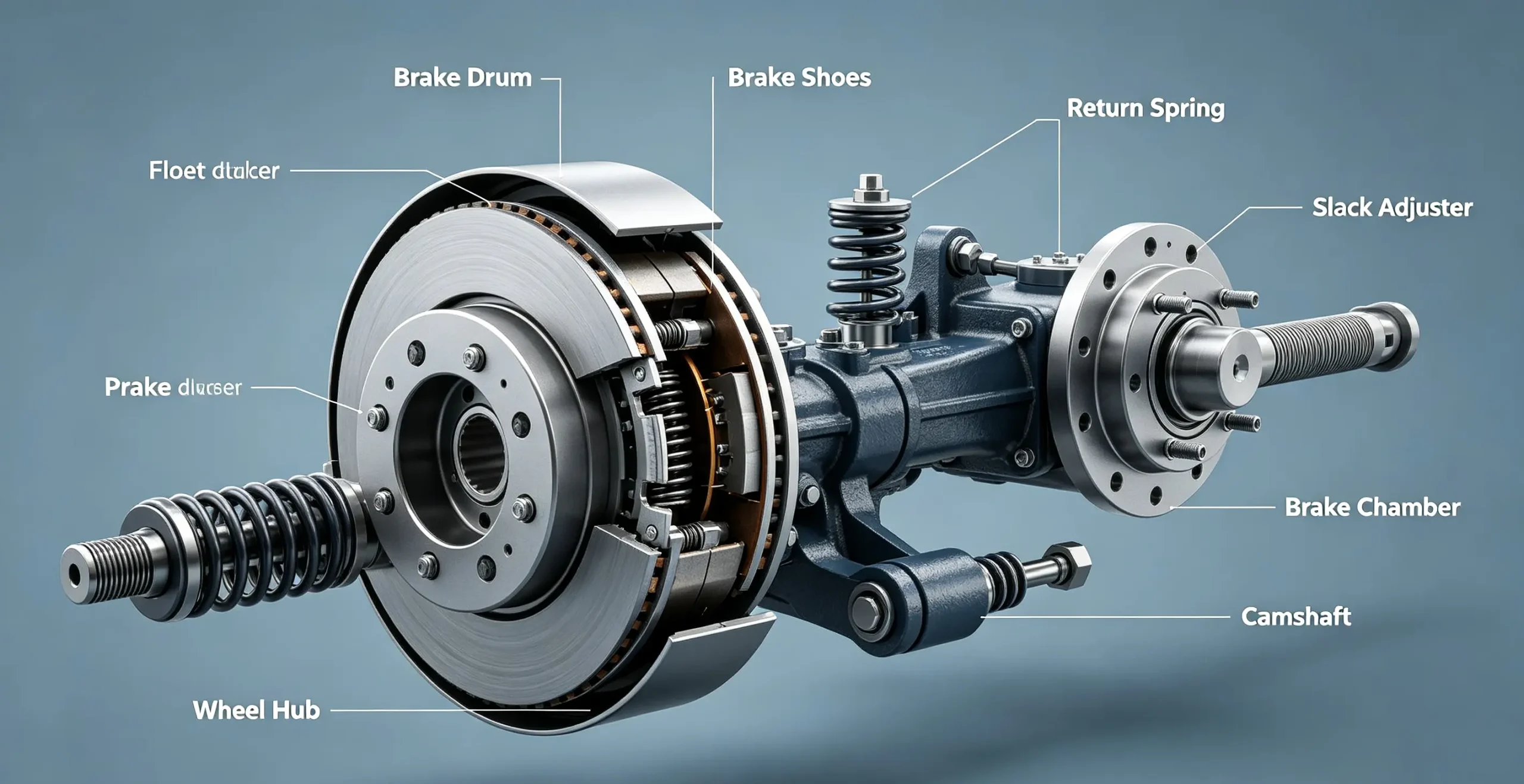
A brake drum is a circular cast iron component mounted on the wheel hub of drum brake trucks. It rotates together with tires during driving. When you step on the brake pedal, brake shoes expand outward and press against the inner surface of the brake drum. Friction between brake shoes and the drum converts kinetic energy into heat, slowing down or stopping the vehicle.
Unlike disc brake rotors widely used on light vehicles, heavy-duty truck brake drums must withstand continuous high load, frequent braking and extreme temperature changes. Long-distance haulage, frequent uphill and downhill braking, and overloading all accelerate surface abrasion.Just like suspension rubber parts, brake drums experience gradual material fatigue after long-term service.
It is important to note that brake drums cannot work independently. The full drum brake system includes brake shoes, return springs, brake chambers, slack adjusters and camshafts. Any fault in matching parts will indirectly speed up brake drum wear. For this reason, technicians need to check the whole assembly instead of only observing the drum surface during routine maintenance.
Heavy-duty brake drums adopt thick cast iron material for two core reasons. First, thick cast iron provides excellent heat dissipation performance to cope with frequent high-temperature braking. Second, it guarantees structural rigidity under heavy load conditions. Lightweight materials cannot adapt to the braking pressure of fully loaded semi-trailers and dump trucks.
In practical application, brake drums are divided into standard-duty and heavy-duty types. Standard-duty drums suit flat highway transportation with light load changes. Heavy-duty reinforced drums are specially designed for mountain routes, construction site vehicles and frequent start-stop urban delivery trucks. Mixing different types of brake drums on one axle will cause unbalanced friction and accelerated abnormal wear.
Main Brake Drum Wear Symptoms You Should Not Ignore
1. Unusual Noise While Braking
Strange sound is usually the earliest warning sign of brake drum wear. Different types of noise correspond to different damage conditions, which can help you judge the severity of problems quickly.
A continuous grinding noise during braking often means the inner friction surface of the drum has formed deep grooves. Hard debris from worn brake shoe linings scratches the cast iron surface continuously. If you hear sharp squealing sounds, small cracks or uneven deformation may exist on the drum inner wall.
When you hear dull thumping noises each time you brake or release brakes, the brake drum may suffer out-of-round distortion. Out-of-round drums will create periodic collision friction between brake shoes and drum surfaces. Many drivers mistakenly attribute brake noise to damaged brake shoes, ignoring hidden drum wear problems. Similar to engine component faults, misjudgment will lead to repeated maintenance and extra cost.
It is necessary to distinguish brake drum noise from normal brake shoe noise. Pure brake shoe wear usually produces uniform high-pitched squealing. In contrast, brake drum failure causes intermittent noise that changes with vehicle speed. The noise will become louder when braking downhill with heavy loads, which is a typical feature of drum distortion and groove wear.
In addition, if you hear metal clattering sounds when the truck passes bumpy roads, it may indicate loose brake drum fit caused by long-term wear. The worn drum cannot fit tightly with the wheel hub, resulting in tiny displacement and collision during driving.
2. Steering Wheel Vibration and Vehicle Shaking During Braking
When you apply brakes at medium or high speed, if the steering wheel shakes violently and the whole truck body vibrates obviously, deformed brake drums are one of the most common causes. After repeated heating and cooling cycles, uneven thermal stress makes the drum lose its original circular shape.
Out-of-round brake drums create unstable friction force. At every rotation cycle, brake shoes contact the drum surface unevenly, generating periodic vibration transmitted to wheels, axles and steering systems. Many operators only replace brake shoes when facing vibration issues. The shaking will return shortly after road testing if worn brake drums remain unchanged.
You should test vibration under stable speed conditions. Try braking at 60km/h and 80km/h separately. If vibration appears only during braking rather than normal driving, you can narrow the trouble point to brake assemblies instead of wheel hubs or tires.
Brake drum vibration has obvious speed characteristics. Slight deformation usually causes vibration at 70-90km/h. Severe out-of-round deformation will trigger shaking at low-speed braking below 40km/h. If left unprocessed, long-term vibration will also cause abnormal wear of steering components and tire pattern distortion, bringing secondary maintenance costs.
Moreover, asymmetric wear of left and right brake drums on the same axle will lead to inconsistent braking friction. This condition causes the truck to drift left or right during braking, which greatly reduces driving safety, especially in rainy and slippery road conditions.
3. Longer Stopping Distance and Weak Braking Force
Effective contact area directly decides braking efficiency. When brake drums wear seriously, the inner diameter expands beyond standard limits. Brake shoes cannot form sufficient tight contact with the drum surface even after full extension.
Over time, you will notice you need to press the brake pedal deeper to achieve expected deceleration. The stopping distance gradually extends, especially when carrying heavy loads or driving downhill. In rainy weather, the decline of braking performance becomes more obvious.
Some drivers try to adjust slack adjusters repeatedly to compensate weak braking. Temporary improvement can be achieved, yet this method accelerates wear of brake shoes and camshafts. Once the drum inner diameter exceeds maximum allowable size, adjustment cannot restore normal braking performance anymore.
For heavy-duty trucks, extended stopping distance is an extremely dangerous hidden danger. Fully loaded semi-trailers have huge inertia. Even a 2-meter increase in stopping distance may lead to rear-end collisions on highways. Many fleet safety accidents are caused by long-term ignored brake drum wear and insufficient braking force.
Another obvious feature of worn brake drums is soft brake pedal feeling. The pedal travel becomes longer than usual, and the braking response is delayed. This situation will become more serious after continuous downhill braking, as high temperature further reduces the friction matching degree between shoes and drums.
4. Brake Overheating and Continuous Hot Wheels
Damaged brake drums cause uneven friction. Partial contact generates concentrated heat on local areas of the drum. After short-distance driving, the wheel hub temperature becomes abnormally high compared with other wheels on the same axle.
Continuous overheating triggers thermal cracking and thermal deformation. If you smell burnt friction material near wheels after braking, inspect the brake drum immediately. Avoid washing hot brake drums with cold water. Sharp temperature difference will create large cracks on cast iron drums and lead to sudden brake failure.
Normal braking will also generate heat, but the temperature should be consistent on all wheels of the same axle. If one wheel hub is significantly hotter than others after the same driving mileage, it is definitely caused by local friction of worn brake drums or dragging brake failure.
Long-term overheating will form a hard carbonized layer on the inner friction surface of the brake drum. This carbon layer reduces friction coefficient permanently. Even if you replace new brake shoes later, the braking effect cannot return to the standard level. In this case, only replacing the brake drum can solve the problem completely.
5. Visible Surface Defects After Wheel Disassembly
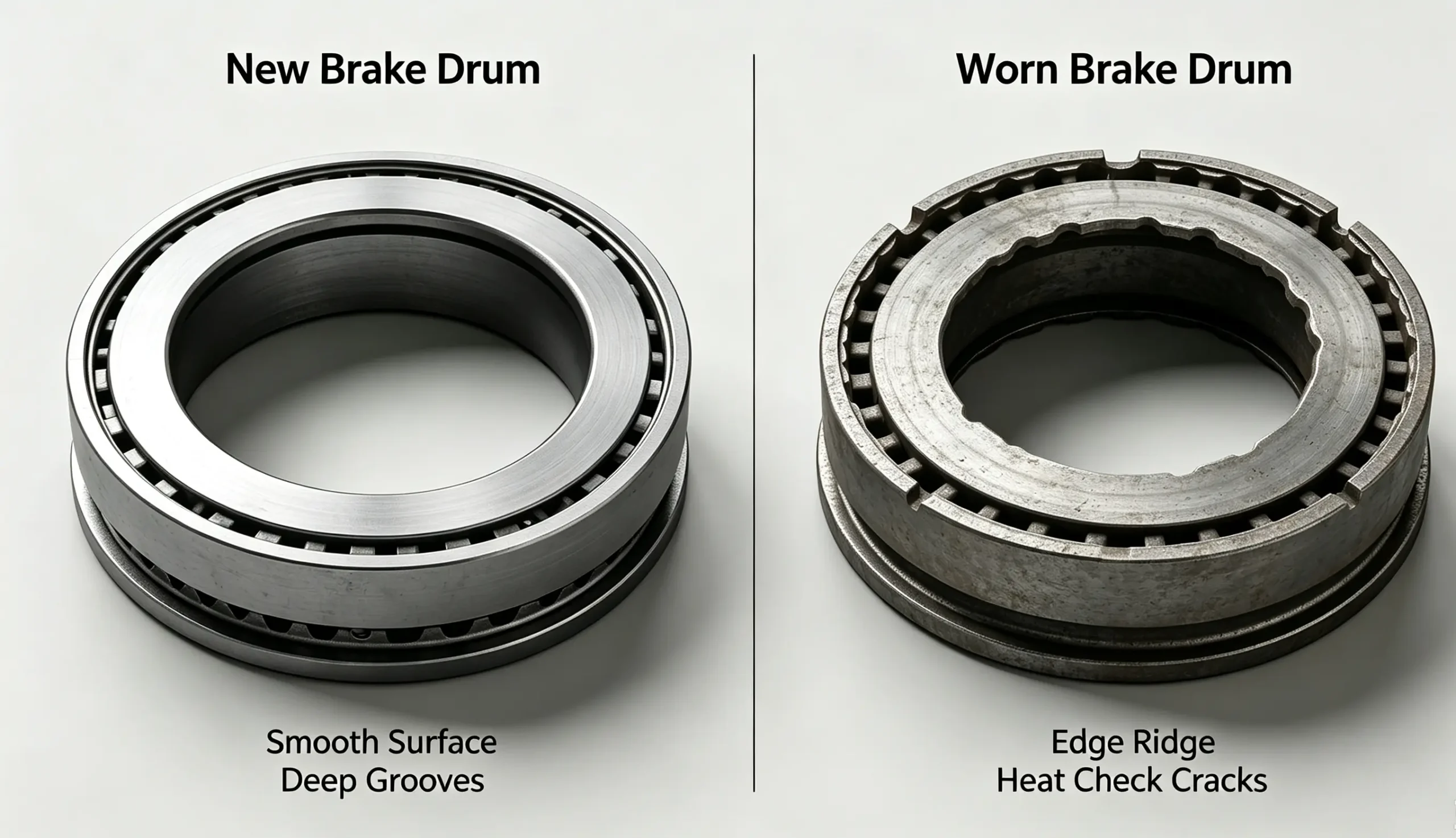
You cannot observe complete drum conditions without removing wheels. During regular maintenance, technicians should check the inner surface carefully. Common visible wear defects include deep scoring grooves, heat check cracks, pitting corrosion and edge ridges.
Edge ridges form on both sides of the friction surface after long-term abrasion. These ridges prevent brake shoes from fitting flatly. Tiny network cracks named heat checks spread across the inner wall under repeated high temperature. Once heat checks expand into penetrating cracks, the brake drum faces risk of rupture during operation.
Pitting corrosion is common for trucks operating in humid and coastal areas. Small rust pits on the drum surface will continuously polish and wear brake shoe linings. It forms a vicious cycle: corroded drums wear shoes faster, and worn shoe debris further scratches the drum surface.
Heat check cracks are the most hidden and dangerous defect. These dense fine cracks are hard to find at first glance. However, during high-load braking and temperature fluctuation, these cracks will expand rapidly. Many sudden brake drum bursts during driving are caused by neglected heat check cracks.
Common Causes of Accelerated Brake Drum Wear
Overloading and Long-Distance Downhill Braking
Overloaded trucks place extra burden on braking systems. When traveling downhill, drivers keep applying brakes to control speed. Continuous friction raises brake drum temperature rapidly. Recurrent thermal expansion and contraction speed up material fatigue and surface wear.
Many drivers rely too much on service brakes instead of using engine retarders. This bad habit greatly shortens the service life of brake drums. Standard operating procedures suggest using auxiliary braking devices to reduce service brake usage on long slopes.
Overloading is the top cause of premature brake drum failure in the freight industry. Exceeding rated load will increase braking inertia exponentially. The brake drum needs to bear several times the standard friction pressure, which leads to rapid surface wear and thermal deformation.
For mountain route fleets, downhill continuous braking is the main killer of brake drums. Without auxiliary braking assistance, the brake drum will work at high temperature for a long time. Repeated heating and cooling will cause metal fatigue, resulting in out-of-round deformation and crack generation in advance.
Incorrectly Adjusted Slack Adjusters
Slack adjusters control the clearance between brake shoes and brake drums. Too small clearance leads to persistent slight contact. Brake components keep generating friction even without braking commands, resulting in constant overheating and premature wear.
On the other side, excessive clearance reduces brake response speed. Drivers need longer pedal travel to activate brakes. Uneven adjustment between left and right wheels also creates unilateral wear on brake drums.
Most early abnormal wear cases are caused by improperly adjusted slack adjusters. Many novice maintenance personnel adjust the clearance too tightly to pursue sensitive braking. This makes the brake shoes always rub against the drum slightly during driving. The cumulative wear is extremely serious after thousands of kilometers.
As for automatic slack adjusters, aging and failure will also cause clearance errors. Stuck automatic adjusters cannot compensate wear normally, leading to either over-tight friction or delayed braking response. Regular calibration and inspection of slack adjusters can effectively extend brake drum service life.
Poor Quality Brake Shoe Linings
Low-grade brake shoe linings contain hard impurity particles. These particles scratch the smooth inner surface of brake drums continuously. High-quality friction linings match the hardness of cast iron drums, minimizing abrasive wear for both components. Choosing qualified spare parts always lowers long-term maintenance frequency of chassis systems.
Many fleet owners choose cheap inferior brake shoes to save short-term cost. In fact, hard impurities in low-quality linings will cause irreversible scratch damage to brake drums. The replacement cost of brake drums is far higher than that of brake shoes. This cost-saving method actually increases overall fleet maintenance expenditure.
Genuine high-quality brake linings adopt scientific friction coefficient formula. They ensure stable braking force while protecting the cast iron drum surface from severe abrasion. It is the most cost-effective matching solution for long-term fleet operation.
Water, Mud and Corrosion Influence
Trucks running on muddy roads or coastal areas face higher corrosion risks. Moisture stays inside brake drums after driving on wet pavements. Rust forms on the friction surface. Rust layers act as abrasive material and scratch the drum every time brakes work.
Construction site trucks and rural route vehicles often drive through muddy water. Mud and sediment enter the brake drum assembly and are difficult to discharge completely. These hard sediment particles stay between shoes and drums, causing continuous abrasive wear during each braking.
Coastal high-salt humid air will cause electrochemical corrosion on brake drums. The rust layer generated by corrosion is harder than original cast iron. Long-term friction will quickly wear out the drum inner wall, leading to early scrapping of brake drums.
Critical Measurement Standards: When Should You Replace Brake Drums?
Every brake drum comes with factory specification data including original inner diameter and maximum allowable diameter. You must use an inside micrometer to measure dimensions accurately instead of visual judgment only.
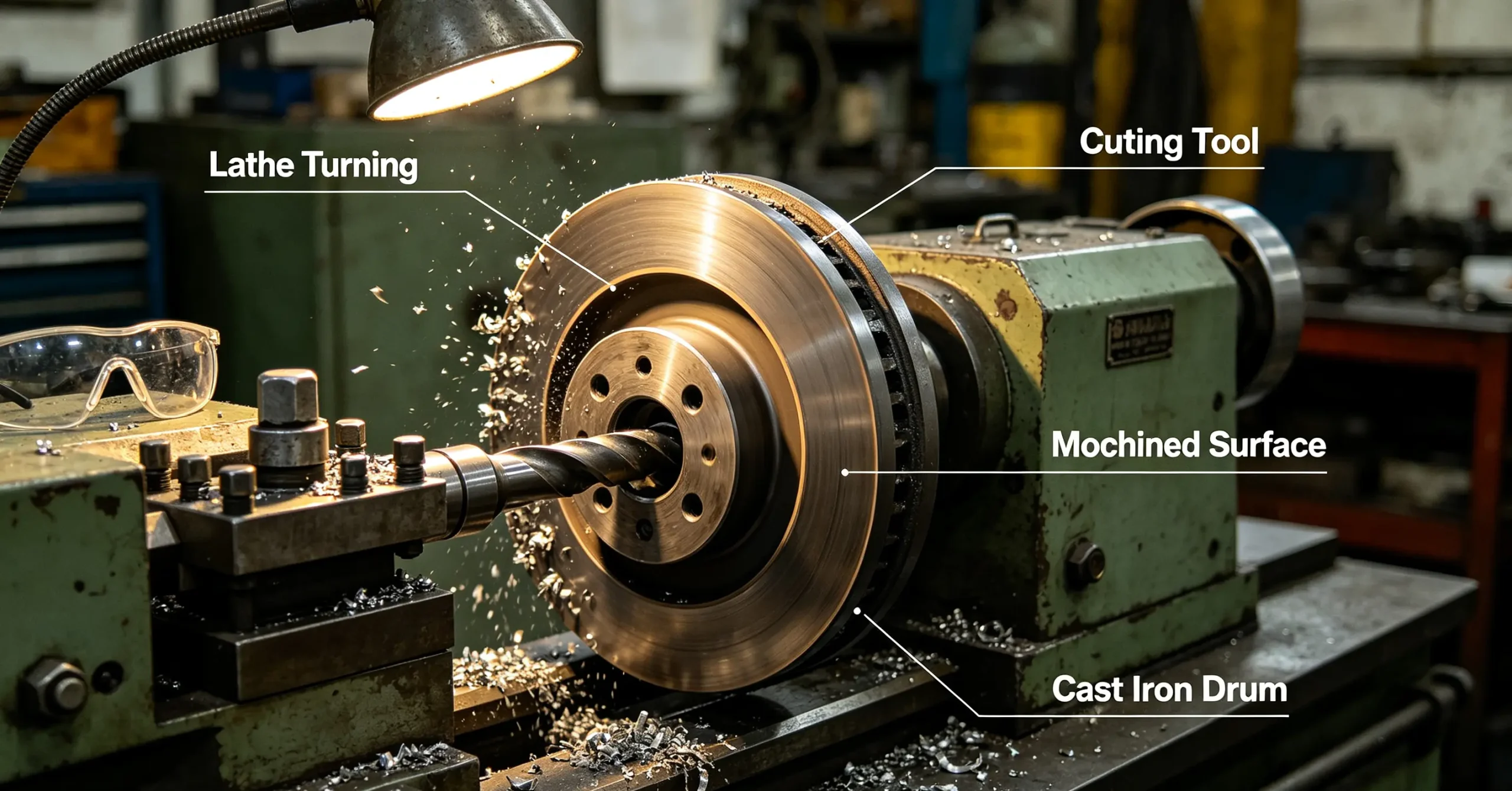
After long-term friction, the inner diameter increases. Once the measured value reaches or exceeds the limit marked on the drum shell, replacement becomes mandatory. Machining (turning) can only be carried out within the allowable machining margin. Do not repeatedly turn brake drums until wall thickness becomes too thin.
Besides diameter limits, replacement is required under the following situations:
-
Visible penetrating cracks on any position of the drum
-
Deep scoring grooves deeper than 1.5mm on friction surface
-
Serious out-of-round deformation that cannot be fixed by machining
-
Thin residual wall thickness after turning processing
-
Large areas of peeling and material loss on inner surface
Many fleet teams set fixed inspection cycles. For trucks running 10,000 kilometers per month, complete brake drum measurement should be arranged every 6 months. Timely inspection avoids sudden breakdown on highways.
Visual inspection can only find obvious defects such as large cracks and deep grooves. Slight diameter expansion and tiny out-of-round deformation can only be detected by professional micrometer measurement. Therefore, quantitative measurement is the core standard for judging replacement, rather than subjective observation.
It is worth noting that different brands and models of brake drums have different limit parameters. You cannot apply a unified standard to all drums. Always refer to the factory specification data marked on the drum outer wall to avoid misjudgment.
Once the brake drum exceeds the maximum allowable diameter, even if there are no obvious cracks or grooves, it must be replaced. Excessive diameter will cause insufficient contact stroke of brake shoes, permanently reduced braking force, and hidden safety hazards that cannot be fixed by adjustment or machining.
Can You Machine Worn Brake Drums Instead of Replacement?
Brake drum turning (machining) removes uneven surface layers, eliminating slight out-of-roundness, shallow grooves and minor heat checks. It is an economical solution for slight wear within processing allowance.
However, machining has clear limits. Each turning reduces the wall thickness of cast iron drums. Thinner walls weaken structural strength and heat dissipation capacity. Drums processed multiple times cannot withstand high temperature, and deformation or cracking easily happens under heavy load.
Industry recommendations: If wear exceeds 70% of the maximum machining allowance, prepare new brake drums in advance. Do not pursue cost saving by repeatedly machining aging drums. Safety risks cannot be ignored. Just like regular maintenance of engine accessories, preventive replacement prevents roadside breakdown.
Brake drum machining is only suitable for minor wear problems such as slight out-of-roundness and shallow uniform scratches. For drums with dense heat cracks, deep grooves or excessive diameter wear, machining cannot solve the fundamental problem. Processing will only thin the wall and increase the risk of burst failure.
Fleet maintenance data shows that repeatedly machined brake drums have a failure rate more than three times higher than new drums. The short-term cost saving will be offset by frequent secondary maintenance and potential traffic accident losses.
After machining, the brake drum must be matched with new brake shoes. The old worn shoes cannot fit the newly processed smooth surface, which will lead to poor contact and weak braking force in the early stage of use.
Step-by-Step Brake Drum Inspection Procedure
Follow standardized inspection steps to avoid missing hidden wear problems.
First, safely lift the truck with professional jacks and support the axle with safety stands. Never work relying only on hydraulic jacks. Remove tires and wheel hubs carefully to expose the brake drum assembly.
Second, clean dust, mud and old friction powder inside the drum. Wipe the inner friction surface fully so you can observe cracks, grooves and corrosion clearly. Check the outer surface and drum edge for cracks as well.
Third, use an inside micrometer to measure inner diameter at multiple positions. Take measurements horizontally and vertically to calculate out-of-round value. Record all data for comparison with factory standards.
Fourth, check matching components. Inspect brake shoes, return springs, slack adjusters and brake camshaft. Replace damaged matching parts simultaneously when installing new brake drums. Faulty auxiliary components will damage new drums quickly.
Before inspection, you must ensure the truck is completely stationary and the air pressure of the brake system is exhausted. Residual air pressure may cause accidental ejection of brake components and lead to maintenance safety accidents.
When cleaning the brake drum, do not use high-pressure water flushing directly in a short time for high-temperature drums. Natural cooling and dry wiping are the safest cleaning methods to avoid thermal cracking caused by sudden temperature change.
Multi-point measurement is crucial for accurate inspection. Measuring only one position will miss out-of-round deformation defects. Horizontal, vertical and 45-degree oblique multi-point measurement can fully reflect the true wear state of the brake drum.
After completing drum inspection, the linkage inspection of the brake system must not be omitted. Damaged return springs will cause incomplete shoe reset, resulting in continuous friction wear of new drums. Unqualified matching parts will make new brake drums wear out in a short time.
Professional Tips for Brake Drum Replacement
Replace Brake Drums in Pairs on the Same Axle
Do not replace only one single brake drum on an axle. New and worn drums have different friction characteristics. Unbalanced braking force makes the truck pull to one side during braking, bringing huge safety hazards. Always replace left and right brake drums of the same axle at the same time.
Many individual truck owners replace only the damaged single drum to save cost. This operation will cause inconsistent braking friction coefficient on both sides of the axle. During emergency braking, unilateral rapid braking will lead to vehicle sideslip or even rollover accidents, especially on curved and slippery roads.
Pair replacement ensures consistent friction performance, uniform stress and balanced braking force on both sides. It is the most basic standard operation procedure in heavy-duty truck maintenance.
Run-in New Brake Drums Properly
After installation of new brake drums and brake shoes, avoid frequent emergency braking within the first 200 kilometers. Gentle braking allows friction surfaces to form uniform contact. Violent braking in the run-in period leads to partial hot spots and permanent deformation.
The run-in period is the key stage for the fit between new drums and new shoes. Gentle and uniform braking can form a flat and stable friction layer. It effectively prolongs the service life of the entire brake assembly.
If emergency braking is frequent during the run-in period, local high temperature will cause partial hardening of the friction surface. The new drum will form uneven wear from the beginning, resulting in vibration and noise problems in later use.
Keep Brake System Clean
Prevent grease, engine oil and fuel from splashing onto the friction surface of brake drums and brake shoes. Oil contamination causes sharp decline of friction coefficient. Braking will become unstable and ineffective once pollution occurs.
Oil leakage of wheel hub oil seals is a common cause of brake drum pollution. Lubricating oil penetrates into the brake assembly and adheres to the drum inner wall. It will lead to slippery braking, delayed response and increased stopping distance.
During replacement and maintenance, technicians must strictly ensure the cleanness of the friction surface. Any oil stain, dust and impurities will affect the braking effect and accelerate component wear.
Select Matching Specification Brake Drums
Different truck models carry brake drums with unique size, load rating and installation hole position. Do not install incompatible universal parts. Unsuitable drums loosen during operation and trigger serious brake failure. Confirm component specifications before ordering any heavy-duty spare parts.
Many universal modified brake drums on the market have unqualified load parameters and installation accuracy. Although they are low in price, they are prone to loose installation, eccentric rotation and rapid wear. For heavy-duty trucks that pursue safety and stability, original standard matching drums are the best choice.
Daily Maintenance to Extend Brake Drum Service Life
Effective daily maintenance can greatly slow down brake drum wear and cut overall fleet operation cost.
Control loading weight strictly and prohibit overloading. Train drivers to form good driving habits. Use auxiliary braking systems on downhill roads and avoid continuous service braking.
Arrange regular brake clearance inspection. Maintain standard slack adjuster clearance to prevent persistent drag braking. Clean the brake assembly regularly to remove accumulated dust and corrosive mud.
Carry out systematic brake inspection before long-distance transportation. Check temperature of each wheel hub after long-time driving. Stop and examine immediately if any wheel keeps overheating.
Fleet companies can formulate standardized monthly brake inspection system. Special maintenance personnel are arranged to measure brake drum diameter, check cracks and calibrate brake clearance every month. Early maintenance can avoid high-cost replacement and accident risks.
Driving habit optimization is the most effective free maintenance method. Avoid frequent sudden braking, reduce continuous downhill service braking, and use engine braking reasonably. These habits can double the service life of brake drums and brake shoes.
For vehicles parked for a long time, regular low-speed braking is required to remove surface rust. Long-term static parking will cause thick rust layers on the drum inner wall, which will lead to severe abrasive wear after restarting operation.
Frequently Asked Questions About Brake Drum Wear
Q1: How many kilometers can a heavy-duty truck brake drum last normally?
A: Service life depends on load, route and driving habits. For standard-load highway trucks, brake drums can work for 150,000 to 300,000 kilometers. Trucks operating on mountain routes with frequent braking have much shorter service cycles.
Vehicles often running on construction sites and muddy roads have a service life reduced by nearly half due to serious abrasive wear. Strict load control and standardized maintenance can effectively extend the service cycle of brake drums.
Q2: Is slight rust inside brake drums normal?
A: Light surface rust formed after parking for several days will disappear after normal braking. If thick rust layers exist all the time, check whether brake shoes drag or the truck stays in humid environments long term.
Slight surface rust is a normal physical phenomenon and will be polished flat after several times of braking. Persistent thick rust indicates abnormal friction or long-term humid parking environment, which needs targeted inspection and improvement.
Q3: Can heat check cracks continue to be used?
A: Tiny surface heat checks need close monitoring. Stop using the drum immediately when cracks extend or penetrate the drum wall. Cracked brake drums may burst under high temperature during driving.
Heat check cracks are fatigue cracks caused by repeated temperature changes. They will not disappear automatically. With the increase of braking times, the cracks will continue to expand. Timely replacement is the only safe solution.
Q4: Why does the new brake drum wear unevenly quickly?
A: The main reasons include misaligned brake camshaft, damaged return springs, incorrectly adjusted slack adjusters or deformed wheel hubs. You need to check all related components during replacement.
Most rapid abnormal wear of new drums is not caused by quality problems of the drum itself, but by faulty matching brake system components. Complete linkage inspection before installation can completely avoid this problem.
Final Summary
Brake drum wear develops gradually from minor signs to dangerous failure. Early symptoms including braking noise, body vibration and extended stopping distance cannot be ignored. Regular dimensional measurement and visual inspection are the most reliable ways to judge replacement timing.
Decide between machining and replacement according to wear degree and wall thickness data. Always follow the rule of pairwise replacement on the same axle. Cooperate with standardized maintenance and scientific driving habits to maximize the service life of brake drums and guarantee driving safety for heavy-duty trucks. Systematic chassis maintenance helps fleet operators reduce accident risks and control repair expenditure in the long run.
In short, brake drum maintenance is a key part of truck safety management. Early detection, reasonable judgment, standardized replacement and daily maintenance can effectively avoid brake failure accidents and reduce fleet operating costs. Every truck driver and maintenance technician should master professional brake drum inspection and maintenance knowledge to ensure safe and stable transportation operation.


