
Introduction
All heavy-duty trucks and commercial trailers rely fully on stable pneumatic brake systems for road safety. Unlike regular passenger cars with hydraulic brakes, large commercial vehicles use air brakes. Air brakes offer stronger load resistance and better safety backup for heavy loads.
The air brake compressor acts as the heart of the entire air brake system. Most drivers and junior maintenance staff only know it builds air pressure. Few understand its full working logic, internal operation phases and component matching rules.
This core part converts engine mechanical power into high-pressure air. The compressed air stores in air reservoirs. It supplies power for braking, air suspension, gear shifting assist and other pneumatic functions.
A faulty air brake compressor causes obvious vehicle issues. Common problems include insufficient air pressure, slow air charging and soft braking. Severe failures trigger low-pressure protection, lock brakes and lead to roadside shutdowns.
Most pneumatic system faults do not come from brake chambers or valves. Over half of failures result from substandard compressor operation, poor daily maintenance or mismatched compressor parameters.
Fleet managers and technicians must master compressor working principles. This knowledge enables fast fault diagnosis, standardized maintenance and lower long-term fleet operating costs.
This guide explains heavy-duty truck air brake compressors in simple language. It covers core components, full working cycles, loaded/unloaded modes, system matching rules, common faults, failure causes and professional maintenance tips.
After reading this guide, you can accurately judge compressor status, locate abnormalities quickly, standardize maintenance and select compatible compressors for different truck models.
If you’re looking to upgrade or replace worn-out components within your vehicle’s pneumatic setup, you can explore our full lineup of reliable truck pneumatic brake system parts and accessories for all heavy-duty truck models.
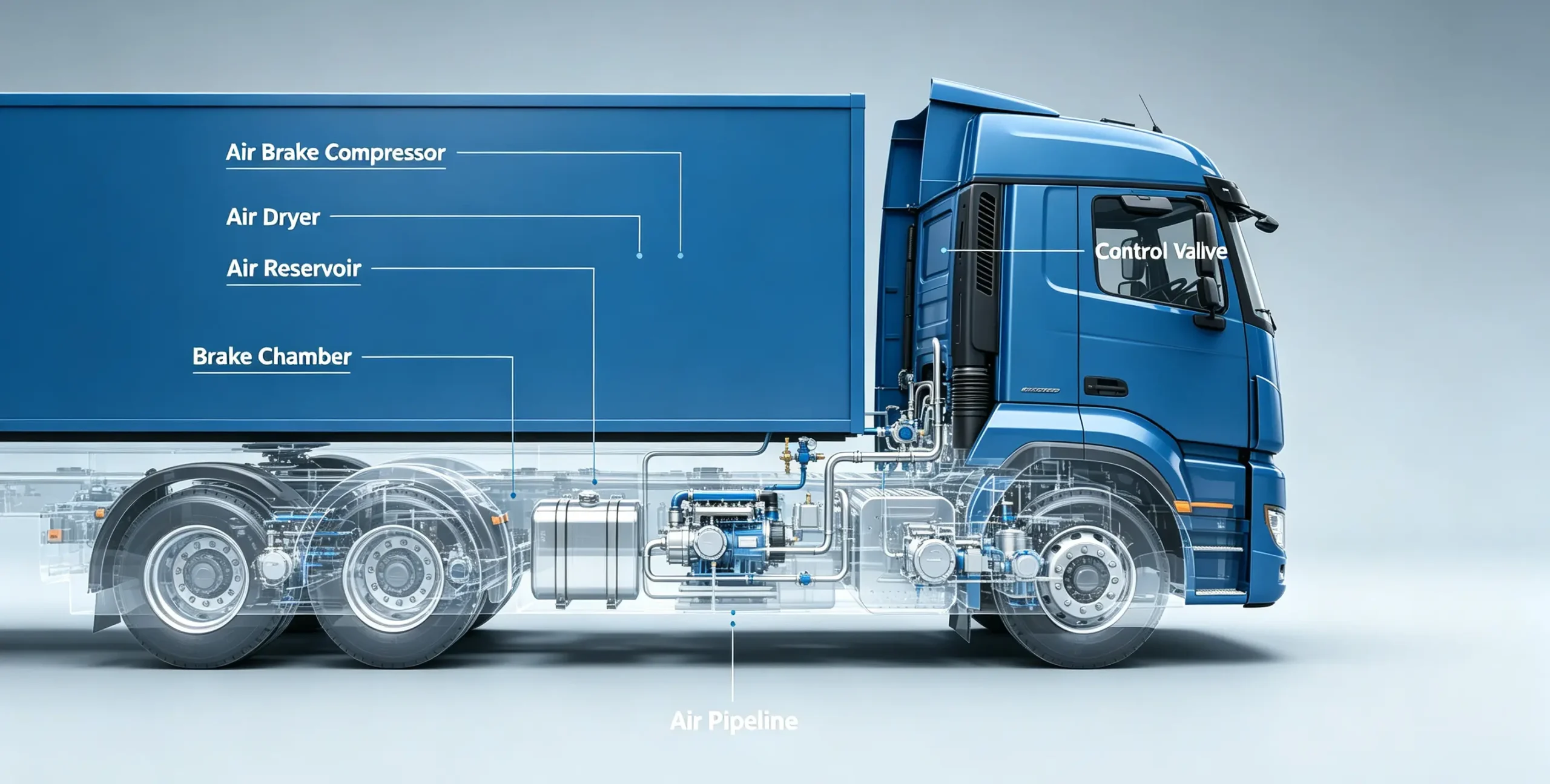
What Is a Heavy-Duty Truck Air Brake Compressor?
A truck air brake compressor is an engine-driven pneumatic power generator. It is custom-built for commercial vehicle air brake systems.
It differs greatly from industrial air compressors. Truck compressors feature compact size, strong vibration resistance and wide temperature adaptability. They support intermittent cyclic operation to fit complex long-haul and heavy-load driving conditions.
The compressor’s core job is simple. It draws in ambient air, filters it and compresses it into standard high-pressure air. It then delivers clean pressurized air to dryers and reservoirs for vehicle-wide pneumatic use.
This component does not run at full load nonstop. It automatically switches between loaded pumping mode and unloaded idle mode based on system air pressure. This smart design reduces engine load and saves fuel.
Besides powering brakes, qualified compressors support multiple auxiliary functions. These include air suspension adjustment, clutch assist, pneumatic gear shifting and door air control.
In short, compressor performance directly controls brake response speed, system stability and driving safety. It is an essential core safety component for all heavy-duty trucks.
Core Components of Air Brake Compressor & Their Functions
A stable compressor operation depends on precise coordination of internal parts. Every component plays an independent and irreplaceable role in air intake, compression, exhaust and pressure regulation.
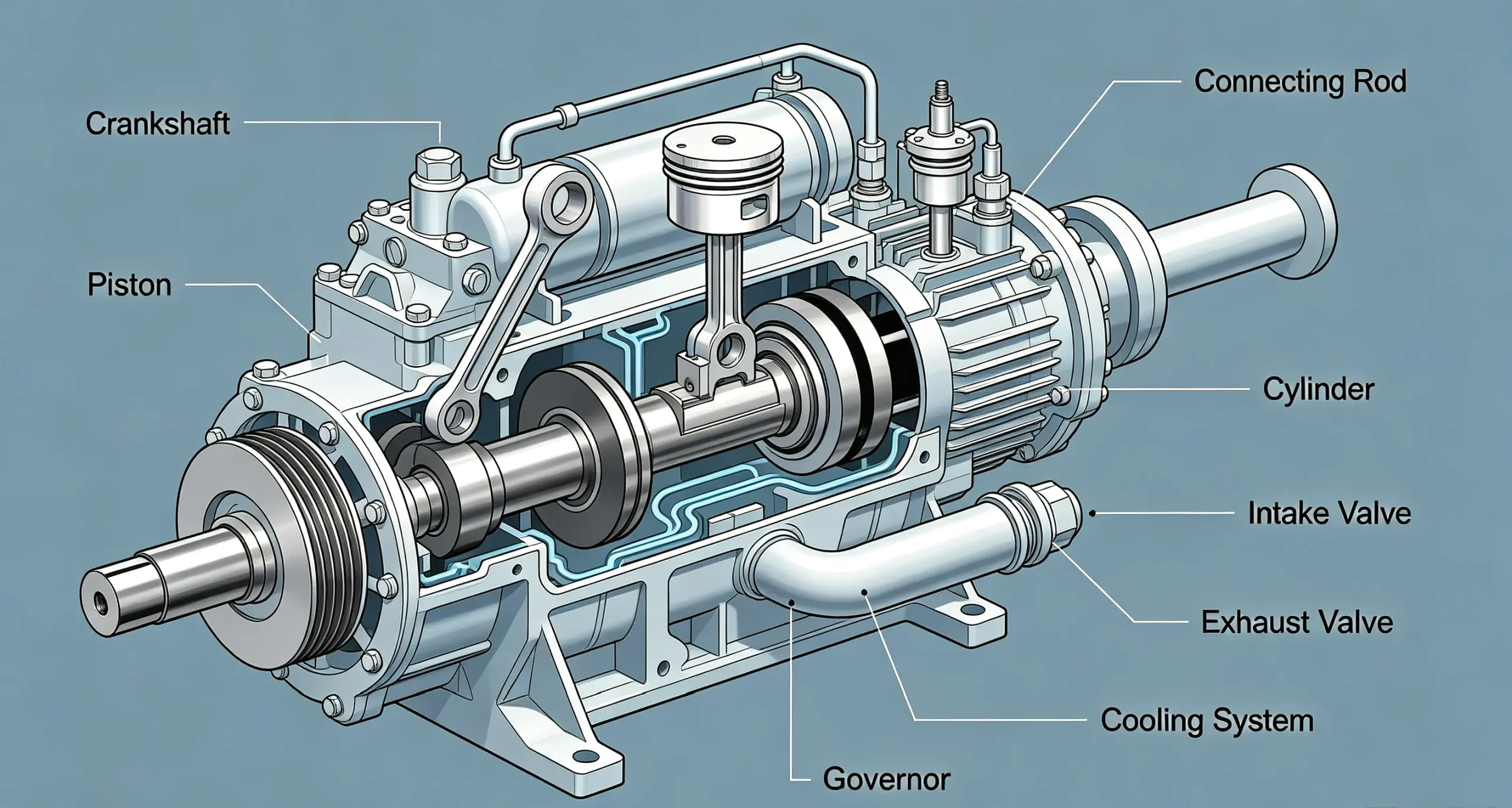
Most heavy-duty truck compressors are reciprocating piston types. They have single-cylinder or double-cylinder structures. Core component layouts remain consistent across most mainstream models.
Below are detailed functions of all key compressor parts for clearer structural understanding.
1. Crankshaft & Connecting Rod Mechanism
The crankshaft receives power from the truck engine via gears or belts and rotates continuously. The connecting rod converts rotary crankshaft motion into linear piston movement.
This mechanical conversion creates the basic power for air compression. Crankshaft forging quality and machining precision directly impact compressor efficiency and service life.
2. Piston & Cylinder Assembly
The cylinder forms a sealed compression chamber. The piston moves up and down to finish air suction and compression. Piston rings ensure chamber tightness and prevent internal air leakage.
High-quality compressors adopt precision cylinder honing and wear-resistant piston rings. This design maintains a stable compression ratio and avoids pressure drop after long working hours.
3. Intake & Exhaust Valves
These two one-way valves control air flow direction. The intake valve opens when the piston descends to draw in external air. The exhaust valve opens during piston ascent to discharge high-pressure air.
Valve opening and closing rely purely on internal pressure differences with no electronic control. Valve sensitivity and tightness determine air charging speed and overall compression efficiency.
4. Unloader Mechanism
The unloader controls compressor working mode switching. It cooperates with the external governor to adjust intake valve status.
When air pressure reaches the upper limit, the unloader holds the intake valve open. The compressor runs idle with no compression resistance to reduce engine power consumption.
5. Governor Valve
The governor acts as the system pressure monitoring center. It tracks real-time reservoir pressure and sends control signals to the unloader.
Most heavy-duty truck air systems work steadily between 100 PSI and 125 PSI. The governor precisely controls cut-in and cut-out pressure to keep the system within a safe range.
6. Cooling & Lubrication System
Frequent air compression generates massive heat. Compressors use water-cooled or air-cooled structures to dissipate heat and prevent high-temperature part deformation.
The lubrication system delivers continuous oil to crankshaft, piston and connecting rod friction points. It reduces mechanical wear and ensures flexible component operation.
Understanding these core components helps technicians quickly pinpoint mechanical failures during daily inspections. For more in-depth troubleshooting and routine upkeep strategies for pneumatic brake systems, refer to our dedicated truck technical support and professional repair guides.
Complete Working Principle of Heavy-Duty Air Brake Compressor
The air brake compressor runs in a full closed-loop cycle. It has two core working states that switch automatically based on system pressure changes.
A common misconception is that compressors compress air nonstop after engine startup. Continuous full-load operation causes overheating damage and fuel waste. Automatic mode switching ensures long-term stable performance.
We break down the full working process into three simple phases below.
Phase 1: Loaded Pumping Cycle (Pressure Supplement State)
Vehicle braking and pneumatic accessory use gradually consume reservoir air pressure. When pressure drops to 100–110 PSI (governor cut-in point), the compressor enters loaded working mode.
The governor resets the unloader mechanism. The intake valve restores normal one-way opening and closing. The compressor starts regular air intake and compression cycles.
First, the piston moves downward to create negative pressure. Filtered external air pushes open the intake valve and fills the compression chamber.
Next, the piston moves upward to close the intake valve. Sealed air inside the cylinder compresses rapidly, raising air pressure and temperature.
When internal cylinder pressure exceeds pipeline pressure, the exhaust valve opens. High-pressure air flows into cooling pipelines and moves to the air dryer for purification.
The dryer removes moisture and oil contaminants. Clean high-pressure air finally enters air reservoirs for storage. This cycle repeats continuously to replenish system pressure.
Phase 2: Unloaded Idle Cycle (Pressure Maintenance State)
Continuous pumping raises reservoir pressure to 120–125 PSI (standard cut-out pressure). The governor activates the pressure maintenance mechanism.
A control signal pushes the unloader to lock the intake valve in an open state. The cylinder connects directly with ambient air.
The piston moves up and down normally but creates no effective compression. No new high-pressure air generates.
The compressor runs in zero-load idle mode. It follows engine rotation without consuming extra power. This mode prevents system overpressure and cuts fuel consumption.
Phase 3: Automatic Cycle Switching
Pneumatic components consume air constantly during driving. Reservoir pressure slowly decreases over time.
Once pressure falls back to the cut-in threshold, the governor and unloader reset automatically. The compressor returns to loaded pumping mode.
This loop maintains air pressure steadily within the safe 100–125 PSI range. It realizes automatic pressure supplement and maintenance for the whole vehicle.
Single-Stage vs Two-Stage Air Brake Compressors: Key Differences
Heavy-duty truck compressors fall into two categories based on compression structure: single-stage and two-stage. Each type suits different vehicle loads and working scenarios.
Single-Stage Compressor Features
-
Simple structure: Fewer internal parts and lower failure rates
-
Fast startup: Stable performance under low and medium loads
-
Best application: Medium/light-duty trucks and short-haul freight vehicles
-
Limitation: Limited compression efficiency, not ideal for long-term high-temperature and high-load operation
Two-Stage Compressor Features
-
Dual compression design: Two cylinders complete primary and secondary pressurization sequentially
-
Higher efficiency: Larger air output and more stable pressure delivery
-
Balanced heat dissipation: Avoids local overheating and thermal failure
-
Best application: Heavy-duty long-haul trucks, large trailers and engineering vehicles with high air consumption
When replacing or upgrading your compressor, it is critical to select parts that match your vehicle’s original specifications. We offer a full range of OEM-grade components from trusted manufacturers, covering all mainstream truck brands in our truck genuine brand parts and factory supply standards collection.
Complete Air Brake System Matching Logic
The air brake compressor cannot work independently. Its stable operation relies on full coordination with peripheral pneumatic components. Many compressor faults stem from mismatched or aging auxiliary parts rather than compressor body damage.
The full air transmission and purification process includes four key links:
1. Air Intake Filtration
External air passes through a dedicated filter before entering the compressor. The filter blocks dust, sediment and impurities. It prevents abrasive wear on cylinders and pistons.
Clogged or failed filters cause insufficient air intake, lower compression efficiency and accelerate internal component aging.
2. Compression & Cooling
Air temperature rises sharply after compression. Cooling coils quickly reduce hot air temperature to control vapor and oil precipitation.
Effective cooling lowers the burden on subsequent drying procedures and improves overall system stability.
3. Purification & Drying
The air dryer acts as the core purification component. It removes moisture, oil residue and tiny particles from compressed air.
Unclean air causes reservoir rust, valve jamming and pipeline blockage. These issues trigger full-system pneumatic failures over time.
4. Pressure Storage & Distribution
Dry and clean pressurized air stores in front and rear air reservoirs. Multi-loop storage ensures pressure redundancy for emergency braking.
Reserved air distributes to brake valves, clutch assists, air suspensions and other pneumatic execution parts to support vehicle functions.
Common Air Brake Compressor Abnormal Working Phenomena
Compressors develop minor abnormalities after long-term operation and irregular maintenance. These early warning signs predict major failures. Most fleets overlook small issues, leading to costly shutdown repairs.
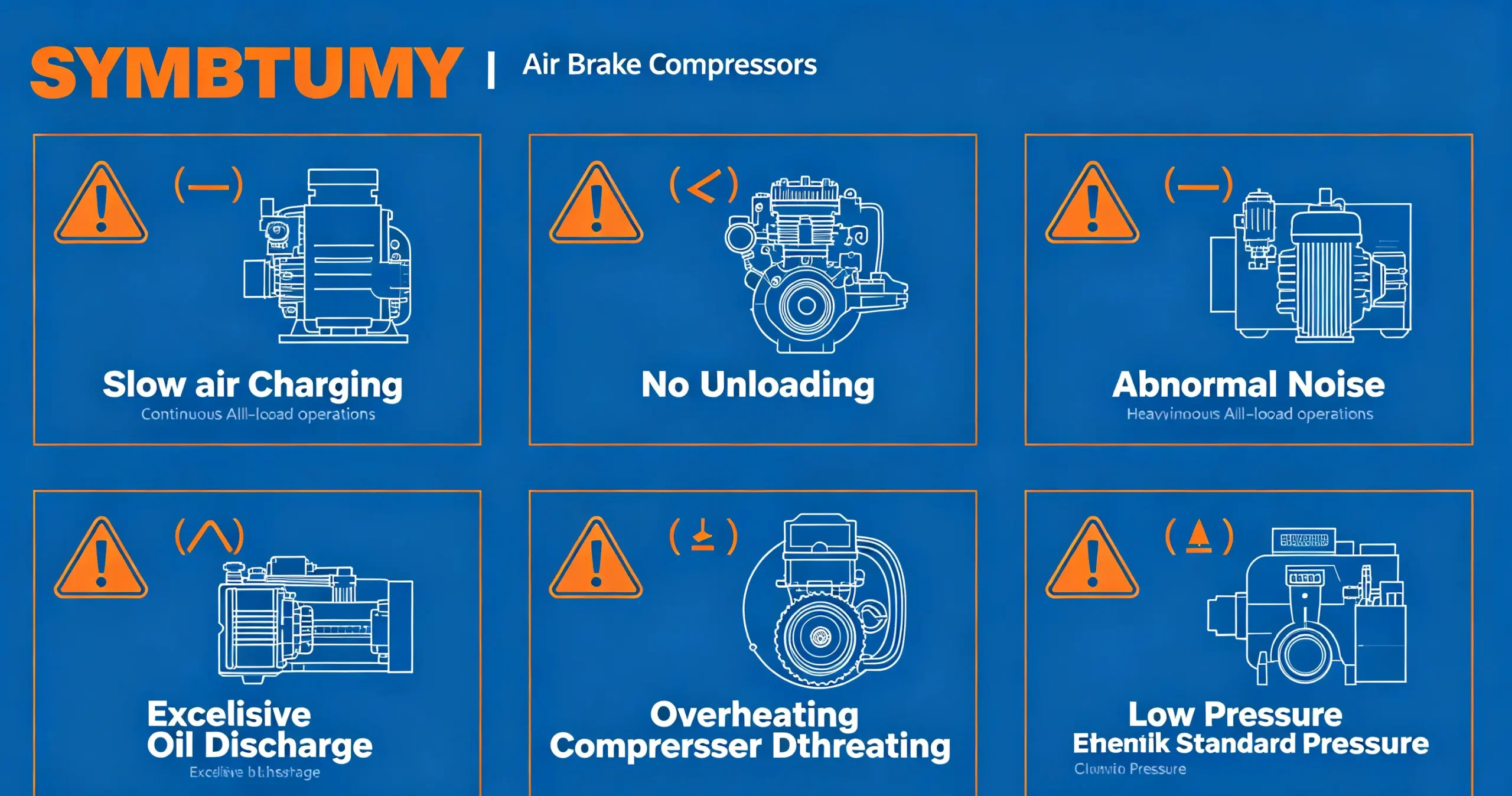
Below are six common abnormal symptoms and clear judgment methods:
1. Slow Air Charging Speed
The vehicle takes far longer than normal to reach standard pressure. Air supply cannot keep up with driving air consumption.
Main causes: clogged intake filter, worn piston rings, poor valve sealing and aging governor.
2. Continuous Full-Load Operation (No Unloading)
Normal compressors switch to idle mode after hitting max pressure. Continuous full-load operation indicates faulty unloader or governor parts.
Long-term full-load work causes overheating, accelerated wear, higher fuel use and shorter service life.
3. Abnormal Operating Noise
Steady low-frequency hums are normal. Clicking, knocking or grinding noises signal internal wear or loose assembly.
Common triggers: loose connecting rods, worn bearings, cylinder foreign matter and damaged piston rings.
4. Exhaust Air With Excessive Oil
Tiny oil vapor is normal. Visible oil in compressed air means severe lubrication system aging and piston wear.
Oil-contaminated air ruins dryer desiccants, causes pipeline water buildup and leads to frequent valve jams.
5. Compressor Overheating
Overheating comes from long high-load operation, blocked cooling pipes, insufficient oil or poor heat dissipation.
High temperature deforms cylinders and pistons, reduces tightness and even causes cylinder scraping and compressor scrapping.
6. Unreachable Standard Pressure
If pressure never reaches 120–125 PSI after long driving, internal air leakage or pressure regulation failure is confirmed.
Long-term low-pressure operation leads to weak braking, longer stopping distances and serious safety risks.
Persistent minor issues will eventually evolve into critical breakdowns that halt fleet operations. We have assisted numerous global fleets in solving pneumatic system failure challenges and optimizing parts replacement plans, which you can learn more about in our global fleet cooperative cases and customized parts solutions.
Root Causes of Compressor Failure & Aging
Compressor failures are almost never sudden. They accumulate from poor working conditions, irregular maintenance and low-quality parts. Six core causes account for most aging and faults:
-
Inferior non-standard compressors: Low-cost unqualified parts have unstable pressure regulation, low efficiency and short service cycles
-
Neglected filter replacement: Blocked filters increase compressor load and let abrasive dust wear internal parts
-
Irregular lubrication: Insufficient or deteriorated oil causes friction wear, noise and overheating
-
Long-term overload operation: Frequent braking and mountain road driving keep compressors working at high load without proper heat dissipation
-
Aging peripheral accessories: Faulty dryers, blocked cooling pipes and failed governors damage the main compressor indirectly
-
Unprofessional installation: Misaligned angles, unbalanced belt tension and incorrect calibration cause eccentric part wear
High-Efficiency Daily Maintenance Tips to Extend Compressor Life
Standardized maintenance can extend high-quality compressor service life to 3–5 years. Simple daily checks greatly reduce failure rates and fleet maintenance costs.
Follow these six practical maintenance rules:
1. Daily Pressure Inspection
Check the air pressure gauge before daily driving. Observe air charging speed and maximum pressure value. Record and troubleshoot abnormal data timely.
2. Timely Intake Filter Replacement
Replace filters regularly based on road conditions. Shorten replacement cycles for dusty and complex road environments to ensure smooth air intake.
3. Regular Lubricating Oil Check
Inspect oil level and quality periodically. Replace emulsified or deteriorated oil to guarantee full internal lubrication.
4. Regular Reservoir Water Discharge
Drain accumulated water from air reservoirs routinely. This prevents moisture backflow, internal rust and pipeline corrosion.
5. Cooling System Cleaning
Keep cooling pipelines unblocked and heat dissipation surfaces clean. Dust coverage directly causes poor heat dissipation and overheating faults.
6. Governor Pressure Calibration
Test and calibrate cut-in and cut-out pressure regularly. Ensure normal mode switching and avoid long-term compressor overload.
If you encounter complex compressor faults or need professional customized maintenance advice, feel free to contact our professional after-sales technical team for one-on-one accurate guidance and problem-solving support.
How to Select a Qualified Compressor Supplier
Compressor quality determines fleet pneumatic system safety and stability. Reliable suppliers avoid frequent faults and repeated maintenance costs. Use these six core standards for supplier selection:
-
Complete formal qualifications: Certified production, official inspection reports and OEM matching capabilities
-
Strict factory testing: All products pass tightness, efficiency, pressure stability and high-temperature durability tests
-
Full model coverage: Compatible with SINOTRUK, SHACMAN, FAW, FOTON and other mainstream heavy-duty truck brands
-
Stable batch supply: Large production lines and standardized warehouses support fast delivery and sufficient inventory
-
Professional after-sales service: Provide parameter matching, installation guidance and customized fleet solutions
-
Cost-effective factory direct sales: No middlemen, original quality with competitive ex-factory prices
Choosing a professional and qualified manufacturer is the premise of stable parts supply and quality assurance. To learn more about our standardized production processes, strict quality control system and comprehensive service advantages, check out Mettlead professional truck parts manufacturer introduction.
FAQ: Common Compressor Working & Maintenance Questions
1. Why does the compressor keep running after reaching standard pressure?
This issue mainly comes from governor failure or unloader mechanism jamming. The compressor cannot receive unloading signals and stays in full-load mode. Replace faulty parts and recalibrate pressure parameters to fix it.
2. What causes slow air charging in heavy-duty trucks?
Top causes include clogged air filters, worn piston ring air leakage, poor valve sealing, aging governors and large-area pipeline air leakage.
3. What is the standard service life of an air brake compressor?
With standardized maintenance and normal driving conditions, high-quality original compressors last 3–5 years. Harsh working conditions shorten the service cycle appropriately.
4. Can I drive with abnormal compressor noise?
No. Abnormal noise is an early warning of internal wear. Continued driving aggravates faults and may cause sudden compressor failure on the road.
5. What is the standard working pressure range for truck air brake systems?
Most heavy-duty pneumatic systems work safely at 100 PSI (cut-in) to 125 PSI (cut-out). Deviations from this range cause system abnormalities.
6. Which compressor suits long-haul fleets: single-stage or two-stage?
Two-stage compressors are better for long-haul heavy-load fleets due to higher efficiency and stability. Single-stage compressors offer better cost performance for short-haul light-load vehicles.
This FAQ covers the most common doubts from fleet maintenance personnel and truck drivers. For more professional knowledge about pneumatic system inspection, fault repair and daily maintenance, browse our rich truck brake and pneumatic system technical articles.
Conclusion
The air brake compressor serves as the core power source of heavy-duty truck pneumatic brake systems. Its stable operation directly guarantees braking safety, response sensitivity and overall fleet operating efficiency.
Most fleet safety hazards and extra maintenance costs result from insufficient compressor knowledge and non-standard daily upkeep.
Mastering compressor working cycles, core component functions, system matching rules and fault judgment methods helps technicians solve pneumatic abnormalities efficiently and avoid major safety accidents.
Equip vehicles with high-quality factory-standard compressors, choose professional suppliers and stick to standardized maintenance routines. These steps maximize component service life, cut fleet operating costs and ensure long-term stable vehicle operation. For more truck parts resources, professional guides and one-stop procurement services, visit the Mettlead Auto Parts Official Website.


