
Introduction
Chinese heavy-duty trucks are the backbone of domestic logistics and engineering transportation. Mainstream models including Sinotruk HOWO, Shacman X3000, FAW J6P and Dongfeng KC run high-intensity operations all year round. These trucks frequently carry heavy loads, travel on rough mountain roads, and maintain long-hour continuous driving states.
The transmission is the core power transmission component of heavy trucks. Its stable operation directly determines driving safety and transportation efficiency. Inside the compact gearbox structure, transmission bearings are tiny but indispensable core parts.
These precision components support all rotating shafts and gear sets. They reduce metal friction during operation and stabilize gear meshing accuracy. Most fleet drivers only focus on regular gear oil replacement and clutch inspection. Transmission bearings are often ignored until obvious faults appear.
Transmission bearing failure does not happen overnight. It is a gradual wear process with obvious early warning signs. Slight noise and subtle vibration are the first signals of performance degradation.
Without timely maintenance and intervention, worn bearings will damage matching gears, synchronizers and transmission shafts. In severe cases, it triggers gear jamming, shaft deformation and sudden gearbox shutdown on the road.
Sudden gearbox faults bring huge losses to fleets and individual drivers. Roadside emergency repairs cost far more than daily maintenance. Shipment delays also cause invisible economic losses and customer trust loss.
It is much more practical and cost-effective to master early diagnosis methods and replace worn bearings in advance.
This professional maintenance guide is tailored exclusively for Chinese heavy-duty truck transmission systems. It sorts out real and common bearing failure symptoms in actual driving scenarios.
The article analyzes all key failure causes, shares simple and efficient diagnosis skills, and details standardized replacement steps. It also summarizes targeted daily maintenance tips to help fleets reduce gearbox failure rates.
If you want stable transmission performance and fewer unexpected faults, high-quality truck transmission parts match perfectly with mainstream domestic heavy trucks, effectively cutting repeated repair issues.
What Is a Transmission Bearing & Its Core Function
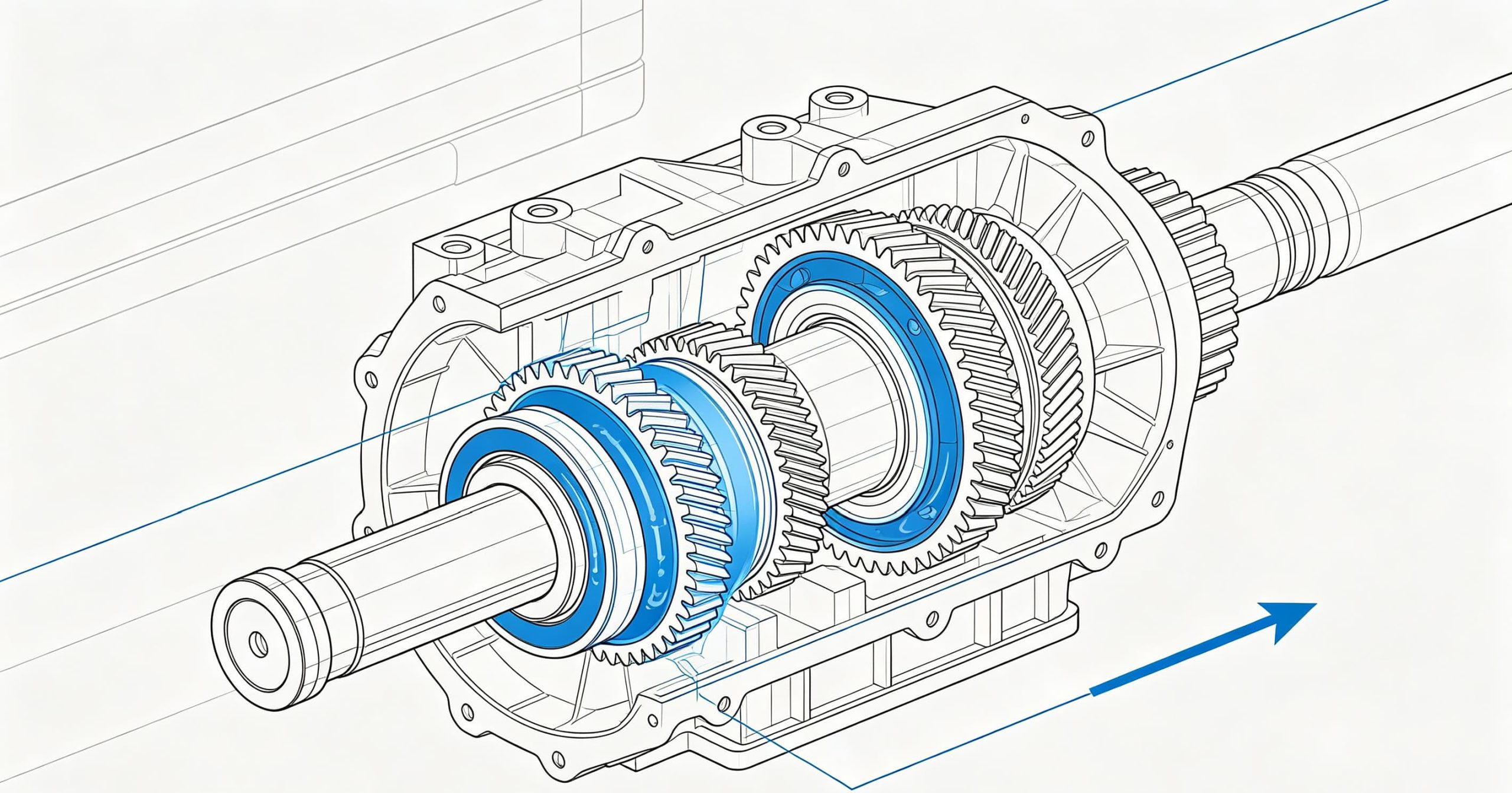
Transmission bearings are precision rotary accessories installed on the gearbox main shaft, counter shaft and gear assembly. They are completely different from ordinary passenger car bearings.
Heavy-duty truck bearings are specially customized for high-torque, heavy-load and long-duration operation scenarios. They feature high hardness, strong pressure resistance and excellent wear resistance to adapt to complex driving conditions of engineering and logistics trucks.
The bearing has two core practical functions in the transmission system. First, it fixes the operating position of rotating shafts to prevent shaft offset and shaking during high-speed operation.
Second, it isolates direct metal contact between moving parts. It greatly reduces friction resistance and lowers operating wear and heat generation.
When the bearings are in good condition, the gearbox runs smoothly. Gear shifting is precise and stable, and internal component wear is controlled within a normal range.
Once bearings wear, loosen or lose precision, the overall stability of the transmission will collapse instantly. Tiny clearances will trigger a series of linkage faults.
Slight shaft runout will cause abnormal gear meshing. This creates noise, harsh shifting and accelerated wear on gears and synchronizers. That is why a small bearing fault can trigger a chain of big transmission problems.
6 Common Symptoms of Worn Transmission Bearings
You do not need professional equipment to judge most bearing problems. You can tell simply from how the truck sounds and feels while driving. These symptoms appear gradually and get worse over time.
1. Continuous Transmission Humming Noise
Persistent humming noise is the most intuitive early warning of bearing wear. A healthy gearbox only produces uniform and low mechanical operating sound during operation.
Worn bearings will generate continuous buzzing and humming noise. The noise is closely linked to engine speed, not gear position.
The abnormal noise will become louder during acceleration and weaken slightly when decelerating. It will not disappear after shifting gears. This feature effectively distinguishes bearing faults from synchronizer and gear wear faults.
2. Obvious Vibration During Driving
Bearing wear will increase the internal clearance of transmission shafts. The rotating shaft cannot maintain a stable operating state, resulting in overall slight vibration of the gearbox.
Drivers can clearly feel subtle jitter through the gear lever and chassis. The vibration problem will be significantly aggravated under heavy load climbing and medium-high speed driving conditions.
3. Stiff & Unstable Gear Shifting
Unstable shaft operation caused by faulty bearings will lead to inaccurate gear meshing. The fitting degree between gears decreases obviously.
At this time, gear shifting becomes stiff and laborious. Many gear positions feel empty and not fully engaged during operation.
As wear intensifies, intermittent gear jumping may occur during stable driving. The power output becomes fluctuating, which seriously affects driving stability and transportation safety.
4. Abnormal Noise in Neutral Gear
If continuous humming noise occurs when the truck is idling in neutral, the front bearing or main shaft bearing is severely worn.
Pressing the clutch pedal will separate the power connection. The bearing stops rotating, and the abnormal noise will weaken or disappear completely.
This is the most classic and accurate judgment method for transmission bearing faults. It can effectively exclude abnormal noise caused by gear wear and oil circuit problems.
5. Overheating Transmission Housing
Failed bearings lose lubrication balance and produce severe dry friction. A large amount of friction heat accumulates inside the closed gearbox cavity and cannot be dissipated in time.
After long-distance driving, the gearbox shell will feel obviously overheated. Long-term high temperature will accelerate gear oil oxidation and deterioration, and further aggravate the wear of internal transmission parts.
6. Metal Debris in Gear Oil
Regular gear oil inspection is an effective way to judge bearing health. When draining old gear oil, check the oil quality carefully.
If the oil body is black and turbid, accompanied by fine metal powder and tiny particles at the bottom, it is confirmed that the bearings are worn and falling debris.
These metal impurities will circulate along with the gear oil. They scratch gear surfaces, block lubricating oil passages, and cause secondary damage to the entire transmission system.
Main Causes of Early Transmission Bearing Failure
Genuine standard transmission bearings have stable quality and long service life under standard working conditions. Most early failures are not caused by product quality problems.
Bad driving habits, irregular maintenance and harsh working environments are the main culprits of premature bearing wear.
1. Long-Term Overload Operation
Many fleets pursue transportation volume and often run trucks with overloaded cargo. Overloading makes the transmission bear torque far beyond the design standard.
Bearings will bear extreme pressure during each acceleration, slope climbing and gear shifting process.
Long-term overload operation will cause bearing fatigue deformation and clearance expansion. The precision of rotating fit decreases rapidly, which greatly shortens the service life of bearings.
2. Inferior or Deteriorated Gear Oil
Many truck owners choose low-grade cheap gear oil to save costs, or delay oil replacement for a long time.
Inferior oil has poor viscosity and cannot form a complete protective oil film. Expired deteriorated oil contains a large number of impurities and oxide sediments.
Bearings run in a semi-dry friction state for a long time. The wear speed increases exponentially, and minor bearing faults will gradually evolve into major transmission failures.
3. Frequent Rough Shifting
Violent gear shifting, forced gear engagement and incomplete clutch separation are common bad operating habits. These behaviors will produce instantaneous strong impact on transmission shafts and bearings.
Repeated impact load will loosen the internal structure of bearings, cause precision loss, and induce abnormal noise and vibration faults.
4. Poor Working Environment & Vibration
Engineering trucks and short-haul distribution vehicles often drive on bumpy and muddy roads. Continuous chassis vibration will affect the matching precision of bearings and shafts.
Long-term vibration will loosen the bearing assembly clearance and destroy the stable rotating state of parts.
5. Unqualified Aftermarket Bearings
Many low-cost aftermarket bearings have unqualified production precision and uneven material hardness. They cannot adapt to the high-intensity working conditions of heavy-duty trucks.
After simple replacement, faults such as noise and vibration will recur in a short time, resulting in repeated maintenance and increased costs.
Practical Bearing Diagnosis Steps (No Complex Tools Needed)
Most transmission bearing faults can be judged through simple manual detection and road tests. No professional precision testing equipment is required. These diagnosis methods apply to all mainstream Chinese heavy-duty truck gearboxes.
Step 1: Neutral Gear Noise Test
Start the engine and keep it idling in neutral gear. Listen closely to the operating sound of the gearbox.
If there is continuous humming noise, and the noise disappears or weakens significantly when stepping on the clutch, the main shaft bearing is worn and faulty.
Step 2: Road Test for Vibration & Noise
Drive the truck at a stable medium speed. Observe the changes of gearbox vibration and abnormal noise.
If the vibration and noise increase synchronously with the vehicle speed, and have no connection with gear position switching, it is basically confirmed as bearing wear failure.
Step 3: Check Gear Oil Condition
Drain a small amount of gear oil for visual inspection. Qualified gear oil is transparent and uniform.
Black, turbid oil with visible metal powder and impurities is the most direct evidence of internal bearing and component wear.
Step 4: Inspect Transmission Temperature
After one hour of normal driving, park the truck and touch the gearbox shell.
If the gearbox temperature is abnormally high without other obvious faults, it is an auxiliary judgment sign of severe bearing friction and wear.
Step-by-Step Transmission Bearing Replacement Guide
Transmission bearing replacement is a refined maintenance operation. Non-standard disassembly and assembly will easily cause secondary damage to gears and shafts.
The following standardized steps are suitable for all mainstream domestic heavy trucks such as Sinotruk, Shacman, FAW and Dongfeng.
Step 1: Prepare Tools & Safety Work
Prepare complete maintenance tools in advance, including socket sets, torque wrenches, special bearing pullers and cleaning supplies. Prepare matching genuine new bearings.
Park the truck on flat ground, tighten the handbrake, and turn off the engine. Wait for the gearbox to cool completely to avoid scalding and ensure safe operation.
Step 2: Drain Old Gear Oil
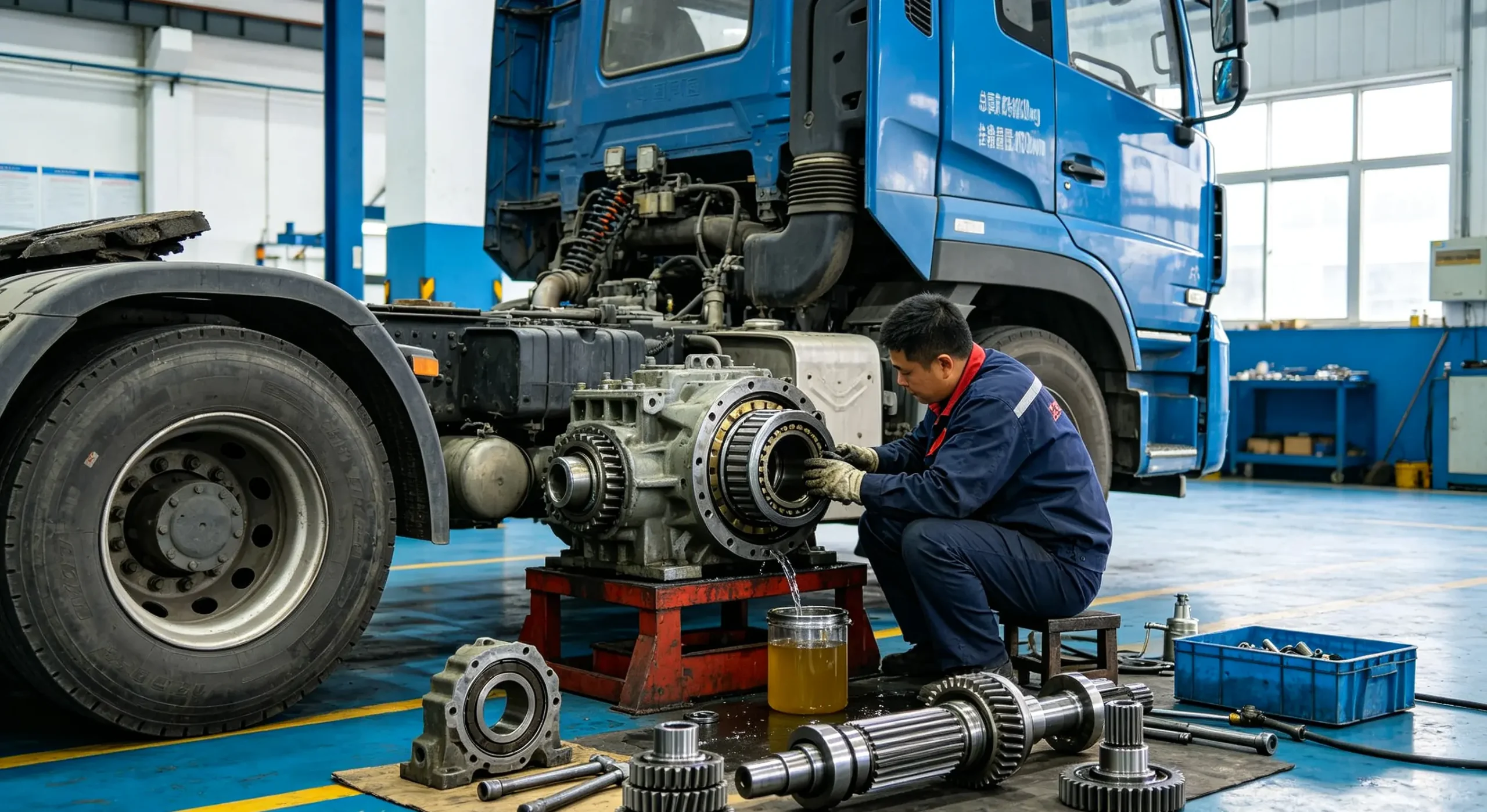
Place a clean oil pan under the gearbox oil drain hole. Open the oil drain bolt to completely discharge the old gear oil.
Check the drained oil for metal debris and impurities. Clean the oil drain port and tighten the bolt stably after oil drainage.
Step 3: Disassemble Transmission Auxiliary Parts
Remove the transmission connecting shaft, shift lever assembly, wiring harness and protective baffles that block the disassembly position.
Mark each pipeline and interface to avoid wrong assembly and wiring during subsequent reinstallation.
Step 4: Remove Transmission & Split Housing
Fix the transmission with a professional lifting device. Remove the fixed bolts between the gearbox and clutch housing, and slowly separate the transmission assembly.
Split the upper and lower gearbox shells to completely expose the internal rotating shafts, gears and worn bearings.
Step 5: Take Out Worn Bearings
Use a special bearing puller to take out the worn old bearings. Do not knock hard with tools to prevent shaft deformation and thread damage.
Clean the surface of the rotating shaft thoroughly to remove residual oil sludge, rust and tiny impurities to create a clean installation environment.
Step 6: Install New Bearings
Check the model, size and tolerance parameters of the new bearing to ensure it is fully consistent with the original factory standard.
Use professional pressing tools to install the new bearing evenly. Avoid unilateral stress and skew installation that affect operating precision.
Step 7: Reassemble Transmission Components
Reinstall gears, rotating shafts and all disassembled auxiliary parts in reverse order. Tighten all fixing bolts with standard torque to ensure uniform stress on the gearbox.
Manually toggle the gear set to check the flexibility of gear meshing and shaft operation to ensure no jamming.
Step 8: Refill Oil & Test Run
Inject qualified gear oil that meets the factory specification, and fill to the standard oil level scale.
Start the engine for 20 minutes of idle operation, shift gears repeatedly to check for abnormal noise and jamming. Finally, conduct a low-speed road test to confirm the transmission works normally.
Key Tips to Avoid Repeated Bearing Failure
Many truck owners encounter repeated bearing wear and abnormal noise soon after replacement. Most problems stem from non-standard repair details and improper daily use. The following tips can effectively avoid recurring faults.
-
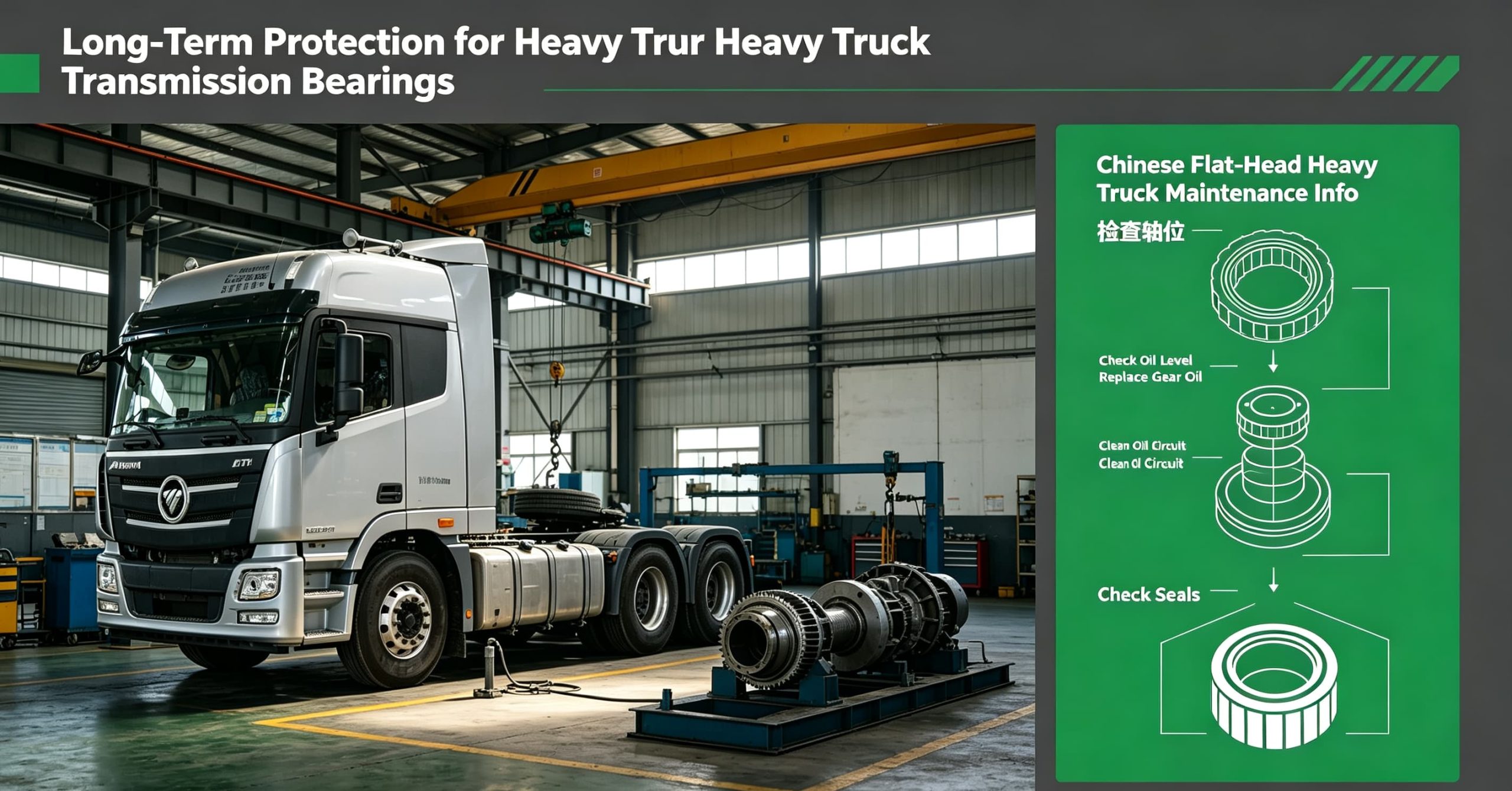
Replace gear oil synchronously: Old oil contains abrasive particles that will wear new bearings quickly. Always change oil together with bearing replacement.
-
Clean internal oil passages thoroughly: Remove all sludge and metal debris to ensure clean lubrication for new bearings.
-
Use qualified original bearings: Low-precision aftermarket parts have short service life and unstable operation.
-
Avoid overload and rough shifting: Reduce impact load on transmission shafts and bearings during daily driving.
-
Check shaft runout before installation: Slight shaft deformation will cause new bearings to wear rapidly, so check and correct it in advance.
Daily Maintenance Habits to Extend Bearing Life
Scientific and standardized daily maintenance is the most effective way to extend bearing service life. Simple long-term habits can greatly reduce transmission failure rates and fleet maintenance costs.
-
Replace gear oil every 40,000 to 60,000 kilometers, strictly following manufacturer oil specifications.
-
Avoid long-term full-load climbing and continuous high-speed driving to reduce bearing fatigue loss.
-
Form smooth shifting habits, do not drag gears or shift violently.
-
Regularly check transmission vibration and noise, deal with minor faults in time.
-
Clean transmission oil filter regularly to guarantee smooth oil circulation.
Frequently Asked Questions
Q: Can I keep driving with a noisy transmission bearing?
A: It is not recommended. Early noise means slight wear. Long-term driving will expand bearing clearance, cause gear meshing deviation and even lead to gearbox locking.
Q: How long do heavy truck transmission bearings last?
A: With standard load and regular maintenance, genuine bearings can last 3 to 5 years. Overload and poor oil quality may shorten the service life to 1 to 2 years.
Q: Why does noise still exist after bearing replacement?
A: Possible reasons include residual internal debris, uncorrected shaft deformation, unqualified new bearings or insufficient oil filling. Recheck internal cleanliness and assembly accuracy.
Q: Is transmission bearing failure related to clutch operation?
A: Yes. Incomplete clutch separation and frequent semi-clutch operation will bring continuous impact to transmission bearings, accelerating wear.
Conclusion
Transmission bearings are small but core components that determine transmission stability. Most driving faults are caused by long-term neglect of minor bearing wear.
Early warning signs of bearing failure are obvious and easy to capture. Timely inspection and replacement can completely avoid major gearbox breakdowns.
Standardized replacement operations and good driving habits can effectively reduce fleet downtime and maintenance costs. This is the most cost-effective gearbox maintenance solution for long-term fleet operation.
If you want stable and durable transmission performance, choosing reliable accessories is essential. Mettlead Truck Parts provides full-series genuine-quality transmission bearings, gears and gearbox parts.
All products perfectly match Sinotruk, Shacman, FAW, Dongfeng and Foton heavy-duty trucks. With stable quality and high precision, they effectively reduce repeated faults and escort the safe and efficient operation of global fleets.


