Introduction
Chinese heavy-duty trucks are the backbone of long-haul logistics, engineering transportation and mining operations. Classic models including Sinotruk HOWO, Shacman X3000, FAW J6P, Dongfeng KC and Foton Auman operate under continuous heavy loads and complex road conditions all year round.
For these commercial vehicles, the gearbox is the core power transmission component. It undertakes torque conversion, speed adjustment and power distribution tasks during driving. To ensure stable gear shifting and long-term service life, full and continuous gearbox lubrication is indispensable.
As the core power supply unit of the gearbox lubrication system, the gearbox oil pump plays a decisive role. Simply put, it pressurizes and circulates gear oil to every friction part inside the gearbox.
These key lubrication targets include transmission gears, synchronizers, bearings and shift shafts. Without stable oil supply, internal components will lose lubrication and heat dissipation protection in a short time.
In general operation, most drivers and maintenance personnel only pay attention to regular gear oil replacement. However, they often ignore the working state of the gearbox oil pump. In fact, a faulty oil pump is the hidden cause of most gearbox abrasion and early failure.
Once the oil pump performance declines or fails completely, a series of chain faults will occur. For instance, insufficient oil pressure leads to poor lubrication, causing gear wear and synchronizer jamming.
Meanwhile, weakened heat dissipation causes high gearbox temperature, oil deterioration and bearing ablation. In severe cases, it will result in difficult gear shifting, sudden power interruption and even gearbox scrapping.
These faults not only trigger sudden road shutdowns but also bring huge maintenance costs and transportation delay losses for fleets. Therefore, early identification of oil pump failure and standardized replacement are essential for gearbox protection.
Different from sudden mechanical damage, gearbox oil pump failure is a progressive process. It has obvious early warning symptoms from performance degradation to complete failure. Thus, mastering professional diagnosis and repair skills can effectively avoid major faults.
This guide is tailored for mainstream Chinese heavy-duty truck gearbox systems. It systematically introduces the oil pump working principle, typical failure symptoms, root causes, diagnosis steps and complete replacement procedures.
In addition, it summarizes practical maintenance tips to extend oil pump service life. It provides reliable technical reference for fleet managers, overseas maintenance technicians and individual truck owners.
For stable and durable gearbox system accessories, high-quality truck gearbox parts perfectly match Chinese heavy trucks, effectively avoiding repeated faults and reducing fleet maintenance costs.
What Is a Truck Gearbox Oil Pump & How It Works
To accurately judge faults and carry out standardized maintenance, it is necessary to clarify the basic structure and working mechanism of the gearbox oil pump. Heavy-duty truck gearbox oil pumps are specially designed for high-torque and heavy-load working scenarios.
Compared with light vehicle oil pumps, they feature higher pressure resistance, stronger oil supply stability and better high-temperature adaptability. They fully adapt to the frequent gear shifting and variable load operation of heavy trucks.
The mainstream gearbox oil pump of Chinese heavy trucks is mostly a gear-type pressure oil pump. The complete assembly consists of drive gear, driven gear, pump body, oil inlet, oil outlet, sealing ring and fixed fasteners.
All components adopt high-strength wear-resistant materials to resist long-term high-pressure operation and oil corrosion. The overall structure is compact, with high transmission precision and stable oil supply performance.
The core working principle relies on gear meshing rotation to realize oil absorption and pressure delivery. When the truck is running, the engine power drives the gearbox input shaft, which further drives the oil pump gear set to rotate synchronously.
During gear rotation, a negative pressure area is formed at the oil inlet. It automatically sucks gear oil from the gearbox oil bottom shell into the pump body. At the same time, the meshing gear squeezes the oil liquid to form stable pressure.
Subsequently, the pressurized gear oil is delivered to each lubrication pipeline. It finally covers all moving parts inside the gearbox to complete circulating lubrication and heat dissipation.
The oil pump undertakes two core functions in the gearbox system. First, it provides continuous lubrication to reduce friction and wear between gears, synchronizers and bearings.
Second, it takes away a large amount of friction heat generated during gear operation through circulating oil. This controls the gearbox operating temperature and avoids high-temperature oil deterioration and component thermal deformation.
Furthermore, for some automatic and semi-automatic gearboxes, the oil pump also provides stable hydraulic pressure for gear shifting execution components. It ensures accurate and smooth gear switching and avoids shifting jitter and delay.
It is worth mentioning that the oil pump works synchronously with the gearbox for a long time. Frequent start-stop, heavy-load impact and high-temperature operation will continuously consume its performance.
Once the internal gear wears, the seal fails or the oil passage is blocked, the oil supply pressure and flow will drop sharply. As a result, the gearbox will fall into a state of insufficient lubrication and heat dissipation.
7 Common Symptoms of Failing Gearbox Oil Pump
Gearbox oil pump failure will produce obvious distinguishable symptoms in the early, middle and late stages. Most major gearbox faults are caused by long-term neglect of minor oil pump abnormalities.
Mastering the following typical failure signs can help achieve early warning and preventive maintenance, effectively avoiding sudden breakdowns and expensive gearbox overhaul.
1. Difficult & Stiff Gear Shifting
Unsmooth gear shifting is the earliest and most intuitive warning sign of oil pump performance decline. A healthy oil pump provides sufficient pressure oil to lubricate synchronizers and shift mechanisms.
When the oil pump wears out, the oil supply flow decreases. The synchronizer cannot get timely and sufficient lubrication and buffer. For this reason, gear shifting becomes stiff and laborious.
This symptom is more obvious in cold start and low-speed driving. As the oil pump failure worsens, stiff shifting will appear frequently in all gear positions, seriously affecting driving operation.
2. Abnormal Gearbox Noise
Insufficient lubrication caused by faulty oil pumps will lead to direct dry friction between internal gears and bearings. It produces continuous dull buzzing and grinding noise during gearbox operation.
Different from normal mechanical operation sound, this abnormal noise will synchronously increase with the rise of vehicle speed and engine speed. Moreover, the noise will be more prominent under heavy-load climbing and acceleration conditions.
In the early failure stage, the noise is faint after the gearbox warms up. In the late stage, continuous loud noise will accompany the whole driving process, indicating severe internal component wear.
3. Rising Gearbox Operating Temperature
The gearbox oil pump is the core of the heat dissipation system. Sufficient circulating oil can take away friction heat in time and maintain normal operating temperature.
When the oil pump pressure is insufficient, the oil circulation speed slows down. The heat dissipation efficiency drops sharply, resulting in continuous temperature rise of the gearbox.
Drivers can obviously feel the gearbox overheating during long-distance driving and heavy-load operation. In serious cases, the overheating alarm will be triggered, forcing vehicle deceleration and shutdown.
4. Gear Oil Deterioration & Blackening
Under normal working conditions, gear oil keeps transparent and uniform texture within the service cycle. However, a faulty oil pump leads to insufficient lubrication and dry friction of internal components.
A large amount of metal wear debris will fall into the gear oil. Meanwhile, high temperature causes oil oxidation and carbonization. Finally, the gear oil turns black, turbid and accompanied by fine metal particles.
If the deteriorated oil is not replaced in time, the abrasive particles will circulate with the oil. It will further aggravate oil pump wear and internal component damage, forming a vicious cycle.
5. Vehicle Power Drop & Shifting Jitter
For heavy-duty truck gearboxes relying on oil pressure auxiliary shifting, insufficient oil pump pressure will lead to incomplete gear meshing.
During driving, the vehicle will have obvious power weakness, slow acceleration and intermittent shifting jitter. Especially during heavy-load driving, the power transmission is unstable, which greatly reduces transportation efficiency.
6. Oil Pressure Warning Light On
Most new Chinese heavy trucks such as Shacman X3000 and Sinotruk Sitrak are equipped with gearbox oil pressure monitoring systems.
When the oil pump fails and the system oil pressure is lower than the factory standard value, the dashboard oil pressure warning light will light up. This is the most accurate electronic early warning signal of oil pump failure.
Once the warning light is on, drivers must stop driving for inspection immediately. Otherwise, irreversible damage to the gearbox will be caused in a short time.
7. Oil Leakage Around Oil Pump Mounting Position
Long-term high-temperature aging and vibration will cause the oil pump sealing ring to fail and age. As a result, gear oil leaks from the gap between the pump body and the gearbox housing.
Oil leakage will lead to insufficient system oil volume and further reduce oil pump supply pressure. Serious oil leakage will cause rapid oil loss and directly trigger gearbox lubrication failure.
Root Causes of Gearbox Oil Pump Failure
High-quality OEM gearbox oil pumps have a theoretical service life of 3–5 years under standard working conditions. However, many truck oil pumps fail prematurely due to harsh working environments and improper maintenance.
The following systematic root cause analysis helps fleets formulate targeted maintenance plans to extend oil pump service life and reduce failure rates.
1. Long-Term High-Temperature Operation
Heavy trucks often work under heavy-load climbing and long-distance continuous driving conditions. The gearbox generates a lot of friction heat, resulting in long-term high-temperature operation of the oil pump.
High temperature accelerates the aging of internal sealing parts and lubricating oil. It also causes thermal deformation of oil pump gears, reducing meshing precision and oil supply efficiency.
2. Deteriorated or Unqualified Gear Oil
Many truck owners use low-grade unqualified gear oil or delay oil replacement for a long time. Deteriorated gear oil has increased viscosity, poor fluidity and contains a lot of impurities.
Impurities will wear oil pump gears and block oil passages. Excessively viscous oil increases oil pump operating load, accelerating performance attenuation and early failure.
3. Frequent Heavy-Load & Impact Shifting
Engineering and short-haul distribution trucks often have frequent gear shifting, sharp acceleration and sudden load changes. Each impact shifting brings instantaneous overload pressure to the oil pump.
Long-term alternating load impact will cause fatigue wear of oil pump gears and reduce pressure supply stability.
4. Oil Passage Blockage & Poor Circulation
Long-term accumulated oil sludge, metal wear debris and dust impurities will block the gearbox oil filter and lubrication pipeline. It leads to poor oil circulation and insufficient oil inlet of the oil pump.
The oil pump runs in a state of oil shortage for a long time, which causes dry wear of internal gears and rapid performance decline.
5. Vibration & Loose Installation
Heavy-duty diesel trucks have strong engine and chassis vibration during operation. Long-term high-frequency vibration will loosen the oil pump fixing bolts and displace the mounting position.
As a result, the oil pump operates eccentrically, causing abnormal gear wear, seal damage and oil leakage faults.
6. Inferior Aftermarket Oil Pump Parts
Many small fleets choose low-cost inferior oil pumps to save costs. These parts have unqualified gear precision, poor wear resistance and unstandardized sealing structure.
They are unable to adapt to heavy-load working conditions. Problems such as insufficient oil pressure, noise and oil leakage will occur soon after installation, resulting in repeated maintenance.
Professional Diagnosis Steps for Bad Gearbox Oil Pump
Many gearbox abnormal symptoms are similar to clutch and synchronizer faults. Therefore, standardized diagnosis is required to accurately locate oil pump faults and avoid blind disassembly and replacement.
Step 1: Check Dashboard Warning Information
First, observe whether the gearbox oil pressure warning light is on. Check the vehicle computer system for fault codes related to low gearbox oil pressure. This is the most intuitive preliminary judgment basis.
Step 2: Test Gear Shifting & Running Noise
Start the engine, perform idle speed and low-speed driving tests. Manually experience the smoothness of each gear shifting. Listen carefully to whether there is continuous abnormal noise inside the gearbox during operation.
If shifting is stiff and noise increases with speed, it can be initially judged as insufficient oil pump lubrication.
Step 3: Detect Gearbox Oil Temperature & Oil Condition
After a certain period of driving, check the gearbox shell temperature. If the temperature is abnormally high, stop the vehicle to sample the gear oil.
Observe whether the oil is black, turbid or contains metal particles. Deteriorated oil with impurities is an important feature of oil pump wear and poor circulation.
Step 4: Inspect Oil Pump Mounting for Leakage
Clean the oil pump mounting position thoroughly. Observe whether there is residual oil stain, check whether the fixing bolts are loose and whether the sealing ring is aging and failed.
Step 5: Test System Oil Pressure
Connect a professional oil pressure gauge to the gearbox oil pressure detection port. Test the static and dynamic oil pressure values. Compare with the factory standard parameters.
If the actual oil pressure is significantly lower than the standard value, it confirms that the oil pump is worn and has insufficient pressure supply capacity.
Step-by-Step Gearbox Oil Pump Replacement Guide
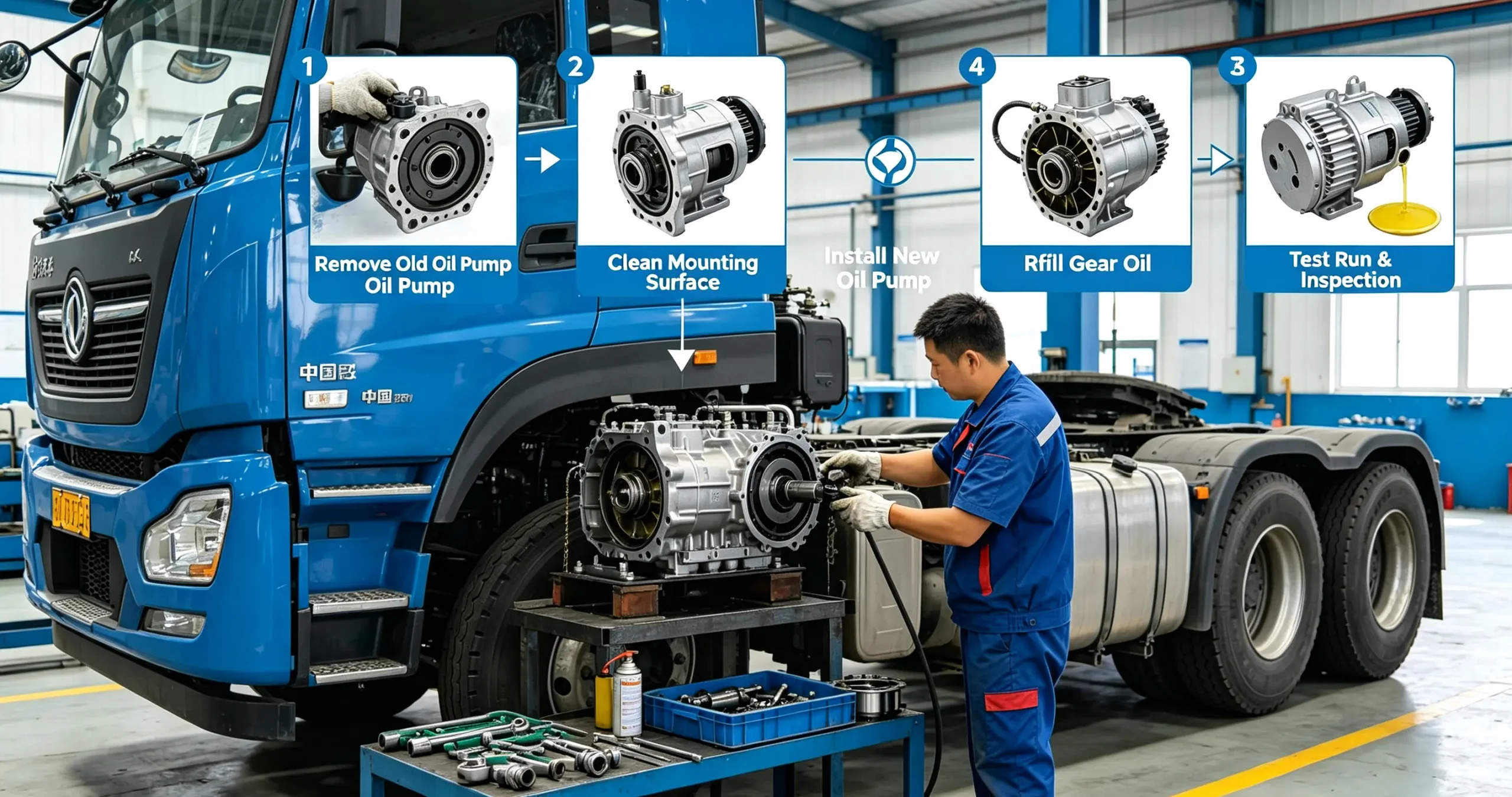
Oil pump gear wear, seal aging and pressure attenuation are irreversible faults. Only complete assembly replacement can thoroughly solve the problem. The following steps apply to all mainstream Chinese heavy-duty truck gearboxes.
Step 1: Prepare Tools & Safety Protection
Prepare socket wrench set, torque wrench, oil drain tool, cleaning cloth and new oil pump assembly. Park the truck on flat ground, tighten the handbrake and turn off the engine.
Wait for the gearbox to cool completely to avoid scalding during operation.
Step 2: Drain Old Gear Oil
Place an oil drain pan under the gearbox oil drain port. Open the oil drain bolt to completely discharge the old deteriorated gear oil. Check the drained oil for metal debris and impurities.
After draining, clean the oil drain port and tighten the bolt temporarily.
Step 3: Disassemble Auxiliary Components
According to the gearbox structure, remove the pipeline, protective shell and wiring harness that block the oil pump mounting position. Mark the pipeline interface to avoid wrong installation.
Step 4: Remove the Old Oil Pump
Loosen the oil pump fixing bolts diagonally. After all bolts are loosened, take out the old oil pump assembly slowly.
Clean the gearbox mounting plane thoroughly to remove oil sludge, impurities and residual sealant to ensure flat and clean installation surface.
Step 5: Verify & Prepare New Oil Pump
Compare the new oil pump with the old one. Check the consistency of model, mounting hole position, gear specification and interface size. Confirm the part number matches the truck gearbox model completely.
Replace the new sealing ring and apply a small amount of gear oil for pre-lubrication.
Step 6: Install New Oil Pump
Align the new oil pump with the mounting position accurately. Manually screw in the fixing bolts in place. Use a torque wrench to tighten diagonally according to factory standard torque to ensure uniform stress.
Reinstall all removed pipelines and accessories, and check the sealing performance of each interface.
Step 7: Refill Standard Gear Oil
Inject qualified gear oil according to the gearbox standard oil quantity and oil level scale. After filling, let it stand for 10 minutes to ensure the oil fully flows into each lubrication part.
Step 8: Test Run & Inspection
Start the engine for idle operation for 15 minutes. Shift gears repeatedly to observe whether the shifting is smooth and whether there is abnormal noise.
Check the oil pump interface for oil leakage and monitor the gearbox oil pressure and temperature. After confirming no abnormality, conduct a low-speed road test to complete the replacement.
Key Repair Tips to Avoid Recurring Faults
Many fleets still encounter oil pressure insufficiency and noise faults after oil pump replacement. Most problems come from non-standard operation and neglected details. The following tips effectively ensure long-term stable operation.
- Replace gear oil synchronously: Old oil contains a lot of wear impurities. Matching new oil pump with old oil will cause secondary wear. Synchronous oil change is the most cost-effective maintenance method.
- Clean oil filter and oil passage: Thoroughly clean or replace the gearbox filter during replacement. Remove pipeline sludge to ensure smooth oil circulation and sufficient oil supply of the new pump.
- Strictly use standard torque: Uneven bolt tightening will cause oil pump skew and poor gear meshing. Standard diagonal fastening ensures stable pump body operation.
- Prevent mixed use of inferior oil: Always use manufacturer-specified gear oil. Inferior oil will cause oil pump adhesion wear and pipeline blockage in a short time.
- Check gearbox internal wear: If the old oil contains a lot of metal debris, check internal gears and bearings for wear to avoid repeated faults.
Long-Term Maintenance Tips to Extend Oil Pump Life
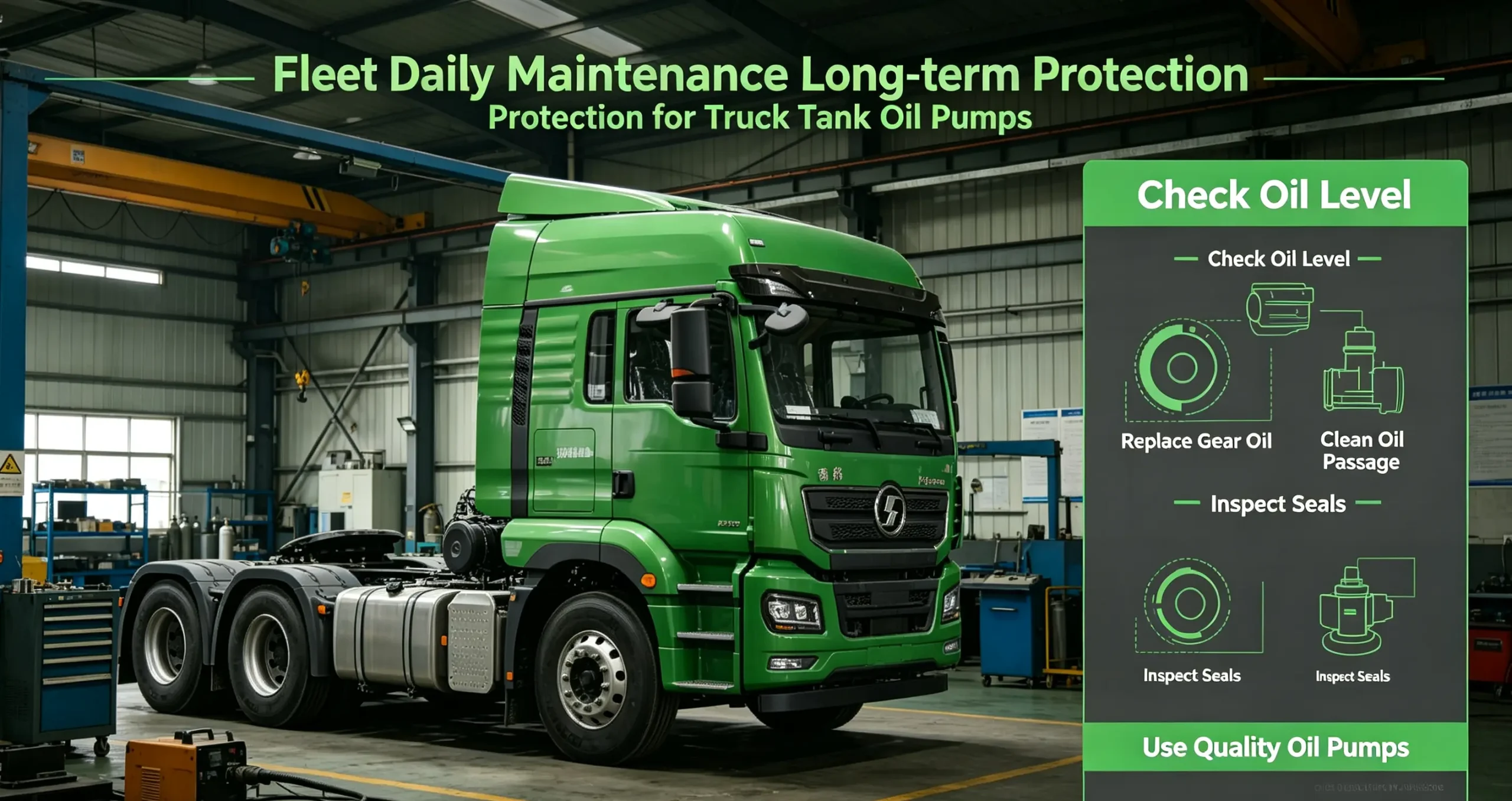
Scientific daily maintenance can greatly delay oil pump aging and wear, reduce gearbox failure rate and cut fleet operating costs.
- Regular oil inspection and replacement: Replace gear oil every 40,000–60,000 kilometers. Regularly check oil level and oil condition to avoid long-term operation of deteriorated oil.
- Avoid long-term overload and high-temperature driving: Reduce long-time heavy-load climbing and continuous high-speed driving to avoid long-term high-temperature overload operation of the oil pump.
- Optimize shifting habits: Adopt smooth shifting operation, reduce violent impact shifting, and relieve instantaneous overload pressure of the oil pump.
- Regularly clean oil passages and filters: Clean gearbox filter and oil sludge regularly to ensure unobstructed oil circulation and stable oil pump pressure supply.
- Choose high-quality OEM oil pumps: Reject inferior accessories. High-quality OEM oil pumps have precise gear matching, good wear resistance and high-temperature stability, adapting to heavy-duty truck working conditions.
Frequently Asked Questions
Q: How long does a truck gearbox oil pump last?
A: Under standard working conditions and scientific maintenance, high-quality OEM oil pumps can last 3–5 years. Harsh working environments such as overload, high temperature and inferior oil will shorten the service life to 1–2 years.
Q: Can I drive with a faulty gearbox oil pump?
A: It is not recommended to continue driving. Insufficient oil pump pressure will cause severe gearbox wear, high temperature and gear jamming, which may lead to sudden power failure and traffic safety accidents.
Q: Why does gearbox noise remain after oil pump replacement?
A: The main reasons include uncleaned oil passage impurities, residual internal gear wear, unqualified new oil pump and insufficient oil filling. It is necessary to recheck the oil circuit and internal components.
Q: Is oil pump failure related to gear oil type?
A: Yes. Viscosity mismatched and inferior gear oil will increase oil pump operating load, cause poor fluidity and accelerate gear wear, which is one of the main causes of early oil pump failure.
Conclusion
The gearbox oil pump is a small but core component that determines the overall service life of the truck transmission system. Stable oil supply pressure and flow are the basic guarantees for gearbox lubrication, heat dissipation and smooth shifting.
Most gearbox overhaul faults are caused by long-term neglect of oil pump performance degradation and abnormal oil circulation. Early warning symptoms of oil pump failure are obvious and leave sufficient maintenance cycle.
Timely diagnosis, standardized replacement and scientific daily maintenance can completely avoid major gearbox faults. It effectively reduces fleet unplanned downtime and long-term maintenance costs.
For global truck fleet operators and maintenance technicians, mastering oil pump maintenance skills is an essential part of gearbox system protection.
To ensure long-term stable operation of truck gearbox systems, choosing reliable and high-quality accessories is crucial. Mettlead Truck Parts provides full-series OEM-standard gearbox oil pumps, gears, synchronizers and related system parts.
All products are perfectly compatible with Sinotruk, Shacman, FAW, Dongfeng and Foton heavy-duty trucks, with stable quality and strong durability, escorting the safe and efficient operation of global fleets.
AI Image Generation Prompt Code
1. Article Cover Prompt
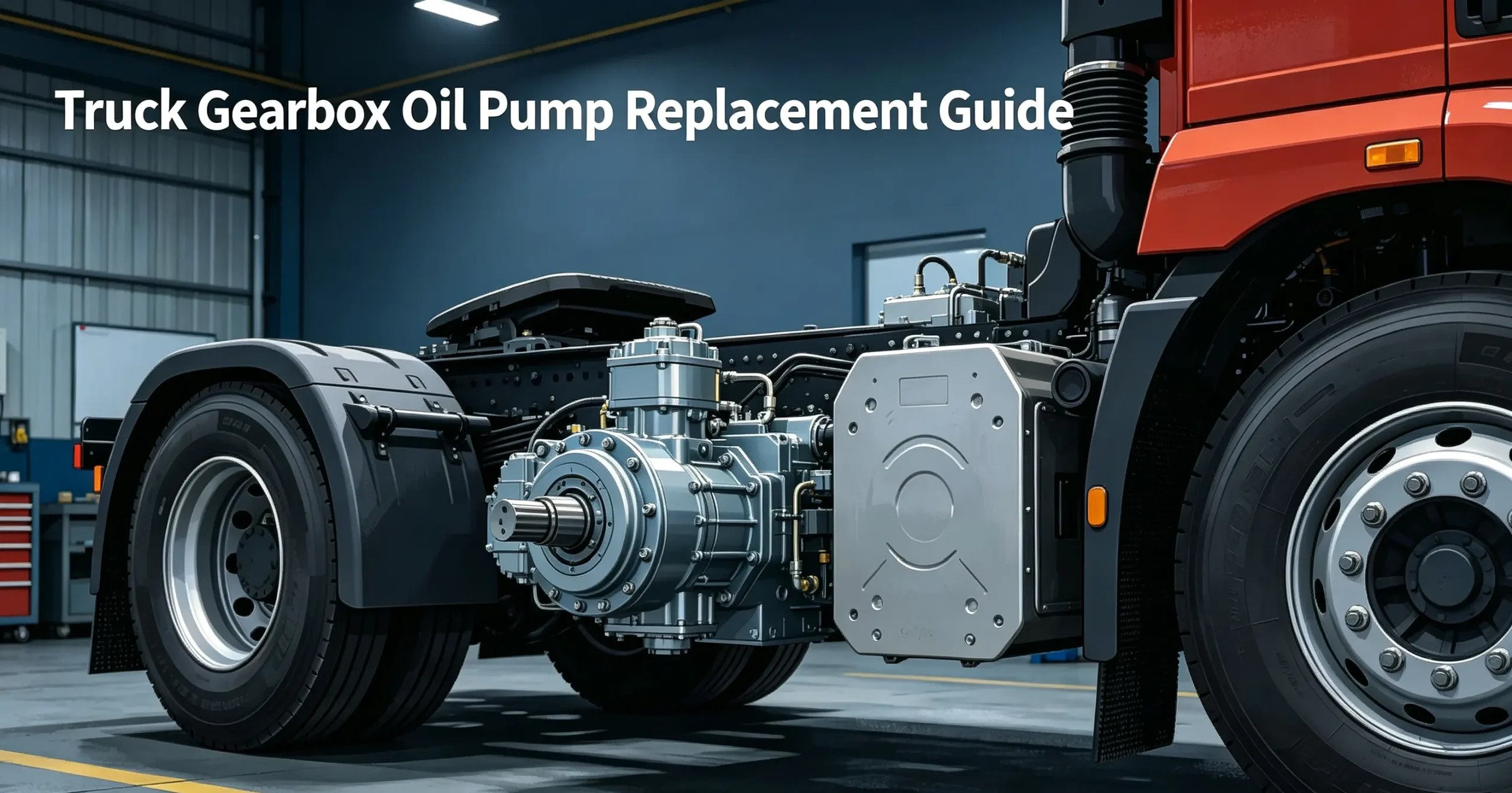
Industrial technical blog cover, 16:9, Chinese heavy-duty truck gearbox oil pump repair theme, realistic industrial photography style, clean background, detailed mechanical structure, flat-head heavy truck chassis close-up (Sinotruk HOWO, Shacman X3000), no foreign trucks, no logo, no text, high definition, professional truck maintenance article cover
2. Gearbox Oil Pump Working Principle Prompt
2D industrial infographic schematic, truck gearbox oil pump internal structure working principle, gear type oil pump oil circulation diagram, clear structure demonstration, Chinese heavy truck gearbox system, simple technical illustration, high contrast, no redundant text, mechanical teaching picture
3. Failure Symptoms Infographic Prompt
Technical list infographic, 7 common failure symptoms of truck gearbox oil pump, industrial gray and orange tone, icon + text layout reserved, abnormal noise, stiff shifting, oil leakage, overheating warning, Chinese heavy truck maintenance scene background, professional repair guide picture
4. Replacement Steps Infographic Prompt
Step-by-step maintenance infographic, professional mechanic replacing gearbox oil pump on Chinese flat-head heavy truck, standard disassembly and installation process, neat workshop environment, high definition industrial picture, safe truck repair demonstration
5. Daily Maintenance Tips Infographic Prompt
Fleet maintenance infographic, gearbox oil pump long-term maintenance guide, green industrial tone, Chinese heavy truck background, component protection knowledge layout, simple and official style, suitable for technical blog illustration


