
Introduction
Every heavy-duty diesel truck depends on a stable, controllable fuel supply to complete daily transport tasks. Long-haul drivers and fleet operators face countless mechanical risks during cross-country routes.
Most maintenance checklists focus on well-known fuel system components. Technicians regularly test fuel injectors, fuel transfer pumps and fuel filters during scheduled service work.
Even so, many teams overlook the fuel shut off valve. This compact component acts as a safety switch that controls fuel flow inside the entire diesel circuit.
The core function of a fuel shut off valve is straightforward. It can cut off fuel supply immediately when the engine shuts down, or trigger emergency fuel stop under special working conditions.
Once the valve loses normal function, a series of tricky faults will appear. These problems interfere with ignition, create unexpected stalling and even bring hidden safety hazards.
Many valve faults do not break out suddenly. Minor jamming and seal aging develop slowly over thousands of driving miles. Early abnormalities are easily ignored by drivers.
When small issues turn into serious failures, trucks may refuse to start or stall on busy highways. Roadside breakdowns lead to delayed shipments and expensive emergency repair bills.
In extreme cases, a failed shut off valve cannot block fuel flow completely. Continuous fuel leakage raises fire risks during maintenance or accidental vehicle rollover incidents.
For all these reasons, every driver and fleet technician needs to understand how shut off valves operate. It is equally important to identify faults and carry out reliable repairs.
To build systematic knowledge of your vehicle’s fuel circuit, read our comprehensive guide covering heavy truck fuel system maintenance for complete preventive service plans.
Basic Knowledge of Heavy Truck Fuel Shut Off Valve
Before troubleshooting any related faults, you must clarify the basic classification and working logic of fuel shut off valves. This foundation prevents misjudgment during on-site inspection.
Fuel shut off valves installed on heavy commercial trucks differ greatly from small engine valves. They withstand higher diesel pressure and continuous chassis vibration.
Two mainstream types are widely adopted on modern heavy-duty fleets. Operators will encounter mechanical manual fuel shut off valves and electromagnetic electric fuel shut off valves.
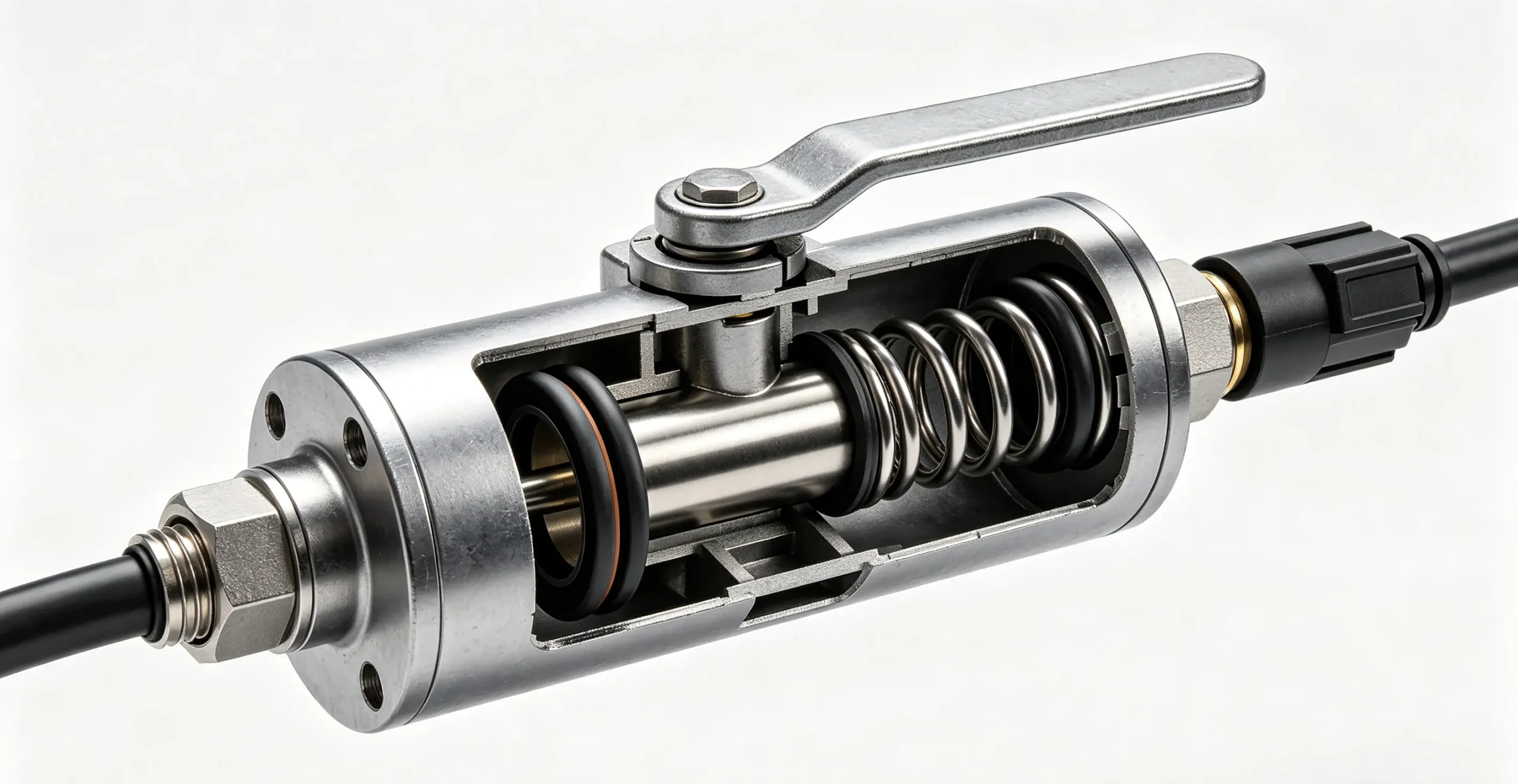
Mechanical shut off valves rely on manual pull cables or rotary handles. Drivers or technicians manually switch the valve spool to connect or block fuel pipelines.
Electromagnetic shut off valves receive electric signals from the truck ignition switch. When power cuts off, the internal spring pushes the spool to close the fuel passage automatically.
A complete shut off valve assembly contains multiple core parts. Key components include valve housing, internal spool, return spring, sealing gaskets, fuel inlet port and fuel outlet port.
Each internal part carries an independent task. The spool controls fuel flow channel switching. Rubber gaskets prevent fuel leakage and air intake inside pipelines.
For electric shut off valves, additional electromagnetic coils and wiring connectors are equipped. Electric power overcomes spring force to keep the valve open during engine operation.
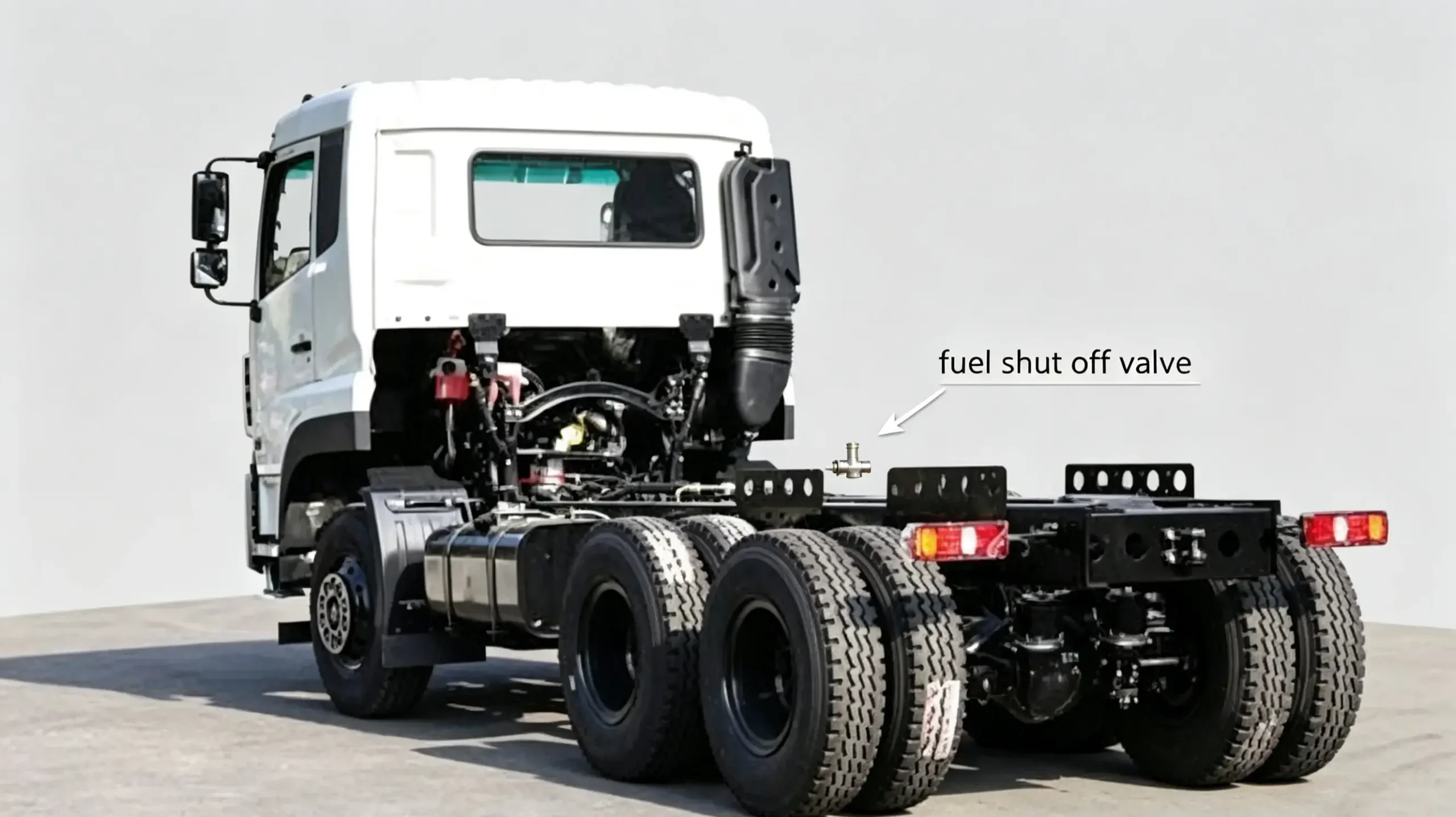
Mounting positions follow fixed chassis layout rules. Valves are usually installed between the fuel tank and fuel transfer pump, or beside the primary fuel filter assembly.
This layout allows technicians to cut off fuel supply quickly during pipeline maintenance. It also minimizes fuel spill risk when replacing downstream fuel parts.
Many maintenance staff confuse shut off valves with pressure regulators and water separators. You can clear up common component confusion through our comparison between truck fuel filter and water separator functions.
Primary Causes of Fuel Shut Off Valve Failure
Fuel shut off valve malfunctions rarely happen without clear inducements. Most damage accumulates slowly due to poor fuel quality, neglected maintenance and harsh driving environments.
After sorting massive fleet maintenance records, we have summarized the most frequent root causes that trigger valve faults in daily heavy truck operation.
1. Contaminated Diesel and Internal Spool Blockage
This ranks as the most common trigger of premature shut off valve failure. Many long-haul truckers choose low-cost unregulated diesel to reduce short-term operating expenditure.
Unqualified diesel carries sediment, colloidal sludge, metal particles and trapped water. All these impurities flow into the narrow internal passage of the shut off valve.
Solid particles scratch sealing surfaces and hinder free movement of the internal spool. Colloidal deposits stick to valve components and cause partial jamming.
When the spool cannot fully open or fully close, fuel flow becomes unstable. Drivers will face irregular startup and stalling problems.
2. Aging and Degradation of Internal Rubber Seals
All rubber gaskets and O-rings have limited service lifespans. Long-term contact with diesel fuel gradually makes rubber materials hard and brittle.
Once sealing parts crack, two serious problems emerge. The first is external fuel leakage around the valve housing. The second is air entering the closed fuel pipeline.
Air bubbles inside fuel lines disrupt fuel delivery stability. This creates rough combustion and fluctuating engine power output.
This aging issue becomes obvious for trucks operating continuously for more than three years. Regular visual inspection helps discover seal wear ahead of complete failure.
3. Chassis Vibration Leading to Structural Loosening
Heavy trucks frequently travel on bumpy construction roads, mountain routes and uneven rural pavements. Continuous vibration transfers to all frame-mounted fuel components.
Over long distances, vibration loosens valve mounting bolts. It also creates fatigue damage on internal springs and connecting structures.
For electric shut off valves, vibration easily loosens electrical plugs. Poor contact leads to intermittent power supply and unstable valve action.
4. Electrical Circuit Faults (Electromagnetic Shut Off Valves)
Electromagnetic shut off valves rely on stable power supply to stay open during engine running. Circuit failures account for nearly 40 percent of electric valve service cases.
Common circuit faults include corroded connector pins, frayed wiring, burned fuses and loose terminals. Road moisture and road salt accelerate metal corrosion on plugs.
When power supply gets interrupted unexpectedly, the valve closes immediately. The engine loses fuel supply and stalls suddenly during driving.
5. Improper Operation and Human-caused damage
During fuel system maintenance, many technicians apply excessive force when operating manual shut off valves. Rough rotation twists internal spool and damages spring components.
In addition, incorrect pipeline installation creates tensile stress on the valve body. Long-term tension causes housing deformation and internal component dislocation.
6. Long-Time Static Corrosion
If trucks stay parked for weeks or months without running, water inside fuel accumulates near the shut off valve. Slow corrosion damages metal internal parts.
Corroded spools cannot slide freely. The valve will get stuck in open or closed position permanently if left untreated.
Typical Warning Signs of a Faulty Fuel Shut Off Valve
Defective fuel shut off valves produce recognizable abnormal signals. Capturing these symptoms early allows planned maintenance before dangerous highway failures happen.
The following driving abnormalities serve as reliable reference standards for technicians diagnosing shut off valve related faults.
1. Difficult Engine Starting and Extended Cranking Time
When the shut off valve cannot fully open, fuel flow is restricted. The transfer pump cannot send enough diesel toward the engine within a short time.
Drivers need repeated ignition attempts to start the truck. This symptom becomes more obvious in low-temperature cold start conditions.
2. Sudden Engine Stalling During Driving
For electric shut off valves with unstable power supply, the valve may close accidentally while the truck runs. Fuel supply gets cut off instantly.
Unexpected engine stall creates major traffic safety risks. It also forces expensive roadside rescue services for long-distance haulers.
3. Engine Cannot Shut Down After Turning Off Ignition
This is a typical fault of stuck open shut off valves. After cutting ignition power, the valve fails to close and fuel continues flowing into the engine.
The engine keeps running and cannot stop normally. This condition accelerates internal engine wear and brings safety risks during maintenance.
4. Visible Fuel Leaks Around the Valve Assembly
Aged sealing gaskets create slow fuel seepage. You can observe dark wet stains around valve ports and mounting surfaces during chassis inspection.
Spilled diesel not only increases fuel waste, it also raises fire risks near hot engine components.
5. Unstable Engine Power and Intermittent Power Loss
Partially jammed shut off valves limit fuel flow randomly. Under heavy load or climbing conditions, fuel supply cannot meet engine demand.
Drivers feel obvious power surging and lagging while transporting full cargo loads.
6. Air Ingestion and Rough Engine Idle
Damaged seals allow outside air to enter fuel pipelines. Mixed air and diesel lead to uneven cylinder combustion.
The engine generates obvious shaking at idle speed, and vibration transfers into the driver cabin.
Many different mechanical defects trigger power loss in heavy trucks. You can distinguish shut off valve faults from other failures by reading our article covering truck engine power loss common causes.
Preparation Checklist Before Shut Off Valve Inspection & Repair
Complete adequate preparation before disassembly work. This minimizes safety risks and avoids accidental secondary damage to fuel system components.
First, park the heavy truck on flat, well-ventilated workshop ground. Firmly engage the parking brake and use wheel chocks to prevent unintended rolling movement.
Shut down the engine completely. Wait 10 to 20 minutes so residual pressure inside fuel pipelines bleeds off naturally.
Prepare all necessary tools ahead of time. You need socket wrenches, oil collection basin, lint-free clean rags and protective work gloves.
For electromagnetic shut off valve testing, prepare a multimeter to check circuit voltage and wire continuity.
Clean accumulated mud and dust on the valve and surrounding frame area. Stop external dirt from entering open fuel pipelines after disconnecting hoses.
Remove all ignition sources away from the operation zone. Spilled diesel creates serious fire hazards inside enclosed repair workshops.
Standard safe chassis operation rules help you avoid component damage. Follow guidance introduced in our truck chassis parts installation tips.
Step-by-Step Fuel Shut Off Valve Inspection, Troubleshooting and Replacement
The following workflow fits most mainstream heavy truck brands including Sinotruk, FAW, Shacman and Dongfeng. Independent mechanics and fleet service teams can follow these steps reliably.
Step 1: Record All Observed Fault Phenomena
Start the engine and observe all abnormal behaviors. Note startup difficulty, idle stability, stalling incidents and fuel leakage traces.
Keep these records for comparison with test results. This helps separate shut off valve faults from failures of transfer pumps or fuel filters.
Step 2: Visual External Inspection of the Valve Assembly
Check the valve housing for cracks, wet leak marks and loose mounting bolts. Inspect fuel hoses connected to inlet and outlet ports for aging and swelling.
For electric valves, examine wiring plugs for corrosion, water intrusion and broken wires.
Step 3: Function Test for Manual Shut Off Valves
Operate the manual handle or pull cable repeatedly. Feel whether switching movement is smooth without obvious jamming.
After closing the valve, loosen downstream fuel pipe fittings to check if fuel flow stops completely. Continuous outflow proves the valve cannot seal tightly.
Step 4: Electrical Testing for Electromagnetic Shut Off Valves
Use a multimeter to detect coil resistance and power supply voltage. Compare measured values with official service manual parameters.
Turn ignition switch on and off to check whether the valve emits clear switching sound. No sound usually indicates coil burnout or circuit disconnection.
Step 5: Safely Remove the Faulty Fuel Shut Off Valve
Place an oil collection basin directly below the valve to catch spilled diesel during disassembly.
Loosen fuel hose fittings slowly to release residual fuel pressure gradually. Prevent sudden diesel spray caused by rapid pressure release.
Remove mounting bolts and carefully detach the valve from the bracket. Do not twist fuel hoses with excessive force to avoid pipeline cracking.
Step 6: Clean Internal Passages and Inspect Component Wear
Flush the valve internal channel with clean diesel to wash away colloidal deposits and solid impurities.
Check spool, spring and sealing surfaces for scratches, corrosion and deformation. Replace the whole valve assembly if internal parts suffer severe wear.
Step 7: Install New Fuel Shut Off Valve With Brand-New Seals
Fit brand-new gaskets and O-rings on the replacement valve. Never reuse old sealing accessories removed from the original component.
Align the new valve correctly on the mounting bracket. Thread mounting bolts by hand first to avoid cross-thread damage.
Tighten bolts to torque values specified in your truck service manual. Over-tightening deforms the valve housing and triggers leakage.
Step 8: Reconnect Fuel Pipelines and Electrical Connectors
Attach fuel hoses one by one and secure hose clamps firmly. Double-check every fitting to eliminate loose connections.
Plug electrical connectors for electromagnetic valves until you hear obvious locking clicks. Confirm no exposed wire strands outside the connector housing.
Step 9: Bleed Trapped Air Inside Fuel Circuits
Air enters fuel pipelines every time you disconnect fuel system components. Trapped air causes unstable fuel supply and rough engine running.
Operate the manual hand fuel pump repeatedly until air bubbles disappear entirely. Tighten all bleed screws securely after air purging finishes.
Step 10: Test Run and Verify Repair Effect
Start the engine and keep idling for several minutes. Watch carefully for fuel leaks around the new shut off valve assembly.
Test engine startup and shutdown functions repeatedly. Complete a short low-speed road test to confirm all previous fault symptoms disappear.
For standardized service workflows suitable for repair workshops, refer to our heavy truck maintenance steps guide.
Common Mistakes During Fuel Shut Off Valve Service
Many amateur technicians and fleet drivers make avoidable errors during shut off valve replacement. These mistakes lead to repeated faults and extra maintenance costs.
1. Reusing Old Sealing Gaskets and O-Rings
Used rubber gaskets have permanent compression deformation. They cannot maintain reliable sealing after being removed once.
Reused seals almost always cause slow fuel leakage and air ingestion within hundreds of miles after repair.
2. Installing Incompatible Universal Valves
Generic aftermarket shut off valves often mismatch flow rate and pressure standards. Improper specifications create fuel flow restriction or sealing failure.
Even after replacement, drivers still face startup and stalling troubles due to mismatched valve assemblies.
3. Skipping Air Bleeding After Pipeline Disassembly
Unbleached air bubbles disrupt fuel supply stability. Operators often misjudge the new valve as defective when air remains trapped in pipelines.
4. Excessive Force When Operating Manual Valves
Rough twisting of manual handles bends internal spools and breaks return springs. This creates permanent valve damage that cannot be fixed by simple cleaning.
Practical Preventive Maintenance Tips to Extend Shut Off Valve Service Life
Sustained routine maintenance greatly reduces unexpected shut off valve failures. It cuts overall fleet repair expenditure over multi-year operation cycles.
1. Purchase Only High-Quality Clean Diesel Fuel
Reputable fuel suppliers provide diesel with low impurity levels. Clean fuel reduces sludge accumulation and abrasion inside all fuel system components.
Avoid buying unknown low-cost fuel from unregulated vendors to protect precision fuel hardware.
2. Follow Strict Fuel Filter Replacement Cycles
Fuel filters serve as the primary barrier against dirt particles. Stick to mileage-based replacement schedules listed in your truck operation manual.
If you often operate in dusty construction zones, shorten filter service intervals to add extra protection for fuel pipelines.
3. Complete Monthly Visual Fuel System Inspections
Every month, spend time checking the shut off valve, fuel hoses and connectors. Look for damp leak marks, cracked rubber and loose mounting bolts.
Discover minor leaks and component wear before they escalate into costly roadside breakdowns.
4. Drain Water Separators At Fixed Intervals
Water mixed with diesel accelerates metal corrosion and rubber aging. Regular water removal protects the whole fuel circuit including shut off valves.
You can build a stable inspection schedule by following our downloadable truck monthly maintenance checklist.
5. Avoid Long-Term Vehicle Static Parking
If trucks must stay parked for weeks, run the engine periodically to prevent water sediment and sludge buildup inside fuel pipelines.
OEM-Grade Heavy Truck Fuel System Parts Supply
The service life and reliability of your replacement fuel shut off valve directly depend on manufacturing quality. OEM-standard components maintain stable sealing performance for thousands of operating miles.
We supply full-series heavy truck fuel shut off valves, sealing kits and matching fuel system spare parts for all mainstream truck brands.
All components comply with original factory dimensional standards. They support direct bolt-on installation without modification for Sinotruk, FAW, Shacman and Dongfeng vehicles.
We support single-unit retail and large bulk fleet wholesale orders. Constant stock availability enables fast order fulfillment for global customers.
Global shipping solutions shorten waiting times for overseas repair shops and transport companies. Our technical team offers remote troubleshooting support during component installation.
For one-stop sourcing of all heavy truck replacement spare parts, visit our official website at mettlead.com.
Frequently Asked Questions About Truck Fuel Shut Off Valves
1. Can I keep driving with a slightly leaking fuel shut off valve?
Long-distance driving is strongly discouraged. Small leaks worsen rapidly and create fire risks. Air ingestion also causes progressive engine performance decline.
2. Is cleaning enough to repair a jammed shut off valve?
Cleaning only works for blockage caused by sludge. If internal springs or sealing surfaces suffer scratch corrosion, cleaning cannot restore full function. Replacement becomes necessary.
3. What service life can I expect from a heavy truck fuel shut off valve?
With clean fuel and regular maintenance, many valves work normally for 2 to 4 years. Poor fuel quality can shorten service life significantly.
4. Can manual shut off valves replace electromagnetic shut off valves?
They cannot be swapped freely. Electric valve systems match vehicle ECU logic. Manual valves lack automatic emergency cut-off functions required by many modern engine platforms.
5. Why can the engine not shut down normally after installing a new shut off valve?
Common causes include incorrect valve model, incomplete pipeline air bleeding, wiring connection mistakes or blocked fuel return passages.
Conclusion
The fuel shut off valve acts as an important safety control component inside every heavy truck fuel supply circuit. Reliable valve operation guarantees controllable fuel flow and reduces fire risks during equipment failure.
Most shut off valve faults develop gradually from contaminated diesel, neglected filter replacement and natural aging of sealing components.
Learning to identify early warning signs allows fleet operators to arrange planned maintenance instead of handling urgent roadside breakdowns.
When replacement becomes necessary, always select properly matched high-quality components and follow standardized testing and air bleeding steps.
Long-term preventive maintenance extends shut off valve service life. It stabilizes vehicle performance and lowers overall fleet operating costs.
If you need reliable OEM-grade fuel shut off valves and professional technical guidance for your heavy truck fleet, contact our sales team anytime for detailed quotations.


