Commercial Truck Parts: Choose China’s Leading Export Supplier for High-Quality & Cost-Effective Solutions
Key Categories of Commercial Truck Parts We Export from China
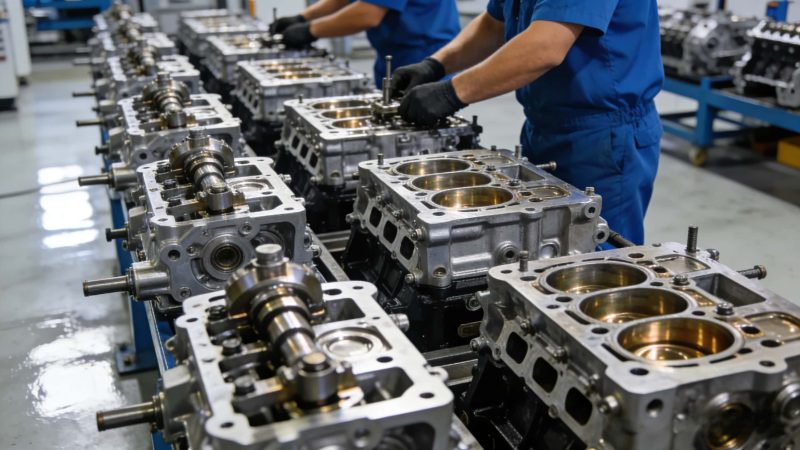
1. Engine Components: The Power Core of Commercial Trucks
2. Chassis & Suspension Parts: Stability and Safety on the Road
3. Electrical & Electronic Parts: Power and Intelligence for Modern Trucks
4. Body & Auxiliary Parts: Functionality and Comfort
Why Choose China’s Commercial Truck Parts Exporter? Our Core Advantages
1. Mature Industrial Cluster & Stable Supply Chain
2. Strict Quality Control & International Certification
3. Competitive Pricing & High Cost-Effectiveness
4. Comprehensive Customization & One-Stop Service
🧠 Commercial Truck Parts Procurement Is a Supply Chain Decision, Not Just a Purchasing Action
⚙️ Why China Has Become a Global Hub for Commercial Truck Parts Supply
China has developed a complete industrial ecosystem for commercial truck parts, covering manufacturing, machining, assembly, testing, and global logistics coordination.This integrated supply chain allows suppliers to offer a wide range of components across engine systems, braking systems, suspension systems, drivetrain assemblies, and electrical parts.

More importantly, the scale of production enables competitive cost structures while maintaining increasingly standardized quality control systems.For global buyers, this creates a sourcing environment where both cost efficiency and product variety can be achieved within a single supply chain network.
🔥 Truck Parts Sourcing Is Not About Price, But About Supply Chain Reliability
One of the most common mistakes in commercial truck parts procurement is focusing only on unit price while ignoring supply chain stability.A lower-priced supplier may not guarantee consistent production quality, stable lead times, or reliable after-sales support.
In contrast, a stable supplier relationship ensures predictable delivery schedules, consistent product quality, and reduced risk of operational disruption.In fleet operations, supply chain reliability often has a greater financial impact than marginal price differences.
📦 Why Procurement Failure Often Comes From Process Gaps, Not Product Defects
Many issues in truck parts sourcing are not caused by defective products, but by gaps in procurement processes.These include unclear technical specifications, insufficient sampling verification, lack of quality inspection standards, and poor communication during production stages.
When these process gaps exist, even high-quality manufacturers may deliver inconsistent results.This makes structured procurement workflows essential for reducing sourcing risk and ensuring long-term supply consistency.
💰 Hidden Cost Structure Behind Truck Parts Sourcing Decisions
In commercial vehicle maintenance, consistency is more valuable than occasional low-cost sourcing.Long-term supplier relationships help stabilize product quality, improve communication efficiency, and reduce procurement uncertainty.
Over time, this leads to better coordination in inventory planning, faster response to urgent demand, and improved overall fleet maintenance efficiency.
🔁 Why Long-Term Supplier Relationships Matter in Truck Parts Industry
The true cost of truck parts sourcing is not limited to unit price. It includes logistics costs, customs handling, quality inspection expenses, potential downtime costs, and emergency replacement scenarios.
When procurement decisions are not optimized, these hidden costs can significantly exceed initial purchase savings.Therefore, evaluating total landed cost and operational risk is more important than focusing solely on factory pricing.
The Global Market Prospect of Chinese Commercial Truck Parts
Choose Us: Your Trusted China Commercial Truck Parts Export Partner
❓FAQ – Commercial Truck Parts Supplier & Procurement
Why is China a major supplier of commercial truck parts globally?
What makes a Chinese truck parts supplier reliable for long-term cooperation?
What are the main risks when sourcing commercial truck parts internationally?
Why is supplier selection more important than product price in truck parts sourcing?
How does the truck parts procurement process typically work?
The procurement process typically begins with technical inquiry and specification confirmation, followed by sample evaluation to verify quality and compatibility.Once samples are approved, production is scheduled, and quality control inspections are conducted during and after manufacturing.
Before shipment, final packaging and documentation are verified, followed by logistics coordination and delivery.Each step in this process plays a critical role in ensuring that the final delivered parts meet both technical and operational requirements.
How do lead times affect commercial truck fleet operations?
Lead times have a direct impact on fleet operations because any delay in receiving spare parts can extend vehicle downtime.In logistics and transportation industries, even short delays can disrupt delivery schedules, increase operational costs, and reduce fleet efficiency.
Therefore, suppliers with stable and predictable lead times are more valuable than those offering lower prices but inconsistent delivery schedules.
How can buyers verify the quality of truck parts before mass purchase?
Buyers can verify quality through sample testing, technical specification comparison, and controlled field testing under real operating conditions.
In addition, quality assurance can be improved through third-party inspections, factory audits, and review of production consistency across multiple batches.This reduces the risk of receiving inconsistent products during large-scale procurement.
What role does logistics play in truck parts procurement?
Logistics plays a critical role because even high-quality parts are ineffective if they cannot be delivered on time.International shipping, customs clearance, and transportation coordination all influence how quickly parts reach the end user.
Efficient logistics systems reduce downtime risk and ensure that fleet maintenance operations are not interrupted by supply delays.
How does poor spare parts sourcing affect fleet operations?
Poor spare parts sourcing can lead to inconsistent product quality, increased failure rates, and extended vehicle downtime.
This not only affects individual vehicles but can also disrupt entire fleet schedules, especially in time-sensitive logistics operations.Over time, this increases maintenance costs and reduces overall operational efficiency.
Why should fleet operators consider total cost instead of unit price?
Fleet operators should consider total cost because the true cost of truck parts includes not only purchase price but also logistics, downtime impact, maintenance frequency, and failure risk.
A lower-priced part that fails frequently or causes operational delays often results in higher total cost over time.Therefore, evaluating lifecycle cost is more important than focusing only on initial procurement price.