
Heavy-duty commercial trucks face harsh conditions every day. These work rigs carry heavy cargo across long distances. They absorb repeated impact from potholes, gravel, and rough terrain. Every suspension component takes constant torsion, compression, and vibration. Fleet managers and drivers inspect high-wear parts routinely. They check tires, shock absorbers, brakes, and engine accessories.
Even so, crews overlook many small but critical chassis parts. The stabilizer bar bushing falls into this easy-to-miss group. This compact rubber or polyurethane sleeve shapes truck stability, corner safety, chassis tightness, and handling feel.
Stabilizer bar bushings age, wear, deform, or crack over time. They produce subtle but annoying driving faults as material breaks down. These parts rarely trigger sudden breakdowns. Problems build slowly across thousands of miles. They erode driving safety and create hidden risks. Many repair techs misread bushing failure. They confuse it with bad shocks, worn control-arm bushings, or loose steering linkage. Misdiagnosis forces unnecessary part swaps, repeat repairs, and higher costs.
Use this guide to spot early failure signs and avoid wrong diagnosis. You will learn core root causes and hands-on repair workflows. This material covers diagnosis steps, replacement rules, common mistakes, and service-life tips. Visit our technical support resource center for more chassis troubleshooting tutorials.
What Is a Stabilizer Bar Bushing? Core Functions & Working Principles
You need clear structural knowledge before studying failure signs and fixes. Solid understanding helps you spot abnormal behavior during driving and service work.
The stabilizer bar also goes by anti-roll bar or sway bar. It is a long torsion-resistant steel beam. Mechanics mount this bar horizontally across the truck chassis. It connects left and right suspension for front or rear axles. Its main job limits extreme body lean during turns. It balances height offset between left-right suspension and holds the body steady.
Trucks without a healthy stabilizer system lean hard during fast lane changes. Heavy body roll creates uneven tire load. Tires lose surface grip. Sideslip risk grows, especially with full cargo weight.
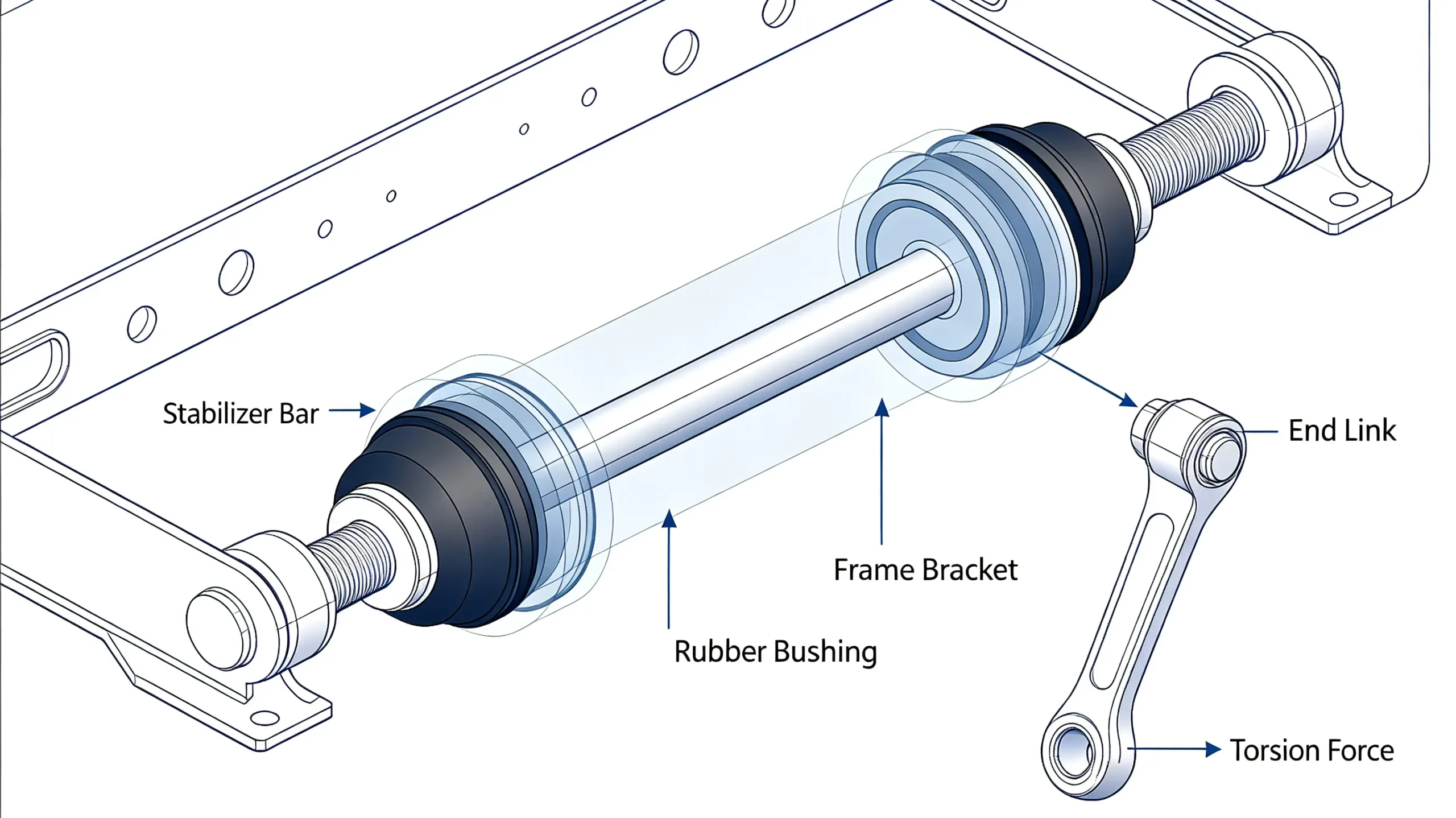
The stabilizer bar bushing works as buffer and fastener. It sits between metal sway bar and chassis bracket. Manufacturers build this sleeve from high-elastic rubber or heavy-duty polyurethane. Unlike rigid metal hardware, bushings deliver function via elastic flex. This same trait makes them vulnerable to aging.
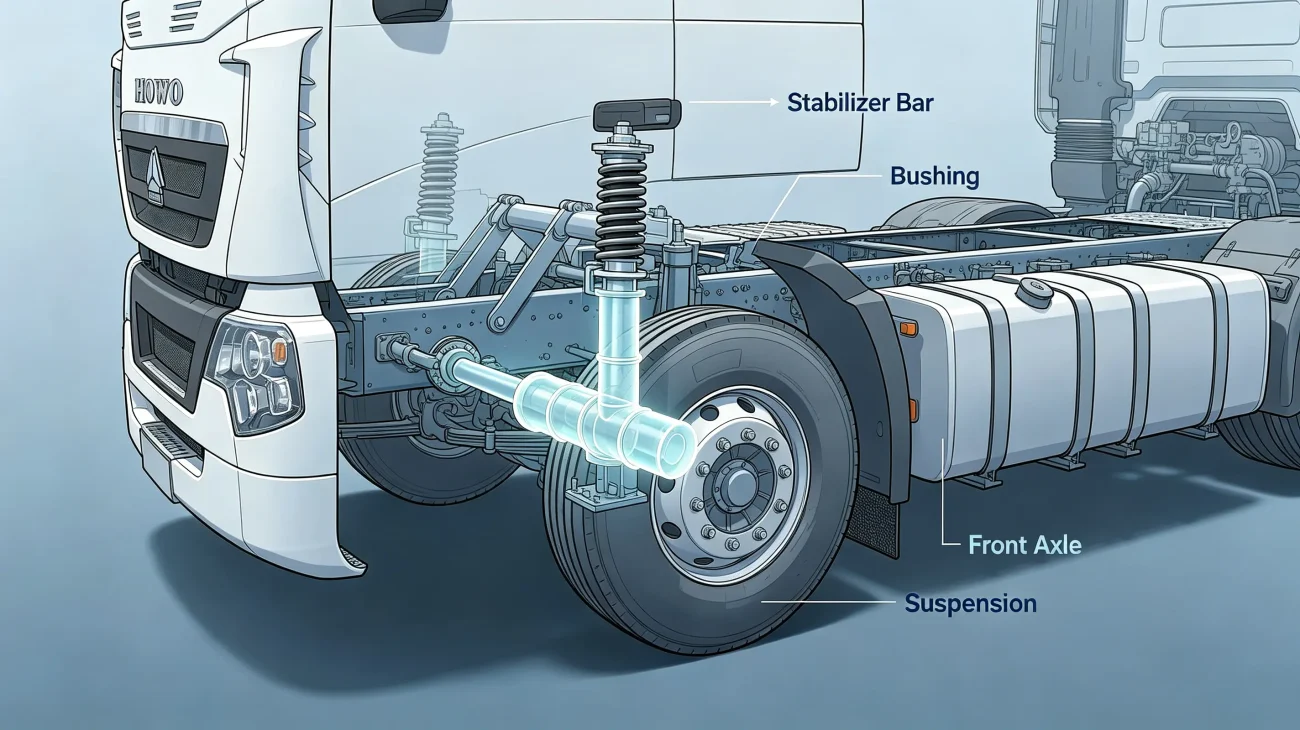
Three Core Roles of Stabilizer Bar Bushings
First, they secure component positioning. They lock the stabilizer bar firmly inside chassis brackets. They stop unwanted shift during operation. Second, they deliver elastic dampening. They soak up road vibration and impact through suspension. They quiet harsh chassis shake. Third, they prevent metal-on-metal friction. They block direct hard contact between steel bar and metal brackets. They eliminate clatter from metal collision.
Main Bushings Versus End-Link Bushings
Two primary bushing types support the stabilizer setup. Main frame bushings sit along the middle section of the bar. They handle primary mounting and vibration dampening. End-link bushings fit on both bar ends. They connect toward control arms and axle housings. These two groups carry different load magnitudes. Yet they produce largely matching failure symptoms. Inspect both sets during every service check. You will not overlook hidden damage.
Good-condition bushings retain steady elasticity. They twist with the sway bar while suspension travels. They keep the assembly quiet and stable. Long exposure to rough terrain and temperature swings degrades material. This triggers a series of driving faults.
Shop durable stabilizer bar bushings and other suspension parts. We stock parts for SINOTRUK, SHACMAN, FOTON, and other Chinese brands. Find them in our truck system parts catalog.
Typical Symptoms of Bad Stabilizer Bar Bushings
Stabilizer bar bushing damage develops step by step. Early signs stay faint. They only show under specific road or driving states. Symptoms grow more noticeable as wear worsens. Eventually they compromise road safety. We draw real heavy-truck repair cases to list clear failure signals. Mechanics and fleet teams can tell bushing damage apart from other faults.
1. Clunking & Rattling Chassis Noise Over Bumpy Roads
Strange chassis noise ranks as the earliest warning for worn bushings. Drivers describe this sound as dull thuds, knocks, or rattle. This signal follows clear patterns. It activates over speed bumps, potholes, cracked asphalt, and gravel. It nearly disappears on smooth flat highways.
Wear creates physical gaps inside the bushing unit. Rubber material thins with age. Space opens between stabilizer bar and bushing shell. The metal bar shifts and strikes brackets each time suspension bounces. This movement generates dull impact noise.
Many service techs misattribute this issue to loose leaf springs or bad shocks. You can tell these apart easily. Faulty shocks produce vehicle bounce and float. They do not create consistent clunk sounds. Loose bolts trigger random noise. Bushing noise reliably follows vertical suspension compression.
Heavily worn end-link bushings create this same noise pattern. When you hear these knocks, inspect both middle bushings and end-link units. This helps you avoid incomplete repair work.
2. Excessive Body Roll During Turning & Lane Changes
Body-roll suppression forms the core purpose of the stabilizer assembly. Healthy bushings hold sway-bar movement in check. They transfer torsion force reliably through cornering. They balance load between left-right sides and keep the truck level.
Aged, cracked, or loose bushings let the bar spin and slide inside brackets. The assembly cannot build proper anti-roll resistance. Your truck leans noticeably through low-speed corners and high-speed lane changes.
Drivers feel obvious body tilt and loose floating road feel. This effect grows stronger under full cargo. Excessive roll hurts ride comfort. It creates uneven tire pressure. Corner grip drops and sideslip risk rises on wet pavement.
3. Loose & Vague Steering Handling
Handling grows loose and vague as bushing degradation moves forward. Experienced operators spot delayed steering response. The chassis loses its solid planted feel. Drivers feel slight floating sensation while driving.
People often mix this symptom with worn steering boxes or bad tie-rod ends. Run quick successive lane changes to separate these faults. If the truck sways side-to-side, chassis fails to follow steering firmly, and self-centering weakens, bad bushings likely cause it.
Early-stage change stays subtle. Operators slowly get used to softer behavior and miss cues. Planned periodic chassis inspections catch risks ahead of time.
4. Squeaking & Creaking Underbody Friction Noise
Besides impact clunk sounds, failing bushings produce high-pitched squeaks. Dry rubber aging creates this specific symptom.
Bushing rubber loses embedded lubricant and flexibility over time. Its surface hardens and dries out. The metal bar rubs directly against dry rubber during twist motion. This contact creates persistent squeal. You hear it most on low-speed turns and reverse maneuvers.
Cold damp weather amplifies squeaking noise. Low temperature stiffens rubber and increases friction. Rainfall can mask noise temporarily. Water lubricates contact surfaces. This trait works as a diagnostic clue. Rubber-safe spray lube quiets squeaks briefly. It cannot mend cracked, aged material.
5. Irregular & Accelerated Tire Wear
Bushing failure indirectly creates abnormal tire wear. This result builds slowly over many miles. Loose ineffective bushings shift suspension geometry through cornering. Tires on opposite axles receive mismatched load force.
Long-term uneven load wears tire shoulders unevenly. Tread edges wear heavily while center tread stays intact. Unaddressed wear shortens tire service cycles. It pushes up fleet tire replacement cost.
Keep one distinction in mind. Single-tire wear usually links to misaligned geometry. Matched wear across both sides connects more closely to bushing defects. Chassis noise and sloppy handling almost always accompany this pattern.
6. Visible Physical Damage in Visual Inspection
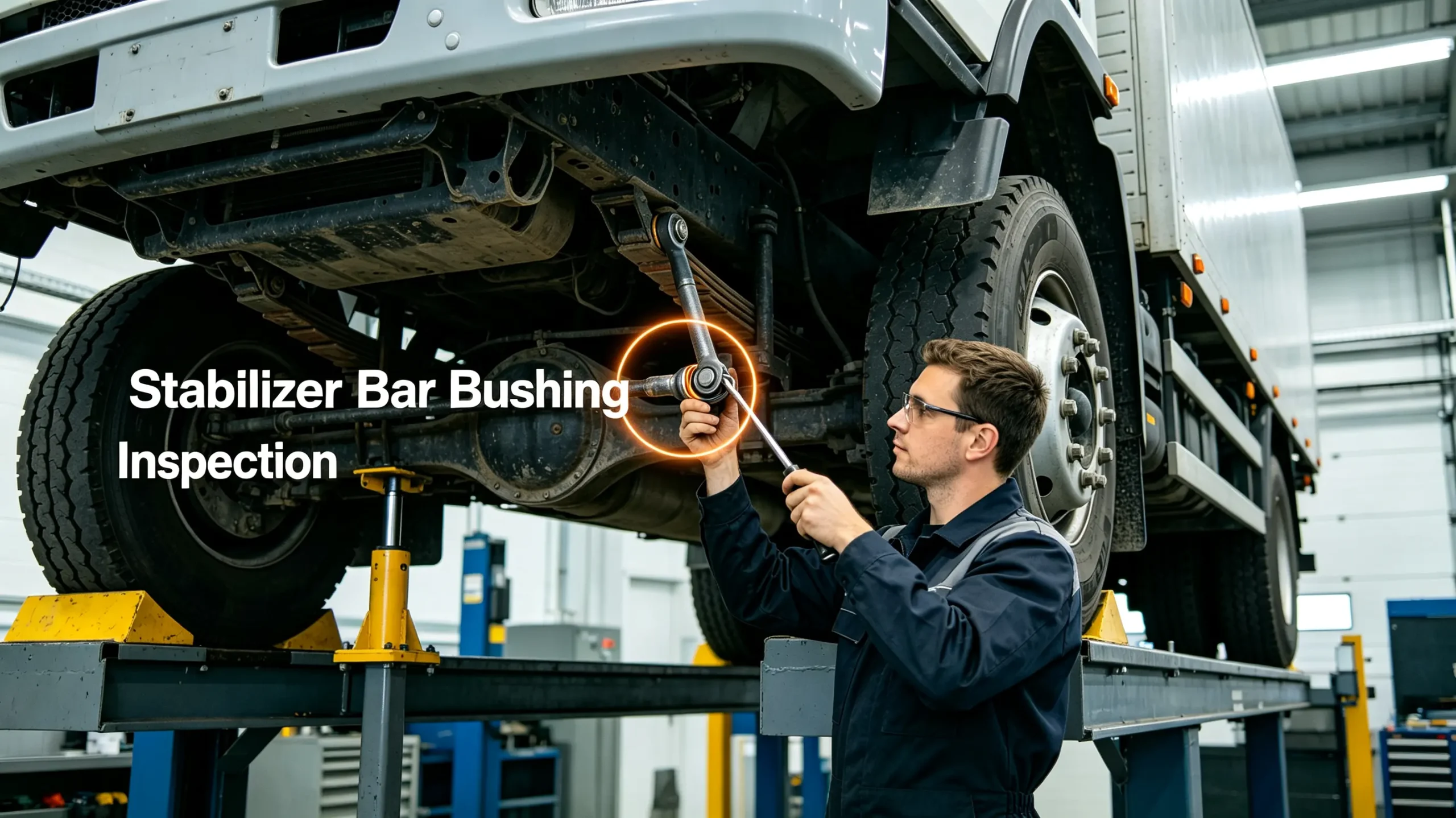
You spot clear physical damage when you inspect failed bushings visually. Lift the truck with certified jack equipment. Secure it with safety support stands. Now you can view bushing hardware underneath.
Good intact bushings show smooth complete rubber skin. They hold zero cracks, zero deformation, and no oil soak. They fit snugly around the bar shaft. Damaged bushings show clear red flags. These include radial cracks, crushed sleeve geometry, flaking rubber, oil-swollen texture, or hard whitened brittleness.
Oil-soaked bushings carry highest hazard. Splashed engine oil, gear oil, or hydraulic fluid ruins rubber makeup. Bushings lose elasticity rapidly. Whenever you spot oil contamination, locate and repair leak points first. Then fit new bushings.
7. Poor Stability & Wandering in Crosswinds
Many operators overlook this secondary symptom. Worn loose bushings lower overall chassis rigidity. Strong crosswinds on open highway trigger truck wander. Vehicle tracking becomes unstable.
Drivers must apply constant small steering corrections to hold straight travel. That raises driver fatigue and road danger. This symptom rarely occurs alone. It pairs with body-roll tendency and chassis rattle. Evaluate all signs together for correct diagnosis.
Root Causes of Stabilizer Bar Bushing Premature Failure
Stabilizer bar bushings belong to consumable wearing parts. Natural aging will happen eventually. Still, many trucks develop severe damage at low mileage. Misuse, poor service practice, and low-grade parts create these early failures. Understand failure sources. You extend new-bushing lifespan and prevent repeat breakdowns.
1. Natural Rubber Aging & Fatigue Accumulation
Rubber and polyurethane materials carry fixed usable-life boundaries. Repeated suspension squeeze, twist, and vibration build fatigue inside bushing bodies. Constant physical flex makes rubber turn hard. It loses elasticity and finally cracks.
Outside environmental factors speed up rubber degradation. Ultraviolet sunlight, high under-chassis heat, and freezing frost all take their toll. Even low-mileage trucks see bushing aging after three to five years. This counts as normal mechanical wear.
2. Oil & Chemical Contamination Corrosion
Oil exposure sits among top causes for destroyed bushings. Leaking engine oil, transmission fluid, axle gear lube, or brake fluid splash onto assemblies. Petroleum-based fluids trigger chemical reaction with rubber. Bushings swell, soften, deform, and permanently lose elasticity.
Winter road salt, de-icing agent, mud, and dust stick onto bushing surfaces. These corrosive agents erode rubber layer by layer. They speed wear and cut component life short.
3. Severe Working Conditions & Overload Operation
Many heavy-duty trucks work construction zones, mountain routes, and gravel roads. Constant travel over bumpy ground exposes suspension to extreme shock. Bushings handle load above design rating. They accumulate fatigue damage quickly.
Sustained over-cargo weight also brings premature failure. Extra body mass amplifies body-roll range while driving. The stabilizer bar receives extreme torsion stress. It creates irreversible bushing deformation and abrasion.
4. Inferior Aftermarket Replacement Parts
Bushing quality on the market varies greatly. Many low-cost products use recycled rubber and unqualified polyurethane. Size and appearance may match original parts. But material density, elasticity, and wear resistance fall far short of genuine parts.
Inferior bushings harden, crack, and deform shortly after installation. They cause repeated faults. Fleet users who pursue long-term stability need high-quality parts. We provide genuine parts for major truck brands. View resources through our truck product brand catalog.
5. Non-Standard Installation Process
Improper installation commonly causes premature failure of new bushings. Maintenance personnel easily overlook this issue. Many repairmen tighten brackets when suspension sits fully lifted or compressed.
After the truck returns to normal height, the bushing stays permanently twisted. It bears abnormal preload. This forced deformation cracks and damages the new bushing quickly.
Excessive bolt tightening crushes the bushing. Insufficient tightening leaves the bracket loose. Both operations directly lead to failure. Misaligned bracket installation causes unilateral stress and accelerates wear.
6. Lack of Daily Chassis Cleaning & Maintenance
Most fleet owners focus on parts replacement. They ignore daily chassis cleaning. Long-term mud, sand, and dust deposit in bushing and bracket gaps. During vibration, these impurities rub the bushing surface like sandpaper. They cause gradual wear and thinning of rubber.
Regular chassis flushing removes abrasive impurities and corrosive attachments. It reduces bushing wear and extends service life of suspension rubber parts.
Step-by-Step DIY Diagnosis for Failing Stabilizer Bar Bushings
Professional fault diagnosis does not require expensive instruments. Drivers and maintenance staff can complete accurate judgment through road test and manual detection. The following process suits heavy-duty trucks. It delivers high accuracy and low misjudgment rate.
Step 1: Road Test to Reproduce Abnormal Symptoms
First, complete road test verification. Select bumpy roads, speed bumps, and curved sections for testing. Observe regular chassis clunking and squeaking noise. Feel whether body roll seems excessive and handling feels loose. Record road conditions and driving states where symptoms appear. This narrows the fault range.
Step 2: Lift the Truck to Normal Ride Height
Use a professional hydraulic jack to lift the truck. Fix the body with a safety support frame. Ensure suspension stays in natural horizontal state at normal ride height. Do not test with suspension fully suspended or compressed. Otherwise gap readings become inaccurate and cause misjudgment.
Step 3: Full Visual Inspection of Bushing Components
Observe all main bushings and end-link bushings one by one. Check for cracks, deformation, peeling, oil pollution, hardening, and missing rubber. Also check whether fixing brackets look loose, deformed, or cracked. Verify whether bolts appear missing or rusted.
Step 4: Manual Prying Play Test
Use a pry bar to gently pry the gap between bar and bracket. Observe relative displacement between steel bar and bushing. A tiny amount of movable gap counts as normal. Obvious shaking and large displacement signal serious wear and failure.
Run this test at all bushing installation positions. You avoid missing local wear faults.
Step 5: Lubricant Verification Test for Squeaking Fault
For vehicles with squeaking noise, spray rubber-safe lubricant on bushing contact points. After lubrication, run another road test. If squeaking disappears completely or reduces sharply, you confirm the noise source. It comes from dry wear of the stabilizer bar bushing.
Step 6: Cross-Check Other Suspension Parts
To fully eliminate misdiagnosis, check control arm bushings, shocks, ball joints, and tie rod ends. Confirm other parts stay intact. Then you can determine bushing failure with confidence. For more real maintenance cases, refer to our customer cooperation cases.
Repair vs Replacement: Effective Solutions for Bad Bushings
Many truck owners choose simple lubrication and cleaning to save costs. In fact, aged, cracked, deformed, and oil-polluted bushings hold no repair value.
Cleaning and lubrication only temporarily eliminate abnormal noise. They cannot repair damaged rubber structure. Failure symptoms recur soon. Hidden safety hazards remain. Therefore, direct replacement stands as the only fundamental solution for failed bushings.
Why Replace Left and Right as a Set
In actual maintenance, we recommend replacing left and right main bushings together. Also replace end-link bushings as a set. Aging and wear degree of left-right bushings stays basically consistent. Unilateral replacement leads to inconsistent stress on both chassis sides. It causes new handling deviation faults. Synchronous replacement avoids repeated disassembly and reduces costs.
Critical Installation Specifications
Follow these installation specifications strictly during replacement. First, tighten all bracket bolts at normal vehicle height. This avoids pre-twist deformation of bushings. Second, clean bracket inner walls thoroughly. Remove old rubber residue and sediment. Third, use special rubber lubricant for auxiliary installation. Never use petroleum grease. Fourth, tighten bolts to standard torque. Avoid excessive compression or loose fixation.
After replacement, run a road test. Confirm abnormal noise disappears, body roll normalizes, and handling feels stable. This ensures maintenance completes properly.
Common Post-Replacement Failure Mistakes & Avoidance Skills
Many fleet owners encounter repeated failures shortly after replacement. Most problems stem from non-standard installation and incomplete fault elimination. Part quality rarely causes these issues. We summarize common wrong operations to help you avoid detours.
Mistake 1: Tightening Bolts With Suspended Suspension
The first common mistake involves tightening bolts with suspended suspension. This operation forces the new bushing to bear permanent torsion stress. It cracks and fails quickly after driving. Always tighten bolts at normal ride height.
Mistake 2: Failing to Clean Bracket Impurities
The second mistake means skipping bracket cleaning. Residual sediment and old rubber squeeze the new bushing. This creates local stress concentration and deformation damage. Always clean brackets thoroughly before installation.
Mistake 3: Ignoring Chassis Oil Leakage Faults
The third mistake involves ignoring chassis oil leakage. If you do not repair leak points before replacement, new bushings corrode and swell from oil pollution quickly. Fix all leaks first, then install new parts.
Mistake 4: Selecting Mismatched Inferior Parts
The fourth mistake means choosing mismatched inferior parts. Inconsistent inner and outer diameters cause immediate problems. Unqualified material hardness leads to ineffective bushing work. Always select high-quality matching parts.
Standardizing installation steps and eliminating hidden chassis faults hold the key. They ensure long service life for new bushings.
Practical Maintenance Tips to Extend Bushing Service Life
Although bushings are wearing parts, standardized maintenance delays aging and wear. It reduces replacement frequency and saves fleet costs. The following tips suit all heavy-duty truck models.
Tip 1: Insist on Regular Chassis Cleaning
Flush chassis suspension parts with clean water regularly. Remove road salt, mud, and abrasive dust. This reduces chemical corrosion and mechanical wear of bushings.
Tip 2: Arrange Regular Visual Inspections
Check bushing status during every monthly maintenance. Find slight aging and wear in advance. Arrange replacement during idle maintenance. This avoids sudden faults during transportation.
Tip 3: Eliminate Chassis Oil Leakage in Time
Repair chassis oil leakage immediately once you find it. This prevents oil pollution from eroding rubber suspension parts.
Tip 4: Standardize Driving Habits
Avoid long-term overload operation. Reduce violent driving such as sharp turning and rapid acceleration. This lowers instantaneous impact load on suspension bushings.
Tip 5: Select High-Quality Replacement Parts
Choose high-elasticity rubber and polyurethane bushings for replacement. Qualified parts offer better wear and aging resistance. They can effectively extend service life by more than double.
FAQs About Stabilizer Bar Bushing Failure & Maintenance
Q1: Is it safe to drive a truck with bad stabilizer bar bushings?
In early slight wear stage, short-distance low-speed driving stays basically safe. However, as wear deepens, chassis stability decreases. Sideslip and rollover risk increases during high-speed driving and heavy-load turning. Long-term driving with faults also wears other suspension parts. It results in greater maintenance losses. Replace bushings in time after you find faults.
Q2: Will bad stabilizer bar bushings trigger dashboard warning lights?
Most traditional mechanical suspension trucks lack electronic monitoring for bushings. Bushing wear and failure does not trigger fault codes or dashboard lights. You find all faults through manual inspection and road test experience.
Q3: What is the difference between bushing noise and shock absorber noise?
Bushing failure mainly produces regular clunking and squeaking when passing bumps. Shock absorber failure causes vehicle bouncing, floating, and poor damping. It produces almost no obvious collision noise. This gives you the most intuitive distinguishing method.
Q4: Rubber vs polyurethane bushings: which is better for heavy-duty trucks?
Rubber bushings deliver good damping and noise reduction. They offer soft driving feel. They suit daily logistics transportation vehicles. Polyurethane bushings carry higher hardness. They offer stronger wear and deformation resistance. They suit engineering vehicles and harsh working condition trucks. Choose according to your actual working scenario.
Q5: Can I replace stabilizer bar bushings by myself?
DIY replacement works for personnel with maintenance experience and safety tools. However, heavy-duty truck chassis parts demand high installation precision and torque standards. Inexperienced users should seek professional maintenance. This avoids secondary faults from non-standard installation.
Conclusion
Stabilizer bar bushings are small but core components. They determine chassis stability and driving safety of heavy-duty trucks. Although they do not cause sudden breakdowns, ignored wear and aging reduce handling stability. They increase chassis noise, accelerate tire wear, and bring safety hazards to heavy-load transport. Main failure causes include natural aging, oil corrosion, harsh conditions, inferior parts, non-standard installation, and poor maintenance.
Timely detection of symptoms, accurate diagnosis, and standardized replacement solve bushing faults effectively. Good driving habits and regular chassis maintenance extend service life greatly. They reduce fleet operating costs. To learn more suspension maintenance knowledge, follow our technical support column.
If you seek high-quality durable bushings and complete suspension parts, our team provides accurate matching and consulting. You can contact us anytime for customized solutions and bulk supply.
To know more about our truck parts export experience and global service layout, visit our about us page. For full-series engine, chassis, and electrical accessories, browse our official homepage.


