Introduction
The torque rod is a core yet underrated component of heavy-duty truck suspension systems. Unlike shock absorbers that reduce vibration or leaf springs that support vertical weight, torque rods focus on axle positioning and stability. Every long-haul, construction, and heavy-haul truck relies on functional torque rods to maintain steady driving posture.
This key part controls all longitudinal and minor lateral axle movement. It locks the axle in a fixed geometric position during acceleration, braking, downhill travel, and rough-road driving. This stable positioning keeps wheel alignment consistent, steering responsive, and tire pressure evenly distributed.
Suspension quality directly impacts truck safety, fuel efficiency, tire lifespan, and fleet operating costs. Even minor torque rod wear creates small chassis gaps. These tiny flaws escalate under heavy loads and high speeds, triggering a chain of secondary component faults.
Most fleet teams overlook torque rod and bushing inspections. They prioritize tires, brakes, and shocks, ignoring this critical maintenance blind spot. Torque rod performance declines gradually. Most failures only surface after severe wear occurs.
Aging, cracked, or loose torque rod bushings create invisible axle play. This gap amplifies during daily operation. Drivers notice wandering steering, delayed braking, and persistent chassis vibration. Tires also wear unevenly and fail prematurely as a result.
Neglected torque rod issues damage more than the suspension. They wear down leaf springs, U-bolts, steering linkages, and axle housings. Minor suspension problems escalate into costly chassis failures. This causes unplanned downtime and higher fuel consumption for aging trucks.
Truck torque rod replacement delivers outstanding cost-to-value benefits for fleet maintenance. It restores factory suspension geometry, eliminates chassis floating and vibration, and stabilizes steering and braking. It also extends the overall service life of the entire suspension system.
This guide serves fleet maintenance staff and independent truck repair technicians. It covers torque rod structure, failure signs, root causes, standardized replacement steps, precision installation rules, post-repair checks, and long-term maintenance tips. You can accurately diagnose faults and complete error-free replacements with this structured tutorial.
What Is a Truck Torque Rod & Core Functions
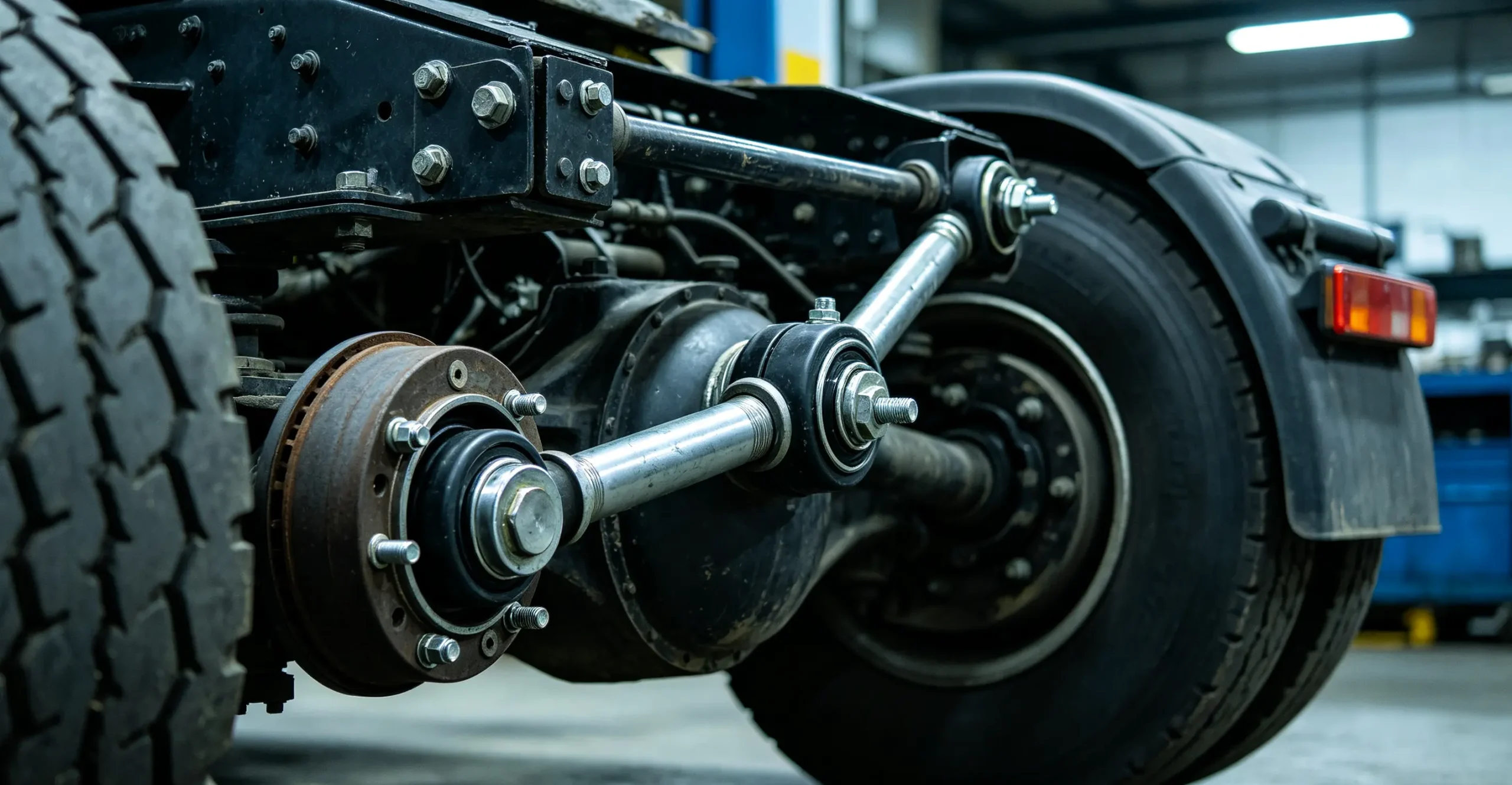
Heavy-duty truck torque rods, also called torque arms or control arms, are high-strength forged steel parts built for harsh working conditions. Both rod ends feature elastic rubber or durable polyurethane bushings. These bushings act as the main buffer and load-bearing core of the assembly.
Torque rods feature a simple yet highly precise structure. Technicians install them between the truck frame and axle housing via fixed bolts. Paired with leaf springs and shock absorbers, they form a stable suspension system critical for heavy-load driving safety.
Torque rods deliver three non-negotiable core functions for heavy trucks:
1. Longitudinal Axle Positioning: Hard acceleration and braking generate strong inertial force. Torque rods lock the axle in place to prevent forward and backward shifting. This eliminates power lag and braking deviation.
2. Vibration & Impact Buffering: Elastic end bushings absorb most rigid impact from bumpy, gravel, and uneven roads. They prevent direct metal-to-metal contact between the frame and axle. This reduces chassis vibration and improves driving comfort.
3. Consistent Wheel Alignment: Torque rod structure fixes axle parallelism and verticality. Intact, properly installed rods keep tires perpendicular to the road. This ensures uniform stress and avoids abnormal wear or steering drift.
Heavy trucks use two common torque rod layouts: parallel double rods and V-shaped rod combinations. All torque rod assemblies and matching accessories belong to professional heavy-duty truck suspension system parts. Every part requires strict model matching and standardized installation.
Torque rod specifications vary drastically by truck brand, tonnage, and model. Key differences include rod length, bushing hardness, steel strength, and bolt size. Mismatched parts fail quickly and compromise suspension stability and safety.
Quality torque rods last over 300,000 miles with flat-road driving, standard loads, and regular lubrication. Harsh conditions shorten service life drastically. Continuous overload, frequent off-road travel, and neglected maintenance accelerate bushing aging and rod fatigue.
Routine torque rod inspections and maintenance reduce fleet repair costs significantly. They prevent premature chassis aging and extend the full lifespan of truck suspension components.
Common Torque Rod Failure Symptoms (Early to Severe)
Torque rod failure develops gradually. It does not disable trucks suddenly. Early warning signs are subtle and often misdiagnosed as steering, tire, or shock absorber issues. Learning progressive failure patterns helps you fix problems before they escalate.
The following symptoms are ordered from mild early signs to critical late-stage failures for easy hierarchical judgment and maintenance scheduling.
1. Unstable Steering & Wandering Driving
Steering wander is the earliest and most common sign of worn torque rod bushings. Aging bushings lose elasticity and create small gaps between rods and mounting brackets. The axle shifts slightly left and right with road vibration during straight driving.
Drivers must constantly correct the steering wheel to maintain a straight path. This increases fatigue on long hauls. Crosswinds and high-speed cruising amplify this instability significantly.
Many mechanics misattribute wandering steering to loose tie rods, worn kingpins, or low tire pressure. In most unexplained cases, torque rod positioning failure is the root cause. Professional professional truck suspension troubleshooting always prioritizes torque rod inspections for steering drift issues.
2. Uneven & Accelerated Tire Wear
Failed torque rods disrupt factory wheel alignment data. Tires can no longer maintain full vertical road contact. Instead, they rub sideways under load, causing irregular friction and rapid wear.
Typical signs include feathered tread, worn tire shoulders, and thinner rubber on one side of the tire. This issue increases tire replacement frequency and raises long-term fleet operational costs.
Most fleet managers only replace worn tires without fixing suspension faults. This leads to repeated abnormal wear. Adopting parts from trusted premium truck component selection guide standards eliminates this recurring issue and extends tire service life.
3. Loud Chassis Clunking & Impact Noises
Bushings act as a buffer between metal components. Cracked, detached, or fully aged bushings lose all cushioning ability. This creates direct metal contact between torque rods and axle brackets.
You will hear distinct loud “clunk” noises when braking, accelerating, or crossing rough roads. Early-stage noise only occurs on bumpy surfaces. Advanced wear produces noise even on flat pavement.
Persistent chassis noise signals unprotected suspension operation. Long-term neglect scratches mounting holes, deforms brackets, and causes irreversible structural chassis damage.
4. Cruising-Speed Chassis Vibration
Functional torque rods stabilize axle movement. Failed rods allow irregular up-down and side-to-side axle oscillation. Shock absorbers cannot eliminate this movement, so vibration transfers to the chassis and cab.
Drivers feel steady vibration through the floor and steering wheel, most noticeable at 45–65 mph. Unlike wheel-balance vibration, torque rod vibration persists across speeds and worsens under heavy loads.
Continuous vibration accelerates fatigue in all suspension parts. It wears shocks, leaf springs, fasteners, and steering components, creating a vicious cycle of recurring failures.
5. Poor Braking Stability & Axle Shift
Heavy-duty truck braking relies on rigid axle support. Healthy torque rods lock the axle firmly during stops to maintain vehicle stability and precise braking response.
Damaged torque rods cannot restrict axial axle movement. Hard braking triggers sudden forward axle shift. This creates a delayed, spongy brake feel and left-right braking deviation.
This fault is extremely dangerous during downhill hauls and high-speed full-load travel. Minor braking drift can lead to loss of vehicle control and requires immediate repair.
6. Visible Bushing Cracking, Deformation & Leakage
Visual inspection is the fastest way to confirm torque rod failure. Aging rubber bushings develop dry surface cracks, bulging edges, and hardened flattened surfaces. Wear-resistant polyurethane bushings chip, compress, and deform after heavy overload use.
Severe failure causes full separation between bushings and metal sleeves, creating large rod play. Greasable bushings also leak lubricant when worn and poorly sealed.
Torque rods work in symmetric pairs. Always replace full sets instead of single faulty rods. Balanced chassis stress prevents new suspension imbalance issues after repair.
Root Causes of Premature Torque Rod Failure
Torque rods rarely fail from natural aging alone. Most premature damage stems from poor driving habits, harsh operating environments, and irregular maintenance. Addressing these root causes reduces repeated repairs and extends suspension component lifespan.
Overload & Continuous Heavy Hauling: Overloading is the top cause of torque rod damage. Excess cargo exponentially increases suspension pressure. Bushings endure constant extreme compression, leading to irreversible deformation, elasticity loss, and structural fatigue. Overload operation cuts torque rod service life by over 60%.
Rough Road & Off-Road Operation: Frequent travel on potholed, gravel, construction, and mountain roads delivers repetitive strong chassis impacts. Each jolt creates tension and compression stress on torque rods. Repeated fatigue cracks bushings, loosens bolts, and bends rod bodies over time.
Missing Routine Inspection & Lubrication: Most modern torque rods feature grease fittings for routine maintenance. Proper lubrication reduces internal bushing friction, delays aging, and buffers structural stress. No lubrication causes dry friction, rapid wear, and powder breakdown. Unchecked minor faults worsen into severe failures.
Low-Quality Aftermarket Components: Many repair shops use cheap generic torque rods to cut costs. These inferior parts use soft rubber, thin steel, and uncalibrated structures. They cannot withstand heavy truck loads and impacts, failing quickly. Choosing certified genuine truck suspension component brands ensures long-term durability and stable performance.
Improper Installation & Incorrect Torque Values: Installation quality directly determines part lifespan. Over-tightened bolts over-compress bushings and speed up aging. Loose bolts cause suspension play and vibration. Twisted bushings during installation create unbalanced stress, leading to failure within a few thousand miles. Standard torque settings and professional processes guarantee reliable repair results.
Pre-Replacement Preparation (Tools, Safety & Inspection)
Complete pre-work preparation eliminates common replacement errors, including bolt stripping, bracket cracking, and post-installation repeat failure. Follow standardized tool setup, safety protocols, and pre-repair inspections before disassembly.
Required Tools: Prepare a heavy-duty floor jack, jack stands, high-torque impact wrench, precision torque wrench, full socket set, penetrating rust remover, wire brush, industrial cleaning solvent, and high-temperature chassis grease. Complete tool sets ensure smooth disassembly and accurate installation without secondary part damage.
Safety Preparations: Park the truck on flat, solid ground. Engage the parking brake fully and chock all tires to prevent sliding. Use a jack to slightly lift the axle and release built-up suspension tension on torque rod mounting points. Never work under unsupported vehicle weight to avoid safety risks.
Pre-Replacement System Inspection: Check all adjacent suspension components before removing torque rods. Inspect leaf springs for cracks and bends, U-bolts for fatigue and looseness, shocks for oil leakage, and brackets for deformation. Resolve all secondary faults before installing new parts to ensure full suspension system health.
Step-by-Step Heavy-Duty Torque Rod Replacement Process
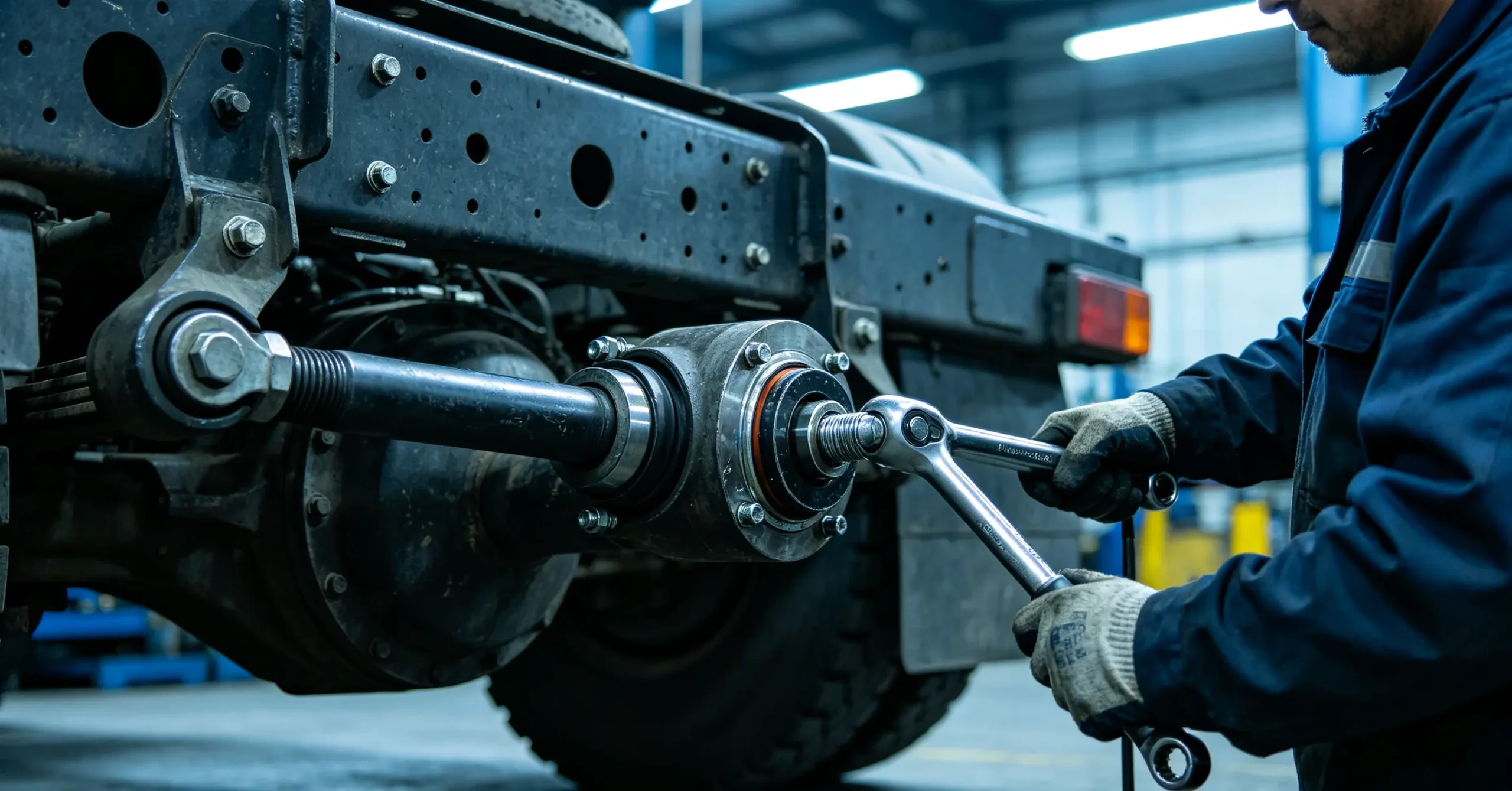
This standardized workshop process covers full torque rod replacement for SINOTRUK, SHACMAN, FAW, FOTON, and most mainstream heavy-duty truck models. Strict adherence eliminates installation errors and ensures long-term stable component performance.
Step 1: Relieve Suspension Tension
Loaded suspension tension jams mounting bolts and complicates disassembly. Slightly lift the axle with a floor jack to fully release pressure on torque rods and bolts. This prevents thread damage and bracket cracking during removal.
Step 2: Loosen & Remove Rusted Mounting Bolts
Chassis bolts rust and bind after long-term outdoor exposure. Spray penetrating rust remover on stuck fasteners and wait 3–5 minutes for full penetration. Loosen upper frame bolts first, then lower axle bolts gradually. Avoid brute force to prevent stripped threads and broken bolts.
Step 3: Remove Old Torque Rod Assembly
Slowly detach the old torque rod after bolt removal. Inspect the rod body for bending, cracking, and surface fatigue. Check bushings for severe wear and sleeve deformation. Record wear characteristics to guide future fleet maintenance and fault diagnosis.
Step 4: Clean Mounting Surfaces & Threads
Mounting holes, brackets, and threads accumulate rust, dirt, and old grease buildup. These impurities ruin fitting precision and torque accuracy. Scrub surfaces and threads with a wire brush, then clean thoroughly with industrial solvent. Fully clean mounting points ensure perfect new part fitting and balanced stress distribution.
Step 5: Install New Torque Rod
Align the genuine new torque rod with frame and axle mounting positions. Thread bolts in manually first to avoid cross-threading damage. Complete preliminary fastening, then verify bushing alignment. Ensure bushings sit naturally without twisting or distortion to prevent unbalanced operational stress.
Step 6: Tighten Bolts to OEM Standard Torque
Precision torque calibration is critical for long bushing life. Tighten all bolts strictly to OEM factory torque specifications. Over-tightening crushes bushings, while under-tightening causes suspension play. Professional installation standards, proven in real heavy-duty truck part installation cases, deliver reliable repair quality.
Step 7: Re-Grease Bushing Fittings
Inject high-temperature chassis grease into all greasable torque rod fittings after installation. Stop when clean new grease overflows from bushing edges. This confirms full internal lubrication, eliminates dry friction gaps, and maximizes new part buffer performance and service life.
Post-Installation Inspection & Wheel Alignment
Replacement work is not complete after installation. New torque rods reset suspension geometry and axle positioning. Skipping post-repair checks and alignment leads to persistent tire wear and steering instability. Comprehensive calibration ensures optimal driving performance.
Visual Inspection: Check installed torque rods for twisted or deformed bushings. Confirm brackets fit flush with no offset and all bolts are fully tightened. Manually move suspension components to verify smooth movement with no jamming or abnormal resistance.
Road Test Verification: Perform a low-speed test drive first to check for chassis noise and vibration. Gradually increase to highway cruising speed. Confirm straight stable driving, no steering wander, no abnormal vibration, and responsive consistent braking feedback.
Professional Wheel Alignment: Always complete full heavy-duty truck wheel alignment after torque rod replacement. Correct axle parallelism, camber, and toe-in data to restore factory suspension geometry. This eliminates tire scrubbing wear and locks in stable driving performance.
Long-Term Torque Rod Maintenance Best Practices
Standardized daily maintenance extends torque rod lifespan and reduces fleet repair costs dramatically. Complete full truck system maintenance solutions prioritize routine torque rod inspections for long-term suspension health.
1. Regular Lubrication: Grease torque rod fittings every 10,000–15,000 miles. Sustained lubrication minimizes internal bushing friction and delays aging.
2. Periodic Visual Checks: Inspect bushing condition and bolt tightness during every chassis service. Fix minor cracks and loose bolts early to stop fault progression.
3. Standardize Driving Habits: Avoid continuous overloading, hard acceleration, and sharp braking. These behaviors reduce extreme impact and compression stress on torque rod assemblies.
4. Replace Parts in Complete Sets: Replace left and right torque rod sets together. Symmetrical component aging maintains balanced chassis stress and prevents suspension offset.
5. Use OEM-Grade Genuine Parts: High-quality genuine torque rods feature precise structural design and durable materials. They avoid the premature failure common with cheap aftermarket alternatives.
Frequently Asked Questions
1. Can I drive with a bad torque rod?
Short-distance low-speed driving is possible but not safe long-term. Faulty torque rods cause unstable steering, poor braking control, and rapid tire wear. Severe cases trigger sudden suspension failure and highway accidents. Always repair or replace damaged torque rods promptly.
2. How long do heavy-duty truck torque rods last?
Service life depends on part quality and operating conditions. Well-maintained OEM torque rods last 200,000–350,000 miles on flat roads with standard loads. Harsh conditions like overload and off-road driving can reduce lifespan to under 50,000 miles. Consistent maintenance is the key to maximum durability.
3. Do I need alignment after torque rod replacement?
Wheel alignment is mandatory after replacement. New torque rods alter original suspension geometry and axle positioning. Without calibration, wheels remain unbalanced, causing persistent uneven tire wear and steering drift. Alignment restores factory driving stability and fuel efficiency.
4. Is bushing replacement better than full rod replacement?
It depends on component condition. If the rod body is straight, crack-free, and undamaged, only replacing worn bushings is cost-effective. If the rod body is bent, fatigued, or cracked, the entire assembly requires replacement to ensure structural safety and suspension stability.
Conclusion
Torque rods serve as the core positioning foundation of heavy-duty truck suspension systems. They directly control driving stability, braking precision, tire lifespan, and overall road safety. Most common chassis issues, including vibration, steering wander, abnormal noise, and rapid tire wear, stem from unmaintained torque rod faults.
Fleets reduce unplanned downtime and excessive operating costs by identifying early failure signs, following standardized replacement processes, and implementing preventive maintenance. Mastering torque rod repair and maintenance is an essential skill for professional heavy-duty chassis technicians.
This complete guide delivers durable, high-quality torque rod repair results for technicians and fleet managers alike. For model matching, installation debugging, and professional fault resolution support, contact our expert professional heavy-duty truck service team for one-stop technical solutions.


