
Introduction
Heavy-duty trucks rely on a steady and consistent fuel supply to operate normally. Every long-haul trip and construction task depends on stable fuel delivery from the tank to the engine.
Many drivers focus heavily on engine performance, tires, and brake systems. However, most overlook the importance of the fuel transfer pump.
The fuel transfer pump acts as the core delivery component in diesel fuel systems. It pushes diesel from the fuel tank toward filters, injectors, and the engine combustion chamber.
Without a fully functional transfer pump, even high-quality diesel cannot reach the engine smoothly. This directly leads to poor vehicle performance and frequent breakdowns.
Unlike fuel filters that only clean impurities, transfer pumps bear continuous mechanical pressure during operation. They work every time the truck starts and runs.
Over time, internal wear, fuel contamination, and electrical failures will gradually damage the pump. Minor issues slowly turn into serious mechanical faults.
Most truck owners only notice problems after obvious symptoms appear. These symptoms include hard starting, power drop, and sudden stalling on the road.
Unexpected pump failures often happen during long-distance transportation. They cause delayed delivery schedules and expensive roadside repair costs.
In severe cases, faulty transfer pumps can even damage fuel injectors and engine cylinders. This greatly increases overall fleet maintenance expenses.
For this reason, every truck driver and fleet maintenance technician must master basic diagnosis and repair methods. Timely troubleshooting can avoid unnecessary losses.
To better understand the full fuel system workflow, you can review our detailed guide on heavy truck fuel system maintenance for systematic reference.
Basic Knowledge of Truck Fuel Transfer Pump
Before troubleshooting faults, it is necessary to understand the basic structure and working logic of fuel transfer pumps. This helps you avoid blind disassembly and wrong judgments.
Heavy-duty truck transfer pumps differ greatly from ordinary light vehicle pumps. They feature higher pressure resistance and stronger continuous working capacity.
Currently, mainstream heavy trucks use two types of transfer pumps. The first type is mechanical transfer pumps, and the second type is electronic electric transfer pumps.
Mechanical transfer pumps connect directly to the engine gear system. They rely on engine rotation to provide power for fuel delivery.
Electric transfer pumps use vehicle battery power. They start working immediately after the key is turned on. They provide stable fuel pressure before engine ignition.
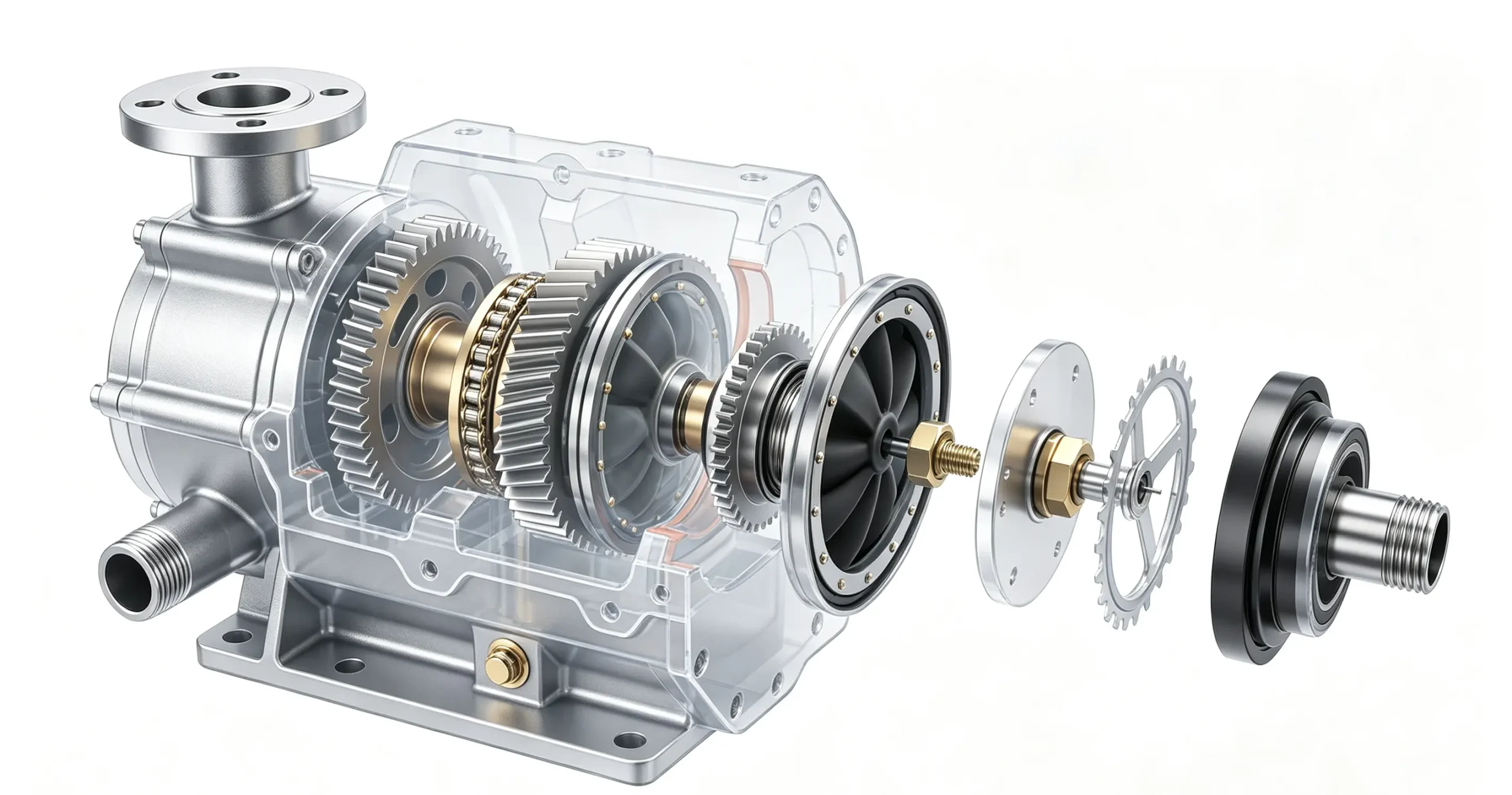
A complete transfer pump assembly includes multiple core parts. These parts include pump housing, internal gear or diaphragm, pressure valve, oil inlet port, oil outlet port, and sealing rings.
Each component plays an irreplaceable role. The internal gear squeezes diesel to generate pressure. The pressure valve stabilizes fuel delivery pressure.
Sealing rings prevent internal and external oil leakage. The inlet and outlet ports ensure one-way fuel flow without backflow.
In actual operation, the transfer pump extracts diesel from the bottom of the fuel tank. It then sends fuel through pipelines to the primary filter and fine filter.
After full filtration, clean diesel flows into the high-pressure oil pump. Finally, fuel is injected into the engine for combustion and power generation.
The entire fuel circulation process requires stable pressure and continuous flow. Once the transfer pump weakens, the whole fuel system efficiency declines.
Many users confuse transfer pumps with oil-water separators. You can clearly distinguish their functions through our article about truck fuel filter and water separator differences.
Main Causes of Fuel Transfer Pump Failures
Fuel transfer pump faults never occur without reason. Almost all failures come from long-term improper use, poor fuel quality, or irregular maintenance.
By summarizing a large number of fleet maintenance cases, we have sorted out the most common failure causes for daily reference.
1. Long-Term Use of Impure Low-Quality Diesel
This is the primary cause of early transfer pump damage. Many truck drivers choose cheap fuel to save operating costs.
Unqualified diesel contains a large amount of sediment, colloids, metal particles, and excess water. These impurities directly enter the pump body with fuel.
Hard particles continuously scratch internal gears and sealing components. This causes internal wear and reduced sealing performance.
Colloidal substances easily adhere to pump interiors and pipelines. They block tiny oil passages and affect normal fuel delivery pressure.
2. Long-Time Idle and Dry Pump Operation
Many drivers habitually run the pump when the fuel tank level is too low. They also frequently start the engine with insufficient residual fuel.
Transfer pumps rely on diesel for internal lubrication and heat dissipation. Dry running without fuel will cause rapid wear of internal precision parts.
Long-term dry pumping will deform gears and damage the pressure balance system. The pump will gradually lose pressure delivery capacity.
3. Aging and Damage of Internal Sealing Parts
All rubber sealing rings and gaskets have a fixed service life. After long-term contact with diesel, rubber materials will harden and age.
Aged seals cause micro oil leakage and air intake problems. Air entering the fuel pipeline will lead to unstable fuel pressure.
This issue is very common in trucks with more than three years of service. Regular inspection of sealing accessories is essential.
4. Electrical Circuit Faults (Electric Transfer Pumps)
For electronic transfer pumps, circuit problems account for nearly 40% of total failures. Common issues include loose wiring, poor contact, and fuse damage.
Long-term vehicle vibration will loosen pump power connectors. Water and dust accumulation also cause short circuits and power failure.
Once the circuit fails, the electric pump cannot start normally. The truck will face difficulty in ignition and fuel supply shortage.
5. Blocked Inlet and Outlet Pipelines
Fuel pipelines will accumulate dirt and impurities after long-term operation. Blocked pipelines increase fuel delivery resistance.
The transfer pump needs to work harder to deliver fuel. Long-term overload operation accelerates pump aging and damage.
6. Excessive Working Load and Harsh Environment
Trucks working in mountainous areas, construction sites, and muddy roads face harsher working conditions.
Continuous full-load climbing and frequent start-stop operations make the transfer pump work under high load for a long time.
At the same time, chassis dust and mud corrode the pump housing and fixed parts. This causes structural deformation and performance degradation.
Typical Symptoms of Bad Fuel Transfer Pump (Early + Advanced Faults)
Most pump failures have obvious early warning signals. If you can capture these symptoms in time, you can repair faults before serious damage occurs.
The following abnormal performances are standard judgment basis for transfer pump faults in heavy truck maintenance.
1. Difficult Engine Ignition and Delayed Startup
When the transfer pump pressure is insufficient, the fuel pipeline cannot form effective pressure quickly.
You need multiple ignition attempts to start the engine. This is the most typical early failure feature.
2. Weak Acceleration and Insufficient Power Under Load
The truck runs normally at idle speed and low speed. However, the power is obviously insufficient when climbing or accelerating with load.
This is because the pump cannot supply enough fuel instantly. The engine cannot get sufficient fuel for high-power combustion.
3. Unstable Idle Speed and Engine Jitter
Faulty transfer pumps cause unstable fuel delivery pressure. Fuel supply fluctuates irregularly.
Uneven fuel supply leads to inconsistent combustion in each cylinder. Finally, obvious engine jitter and idle speed fluctuation occur.
4. Increased Fuel Consumption
When the pump efficiency decreases, the engine cannot burn fuel fully. At the same time, the ECU will compensate fuel injection volume.
Under the same load and mileage, the overall fuel consumption of the truck will increase significantly.
5. Sudden Engine Stalling During Driving
This is a typical advanced failure symptom. The pump basically loses fuel delivery capacity.
The fuel supply is suddenly interrupted during driving. The engine will stall instantly, bringing serious safety risks.
6. Abnormal Pump Noise
Healthy transfer pumps work with low and stable sound. Faulty pumps produce obvious buzzing, friction, or impact noise.
Abnormal noise indicates internal gear wear, foreign matter jamming, or electrical instability.
7. Oil Leakage and Air Intake in Pipeline
Aged seals cause oil leakage at pump interfaces. At the same time, outside air enters the fuel pipeline.
Air bubbles in fuel will cause combustion disorder and greatly affect driving stability.
Many power-related failures look similar. You can accurately distinguish problems by learning truck engine power loss common causes.
Pre-Inspection Preparation Before Pump Troubleshooting
Before formal disassembly and maintenance, sufficient preparation is required. This ensures safe, efficient, and error-free inspection.
First, park the truck on a flat and ventilated ground. Turn off the engine completely and pull up the handbrake.
Wait 10 to 15 minutes for pipeline pressure to release naturally. This prevents residual diesel from spraying out during disassembly.
Prepare conventional maintenance tools, including adjustable wrenches, screwdrivers, oil receiving basins, clean rags, and insulating gloves.
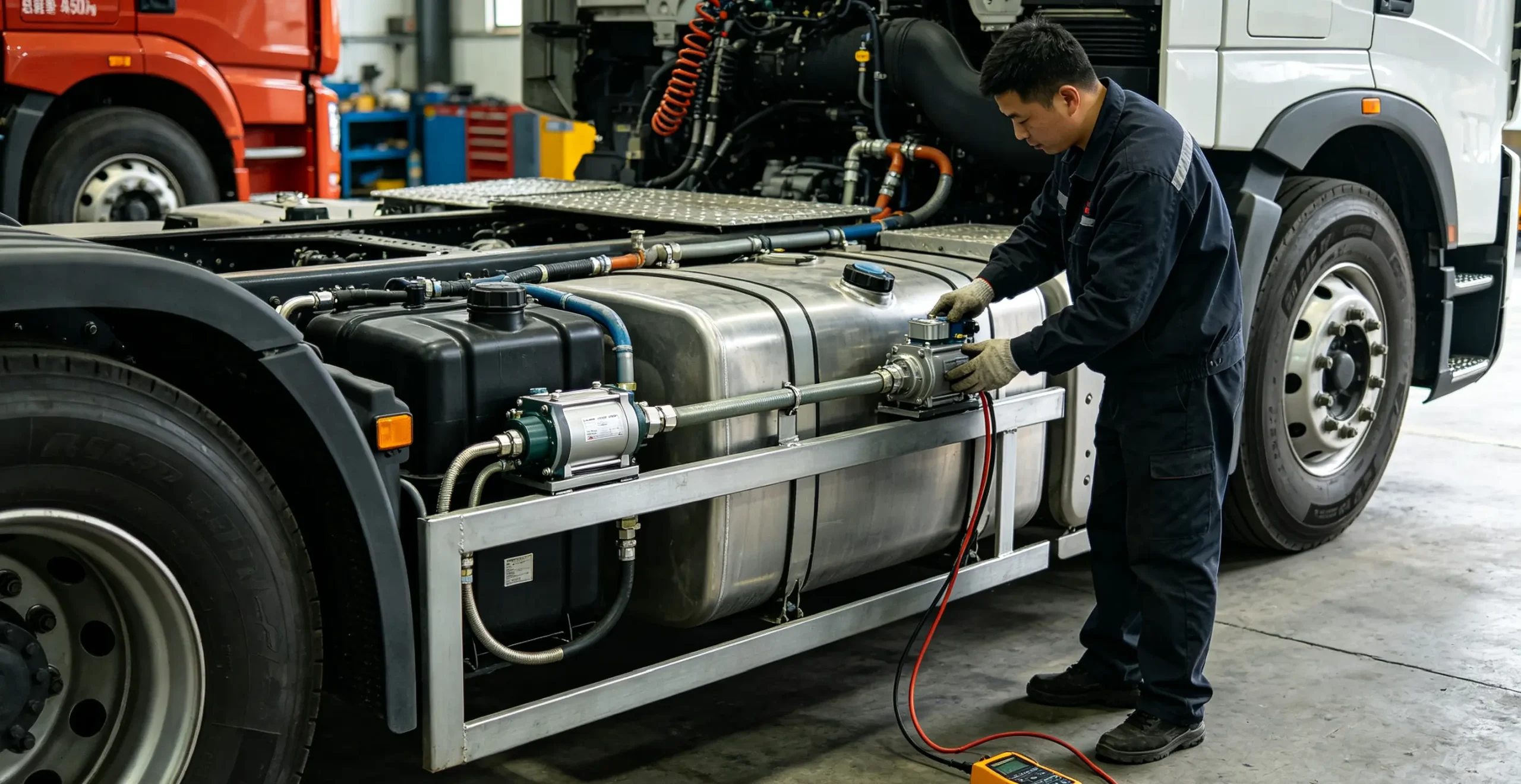
For electric pump inspection, prepare a multimeter to detect circuit voltage and line continuity.
Clean the dust and mud on the pump surface and surrounding chassis. This prevents external impurities from entering the pipeline.
Check the fuel tank level to ensure sufficient fuel to avoid dry pumping during testing.
Standard chassis operation specifications can help you avoid secondary damage. Refer to truck chassis parts installation tips for safe operation standards.
Complete Step-by-Step Troubleshooting & Fix Steps
The following steps apply to all mainstream heavy truck models. You can follow the process to complete inspection, troubleshooting, and repair independently.
Step 1: Preliminary Fault Judgment Through Symptom Observation
Start the engine and observe idle stability. Listen carefully to whether the transfer pump has abnormal noise.
Test the acceleration response. Judge whether the power lag phenomenon is obvious.
Check all pump interfaces for oil leakage and wet traces. Record all abnormal phenomena for subsequent inspection.
Step 2: Check Fuel Quality and Pipeline Blockage
Extract a small amount of diesel from the fuel tank. Observe whether the fuel is turbid, watery, or contains precipitated impurities.
Disassemble the oil inlet pipeline and check for dirt blockage. Clean the pipeline thoroughly if blocked.
Poor fuel quality is the main cause of pump wear. Replace unqualified diesel immediately.
Step 3: Test Electric Pump Circuit and Fuse (Electric Pump Models)
Use a multimeter to detect whether the pump power supply voltage is normal. Check whether the fuse is burned out.
Inspect wire harness aging, peeling, and poor contact. Fix or replace damaged lines in time.
After circuit repair, test whether the electric pump can pre-pressurize normally.
Step 4: Check Mechanical Pump Transmission Structure
For mechanical transfer pumps, check the connecting gear and transmission shaft.
Observe whether the transmission part is worn, slipped, or stuck. Repair transmission failure first if power cannot be input normally.
Step 5: Disassemble Pump Body and Clean Internal Impurities
Place an oil basin under the pump to collect residual diesel. Disassemble the pump housing slowly.
Clean internal gears, oil passages, and pressure valves with clean diesel. Remove all colloidal deposits and hard particles.
Check internal parts for wear, deformation, and scratches. Replace severely worn parts directly.
Step 6: Replace Aging Sealing Rings and Gaskets
Aged rubber accessories must be replaced. Do not reuse old seals to avoid repeated oil leakage.
Install new gaskets flat without deviation or wrinkles. Ensure full sealing of the pump body.
Step 7: Reinstall Pump Body and Connect Pipelines
Install the repaired or new pump in place. Fix the bolts evenly with moderate tightness.
Reconnect the oil inlet and outlet pipelines. Ensure firm interface connection and no distortion.
Step 8: Exhaust Pipeline Air Completely
Air intake after disassembly will cause unstable fuel supply. Manual exhaust is a key repair step.
Continuously press the hand oil pump until the pipeline is full of bubble-free diesel. Tighten the exhaust screw.
Step 9: Test Run and Verify Repair Effect
Start the engine and observe idle operation. Check for abnormal noise and oil leakage.
Test accelerate repeatedly to confirm full power recovery. Complete low-speed road test to verify stable fuel supply.
For more standardized repair processes, follow our heavy truck standard maintenance guide to improve repair accuracy.
Common Transfer Pump Repair Mistakes to Avoid
Many drivers make low-level errors during self-repair. These mistakes lead to repeated failures and secondary component damage.
1. Only Clean Without Replacing Worn Parts
Cleaning can solve blockage problems. However, it cannot repair worn gears and deformed pressure valves.
Blind cleaning will cause the pump to fail again in a short time.
2. Reusing Old Sealing Accessories
Old gaskets have aging fatigue. Reuse will inevitably cause oil leakage and air intake.
3. Improper Bolt Tightness During Installation
Excessively tight bolts will deform the pump housing. Loose bolts will cause interface gaps and leakage.
4. Ignoring Pipeline Air Exhaust
Incomplete exhaust is the main cause of post-repair jitter and weak power.
Daily Maintenance Tips to Extend Transfer Pump Lifespan
Scientific daily maintenance can greatly reduce pump failure rate. It also extends service life and cuts fleet maintenance costs.
1. Always Use Standard Qualified Diesel
High-purity diesel reduces internal wear and colloid accumulation. It is the most effective protection for transfer pumps.
2. Avoid Long-Term Low Fuel Level Driving
Maintain reasonable fuel tank capacity. Prevent dry pump operation without diesel lubrication.
3. Regularly Clean Fuel Pipelines and Filters
Regular cleaning ensures smooth fuel delivery and reduces pump operating load.
4. Regularly Check Circuit and Interface Sealing
Inspect wires, plugs, and gaskets monthly. Replace aging parts in advance.
5. Avoid Long-Time High-Load Overoperation
Arrange driving breaks reasonably to avoid continuous overload operation of the fuel system.
You can formulate a scientific inspection plan through our truck monthly maintenance checklist.
Professional Heavy Truck Fuel System Parts Supply
The service life and stability of transfer pumps depend entirely on product quality. OEM-standard accessories ensure long-term stable operation.
We supply full-series heavy truck fuel transfer pumps, sealing kits, and matching pipeline accessories.
All parts fit Sinotruk, FAW, Shacman, Dongfeng and other mainstream models perfectly.
We support retail and wholesale, with sufficient spot inventory and fast global logistics.
For one-stop truck parts procurement, visit mettlead.com for high-quality OEM parts.
FAQs About Truck Fuel Transfer Pump Repair
1. How do I know if my transfer pump is broken or just blocked?
Blockage problems are solved after cleaning. If symptoms recur quickly after cleaning, internal wear and pump damage are confirmed.
2. Can I drive temporarily with a faulty transfer pump?
Temporary driving is not recommended. Unstable fuel supply may cause sudden stalling and traffic accidents.
3. How long does a heavy truck transfer pump usually last?
With standard maintenance, the service life ranges from 2 to 4 years. Poor fuel quality will shorten the lifespan greatly.
4. Is electric transfer pump better than mechanical pump?
Electric pumps have stable pre-pressure. Mechanical pumps have stronger durability. Choose according to your truck model.
5. Why does the pump leak oil after replacement?
The main reasons are uneven gasket installation, unqualified sealing parts, and improper bolt tightness.
Conclusion
The fuel transfer pump is the core power source of the entire truck fuel delivery system. Its stability directly determines driving safety and operating efficiency.
Most pump failures come from long-term neglect of maintenance and unstandardized fuel use.
Drivers can effectively avoid most faults by mastering symptom judgment, standardized troubleshooting, and daily maintenance methods.
Timely repair and regular inspection can reduce breakdown frequency and save a lot of fleet operating costs.
If you need high-quality matching transfer pumps and professional repair guidance, you can always contact our professional after-sales team.


