Introduction
As the backbone of global logistics and construction industries, heavy-duty trucks undertake massive transportation tasks every day. These commercial vehicles operate continuously across long distances and bear ultra-heavy cargo loads throughout the year.
Worse still, most trucks work under harsh and unpredictable road conditions. Dusty terrain, rainy wet roads and rugged ground accelerate the wear and tear of vehicle components significantly.
Among all truck mechanical systems, the brake unit stands out as the most vital safety component. It safeguards the safety of drivers, transported cargo and public road traffic at all times.
Unlike ordinary passenger cars, heavy-duty trucks carry tremendous weight during operation. For this reason, their brake systems require exceptional stability, sensitivity and reliability.
Even minor and overlooked brake defects can trigger severe consequences. These range from traffic accidents and unexpected vehicle downtime to substantial economic losses for fleet enterprises.
Currently, the majority of modern heavy trucks adopt advanced disc brake systems. Serving as the core execution component of these systems, brake calipers convert hydraulic pressure into braking force.
Specifically, calipers push brake pads to clamp the rotating brake disc, which slows down or completely stops the running truck. In short, caliper working condition directly determines overall braking safety.
With the accumulation of driving mileage, internal caliper components inevitably wear and age. Common aging issues include degraded sealing rings, persistent oil leaks and inflexible guide pins.
Cracked dust boots are also a frequent fault. These minor defects rarely cause immediate brake failure, yet they deteriorate gradually and evolve into critical safety hazards over time.
To address weakened braking performance, many fleet managers choose to replace the entire brake caliper assembly. However, genuine factory calipers come with extremely high procurement costs.
Such expensive replacements greatly increase the long-term maintenance expenditure of commercial fleets. In fact, most faulty calipers retain intact main bodies with only small wearable parts damaged.
For this reason, professional brake caliper repair kits have become a cost-effective alternative for aftermarket maintenance. They enable targeted part replacement instead of full assembly renewal.
A complete and high-quality repair kit can fully restore the original working performance of worn calipers. It reduces brake maintenance costs by more than 70% while restoring braking power to factory specifications.
Nevertheless, the aftermarket is flooded with low-quality, inferior repair kits. Most cheap products adopt recycled rubber materials and roughly processed metal accessories.
These substandard parts age rapidly and crack easily during high-load operation. They lead to recurring brake faults and latent safety risks for truck operation.
Accordingly, choosing a credible and professional heavy duty truck brake parts supplier is crucial for reliable caliper maintenance.
As an export-oriented manufacturing enterprise, we specialize in producing full-spec caliper repair kits compatible with mainstream Chinese and European heavy trucks. This comprehensive guide elaborates on all practical knowledge of caliper repair kits for fleet operators and repair shops.
What Is a Truck Brake Caliper Repair Kit & Core Functions
Most industry buyers have a basic understanding of caliper repair kits, yet few fully grasp their specific working mechanisms and core values in brake systems.
Essentially, a truck brake caliper repair kit refers to a complete set of wearable overhaul accessories. It is professionally customized for the daily maintenance of heavy-duty truck disc brake calipers.
Different from scattered single replacement parts, our full repair kits are manufactured in strict accordance with original factory technical standards. Every accessory matches the size and structure of standard caliper components perfectly.
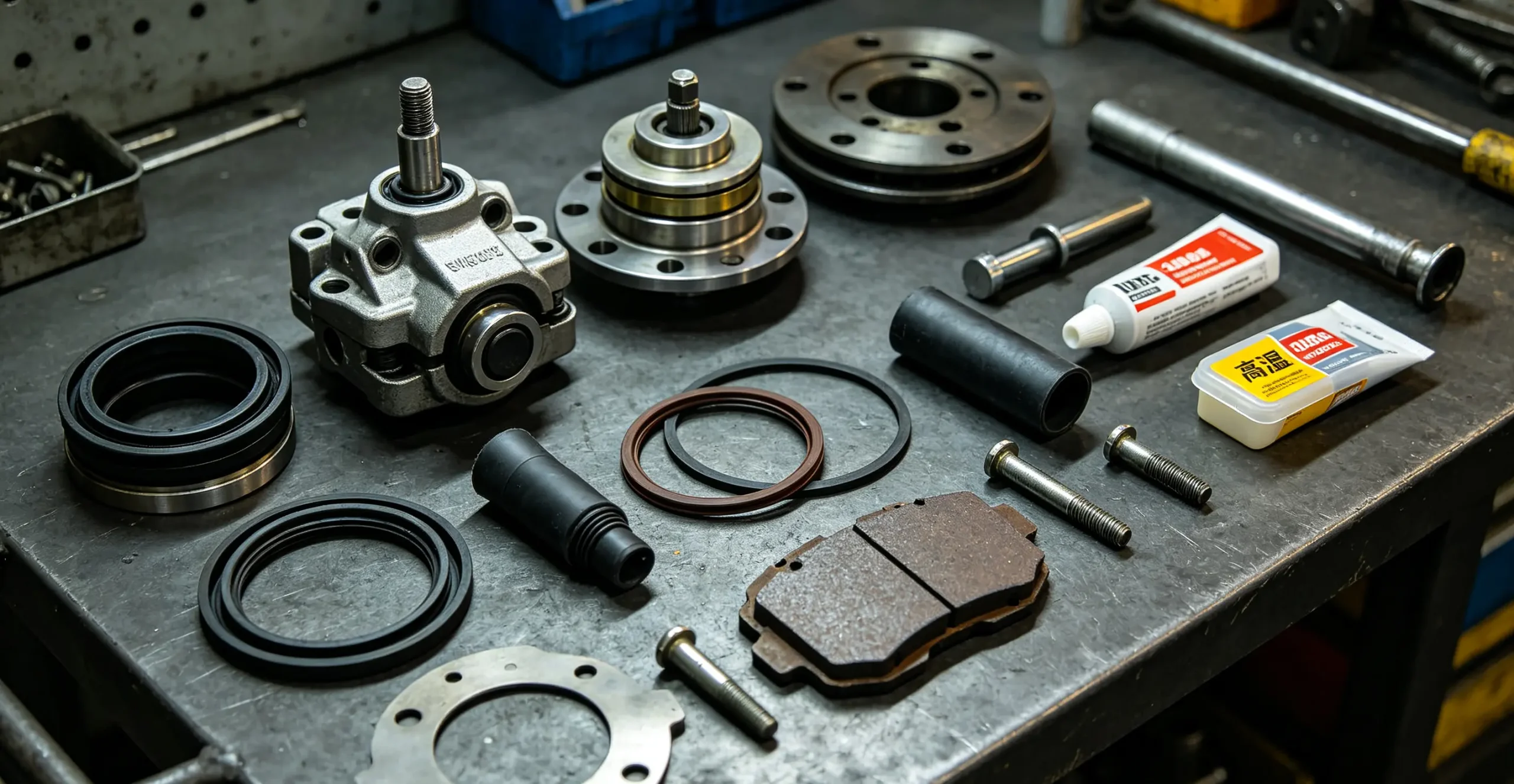
A standard complete kit covers all essential parts required for full caliper overhaul. The package includes precision rubber seals, durable dust boots, flexible guide pin sleeves and anti-vibration gaskets.
In addition, each kit is equipped with dedicated high-temperature resistant brake grease to support professional and standardized maintenance operations.
To better understand its importance, it is necessary to clarify the basic working principle of brake calipers. When drivers step on the brake pedal, the brake master cylinder transmits stable hydraulic pressure to the caliper piston.
Driven by hydraulic force, the piston pushes brake pads tightly against the surface of the brake disc. The friction generated between the two components achieves deceleration and parking of the truck.
The precise coordination of tiny internal parts ensures accurate and stable braking. Sealing rings lock internal hydraulic pressure to avoid pressure loss, while dust boots isolate external dirt and moisture.
Meanwhile, guide pins support smooth and balanced sliding of the entire caliper. The collaboration of all components guarantees consistent and reliable braking output in various working scenarios.
In actual truck operation, harsh working conditions continuously damage these vulnerable precision parts. High braking temperature, road dust erosion and long-term pressure lead to gradual component failure.
Once a single internal part fails, the overall working precision of the caliper will be compromised. Fortunately, a one-time full overhaul with a standard repair kit can eliminate most hidden brake troubles thoroughly.
It effectively resolves common problems such as hydraulic oil leakage, slow brake pedal rebound and running deviation during braking. Ultimately, it restores the caliper to its optimal working state.
As a professional and experienced truck brake caliper spare parts supplier, we design all repair kits targeted at heavy-load truck working scenarios.
Compared with ordinary civilian-grade repair kits, our products feature stronger high-temperature resistance, pressure resistance and anti-aging performance for long-term heavy-duty use.
In general, high-quality caliper repair kits bring three core operational advantages. Firstly, they completely eliminate internal hydraulic pressure leakage of brake calipers.
Secondly, they prevent secondary wear of caliper internal structures caused by external impurities. Thirdly, they maintain flexible and consistent piston movement for stable braking.
Furthermore, the matched professional high-temperature grease greatly reduces internal friction between moving parts. It effectively avoids common faults such as piston jamming and brake dragging.
By optimizing the internal operating environment of calipers, this simple overhaul measure significantly extends the overall service life of the entire brake caliper assembly.
Complete Components of Standard Brake Caliper Repair Kit
One major flaw of low-cost aftermarket repair kits is corner-cutting on accessories. Incomplete parts or inferior rubber materials often result in ineffective repairs and repeated failures.
Repaired calipers equipped with non-standard kits are prone to malfunction in a short time. Therefore, mastering the composition of standard repair kits helps you quickly screen high-quality products.
All our factory-grade caliper repair kits follow original assembly specifications strictly. Every accessory is complete in quantity and accurate in size to meet professional overhaul standards.
1. Caliper Piston Sealing Ring
Serving as the core component of the entire repair kit, the piston sealing ring undertakes the key task of sealing hydraulic oil inside the caliper cylinder.
This critical part prevents hydraulic pressure loss and brake fluid seepage during braking operations. To ensure durability, we adopt imported oil-proof and high-temperature resistant rubber raw materials.
Our customized sealing rings remain tough and stable in extreme temperatures ranging from -40℃ to 220℃. Unlike ordinary rubber rings that harden and fail under sustained high heat, our products resist thermal aging effectively.
Thanks to the advanced material formula, the seals maintain stable hydraulic locking performance for a long time, fully adapting to daily high-intensity braking of heavy-duty trucks.
2. Piston Dust Boot
Acting as the first line of defense for caliper internal structures, the piston dust boot blocks external pollutants including dust, sediment, rainwater and mud.
This isolation effect effectively prevents piston surface scratches, cylinder wall abrasion and internal metal rust. It creates a clean working environment for caliper internal precision parts.
We adopt integrated one-piece molding technology to produce dust boots. The finished products boast excellent elasticity and strong crack resistance.
Even under frequent piston stretching and long-term vehicle vibration, our dust boots will not crack, peel or fall off, ensuring long-term stable dustproof performance.
3. Guide Pin & Guide Pin Rubber Sleeve
Guide pins dominate the sliding balance of the entire brake caliper during braking. Matching rubber sleeves provide buffering, shock absorption and anti-rust protection for metal pins.
Once the rubber sleeves age, crack or fall off, guide pins are prone to rust and jamming. This directly causes caliper offset and uneven wear of brake pads.
In severe cases, faulty guide pin operation leads to dangerous brake deviation during driving. To avoid such risks, our guide pins undergo precision polishing and anti-corrosion spraying treatment.
The smooth and burr-free surface ensures flexible sliding, while the supporting rubber sleeves feature high fitting accuracy and wear resistance for long-term stable operation.
4. Anti-Noise Shim & Gasket Accessories
Though small in size, anti-noise shims and gaskets play an indispensable role in optimizing braking experience. They buffer friction vibration between brake pads and caliper brackets.
Complete and intact gasket accessories eliminate harsh squeaking and jittering sounds during braking. They effectively improve driving comfort and overall brake system stability.
5. Special High-Temperature Lubricating Grease
Professional dedicated brake grease is a must for standardized caliper overhaul. It features extreme high-temperature resistance and will not dry out or fail under continuous braking heat.
It is specially used to lubricate guide pins, pistons and other caliper moving parts. The grease reduces internal friction and fundamentally prevents piston jamming and brake dragging faults.
We never replace professional brake grease with ordinary butter, as common lubricants melt and fail easily under high braking temperature, failing to meet heavy-duty truck operation standards.
Wide Applicable Truck Models & Caliper Brands
Our customized caliper repair kits boast ultra-wide compatibility with global heavy-duty truck markets. They cover mainstream models of Chinese domestic trucks and classic European imported trucks.
Whether you are a parts wholesaler, repair shop operator or fleet manager, you can find perfectly matched repair kits from our complete product lineup.
For mainstream Chinese heavy trucks, our products fit classic and new models including Sinotruk Howo, Shacman X3000 and Shacman X5000.
In addition, they are fully compatible with FAW J6, FAW J7, Foton Auman and Dongfeng Kinland, completely matching the original caliper size and structural parameters.
For European heavy truck systems, our repair kits adapt to world-renowned caliper brands such as Knorr-Bremse, WABCO, Meritor and BPW.
They work stably on mainstream European truck models including MAN, Volvo, Scania, DAF and Mercedes-Benz heavy-duty commercial vehicles.
We support compatibility matching for both new-generation truck models and old classic equipment. Meanwhile, we provide personalized OE number matching and customized production services for special models.
10 Common Fault Symptoms of Aging Brake Caliper (Need Repair Kit Overhaul)
Caliper aging and failure are progressive processes instead of sudden malfunctions. Early abnormal symptoms are usually mild and easily ignored by drivers and maintenance personnel.
As the driving mileage increases, trivial aging problems gradually worsen into serious brake faults. Timely overhaul with qualified repair kits can avoid sudden brake failure and expensive full caliper replacement.
Summarized from a large number of actual truck maintenance cases, the following ten symptoms are typical signs of aging brake calipers requiring urgent overhaul.
1. Unilateral Brake Deviation
During the braking process, the truck will automatically lean or pull to one side. This fault mostly occurs when the sealing ring of a single-side caliper ages and leaks oil.
Uneven hydraulic pressure on the left and right sides leads to unbalanced braking force, which poses great safety risks during high-speed driving and downhill braking.
2. Slow Brake Pedal Rebound
After releasing the brake pedal, the pedal cannot reset quickly and rebounds slowly. This problem stems from piston jamming, aging reset parts or dry friction of guide pins.
Replacing a full set of standard repair kits and reapplying professional high-temperature grease can completely solve the slow pedal rebound fault.
3. Continuous Brake Abnormal Noise
Harsh squeaking or jittering noise appears every time the brake is applied. The main cause is aging and falling off of anti-noise gaskets inside the caliper.
Accumulated dust and sediment in caliper gaps can also cause persistent friction noise. Installing new complete repair kit parts can eliminate abnormal braking noise thoroughly.
4. Brake Disc Partial Wear & Scratch
Obvious uneven wear and deep groove scratches appear on the brake disc surface. Inflexible piston movement is the root cause of this phenomenon.
The brake pad keeps partial contact with the brake disc for a long time, resulting in abnormal friction. Without timely repair, the brake disc will be scrapped prematurely and increase replacement costs.
5. Caliper Hydraulic Oil Leakage
Visible wet oil stains appear on the caliper surface, and severe cases will be accompanied by continuous brake fluid dripping. Aging and failure of sealing rings are the direct causes of oil leakage.
Oil leakage directly reduces the internal pressure of the brake system, weakens overall braking efficiency and seriously endangers driving safety.
6. Brake Dragging & Hot Wheel Hub
After releasing the brake, the brake pads cannot fully separate from the brake disc. Sustained friction generates a large amount of heat, leading to overheated wheel hubs.
Besides affecting braking safety, brake dragging also significantly increases truck fuel consumption. Stuck guide pins and failed piston reset functions are the main triggers of this fault.
7. Insufficient Braking Force & Long Braking Distance
The brake pedal feels hollow and soft during use, and the braking response lags obviously. Meanwhile, the truck’s stopping distance becomes much longer than the standard value.
Internal hydraulic pressure leakage of aging calipers leads to insufficient output power, making the piston unable to push brake pads to form effective friction braking force.
8. Dust Accumulation Inside Caliper & Rusty Piston
Once the dust boot is cracked and damaged, external dust and rainwater will penetrate into the caliper interior. This causes piston surface rust and dirt accumulation in the cylinder cavity.
Long-term dirt accumulation and rust abrasion accelerate internal part wear and induce more complex and serious mechanical failures.
9. Intermittent Brake Failure
The brake system works normally when the truck is cold. After long-distance driving and continuous high-temperature braking, the braking force weakens intermittently.
High heat softens inferior sealing rings, resulting in unstable intermittent pressure leakage. This hidden fault is extremely easy to be ignored by drivers in daily operation.
10. Frequent Brake Pad Wear
The brake pads wear out abnormally fast and require frequent replacement cycles. Unbalanced caliper sliding movement leads to long-term partial contact between pads and discs.
Professional and standardized caliper overhaul with high-quality repair kits can completely solve the problem of abnormal brake pad wear.
Root Causes of Brake Caliper Failure (Practical Maintenance Summary)
In actual after-sales maintenance, most caliper failures are not caused by original factory quality defects. Instead, they result from unreasonable use and irregular daily maintenance.
In addition, the use of inferior aftermarket accessories is also a major cause of repeated caliper faults. Clarifying these root causes helps fleets formulate scientific maintenance plans to reduce failure rates.
1. Long-Term Exposure to Harsh Working Environments
Heavy-duty trucks often operate on muddy, dusty and wet road surfaces. Brake calipers are exposed at the bottom of the vehicle without complete protective shielding.
Road sediment, dust and rainwater continuously erode caliper internal parts all year round, accelerating the aging of rubber accessories and the wear of metal components.
2. High-Temperature Fatigue Aging
Frequent downhill braking and emergency braking generate instantaneous high temperatures. Long-term thermal baking causes fatigue deformation of rubber sealing parts.
Gradually, the sealing rings lose original elasticity and sealing performance, resulting in hydraulic pressure leakage and attenuated braking performance.
3. Irregular Maintenance & Delayed Replacement
Most fleet maintenance teams only focus on regular brake pad replacement. They ignore long-term inspection and overhaul of caliper internal wearable parts.
Aged parts and accumulated internal dirt damage the caliper structure slowly. Over time, trivial problems accumulate and trigger comprehensive brake system failure.
4. Use of Inferior Aftermarket Accessories
To save short-term maintenance costs, some repair shops choose ultra-low-cost inferior repair kits. These low-grade products have poor heat resistance and unstable material quality.
They are prone to aging and failure after only a few thousand kilometers of operation, bringing repeated maintenance costs and potential safety hazards.
5. Long-Term Overload & Frequent Emergency Braking
Long-term overloaded driving increases the overall load of the brake system. Frequent emergency braking produces extreme instantaneous hydraulic pressure inside calipers.
This intense pressure impact accelerates fatigue wear of precision parts such as sealing rings and guide pins, shortening the service life of calipers greatly.
How to Diagnose Bad Brake Caliper Accurately Before Repair
Accurate fault diagnosis is the premise of efficient caliper maintenance. Blind disassembly and part replacement will only waste labor time and increase unnecessary maintenance costs.
Combined with on-site maintenance experience, we summarize five simple and efficient field diagnosis methods to help you quickly and accurately judge caliper faults.
Step 1: Wheel Hub Temperature Inspection
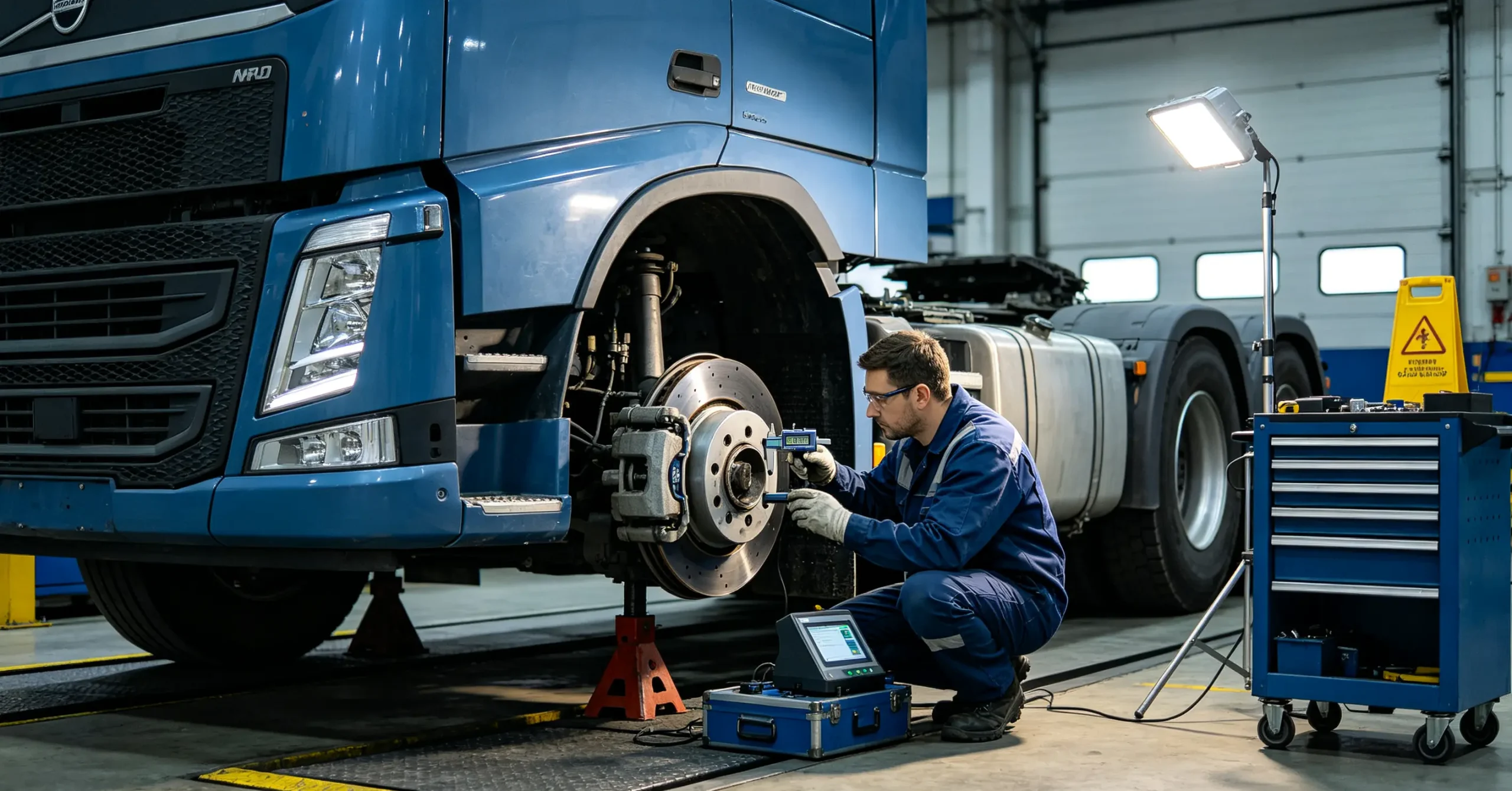
After normal driving, turn off the engine and touch each wheel hub to check the temperature. If a single hub is significantly hotter than others, the corresponding caliper has dragging or jamming faults.
Once this phenomenon occurs, timely overhaul with a professional repair kit is required to avoid fault deterioration.
Step 2: Brake Effect Road Test
Carry out multiple low-speed braking tests on flat road sections. If the truck shakes or pulls sideways during braking, it indicates unbalanced pressure output of the caliper.
Delayed braking response and hollow pedal feeling also intuitively reflect internal seal aging and hydraulic leakage problems.
Step 3: Caliper Appearance & Oil Circuit Inspection
Carefully observe the caliper surface and oil pipe connection parts. Wet traces, oil stains or dripping brake fluid are intuitive signs of seal failure.
In this case, partial part replacement is ineffective, and a full set of repair kit replacement must be completed to restore normal braking function.
Step 4: Piston Flexibility Test
Jack up the vehicle stably and remove the brake pads to expose the caliper piston. Manually push and reset the piston to test its flexibility.
Stiff pushing, blocked movement or slow reset all prove aging internal parts and piston jamming faults inside the caliper.
Step 5: Dust Cover Integrity Check
Thoroughly inspect the integrity of piston dust boots and guide pin rubber sleeves. Any crack, breakage or falling off will destroy the caliper’s dustproof and waterproof barrier.
If not replaced in time, external impurities will continuously invade the caliper interior and cause irreversible wear of precision parts.
Standard Step-by-Step Caliper Overhaul Process with Repair Kit
Caliper overhaul is a standardized and systematic maintenance operation. Strictly following standard operating procedures can ensure stable repair quality and avoid secondary faults.
The following is a universal and complete overhaul process applicable to all heavy-duty truck disc brake calipers, with standardized and safe operation steps.
Step 1: Vehicle Fixing & Safety Protection
Park the truck on a flat and solid ground. Use wheel stoppers to fix the tires and turn off the engine completely.
Fully release the hand brake to eliminate brake pre-tension. Lift the faulty wheel with a jack and fix it with a safety support bracket.
Prepare maintenance tools, new repair kits and professional cleaning supplies in advance to ensure smooth operation.
Step 2: Remove Wheel & Brake Pad
Unscrew the wheel fixing bolts and remove the wheel cover. Then disassemble the caliper fixing bolts in a fixed order.
Take out the brake pads slowly to fully expose the caliper piston and internal structural parts for subsequent maintenance.
Step 3: Discharge Residual Brake Fluid & Clean Dirt
Slowly discharge the aging residual brake fluid inside the caliper. Clean surface dust, oil dirt and mud with professional brake system cleaner.
Ensure the cylinder wall and all moving parts are clean and free of impurities to guarantee assembly accuracy.
Step 4: Remove Aging Accessories
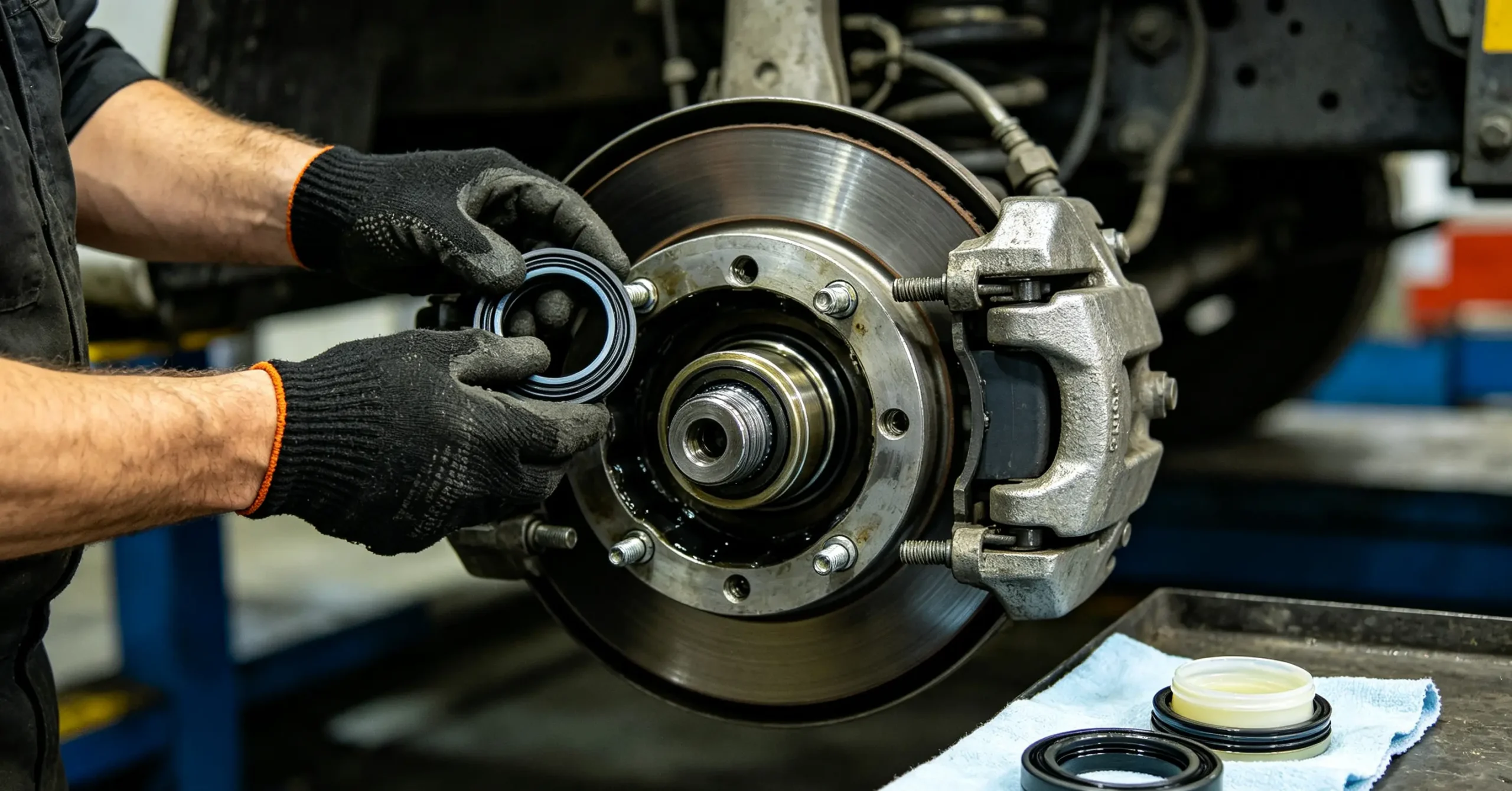
Take out the aging sealing rings, dust boots and rubber sleeves one by one. Carefully check the piston and cylinder wall for scratches and wear.
If the main caliper body is intact without damage, replace all wearable parts with new repair kit accessories.
Step 5: Install New Repair Kit Accessories
Install new seals and dust boots strictly according to the original assembly positions. Evenly apply supporting high-temperature grease on guide pins and piston surfaces.
Full lubrication ensures flexible and unobstructed movement of internal parts after assembly.
Step 6: Reset Piston & Fix Caliper
Slowly push the caliper piston back to the standard initial position. Reinstall the brake pads and fasten the caliper fixing bolts evenly.
Check repeatedly to ensure no shaking, offset or jamming after overall installation.
Step 7: Add Brake Fluid & Exhaust Air
Supplement qualified standard brake fluid to the specified liquid level. Repeatedly exhaust air from the brake oil circuit.
Trapped air in the pipeline will cause soft brake pedals and insufficient braking force. Thorough air exhaust is key to ensuring brake sensitivity.
Step 8: Static Test & Road Test
Step on the brake pedal repeatedly for static debugging to confirm stable and firm pedal feedback without jamming or emptiness.
Subsequently, conduct low-speed road tests to verify sensitive braking, no deviation, no abnormal noise and no brake dragging.
Daily Maintenance Tips to Extend Caliper & Repair Kit Service Life
Scientific and standardized daily maintenance can effectively delay caliper aging speed. It reduces overhaul frequency and lowers long-term fleet operating costs significantly.
Based on years of after-sales service and technical experience, we summarize five practical and easy-to-operate maintenance tips for fleet reference.
1. Regular Brake System Cleaning
It is recommended to clean brake calipers and brake discs every 10,000 kilometers. Timely remove accumulated dust, mud and oil stains on the surface.
This avoids long-term impurity abrasion on internal precision parts and maintains the optimal working state of the brake system.
2. Avoid Long-Time Continuous Braking
When driving on long downhill sections, prioritize engine braking instead of long-term continuous foot braking.
Reducing continuous heat accumulation effectively slows down the thermal aging of rubber sealing parts and extends component service life.
3. Regular Inspection of Dust-Proof Parts
Arrange monthly inspection of dust boots and guide pin rubber sleeves. Once cracks or damage are found, replace them immediately.
Timely replacement blocks external pollutants from entering the caliper and protects internal moving parts from wear and rust.
4. Replace Brake Fluid Regularly
Renew the entire vehicle brake fluid every 20,000 to 30,000 kilometers. Deteriorated and expired brake fluid will corrode sealing parts.
Regular fluid replacement prevents oil leakage and caliper structural damage caused by deteriorated brake fluid.
5. Choose High-Quality Repair Kits for Overhaul
Never use inferior low-grade repair kits for temporary maintenance. High-standard factory-grade kits feature stable performance and strong durability.
They avoid repeated maintenance troubles and effectively reduce the comprehensive maintenance cost of fleets.
Why Choose Us as Your Truck Brake Caliper Repair Kit Supplier
The global heavy-duty truck spare parts market is full of various caliper repair kit suppliers. However, few manufacturers can balance full model coverage, stable quality and reliable after-sales service.
As a professional manufacturer and exporter specializing in heavy-duty truck brake parts, we own independent production workshops and complete quality inspection systems.
We adhere to the factory direct sales model to provide cost-effective and high-quality products for global cooperative customers.
In terms of product compatibility, we realize full coverage of mainstream truck models. Our repair kits match almost all common Chinese and European heavy-duty trucks.
For this reason, buyers do not need to cooperate with multiple suppliers to purchase different model accessories.
In terms of quality control, we implement strict whole-process inspection. All rubber accessories adopt high heat and oil-resistant customized formulas.
All metal parts are polished precisely and treated with anti-corrosion spraying. Every batch of products undergoes strict sampling inspection before delivery.
To meet personalized customer demands, we provide customized production services. We support accurate OE number matching and sample-based processing for special caliper specifications.
Benefiting from direct factory supply, we eliminate middleman markup links. Long-term cooperative customers can enjoy flexible discount policies and efficient delivery cycles.
Moreover, we provide comprehensive after-sales quality assurance. For any quality problems caused by production processes, we support free replacement and compensation.
You can browse our truck brake parts product categoryto obtain full product catalogs and bulk wholesale quotations.
Our Supporting Truck Spare Parts Product Line
Beyond professional caliper repair kits, we provide diversified truck spare part solutions. We focus on building a one-stop procurement platform for global truck parts buyers.
Our complete product lineup covers multiple core truck systems, helping customers enrich product portfolios and realize one-stop bulk procurement.
We supply a full range of high-quality truck clutch system parts, including master cylinders, slave cylinders, clutch discs and release bearings.
Meanwhile, we provide complete truck chassis partsand suspension accessories to meet diverse maintenance and wholesale needs.
You can visit our truck brand parts page to quickly find exclusive accessories corresponding to different truck brands.
In addition, we update professional technical content regularly. Check our technical support center for the latest fault diagnosis methods and maintenance tutorials.
To learn more about our factory strength and global market reputation, refer to our customer cooperation cases to view real overseas project feedback.
Conclusion
Brake calipers occupy a core safety position in the disc brake system of heavy-duty trucks. Small wearable internal parts directly determine braking stability and driving safety.
Statistics show that most caliper faults stem from aging sealing rings and damaged dust-proof parts. The use of inferior replacement parts will only lead to repeated failures.
Adopting high-standard professional caliper repair kits can completely restore factory-level braking performance. It effectively reduces long-term fleet maintenance costs.
At the same time, standardized overhaul and high-quality parts replacement greatly improve the overall operation safety of heavy-duty trucks.
As a reliable and professional truck brake caliper repair kit supplier, we always take product quality and customer demand as the core.
We provide global customers with full-model matched brake parts, competitive factory prices and convenient one-stop procurement services.
We sincerely welcome global truck parts dealers, fleet operating enterprises and repair institutions to negotiate cooperation and achieve win-win development.


