
Introduction
Heavy-duty commercial trucks serve as the core force of global freight and infrastructure construction. Countless heavy vehicles travel long distances daily to deliver goods and support engineering projects worldwide.
Unlike light vehicles, heavy trucks carry extreme loads and operate under harsh road conditions year-round. Thus, every vehicle component requires stable performance and strong durability.
The fuel supply system ranks among the most critical core systems of heavy trucks. Clean and steady fuel delivery directly guarantees normal engine power output.
Diesel engines rely on pure fuel for internal combustion and power generation. Impurity-contaminated diesel will quickly reduce overall truck power performance.
Truck manufacturers install professional fuel filter assemblies on fuel pipelines. These core parts block dirt, metal particles, water and other harmful impurities in diesel.
Most fleet owners and new drivers prioritize engine and tire maintenance. However, they often overlook regular fuel filter inspection and replacement.
Accumulated impurities will clog the internal filter element over time. Once the filter reaches its maximum capacity, it triggers various driving and mechanical issues.
Clogged fuel filters cause insufficient fuel supply, weak acceleration, higher fuel consumption and cold-start failures. Severe clogging even leads to sudden engine stalling while driving.
Neglected faulty filters also wear out fuel injectors and oil pumps rapidly. This raises long-term maintenance costs and shortens the engine’s service life significantly.
For this reason, every truck driver and maintenance worker must master professional fuel filter replacement and maintenance skills.
If you want to fully optimize your truck’s power system, learninghow to maintain a heavy truck fuel system is essential for long-term vehicle stability and fewer breakdowns.
Basic Knowledge of Truck Fuel Filter Assembly
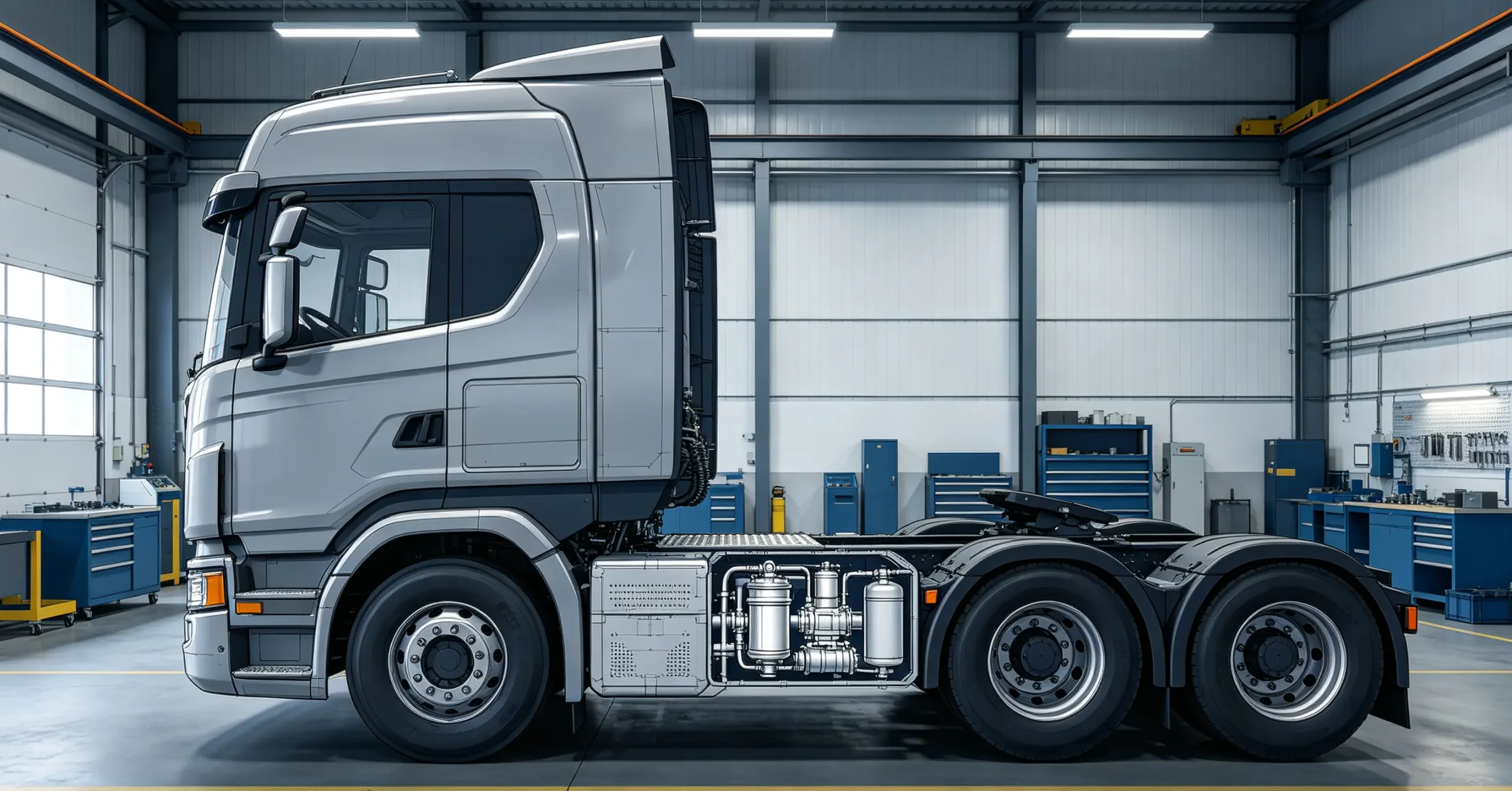
Professional maintenance starts with basic component knowledge. Understanding the structure and working principle of fuel filter assemblies helps avoid common operational errors.
Nearly all modern heavy trucks adopt integrated fuel filter assemblies. This all-in-one design simplifies installation, disassembly and overall replacement work.
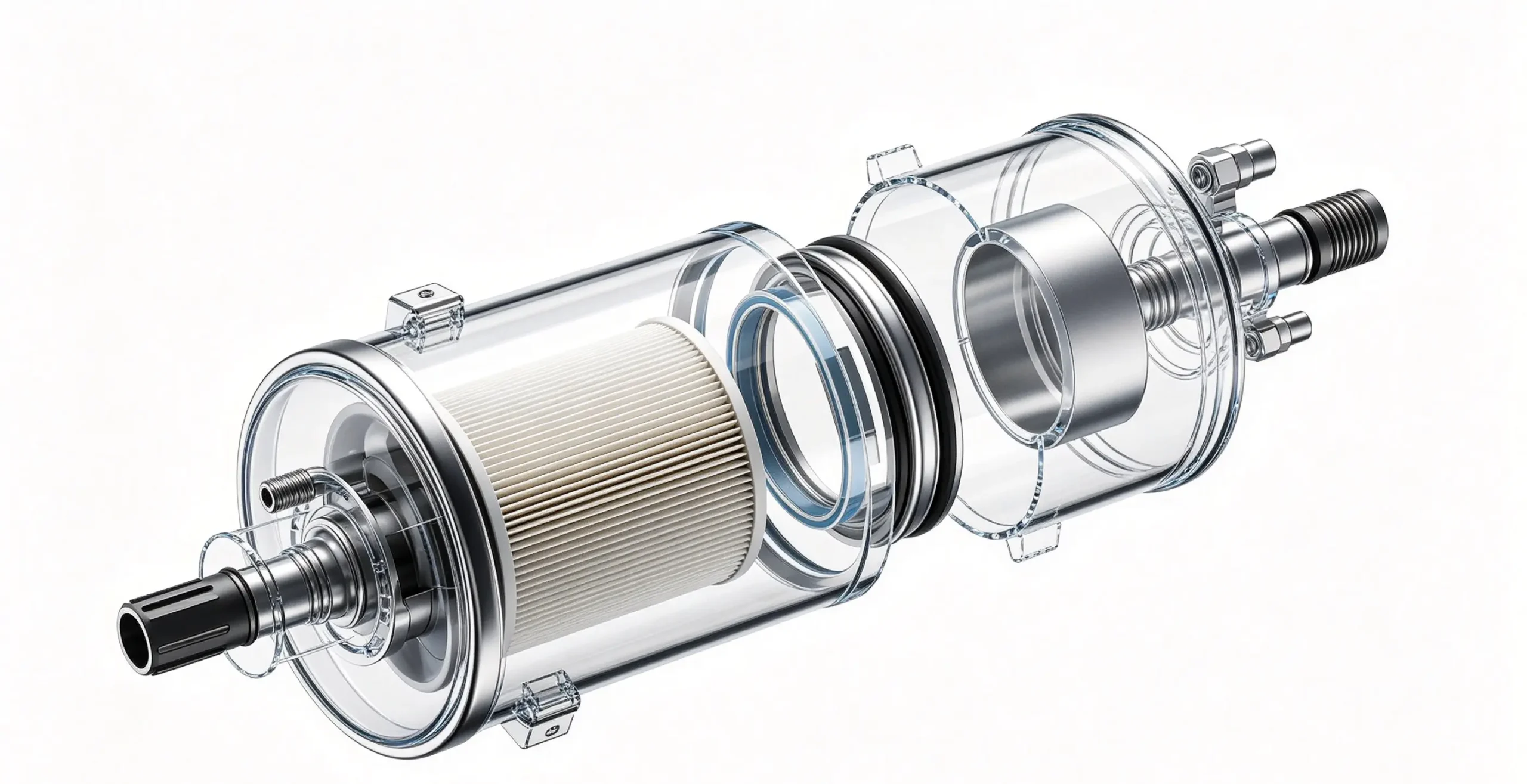
A standard fuel filter assembly consists of six key parts: protective outer shell, built-in filter element, water separator, fuel inlet, fuel outlet and fixed mounting bracket.
The high-density filter paper element acts as the core functional part. It traps tiny solid impurities effectively as diesel flows through the pipeline.
Besides impurity filtration, modern filters feature efficient water separation. Excess water in diesel causes engine instability and internal component corrosion.
Qualified clean diesel flows out to the engine after filtration, while all harmful debris stays inside the filter shell.
Long-term use leads to debris buildup inside the filter. This slows down fuel flow and fails to meet high-power engine fuel demands.
Different truck brands and engine displacements require specific filter specifications. Always select fully matched accessories for replacement.
Many truck owners confuse ordinary filters with professional-grade assemblies. You can check our guide on truck fuel filter vs water separator to distinguish their functions and avoid wrong maintenance operations.
Main Causes of Fuel Filter Assembly Failure
Fuel filter clogging and malfunctions do not happen suddenly. They result from long-term improper use and adverse external factors.
Based on massive field maintenance cases, we summarize five common causes of filter performance degradation for your reference.
1. Overdue Service Beyond Replacement Cycles
Every heavy truck official manual specifies a clear fuel filter replacement cycle, based on driving mileage or service time.
Many drivers delay replacement to cut short-term costs. Overused filters have completely blocked filter holes and lose filtration capacity.
This is the top cause of fuel supply faults in daily heavy truck operation and fleet maintenance.
2. Low-Quality and Impure Diesel Fuel
Cheap unqualified diesel contains large amounts of sediment, colloid and excess water. These impurities accumulate rapidly inside filters.
Trucks running on poor-quality fuel experience far faster filter clogging than vehicles using standard qualified diesel.
3. Harsh Driving Environments
Trucks often operate on dusty construction sites and muddy rural roads. External dust enters fuel tanks through ventilation holes.
Mixed impurities flow into fuel pipelines with diesel and accelerate filter blockage greatly.
4. Irregular Fuel Tank Cleaning
Fuel tanks produce oil dirt and precipitated impurities after long-term use. Uncleaned tanks send continuous debris into fuel filters.
This causes filter damage and secondary pollution to the entire fuel supply pipeline system.
5. Improper Installation and External Damage
Fuel filters mount on the truck chassis bottom. Road stones and obstacles easily scratch or collide with the assembly during driving.
Over-tight or loose installation also causes oil leakage, pipeline distortion and reduced fuel delivery efficiency.
To avoid installation errors, follow our standard tutorial for truck chassis parts installation tips to ensure stable and safe component mounting.
Typical Symptoms of Faulty Fuel Filter Assembly
A clogged or damaged fuel filter produces obvious abnormal driving signals. You can quickly judge filter faults through these intuitive symptoms.
Early fault detection helps you arrange timely maintenance and avoid sudden breakdowns that delay transportation schedules.
1. Difficult Cold Weather Engine Starting
Severe filter blockage slows fuel supply speed. The engine cannot receive sufficient diesel during cold starts.
Drivers need repeated ignition attempts to start the truck, which is the most typical early filter failure sign.
2. Insufficient Engine Power & Weak Acceleration
The truck accelerates slowly even with full throttle on flat roads or slopes. This indicates fuel supply cannot match engine power demands.
Poor filter circulation is the main culprit for weak power output in most cases.
3. Unstable Engine Idle Operation
The engine speed fluctuates irregularly during idling, with obvious cab vibration.
Blocked filters cause unstable fuel flow, leading to uneven cylinder combustion and abnormal engine operation.
4. Sharp Increase in Fuel Consumption
Trucks consume more fuel per hundred kilometers under the same load and route conditions.
Clogged pipelines increase fuel delivery resistance, forcing the engine to burn more fuel to maintain normal power.
5. Sudden Engine Stalling During Driving
Advanced filter failure may completely block fuel pipelines. The engine stalls suddenly without warning during operation.
This fault poses serious driving safety risks and requires immediate filter replacement.
6. Dashboard Water Accumulation Alarm
Integrated filter assemblies come with water detection sensors. Excess internal water triggers a dashboard alarm prompt.
You need to drain accumulated water or replace the filter assembly based on actual fault severity.
Most power-related truck faults are interlinked. Learn more about common truck engine power loss causes to diagnose and fix vehicle issues faster.
Pre-Replacement Preparation Work
Complete adequate preparation before filter replacement to avoid oil pollution, safety hazards and operational errors.
First, park the truck on a flat, ventilated site. Firmly engage the handbrake and pad tires to prevent sliding.
Turn off the engine fully and wait for natural pipeline pressure release to minimize residual diesel outflow.
Prepare standard tools: adjustable wrench, filter sleeve, oil basin, clean rags and protective gloves.
Verify the new filter’s specifications, interface size and mounting position match the original factory parts strictly.
Wear protective gloves and keep away from open flames to ensure construction safety.
Prepare spare sealing gaskets, as aging gaskets are the main cause of post-replacement oil leakage.
9-Step Standard Fuel Filter Replacement Process
The following standardized steps apply to Sinotruk, FAW, Shacman, Dongfeng and other mainstream heavy truck models. They suit personal and repair shop daily maintenance.
Step 1: Cut Fuel Supply & Release Pipeline Residual Pressure
After the engine cools completely, close the main fuel tank switch to cut off fuel circulation.
Ignite the engine 2-3 times without formal startup to fully release internal pipeline pressure.
Step 2: Place Oil Basin & Clean Surrounding Dust
Position an oil receiving basin directly under the filter to collect residual diesel during disassembly.
Wipe dust and mud off the filter shell and pipeline interfaces to prevent external debris from entering pipelines.
Step 3: Disconnect Fuel Inlet & Outlet Pipelines
Loosen pipeline fixing nuts gently with professional tools to avoid thread sliding or interface cracking.
Separate oil pipes slowly; allow residual diesel to flow completely into the oil basin.
Step 4: Dismount Bracket & Remove Old Filter Assembly
Loosen all filter bracket fixing bolts one by one. Separate the old assembly from the chassis support.
Place the old filter in a waste oil recycling container to avoid environmental pollution.
Step 5: Clean Mounting Base & Pipeline Interfaces
Wipe oil stains and dirt from the mounting base. Check pipeline inner walls for blockages.
Dredge slight pipeline blockages to ensure unobstructed fuel delivery after installation.
Step 6: Install New Fuel Filter Assembly
Fit a new sealing gasket on the filter accurately without deviation or wrinkles.
Align the new filter with the bracket, tighten bolts manually first, then fasten to moderate tightness with tools.
Avoid over-tightening (shell deformation) or loose fixing (post-installation shaking and leakage).
Step 7: Reconnect All Fuel Pipeline Interfaces
Align inlet and outlet pipes with the new filter interfaces precisely.
Tighten all fixing nuts steadily to ensure full sealing and zero oil leakage risks.
Step 8: Drain Air From Fuel Pipeline (Key Step)
Air trapped in pipelines after installation causes startup failure and engine jitter.
Operate the hand oil pump repeatedly until bubble-free diesel fills the entire pipeline.
Tighten the exhaust screw firmly after complete air drainage.
Step 9: Inspect & Test Run the Vehicle
Check all interfaces again to confirm no diesel leakage exists.
Start the engine and maintain idling to observe stable operation without jitter.
Conduct low-speed test driving to verify full recovery of fuel supply and power performance.
For more standardized operation guidelines, check our complete heavy truck maintenance steps guide to standardize your daily repair workflow.
Practical Maintenance Tips to Extend Filter Service Life
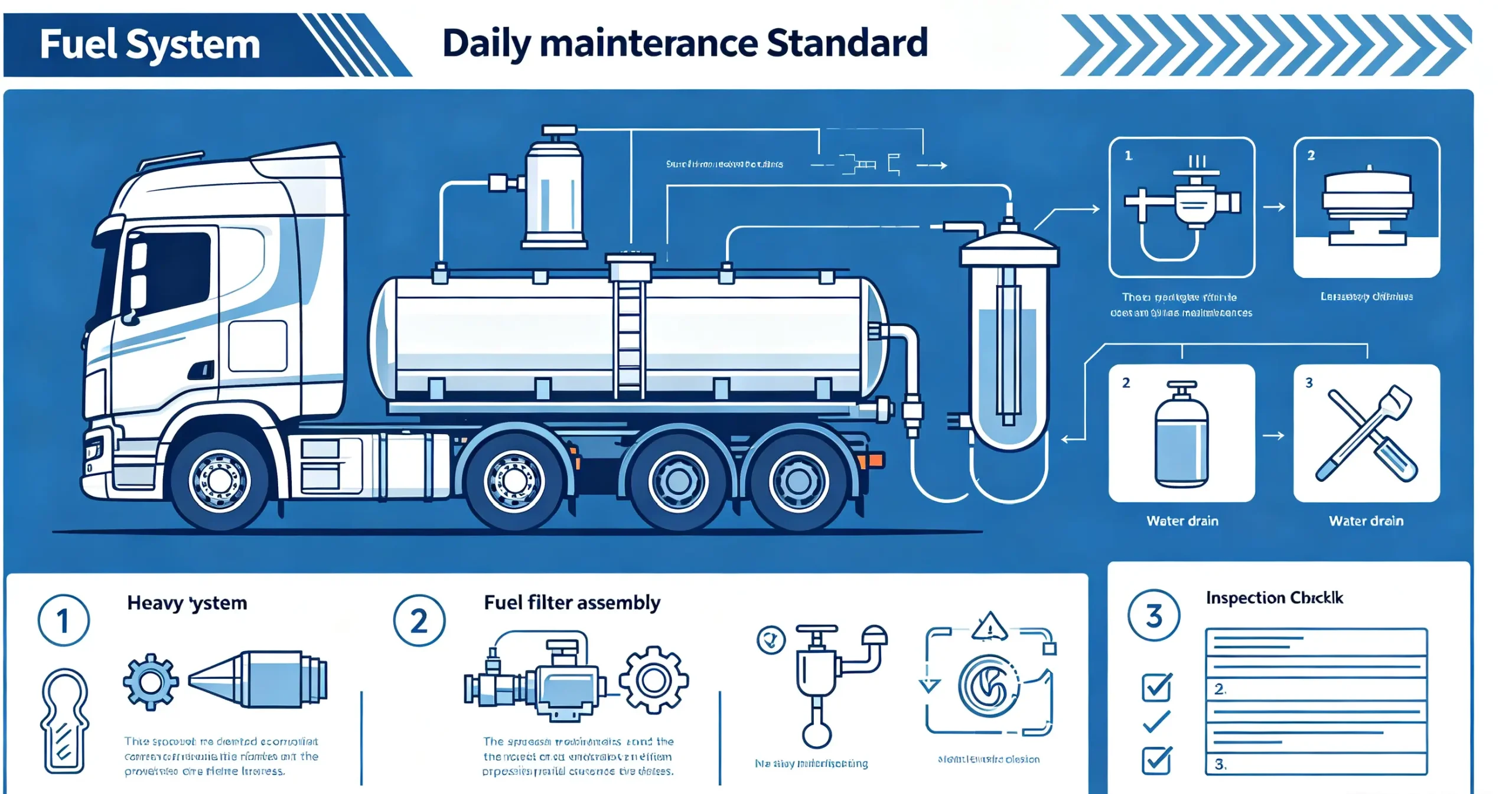
Standard daily maintenance slows filter clogging, prolongs service life and reduces long-term fleet maintenance costs.
1. Refuel Only at Standard Gas Stations
High-purity qualified diesel minimizes impurity accumulation and reduces filter operating burden.
Avoid cheap unregulated fuel to prevent rapid filter blockage and fuel system damage.
2. Regularly Drain Filter Accumulated Water
Drain internal water via the bottom screw regularly based on local climate and driving conditions.
This protects the water separation function and prevents water from entering the engine combustion chamber.
3. Strictly Follow Official Replacement Cycles
Replace filters per the truck manual’s mileage or time cycle standards.
Delayed replacement leads to costly engine and fuel system damage despite short-term cost savings.
4. Keep Fuel Tank Clean & Sealed
Check tank filling ports and ventilation holes regularly to block external dust and rainwater.
Clean fuel tanks every 2-3 years to remove precipitated oil dirt and impurities.
5. Avoid Long-Term Full-Load Overoperation
Continuous full-load driving increases instantaneous fuel flow and accelerates filter element wear.
Arrange reasonable cargo loads and driving breaks to protect filter and engine lifespan.
6. Monthly Pipeline Tightness Inspection
Check fuel pipelines monthly for aging, distortion and loose interfaces.
Fix minor oil leakage promptly to prevent fault expansion and fuel efficiency reduction.
You can follow our truck monthly maintenance checklist to form a fixed inspection routine and reduce hidden vehicle faults.
Professional Heavy Truck Fuel System Parts Supply
Filter performance and service life depend entirely on product quality. High-density filter elements deliver stable filtration and smooth fuel flow.
We specialize in original matching heavy truck parts, covering Sinotruk, FAW, Shacman, Dongfeng and other mainstream brands.
All fuel filter assemblies comply with factory technical standards for direct installation without secondary adjustment.
We support single retail and bulk wholesale with sufficient spot inventory for individual drivers and fleet repair factories.
Fast global logistics shorten delivery cycles for overseas customers. Our professional team provides remote installation and fault-solving guidance.
If you need durable and OEM-grade truck replacement parts, browse our full product range at mettlead.com for one-stop purchasing service.
FAQs About Truck Fuel Filter Replacement
1. What is the standard fuel filter replacement cycle?
Replace filters every 20,000-30,000 km with qualified diesel and good driving conditions. Shorten the cycle for harsh environments or poor fuel quality.
2. Can I drive with a slightly clogged fuel filter?
Long-term driving is not recommended. Mild clogging worsens rapidly, causing power loss, high fuel consumption and complex engine faults.
3. What risks come with incomplete pipeline air drainage?
Trapped air causes difficult startup, engine jitter, weak acceleration and abnormal fuel injector component wear.
4. Are integrated and split fuel filters interchangeable?
No. Different filter structures have unique installation positions, interface directions and flow designs. Random replacement causes poor sealing and pipeline disorder.
5. Is residual diesel outflow during replacement normal?
Yes. Residual diesel always exists in filters and pipelines. Preparing an oil basin effectively solves oil stain pollution issues.
Conclusion
The fuel filter assembly is a tiny but indispensable core component of heavy truck fuel systems. It undertakes fuel purification, impurity isolation and water separation tasks.
Most common truck faults including weak power, high fuel consumption and hard startup stem from clogged or failed fuel filters.
Drivers and maintenance workers must follow standard replacement cycles and select high-quality matched accessories.
Mastering standardized replacement and air drainage steps ensures safe, efficient maintenance without secondary vehicle faults.
Scientific daily maintenance optimizes fuel system operation, cuts fleet operating costs and extends overall truck service life.
Contact our team for cost-effective original fuel filter assemblies and professional after-sales support for your heavy truck maintenance needs.


