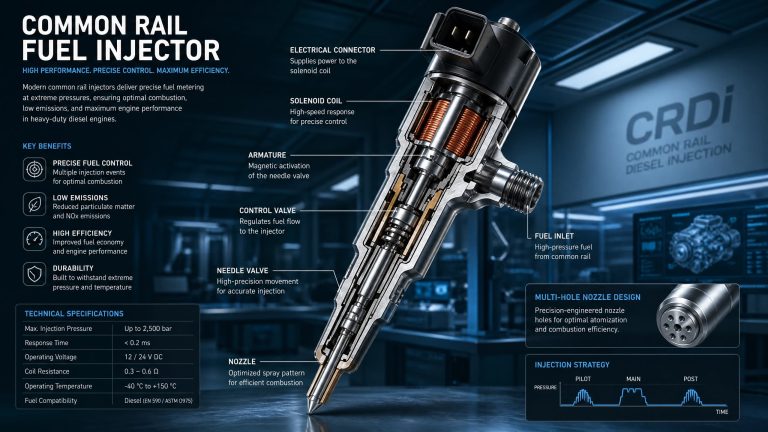
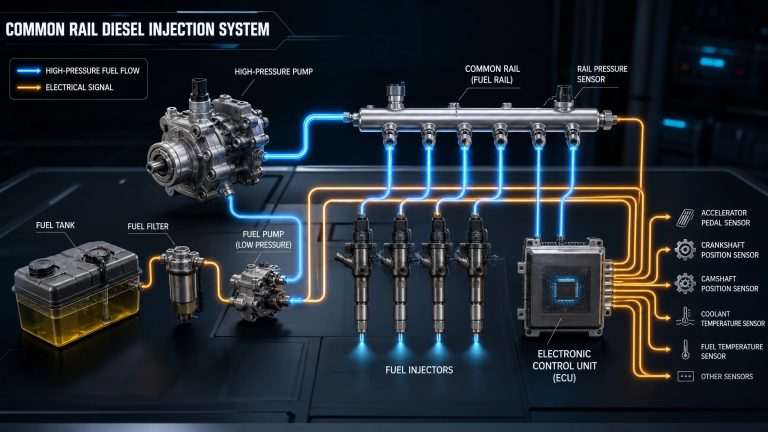
Common Rail Injector: Technical Guide
The common rail injector is the cornerstone of modern diesel engine technology, revolutionizing efficiency, power, and emissions control in heavy-duty vehicles. For professionals in the trucking industry, fleet management, or automotive parts supply, a deep understanding of this technology is essential for optimizing operational performance, ensuring regulatory compliance, and minimizing costly downtime.
This comprehensive guide will demystify the common rail injector, exploring its operational principles, evolution, and critical role. We will dissect its core components, compare distinct types, and provide practical insights into diagnosing failures, implementing effective maintenance, and making informed replacement decisions. Whether you seek technical knowledge, enhanced fleet reliability, or a trusted supplier of common rail injectors, this article is your definitive resource.
Understanding the Common Rail Injection System: The Foundation of Modern Diesel Power
The common rail injection system fundamentally altered how fuel is delivered to a diesel engine by separating high-pressure fuel generation from the precise injection event, offering unprecedented control over combustion.
The Core Principle: Decoupling Pressure Generation and Injection
The Precision of the Common Rail Injector: A Step-by-Step Overview
This precisely choreographed sequence, managed in microseconds, enables modern diesel engines to balance power, fuel efficiency, and low emissions. For system integration details, visit our System Products Page.
The Evolutionary Leap: Common Rail vs. Traditional Fuel Injection Systems
Common rail technology's revolutionary impact is best understood by examining the limitations of its predecessors.
The Era of Mechanical and Unit Injector Systems
Electronic Unit Injectors (EUI) and Hydraulic Electronic Unit Injectors (HEUI) integrated the pump and injector per cylinder, offering electronic timing control. However, pressure generation remained linked to engine speed or oil pressure, limiting multiple, finely controlled injections .
This precisely choreographed sequence, managed in microseconds, enables modern diesel engines to balance power, fuel efficiency, and low emissions. For system integration details, visit our System Products Page.
The Unprecedented Advantages of Common Rail Technology
Comparison Table: Common Rail vs. Traditional Injection Systems
| Feature | Common Rail System | Traditional Mechanical System (e.g., Inline Pump) | Electronic Unit Injector (EUI/HEUI) |
|---|---|---|---|
| Pressure Generation | Independent of engine speed; constant high pressure | Dependent on engine speed; pressure varies with RPM | Linked to engine speed/oil pressure; pressure varies |
| Injection Pressure (Max) | Up to 2,500+ bar | ~800-1,200 bar | ~1,800-2,200 bar |
| Timing Control | Fully electronic, microsecond precision | Mechanical, limited adjustability | Electronic, but mechanically constrained |
| Injection Events | Multiple (pilot, main, post) | Single | Single (some limited pre-injection on advanced EUIs) |
| Fuel Atomization | Excellent, consistent across all RPMs | Poor at low RPMs, better at high RPMs | Good, but less consistent than common rail |
| Noise Level | Significantly quieter due to pilot injection | Loud, characteristic "diesel clatter" | Quieter than mechanical, but louder than common rail |
| Emissions Control | Excellent, meets stringent modern standards | Poor, high NOx and PM | Improved, but struggles with latest standards |
| Fuel Economy | High efficiency across operating range | Lower efficiency, especially at off-peak RPMs | Improved, but less optimized than common rail |
This table highlights why the common rail injector became pivotal in the modern clean diesel revolution, enabling heavy-duty diesel engines to meet strict global emissions standards while enhancing performance and fuel economy.
Delving Deeper: Types of Common Rail Injectors – Solenoid vs. Piezoelectric
Solenoid Injectors: The Workhorse of Common Rail Systems
Piezoelectric Injectors: The Pinnacle of Precision
| Feature | Solenoid Injectors | Piezoelectric Injectors |
|---|---|---|
| Actuation Mechanism | Electromagnetic coil (solenoid) | Piezoelectric crystals |
| Response Speed | Good, but slower than piezo | Extremely fast (up to 5x faster) |
| Precision | High | Ultra-high, microsecond accuracy |
| Multi-Injection Capability | Moderate (typically 3-5 events) | High (up to 7+ events) |
| Cost | Lower | Higher |
| Robustness | Very robust | More delicate, sensitive to contamination |
| Serviceability/Remanufacture | Easier to repair and remanufacture | Difficult to repair, often requires full replacement |
| Typical Applications | Wide range of diesel engines, heavy-duty trucks, commercial vehicles | Premium diesel engines, passenger cars, high-performance commercial vehicles |
Identifying Trouble: Common Symptoms of Common Rail Injector Failure
Exhaust Smoke: A Visual Diagnostic Indicator
Engine Performance Issues: Misfires, Rough Idle, and Power Loss
Starting Difficulties: Hard Starts and No-Start Conditions
Engine Knocking or "Diesel Clatter"
Precision Diagnostics: Testing and Troubleshooting Common Rail Injectors
On-Vehicle Diagnostic Procedures
Off-Vehicle Bench Testing: The Definitive Diagnosis
Comprehensive bench testing determines if an injector needs cleaning, repair, remanufacturing, or replacement. For advanced technical support, visit our Technical Support Page.
Extending Lifespan: Best Practices for Common Rail Injector Maintenance
The Paramount Importance of Fuel Quality
Rigorous Fuel Filtration: The First Line of Defense
The Role of Fuel Additives
Strategic Replacement: Choosing the Right Common Rail Injector
Understanding Your Options: OEM, OEM Supplier, and Aftermarket
New vs. Remanufactured Injectors: A Cost-Benefit Analysis