7 Signs Your Truck Air Intake Hose Is Damaged or Leaking
Introduction: Why Air Intake Hose Condition Directly Determines Diesel Engine Efficiency
The truck air intake hose is a core component of the diesel engine airflow system, responsible for delivering filtered air from the air cleaner into the turbocharger and combustion chamber under controlled pressure conditions. Although it is physically a flexible pipe, its functional importance is directly tied to combustion stability, turbo efficiency, and engine durability.
In real operating environments, heavy-duty trucks are exposed to continuous vibration, long-distance high-load driving, dust-heavy roads, and extreme temperature variation. These external stress factors gradually degrade hose material integrity. Rubber fatigue, internal layer separation, micro-cracks, and clamp loosening begin forming long before visible damage appears.
Once air intake hose leakage occurs, unmetered air enters the system and disrupts ECU-calculated air-fuel ratios. This leads to incomplete combustion, unstable turbo boost pressure, reduced engine power output, and increased fuel consumption. Over time, these issues propagate into turbocharger stress, injector inefficiency, and higher maintenance costs across the entire engine system.
How Truck Air Intake Hose Works Inside Diesel Engine Airflow System
The air intake hose is part of a continuous pressurized airflow chain that includes the air filter housing, turbocharger inlet, intercooler system, and intake manifold. Each component depends on precise pressure synchronization to maintain efficient combustion performance.
Air enters through the filtration system where dust and contaminants are removed, then flows through the air intake hose toward the turbocharger. The turbo compresses the air before sending it into the intercooler and combustion chamber. When all components function properly, airflow remains stable and pressure-balanced.
However, if the air intake hose develops leakage, airflow becomes unstable and pressure drops occur. This disrupts turbo efficiency, delays boost response, and reduces engine torque output. In long-haul trucking conditions, even minor leakage becomes amplified due to sustained load cycles and continuous turbo operation.
7 Signs Your Truck Air Intake Hose Is Damaged or Leaking
Air intake hose failure does not occur suddenly in most diesel engines. Instead, it develops gradually through small airflow inefficiencies that accumulate over time. Because the intake system operates under continuous pressure cycles, even minor degradation can affect overall engine performance long before visible damage appears.

In real truck operations, especially long-haul and heavy-load transportation, airflow demand constantly changes based on engine load conditions. When the air intake hose begins to weaken, the system can no longer maintain stable pressure balance, which leads to progressive performance loss across multiple engine parameters rather than a single failure point.
Each symptom of air intake hose failure represents a different stage of airflow instability inside the combustion system, ranging from early-stage efficiency loss to severe turbo and combustion disruption.
Reduced Engine Power Under Load Conditions
When the air intake hose develops leakage, airflow entering the engine becomes unstable and insufficient, especially under high-load operating conditions. Diesel engines rely on precise air-fuel ratio control, and even small airflow deviation directly affects combustion efficiency and torque output.
Under heavy load scenarios such as uphill driving, high-speed acceleration, or full cargo transportation, the turbocharger must generate higher boost pressure to maintain engine performance. If the intake hose is leaking, this pressure cannot be fully retained inside the system, causing boost loss and inconsistent airflow delivery.
As a result, the engine experiences reduced torque output, slower acceleration response, and noticeable power drop during load transitions. In fleet operations, this symptom often becomes more obvious after prolonged driving because heat expansion further worsens existing micro-cracks in the hose structure.
To confirm this issue, technicians typically perform load-based pressure testing to observe whether boost pressure drops abnormally under acceleration conditions.
Excessive Black Smoke and Combustion Instability
Air intake hose leakage directly reduces the amount of oxygen entering the combustion chamber, which disrupts the air-fuel balance required for complete combustion. When fuel injection volume remains unchanged but airflow decreases, the combustion process becomes oxygen-deficient.
This imbalance leads to incomplete fuel burning, resulting in black smoke emission from the exhaust system. In diesel engines, this condition is not only a visible symptom but also an indicator of deeper combustion inefficiency inside the cylinder.
Over time, unburned carbon particles accumulate inside injectors, piston crowns, and exhaust pathways. This accumulation gradually reduces engine efficiency and increases thermal stress on internal components. If the condition continues without correction, it may also impact downstream systems such as DPF filters and EGR valves, increasing maintenance complexity and operational cost.
In long-distance trucking environments, this issue becomes more severe because sustained engine load amplifies combustion inefficiencies across longer operating cycles.
Turbo Whistling Noise and Air Leakage Sound
Air intake hose leakage often produces abnormal acoustic signals such as whistling, hissing, or airflow vibration noise during engine operation. These sounds are generated by high-speed air escaping through damaged or loosened sealing points.
Mechanism of Air Leak Noise Formation
When compressed air flows through the turbocharged intake system, it operates under high pressure. If the hose has cracks or weak clamp sealing, air escapes through a narrow gap at high velocity. This creates a pressure differential between the inside and outside of the hose.
As air passes through this restricted opening, it transitions from laminar flow to turbulent flow. Turbulence generates vibration waves, which are transmitted through the hose structure and surrounding air, producing audible noise. The intensity of this sound increases significantly under acceleration because turbo boost pressure rises sharply under load conditions.
In real diagnostic practice, this sound is often one of the earliest indicators of intake leakage, especially before measurable performance loss becomes obvious.
Check Engine Light Triggered by Airflow Sensor Imbalance
Modern diesel engine control systems rely on real-time airflow, pressure, and temperature sensor data to regulate combustion efficiency. These sensors continuously communicate with the ECU to maintain precise fuel injection timing and air-fuel ratio control.
When the air intake hose leaks, the measured airflow entering the system no longer reflects actual combustion chamber conditions. This discrepancy creates a data mismatch between expected and real airflow values, which the ECU interprets as abnormal combustion behavior.
As a protective response, the ECU triggers a check engine warning light and may activate reduced power mode to prevent further system damage. In many maintenance cases, this condition is incorrectly diagnosed as sensor failure or fuel injection malfunction, while the root cause is actually intake system leakage.
If unresolved, the ECU continues operating in adaptive compensation mode, adjusting fuel delivery based on inaccurate airflow data. This leads to long-term inefficiency, unstable combustion control, and increased engine stress.
Increased Fuel Consumption and Operating Cost Impact
When the air intake hose becomes unstable or damaged, airflow consistency entering the engine is disrupted. Diesel combustion systems depend on a precise air-to-fuel ratio to achieve optimal efficiency, meaning airflow deviation directly impacts fuel economy.
To compensate for reduced airflow accuracy, the ECU increases fuel injection volume in an attempt to maintain power output. However, this compensation is based on incorrect sensor data, resulting in fuel over-injection without proportional combustion efficiency gain.
In real-world trucking operations, this inefficiency becomes significantly amplified under continuous load cycles such as long-distance transport, highway cruising, and cargo-heavy driving conditions. Over time, this leads to measurable increases in fuel consumption per kilometer and reduced fleet profitability.
Additionally, incomplete combustion generates carbon deposits that accumulate within injectors and combustion chambers, further reducing long-term engine efficiency and increasing maintenance frequency.
Visible Physical Damage: Cracks, Oil Residue, and Hose Deformation
Air intake hose damage can often be identified through external inspection, although visible damage usually indicates advanced-stage material degradation rather than early failure.
Crack formation is primarily caused by repeated thermal expansion and contraction cycles. As engine temperature rises, the hose expands; when cooled, it contracts. Over time, this repetitive mechanical stress weakens molecular structure and creates micro-cracks that gradually expand.
Rubber hardening is another major failure mechanism, particularly in high-temperature engine environments. Prolonged heat exposure reduces elasticity, making the hose more brittle and less capable of maintaining airtight sealing under pressure.
Oil contamination from adjacent engine systems accelerates chemical degradation of rubber materials, weakening structural integrity and causing surface swelling or softening.Clamp misalignment or over-tightening introduces uneven stress distribution, creating localized failure points that expand under continuous vibration and airflow pressure.
Engine Hesitation and Irregular Acceleration Response
Air intake hose damage can often be identified through external inspection, although visible damage usually indicates advanced-stage material degradation rather than early failure.
Crack formation is primarily caused by repeated thermal expansion and contraction cycles. As engine temperature rises, the hose expands; when cooled, it contracts. Over time, this repetitive mechanical stress weakens molecular structure and creates micro-cracks that gradually expand.
Rubber hardening is another major failure mechanism, particularly in high-temperature engine environments. Prolonged heat exposure reduces elasticity, making the hose more brittle and less capable of maintaining airtight sealing under pressure.
Oil contamination from adjacent engine systems accelerates chemical degradation of rubber materials, weakening structural integrity and causing surface swelling or softening.Clamp misalignment or over-tightening introduces uneven stress distribution, creating localized failure points that expand under continuous vibration and airflow pressure.
Root Causes of Truck Air Intake Hose Failure
Air intake hose failure is caused by a combination of mechanical, thermal, and environmental stress factors rather than a single failure mechanism.Continuous engine vibration weakens structural integrity at hose connection points, especially in high-stress zones such as bends and clamp interfaces. Over time, this leads to micro-crack formation and gradual leakage development.
High operating temperatures accelerate rubber aging, reducing elasticity and increasing material brittleness. This makes the hose more vulnerable to deformation under pressure cycles.Oil contamination chemically interacts with rubber compounds, degrading molecular structure and weakening material cohesion. This often results in surface swelling or premature failure.
Improper installation practices, including over-tightened clamps or misaligned hose positioning, create stress concentration zones that act as initiation points for structural failure under continuous operation.
Inspection and Diagnostic Methods for Air Intake Hose Systems
Effective diagnosis of air intake hose systems requires a structured combination of static inspection and dynamic performance testing, because most leakage failures in diesel engines do not occur as visible damage in early stages but instead develop internally under pressure cycling conditions.
Static inspection focuses on external visual evaluation, including detection of surface cracks, deformation, oil contamination, and clamp looseness. However, this method only identifies physical damage that has already reached visible stage, meaning early-stage micro-leaks and pressure instability often remain undetected. In real maintenance environments, technicians frequently encounter cases where the hose appears intact externally but still causes significant airflow imbalance under operating conditions.
Dynamic inspection provides a more accurate diagnostic method by evaluating system behavior under real engine load. When the engine operates under acceleration or heavy-duty conditions, turbocharger pressure increases significantly, exposing weak points in the intake system. During this stage, air leakage becomes more detectable through abnormal airflow noise, measurable pressure drop, or unstable boost response. This makes dynamic testing essential for identifying hidden or intermittent leaks that only appear under stress conditions.
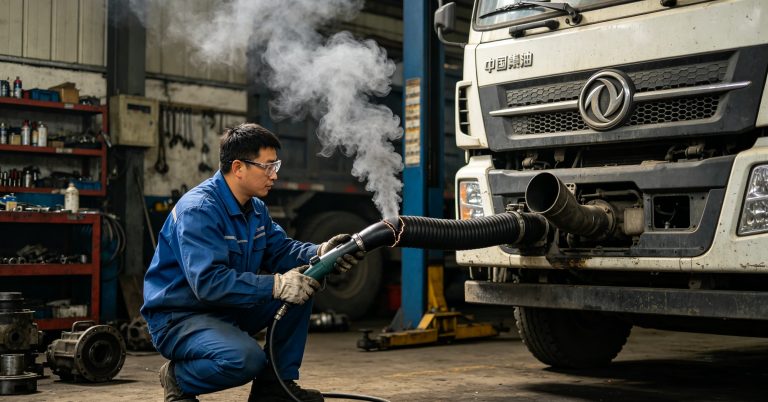
Advanced diagnostic workshops often rely on smoke testing or controlled pressure testing systems to precisely locate micro-leaks without requiring full disassembly of the intake system. These methods allow technicians to visualize airflow escape points and confirm sealing integrity across the entire intake pathway.
For structured maintenance procedures and technical troubleshooting frameworks, refer to Technical Support System.
Air Intake Hose Replacement and Installation Procedure
Replacing a damaged air intake hose is not simply a component swap operation but a controlled installation process that directly affects long-term airflow stability and engine performance reliability. Improper installation can lead to repeated leakage, premature wear, and system pressure imbalance.
Before replacement begins, the engine must be fully shut down and allowed to cool to prevent thermal injury and material deformation during handling. Once cooled, the damaged hose is carefully removed by loosening clamps and disconnecting both intake and outlet connection points without applying excessive force that could damage adjacent components.
All connection surfaces must be thoroughly cleaned before installing the new hose. Residual oil, dust, or carbon deposits can compromise sealing integrity and create micro-leakage pathways even when a new hose is installed. Proper surface preparation is a critical step in ensuring long-term airtight performance.
During installation, the hose must be positioned without twisting, bending stress, or tension load. Any misalignment can create uneven stress distribution across the hose body, which accelerates fatigue failure under vibration and pressure cycles.
Clamp tightening must be performed in a balanced and controlled manner. Over-tightening can damage hose walls, while under-tightening can result in pressure leakage. After installation, the system must be tested under both idle and load conditions to verify stable airflow behavior and confirm that boost pressure remains consistent.
Preventive Maintenance Strategy for Air Intake System
Preventive maintenance plays a critical role in extending the operational lifespan of air intake hose systems and maintaining stable diesel engine performance across varying load conditions. Unlike corrective maintenance, which reacts to failure, preventive strategies aim to control degradation before it reaches system failure stage.
Inspection intervals must be adjusted according to real operating environments. Trucks operating in high-dust regions, construction zones, or high-temperature climates experience accelerated rubber aging and clamp loosening due to continuous environmental stress. In these conditions, standard inspection intervals are often insufficient to detect early-stage degradation.
Fleet-level maintenance standardization is essential for ensuring consistent engine performance across multiple vehicles. Without standardized maintenance procedures, variations in inspection quality and replacement timing can lead to uneven airflow performance, resulting in inconsistent fuel efficiency and operational instability across the fleet.
In practical fleet operations, maintenance planning is often aligned with system-level component strategies to ensure compatibility and long-term reliability. For system optimization and airflow component alignment, refer to System Products.
To maintain consistent part quality across different operational units, many fleet operators rely on standardized sourcing through Brand Products.
Operational experience and failure trend analysis are often validated through Cooperative Cases which provide real-world insights into how different operating conditions affect system durability.
When maintenance issues require engineering-level evaluation or system redesign recommendations, direct consultation is available through Contact Us.
and company background information can be found at About Us.
Fleet-Level Air Intake System Management Strategy
In fleet-level operations, air intake hose failure should not be treated as an isolated component issue but rather as part of a broader airflow system degradation pattern. This includes turbocharger efficiency decline, intercooler contamination buildup, and sensor calibration drift over time.
A system-level diagnostic approach is required to accurately identify root causes instead of only addressing surface-level symptoms. Without this approach, repeated failures may occur even after component replacement, leading to increased maintenance cost and reduced operational efficiency.
Fleet management strategies must therefore integrate airflow system monitoring, preventive maintenance scheduling, and standardized replacement protocols to ensure consistent performance across all vehicles. This approach significantly reduces unexpected downtime and improves long-term reliability of the entire engine fleet.
Frequently Asked Questions (FAQ)
What happens when a truck air intake hose leaks?
A leaking air intake hose introduces unmetered and uncontrolled air into the combustion system, which disrupts ECU-calculated air-fuel ratio balance. This leads to unstable combustion, reduced engine torque output, increased fuel consumption, and potential turbocharger inefficiency. If the condition continues without repair, it can also accelerate carbon buildup and long-term engine wear.
Can I drive with a damaged air intake hose?
Short-term driving may still be possible depending on leak severity, but continued operation is not recommended. Prolonged air leakage increases engine stress, reduces combustion efficiency, and may cause secondary damage to turbocharger components, injectors, and emission control systems. In fleet operations, early replacement is always recommended to avoid cascading system failures.
Why does air intake hose damage affect engine performance?
Air intake hose damage disrupts stable airflow delivery into the combustion chamber, which directly affects ECU-controlled combustion timing. When airflow becomes inconsistent, fuel injection calculations lose accuracy, resulting in inefficient combustion, reduced power output, and unstable engine behavior under load conditions.
How is air intake hose leakage professionally diagnosed?
Professional diagnosis typically involves a combination of static inspection, dynamic load testing, smoke testing, and pressure testing. Static inspection identifies visible defects, while dynamic testing reveals performance-related airflow instability under real operating conditions. Smoke and pressure testing are particularly effective for detecting micro-leaks that are not visible externally.
What causes air intake hose cracks?
Air intake hose cracks are primarily caused by long-term exposure to thermal cycling, mechanical vibration, oil contamination, and improper installation. These factors gradually weaken rubber elasticity and structural integrity, eventually leading to micro-crack formation and progressive leakage failure under pressure conditions.
Is air intake hose replacement expensive?
Compared to major engine or turbocharger repairs, air intake hose replacement is relatively low-cost. However, delayed replacement can significantly increase total maintenance expenses due to secondary damage to turbo systems, combustion inefficiency, and increased fuel consumption over time.