Truck Engine Maintenance Best Practices for Fleet Reliability and Cost Reduction
Introduction: The Strategic Role of Engine Maintenance in Modern Fleet Systems
Truck engine maintenance in modern logistics is no longer a simple mechanical servicing task but a core operational strategy that directly determines fleet profitability, reliability, and long-term asset value. Heavy-duty trucks operate in continuous high-load environments where engines are exposed to constant combustion pressure, thermal cycling, and mechanical friction. Unlike controlled industrial machinery, these engines must perform under unpredictable real-world conditions including long-distance transport, urban congestion, mountainous terrain, and extreme weather variations.
Over time, these stress factors do not act independently. Instead, they accumulate gradually across multiple engine subsystems, forming a slow degradation cycle that eventually affects overall performance stability. This is why fleet operators cannot rely solely on reactive repair methods. Instead, they must adopt structured maintenance systems that integrate engineering principles, operational data analysis, and predictive diagnostics.
In high-scale fleet operations, even a small percentage of engine failure can lead to significant financial loss due to delayed deliveries, increased fuel consumption, and cascading operational disruptions. Therefore, engine maintenance should be understood as a system-level optimization process rather than a cost center.
Engine Operating Environment and Stress Accumulation Mechanisms
Continuous Load Pressure in Commercial Transport
Truck engines operate in environments where load conditions rarely stabilize. A fully loaded vehicle climbing uphill generates significantly different internal stress compared to highway cruising. These fluctuations in load intensity create continuous pressure variation inside combustion chambers and drivetrain components.
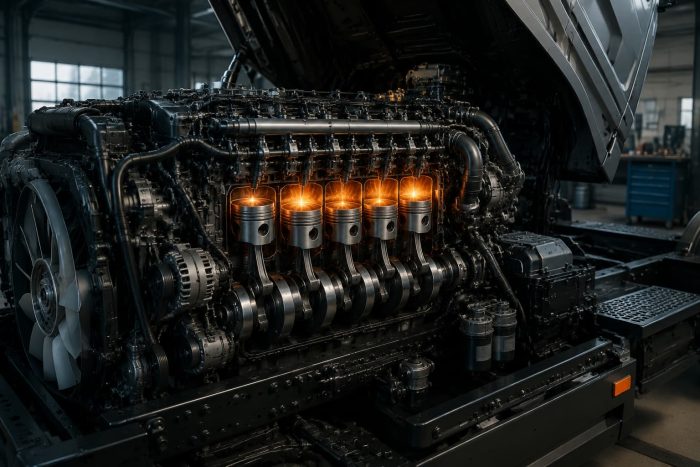
Each combustion cycle generates force that is transferred through pistons, connecting rods, and crankshafts. Over time, these repeated cycles produce micro-level deformation in metal structures, which slowly accumulates into measurable wear.
This wear is not immediately visible in early stages. Engines may continue to operate normally even when internal degradation has already begun. This is one of the primary reasons why many fleet operators experience sudden engine failure without prior warning signs.
Thermal Stress and Material Fatigue Development
Thermal stress is another major factor in engine degradation. During combustion, temperatures inside the engine can rise to extremely high levels, causing rapid expansion of metal components. When the engine cools down, contraction occurs.
This continuous expansion and contraction cycle creates internal stress within material structures. Over time, this leads to weakening of seals, deformation of metal surfaces, and reduced structural integrity.
In high-mileage fleet operations, thermal fatigue becomes one of the most common underlying causes of engine failure, especially in gasket systems and cylinder head assemblies.
Interaction Between Mechanical and Thermal Stress
What makes truck engine degradation particularly complex is the interaction between mechanical and thermal stress systems. These two forces do not operate separately. Instead, they amplify each other under heavy load conditions.
For example, when engine temperature increases, metal becomes softer, making it more vulnerable to mechanical deformation. At the same time, mechanical pressure increases internal friction, which further raises temperature levels.
This feedback loop creates a compounding degradation cycle that accelerates engine wear if not controlled through proper maintenance strategies.
Core Engine System Architecture and Functional Dependencies
A truck engine is not a single mechanical unit but a highly integrated system composed of multiple subsystems that must operate in synchronized balance. Failure in one subsystem often leads to cascading effects across the entire engine structure.
Lubrication System Stability and Wear Control
The lubrication system is responsible for reducing friction between moving components by maintaining a stable oil film layer. This film prevents direct metal-to-metal contact and significantly reduces wear.
However, engine oil is not static. Over time, it degrades due to heat exposure, contamination, and oxidation. Once oil viscosity decreases or becomes contaminated, its protective ability weakens.
This leads to increased friction inside the engine, which accelerates wear in components such as bearings, camshafts, and crankshaft journals. In severe cases, lubrication failure can result in complete engine seizure.
Cooling System Performance and Thermal Regulation
The cooling system plays a critical role in maintaining optimal engine temperature during operation. It ensures that excess heat generated during combustion is efficiently transferred away from the engine block.
When cooling efficiency decreases, temperature control becomes unstable. Even small inefficiencies in coolant circulation can lead to localized overheating inside the engine.Over time, this causes structural deformation in metal components and increases the risk of gasket failure. In extreme cases, overheating can result in irreversible engine damage.
Air Intake System and Combustion Efficiency Control
The air intake system ensures that sufficient clean air reaches the combustion chamber. Proper airflow is essential for maintaining an optimal air-fuel ratio.
When airflow is restricted due to clogged filters or intake system inefficiencies, combustion becomes incomplete. This reduces engine power output and increases carbon buildup inside the combustion chamber.Carbon accumulation further restricts airflow, creating a self-reinforcing cycle of performance degradation.
Fleet-Level Maintenance Strategy and Operational Standardization
Fleet maintenance systems require a fundamentally different approach compared to individual vehicle maintenance. In fleet environments, multiple trucks operate under different loads, routes, and environmental conditions. This creates uneven wear patterns that cannot be effectively managed using isolated maintenance decisions.
A fleet-level maintenance strategy introduces standardization across all operational units. This includes unified inspection procedures, consistent diagnostic criteria, and structured replacement cycles. By applying standardized rules, fleet operators can ensure that all vehicles maintain a consistent performance baseline.
Standardization also improves predictability. When maintenance actions are performed under unified conditions, fleet managers can better forecast failure probabilities and optimize scheduling. This reduces unexpected breakdowns and improves overall operational stability.
Modern fleet systems also integrate data-driven monitoring tools that track real-time engine performance indicators such as temperature fluctuations, oil pressure stability, fuel consumption patterns, and vibration signatures. These data points provide early warning signals that allow maintenance teams to intervene before failure occurs.
Failure Chain System in Engine Degradation
Engine failure in heavy-duty trucks follows a structured degradation chain rather than occurring suddenly. This failure chain typically begins at a microscopic level where performance deviations are barely noticeable during regular operation.
In the early stage, minor inefficiencies appear in fuel consumption, temperature stability, or oil pressure consistency. These changes are often ignored because the engine continues to operate within acceptable performance ranges. However, internal wear has already begun at a structural level.
As degradation progresses into the mid-stage, system imbalance becomes more evident. Lubrication efficiency decreases, cooling performance weakens under load, and combustion stability becomes inconsistent. At this stage, engines may still function, but operational stress levels are significantly higher than normal.
In the final stage, multiple engine systems begin to fail simultaneously. Lubrication breakdown leads to increased friction, cooling inefficiency causes overheating, and combustion instability reduces power output. These combined effects create a cascading failure mechanism that can rapidly result in complete engine shutdown or irreversible damage.
Understanding this failure chain is essential for fleet operators because it enables early intervention strategies that significantly reduce repair costs and prevent large-scale operational disruption.
Economic Structure of Engine Maintenance in Fleet Operations
Engine maintenance costs are not limited to direct repair expenses. In reality, total maintenance cost is composed of multiple interconnected layers that collectively determine fleet profitability.The first layer is direct maintenance cost, which includes replacement parts, labor, and workshop services. While this is the most visible cost component, it often represents only a portion of total financial impact.
The second layer is downtime cost. When a truck is not operational, it generates no revenue but still incurs fixed operational obligations. This creates a direct loss in productivity and delivery capacity.
The third and often most significant layer is indirect operational cost. This includes delayed shipments, increased workload on other vehicles, contract penalties, and reduced customer satisfaction. In large-scale logistics operations, these indirect costs can exceed direct repair expenses by several times.
Because of this multi-layer cost structure, engine maintenance should be treated as a financial optimization strategy rather than a technical necessity.
Spare Parts Availability and Maintenance Efficiency Systems
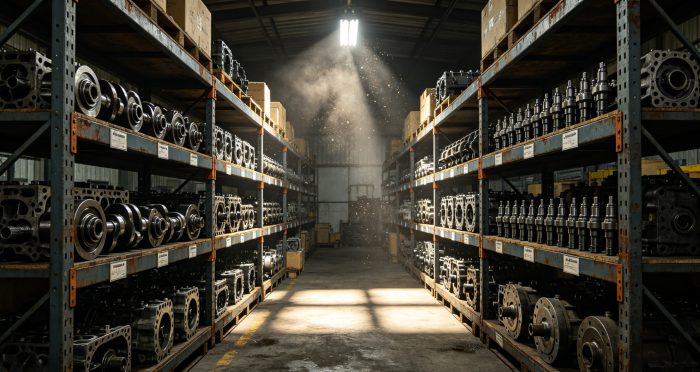
Spare parts availability is one of the most critical factors influencing maintenance efficiency in fleet operations. Even when engine issues are correctly diagnosed, lack of available components can significantly delay repair processes and increase downtime.
In global logistics systems, spare parts supply chains often become operational bottlenecks. Critical engine components such as fuel injectors, oil pumps, sensors, and cooling system parts must be available immediately to ensure fast repair turnaround.
Fleet operators must implement structured inventory classification systems that divide components into critical and non-critical categories. Critical components must be stocked in advance, while non-critical parts can follow standard procurement cycles.This ensures that maintenance operations remain efficient even under unexpected failure conditions.
Lifecycle-Based Engine Maintenance Management
Truck engines follow a predictable lifecycle pattern that includes early operation phase, stable performance phase, degradation phase, and end-of-life phase.During the early and stable phases, maintenance focuses on performance optimization and preventive inspection. Engines operate under optimal conditions and require relatively low intervention frequency.
As engines enter the degradation phase, wear becomes more pronounced and maintenance frequency increases. At this stage, early detection becomes critical to prevent accelerated system failure.Lifecycle-based maintenance allows fleet operators to allocate resources efficiently based on actual engine condition rather than fixed schedules, improving cost control and operational efficiency.
Predictive Maintenance Systems in Modern Fleet Operations
Predictive maintenance represents the most advanced stage of fleet engine management. It relies on continuous analysis of real-time operational data to forecast potential failures before they occur.By monitoring parameters such as vibration frequency, temperature variation, oil pressure behavior, and fuel efficiency trends, predictive systems can detect early warning patterns that indicate abnormal engine behavior.
This allows maintenance teams to schedule repairs at optimal timing, reducing unnecessary maintenance while preventing unexpected breakdowns. Predictive maintenance significantly improves fleet reliability and reduces operational risk.
Engineering Execution Logic in Maintenance Systems
Maintenance execution requires structured workflow logic to ensure repair accuracy and system stability. Diagnosis alone is not sufficient unless followed by correct execution procedures.Before repair begins, diagnostic validation must confirm the root cause of failure because multiple systems can produce similar symptoms. For example, overheating may result from cooling failure, lubrication issues, or airflow restriction.
Once validated, maintenance execution follows a structured process including system isolation, component replacement, reassembly, and functional testing. Each step must be verified to ensure repair completeness.Post-repair validation is equally important because certain failures only appear under real load conditions, not during static testing.
Integration of Maintenance Systems with Fleet Operations
Modern fleet maintenance systems are increasingly integrated with digital operational platforms that synchronize maintenance scheduling with logistics planning.This integration allows fleet operators to perform maintenance during low-demand periods, minimizing operational disruption. It also improves communication between drivers, technicians, and fleet managers through shared data systems.
For technical systems, see Technical Support Center.For real-world applications, see Cooperative Case Studies.
Frequently Asked Questions (FAQ)
What is the most important factor in truck engine maintenance?
The most important factor in truck engine maintenance is consistency and system-level control rather than isolated repair actions. Truck engines operate under continuous high-load conditions, which means wear does not happen suddenly but accumulates gradually over long operational cycles. If maintenance is inconsistent, small inefficiencies inside lubrication, cooling, or fuel systems can slowly evolve into large-scale mechanical failures.Modern fleet maintenance systems are increasingly integrated with digital operational platforms that synchronize maintenance scheduling with logistics planning.This integration allows fleet operators to perform maintenance during low-demand periods, minimizing operational disruption. It also improves communication between drivers, technicians, and fleet managers through shared data systems.
In fleet operations, consistency also means maintaining unified standards across all vehicles. When different trucks receive different maintenance quality or timing, performance gaps appear across the fleet. This leads to uneven fuel consumption, unpredictable breakdown rates, and unstable delivery scheduling. Therefore, the core principle of engine maintenance is not just repairing problems but maintaining stable system conditions over time.
How often should truck engines be maintained in fleet operations?
Truck engine maintenance frequency cannot be fixed using a single universal rule because operating conditions vary significantly between fleets. Vehicles operating under heavy load, long-distance transportation, or high-temperature environments require more frequent inspection cycles compared to light-duty usage.
In modern fleet systems, maintenance intervals are increasingly determined by condition-based monitoring rather than mileage alone. This includes tracking oil pressure behavior, temperature fluctuations, vibration patterns, and fuel consumption trends. These data points provide a more accurate reflection of engine health than fixed schedules.
As a result, maintenance frequency becomes dynamic rather than static. Engines that operate under stable conditions may require fewer interventions, while engines exposed to harsh environments may require more frequent checks to prevent early-stage degradation from developing into major failures.
What causes most truck engine failures?
Most truck engine failures are caused by a combination of lubrication system degradation, cooling system inefficiency, and fuel delivery instability. These three systems are interconnected, meaning failure in one system often accelerates problems in others.
Lubrication failure increases internal friction between moving parts, which leads to excessive heat generation. Cooling system inefficiency then struggles to regulate this heat, creating a compounding thermal stress cycle. At the same time, fuel system imbalance reduces combustion efficiency, increasing carbon buildup inside the engine.
These issues rarely appear suddenly. Instead, they develop gradually through micro-level inefficiencies that accumulate over time. When multiple systems reach a critical imbalance point simultaneously, the engine enters a failure state that often requires major repair or full overhaul.
Why is preventive maintenance better than reactive repair?
Preventive maintenance is more effective because it focuses on identifying and resolving early-stage degradation before it develops into system-level failure. In contrast, reactive repair only occurs after breakdown, which means damage has already spread to multiple components.
From a cost perspective, preventive maintenance significantly reduces total operational expenses because it avoids emergency repair costs, towing expenses, and extended downtime. More importantly, it helps maintain stable fleet performance by preventing unexpected vehicle unavailability.
In addition, preventive maintenance reduces secondary damage. For example, a small cooling system issue detected early can be resolved before it causes overheating damage to pistons, gaskets, or cylinder heads. This greatly extends overall engine lifespan and improves long-term reliability.
How does engine oil affect long-term engine performance?
Engine oil plays a critical role in reducing friction between moving metal components and maintaining thermal stability inside the engine system. It forms a protective lubricating film that prevents direct metal-to-metal contact during operation.
However, engine oil degrades over time due to high temperature exposure, oxidation, and contamination from combustion byproducts. When oil loses viscosity or becomes contaminated, its ability to protect internal components decreases significantly.
This leads to increased friction, higher operating temperatures, and accelerated wear of critical components such as bearings, crankshafts, and camshafts. In long-term fleet operation, poor oil management is one of the leading contributors to engine lifespan reduction.
What happens when the cooling system fails?
When the cooling system fails or becomes inefficient, the engine loses its ability to regulate internal temperature. This results in overheating conditions, which can severely damage internal components.
High temperatures cause metal expansion beyond safe operational limits. This leads to gasket failure, cylinder head deformation, and in extreme cases, permanent engine block damage. Overheating also accelerates oil degradation, which further reduces lubrication efficiency and increases internal friction.
In fleet operations, cooling system failure is particularly dangerous because it often develops gradually. Minor coolant leaks or reduced circulation efficiency may go unnoticed until critical overheating occurs under heavy load conditions.
What is condition-based maintenance in truck fleets?
Condition-based maintenance is a modern maintenance strategy that relies on real-time engine performance data rather than fixed service intervals. It uses operational indicators such as vibration frequency, temperature trends, oil pressure stability, and fuel consumption behavior to determine maintenance timing.
In fleet environments, condition-based maintenance improves efficiency by reducing unnecessary servicing while also preventing unexpected breakdowns. It represents a more accurate and cost-effective approach compared to traditional time-based maintenance systems.
In fleet operations, cooling system failure is particularly dangerous because it often develops gradually. Minor coolant leaks or reduced circulation efficiency may go unnoticed until critical overheating occurs under heavy load conditions.
Why is spare parts management important for fleet maintenance?
Spare parts management is essential because it directly affects repair speed and vehicle downtime duration. Even when engine problems are accurately diagnosed, lack of available components can delay repair processes and disrupt fleet operations.
In large-scale logistics systems, downtime does not only mean repair cost but also includes lost delivery capacity and operational delays. Therefore, having a structured spare parts inventory system ensures that critical components are always available when needed.
Proper classification of spare parts into critical and non-critical categories also improves efficiency. Critical components must be stocked in advance, while non-critical items can follow standard procurement cycles.
What is predictive maintenance in modern fleet systems?
Predictive maintenance is an advanced maintenance strategy that uses real-time data analysis and historical performance trends to predict potential engine failures before they occur.
It relies on continuous monitoring of engine behavior patterns such as temperature variation, vibration changes, pressure fluctuations, and fuel efficiency trends. These data points are analyzed to detect early signs of abnormal behavior.
This allows maintenance teams to schedule repairs at the most efficient time, reducing both unnecessary maintenance activities and unexpected breakdowns. Predictive maintenance represents the most advanced stage of fleet maintenance evolution.
What happens if engine maintenance is ignored?
If engine maintenance is ignored, small inefficiencies gradually accumulate and evolve into major system failures. This process typically begins with minor performance degradation such as reduced fuel efficiency or slight temperature instability.
Over time, these small issues spread across multiple engine systems, including lubrication, cooling, and combustion. Eventually, the engine reaches a failure threshold where major repairs or complete replacement becomes necessary.