When and How to Do a Fuel Filter Replacement on Diesel Trucks
Introduction: Why Fuel Filter Replacement Is a Core Part of Diesel Engine Maintenance
Fuel filter replacement in diesel trucks is not only a routine maintenance procedure but a foundational protection layer for the entire fuel system architecture. In diesel engines, combustion quality depends heavily on the precision of fuel atomization, and this precision is extremely sensitive to contamination levels in fuel supply.
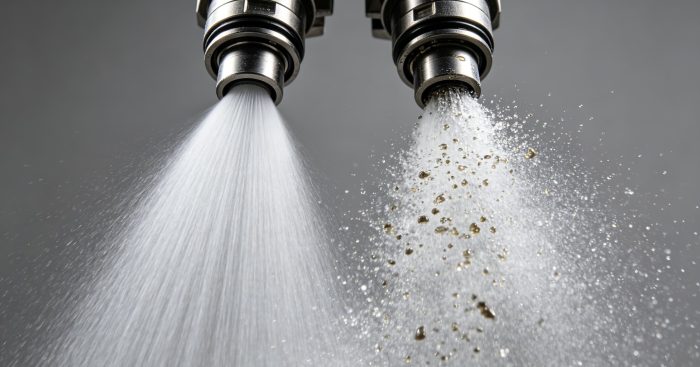
In real-world transportation environments, diesel fuel is rarely completely clean. During storage, transfer, and refueling processes, fuel is exposed to airborne dust, condensation moisture, tank sediment, and even microbial contamination in long-term storage conditions. These impurities may seem minor at a microscopic level, but in high-pressure fuel injection systems, even particles smaller than visible dust can disrupt injector spray patterns.

The fuel filter plays a critical role as a stabilizing barrier between contaminated fuel and high-precision engine components. However, unlike static components, the filter is a consumable system that gradually loses efficiency as it accumulates debris. Once saturation begins, fuel flow resistance increases, which directly affects engine breathing and combustion stability.
For fleet operators, this process is not isolated to a single engine system. A clogged fuel filter does not only affect fuel delivery but also triggers secondary stress across injectors, combustion chambers, and even turbocharging response due to altered combustion efficiency. That is why fuel filter maintenance must be integrated into a broader engine health management system rather than treated as a simple replacement task.
How Diesel Fuel Filters Work Inside the Fuel System
The diesel fuel filter operates as a multi-layer protection and stabilization mechanism within the fuel delivery system. Its role extends beyond simple particle filtration and includes flow regulation, contamination separation, and injection system protection.
Inside the filter, fuel passes through a structured filtration medium designed with multiple density layers. These layers are engineered to progressively capture contaminants based on particle size. Larger debris is captured in the outer layers, while finer microscopic particles are trapped deeper inside the filter structure. This staged filtration ensures that fuel purity is maintained at a level suitable for high-pressure injection systems.
Water Separation and Fuel Stability Function
One of the most critical additional functions of modern diesel fuel filters is water separation. Water contamination in diesel fuel can occur due to condensation inside storage tanks, environmental humidity, or fuel supply chain inconsistencies. Once water enters the fuel system, it reduces lubrication properties and introduces corrosion risk to metallic components.
In high-pressure injection systems, even small amounts of water can cause injector surface damage and irregular combustion behavior. Over time, this leads to unstable engine performance and increased maintenance frequency. The fuel filter’s water separation function helps prevent these issues by isolating moisture before it reaches sensitive components.
As contamination accumulates inside the filter, fuel flow resistance gradually increases. This does not immediately stop engine operation, but it alters pressure dynamics within the fuel system, forcing the engine to adjust injection timing and compensation behavior.
When Fuel Filter Replacement Becomes Necessary
Fuel filter replacement timing cannot be accurately defined using mileage alone because diesel engine operating conditions vary significantly across different fleet environments. A truck operating in clean highway conditions behaves very differently from one operating in mining, construction, or dusty rural logistics environments.
One of the most important factors influencing replacement timing is fuel quality consistency. Poor-quality fuel contains higher levels of impurities, accelerating filter saturation. Additionally, engines operating under heavy load consume more fuel per cycle, which means more contaminants are processed through the filter in a shorter time period.
In modern fleet management systems, condition-based maintenance is increasingly replacing traditional fixed-interval servicing. Instead of relying solely on mileage, operators monitor fuel pressure stability, engine response behavior, and injector efficiency trends. These data signals provide early indicators of filter saturation.
Once fuel delivery becomes inconsistent—such as delayed acceleration response, reduced power output, or unstable combustion under load—this indicates that the filter has reached a critical restriction level and replacement should be performed immediately to prevent downstream damage.
Step-by-Step Fuel Filter Replacement Process
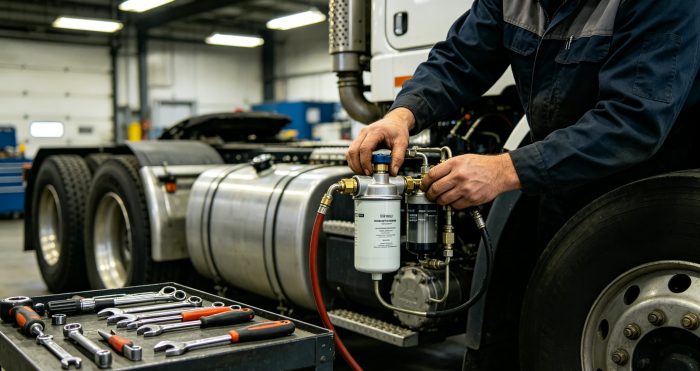
Fuel filter replacement must be executed in a controlled environment to avoid contamination entering the fuel system. Diesel injection systems operate under extremely tight tolerances, meaning even small impurities introduced during maintenance can affect long-term performance.
The process begins with engine shutdown and complete fuel system pressure release. This ensures safe handling conditions and prevents accidental fuel leakage during disassembly.The old fuel filter is then carefully removed from its housing. During this step, it is critical to avoid exposing open fuel lines to environmental contaminants such as dust or moisture.
Before installing the new filter, all sealing surfaces must be thoroughly cleaned and inspected. Any residue or debris can compromise sealing performance and lead to fuel leakage or pressure instability.The new filter must be installed in the correct orientation according to fuel flow direction specifications. Incorrect installation direction is a common but serious error that can immediately disrupt fuel system operation.
After installation, the fuel system must be properly primed to remove trapped air. Air pockets inside the fuel system can cause unstable combustion, hard starting conditions, or engine hesitation.Finally, the engine should be tested under both idle and load conditions to verify stable fuel delivery and combustion performance across different operating states.
Impact of Fuel Filter Condition on Engine Performance
The condition of the fuel filter has a direct and measurable impact on engine combustion stability, fuel efficiency, and long-term component durability. A clean and properly functioning fuel filter ensures stable fuel pressure and consistent injector performance, which are essential for efficient combustion.
When the filter begins to clog, fuel flow restriction causes irregular fuel delivery. This leads to incomplete combustion cycles, increased carbon buildup inside combustion chambers, and reduced thermal efficiency of the engine system.
Over time, injectors must compensate for unstable fuel flow by adjusting injection pressure and timing. This compensation increases system stress and accelerates wear across multiple components, including fuel pumps and combustion chamber surfaces.
Fuel Filter Maintenance in Fleet-Level Operations
In fleet-level operations, fuel filter maintenance must be standardized across all vehicles to ensure consistent performance and predictable operational output. Without standardization, different maintenance intervals and component qualities can lead to uneven performance across the fleet.
Fleet managers must consider environmental conditions, operational routes, and fuel sourcing when designing maintenance schedules. Vehicles operating in harsh environments require more frequent inspection cycles due to higher contamination exposure.Standardization also improves maintenance forecasting and reduces unexpected breakdown risks, which is critical for maintaining logistics efficiency and delivery reliability.
Relationship Between Fuel Quality and Filter Lifespan
Fuel quality is one of the most critical but often underestimated factors affecting fuel filter lifespan in diesel truck systems. In real-world logistics operations, fuel is sourced from multiple suppliers, transported through different storage infrastructures, and exposed to varying environmental conditions. Each of these stages introduces potential contamination risks that directly impact filter performance.
High-quality diesel fuel contains fewer impurities, stable chemical composition, and lower water content. In contrast, low-quality fuel often contains sediment particles, oxidation residues, and moisture contamination that accelerate filter saturation. Once these contaminants enter the filtration system, they begin to accumulate within the filter media, increasing flow resistance and reducing filtration efficiency.
Over time, poor fuel quality does not only shorten filter lifespan but also increases system-wide stress. The fuel pump must work harder to maintain pressure, while injectors face inconsistent fuel delivery patterns. This creates a chain reaction that affects combustion efficiency and overall engine stability.
For fleet operators, fuel sourcing strategy becomes directly linked to maintenance cost control. Choosing reliable fuel supply channels is not only a procurement decision but also a long-term engine protection strategy.
Environmental Factors That Accelerate Fuel Filter Clogging
Environmental operating conditions play a significant role in determining how quickly a fuel filter becomes saturated. Trucks operating in dusty, humid, or extreme temperature environments experience faster contamination buildup compared to those operating in stable highway conditions.
Dust-heavy environments introduce fine airborne particles that can enter fuel storage systems during refueling operations. These particles are often too small to be noticed but accumulate rapidly within the filter medium. Similarly, high humidity conditions increase the likelihood of water condensation inside fuel tanks, which further contaminates diesel fuel.
Temperature fluctuations also contribute to fuel instability. In cold environments, diesel fuel may develop wax particles, while in high-temperature conditions, fuel oxidation accelerates. Both scenarios increase contaminant load and reduce filter efficiency.
These environmental stress factors do not act independently but combine to accelerate filter degradation. As a result, vehicles operating in harsh environments require significantly shorter maintenance intervals.
Relationship Between Fuel Filter Condition and Injector Lifespan
Fuel injectors are among the most precise and expensive components in a diesel engine fuel system, and their lifespan is directly influenced by fuel filter condition. When the filter operates in optimal condition, it ensures that only clean fuel reaches the injectors, allowing for consistent spray patterns and stable combustion.
However, when the filter becomes partially clogged or saturated, fuel flow becomes inconsistent. This forces injectors to operate under unstable pressure conditions, which affects atomization quality. Poor atomization leads to incomplete combustion and increased carbon buildup around injector nozzles.
Over time, this contamination reduces injector responsiveness and efficiency. In severe cases, injectors may become partially blocked, leading to uneven cylinder performance and engine vibration. Because injectors operate under extremely high pressure and tight tolerances, even minor contamination can significantly reduce their operational lifespan.
Therefore, maintaining fuel filter health is not only about protecting fuel flow but also about extending the lifespan of the entire injection system.
Importance of Standardized Maintenance Intervals in Fleet Systems
In fleet-level operations, inconsistent maintenance intervals across vehicles can lead to significant performance variability. Without standardized fuel filter replacement schedules, some vehicles may operate with fresh filters while others run with partially clogged or degraded filters, creating uneven fuel efficiency and engine performance across the fleet.
Standardization ensures that all vehicles operate under similar mechanical conditions, which improves predictability in fuel consumption, maintenance planning, and operational scheduling. It also reduces the risk of unexpected breakdowns caused by overlooked filter degradation.
Modern fleet systems increasingly combine mileage-based schedules with condition-based monitoring. This hybrid approach allows operators to maintain consistency while adapting to real-world operating conditions.
Standardized maintenance is not only a technical strategy but also a cost-control mechanism that improves long-term fleet efficiency.
🚛 Frequently Asked Questions (FAQ)
What is the main function of a fuel filter in diesel engines?
The main function of a fuel filter in diesel engines is to ensure that all fuel entering the combustion system is clean, stable, and free from harmful contaminants. Diesel engines rely on extremely precise fuel injection systems that operate under very high pressure and tight tolerances, which makes them highly sensitive to even microscopic impurities.
In real-world fuel supply chains, diesel fuel often contains solid particles, rust fragments, water droplets, and oxidation residues generated during storage or transportation. If these contaminants are not removed, they can directly interfere with injector spray patterns and combustion stability.
A properly functioning fuel filter removes these impurities before they reach the fuel pump and injectors. In addition, modern filters also help stabilize fuel flow and separate water content, both of which are critical for maintaining consistent combustion efficiency and preventing corrosion inside the fuel system.
What is the main function of a fuel filter in diesel engines?
A clogged fuel filter restricts the normal flow of diesel fuel into the engine, which creates a pressure imbalance across the fuel system. This restriction does not immediately stop the engine, but it gradually disrupts combustion stability and fuel delivery precision.
When fuel flow becomes inconsistent, the engine compensates by adjusting injection timing and fuel quantity. However, this compensation is not always accurate, which leads to incomplete combustion, reduced power output, and increased fuel consumption.
Under heavy load conditions, the impact becomes more noticeable. The engine may struggle to accelerate, lose power during uphill driving, or exhibit delayed throttle response. In advanced cases, fuel starvation may occur, causing engine hesitation or temporary shutdown.Over time, this condition also increases stress on the fuel pump and injectors, accelerating wear across the entire fuel system.
What happens if fuel filter replacement is delayed?
If fuel filter replacement is delayed beyond its effective lifespan, the filtration system gradually loses its ability to block contaminants. This allows impurities to pass into sensitive fuel system components, particularly injectors and fuel pumps.
Once contaminants enter the injection system, they begin to affect spray precision, causing uneven fuel atomization inside the combustion chamber. This leads to inefficient combustion, carbon buildup, and increased engine temperature instability.
Long-term neglect can result in serious mechanical consequences, including injector clogging, pump wear, and even partial engine failure in extreme cases. What begins as a simple maintenance task can evolve into a costly system-level repair issue.
For fleet operators, delayed replacement also increases downtime risk, reduces fuel economy, and negatively impacts operational efficiency.
Why is fuel filter maintenance important for fleet operations?
Fuel filter maintenance plays a critical role in ensuring operational consistency across fleet vehicles. In large-scale logistics systems, even small differences in engine performance can create significant variability in fuel consumption, delivery timing, and maintenance costs.
When fuel filters are not maintained consistently, some vehicles may operate with clean fuel systems while others experience partial restriction. This imbalance leads to uneven engine performance across the fleet, making operational planning less predictable.
Standardized fuel filter maintenance ensures that all vehicles operate under similar fuel system conditions. This improves fuel efficiency consistency, reduces unexpected breakdowns, and enhances long-term cost control.
From a fleet management perspective, fuel filter maintenance is not just a technical requirement but a core component of operational stability and risk management.
Can poor fuel quality reduce fuel filter lifespan?
Yes, poor fuel quality is one of the most significant factors that directly reduces fuel filter lifespan. Diesel fuel that contains high levels of sediment, water contamination, or chemical instability accelerates the rate at which filter media becomes saturated.
When contamination levels are high, the filter must capture more particles in a shorter time period. This increases internal resistance and reduces filtration efficiency much faster than under clean fuel conditions.
In addition, poor-quality fuel can introduce unstable chemical compounds that affect combustion behavior, indirectly increasing soot formation and further contaminating the fuel system.For fleets operating in regions with inconsistent fuel supply quality, more frequent fuel filter replacement is necessary to maintain engine stability and prevent downstream damage.
How does fuel filter condition affect injector lifespan?
Fuel filter condition has a direct and critical impact on injector lifespan. Fuel injectors are precision-engineered components designed to deliver highly controlled fuel atomization under extreme pressure conditions.
When the fuel filter is clean and functioning properly, injectors receive stable, contaminant-free fuel, allowing them to maintain consistent spray patterns and combustion efficiency.However, when the filter becomes clogged or degraded, fuel flow becomes inconsistent. This forces injectors to operate under unstable pressure conditions, which disrupts atomization quality.
Over time, this leads to carbon buildup on injector nozzles, uneven fuel distribution, and increased mechanical wear. In severe cases, injectors may partially fail or become permanently damaged due to contamination exposure.Therefore, maintaining fuel filter health is essential for protecting injector performance and extending overall engine lifespan.
Is fuel filter replacement considered preventive maintenance?
Yes, fuel filter replacement is a core part of preventive maintenance in diesel engine systems. Its purpose is to prevent contamination-related failures before they occur, rather than responding after damage has already happened.
Preventive replacement ensures that the fuel system continues operating under optimal pressure and cleanliness conditions. This helps maintain stable combustion, reduce engine stress, and improve fuel efficiency.
In fleet environments, preventive maintenance strategies significantly reduce unexpected breakdowns and improve long-term operational reliability. It also allows maintenance teams to schedule service during planned downtime instead of reacting to emergency failures.
What is the difference between a clean and a clogged fuel filter in operation?
A clean fuel filter allows fuel to flow smoothly through the system with minimal resistance, ensuring stable pressure and consistent injector performance. This results in efficient combustion, stable engine power, and optimized fuel consumption.
A clogged fuel filter, on the other hand, creates resistance within the fuel system. This restriction disrupts fuel delivery, leading to inconsistent combustion cycles and reduced engine performance.Over time, this imbalance affects not only fuel efficiency but also increases stress on pumps and injectors, accelerating wear across the entire fuel system.