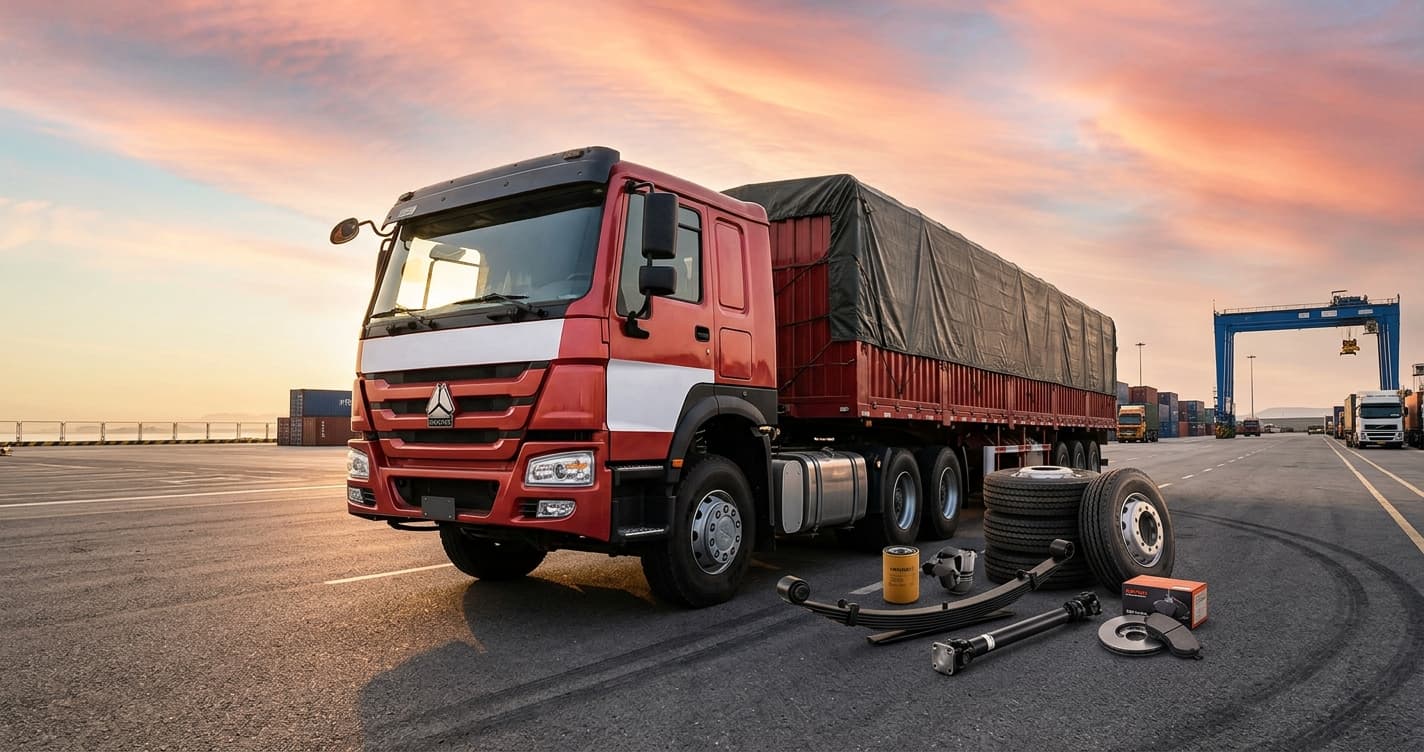
If trucks had a popularity contest across Africa, Southeast Asia, and the Middle East, HOWO would be that quiet kid who somehow wins prom king every single year. With over 1 million HOWO trucks exported globally, this Chinese heavy-duty powerhouse has quietly become the backbone of commercial transport on multiple continents. But here’s the real question — what makes these trucks so dominant, and more importantly, how do you source the right China Howo truck parts without getting burned?
Whether you’re a fleet manager in Nairobi, a parts dealer in Dubai, or a logistics company in Manila, this guide walks you through everything: the brand story, the parts ecosystem, the common pitfalls, and exactly how to solve them. So grab a coffee, and let’s get into it.
Who Is Behind HOWO? The Sinotruk Story You Should Know
HOWO doesn’t exist in a vacuum. Behind this iconic truck brand stands Sinotruk — officially known as China National Heavy Duty Truck Group — one of the oldest and largest heavy truck manufacturers in China. Founded in 1956, Sinotruk earned the distinction of producing China’s very first heavy-duty truck.
What truly set Sinotruk apart, however, was its technology partnership with Austrian manufacturer Steyr in the 1980s. This collaboration injected European engineering DNA into Chinese manufacturing muscle. Later, a strategic partnership with Volvo further refined the brand’s drivetrain and safety technologies.
HOWO emerged as Sinotruk’s flagship brand — the one designed specifically to compete on the global stage. Think of Sinotruk as the proud parent and HOWO as the overachieving child who went abroad and made the whole family famous. Today, HOWO trucks are synonymous with affordability, durability, and surprisingly strong performance in harsh operating conditions.
About Mettlead — Your Trusted China Truck Parts Partner
HOWO by the Numbers — Why It Dominates Global Markets
Numbers don’t lie, and HOWO’s numbers tell a compelling story. Let’s look at the data that explains why Sinotruk HOWO heavy duty trucks keep showing up on roads from Lagos to Lima.
| Metric | Data |
|---|---|
| Countries exported to | 110+ |
| Annual production capacity | 200,000+ units |
| Most popular models | HOWO A7, HOWO T7H, HOWO TX |
| Key export regions | Africa, Middle East, Southeast Asia, South America |
| Engine range | 290HP–460HP |
| Global market share (Chinese truck exports) | #1 for 19 consecutive years |
These figures reveal something important: HOWO isn’t just popular — it’s dominant. Furthermore, the brand’s wide engine range means there’s a HOWO for virtually every heavy-duty application, from urban construction to long-haul intercity freight.
Additionally, the sheer volume of trucks on the road creates a self-reinforcing ecosystem. More trucks mean more demand for China Howo truck parts, which means more suppliers, better availability, and ultimately lower costs for buyers. It’s a virtuous cycle that benefits everyone in the chain.
HOWO Truck Model Lineup — Which One Fits Your Operation?
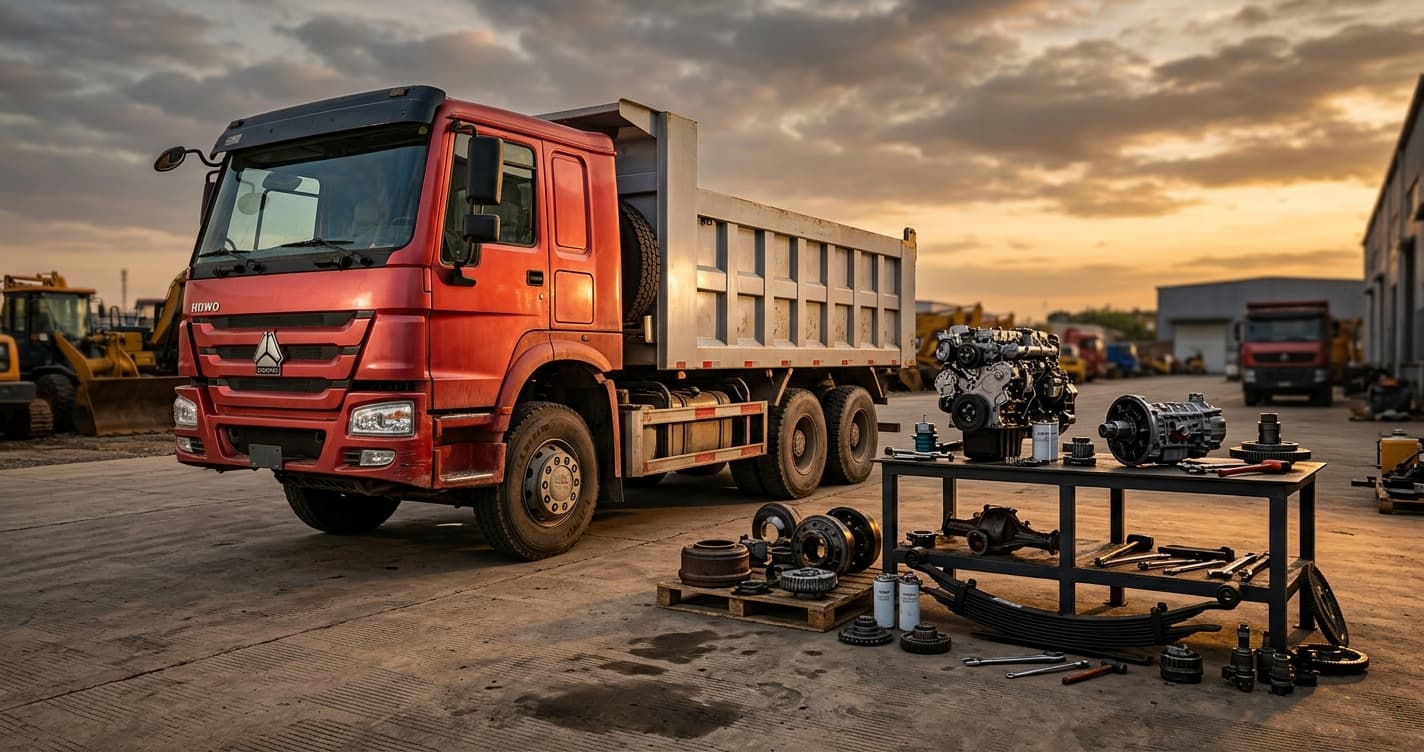
Not all HOWO trucks are created equal. Sinotruk designed different series for different missions, and understanding the lineup helps you source the right heavy duty truck spare parts down the road. Here’s a quick overview of the main categories:
- Dump Trucks — The workhorses of mining and construction sites across Africa and Asia
- Tractor Heads — Long-haul kings built for intercity and cross-border freight
- Cargo Trucks — Versatile flatbed and box configurations for general logistics
- Mixer Trucks — Concrete delivery specialists with robust PTO systems
- Tanker Trucks — Fuel, water, and chemical transport solutions
Now, let’s compare the three most popular model series head-to-head. This comparison is especially useful when you’re trying to identify which HOWO truck replacement parts catalog to reference.
| Feature | HOWO A7 | HOWO T7H | HOWO TX |
|---|---|---|---|
| Engine Power | 290HP–420HP | 360HP–440HP | 400HP–460HP |
| Cabin Type | Standard high-roof | Upgraded luxury cabin | New-generation smart cabin |
| Transmission | HW19710 manual | ZF/HW manual or AMT | ZF AMT standard |
| Typical Use | Dump, general cargo | Long-haul tractor, logistics | Premium long-haul, express freight |
| Fuel Efficiency | Good | Very good | Best in class |
| Price Range | Most affordable | Mid-range | Premium |
| Best Market Fit | Africa, South Asia | Middle East, SE Asia | Domestic China, premium export |
As you can see, the A7 remains the global bestseller thanks to its unbeatable price-to-performance ratio. Meanwhile, the T7H has carved out a strong niche among buyers who want more comfort and fuel savings. The TX series, on the other hand, represents Sinotruk’s latest technology push.
Understanding China Howo Truck Parts — What Every Buyer Needs to Know
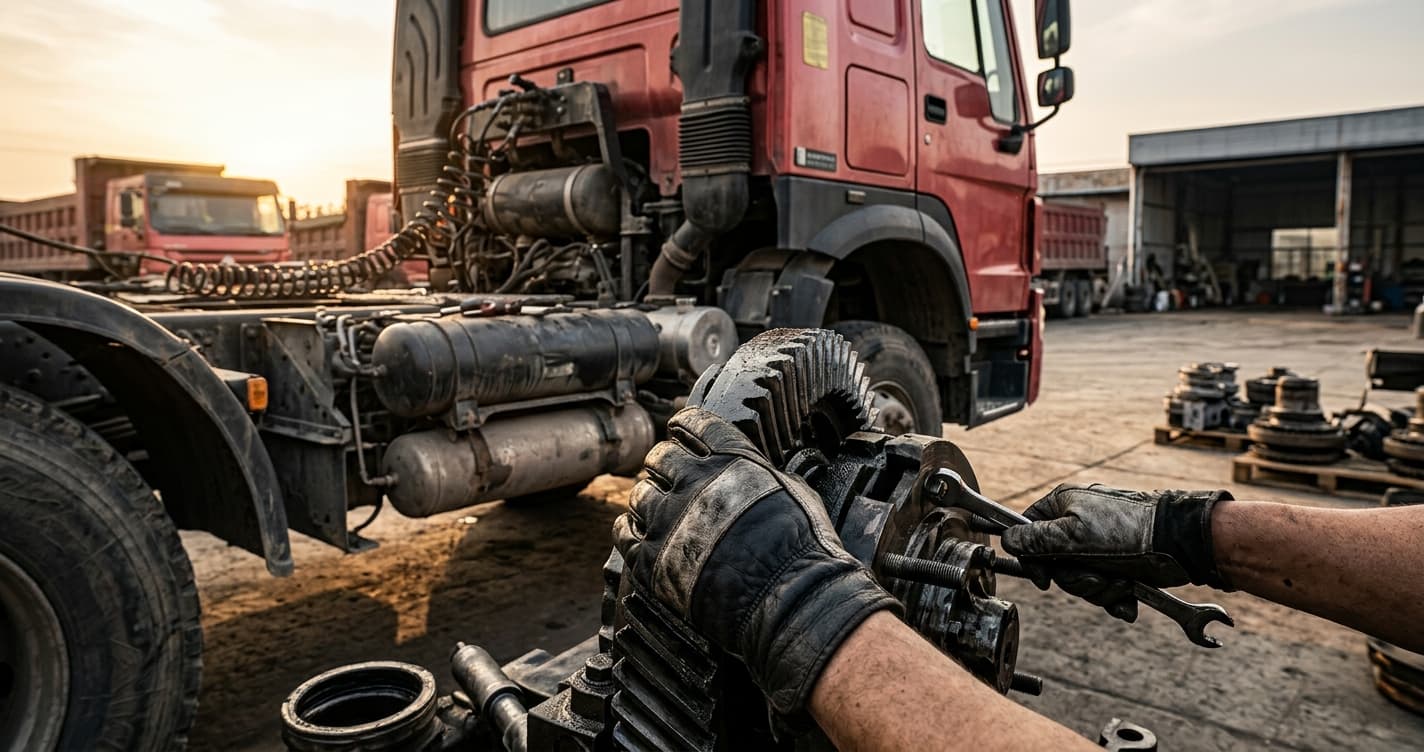
Owning a HOWO truck is one thing. Keeping it running efficiently for 500,000+ kilometers? That’s where sourcing the right genuine Sinotruk components becomes absolutely critical. A truck is only as good as the parts that keep it alive, and in this section, we’ll break down everything you need to know about the China truck components wholesale landscape.
First, let’s address the elephant in the room: why does it matter whether your parts are genuine? Simply put, Sinotruk HOWO spare parts are engineered to match exact tolerances, heat ratings, and stress specifications of each truck model. Drop in a substandard piston or a poorly made clutch disc, and you’re not just risking a breakdown — you’re risking catastrophic engine failure on a highway in the middle of nowhere.
Moreover, understanding the difference between part types saves you both money and headaches. Here’s the quick breakdown:
- OEM Parts — Made by the original equipment manufacturer (Sinotruk or their contracted factory), carrying the Sinotruk brand and part number
- Genuine Parts — Produced by Sinotruk-authorized suppliers, meeting identical specifications but sometimes packaged differently
- Aftermarket Parts — Made by third-party manufacturers, varying widely in quality from excellent to terrible
The China heavy truck parts wholesale market includes all three categories. Consequently, knowing which type to buy — and when — can mean the difference between a smart investment and an expensive mistake.
HOWO Truck Parts Catalog Breakdown by System
Every HOWO truck is a complex machine with multiple interconnected systems. When you’re building a parts order, it helps to think systematically. Below is a comprehensive breakdown of major HOWO parts systems, key components, and the items that most commonly need replacement.
| System | Key Components | Common Replacement Items |
|---|---|---|
| Engine System | Cylinder head, piston, turbocharger, fuel injector, crankshaft | Oil filters, fuel filters, gaskets, water pump, thermostat |
| Transmission | Gearbox assembly, synchronizer ring, clutch assembly | Clutch disc, clutch pressure plate, shift fork, bearings |
| Brake System | Brake drum, brake shoe, ABS sensor, relay valve | Brake pads, brake lining, air dryer cartridge, brake chamber |
| Suspension | Leaf spring, shock absorber, U-bolt, stabilizer bar | Bushings, spring pins, rubber mounts |
| Steering | Steering gear box, power steering pump, drag link | Tie rod ends, steering oil, seals |
| Electrical | Starter motor, alternator, ECU, sensors | Bulbs, wiring harness, switches, fuses |
| Cabin Parts | Door assembly, mirror, dashboard, HVAC system | Windshield glass, seat cushion, AC compressor, door handle |
| Axle & Drivetrain | Rear axle assembly, differential, propeller shaft | Ring and pinion gear, wheel bearings, oil seals |
This table essentially serves as your HOWO engine parts catalog starting point. Of course, each model and engine variant has specific part numbers, which is why working with an experienced Sinotruk authorized parts dealer matters so much.
OEM vs Aftermarket — How to Choose Without Regret
Here’s a practical decision framework that seasoned importers use. It’s not about always buying the most expensive option — it’s about knowing where to invest and where to save smartly.
Always go OEM/Genuine for:
- Engine internals (pistons, cylinder liners, crankshaft bearings)
- Turbochargers and fuel injection systems
- Transmission gears and synchronizers
- Brake system core components (drums, ABS modules)
- Electronic control units and sensors
Quality aftermarket can work well for:
- Cabin accessories (mirrors, handles, seat covers)
- Body panels and cosmetic parts
- Standard filters (with proper truck parts quality inspection)
- Lighting and basic electrical accessories
- Rubber bushings and simple suspension components
The key principle? If a part failure can strand your truck or endanger lives, go genuine. If it’s cosmetic or easily replaceable, quality aftermarket from a reputable OEM truck components manufacturer can save you 30–50% without meaningful risk.
Top 7 Problems Buyers Face When Importing China Howo Truck Parts (And Exactly How to Solve Them)
This is where we get real. After 15 years of working with importers across the globe, we’ve seen every possible headache in the China truck parts wholesale business. Below are the seven most common problems — and, more importantly, the exact solutions that work.
Problem 1 — “I Received the Wrong Part Number”
This is by far the most frequent complaint we hear. A buyer orders what they think is the right part, only to receive something that doesn’t fit. The frustration is real, and the cost of return shipping makes it even worse.
Why it happens: HOWO part numbers are notoriously confusing. Sinotruk has updated designs across model years, meaning the same-looking component might have three different part numbers depending on production date. Additionally, VIN-specific differences between trucks assembled for different markets add another layer of complexity.
How to solve it:
- Always provide your complete VIN (Vehicle Identification Number) to your supplier
- Send clear photos of the old part — front, back, and any visible markings
- Include the old part number, even if it’s partially worn off
- Work with a Sinotruk authorized parts dealer who can cross-reference multiple catalogs
- Ask your supplier to confirm fitment in writing before production
Contact Us for Part Number Verification
Problem 2 — “Quality Doesn’t Match the Sample”
You receive a beautiful sample, approve it, place a bulk order — and then the container arrives with parts that look and feel completely different. Unfortunately, this bait-and-switch tactic remains common in the import truck parts from China market.
How to solve it:
- Demand third-party quality inspection before shipment — companies like SGS or Bureau Veritas operate throughout China
- Request factory audit reports and manufacturing certifications
- Ask for batch production photos and videos during manufacturing
- Partner with suppliers who have a verifiable track record of 15+ years
- Start with a trial order before committing to large volumes
Transparency is the antidote to deception. A trustworthy HOWO truck spare parts supplier will welcome inspection — not resist it.
Problem 3 — “Shipping Took Forever and Parts Arrived Damaged”
Time is money in the trucking business. Every day a truck sits idle waiting for parts is a day of lost revenue. On top of delays, poor packaging can turn a perfectly good part into expensive scrap metal.
How to solve it:
- Insist on export-standard wooden crating for heavy components like engines and gearboxes
- Require foam padding and moisture-proof wrapping for electrical and precision parts
- Use FOB terms when you have a trusted freight forwarder; use CIF when you want the supplier to handle logistics
- Always purchase marine cargo insurance — it costs little but protects a lot
Here’s a realistic timeline table to set your expectations properly:
| Destination | Sea Freight | Air Freight |
|---|---|---|
| East Africa (Mombasa, Dar es Salaam) | 25–35 days | 5–7 days |
| West Africa (Lagos, Tema, Douala) | 35–45 days | 7–10 days |
| Southeast Asia (Manila, Jakarta, Hanoi) | 10–18 days | 3–5 days |
| Middle East (Jeddah, Dubai, Karachi) | 20–28 days | 4–6 days |
| South America (Santos, Callao, Buenos Aires) | 35–50 days | 7–12 days |
Planning ahead with these timelines helps you avoid emergency air freight costs, which can be 5–8 times more expensive than sea shipping.
Problem 4 — “I Can’t Find a Reliable Supplier”
The internet is flooded with suppliers claiming to be the “best” or “largest” HOWO parts dealer. Sorting genuine expertise from empty marketing is exhausting. So how do you separate the real from the fake?
Red flags to watch for:
- No physical address or factory photos
- Prices that seem impossibly low
- Reluctance to provide references or customer testimonials
- Pressure to pay 100% upfront via non-traceable methods
- Vague answers about part specifications
Green flags that signal trustworthiness:
- Verifiable business history of 10+ years
- Willingness to arrange video calls and factory tours
- Clear return and warranty policies
- Existing relationships with customers in your region
- Professional, detailed quotations with part numbers and photos
See Our Customer Success Stories
Problem 5 — “MOQ Is Too High for My Small Order”
Many suppliers in the China truck parts wholesale market set minimum order quantities (MOQs) that simply don’t work for smaller importers or new market entrants. You might only need 50 brake pads and 20 filters, but the supplier wants you to fill an entire container.
How to solve it:
- Mixed container strategy — Combine parts across multiple systems (engine + brake + cabin) to reach container volume without over-ordering any single item
- Consolidation services — Work with a supplier who can warehouse your order and combine it with other shipments
- Start with LCL (Less than Container Load) — It costs more per cubic meter, but it lets you test the supplier relationship with lower risk
- Group buying — Connect with other importers in your region to share container space
A flexible supplier understands that today’s small buyer can become tomorrow’s biggest customer. That’s why accommodation matters.
Problem 6 — “I Don’t Know If Parts Are Genuine Sinotruk Components”
Counterfeit parts are a real and growing problem. They look convincing on the outside but fail catastrophically under stress. For safety-critical components, this isn’t just a financial risk — it’s a life-threatening one.
How to verify authenticity:
- Check for hologram labels — Genuine Sinotruk parts carry anti-counterfeit holographic stickers
- Scan QR codes — Sinotruk has implemented QR-based verification on many product lines; scanning should link to their official database
- Examine packaging quality — Genuine boxes have consistent printing, correct spelling, and professional finish; counterfeits often have blurry text or color inconsistencies
- Compare weight and dimensions — Counterfeit parts frequently use cheaper, lighter materials
- Request certificates of origin — Legitimate genuine Sinotruk components online orders come with proper documentation
When in doubt, send photos to your supplier and ask them to verify through Sinotruk’s official channels. A reputable supplier will do this gladly.
Problem 7 — “After-Sales Support Is Nonexistent”
This is the silent killer of supplier relationships. Everything goes smoothly until something goes wrong — and then your supplier vanishes. No responses, no solutions, no accountability. Over the long term, this is the number one risk that costs importers the most money.
How to solve it:
- Before placing your first order, test the supplier’s responsiveness with technical questions
- Ask specifically about their warranty policy and claims process
- Choose partners who offer dedicated technical support — not just sales staff
- Verify that they have a structured support system, not just a WhatsApp number
After-sales support isn’t a bonus feature — it’s a fundamental requirement for any serious business relationship in the heavy duty truck spare parts industry.
How to Import HOWO Truck Spare Parts from China — Step-by-Step
Now that you understand the common pitfalls, let’s walk through the actual import process. Following these steps systematically will save you time, money, and a significant amount of stress.
Step 1 — Identify Exactly What You Need
Before contacting any supplier, do your homework. Preparation is the foundation of a successful order.
- Decode your VIN — This 17-character code tells the supplier your exact truck model, engine type, production year, and assembly plant
- Prepare a detailed parts list — Include part names, quantities, and any known part numbers
- Document with photos — Take clear pictures of worn or broken parts, including any visible numbers or markings
- Note urgency levels — Mark which parts are needed immediately versus those for stock replenishment
The more information you provide upfront, the faster and more accurate your quotation will be.
Step 2 — Find and Vet Your Supplier
Not all suppliers are created equal. Use this checklist to evaluate potential partners before committing:
| Evaluation Criteria | What to Look For | Minimum Standard |
|---|---|---|
| Years in business | Established track record | 10+ years |
| Export experience | Familiarity with your region’s requirements | Exported to 20+ countries |
| Certifications | ISO, Sinotruk authorization | At least ISO 9001 |
| Communication speed | Response within business hours | Within 24 hours |
| After-sales policy | Written warranty and claims process | Clear documented policy |
| Product range | Covers all major HOWO systems | Engine, transmission, brake, electrical minimum |
| Customer references | Verifiable testimonials | At least 3 contactable references |
Step 3 — Request Quotation and Negotiate Terms
Once you’ve shortlisted suppliers, request detailed quotations. A professional quote should include part numbers, descriptions, unit prices, photos, and lead times.
Common payment terms in the industry:
- T/T (Telegraphic Transfer) — Typically 30% deposit, 70% before shipment; most common for established relationships
- L/C (Letter of Credit) — Bank-guaranteed payment; ideal for large orders with new suppliers
- Trade Assurance — Platform-based protection on marketplaces like Alibaba
Here


