Connecting Rod Bottom Bearing: Maintenance & Solutions
1. Core Function of Connecting Rod Bottom Bearing
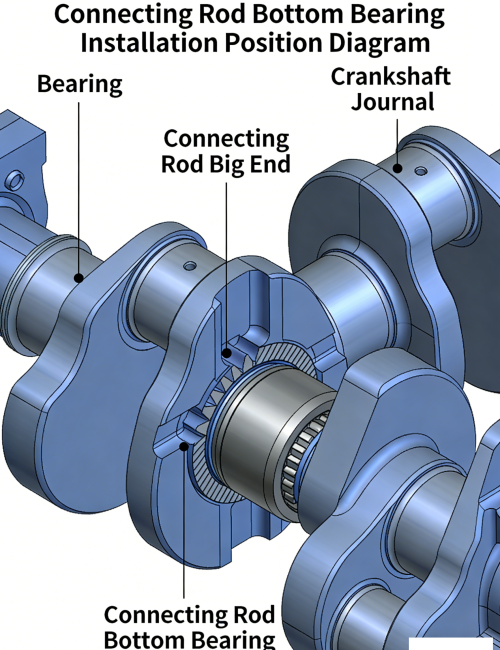
The connecting rod bottom bearing is a vital wear-resistant component in heavy-duty truck engines, serving as a key matching part between the connecting rod big end and crankshaft journal.
Its primary role is to support stable high-speed rotation of the crankshaft, effectively reducing friction between the crankshaft journal and connecting rod big end, and avoiding direct metal-to-metal contact during high-load operation. Meanwhile, it transfers friction-generated heat to engine lubricating oil in time, preventing local overheating that would damage bearing layers or deform the crankshaft.
It also maintains standard reasonable fit clearance, allowing lubricating oil to form a continuous and stable protective oil film. This structure greatly slows down surface wear and extends overall bearing service life. Stable working condition of connecting rod bottom bearing directly guarantees smooth engine power transmission and prolongs the whole engine service life. For complete engine maintenance guidance and protection schemes, visit our truck engine protection page.
Connecting rod bottom bearing structure diagram
2. Common Failures & Their Causes
2.1 Wear and Abrasion
Wear and abrasion are the most frequent faults of connecting rod bottom bearings, accounting for over 60% of rod bearing failures in global truck fleets. Main causes include insufficient lubrication supply and contaminated lubricating oil. When lubrication falls short, a complete oil film cannot form between the bearing surface and crankshaft journal, resulting in direct dry friction and accelerated abrasive wear. Dust, metal chips, and impurities inside dirty oil will further scratch bearing alloy layers sharply. In serious cases, bearing service life will be shortened by more than 40%. Long-time overload operation also raises continuous pressure on bearings, speeding up wear deterioration day by day.
Long-term heavy loading of the truck also increases the pressure on the bearing, exacerbating wear over time. To reduce wear, we recommend using our high-quality wear-resistant connecting rod bottom bearings.
2.2 Alloy Layer Peeling
Alloy layer peeling is a serious destructive failure. Without timely maintenance, it will cause irreversible crankshaft damage and sudden engine shutdown.
This failure happens when the surface-working alloy layer separates from the steel back base.
Main reasons include chronic overloading, non-standard installation clearance, and inferior raw bearing materials.
Once peeling occurs, hard metal contact appears immediately, causing deep scratches on crankshaft journals and even engine seizure.
Such faults require full engine overhaul and long parking downtime, greatly increasing fleet repair expenses.
2.3 Corrosion
Bearing corrosion frequently troubles fleets running in humid coastal areas, rainy regions, and cold wet seasons.
Moisture and acidic substances easily invade internal engine parts.
Aged engine oil will produce corrosive acidic components, gradually eroding bearing surfaces and reducing material hardness and wear resistance.
Moisture entering through aging seals also causes rust spots and surface corrosion damage.
Corroded bearings lose structural strength quickly, leading to premature invalidation and frequent unnecessary part replacement.
Moisture entering the engine through seals or other gaps also causes rust and surface damage to the bearing.
2.4 Excessive Clearance
Excessive fit clearance is an easily ignored hidden trouble.
It does not show obvious faults at first but causes continuous damage to the whole engine system.
It is mostly caused by long-term natural wear or improper assembly clearance adjustment deviating from factory standards.
Too large a clearance brings an obvious abnormal knocking noise during cold start and acceleration and causes unstable crankshaft operation.
This extra impact vibration further accelerates bearing wear and damages adjacent piston, connecting rod, and cylinder components.
3. Effective Maintenance Methods
3.1 Use High-Quality Lubricants
Always adopt engine oil strictly matching original truck manufacturer specifications.
Proper oil viscosity ensures excellent lubrication performance under both high temperatures and heavy loads.
Replace oil filters regularly to keep lubricating oil clean without metal debris and dust impurities.
Clean oil forms a stable continuous oil film between the bearing and crankshaft, greatly lowering friction loss and wear failure rate.
3.2 Avoid Long-Term Overloading
Continuous overload operation sharply raises impact load on connecting rod bottom bearings, accelerating alloy fatigue and layer peeling.
Follow official rated load standards strictly and keep reasonable cargo weight.
Standard load operation not only protects bearings but also reduces burden on piston, crankshaft, and whole power system, cutting annual fleet maintenance cost comprehensively.
3.3 Regular Inspection and Measurement
Add connecting rod bottom bearing detection into regular engine routine maintenance.
Use professional measuring tools to check fit clearance, surface wear, rust spots, and alloy peeling conditions.
Replace abnormal bearings immediately instead of delaying maintenance. Late replacement will expand damage to the crankshaft and cylinder block.
For emergency stock parts and fast replacement supply, contact our sales team anytime.
3.4 Professional Installation
All bearing assembly work should be finished by skilled professional technicians following official repair specifications.
Accurately control assembly fit clearance: both too large and too small a gap will cause early bearing damage.
Standard installation ensures uniform stress distribution, stable oil film formation, and normal long-service operation. Learn professional assembly specifications on our engine parts installation guide page.
4. Why Choose Our Connecting Rod Bottom Bearings
4.1 High-Quality Materials
Our connecting rod bottom bearings adopt premium composite alloy steel materials with outstanding wear resistance, high pressure resistance, and anti-corrosion performance.
All products go through precise CNC machining and a professional heat treatment process, which greatly improves structural stability.
They adapt perfectly to high-temperature, heavy-load, dusty, and humid harsh global working environments.
4.2 Strict Quality Control
We build complete quality inspection system from raw material incoming inspection to finished product delivery.
Every batch of bearings passes wear resistance, high load impact, and corrosion aging tests, fully meeting global OEM and international industry standards.
Stable quality ensures consistent performance for long-distance fleet operation. Check our detailed quality test reports on bearing quality certification page.
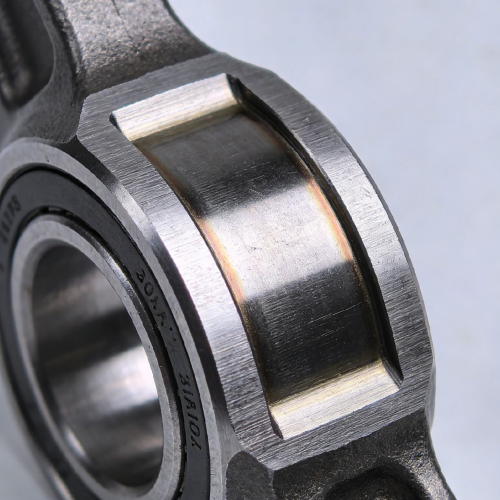
Close-up of connecting rod bottom bearing’s alloy layer and surface
4.3 Wide Compatibility
We cover almost all mainstream Chinese heavy-duty truck engine models. Customers can quickly match suitable bearings through our online model query tool.
Our catalog keeps updating synchronously with new engine technologies, helping fleet owners save plenty of part matching time.
We support efficient international logistics and short delivery cycles, minimizing fleet waiting downtime caused by part shortages.
Our professional technical team provides free maintenance consultation, fault analysis, and bearing selection suggestions.
Complete after-sales service guarantees long-term stable cooperative operation for global customers.
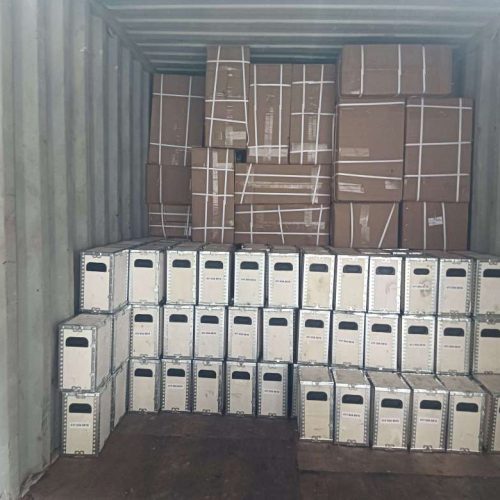
Packing and containerization diagram
5. Final Tips for Fleet Managers
The connecting rod bottom bearing is small in size but extremely important. Neglecting daily maintenance will easily induce major catastrophic engine faults and huge economic losses.
Scientific regular maintenance, qualified lubricant matching, and standard part replacement are core ways to reduce failure rate.
Choosing reliable high-precision connecting rod bottom bearings is a necessary long-term investment to guarantee stable operation and low cost of your global truck fleet.