Introduction
Heavy-duty trucks rely on stable power transmission and flexible gear shifting to complete long-haul transportation, engineering operations, and cargo delivery tasks. Every smooth gear change depends on the normal operation of the entire clutch control system. Among all clutch components, the clutch slave cylinder stands out as a core hydraulic execution part that most drivers and mechanics interact with daily.
In fact, many common clutch faults, such as soft pedal feeling, delayed gear shifting, and incomplete clutch separation, are not caused by the clutch disc or release bearing. Instead, most of these minor and tricky issues stem from abnormal operation or hidden damage to the clutch slave cylinder. For this reason, fully understanding how the truck clutch slave cylinder works is the first step to efficient clutch maintenance and fault troubleshooting.
Unlike rigid mechanical transmission structures, hydraulic clutch systems offer more flexible power transmission, lighter operating resistance, and stronger environmental adaptability. Correspondingly, hydraulic components such as the slave cylinder have stricter requirements for sealing, pressure resistance, and structural stability. Even tiny internal wear or oil leakage can gradually evolve into serious clutch failures that affect driving safety.
Furthermore, most fleet maintenance teams only focus on replacing damaged parts but ignore the working logic behind each component. Without clear working principle support, maintenance work often becomes blind replacement, which virtually increases fleet operating costs and vehicle downtime. To solve this problem, this guide elaborates on the truck clutch slave cylinder in full detail.
In this article, we will cover its basic definition, internal structural composition, complete hydraulic working process, core functional advantages, common failure symptoms, and professional daily maintenance methods. Meanwhile, we will combine practical truck maintenance experience to help readers form a systematic cognition. For more targeted truck component tutorials and troubleshooting skills, you can check our technical support center.
What Is a Truck Clutch Slave Cylinder
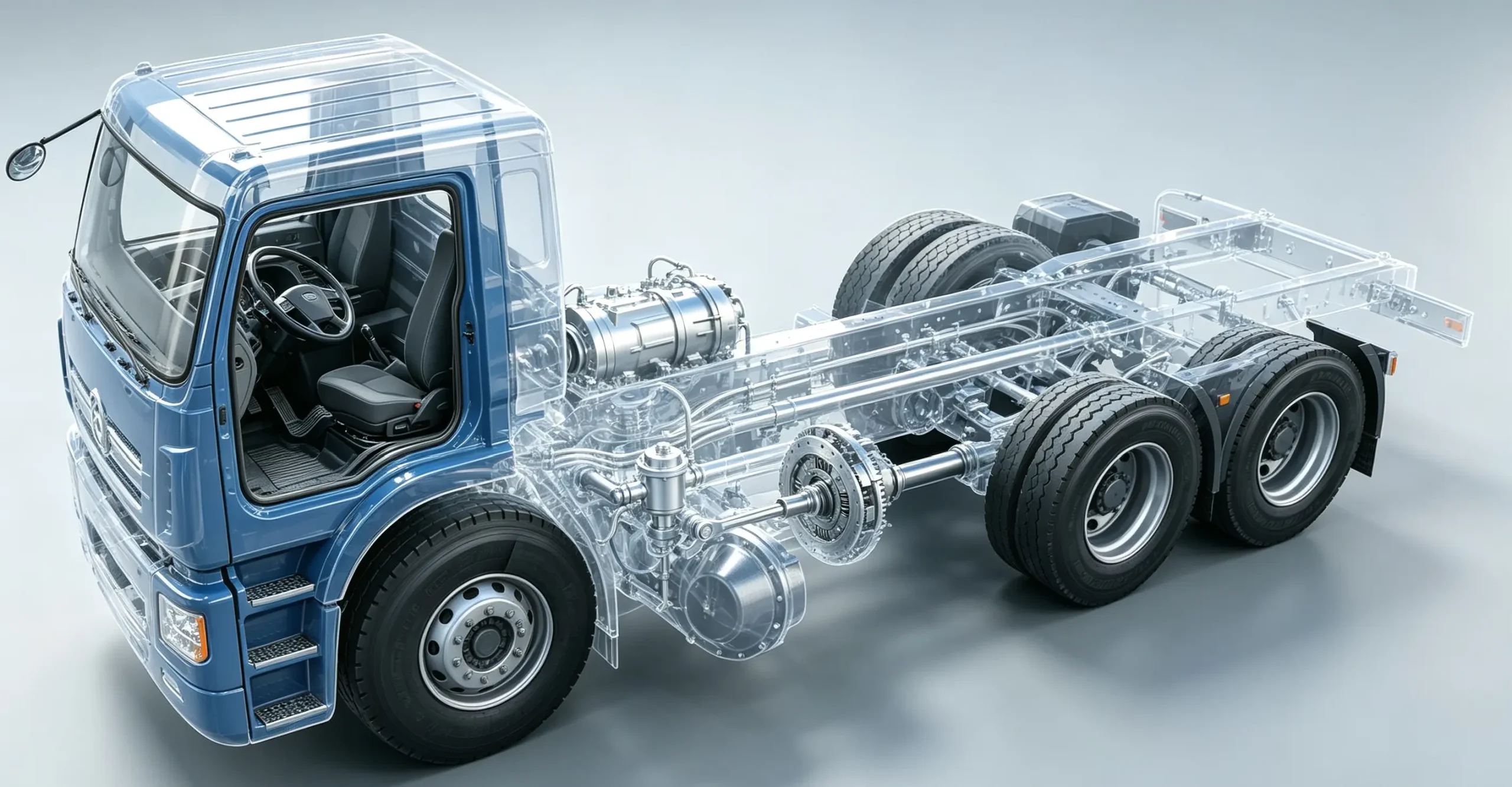
Simply put, the truck clutch slave cylinder is a hydraulic actuator installed on the transmission housing or clutch assembly. It matches with the clutch master cylinder to form a complete closed hydraulic loop. To put it simply, the master cylinder is responsible for receiving the driver’s pedal force, while the slave cylinder undertakes all subsequent execution actions.
Different from passenger car slave cylinders, heavy-duty truck clutch slave cylinders face far harsher working conditions. Long-term heavy load operation, frequent start-stop shifting, high engine compartment temperature, and complex road vibration all test the structural stability and durability of this component. Therefore, professional truck-specific slave cylinders adopt enhanced pressure-resistant structures and high-temperature sealing materials.
Its core working logic is very intuitive. It converts hydraulic pressure generated by the master cylinder into linear mechanical thrust. This thrust directly pushes the clutch release fork, drives the clutch release bearing to move, and finally realizes clutch separation and engagement. In the entire hydraulic clutch system, no component can replace its execution function.
It is worth mentioning that the clutch slave cylinder is a purely passive execution part. It cannot actively generate pressure or power. All its movements depend entirely on the pressure change of hydraulic oil in the pipeline. This design ensures the synchronization accuracy of clutch actions and effectively avoids operational errors caused by mechanical hysteresis.
For fleet owners and maintenance technicians, recognizing the positioning of the slave cylinder in the clutch system helps classify faults accurately. When clutch shifting is abnormal, you can quickly judge whether the fault lies in the hydraulic control system or the clutch friction assembly, so as to improve maintenance efficiency. If you need high-quality and model-matching clutch hydraulic parts, visit our truck system parts category.
Core Structure of Clutch Slave Cylinder (Detailed Breakdown)
Although the overall volume of the clutch slave cylinder is small, its internal structural design is very precise. Each independent component cooperates closely with each other. Any failure of a single part will directly cause the whole slave cylinder to work abnormally. In order to help readers understand the working process more clearly, we disassemble and explain each core structure in detail below.
1. High-Strength Cylinder Body
The cylinder body is the outer frame and fixed base of the entire slave cylinder. Most regular truck slave cylinders adopt cast aluminum alloy or high-strength cast iron materials. These materials have strong compression resistance, vibration resistance and high-temperature resistance, which can adapt to the high-temperature and high-vibration environment of the truck engine compartment for a long time.
In addition, the inner wall of the cylinder body is precisely polished. The smooth inner wall can reduce the friction resistance of the piston during reciprocating movement. At the same time, it can cooperate with the sealing ring to form a stable pressure cavity, preventing hydraulic pressure leakage caused by rough inner wall. For heavy-duty trucks that run continuously for a long time, the structural stability of the cylinder body is the basis of long-term stable operation of the slave cylinder.
2. Piston and Multi-Layer Sealing Rings
The piston is the core moving component inside the slave cylinder. It is also the key part for hydraulic pressure conversion. When hydraulic oil enters the cylinder cavity, the oil pressure acts on the surface of the piston to push it outward. After the pressure is released, the piston resets under the action of the return spring.
The sealing ring sleeved on the piston is an easily worn vulnerable part. Regular genuine slave cylinders are equipped with high-temperature resistant and oil-proof rubber sealing rings. These seals can effectively isolate hydraulic oil, lock internal pressure, and prevent hydraulic oil leakage and pressure loss. In contrast, inferior sealing rings are prone to aging, deformation and oil seepage after a short period of use.
In practical maintenance, most slave cylinder failures are caused by aging and damage of sealing rings rather than piston deformation. Therefore, regular inspection of sealing performance is an important part of daily clutch system maintenance.
3. Built-In Return Spring
The return spring is installed inside the cylinder cavity and always keeps a pre-compressed state. Its main function is to provide reset tension for the piston and push rod. When the driver releases the clutch pedal and the hydraulic pressure disappears, the spring rebounds instantly to pull the piston back to the initial position.
The elasticity of the return spring is strictly matched with the clutch stroke. Too weak spring elasticity will lead to slow piston reset and incomplete clutch engagement. Conversely, excessive elasticity will increase clutch pedal resistance and aggravate driver operation fatigue. High-quality slave cylinders are precisely calibrated in spring tension to balance operation feel and reset efficiency.
4. Adjustable Push Rod Assembly
The push rod is the force transmission bridge between the piston and the clutch release fork. One end of the push rod is connected to the internal piston, and the other end is closely attached to the release fork. It directly transmits the hydraulic thrust generated by the piston to the clutch execution structure.
Most truck slave cylinder push rods support fine stroke adjustment. This design can compensate the stroke error caused by long-term wear of clutch disc and release bearing. Through reasonable adjustment, technicians can ensure the clutch separation and engagement stroke reach the best state, avoiding gear grinding and shifting lag problems.
5. Oil Inlet Port and Air Bleeder Valve
The oil inlet port is connected with the clutch hydraulic pipeline to receive pressure oil transmitted by the master cylinder. It ensures the rapid input and output of hydraulic oil and forms a circulating pressure system with the external pipeline.
The air bleeder valve is a tiny but very practical auxiliary structure. Air will inevitably mix into the hydraulic pipeline during long-term vehicle operation or hydraulic oil replacement. The mixed air will be compressed, resulting in soft clutch pedal, insufficient pressure and incomplete separation. The bleeder valve can discharge the internal air completely, restoring the sensitivity of the hydraulic clutch system.
How Does a Clutch Slave Cylinder Work? (Complete Working Process)
After understanding the basic structure, we can further analyze the complete working cycle of the clutch slave cylinder. Its working process is a set of continuous and closed hydraulic cycle actions. For the convenience of understanding, we divide the whole process into three core stages: clutch separation, clutch engagement, and static standby. Each stage has independent mechanical characteristics and hydraulic changes.
1. Clutch Separation Stage (When Pressing Clutch Pedal)
When the driver needs to shift gears, he will step down the clutch pedal steadily. At this moment, the mechanical force of the pedal acts on the internal piston of the clutch master cylinder. The master cylinder piston compresses the internal hydraulic oil rapidly, generating stable hydraulic pressure in the closed pipeline.
Subsequently, the high-pressure hydraulic oil flows along the pipeline to the inner cavity of the clutch slave cylinder. With the continuous input of hydraulic oil, the pressure inside the slave cylinder cavity rises rapidly. When the oil pressure is greater than the tension of the internal return spring, it will push the piston to move outward against the spring resistance.
As the piston moves outward, it drives the connected push rod to extend synchronously. The push rod pushes the clutch release fork to swing around the fixed fulcrum. At this time, the release fork pushes the release bearing to move forward, compressing the diaphragm spring of the clutch pressure plate.
Under the pressure of the diaphragm spring, the clutch disc is separated from the engine flywheel. The power connection between the engine and the gearbox is completely cut off. At this stage, the clutch is in a fully separated state, and the driver can complete upshifting or downshifting smoothly without gear collision and grinding.
2. Clutch Engagement Stage (When Releasing Clutch Pedal)
After the gear shifting action is completed, the driver slowly releases the clutch pedal. At this time, the pressure on the master cylinder piston disappears immediately, and the internal hydraulic pressure of the master cylinder drops rapidly.
A pressure difference appears in the entire hydraulic pipeline. The high-pressure oil in the slave cylinder flows back to the master cylinder. The internal pressure of the slave cylinder continues to decrease until the pressure is completely balanced with the atmospheric pressure.
Without the support of hydraulic pressure, the compressed return spring rebounds quickly. The spring tension pulls the piston and push rod back to the original reset position. The clutch release fork loses thrust and returns to the initial state under the reaction force of the diaphragm spring.
Finally, the diaphragm spring rebounds completely and presses the clutch disc tightly on the engine flywheel again. The engine power is re-transmitted to the gearbox, and the vehicle returns to normal power driving state. The whole engagement process is smooth and continuous, avoiding power interruption and jitter.
3. Static Standby State (Normal Driving Condition)
When the truck is driving normally without gear shifting operation, the clutch pedal is in a fully released state. At this time, the hydraulic pressure inside the slave cylinder remains balanced and stable, and all internal components are kept in the best reset state.
In this standby state, the clutch is fully engaged, and the power transmission is continuous and stable. The slave cylinder does not bear alternating pressure and mechanical impact, which effectively reduces component wear. This is also the reason why reasonable clutch operation habits can greatly extend the service life of the slave cylinder.
Key Functions of Truck Clutch Slave Cylinder in Heavy-Duty Trucks
In heavy-duty truck operation scenarios, the clutch slave cylinder undertakes multiple core functional tasks. It is not only a simple hydraulic execution part, but also an important guarantee for driving comfort, shifting stability and transmission system safety. The following are its four irreplaceable core functions.
1. Hydraulic Pressure Amplification and Execution
The manual pedaling force of the driver is limited. It is impossible to directly push the heavy-duty truck clutch release mechanism through pure mechanical force. The slave cylinder perfectly solves this problem through hydraulic pressure amplification principle.
It converts small manual pedal force into strong hydraulic thrust, which easily pushes the clutch release fork and bearing assembly. This greatly reduces the driver’s operating intensity, especially suitable for long-distance continuous driving and frequent shifting operation of freight fleets.
2. Precise Clutch Stroke Control
Compared with the traditional mechanical pull rod clutch structure, the hydraulic transmission mode of the slave cylinder has higher precision and stability. The hydraulic oil has uniform and stable pressure transmission, which will not produce mechanical clearance and hysteresis.
Therefore, the clutch separation stroke can be accurately controlled. It can effectively avoid incomplete separation caused by insufficient stroke or excessive separation caused by excessive stroke, so as to prevent gear grinding, shifting difficulty and clutch slipping faults.
3. Vibration Absorption and Operation Noise Reduction
During truck driving, engine vibration and road bump vibration will be transmitted to the clutch system. The traditional mechanical structure will directly transmit the vibration to the pedal, resulting in pedal jitter and operation noise.
The hydraulic oil inside the slave cylinder can absorb most of the tiny vibration and mechanical impact. It buffers rigid structural friction, makes clutch operation smoother and quieter, and significantly improves driving comfort.
4. Automatic Wear Compensation Function
With the increase of vehicle mileage, the clutch disc and release bearing will produce normal wear, which will lead to slow change of clutch stroke. The hydraulic system of the slave cylinder has a certain automatic compensation ability.
It can adapt to minor component wear through tiny hydraulic pressure change and piston stroke adjustment, maintaining stable clutch operation state for a long time and reducing the frequency of manual stroke adjustment.
Common Early Warning Signs of Faulty Clutch Slave Cylinder
Most slave cylinder failures occur gradually instead of sudden breakdowns. In the early stage of failure, the vehicle will have obvious warning symptoms. If detected and repaired in time, it can avoid sudden clutch failure and expensive roadside maintenance. The following are the most common abnormal manifestations in actual truck operation.
1. Soft and Sinking Clutch Pedal
This is the most typical early fault symptom. When stepping on the clutch pedal, the pedal feels empty and soft, and the pressure feedback is insufficient. In serious cases, the pedal will sink to the bottom slowly.
This fault is mainly caused by internal air mixing or slight oil leakage of the slave cylinder. The air in the cavity is compressed, resulting in insufficient hydraulic pressure build-up, which directly affects clutch separation efficiency.
2. Incomplete Clutch Separation
When the clutch pedal is fully pressed, the clutch still cannot be completely separated. At this time, gear shifting will be difficult, accompanied by obvious gear grinding noise. This phenomenon is mostly caused by aging sealing rings, insufficient piston stroke or fatigue failure of the return spring.
3. Slow Clutch Pedal Rebound
After releasing the clutch pedal, the pedal cannot return to the original position quickly and smoothly, and the rebound speed is slow and sluggish. This problem is usually caused by unsmooth piston movement, aging spring performance or internal oil dirt blockage.
4. Visible Hydraulic Oil Leakage
Oil leakage is an intuitive external fault. You can observe obvious oil stains or dripping hydraulic oil near the transmission housing and slave cylinder installation position. Long-term oil leakage will lead to insufficient hydraulic oil volume, completely lost pressure, and finally complete clutch failure.
Professional Maintenance & Replacement Guidelines
The service life of the clutch slave cylinder is closely related to daily driving habits and maintenance frequency. Scientific maintenance can effectively delay component aging and reduce fleet failure rates. Below are practical maintenance and replacement suggestions summarized according to heavy-duty truck operation standards.
1. Regular Hydraulic Oil Inspection and Replacement
Check the clutch hydraulic oil level and oil quality regularly every month. If the oil color turns black, turbid or contains impurities, replace the hydraulic oil in time. Deteriorated hydraulic oil will corrode the internal sealing structure of the slave cylinder and accelerate wear.
2. Timely Air Bleeding Treatment
After replacing hydraulic oil or disassembling the clutch hydraulic pipeline, be sure to exhaust the internal air completely. Residual air is the main cause of soft pedal and unstable clutch operation. Regular air bleeding can keep the hydraulic system sensitive and stable.
3. Avoid Long-Term Half-Clutch Operation
Long-term half-clutch state will keep the slave cylinder in continuous pressure operation. The piston and sealing ring bear alternating load for a long time, which easily causes fatigue deformation and oil leakage. Standardized driving habits are the best way to protect the slave cylinder.
4. Choose High-Quality Matching Parts for Replacement
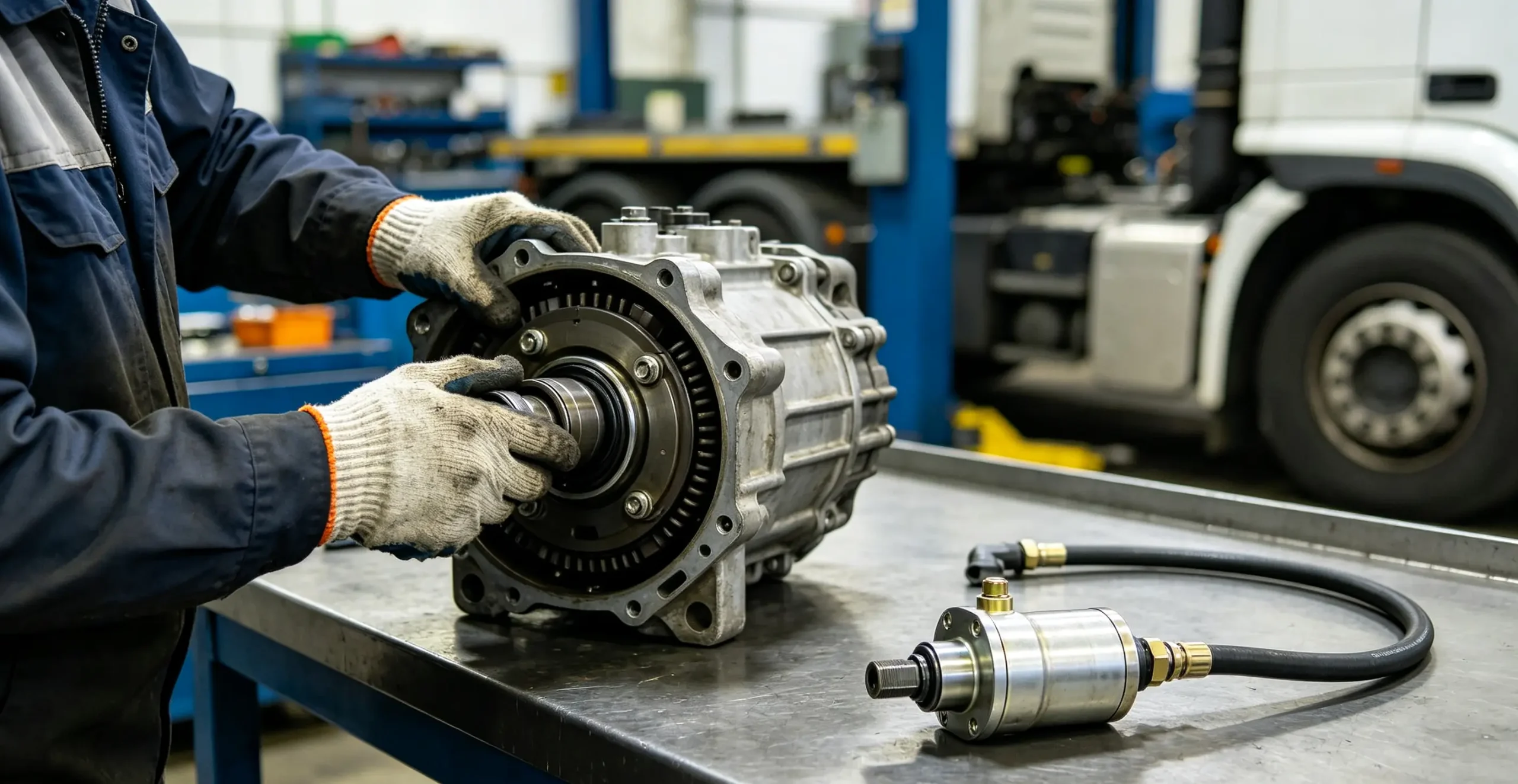
Once the slave cylinder is seriously worn or leaked, it cannot be repaired and can only be replaced as a whole. It is crucial to select genuine or high-quality brand parts. Inferior slave cylinders have unqualified pressure resistance and sealing performance, which are easy to fail repeatedly and increase maintenance costs. You can find model-compliant truck clutch parts for Sinotruk, Shacman, Foton and FAW on our truck brand parts page.
Why Genuine Truck Clutch Slave Cylinders Are More Reliable
Many fleet owners choose low-cost aftermarket parts to save short-term maintenance costs. However, in actual operation, inferior slave cylinders often bring more hidden dangers and higher long-term costs. Genuine supporting parts have irreplaceable advantages in material, process and calibration.
First of all, genuine slave cylinders adopt high-precision cylinder body polishing technology and high-temperature resistant sealing materials, which can adapt to long-term high-temperature and high-vibration working conditions. Secondly, the spring elasticity and piston stroke of genuine parts are strictly calibrated according to truck parameters, with zero error in matching degree.
In addition, genuine parts have stable pressure resistance, no oil seepage, no air leakage, and long service life. They can effectively reduce the frequency of repeated disassembly and replacement, and greatly reduce vehicle downtime. For fleet operation, stable and durable genuine parts are the most cost-effective choice.
Conclusion
To sum up, the clutch slave cylinder is a small but indispensable core component in the heavy-duty truck hydraulic clutch system. It undertakes the important task of hydraulic pressure conversion and clutch action execution, and directly determines the smoothness of gear shifting and the stability of power transmission.
Most daily clutch small faults are closely related to the working state of the slave cylinder. By mastering its internal structure, complete working principle, early failure symptoms and scientific maintenance methods, maintenance technicians can quickly locate faults and solve problems efficiently. At the same time, standardized driving and maintenance habits can effectively extend the service life of the slave cylinder and reduce fleet operating costs.
If you are looking for high-quality, original matching truck clutch slave cylinders and complete hydraulic system accessories, our professional team can provide you with accurate model matching, bulk quotation and global shipping services. Feel free to contact us for technical support and product consultation.
You can also browse our customer cooperation cases to learn about our long-term stable supply strength for global truck parts buyers, and visit our about us page to know more about our factory scale and service advantages.


