King Pin Problems in Trucks: Common Symptoms and Fix Solutions

In the robust architecture of a heavy-duty truck, the steering system is paramount for control, safety, and operational precision. At the core of this system, particularly in solid front axle configurations, lies the king pin—a seemingly simple component that bears immense loads and facilitates the crucial pivot action for steering. When king pin components begin to wear or fail, the consequences can range from subtle handling issues to catastrophic steering loss, directly impacting vehicle safety and operational uptime. For fleet managers, maintenance professionals, and owner-operators, recognizing the early warning signs and understanding effective repair strategies for king pin problems is not just good practice; it's a critical aspect of responsible fleet management.

As a specialized provider of premium heavy-duty truck components, we understand that the king pin assembly is subjected to constant stress from vertical loads, braking forces, and steering maneuvers. Its integrity is vital for maintaining proper wheel alignment, tire wear, and overall steering responsiveness. This comprehensive guide delves into the common symptoms of king pin problems in commercial vehicles, offering expert diagnostic insights and practical solutions. Our aim is to equip you with the technical knowledge to identify issues proactively and make informed decisions, ensuring that your fleet—whether it comprises robust Sinotruk (HOWO) models, versatile Shacman trucks, or reliable FAW (Jiefang), Foton, and Dongfeng vehicles—maintains optimal steering performance and safety. For a broader look at the steering and suspension systems we support, we encourage you to visit our .

Understanding the King Pin Assembly: A Foundation of Steering

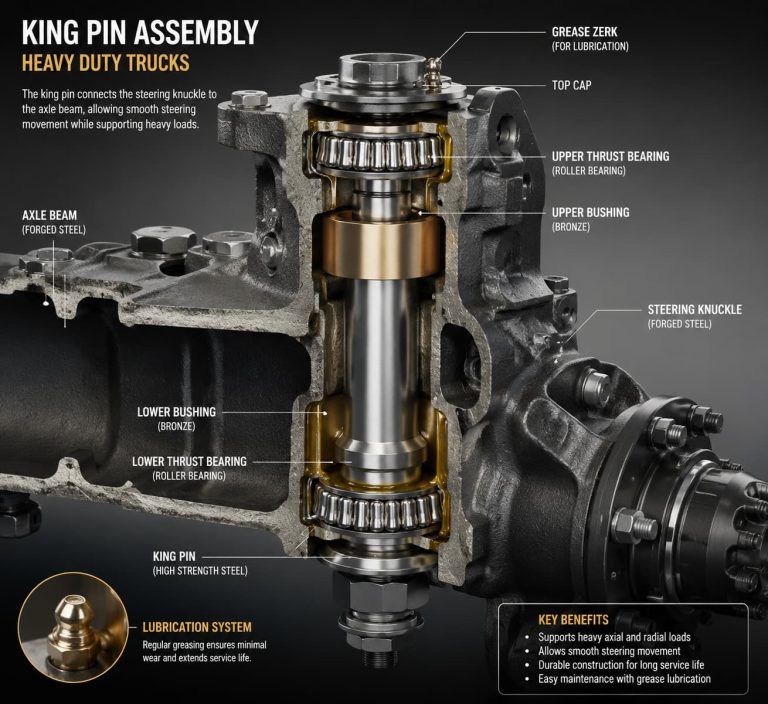
The king pin is a central pivot around which the steering knuckle (which holds the wheel hub) rotates, allowing the wheels to turn. It connects the steering knuckle to the axle beam. The entire assembly typically includes the king pin itself, king pin bearings (thrust bearings and bushings), seals, and locking pins or bolts. This robust design ensures that the heavy weight of the truck is supported while allowing for smooth steering articulation.

The Role of Bearings and Bushings

Within the king pin assembly, the bearings and bushings are critical for smooth operation and load distribution. Thrust bearings (often roller bearings) are located at the top or bottom of the knuckle to support the vertical load of the truck, allowing the knuckle to pivot with minimal friction. Bushings (typically bronze or composite) are pressed into the knuckle and provide the radial support for the king pin, guiding its rotation. Proper lubrication and maintenance of these components are paramount for preventing premature wear and ensuring steering ease. For a comprehensive look at the brands we support, visit our .

Design Variations: Tapered vs. Straight King Pins

While the fundamental principle remains, king pin designs can vary. Older or lighter-duty applications might use straight king pins, while heavy-duty trucks predominantly feature tapered king pins. Tapered designs offer a more secure fit and better load distribution, reducing the likelihood of movement within the axle beam. The precision fit of these components is crucial; even microscopic clearances can lead to accelerated wear under the immense forces at play in commercial vehicle operation.

Understanding-the-King-Pin-Assembly- A-Foundation-of-Steering

Common Symptoms of King Pin Problems

Recognizing the early signs of king pin wear is crucial for preventing more severe damage, ensuring vehicle safety, and avoiding costly repairs. These symptoms often manifest gradually, but can quickly escalate if ignored.

Steering Play and Wander: The Loose Feeling

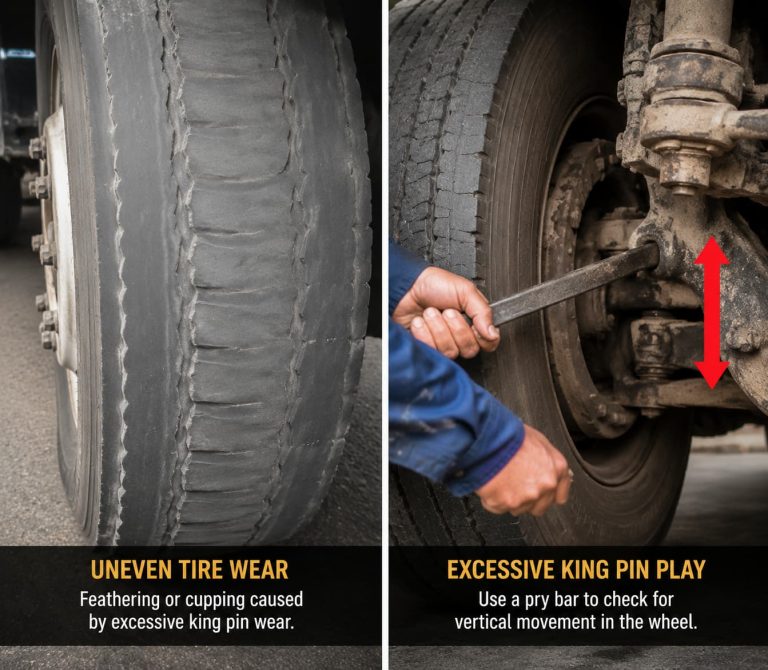
One of the most noticeable symptoms of worn king pins is excessive play or looseness in the steering. Drivers may experience a feeling of "wander" or "float" in the steering, requiring constant small corrections to keep the truck tracking straight. This play is a direct result of increased clearance between the king pin and its bushings, allowing the steering knuckle to move independently of the axle beam. To accurately assess this, a technician can lift the front axle and attempt to rock the wheel assembly vertically (top to bottom). Any noticeable movement indicates excessive wear in the king pin bushings or bearings. Our offers detailed guides on steering system diagnostics.

Uneven Tire Wear: A Costly Consequence

Worn king pins directly impact wheel alignment, leading to premature and uneven tire wear. Common patterns include feathering, cupping, or irregular wear across the tire tread. This is because the loose king pin allows the wheel to move out of its proper alignment, causing it to scrub against the road surface. Uneven tire wear not only shortens tire lifespan—a significant operational cost for fleets—but also compromises handling and fuel efficiency. Early detection of king pin wear can save thousands in tire replacement costs alone.

Hard Steering and Shimmy: Friction and Instability

As king pin components wear, they can also cause the steering to become stiff or difficult, especially at low speeds. This is often due to corrosion, lack of lubrication, or seized bearings within the assembly. Conversely, severe wear can lead to a "death wobble" or steering shimmy, where the front wheels oscillate violently, particularly at certain speeds or over rough terrain. This dangerous condition is a clear indicator of critical wear and demands immediate attention. Our highlight how proper king pin maintenance has resolved such issues for our clients.

Braking Instability: A Safety Hazard

Worn king pins can also compromise braking performance. Excessive play in the steering knuckle can lead to the wheels toeing in or out during braking, causing the truck to pull to one side. This not only increases stopping distances but also creates an unpredictable and dangerous braking scenario, especially for heavy loads. The integrity of the king pin assembly is therefore directly linked to the overall safety of the vehicle's braking system.

Common-Symptoms-of-King-Pin-Problems

Diagnosing King Pin Problems: A Systematic Approach

Accurate diagnosis of king pin issues requires a systematic approach, combining visual inspection with precise measurement techniques. Misdiagnosis can lead to unnecessary component replacement and continued operational problems.

The "Rocking Test": Initial Assessment

As mentioned, the primary diagnostic test involves lifting the front axle off the ground. With the wheels free, a technician uses a pry bar under the tire and attempts to lift the wheel assembly vertically. Any vertical movement (up and down) indicates wear in the king pin bushings or thrust bearings. Similarly, rocking the wheel side-to-side (horizontally) can reveal wear in tie rod ends or wheel bearings, which should not be confused with king pin play. This test provides a quick, initial assessment of the assembly's integrity.

Measuring King Pin Play: Precision is Key

For a more precise diagnosis, specialized tools are used to measure king pin play. This often involves a dial indicator mounted to the axle beam, with its plunger resting against the steering knuckle. The wheel is then rocked vertically, and the dial indicator measures the exact amount of movement. Manufacturers specify maximum allowable play; exceeding this limit necessitates repair. This precise measurement helps differentiate between minor wear and critical failure points, guiding the repair strategy. If you need expert advice on diagnostic tools, feel free to .

Visual Inspection for Damage and Lubrication

Beyond measuring play, a thorough visual inspection is critical. Technicians should look for signs of corrosion, damaged seals, and proper lubrication. Grease fittings should be checked for functionality, and the presence of fresh grease indicates regular maintenance. Dry or rusty king pin components are a clear sign of neglect and accelerated wear. Any visible damage to the axle beam or steering knuckle itself also warrants further investigation.

Fix Solutions: Repair and Replacement Strategies

Once king pin problems are diagnosed, effective repair or replacement is essential. The choice between repair and full replacement often depends on the extent of the wear and the overall condition of the surrounding components.

King Pin Kit Replacement: The Standard Repair

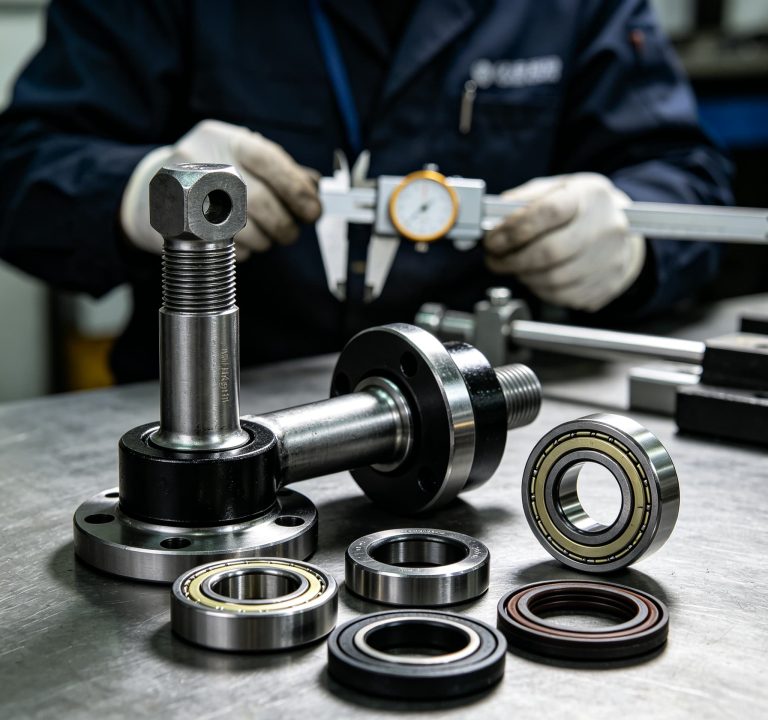
The most common fix for worn king pins is the installation of a complete king pin kit. These kits typically include a new king pin, new bushings, new thrust bearings, seals, and locking pins. The repair process involves removing the old king pin, pressing out the old bushings, cleaning the knuckle and axle beam bores, pressing in new bushings, reaming them to the correct size, and then installing the new king pin and bearings. Precision reaming of the bushings is crucial to achieve the correct fit and prevent premature wear. Our selection of king pin kits for Sinotruk and Shacman are designed for precise fitment and long-term durability.

Axle Beam Inspection and Repair

In cases of severe king pin wear, the bores in the axle beam itself can become ovaled or damaged. If this occurs, simply replacing the king pin kit will not provide a lasting solution. The axle beam may need to be repaired by boring out the damaged sections and installing oversized sleeves, or in extreme cases, the entire axle beam may require replacement. A thorough inspection of the axle beam is therefore a critical step in any king pin repair. For more insights into our quality assurance processes, visit our .

The Importance of Proper Lubrication

Regular and proper lubrication is the single most effective preventative measure against king pin wear. King pins should be greased according to the manufacturer's recommendations, typically during routine maintenance intervals. Using the correct type of grease (usually a heavy-duty, high-pressure grease) and ensuring that grease flows through all fittings until fresh grease purges from the seals is vital. This flushes out contaminants and ensures all bearing surfaces are protected.

Adapting International Standards for Chinese Truck Excellence

Chinese heavy-duty truck manufacturers, including Sinotruk (HOWO), Shacman, FAW, Foton, and Dongfeng, have significantly advanced their front axle and steering system designs. These vehicles are engineered to handle the most challenging terrains and heaviest loads, often incorporating robust king pin assemblies that meet or exceed international performance standards.

Engineering for Diverse Global Climates and Loads

A king pin assembly destined for a FAW truck operating in the harsh conditions of mining operations requires different material specifications and sealing than one for a Dongfeng truck used in long-haul logistics. As a specialized supplier, we ensure that our components are engineered to handle these extremes. This includes using high-strength alloy steels for the king pins, durable bronze or composite bushings, and robust seals that prevent ingress of dirt, water, and corrosive elements. We understand the specific axle designs and load requirements used by these Chinese brands, ensuring a precise fit and optimal performance for our customers.

The Bridge Between Global Tech and Local Performance

As a specialized supplier, our expertise lies in providing king pin kits and components that are precisely engineered for these Chinese brands. We understand that a king pin for a Shacman dump truck needs to withstand extreme shock loads, while a unit for a Foton cargo truck requires exceptional precision for highway stability. We source components that adhere to rigorous quality standards, ensuring they provide the reliable steering performance and durability that international fleet operators expect. We don't just sell parts; we provide verified technical solutions that bridge global technology with local operational demands. For a comprehensive look at the brands we support, visit our .

Quality Matters: Sourcing Reliable King Pin Components

In the commercial vehicle industry, the cost of king pin failure extends far beyond the price of the part. It encompasses significant downtime, potential towing expenses, accelerated tire wear, and critically, compromised vehicle safety. Therefore, sourcing high-quality king pin components is an investment in fleet reliability and safety.

Every king pin kit and component we supply undergoes rigorous quality control testing to ensure it meets our exacting standards for performance and durability. We focus on providing parts that offer a perfect fit, reliable operation, and a long service life, specifically tailored for the demanding applications of Sinotruk, Shacman, FAW, Foton, and Dongfeng trucks. Our efficient logistics network ensures that you receive the parts you need, when you need them, wherever your fleet operates globally. We pride ourselves on being more than just a parts supplier; we are a strategic partner committed to the safety and success of your logistics operations. For any inquiries or technical assistance, please .

Quality-Matters-Sourcing-Reliable-King-Pin-Components

Frequently Asked Questions (FAQ) about Truck King Pin Problems

This section addresses common technical queries regarding heavy-duty truck king pin assemblies, their failure modes, diagnosis, and maintenance, based on our extensive experience in the global truck parts market.

What is a king pin and why is it so important in a truck?

The king pin is a critical pivot point in the front steering axle of heavy-duty trucks. It connects the steering knuckle (which holds the wheel) to the axle beam, allowing the wheels to turn left and right. Its importance lies in bearing the entire vertical load of the truck's front end while facilitating smooth and precise steering. A healthy king pin assembly is essential for stable handling, even tire wear, and overall vehicle safety.

How often should king pins be inspected and lubricated?

King pins should be inspected during every routine maintenance check, typically every 10,000 to 20,000 miles or as per the truck manufacturer's recommendations. Lubrication is even more frequent, usually at every oil change or chassis lubrication interval. Regular greasing with the correct heavy-duty, high-pressure grease is crucial to flush out contaminants and ensure the bearings and bushings remain protected and operate smoothly.

What are the most common symptoms of worn king pins?

The most common symptoms include excessive play or looseness in the steering (requiring constant corrections), uneven and premature tire wear (feathering, cupping), hard steering, and in severe cases, a dangerous steering shimmy or "death wobble" at certain speeds. Braking instability, where the truck pulls to one side, can also indicate king pin wear.

Can I just replace the king pin, or do I need a full kit?

While theoretically possible to replace only the pin, it is highly recommended to replace the entire king pin kit. The kit typically includes the king pin, new bushings, thrust bearings, seals, and locking pins. The bushings and bearings are wear items that work in conjunction with the pin. Replacing all components ensures a proper, tight fit and restores the assembly to optimal condition, preventing premature failure of the new pin due to worn mating surfaces.

What causes king pins to wear out prematurely?

Premature wear is primarily caused by a lack of proper lubrication, ingress of dirt and moisture due to damaged seals, and prolonged operation with excessive play. Overloading the front axle, frequent heavy braking, and driving on rough roads can also accelerate wear. Using incorrect grease types or insufficient greasing intervals are major contributors to early failure.

Why is choosing a high-quality king pin kit important for my Chinese truck fleet?

For Chinese truck fleets (like HOWO, Shacman, FAW, Foton, Dongfeng), choosing high-quality king pin kits from a reputable supplier is critical. These trucks often operate in demanding conditions, and substandard components can lead to rapid wear, compromised safety, and significant downtime. A high-quality kit ensures precise fitment, uses durable materials (e.g., high-strength alloy steel, robust bronze bushings), and provides reliable performance, ultimately reducing maintenance costs and enhancing vehicle safety and operational efficiency. Our expertise lies in sourcing and supplying such high-quality, perfectly compatible components.
LEAVE A MESSAGE FOR ANY QUESTIONS