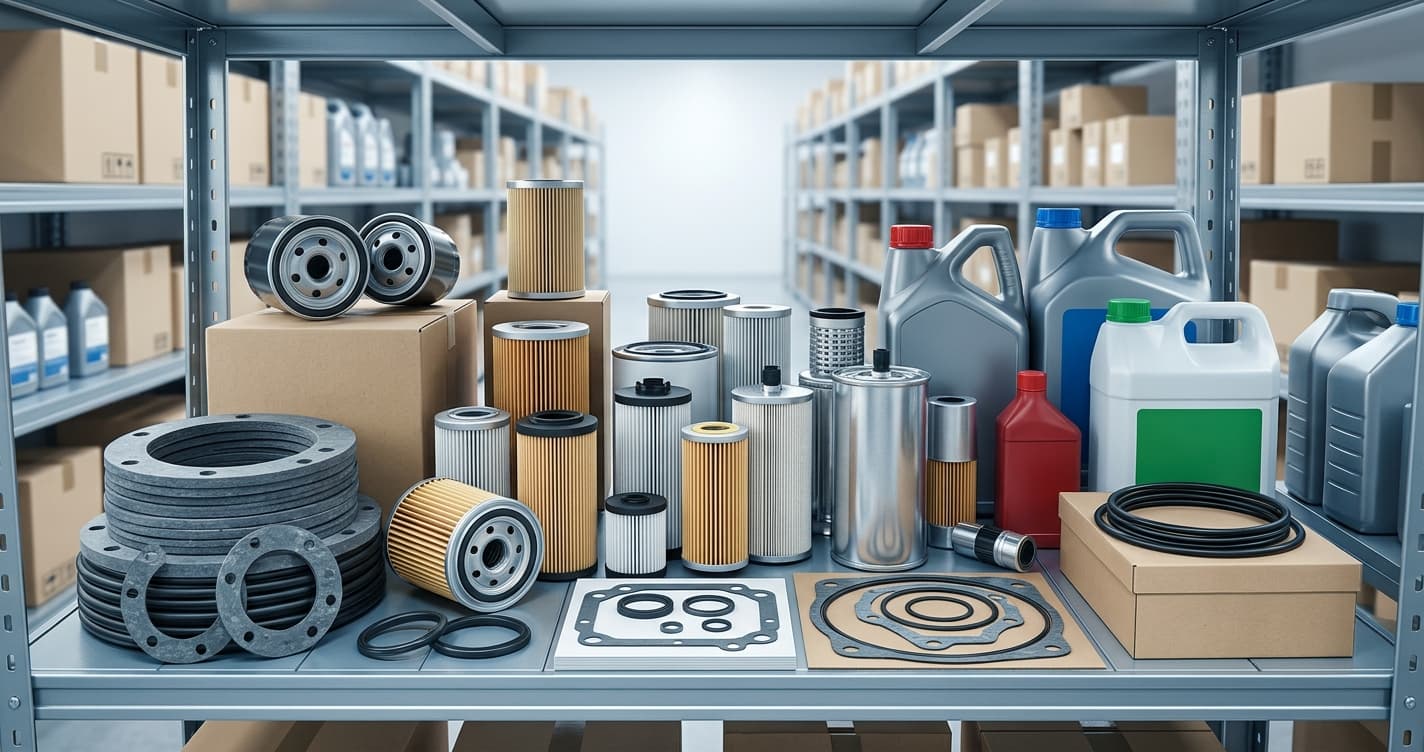
Here’s an analogy every parts dealer instinctively understands: engine parts are like a truck’s vital organs — some wear out faster than others, and knowing which ones keep the “heart” beating is the difference between a thriving wholesale business and a warehouse full of dust collectors gathering cobwebs in the corner.
If you’ve ever stared at a catalog of 3,000+ SKUs and wondered, “Which of these will actually fly off my shelves?” — you’re asking the single most profitable question in the truck engine spare parts wholesale business. And today, we’re answering it with data, real-world patterns, and a healthy dose of hard-won experience.
Let’s crack open the hood and find out which parts deserve prime real estate in your warehouse — and which ones are just taking up expensive shelf space.
Why Understanding Wholesale Engine Parts Demand Matters for Your Business
The Economics of Fast-Moving Engine Components
Inventory turnover isn’t just an accounting term — it’s the heartbeat of your cash flow. Every pallet of bulk automotive components sitting unsold in your warehouse is money that could be working for you. The faster parts move, the faster your capital regenerates.
Think of it this way: a filter that sells 500 units per month at a modest margin will outperform a crankshaft that sells 5 units per year at a fat margin — simply because your money keeps circulating. Dead inventory is the silent killer of wholesale businesses.
Here’s a real-world example that drives this home: a distributor in East Africa was struggling with slow-moving stock until they analyzed their sales data and restructured their orders around the top 10 engine replacement parts. Within 18 months, they doubled their revenue — not by selling more expensive items, but by stocking what the market actually consumed. That’s the power of understanding wholesale engine parts demand.
Market Drivers Behind High Volume Engine Parts Supply
Several macro trends are fueling the explosive growth in high volume engine parts supply for Chinese trucks globally. First, Chinese truck brands — Sinotruk HOWO, FAW, Dongfeng, Shacman, Foton, and JAC — have expanded aggressively into Africa, Southeast Asia, the Middle East, Central Asia, and South America. Where the trucks go, the parts demand follows.
Second, emerging markets are running aging fleets. A HOWO truck bought in 2015 is now deep into its maintenance-intensive years, and its engine is hungry for replacement components. Third, demand isn’t flat — it’s seasonal and regional. Cooling system parts spike before summer in tropical markets; overhaul kits surge during fleet downtime seasons.
Understanding these drivers isn’t optional — it’s how you stay ahead of the curve. Want to learn more about how we track these trends? Visit our company introduction page to see how 15 years of industry expertise shapes our approach.
Top-Selling Engine Spare Parts in Wholesale — Ranked by Demand
Data Table — Best-Selling Engine Parts by Category
We’ve compiled this ranking based on actual order patterns across multiple markets. If you’re building or refining your truck engine spare parts wholesale inventory, this table is your roadmap:
| Rank | Part Category | Specific Items | Why They Sell Fast | Typical Replacement Interval |
|---|---|---|---|---|
| 1 | Filters | Oil filter, fuel filter, air filter | Routine maintenance; consumed in massive volume | Every 10,000–20,000 km |
| 2 | Pistons & Rings | Piston kits, piston rings, cylinder liners | Heavy wear under load; the marathon runners of the engine | 200,000–400,000 km |
| 3 | Gaskets & Seals | Head gasket, oil seals, valve stem seals | Frequent leak repairs; low cost, high volume | Varies (leak-dependent) |
| 4 | Bearings | Main bearings, con-rod bearings, camshaft bearings | Critical in every engine rebuild | During overhaul |
| 5 | Fuel System Parts | Injectors, fuel pumps, injection nozzles | High-precision wear items; fuel quality issues accelerate failure | 100,000–300,000 km |
| 6 | Timing Components | Timing gears, timing chains, tensioners | Preventive replacement during overhaul | 200,000–500,000 km |
| 7 | Turbocharger Parts | Turbo assemblies, cartridges, wastegate actuators | Common failure on turbocharged diesel engines | 150,000–300,000 km |
| 8 | Water Pump & Thermostat | Complete water pump, thermostat housing | Overheating prevention; tropical climate demand surges | 100,000–200,000 km |
| 9 | Valve Train Components | Intake/exhaust valves, valve guides, rocker arms | Wear from high-mileage operation | During head rebuild |
| 10 | Crankshaft & Camshaft | Crankshafts, camshafts, gear sets | Major overhaul items; less frequent but high per-unit value | 500,000+ km |
Notice the pattern? The top of the list is dominated by consumables — parts that trucks eat through like snacks on a long haul. The bottom features heavy-hitter overhaul components that sell less frequently but carry significant order value. A smart wholesale strategy stocks both, but weights inventory toward the top.
Breakdown by Chinese Truck Brand Popularity
Not all markets are created equal. The engine replacement parts market shifts depending on which brands dominate your region’s roads. Here’s what we see in actual ordering patterns:
| Brand | Most Demanded Engine Parts | Engine Model Reference |
|---|---|---|
| Sinotruk HOWO | Piston kits, fuel injectors, oil filters | WD615 / D12 |
| FAW | Cylinder liners, bearings, water pumps | CA6DL / CA6DM |
| Dongfeng | Head gaskets, turbochargers, fuel pumps | ISLe / DCI11 |
| Shacman | Piston rings, oil seals, timing gears | Weichai WP10 / WP12 |
| Foton | Filters, injectors, thermostat kits | ISF / ISG |
| JAC | Valve components, bearings, water pumps | HFC4DA1 / Navieco |
If HOWO trucks rule your market, piston kits and injectors for the WD615 engine should be your bread and butter. If Dongfeng dominates, you’d better have turbochargers and fuel pumps ready to ship. Matching your stock to your market’s fleet DNA is wholesale 101.
Explore our full range of supported brands on our product brands page — you might discover demand for models you haven’t considered yet.
What Makes These Parts “Best Sellers” — The 5 Key Factors
1. Replacement Frequency (Consumables Win)
Filters, seals, and gaskets are the undisputed champions of popular motor spares distribution. Why? Because they’re consumables — parts that every truck needs replaced on a predictable schedule. An oil filter doesn’t care whether the truck is new or old; it needs changing every 10,000–20,000 km, period.
This predictability is gold for wholesalers. Consumables generate recurring revenue, smooth out demand fluctuations, and keep your customers coming back like clockwork.
2. Climate & Operating Conditions
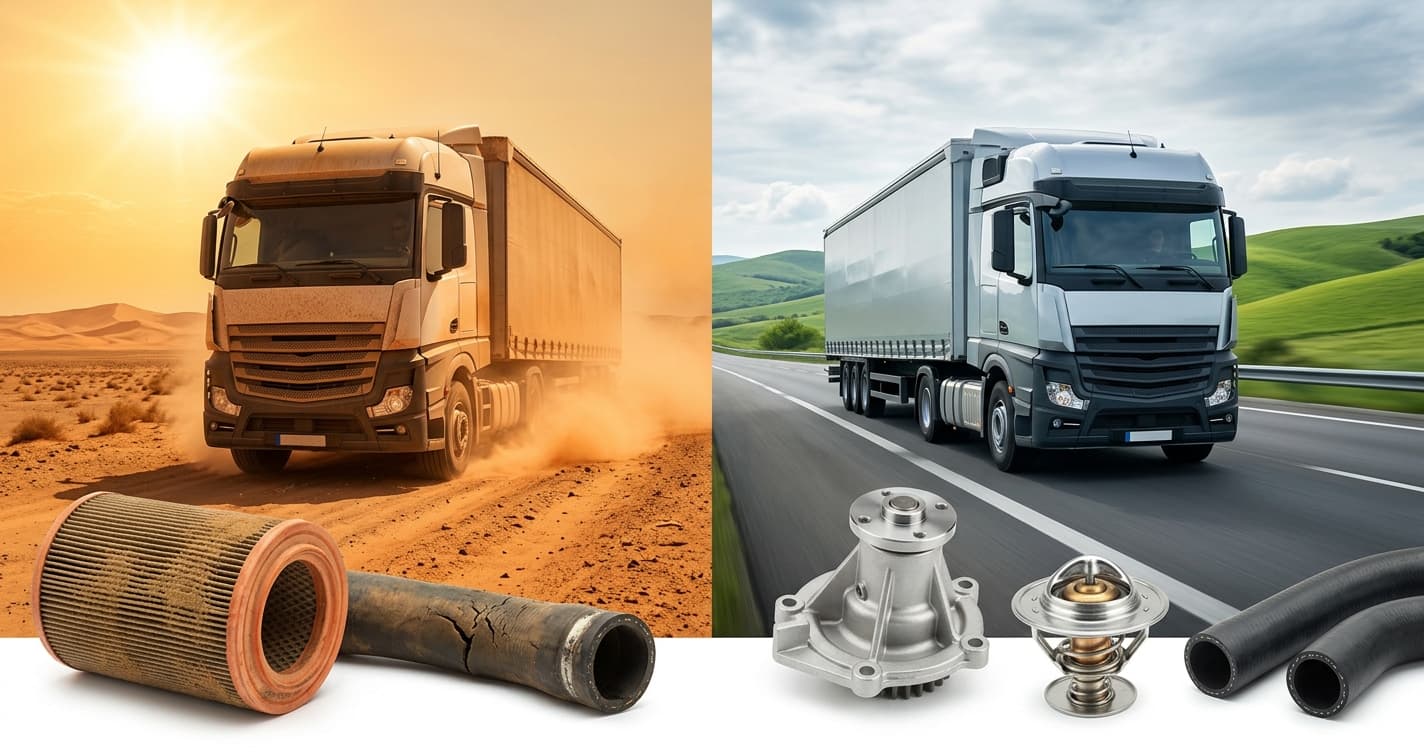
A truck grinding through the Saharan heat treats its cooling system very differently than one cruising through temperate highlands. Hot climates accelerate water pump, thermostat, and radiator hose failures. Dusty roads — common across Africa and Central Asia — chew through air filters and turbo components at alarming rates.
Smart wholesalers adjust their stock seasonally. If you’re supplying tropical markets, cooling system parts should be over-indexed in your inventory before the hot season hits.
3. Fleet Size & Age in Target Markets
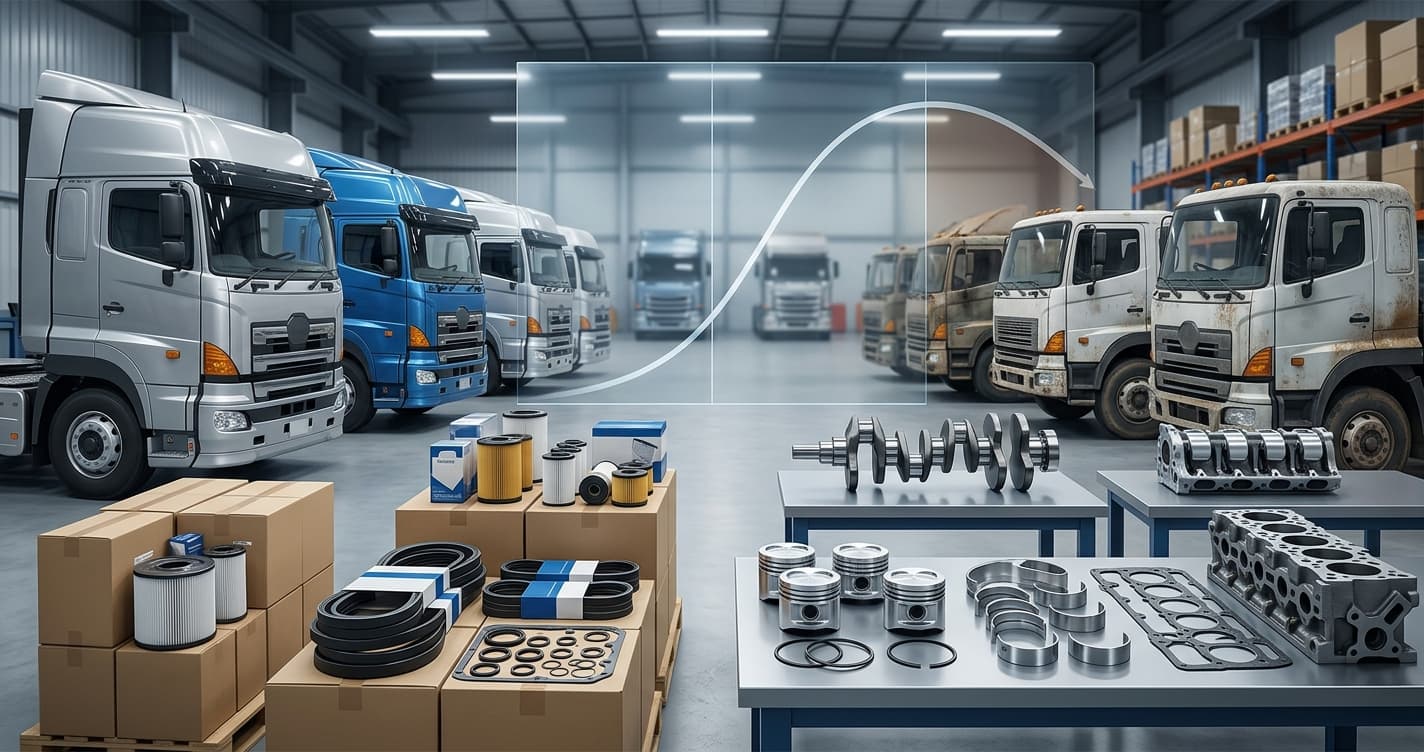
Here’s a simple rule of thumb: older fleets consume overhaul parts (pistons, bearings, crankshafts), while newer fleets consume maintenance parts (filters, belts, seals). If your market received a wave of new Chinese trucks 5–8 years ago, those trucks are now entering their heavy-maintenance window — and demand for engine rebuild components is about to surge.
Understanding where your market sits on this lifecycle curve lets you anticipate demand rather than react to it.
4. Price-to-Value Ratio for Buyers
Chinese brand truck parts occupy a sweet spot in the global market: reliable quality at accessible pricing. For fleet operators in emerging markets, this price-to-value ratio is the deciding factor. Parts that deliver dependable performance without breaking the bank attract bulk automotive components orders — and that’s exactly what drives wholesale volume.
5. Availability & Lead Time
Here’s a truth that doesn’t get enough attention: the best part in the world is worthless if it’s not in stock when your customer needs it. Parts that are consistently available from suppliers earn repeat wholesale buyers. Reliability of supply is just as important as the quality of the part itself.
This is why working with a supplier who maintains deep inventory across engine system categories matters so much — it’s the difference between fulfilling orders and losing customers to competitors.
Common Problems Wholesale Buyers Face — And How to Solve Them
Let’s get practical. The truck engine spare parts wholesale business isn’t all smooth highways — there are potholes. Here are the five most common problems we see buyers struggle with, and exactly how to navigate around them.
Problem 1: Ordering the Wrong Part Number / Fitment Issues
Why it happens: Chinese truck engines can be confusing. A Weichai WP10 and WP12 may look similar in a catalog, but their piston specs are entirely different. Cross-references between OEM numbers, aftermarket numbers, and engine variants create a minefield of potential errors.
How to solve it: Always confirm three things before placing an order — the exact engine model number, the vehicle VIN or production year, and the original OEM part number. Better yet, work with a supplier who provides technical cross-reference support and can verify fitment before your shipment leaves the warehouse. One wrong container of pistons can wipe out months of profit.
Problem 2: Inconsistent Quality Between Batches
Why it happens: Some buyers source from multiple unverified factories to chase the lowest price. The result? Batch one is excellent, batch two is garbage, and your customers lose trust in you.
How to solve it: Partner with a single experienced supplier who audits their factory sources and maintains quality consistency across orders. Request sample units for testing before committing to bulk quantities. Consistency isn’t glamorous, but it’s what builds a wholesale reputation that lasts.
Problem 3: High MOQ (Minimum Order Quantity) Locking Up Capital
Why it happens: Factories prefer large production runs, and their MOQ requirements can squeeze smaller wholesalers who don’t have the capital — or the warehouse space — to absorb massive single-item orders.
How to solve it: Choose a distributor who offers flexible MOQ with mixed-container options. This means you can combine fast-moving filters with slower-moving overhaul parts in a single shipment, optimizing both your cash flow and your container space. It’s like packing a suitcase efficiently — every cubic meter should earn its keep.
Problem 4: Long Lead Times Causing Stockouts
Why it happens: Popular parts — especially filters and piston kits — can run out quickly at the source, particularly during peak demand periods. If you order reactively, you’ll always be chasing your tail.
How to solve it: Establish a forecasting schedule with your supplier. Pre-order seasonal high-demand items 60–90 days in advance. Share your sales data so your supplier can reserve production capacity for you. Proactive planning beats reactive scrambling every single time.
Problem 5: Difficulty Identifying Genuine vs. Counterfeit Parts
Why it happens: The market is flooded with low-quality imitations, especially for high-value items like fuel injectors and turbochargers. Counterfeit parts don’t just fail — they can destroy engines and destroy your business reputation along with them.
How to solve it: Request certificates of origin, factory audit reports, and branded packaging verification from your supplier. Inspect holographic labels and serial number consistency. A trustworthy supplier with 15 years of experience knows exactly how to distinguish genuine components from convincing fakes — and they’ll help you do the same.
Dealing with any of these challenges right now? Our support page has additional resources and troubleshooting guides to help you navigate common wholesale sourcing issues.
How to Build a Profitable Wholesale Engine Parts Inventory
The 80/20 Rule Applied to Popular Motor Spares Distribution
The Pareto Principle is alive and well in the parts business: roughly 80% of your revenue will come from 20% of your SKUs. Look at the top-sellers table above — filters, pistons, gaskets, and bearings are your revenue engines (pun absolutely intended).
Build a tiered stocking strategy: keep high-frequency consumables (filters, gaskets, seals) in deep stock at all times. For overhaul items (crankshafts, camshafts), maintain leaner inventory and order on-demand or in smaller pre-positioned batches. This approach keeps your capital working efficiently without leaving you exposed to stockouts on your best sellers.
Matching Inventory to Your Market’s Fleet Composition
This sounds obvious, but you’d be surprised how many wholesalers stock based on gut feeling rather than data. Survey your local truck population: Which brands dominate the roads? Is it HOWO in your region? Dongfeng? Shacman? Are the trucks primarily 5 years old or 12 years old?
The answers to these questions should directly dictate your purchasing decisions. A market dominated by aging Shacman trucks with Weichai WP10 engines needs a very different inventory profile than one filled with newer Foton trucks. Don’t guess — use data, talk to your mechanic customers, and visit the truck yards.
Bundling Strategy for Higher Order Value
Here’s a strategy that boosts your average order value while making your customers’ lives easier: bundle complementary parts into kits. An “engine overhaul kit” containing a piston kit, rings, bearings, and gasket set sells faster and at better margins than each component individually. Fleet operators love the convenience, and you love the larger ticket size.
Similarly, “maintenance kits” combining three filter types plus oil seals are perfect for fleet operators running scheduled service programs. Bundling transforms you from a parts supplier into a solutions provider — and that’s a powerful position in the engine replacement parts market.
Want to see how other distributors have successfully implemented these strategies? Check out our customer success stories for real examples from markets like yours.
FAQ — Frequently Asked Questions
What are the most profitable engine spare parts to sell wholesale?
Filters and gaskets offer the highest turnover rate, generating consistent recurring revenue. Turbochargers and fuel injectors, on the other hand, offer higher margins per unit. The most profitable approach is a balanced mix — high-volume consumables for cash flow, plus select high-margin components for profit padding. Together, they maximize your overall return on inventory investment.
Which Chinese truck brands have the highest parts demand globally?
Sinotruk HOWO leads the pack in most African and Southeast Asian markets, followed closely by Dongfeng, FAW, and Shacman. These brands have the largest installed fleet bases across Africa, the Middle East, Central Asia, and South America — making their engine parts the most requested items in the global truck engine spare parts wholesale market. Foton and JAC are growing rapidly in lighter truck segments as well.
How do I avoid ordering wrong engine parts for Chinese trucks?
Always cross-reference three data points: the exact engine model number (e.g., WD615, Weichai WP10, CA6DL), the vehicle production year, and the original OEM part number. Never rely on visual similarity alone — parts that look identical can have different bore sizes, pin diameters, or mounting configurations. A reliable supplier with technical expertise will verify fitment before shipment, saving you from costly returns.
What’s the ideal first order for a new wholesale buyer?
Start with a mixed container of high-demand consumables — filters, gaskets, seals, and one or two popular piston kit models for the dominant truck brand in your market. Add a couple of engine overhaul kits to test demand for higher-value items. This approach lets you gauge market response without over-committing capital, and gives you real sales data to refine your second order.
How can I verify the quality of bulk engine parts from China?
Request factory certifications (ISO/TS 16949 or equivalent), ask for sample units for bench testing or dimensional inspection, and verify branded packaging details including holographic seals and serial numbers. Most importantly, work with a supplier who has a verifiable track record, transparent factory relationships, and client references you can actually contact. Fifteen years of experience in this industry teaches you exactly which factories deliver and which ones cut corners.
Stop Guessing — Start Stocking What Actually Sells
Choosing the right truck engine spare parts wholesale inventory shouldn’t feel like guessing in the dark. The data is clear: consumables like filters and gaskets drive volume, overhaul components like pistons and bearings drive value, and matching your stock to your market’s fleet composition drives everything forward.
But data alone isn’t enough — you need a supplier who understands the nuances. Which Weichai engine variant does that Shacman truck actually use? Which factory produces the injectors that won’t fail after 30,000 km? Which parts can be bundled into a mixed container that maximizes your ROI?
We have 15 years of hands-on experience in the Chinese truck parts wholesale industry. We’ve seen markets evolve, brands rise, and we’ve helped distributors across the globe build inventories that actually move. Contact us at Mettlead — we’ll provide you with a practical, tailored solution based on your market, your fleet mix, and your budget.
The most reasonable wholesale pricing for global Chinese brand truck parts, backed by real expertise. No guesswork. No dust collectors. Just parts that sell and a partner who knows the business inside out.


