Somewhere right now — maybe in Lagos, maybe in Almaty, maybe on a dusty construction site outside Riyadh — a fleet manager is staring at a broken-down Shacman truck. The clutch plate has given up the ghost. Drivers are idle. Cargo isn’t moving. And the clock is ticking on a contract deadline. That manager’s most urgent question isn’t philosophical. It’s painfully practical: “Where can I find a reliable replacement part — fast?”
This scene plays out thousands of times a day across Africa, Southeast Asia, the Middle East, and beyond. It’s the reason the global truck spare parts export demand has exploded into a multi-billion-dollar industry. And it’s exactly why understanding which parts are most popular — and most urgently needed — matters enormously if you’re an importer, distributor, or fleet operator trying to keep wheels turning and profits flowing.
Let’s break down the full picture: what’s selling, where it’s going, what problems you’ll face sourcing it, and how to solve every single one of them.
The Global Landscape of Truck Spare Parts Export — Why It’s Booming
Key Market Drivers Behind Aftermarket Truck Components Wholesale Growth
The commercial vehicle replacement parts market isn’t just growing — it’s sprinting. Three powerful forces are driving this surge simultaneously.
First, aging fleets in developing markets. Across Africa, Central Asia, and parts of South America, the average heavy-duty truck on the road is 8–15 years old. These workhorses aren’t being retired — they’re being repaired. Repeatedly. That creates relentless, recurring demand for aftermarket truck components wholesale.
Second, the rapid adoption of Chinese trucks worldwide. Brands like Sinotruk (HOWO), Shacman, FAW, Foton, Dongfeng, and JAC have captured enormous market share in emerging economies over the past decade. According to the China Association of Automobile Manufacturers (CAAM), China exported over 580,000 commercial vehicles in 2023 alone — a staggering year-on-year increase. Every one of those trucks will eventually need parts.
Third, cost advantage. Chinese-made truck spare parts for export offer a compelling price-to-quality ratio that’s hard to beat. For budget-conscious markets, this isn’t a luxury — it’s a lifeline.
Here’s a number that puts it all in perspective: China’s total auto parts exports exceeded $80 billion USD in 2023, according to China Customs data. Heavy-duty truck components represent one of the fastest-growing segments within that figure.
Who’s Buying? Top Export Regions for Heavy Duty Truck Parts International Trade
The auto parts export market trends tell a clear geographic story. Demand clusters around regions where Chinese trucks dominate the roads — and where operating conditions punish vehicles hardest.
Let’s map it out:
| Region | Top Chinese Truck Brands in Use | Primary Demand Driver |
|---|---|---|
| Africa | Sinotruk (HOWO), Shacman, FAW | Mining, logistics, construction |
| Southeast Asia | Foton, Dongfeng, JAC | Last-mile delivery, agriculture |
| Middle East | Shacman, Sinotruk | Oil & gas, heavy haulage |
| Central Asia | FAW, Dongfeng | Cross-border freight corridors |
| South America | Foton, Sinotruk | Urban distribution, infrastructure |
| Russia/CIS | Sinotruk, Shacman, FAW | Replacement of exited Western brands |
Notice a pattern? Sinotruk and Shacman appear in nearly every region. That’s not a coincidence — it’s a reflection of their massive installed base, which directly fuels heavy duty truck parts international trade.
👉 Explore the full range of Chinese truck brands we supply
The Top 10 Most Popular Truck Spare Parts for Export (Ranked by Demand)
Ranking Breakdown with Data
If you’ve ever wondered which truck spare parts for export generate the most orders, the most repeat business, and the most frantic “we need this yesterday” emails — here’s your definitive answer. If engine parts were a pop star, they’d be headlining every concert worldwide. Brake pads would be the tireless drummer. And filters? Filters are the quiet bassist everyone forgets about until the music stops.
Based on industry trade data, customs export records, and our own 15 years of order history, here’s how the top 10 stack up:
| Rank | Part Category | Examples | Why It’s Popular | Typical Replacement Cycle |
|---|---|---|---|---|
| 1 | Engine Parts | Pistons, liners, gaskets, turbochargers | Heart of the truck — wears fastest under heavy loads | 150,000–300,000 km |
| 2 | Brake System Parts | Brake pads, drums, calipers, air valves | Safety-critical; regulatory mandates frequent replacement | 50,000–100,000 km |
| 3 | Clutch & Transmission Parts | Clutch plates, gearbox synchros, bearings | High-wear in hilly terrain and stop-start conditions | 100,000–200,000 km |
| 4 | Suspension & Steering | Leaf springs, shock absorbers, tie rods, king pins | Road conditions in export markets accelerate wear | 80,000–150,000 km |
| 5 | Filters (Oil, Fuel, Air) | Oil filters, fuel filters, air filters | Consumables — ordered in bulk, replaced constantly | 10,000–30,000 km |
| 6 | Electrical & Lighting | Headlamps, alternators, starters, wiring harnesses | Harsh conditions cause frequent electrical failures | Varies |
| 7 | Cooling System Parts | Radiators, water pumps, thermostats, fan clutches | Hot climates in Africa/Middle East demand constant replacement | 100,000–200,000 km |
| 8 | Body & Cabin Parts | Mirrors, bumpers, cabin mounts, door handles | Accident damage + sun/weather degradation | As needed |
| 9 | Exhaust System Parts | Mufflers, exhaust pipes, DPF components | Corrosion and emission regulation compliance | 100,000–250,000 km |
| 10 | Axle & Differential Parts | Crown wheels, pinions, axle shafts, hub bearings | Heavy payloads = heavy axle stress | 200,000–400,000 km |
This ranking isn’t static — it shifts slightly by region and season. But the top five? They’ve been rock-solid for years. If you’re building a parts import business, this table is essentially your starter blueprint.
👉 Browse parts by truck system — engine, brake, suspension, and more
Deep Dive — Why These Parts Dominate Export Orders
Engine Parts — The Undisputed King
There’s a reason engine parts sit at the top of every truck spare parts for export ranking: the engine is where all the magic — and all the stress — happens. Pistons hammer up and down millions of times. Turbochargers spin at speeds that would make your head swim. Gaskets silently hold everything together under extreme heat and pressure.
In the Chinese truck ecosystem, two engine families dominate the aftermarket: Weichai and Yuchai. Weichai engines power the majority of Sinotruk HOWO and Shacman F3000/X3000 trucks, while Yuchai is a staple in many FAW and Dongfeng platforms. Knowing which engine sits inside a specific truck model isn’t trivia — it’s the difference between shipping the right piston kit and getting a frustrated return request.
Engine components also carry the highest per-unit value among commercial vehicle replacement parts, which means they’re significant revenue drivers for distributors. A single turbocharger order can be worth more than a pallet of filters.
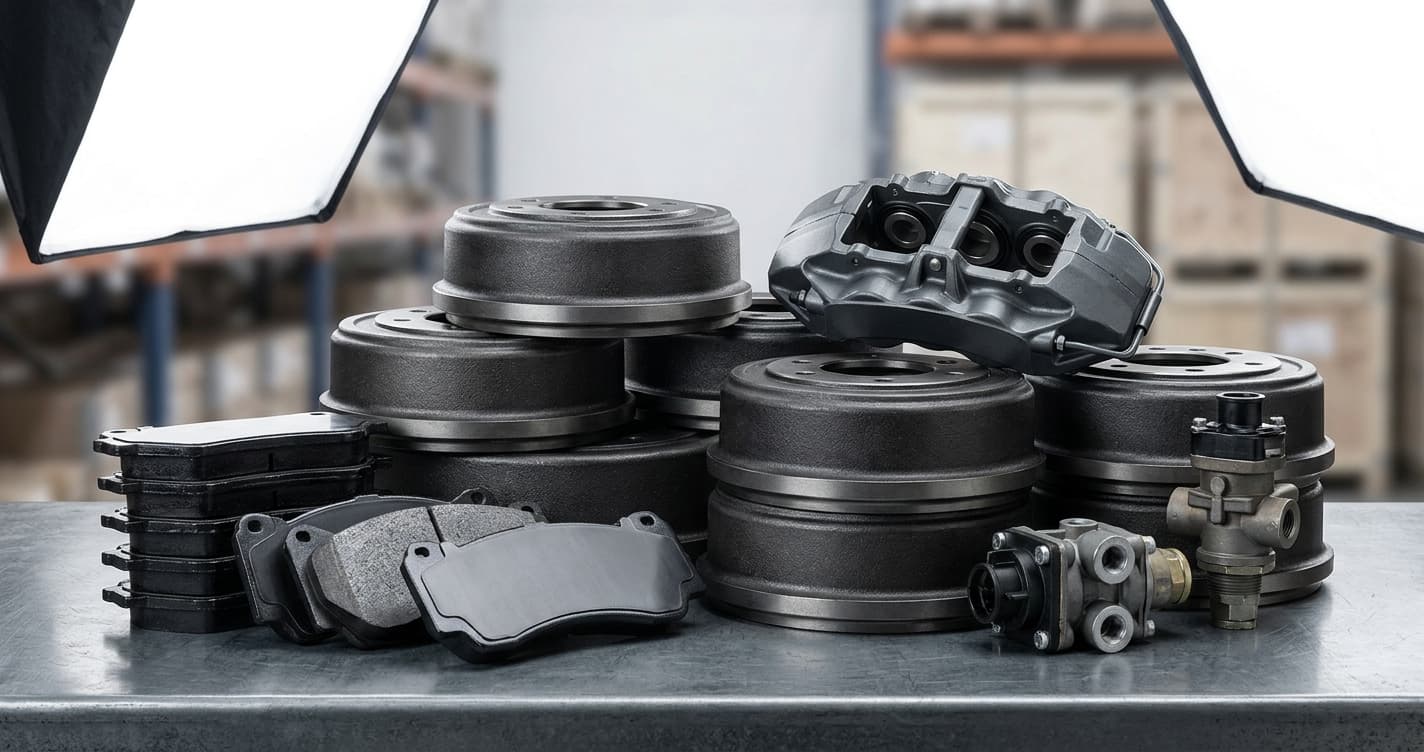
Brake Parts — Where Safety Meets Volume
Brake pads are the workaholics of the truck world — always grinding away, never complaining, until they’re completely spent. And in markets like East Africa or the Arabian Peninsula, where overloaded trucks navigate mountainous terrain and scorching temperatures, brake components don’t just wear out. They get devoured.
Importers in these regions order brake drums, pads, calipers, and air brake valves in massive quantities. It’s not optional — it’s a safety imperative. Many countries are also tightening vehicle inspection standards, which means trucks that might have limped along with worn brakes now need fresh components to stay road-legal.
For any distributor building an aftermarket truck components wholesale business, brake parts should be a non-negotiable stock item. The replacement cycle is short (50,000–100,000 km), the demand is constant, and the reorder rate is beautiful.
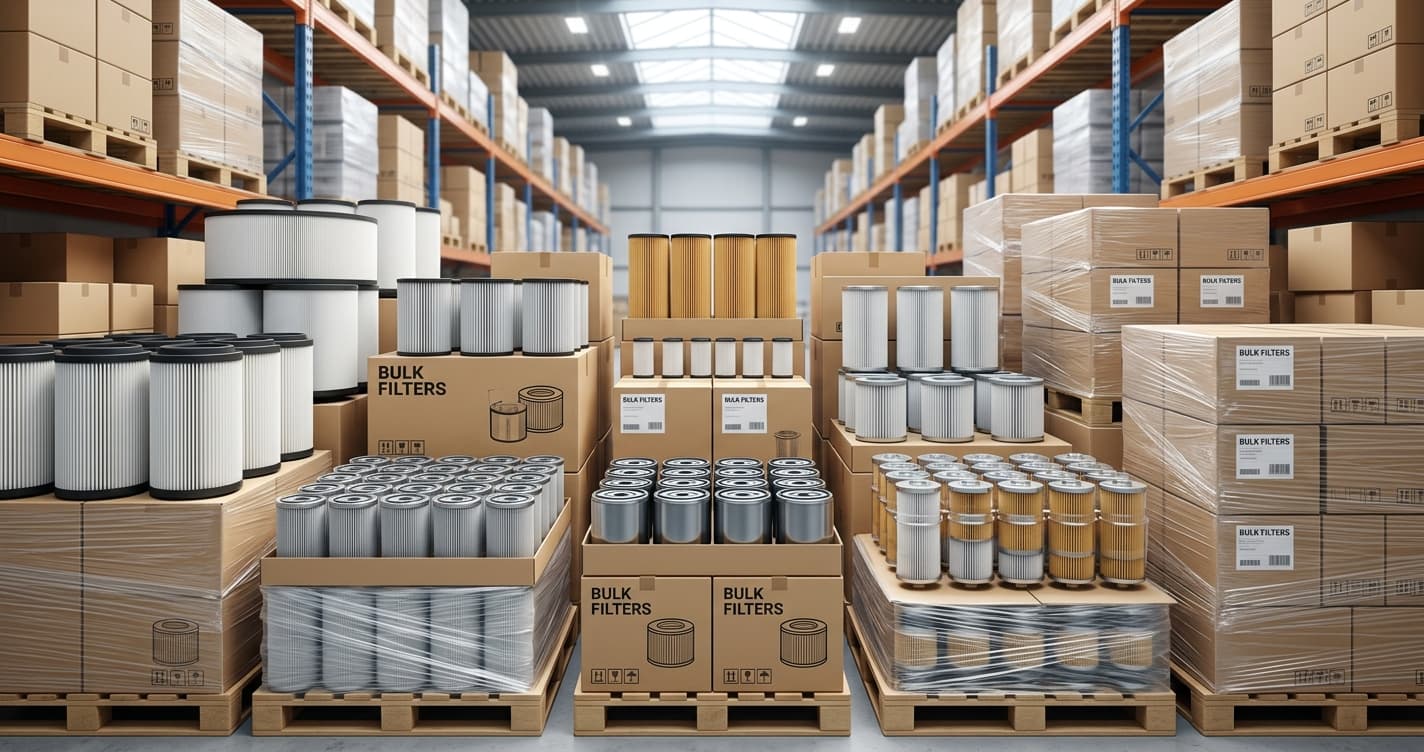
Filters — The Silent Bulk Champion
If brake pads are workaholics, filters are the unsung heroes — the quiet, humble parts that nobody celebrates until the engine chokes on dirty fuel or dust-clogged air. An oil filter costs a fraction of a turbocharger. But when you’re shipping 5,000 of them per container, the math gets very interesting very quickly.
Smart distributors understand this: filters are the gateway product. They’re cheap enough that customers order them with low hesitation, frequent enough that reorders come like clockwork (every 10,000–30,000 km), and universal enough that they apply across multiple truck models. If you’re a new importer testing the auto parts export market trends, filters are your lowest-risk entry point.
Suspension Parts — The Road Condition Factor
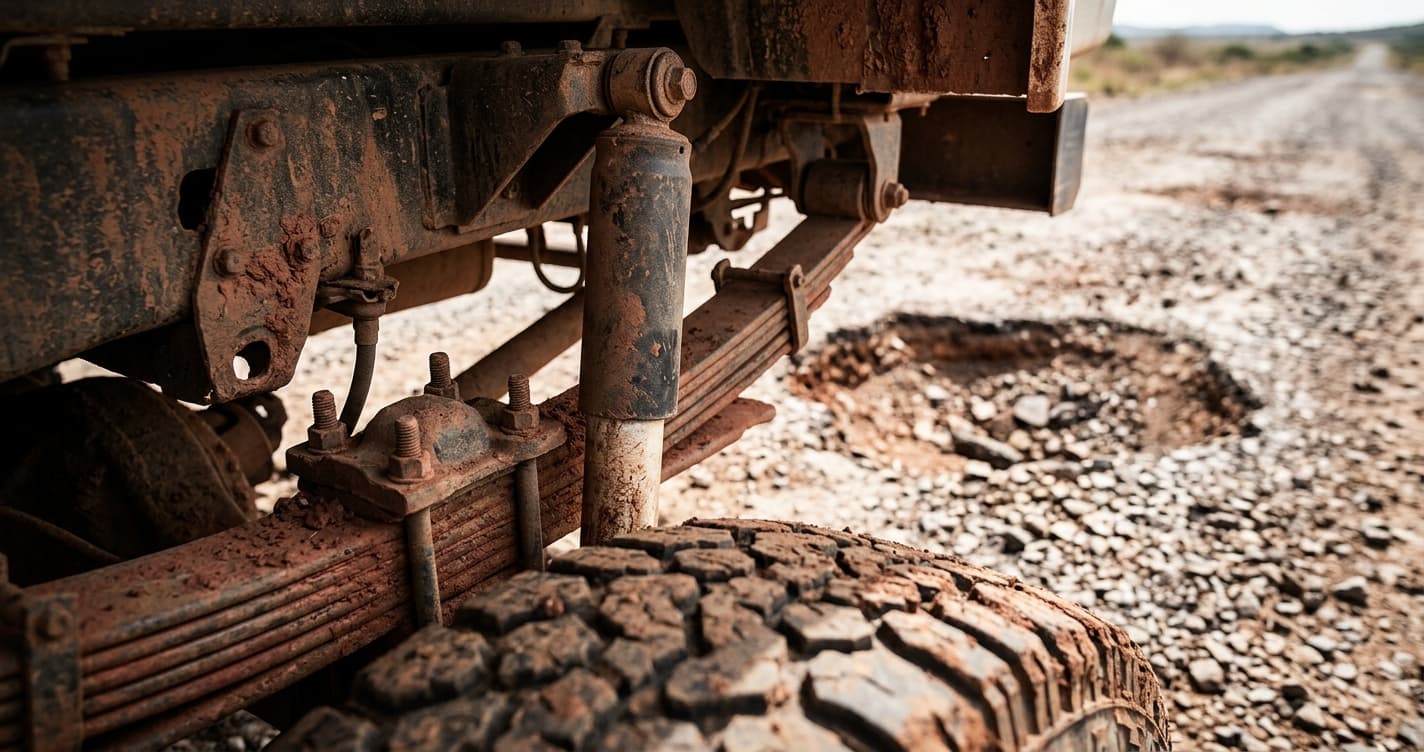
Here’s a reality that anyone who’s driven on roads outside major cities in Africa, Central Asia, or rural South America knows intimately: the roads fight back. Potholes the size of bathtubs. Unpaved stretches that rattle bolts loose. River crossings that no suspension engineer ever designed for.
The result? Leaf springs and shock absorbers on trucks in these markets are replaced 2–3 times more frequently than the same parts on trucks operating in China’s relatively well-maintained highway system. King pins, tie rod ends, and steering components follow a similar pattern. This is why suspension and steering parts consistently rank in the top five for heavy duty truck parts international trade.
👉 See how our clients in 30+ countries built profitable parts businesses
Common Problems When Sourcing Truck Spare Parts for Export (And How to Solve Them)
Sourcing parts across borders isn’t just about finding the cheapest price — it’s a minefield of compatibility headaches, quality gambles, and logistics nightmares. We’ve seen every one of these problems hundreds of times over 15 years. Let’s fix them, one by one.
Problem 1 — Parts Compatibility Confusion
The issue: A buyer orders parts for a “Sinotruk HOWO A7.” Sounds specific, right? Except the HOWO A7 has been produced with at least three different engine options (Weichai WD615, WD12, MC11), multiple axle configurations, and various transmission pairings. Order a piston kit for the wrong engine variant, and you’ve just bought yourself an expensive paperweight.
The solution: Always — and we mean always — provide the VIN number, engine nameplate photo, or OEM part number when ordering. A generic model name is not enough. Work with a supplier who genuinely understands Chinese truck platform variations and can cross-reference your information against manufacturer databases before shipping.
Problem 2 — Inconsistent Quality from Unknown Suppliers
The issue: The internet is flooded with suppliers offering truck parts at suspiciously low prices. Some of those parts are fine. Others are counterfeit garbage that will fail catastrophically. A cheap brake pad that disintegrates on a downhill grade doesn’t just cost you a customer — it can cost someone their life.
The solution: Request quality certifications (ISO, TS16949), ask for sample testing before committing to bulk orders, and demand supplier factory audit reports. Better yet, partner with an experienced exporter who has already pre-screened their factory network and stakes their reputation on every shipment.
Problem 3 — MOQ (Minimum Order Quantity) Too High for First Orders
The issue: You want to test 20 different part numbers to see what sells in your market. The factory says: “Minimum 500 pieces per SKU, full container only.” For a new importer, that’s a terrifying financial commitment with zero market validation.
The solution: Work with a consolidator or trading company that can mix multiple part categories — engine parts, brake components, filters, suspension items — into a single shipment. This lets you test the market with manageable risk while still filling a container efficiently. It’s exactly the kind of flexible arrangement Mettlead specializes in.
Problem 4 — Shipping & Customs Complications
The issue: Incorrect HS codes on the commercial invoice. Missing certificates of origin. Packaging that looked fine in the warehouse but arrived as a crushed mess after six weeks at sea. Customs delays aren’t just annoying — they’re expensive, and they erode your customers’ trust.
The solution: Choose a supplier with real international trade experience — not just a factory with an Alibaba page. Proper HS code classification, complete export documentation, fumigation certificates where required, and export-grade packaging should be standard, not an afterthought.
Problem 5 — No After-Sales Support When Issues Arise
The issue: You receive a shipment. Three water pumps are the wrong specification. You send emails. You call. Silence. The supplier has your money and has mentally moved on to the next order. You’re stuck explaining to your customer why their Dongfeng truck is still overheating.
The solution: Verify the supplier’s after-sales policy before your first order, not after your first problem. A reliable partner provides technical support, replacement guarantees for manufacturing defects, and — critically — actually answers their phone when things go sideways.
👉 Having a sourcing issue? Our support team has solutions
Here’s a quick reference to keep handy:
| Common Problem | Root Cause | Mettlead Solution |
|---|---|---|
| Wrong parts delivered | No VIN/OEM verification | Dedicated parts matching by experienced team |
| Quality failures | Unvetted factory sources | Pre-screened supplier network, quality inspection |
| High MOQ barriers | Factory-direct rigidity | Flexible mixed-container consolidation |
| Customs delays | Incorrect documentation | Full export documentation & HS code support |
| No after-sales response | Supplier accountability gap | 15 years of trade reputation, dedicated support |
How to Choose the Right Export Partner for Truck Spare Parts
The 5-Point Checklist Every Importer Should Use
Not all suppliers are created equal — and in the truck spare parts for export business, the wrong partner can cost you far more than the right one saves you. Before you commit to any supplier, run them through this checklist:
- Years of industry experience: The Chinese truck parts landscape is complex. A supplier with 10+ years has survived market cycles, factory closures, and quality crises. They’ve earned their scars — and their knowledge.
- Chinese truck brand expertise: Can they tell you the difference between a Weichai WP10 and WP12 without Googling it? Do they know which Shacman models use a Fast gearbox versus a Fuller? This knowledge isn’t optional — it’s the foundation of accurate parts matching.
- Quality control process: Do they inspect goods before shipment? Do they have documented QC procedures? Or do they just forward whatever the factory boxes up?
- Flexible order quantities: Can they accommodate mixed-SKU orders and smaller trial quantities? A partner who forces you into rigid MOQs doesn’t understand the realities of building a new market.
- Proven export track record with references: Ask for customer references in your region. Check if they’ve handled customs documentation for your destination country before. Real experience shows in the details.
Why Brand-Specific Expertise Matters
Here’s something that separates a genuine Chinese truck parts specialist from a generic auto parts trader: a generic supplier won’t know that the Shacman M3000 and X3000 use different steering pump specifications despite looking nearly identical from the outside. They won’t know that a FAW J6P cabin mount differs from a J6L mount. They won’t know that a Foton Auman GTL shares some Cummins-derived engine components but has unique Chinese-spec auxiliaries.
This kind of platform-specific knowledge — across Sinotruk, FAW, Dongfeng, Foton, Shacman, and JAC — is what prevents costly mistakes. It’s the difference between a supplier who ships parts and a partner who ships the right parts.
👉 Learn why importers in 60+ countries trust Mettlead
Export Market Trends to Watch in 2024–2025
Rising Demand for Sinotruk & Shacman Parts in Africa
Africa has become the single largest destination for Chinese truck exports, and the aftermarket wave is now cresting. Industry data indicates that Sinotruk HOWO trucks account for over 40% of heavy truck imports in several East and West African countries. Shacman follows closely, particularly in mining and construction corridors.
As the first generation of these trucks (imported 2015–2019) enters the heavy maintenance phase, the demand for engine overhaul kits, transmission components, and brake system parts is surging. Distributors who establish reliable supply chains now will own these markets for the next decade.
EV Truck Components — The Next Frontier
It’s still early days, but the signal is clear: electric commercial vehicles from brands like Foton and Dongfeng are entering export markets in Southeast Asia, South America, and parts of the Middle East. While the volumes are modest compared to diesel trucks, the aftermarket implications are significant.
EV trucks need different consumables — battery management system components, electric motor parts, regenerative braking elements, and specialized cooling systems. Forward-thinking distributors are already asking about these categories. The truck spare parts export demand of tomorrow is being shaped today.
The Shift from OEM to Quality Aftermarket
Here’s a trend that’s quietly reshaping the entire commercial vehicle replacement parts landscape: cost-conscious markets are increasingly accepting high-quality aftermarket alternatives over OEM-branded parts. The reason is simple economics — a quality aftermarket piston ring set that performs at 95% of OEM spec but costs 40% less is an easy decision for a fleet running 50 trucks on tight margins.
This shift is creating massive opportunity for distributors who can source and verify quality aftermarket truck components wholesale. The key word is quality — the market is maturing, and buyers are getting smarter. They’ll accept aftermarket, but they won’t accept junk.
FAQ — Truck Spare Parts for Export
What are the most exported truck spare parts from China?
Engine components (pistons, liners, gaskets, turbochargers), brake system parts (pads, drums, calipers), filters (oil, fuel, air), clutch and transmission parts, and suspension components consistently rank as the top categories in the commercial vehicle replacement parts export market. These five categories alone account for the majority of repeat orders in heavy duty truck parts international trade.
Which Chinese truck brands have the highest aftermarket parts demand globally?
Sinotruk (HOWO), Shacman, FAW, Dongfeng, Foton, and JAC are the six dominant brands driving aftermarket truck components wholesale demand worldwide. Among these, Sinotruk HOWO and Shacman generate the highest volume of parts orders, particularly from African and Middle Eastern markets.
How do I ensure the truck parts I import are compatible with my fleet?
Always provide the VIN number, engine nameplate photo, and OEM part number to your supplier. A generic model name like “HOWO” is not specific enough — there are dozens of configurations within a single model line. An experienced partner like Mettlead cross-references these details against manufacturer databases to ensure exact compatibility before any parts are shipped. Contact us with your vehicle details and we’ll confirm the right parts for your fleet.
What is the typical MOQ for exporting truck spare parts from China?
MOQs vary significantly by part type and supplier. Filters may require 500+ pieces per SKU, while engine parts like turbochargers or cylinder heads may start at 10–50 units. If factory MOQs are too high for your initial order, consolidation services can help mix multiple part categories into a single container shipment, reducing per-SKU minimums while still achieving efficient shipping volumes.
How can I verify the quality of Chinese truck spare parts before ordering in bulk?
Request product samples for hands-on evaluation, ask for factory certifications (ISO 9001, IATF 16949), and consider third-party inspection reports from agencies like SGS or TÜV. The safest approach is working with a supplier who has an established, documented quality control process and a track record of successful exports — not just a factory that looks good in photos.
What shipping methods are most common for truck parts export?
Sea freight is the standard for bulk orders — either Full Container Load (FCL) for large shipments or Less-


