7 Signs Your Truck Battery Is Failing
Introduction
The battery is one of the most crucial components of a heavy-duty truck, responsible for starting the engine, powering electrical systems, and maintaining stability under high-load conditions. In Chinese heavy-duty trucks such as SINOTRUK HOWO, FAW J6, and SHACMAN X3000, batteries operate in extreme environments with frequent temperature swings, vibration, and heavy electrical loads from modern electronics.

A failing battery can cause downtime, delivery delays, and expensive component replacements. Recognizing early warning signs allows fleet operators and drivers to take preventive measures, avoid costly repairs, and maintain operational reliability. Utilizing professional guidance from Technical Support and sourcing OEM or high-quality replacement batteries through Brand or System pages is highly recommended for maintaining fleet efficiency.
Truck batteries do not fail suddenly in most cases—they degrade gradually through internal chemical breakdown. In heavy-duty applications, the most common failure mechanism is lead sulfate crystal accumulation (sulfation) on the battery plates.
When a truck is frequently used for short-distance driving or experiences long idle periods, the alternator does not fully recharge the battery. This incomplete charging cycle allows sulfate crystals to harden over time, reducing the active surface area of the battery plates. As a result, the battery loses its ability to hold a full charge.
In addition, vibration from rough roads accelerates internal plate shedding. This is especially common in Chinese heavy-duty trucks operating in mining, construction, or cross-border logistics routes. Once internal plate material begins to degrade, the battery’s performance drops rapidly, even if external voltage readings still appear normal.
Understanding this internal degradation process is critical for fleet operators because it explains why batteries often fail “suddenly” even though they have shown no obvious symptoms beforehand.
Sign 1: Slow or Sluggish Engine Cranking
This is the most common and earliest symptom drivers notice. When you turn the key or push the start button, the engine takes noticeably longer to turn over. That labored "ruh-ruh-ruh" sound means your cell can no longer deliver adequate cold cranking amps (CCA) to the starter motor.
In diesel-powered trucks, this issue is even more pronounced because compression-ignition engines require significantly more starting power. If you're shopping for the best truck battery for diesel engines, prioritize units rated above 800 CCA to ensure reliable starts year-round.
A healthy power source should crank the engine within one to two seconds. Anything beyond three seconds during moderate weather is a red flag that internal degradation has begun.
Cold weather significantly increases battery load during engine startup. Diesel engines require higher cranking torque due to higher compression ratios, and in low temperatures, engine oil becomes thicker, further increasing resistance.
When temperature drops below 0°C, a truck battery can lose up to 40% of its effective capacity. This means a battery that performs normally in summer may struggle to start the same engine in winter conditions.
Fleet operators in northern regions often misinterpret slow cranking as starter motor failure, while the real issue is reduced cold cranking amperage (CCA) from battery degradation. Repeated cold-start stress accelerates internal wear and shortens battery lifespan dramatically.
What Causes Sluggish Cranking?
Over time, lead-acid cells experience sulfation — a chemical process where lead sulfate crystals build up on the plates. This reduces the effective surface area available for chemical reactions, diminishing output capacity. Temperature extremes accelerate this process considerably.
Sign 2: Dimming Headlights and Flickering Electronics
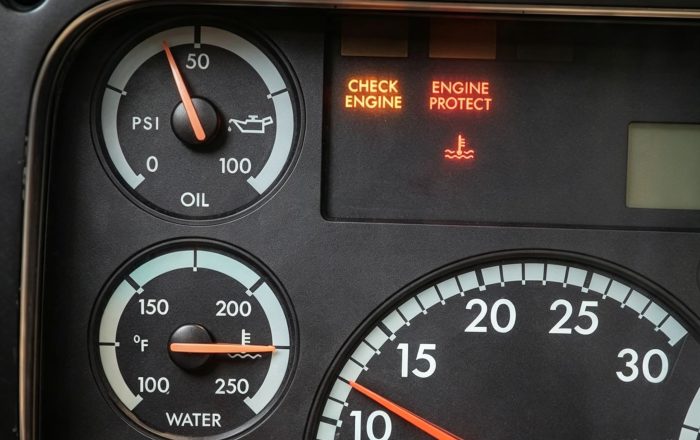
Illuminated dashboard warning lights, including battery or engine alerts, indicate the ECU has detected voltage inconsistencies or battery health degradation. Modern trucks are equipped with intelligent battery monitoring systems that track voltage, current, and charge cycles.
Dim headlights or interior illumination indicate the battery is failing to supply sufficient voltage under load. Electrical accessories, including lighting, HVAC, and infotainment systems, require a stable voltage supply to operate correctly.
A weak battery cannot maintain consistent voltage, particularly during high electrical demand situations. Prolonged operation under low voltage can damage electronic modules, reduce headlight brightness, and compromise driver safety. In fleet operations, dim lighting during night shifts increases the risk of accidents. Battery voltage should be measured with a multimeter under both idle and load conditions. Using high-quality OEM batteries ensures consistent electrical supply across all systems.
Dim lights are often just the visible symptom of a deeper issue: parasitic electrical drain. In many trucks, components such as GPS trackers, security systems, and onboard telematics continue consuming power even when the engine is off.
Over time, this slow discharge cycle prevents the battery from maintaining full charge. Drivers may not notice this immediately, but overnight voltage drop becomes increasingly severe.
Fleet managers should perform standby current tests to identify abnormal electrical leakage. Ignoring this issue leads to repeated battery replacement without solving the root cause.
Sign 3: The Check Engine or Battery Warning Light Activates
Modern trucks are equipped with sophisticated onboard diagnostics. When the charging system detects voltage irregularities — either too low or unstable — it triggers a dashboard warning. Never ignore this indicator, as it often precedes complete failure by just days.
Some vehicles display a dedicated battery icon, while others illuminate the check engine light with a stored diagnostic code. Either way, have the charging system tested immediately. Many auto parts stores and Technical support centers offer free voltage and load testing.
Modern heavy-duty trucks rely heavily on electronic control units (ECUs) for engine management, fuel injection timing, and emissions control. These systems require stable voltage to operate correctly.
Even small voltage fluctuations caused by a weak battery can trigger false error codes, including engine warnings, ABS alerts, or transmission fault signals. In many cases, the battery is the root cause, but drivers may misdiagnose it as sensor or ECU failure.
This makes battery health monitoring not just an electrical issue but a system-wide stability requirement for modern fleet operations.
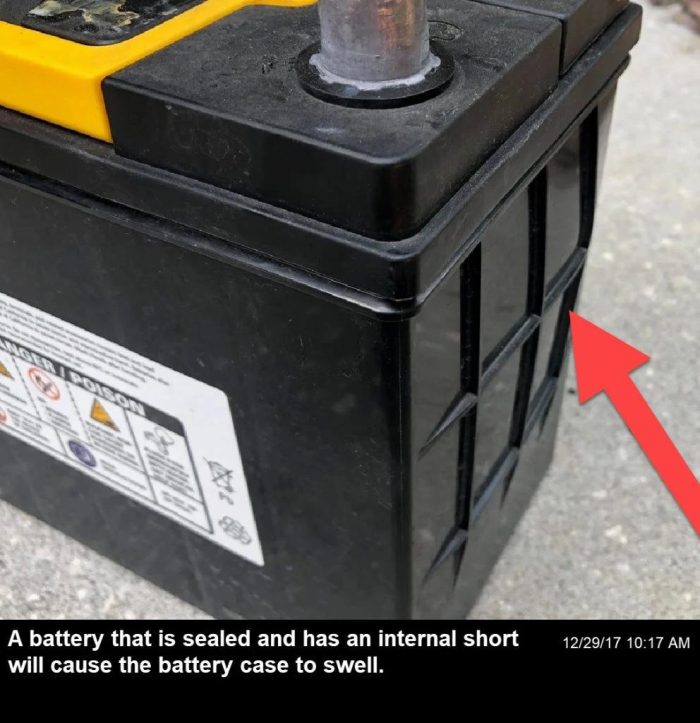
Sign 4: Swollen or Bloated Battery Case
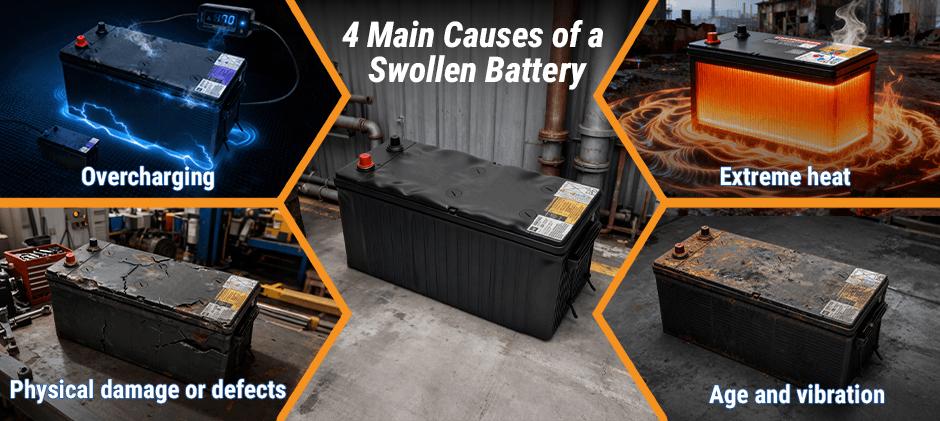
A swollen or leaking battery case is a severe physical symptom indicating internal damage. Excessive heat, overcharging, or chemical degradation can cause the battery casing to expand, crack, or leak electrolyte.
Leaking acid can corrode terminals, wiring, and adjacent components, while swelling can interfere with battery mounting and connections. Trucks exposed to high temperatures or heavy-duty cycles are especially prone to thermal stress. Fleet maintenance teams should inspect battery enclosures for deformation, ensure proper ventilation, and replace compromised units immediately using OEM components.
When a battery is overcharged due to alternator malfunction, internal temperature rises rapidly. This condition is known as thermal stress buildup. In extreme cases, electrolyte fluid begins to evaporate, increasing internal pressure.
If pressure exceeds safe limits, battery casing deformation or leakage occurs. This not only damages the battery but can also corrode surrounding wiring harnesses and mounting structures.
In fleet environments, overcharging is often overlooked because trucks continue to operate normally until sudden failure occurs.
Safety Note
Never attempt to charge or jump-start a visually damaged unit. The risk of acid spray or explosion is real. Dispose of damaged cells at certified recycling facilities only.
Sign 5: Corrosion on Terminals and Connectors
Corroded or loose battery terminals are one of the most common yet underestimated causes of truck electrical failure. In heavy-duty diesel trucks, vibration from long-haul operations and harsh road conditions gradually loosens terminal connections. At the same time, chemical reactions between battery acid vapors and metal terminals lead to corrosion buildup, typically appearing as white or greenish powder around the connection points.
When corrosion increases, electrical resistance rises significantly, which restricts current flow between the battery and vehicle electrical system. As a result, drivers may experience intermittent starting issues, fluctuating dashboard voltage readings, or sudden power loss in auxiliary systems such as lighting or air conditioning. In severe cases, complete electrical failure may occur while the truck is operating under load.
Fleet maintenance teams should regularly inspect terminal tightness, clean corrosion deposits using proper neutralizing agents, and apply anti-corrosion grease to extend connection life. For fleets operating Chinese heavy-duty trucks in high-vibration environments, this maintenance step is critical to ensuring stable electrical performance.
Heavy-duty trucks operating on highways or construction roads experience continuous vibration cycles. Over time, this vibration causes micro-movements between battery plates and internal separators.
This mechanical fatigue gradually weakens structural integrity inside the battery. Even high-quality OEM batteries are affected if mounting brackets are loose or shock absorption is insufficient.
Proper battery fixation and vibration-resistant mounting systems are essential in extending battery lifespan in fleet environments.
Sign 6: Frequent Jump-Starts or Difficulty Holding a Charge
If a truck requires frequent jump-starts, it is a strong indicator that the battery is no longer capable of holding a sufficient charge. This condition often develops gradually due to internal sulfation, aging battery cells, or continuous undercharging caused by alternator inefficiency.
In fleet operations, drivers may initially rely on external power assistance to start the engine, but this is only a temporary solution. Over time, repeated jump-starting places additional stress on both the starter motor and the vehicle’s electrical system. It may also mask underlying issues such as parasitic electrical drain or failing charging systems.
Technicians should conduct a full load test and evaluate battery charging cycles under different operating conditions. If the battery fails to maintain voltage stability after charging, replacement is required. Ignoring this symptom increases the risk of unexpected roadside breakdowns, particularly in long-distance freight transport.
In some fleet operations, batteries fail significantly earlier than expected lifespan. This is usually due to combined factors such as high idle time, extreme climate exposure, and inconsistent charging cycles.
Urban logistics trucks are particularly affected because they experience frequent engine starts but short driving durations, preventing full recharge cycles. This leads to chronic undercharging, which accelerates sulfation and capacity loss.
Sign 7: The Unit Is Past Its Expected Lifespan
Even without visible symptoms, battery age alone is a critical factor in performance degradation. Most heavy-duty truck batteries have a lifespan of 2 to 4 years depending on usage conditions, load cycles, and environmental stress. After this period, internal chemical reactions slow down, reducing overall capacity and efficiency.
In Chinese heavy-duty trucks used in export markets, extreme temperatures, vibration, and inconsistent charging conditions can significantly shorten battery lifespan. High-mileage vehicles often experience reduced cold cranking ability, slower charging response, and increased failure probability.
Fleet managers should track battery installation dates and implement scheduled replacement programs rather than waiting for failure. Proactive replacement reduces downtime risk and ensures consistent fleet reliability, especially for logistics operations where timing is critical.
Frequent jump-starting creates a negative feedback loop in battery health. While it temporarily restores starting capability, it does not restore internal chemical capacity.
Each jump-start cycle places additional stress on both the battery and alternator. Over time, the alternator must work harder to compensate for the weak battery, which accelerates its own wear.
This creates a “failure chain reaction” across the entire electrical system if not addressed early.
Even with perfect maintenance, every energy storage cell has a finite life. Understanding how long does a truck battery last helps you plan proactive replacements before failure catches you off guard.
| Vehicle Type | Average Lifespan | Factors That Shorten Life |
|---|---|---|
| Light-duty pickup | 3–5 years | Short trips, extreme heat |
| Medium-duty commercial | 3–4 years | Heavy accessory loads, vibration |
| Heavy-duty diesel (Class 7–8) | 4–6 years | Cold climate starts, idle time |
| Refrigerated transport | 2–4 years | Constant auxiliary draw |
If your unit is approaching or exceeding these ranges, schedule a load test even if no symptoms are present. The battery replacement timeline varies by usage pattern, but preventive action always costs less than emergency service.
Common Causes of Truck Battery Failure
Truck battery failure rarely happens due to a single factor. Instead, it is usually the result of multiple combined stressors affecting the electrical and chemical systems inside the battery.
One of the primary causes is excessive electrical load. Modern heavy-duty trucks are equipped with advanced systems such as ECU modules, GPS tracking, air conditioning, and safety sensors, all of which draw continuous power. When combined with long idle periods or short-distance driving, the battery may not fully recharge.
Environmental conditions also play a significant role. Extreme heat accelerates internal fluid evaporation, while cold temperatures reduce chemical reaction efficiency, making starting more difficult. Vibration from rough roads or heavy cargo further damages internal battery plates over time.
Poor maintenance practices, such as loose terminals, improper charging, or using low-quality replacement batteries, significantly increase failure rates. Fleet operators should implement structured inspection routines and use OEM-grade components to ensure long-term reliability.
Battery failure rates vary significantly depending on fleet usage patterns. Long-haul trucks tend to have more stable charging cycles, while urban distribution fleets experience higher failure rates due to frequent stopping and restarting.
Additionally, the increasing use of electronic accessories in modern trucks has raised baseline power consumption. This means even when the engine is running, a significant portion of alternator output is consumed by onboard systems rather than battery charging.
How to Diagnose a Failing Truck Battery
Diagnosing battery health requires a combination of visual inspection, electrical testing, and system-level evaluation. Technicians should first inspect the battery casing for swelling, leaks, or corrosion around terminals. These are early indicators of internal damage.
Next, voltage testing using a multimeter provides insight into battery charge levels. A healthy truck battery typically maintains around 12.6V when fully charged and 13.7–14.7V when the engine is running. Values outside this range may indicate battery or alternator issues.
Load testing is another essential diagnostic method. By simulating real-world electrical demand, technicians can determine whether the battery can sustain voltage under stress conditions. For fleet operators, integrating battery diagnostics with ECU and fleet management systems allows real-time monitoring of battery health across multiple vehicles.
Modern fleet management systems are increasingly integrating battery monitoring into telematics platforms. This allows operators to track real-time voltage trends, charge cycles, and abnormal discharge behavior.
Instead of waiting for failure, predictive maintenance models can identify batteries that are nearing end-of-life based on performance degradation patterns. This reduces unexpected downtime and improves logistics efficiency.
What to Do When You Spot These Symptoms
Step 1: Test Before You Replace
A simple voltage reading can reveal a lot. A fully charged 12V unit should read between 12.6V and 12.8V at rest. Anything below 12.4V indicates partial discharge; below 12.0V suggests deep discharge or cell damage.
Step 2: Consider the Operating Environment
Drivers operating in northern climates should research the best truck battery for cold weather 2026 options, as CCA performance drops dramatically below freezing. AGM (Absorbent Glass Mat) designs outperform flooded lead-acid types in temperature extremes.
Preventive Maintenance for Truck Batteries
Preventive maintenance plays a key role in extending battery lifespan and ensuring stable fleet performance. Regular inspection schedules should include terminal cleaning, voltage testing, and casing checks for physical damage.
Battery terminals must remain clean and tightly connected to minimize resistance. Protective grease or coatings can help prevent corrosion, especially in humid or high-salinity environments. Drivers should also be trained to avoid unnecessary electrical load when the engine is off.
Using OEM or high-quality replacement batteries is essential for maintaining consistent performance across fleets. Cheap alternatives often fail prematurely and increase total operating costs. Monitoring electrical load and ensuring proper alternator performance also helps maintain battery efficiency over time.
Instead of replacing batteries only after failure, many large fleets are shifting to lifecycle-based replacement strategies. This involves replacing batteries at predefined intervals based on mileage, usage intensity, and environmental conditions.
This approach reduces roadside breakdowns and improves overall fleet reliability. It is especially important for export fleets operating in remote regions where service access is limited.
Understanding dead battery symptoms is valuable, but preventing premature failure is even better. Follow these proven practices to maximize longevity:
- Keep terminals clean and coated with dielectric grease
- Ensure the hold-down bracket is secure to minimize vibration damage
- Avoid deep discharges — never drain below 50% state of charge
- Test the charging system (alternator output) every 12 months
- In cold storage periods, use a float charger or maintainer
For drivers experiencing recurring vehicle starting problems, the issue may extend beyond the cell itself. Inspect starter motors, ground straps, and wiring harnesses as part of a complete diagnostic. Browse genuine Truck Parts for OEM-quality electrical system components.
Choosing the Right Replacement: Key Specifications
| Specification | What It Means | Why It Matters |
|---|---|---|
| Cold Cranking Amps (CCA) | Current delivered at 0°F for 30 seconds | Determines cold-start capability |
| Reserve Capacity (RC) | Minutes at 25A before voltage drops below 10.5V | Measures backup power for accessories |
| Group Size | Physical dimensions and terminal layout | Must match your vehicle's tray |
| Amp-Hour (Ah) | Total energy storage capacity | Higher Ah = longer runtime under load |
Always cross-reference your owner's manual or consult a Truck Brand parts catalog to confirm compatibility before purchasing.
Frequently Asked Questions (FAQ)
1. How long does a truck battery usually last?
A typical heavy-duty truck battery lasts between 2 to 4 years depending on usage conditions. Factors such as temperature extremes, vibration, electrical load, and charging system quality significantly affect lifespan. In fleet operations with heavy usage, batteries may need replacement earlier. Regular testing helps avoid unexpected failure.
2. What is the most common reason for truck battery failure?
The most common cause is insufficient charging combined with high electrical demand. When a truck runs short routes or idles frequently, the alternator may not fully recharge the battery. Over time, this leads to sulfation and reduced capacity, eventually causing failure.
3. Can a bad alternator damage the battery?
Yes. A failing alternator can either undercharge or overcharge the battery. Undercharging leads to gradual discharge and sulfation, while overcharging causes overheating and fluid loss. Both conditions shorten battery lifespan significantly.
4. Why does my truck battery keep dying overnight?
This is often caused by parasitic electrical drain, aging battery cells, or faulty electrical components that consume power when the engine is off. Fleet technicians should perform current leakage tests to identify the exact cause.
5. How can fleet operators extend battery life?
Fleet operators can extend battery life by implementing regular maintenance schedules, ensuring proper charging system performance, minimizing idle time, and using OEM-quality replacement batteries. Monitoring voltage and load conditions across the fleet also improves early fault detection.
6. Is it safe to continue driving with a weak battery?
While a truck may still operate with a weak battery if the alternator is working properly, it is risky. A weak battery can fail suddenly, especially during startup or when electrical demand increases. This can result in unexpected breakdowns and downtime.