How to Tell If Your Fuel Pressure Sensor Is Bad in Diesel Trucks
Why the Fuel Pressure Sensor Matters in Diesel Trucks
Every modern diesel engine depends on precise fuel metering to deliver power efficiently and meet emissions standards. At the heart of that system sits the fuel rail pressure sensor, a small electronic component that communicates real-time pressure data to the engine control module (ECM). When this sensor degrades or fails, the ECM loses its ability to manage injection timing and quantity accurately.
The consequences range from minor drivability complaints to catastrophic engine damage. For fleet operators managing multiple commercial vehicles, a single faulty sensor can cascade into unplanned downtime and expensive roadside repairs. Understanding the warning signs early protects both your budget and your heavy-duty charging system reliability.
Additionally, many owner-operators overlook this sensor during routine maintenance because it rarely appears on standard service interval charts. Yet industry data from the Technology and Maintenance Council suggests that sensor-related fuel system faults account for roughly 14% of unplanned diesel engine shutdowns reported by North American fleets.
What Does a Fuel Pressure Sensor Do in Diesel Trucks?
Fuel Rail Pressure Monitoring Function
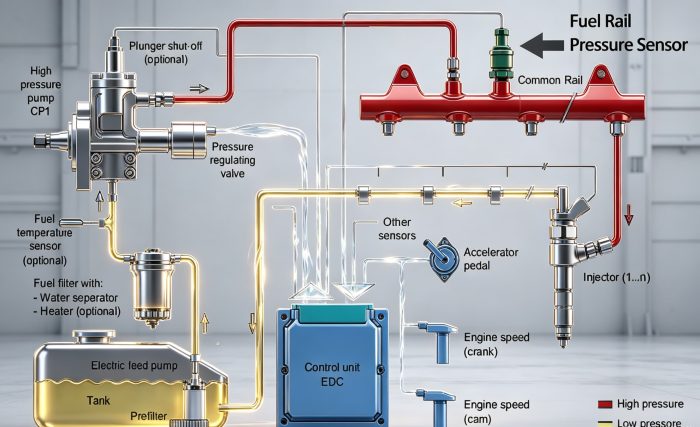
The fuel pressure sensor is responsible for measuring the pressure inside the fuel rail and transmitting this information to the engine control unit (ECU). In common rail diesel engines, this data is essential for maintaining precise fuel injection timing and volume.
Without accurate pressure readings, the ECU cannot properly calculate fuel injection, leading to incomplete combustion or excessive fuel delivery. This directly affects engine efficiency and emissions.
Interaction With ECU and Fuel Injectors
The ECU uses fuel pressure sensor data to control injectors in real time. If pressure is too low, the ECU increases injection duration; if too high, it reduces fuel delivery. This balance is critical for smooth engine operation under different load conditions.
When the sensor fails, this feedback loop becomes inaccurate, causing unstable engine behavior, hesitation, or power loss.
Role in Modern Heavy-Duty Diesel Systems
In modern diesel trucks, fuel pressure sensors are integrated into advanced emission systems such as Euro V and Euro VI standards. They help regulate combustion efficiency and reduce harmful emissions.
A malfunctioning sensor can therefore affect not only performance but also compliance with emission regulations, especially in export markets.
Common Symptoms of a Failing Fuel Pressure Sensor
Sign #1 – Engine Power Loss or Weak Acceleration
When the fuel pressure sensor begins to fail, the ECU receives inaccurate or inconsistent fuel rail pressure data. This directly affects the calculation of fuel injection volume and timing, leading to noticeable reductions in engine power. Drivers may experience difficulty accelerating, particularly when climbing steep inclines, hauling heavy loads, or merging onto highways. The sensation is often described as sluggish throttle response, with delayed turbo engagement in turbocharged diesel engines. Over time, if the issue persists, the truck may struggle to maintain highway speeds, affecting delivery schedules and operational efficiency for long-haul fleets. In addition, repeated power fluctuations can stress the transmission system and increase wear on engine components. Fleet operators should monitor fuel consumption and engine response closely and consult our System Page for diagnostic procedures and compatible replacement sensors for Chinese heavy-duty trucks such as SINOTRUK, FAW, and SHACMAN.

Sign #2 – Poor Fuel Economy
A malfunctioning fuel pressure sensor often causes the ECU to inject more fuel than necessary in an attempt to compensate for perceived low fuel pressure. This results in a noticeable increase in fuel consumption, sometimes without any corresponding improvement in engine performance. For fleet operators, this inefficiency can translate into significant additional operating costs over long distances, especially in regions with high fuel prices. Beyond economics, excessive fuel injection leads to incomplete combustion, increased soot formation, and additional strain on the exhaust after-treatment system, which can shorten the lifespan of particulate filters and catalytic converters. By tracking fuel consumption trends and comparing real-time readings with historical data, technicians can detect early-stage sensor issues before they escalate. Detailed guidance for preventive measures and sensor testing is available on our Technical Support page.
Sign #3 – Hard Starting or Long Cranking Time
Proper fuel rail pressure is critical during engine start-up, particularly in diesel engines with high compression ratios. A failing sensor can send delayed or erroneous signals to the ECU, causing prolonged cranking times or multiple ignition attempts. This not only inconveniences the driver but also places extra stress on the starter motor, battery, and electrical system. In cold weather, these symptoms are exacerbated as diesel fuel becomes more viscous, making accurate pressure readings even more essential. Long cranking cycles can lead to premature battery drain, leaving the truck stranded if not addressed promptly. Fleet operators should schedule early inspections when unusual starting behavior is observed and refer to our Technical Support for step-by-step diagnostics and replacement guidance.
Sign #4 – Engine Stalling or Sudden Shutdown
A failing fuel pressure sensor can lead to unexpected engine stalling or complete shutdown during operation. When the ECU loses accurate fuel pressure input, it may reduce or cut off fuel delivery as a safety precaution. Drivers may notice the engine suddenly dying while idling, accelerating, or under load, which poses significant risks on highways, bridges, or mountainous terrain. Repeated stalling can also stress the clutch and transmission system, increase the risk of accidents, and lead to costly downtime for fleets. To mitigate these risks, technicians should monitor sensor outputs during regular maintenance .
Sign #5 – Check Engine Light or Warning Codes
A failing sensor commonly triggers check engine alerts or diagnostic trouble codes (DTCs) such as P0190–P0194, indicating fuel rail pressure circuit issues. These warnings can appear intermittently or remain illuminated, signaling that the ECU has detected inconsistent or implausible fuel pressure readings. Ignoring these alerts can result in prolonged operation with reduced performance, higher fuel consumption, and even engine damage. For fleet operators managing multiple vehicles, monitoring DTC patterns can identify recurring sensor failures across a fleet.
Sign #6 – Rough Idling or Engine Misfires
Inaccurate fuel pressure readings cause uneven fuel injection, resulting in rough idling, vibrations, and misfires. Misfires reduce engine efficiency and increase stress on internal components like pistons, valves, and the turbocharger. During heavy load or stop-and-go traffic, these symptoms are especially pronounced, potentially causing uncomfortable ride conditions and driver fatigue. Early detection through RPM monitoring, vibration analysis, or exhaust inspection can prevent serious engine damage.
Sign #7 – Excessive Smoke or Poor Emission Control
When the fuel pressure sensor fails, incorrect fuel delivery can lead to over-fueling or under-fueling. This causes excessive smoke, often black or gray, and decreases combustion efficiency. Poor combustion affects emissions, potentially leading to non-compliance with Euro V or Euro VI standards in export markets. Over time, soot buildup can clog diesel particulate filters, reducing engine performance and increasing maintenance costs. Immediate replacement and calibration of the sensor are necessary to restore optimal fuel delivery and emissions compliance.
Diagnostic Data: Symptoms at a Glance
| Symptom | Possible DTC Codes | Severity Level | Common Misdiagnosis |
|---|---|---|---|
| Check engine light (fuel rail) | P0190–P0194 | Moderate | Wiring harness fault |
| Hard starting / long crank | P0087, P0088 | Moderate–High | Weak starter or batteries |
| Rough idle / surging | P0191, P0193 | Moderate | Faulty injectors |
| Power loss / derating | P0087, P1093 | High | Turbocharger failure |
| Excessive fuel consumption | Often no code stored | Low–Moderate | Injector over-fueling |
| Black smoke at acceleration | P0193, P0089 | Moderate | Air filter restriction |
Step-by-Step Testing: How to Confirm the Sensor Is Bad
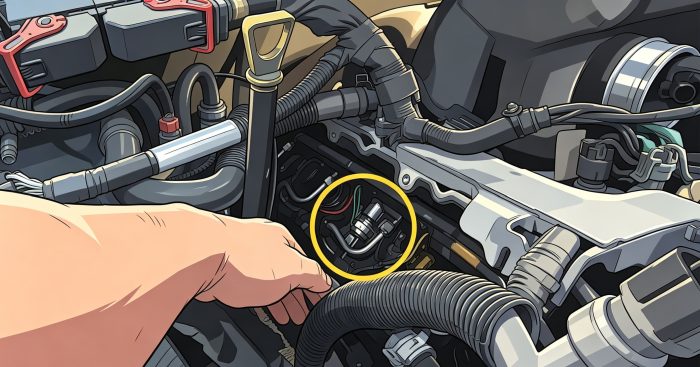
Visual Inspection First
Multimeter Voltage Test
Understanding how to test a truck alternator with a multimeter is valuable, and the same tool verifies sensor circuits. With the key on and engine off (KOEO), back-probe the sensor signal wire. Most fuel rail pressure sensors output between 0.5V and 4.5V proportional to pressure. A reading of 0V or 5V typically indicates an open or shorted circuit.
Compare your reading to the manufacturer's specification at atmospheric pressure (engine off, rail depressurized). Cummins ISX sensors, for example, should read approximately 0.5V at zero rail pressure. Deviations beyond 0.1V warrant further investigation.
Live Data Comparison
Connect a diagnostic scanner capable of reading live PID data. Start the engine and compare the sensor's reported rail pressure against the commanded pressure from the ECM. A healthy sensor tracks commanded pressure closely under all conditions. Deviations greater than 500 PSI at idle or 2,000 PSI under load strongly suggest sensor failure or an actual mechanical fuel system issue.
Fuel Pressure Gauge Verification
For definitive proof, install a mechanical pressure gauge on the fuel rail test port. Compare the gauge reading to the sensor's electronic output. If the gauge shows correct pressure but the sensor reports differently, the sensor is confirmed faulty. This test eliminates the possibility of a failing high-pressure pump being misdiagnosed as a sensor issue.
How the Charging System Connects to Sensor Performance
This might surprise some owners: your diesel engine's electrical output directly affects sensor accuracy. The fuel rail pressure sensor receives a 5V reference signal from the ECM, which itself depends on stable system voltage from the vehicle's charging components. A truck alternator that undercharges allows voltage sags that corrupt sensor signals and trigger false DTCs.
Symptoms of a charging unit not maintaining proper voltage — dim headlights, slow power window operation, or intermittent warning lights — can mask or mimic fuel sensor faults. When diagnosing fuel pressure codes, always verify that the alternator output holds steady between 13.8V and 14.4V (for 12V systems) or 27.6V to 28.8V (for 24V configurations). This applies to 12V 24V truck battery charging systems equally.
For rigs running auxiliary equipment like hydraulic liftgates, inverters, or recovery winches, a high output truck alternator for accessories and winch applications prevents voltage drop that degrades sensitive electronic sensors across the entire vehicle network.
Preventive Maintenance Tips for Fleet Operators
Proactive monitoring saves money. Include fuel rail pressure sensor inspection in your PM-B service intervals. Look for corrosion, connector looseness, and compare live data readings against baseline values established when the sensor was new.
Keep the diesel engine electrical output stable by testing your charging system at every oil change interval. A commercial vehicle voltage regulator that drifts out of specification degrades all electronic sensors gradually, not just the fuel pressure circuit. This fleet maintenance power generation discipline pays for itself in reduced unplanned downtime.
Document baseline fuel pressure readings for each truck in your fleet management software. When a sensor begins degrading, the drift appears in trend data long before a hard failure triggers a code. This predictive approach aligns with how modern fleet maintenance programs operate — catching failures before they strand a driver.
For fleets needing parts organized by vehicle system rather than individual part numbers, browsing by Truck Parts System simplifies procurement and ensures compatibility across multiple units.
When to Seek Professional Help
Not every owner-operator has the scan tools or mechanical gauges needed for complete fuel system diagnosis. If basic multimeter testing reveals normal sensor voltages but drivability symptoms persist, the problem likely involves the high-pressure fuel pump, rail volume control valve, or injector return flow — all of which require specialized equipment to evaluate.
Working with experienced diesel technicians who understand modern electronic fuel systems prevents expensive trial-and-error parts swapping. If you need guidance on diagnosing complex electrical and fuel system interactions, consult dedicated Technical support resources from component suppliers who specialize in heavy-duty applications.
For real-world examples of how fleets have resolved similar diagnostic challenges and reduced unplanned maintenance costs, review published Cooperative case studies that detail the troubleshooting process from symptom to solution.
Choosing the Best Replacement Alternator for Diesel Applications
Since charging system health directly impacts sensor longevity, investing in a quality power generation unit is wise preventive maintenance. The best heavy duty truck alternator for diesel engines delivers consistent amperage across the full RPM range, particularly at low idle speeds common during urban delivery operations or extended PTO usage.
Look for units rated at 200 amps or higher for trucks running significant electrical loads. Brushless designs offer longer service life in high-vibration diesel environments. Pad-mount configurations with sealed bearings resist the road spray and salt exposure that kills cheaper units prematurely.
If you notice truck alternator not charging battery symptoms — such as batteries failing to maintain voltage overnight, warning lights flickering under load, or repeated sensor fault codes after replacing sensors — the charging unit itself likely needs replacement rather than continued sensor troubleshooting.
Common Causes of Fuel Pressure Sensor Failure
Fuel pressure sensor failure in heavy-duty diesel trucks is rarely caused by a single factor. In most real-world fleet operations, the damage is gradual and cumulative, often resulting from harsh working environments and long-term mechanical stress. One of the most common causes is contamination inside the fuel system. Diesel fuel that contains impurities such as dust, water, or microscopic debris can gradually affect the sensor element. Over time, these contaminants may interfere with signal accuracy or physically damage sensitive internal components. This is especially common in regions where fuel quality is inconsistent or filtration systems are not regularly maintained.
Another major factor is electrical wiring and connector degradation. Heavy-duty trucks operate under constant vibration, heat cycles, and sometimes extreme working conditions. These physical stresses can cause wiring insulation to crack, connectors to loosen, or terminals to oxidize. Once electrical contact becomes unstable, the fuel pressure sensor may send intermittent or incorrect signals to the ECU. This type of failure is often difficult to diagnose because it may appear only under certain engine loads or temperature conditions.
Mechanical wear is also a key contributor. Inside the fuel pressure sensor, there is a precision pressure transducer that continuously responds to high-pressure fuel pulses in the common rail system. In high-mileage diesel engines, especially those used in long-haul freight operations, repeated pressure cycling can gradually reduce sensor accuracy. Eventually, the sensor may drift out of specification, causing persistent performance issues even if it has not completely failed.
Thermal and environmental stress further accelerates degradation. Chinese heavy-duty trucks often operate in highly variable environments, including cold northern regions, hot desert climates, and dusty construction zones. These extreme conditions place continuous thermal expansion and contraction stress on sensor materials. Combined with vibration from heavy loads, this significantly shortens sensor lifespan.
Preventive Maintenance for Fuel Pressure Sensors
Preventive maintenance plays a critical role in extending the service life of fuel pressure sensors in heavy-duty diesel trucks. Unlike reactive repair strategies, preventive maintenance focuses on identifying risks before they escalate into failures. One of the most effective measures is implementing a regular inspection schedule. During routine engine servicing, technicians should check the sensor condition, wiring integrity, and connector cleanliness, especially in high-mileage fleet vehicles.
Maintaining a clean fuel system is equally important. High-quality fuel filtration significantly reduces the risk of contamination reaching the sensor. Dirt, water, and fuel impurities are among the leading causes of sensor degradation, so ensuring proper filtration directly improves long-term system stability. Fleet operators are encouraged to use certified fuel filters and replace them at recommended intervals.
Wiring and connector protection is another essential maintenance practice. Because heavy-duty trucks are exposed to constant vibration and harsh environmental conditions, wiring harnesses should be properly secured and shielded from heat sources. Any connector showing corrosion, looseness, or oxidation should be replaced immediately to avoid intermittent signal issues.
Finally, the use of OEM or high-quality replacement parts is crucial. Low-quality sensors may fail prematurely or provide inaccurate readings, leading to repeated downtime and increased maintenance costs. For reliable component sourcing, operators can explore compatible solutions through our Brand section, which supports Chinese heavy-duty truck systems and export markets.