
Common Diesel Fuel Filter Problems in Heavy-Duty Trucks
Introduction
In modern heavy-duty diesel trucks, few components are as important—and as frequently overlooked—as the diesel fuel filter. While drivers and fleet managers often focus on major components such as injectors, turbochargers, alternators, and engines, the fuel filter serves as the first line of defense against contamination that can severely damage the entire fuel system.
Whether operating a SINOTRUK HOWO tractor on long-haul freight routes, a SHACMAN dump truck on construction projects, or a FAW heavy-duty vehicle in regional logistics operations, clean fuel is essential for maintaining reliable engine performance. Today's common rail diesel engines operate at extremely high fuel pressures, often exceeding 2,000 bar. Under these conditions, even microscopic particles can damage fuel injectors, fuel pumps, and emission control systems.
The diesel fuel filter is specifically designed to remove contaminants such as dirt, rust, water, microbial growth, and other impurities before fuel reaches sensitive engine components. When the filter becomes clogged, damaged, contaminated, or improperly maintained, it can trigger a chain reaction of performance issues that eventually lead to expensive repairs and unplanned downtime.
For fleet operators, transportation companies, and truck owners, understanding common diesel fuel filter problems is critical for maximizing uptime and reducing maintenance costs. Early detection of fuel filter issues can prevent injector failures, fuel pump damage, excessive fuel consumption, and costly roadside breakdowns.
At Mettlead, we provide comprehensive solutions for Chinese heavy-duty truck parts and fuel system components through our Technical Support, System Products, and Brand Parts resources. Understanding how fuel filters fail is the first step toward improving fleet reliability and operational efficiency.
Fuel System Deep Importance
In modern heavy-duty diesel trucks, the fuel system is not an isolated component but a fully integrated high-pressure network. The Diesel Fuel Filter works together with the fuel pump, injectors, ECU, and sensors to maintain stable combustion under extreme operating conditions.
In high-load fleet operations, even a slight restriction in the fuel filter can disrupt rail pressure balance inside the common rail system, causing cascading performance issues. This is why fuel filtration is considered a “first-level protection component” in diesel engine engineering.
For Chinese heavy-duty trucks exported to global markets, fuel quality variability makes this component even more critical. Trucks operating in Africa, Southeast Asia, South America, and Middle Eastern regions often face inconsistent diesel purity, increasing the risk of premature filter clogging and injector wear.
What Does a Diesel Fuel Filter Do in a Heavy-Duty Truck?
How Diesel Fuel Travels Through the Fuel System
To understand fuel filter problems, it is first necessary to understand how diesel fuel moves through a modern truck fuel system.
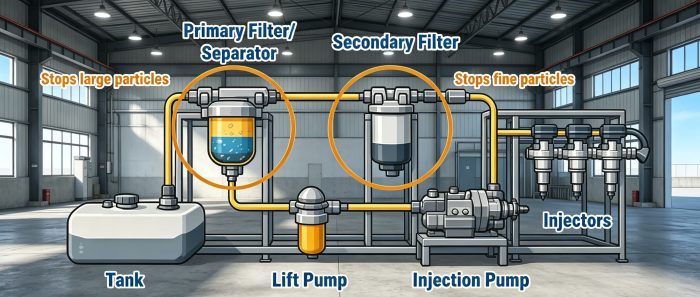
Fuel begins its journey inside the fuel tank, where it is drawn by a transfer pump or low-pressure fuel pump. The fuel then passes through one or more filtration stages before reaching the high-pressure common rail system. After passing through the fuel filter assembly, the fuel enters the high-pressure pump, which compresses the fuel to extremely high pressures before delivering it to the common rail and fuel injectors.
Every component within this system depends on clean fuel. Modern injectors contain precision-machined internal passages measured in microns. Even tiny contaminants can disrupt spray patterns, damage injector needles, and reduce combustion efficiency.
The fuel filter acts as a protective barrier, preventing contaminants from entering these highly sensitive components. Without proper filtration, the entire fuel system becomes vulnerable to premature wear and expensive failures.
Why Clean Fuel Is Critical for Modern Common Rail Engines
Modern diesel engines are significantly more sensitive to fuel contamination than older mechanical injection systems.
In older diesel engines, injection pressures were relatively low, and fuel system tolerances were more forgiving. Modern common rail engines, however, rely on electronic control systems and ultra-high-pressure injection technology to maximize efficiency and meet increasingly strict emissions regulations.
Because fuel pressures are so high, contaminants that might have been harmless in older engines can cause serious damage in newer systems. Water contamination can create corrosion inside injectors. Dirt particles can scratch internal components. Microbial growth can clog fuel passages. Even slight contamination can alter injection timing and combustion quality.
For this reason, fuel filtration has become more important than ever. A properly functioning diesel fuel filter protects thousands of dollars' worth of fuel system components from contamination-related failures.
Fuel Filter vs. Water Separator
Many truck owners mistakenly assume that a fuel filter and a water separator perform the same function. While they are often integrated into a single assembly, their functions are different.
The fuel filter primarily removes solid contaminants such as dirt, rust, dust, and metal particles. The water separator is designed to remove water from diesel fuel before it reaches sensitive fuel system components.
Water contamination is one of the most damaging threats to modern diesel engines. Water reduces fuel lubricity, promotes corrosion, encourages microbial growth, and can severely damage injectors and pumps.
Most modern Chinese heavy-duty trucks use a combined fuel filter and water separator assembly. Regular inspection and maintenance of both functions are essential for long-term fuel system reliability.
Why Fuel Filter Problems Are So Common in Heavy-Duty Trucks
Long-Haul Transportation Creates Continuous Fuel System Stress
Heavy-duty trucks often operate under conditions far more demanding than passenger vehicles. Long-distance freight transportation exposes fuel systems to continuous vibration, changing temperatures, varying fuel quality, and extended operating hours.
A long-haul truck may travel hundreds of thousands of kilometers annually. During this time, the fuel filter must continuously process enormous volumes of fuel while maintaining filtration efficiency.
The longer a vehicle remains in operation, the greater the accumulation of contaminants inside the filter media. Eventually, filtration efficiency declines and restriction increases.
This is why fuel filter maintenance intervals are particularly important for commercial transportation fleets.
Poor Fuel Quality Remains a Global Challenge
Fuel quality varies significantly across regions and markets.
In some areas, fuel storage infrastructure may be outdated. In others, environmental conditions increase contamination risks. Transportation fleets operating internationally may encounter varying fuel standards from one country to another.
Contaminated fuel remains one of the leading causes of premature fuel filter blockage. Dirt, rust, water, microbial contamination, and fuel degradation products can rapidly shorten filter service life.
For fleets operating across multiple regions, maintaining consistent fuel quality standards is essential for reducing fuel-related failures.
Extreme Weather Accelerates Filter Problems
Environmental conditions also play a major role in fuel filter performance.
Cold weather can cause diesel fuel waxing, where paraffin crystals begin forming inside the fuel. These crystals can clog fuel filters and restrict fuel flow.
Hot climates accelerate oxidation and fuel degradation. High humidity increases water contamination risks. Dusty construction environments introduce airborne contaminants that may eventually reach fuel storage systems.
These environmental factors explain why fuel filter problems are especially common in heavy-duty truck operations.
Problem #1 – Clogged Diesel Fuel Filter
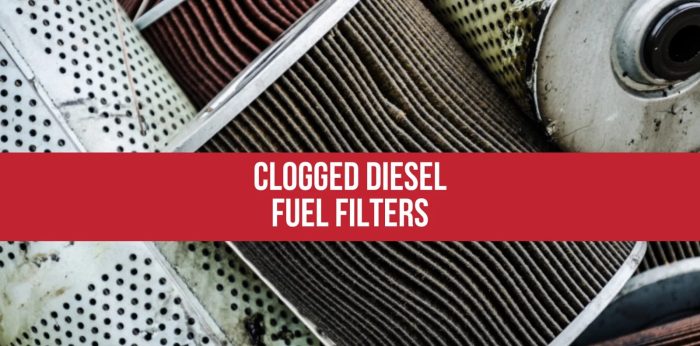
Clogging is by far the most common problem affecting diesel fuel filters in heavy-duty trucks. Over time, contaminants such as dirt, rust, water, and microbial debris accumulate in the filter media, gradually restricting fuel flow. In early stages, drivers may notice subtle signs: slight hesitation during acceleration, minor RPM fluctuations, or longer cranking times. However, as the clogging progresses, symptoms become more pronounced. Fully clogged filters can cause significant engine power loss, stalling, and difficulty starting under load.
Clogging not only impacts engine performance but also increases stress on the high-pressure fuel pump. A pump trying to maintain required injection pressures against restricted fuel flow experiences accelerated wear, overheating, and potentially catastrophic failure. This is particularly problematic in long-haul Chinese heavy-duty trucks, such as SINOTRUK HOWO or FAW J6 series, which operate under continuous high-load conditions. Fleets that neglect filter replacement risk unplanned downtime and costly repairs.
From a maintenance perspective, monitoring pressure drop across the fuel filter is critical. Many modern trucks are equipped with differential pressure sensors that alert drivers when filter restriction exceeds safe limits. For trucks without sensors, scheduled visual inspections and adherence to OEM-recommended service intervals are essential. Early replacement not only restores proper fuel flow but also protects downstream components such as fuel injectors and high-pressure pumps. For guidance on compatible replacement filters and maintenance procedures, operators should consult our Brand and System pages.
Diesel fuel filter clogging does not happen suddenly. It follows a progressive failure pattern:
First stage: micro-contaminant accumulation begins inside filter media.
Second stage: fuel flow restriction starts affecting engine throttle response.
Third stage: high-pressure pump compensates by increasing load.
Final stage: fuel starvation occurs under acceleration or uphill load.
At this stage, the engine may still operate normally at idle, which often misleads drivers into delaying maintenance. However, internal stress on the fuel pump increases significantly during this period, reducing overall system lifespan.
Fleet maintenance data shows that over 60% of fuel pump failures are directly linked to delayed Diesel Fuel Filter replacement.
Problem #2 – Water Contamination Inside the Fuel Filter
Water contamination is another major fuel filter problem, especially in humid regions or areas with substandard fuel storage. Diesel fuel inherently contains trace amounts of water. If the water separator or filter bowl is not regularly drained, water can accumulate and reach critical components such as injectors and pumps. Water in diesel fuel reduces lubricity, promotes corrosion, encourages microbial growth, and can lead to injector sticking or high-pressure pump failure.
Symptoms of water contamination include engine misfires, black smoke during acceleration, or sudden stalling. Drivers may also notice fluctuating fuel pressure or warning lights on the dashboard. For heavy-duty trucks operating in construction sites, high humidity, or cold climates where condensation forms inside the tank, this problem is amplified. Some modern trucks include water level sensors that trigger early warnings, but not all fleets have this feature. Manual inspection and periodic draining remain critical preventive measures.
Maintenance involves regularly checking the water separator and fuel filter assembly. Draining water accumulation according to manufacturer schedules prevents engine damage and improves fuel system reliability. Using high-quality fuel filters with integrated water separation technology is recommended for long-haul trucks. Operators can reference detailed inspection procedures on our Technical Support page.
Water contamination in diesel fuel does not only affect combustion efficiency. It triggers a chain reaction inside the fuel system:
Water reduces lubrication inside injectors → metal-to-metal friction increases
Corrosion begins inside high-pressure pump chambers
Injector spray pattern becomes unstable
Incomplete combustion increases carbon deposits in cylinders
Over time, this leads to higher fuel consumption and increased emissions. In extreme cases, injector seizure or pump failure can occur, resulting in complete engine shutdown.
This is why water separation efficiency is one of the most important performance indicators of a high-quality Diesel Fuel Filter.
Problem #3 – Fuel Starvation Caused by Filter Restriction
Fuel starvation occurs when the diesel fuel filter cannot supply enough fuel to the engine, usually due to clogging, water accumulation, or improper installation. In this scenario, the engine receives insufficient fuel for combustion, resulting in rough idling, engine hesitation, stalling under load, and decreased power output. Unlike complete engine shutdown caused by sensor failures, fuel starvation often manifests gradually and may be mistaken for other engine issues if not properly diagnosed.
Long-haul Chinese heavy-duty trucks, particularly those carrying full payloads, are highly susceptible. Fuel starvation not only reduces performance but also triggers protective ECU functions. The engine may enter a limited power mode to prevent damage, affecting delivery schedules and operational efficiency. Over time, repeated starvation events can damage high-pressure fuel pumps and injectors, leading to costly repairs.
Technicians can diagnose fuel starvation by combining visual inspections, fuel pressure measurements, and observing engine behavior under various load conditions. Ensuring correct filter installation, replacing clogged filters promptly, and maintaining clean fuel supply are critical for preventing this problem. Fleet operators should consult our Technical Support and System resources for step-by-step diagnostic guidance.
Fuel starvation issues become most obvious under high-load conditions such as:
- highway overtaking
- uphill climbing
- fully loaded freight transport
- high-speed cruising
During these conditions, engine fuel demand increases rapidly. If the Diesel Fuel Filter cannot supply sufficient flow, rail pressure drops instantly, causing ECU correction or power limitation mode.
For fleet operators, this is not just a performance issue—it directly impacts delivery schedules, fuel efficiency, and driver safety.
Problem #4 – Fuel Filter Housing Leaks
Fuel filter housing leaks are less common than clogging or water contamination but can have severe consequences. Leaks may occur due to cracked housings, worn seals, or improper installation. When the housing leaks, unfiltered fuel may bypass the filter media, allowing contaminants to reach the high-pressure pump and injectors. This can result in reduced engine performance, erratic idling, or even complete engine shutdown under heavy load.
Heavy-duty Chinese trucks like SINOTRUK HOWO or FAW J6 are particularly exposed to vibration and extreme road conditions, which can exacerbate minor defects in the housing. Over time, metal fatigue or plastic degradation can lead to hairline cracks, which may not be immediately visible during routine inspections. Technicians must inspect the housing carefully during maintenance and ensure that seals and O-rings are correctly installed and intact. Replacing damaged filter assemblies promptly protects the entire fuel system and prevents downstream damage.
Problem #5 – Wax Build-Up During Cold Weather
Wax formation, also known as diesel fuel gelling, occurs when paraffin components in diesel crystallize under low temperatures. This wax can accumulate inside the fuel filter, restricting fuel flow and causing intermittent power loss, rough idling, or engine stalling. Long-haul trucks operating in northern climates or during winter months are most susceptible.
Wax build-up is particularly problematic in trucks with high injection pressures and sensitive injectors, as even partial fuel restriction can affect combustion efficiency. Drivers may notice difficulty starting the engine in the morning or unusual hesitations during acceleration. Preventive measures include using winterized diesel fuel, applying fuel additives, and installing pre-heaters or heated fuel filter assemblies. For fleet operations, monitoring seasonal fuel quality and conducting pre-winter inspections are essential.
Problem #6 – Premature Fuel Filter Failure
Premature fuel filter failure can occur even when replacement intervals are followed, often due to factors such as low-quality fuel, excessive engine load, or environmental stress. High-pressure common rail systems in Chinese heavy-duty trucks operate under extreme conditions, and any deviation from ideal operating parameters can reduce filter lifespan. Symptoms include reduced fuel flow, pressure fluctuations, and occasional misfiring.
Understanding the underlying causes is critical for fleet managers. Using genuine OEM filters designed for specific truck models reduces the risk of early failure. Regular inspections, pressure differential monitoring, and adherence to maintenance schedules also help prevent premature failure.
Problem #7 – Using Low-Quality Fuel Filters
Using non-OEM or low-quality fuel filters is a frequent cause of fuel system issues. Cheap filters often have inconsistent filtration media, poor seals, or improper sizing. These defects can allow contaminants to bypass the filter, reduce fuel flow, or fail prematurely under high-pressure operation.
Fleet operators must carefully select filters compatible with their truck models. Chinese heavy-duty trucks like SINOTRUK and FAW are engineered with specific tolerances, and using improper filters can lead to injector damage, pump wear, and unexpected downtime. Choosing high-quality OEM parts ensures reliable filtration, maintains fuel system integrity, and prolongs component life.
Many fleet buyers focus only on initial procurement cost when selecting fuel filters. However, in real-world fleet operation, the cost difference between OEM and low-quality filters is minimal compared to potential failure losses.
A single injector replacement can cost 20–50 times more than a fuel filter. A fuel pump failure may cost even more and require vehicle downtime, which increases logistics delay costs.
Therefore, using certified Diesel Fuel Filter components is not a purchase decision—it is a risk control strategy.
Common Causes of Diesel Fuel Filter Problems
Diesel fuel filter problems usually result from multiple interacting factors rather than a single cause. Common causes include contaminated fuel, water ingress, air leaks, improper installation, extreme temperature variations, and prolonged high-load operations. Chinese heavy-duty trucks operating in construction, mining, long-haul logistics, or harsh environmental conditions experience higher stress on their fuel systems. Identifying the root causes is essential for effective prevention and maintenance.
How to Diagnose Diesel Fuel Filter Problems
Proper diagnosis involves a combination of visual inspections, functional testing, and sensor monitoring:
- Inspect filters for water, dirt, cracks, or leaks.
- Measure pressure drop across the filter to detect partial or complete blockage.
- Observe engine performance, including idling, acceleration, and stalling under load.
- Use multimeter or scan tools to check fuel pressure sensors and ECU readings.
- Integrate diagnostics with ABS, traction control, and other system data for fleet-wide monitoring.
Early diagnosis allows for timely replacement and prevents damage to injectors or pumps. Detailed step-by-step procedures are documented on our Contact us page.
Preventive Maintenance Strategies for Diesel Fuel Filters
Preventive maintenance is the most effective strategy to avoid costly fuel system failures:
- Replace filters according to OEM-recommended intervals.
- Drain water separators regularly.
- Inspect and replace worn or damaged hoses and seals.
- Use high-quality fuel and avoid contamination.
- Choose OEM-approved filters for compatibility and longevity.
Fleet operators should integrate preventive maintenance into their routine schedules to minimize downtime, maintain engine efficiency, and reduce fuel consumption.
Conclusion
Diesel fuel filters are critical for maintaining engine performance, reliability, and longevity in heavy-duty trucks. Problems such as clogging, water contamination, air restrictions, housing leaks, wax buildup, premature failure, and the use of low-quality filters can all have serious consequences, including injector damage, fuel pump wear, poor combustion, and increased operational costs. For Chinese heavy-duty trucks like SINOTRUK, FAW, and SHACMAN, proactive monitoring, regular maintenance, and use of OEM-quality components are essential to ensure safe, efficient, and reliable fleet operations.
For large-scale fleet operators, Diesel Fuel Filter maintenance should be integrated into a systematic preventive maintenance program rather than handled individually.
Recommended fleet strategy includes:
- standardized filter replacement intervals
- fuel quality monitoring system
- periodic fuel tank cleaning
- driver inspection training
- centralized maintenance records
This system-based approach significantly reduces unplanned downtime and extends overall fuel system lifespan.
Frequently Asked Questions (FAQ)
1. How often should a diesel fuel filter be replaced in heavy-duty trucks?
The replacement interval of a Diesel Fuel Filter depends heavily on operating conditions, fuel quality, and engine load. In standard highway applications, most manufacturers recommend replacing the fuel filter every 20,000 to 50,000 kilometers. However, in real-world fleet operations, especially for heavy-duty trucks operating in construction sites, mining areas, or regions with inconsistent fuel quality, the replacement cycle may need to be shortened significantly.
In dusty environments or long-haul freight operations where trucks run under continuous load, contaminants accumulate much faster inside the filter media. Once the restriction begins to increase, fuel flow becomes unstable, which directly affects engine performance and fuel efficiency. For this reason, many fleet operators implement preventive replacement schedules rather than waiting for symptoms to appear.
Regular inspection combined with pressure drop monitoring across the filter is considered best practice in professional fleet maintenance programs.
This system-based approach significantly reduces unplanned downtime and extends overall fuel system lifespan.
2. What are the first signs of a clogged fuel filter?
A clogged Diesel Fuel Filter does not usually fail suddenly. Instead, it develops gradually, and early symptoms are often subtle. The first noticeable sign is usually a slight reduction in engine responsiveness. Drivers may feel that the truck does not accelerate as smoothly as before, especially under load or when climbing slopes.
As clogging progresses, more obvious symptoms appear, such as longer engine cranking time during startup, irregular idle speed, or intermittent hesitation during acceleration. In advanced stages, the engine may experience fuel starvation, resulting in power loss or even stalling.
One important diagnostic challenge is that these symptoms can also resemble injector or turbocharger issues. This is why proper fuel system inspection is critical before replacing expensive components.
3. Can a bad fuel filter damage injectors?
Yes, a failing or inefficient Diesel Fuel Filter can directly lead to injector damage. Modern common rail injectors operate under extremely high pressure and require perfectly clean fuel for proper operation. Even microscopic particles that pass through a compromised filter can cause internal wear inside the injector.
Over time, contamination can damage injector nozzles, alter fuel spray patterns, and reduce combustion efficiency. This results in increased fuel consumption, higher emissions, and rough engine performance.
In severe cases, injector failure may occur, requiring costly replacement. In fleet operations, injector damage caused by poor filtration is one of the most expensive fuel system failures, making fuel filter quality a critical investment rather than a consumable expense.
4. Is fuel starvation dangerous for truck engines?
Fuel starvation is a serious condition in heavy-duty diesel engines and should never be ignored. When the Diesel Fuel Filter becomes restricted, the engine cannot receive sufficient fuel to maintain proper combustion. This leads to unstable engine operation, hesitation, and loss of power.
Under high-load conditions such as highway driving, uphill climbing, or full cargo transport, fuel demand increases significantly. If the fuel system cannot meet this demand, the engine may enter ECU protection mode to prevent damage. This reduces engine output and can create dangerous driving situations, especially in high-speed traffic or mountainous terrain.
Repeated fuel starvation events also place excessive stress on the fuel pump, which must work harder to maintain pressure. Over time, this can lead to premature pump failure and increased maintenance costs.
5. What is the difference between a fuel filter and a water separator?
Although often combined into a single assembly, a fuel filter and a water separator serve two distinct functions in a diesel fuel system.
The Diesel Fuel Filter is designed to remove solid contaminants such as dust, rust particles, and other impurities from diesel fuel. These particles can cause mechanical wear in injectors and fuel pumps if not properly filtered.
The water separator, on the other hand, is specifically designed to remove water from diesel fuel. Water is particularly harmful because it reduces lubrication, promotes corrosion, and can cause injector malfunction or pump damage.
In many modern heavy-duty trucks, especially Chinese models like SINOTRUK and FAW, both functions are integrated into a single filtration unit to improve system efficiency and simplify maintenance. Regular draining of the water separator and timely filter replacement are essential for maintaining fuel system health.
6. What happens if low-quality fuel filters are used?
Using a low-quality Diesel Fuel Filter can have serious long-term consequences for the entire fuel system. Inferior filters often use poor-grade filtration media, weak structural materials, and low-quality sealing components. These weaknesses reduce filtration efficiency and increase the risk of fuel contamination reaching sensitive engine parts.
In high-pressure common rail systems, even minor contamination can lead to injector wear, fuel pump damage, and unstable engine performance. Additionally, low-quality filters may collapse under pressure or fail prematurely, causing sudden fuel restriction or bypass of unfiltered fuel.
From a fleet management perspective, the initial cost savings of low-quality filters are far outweighed by the potential repair costs and downtime caused by fuel system failures. This is why professional operators consistently choose OEM-quality or certified replacement filters for heavy-duty applications.


