Why Reliable Electrical Components Matter for Heavy-Duty Vehicles
Truck electrical parts are the backbone of modern heavy-duty trucks, powering critical systems from lighting and ignition to braking and navigation.
Unlike other components, these parts directly influence vehicle safety and operational efficiency—even a small malfunction can lead to costly downtime or safety hazards.
Additionally, high-performance electrical components enhance overall vehicle reliability, especially in harsh working environments.
Whether operating in extreme temperatures or dusty construction sites, durable electrical components ensure consistent performance, reducing the need for frequent replacements and repairs.
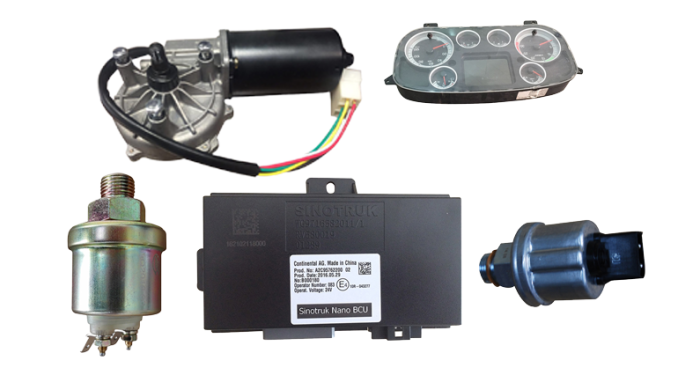
Complete Truck Electrical Parts Set
To better understand their importance, consider that every critical function—from starting the engine to powering the dashboard—relies on well-maintained electrical components.
Neglecting these components can lead to unexpected breakdowns, disrupting delivery schedules and increasing operational costs.
Key Features of Dependable Heavy-Duty Electrical Parts
Not all electrical components for heavy-duty trucks are built to the same standards. To ensure long-term reliability, prioritize parts that meet strict quality criteria. Below are the core features that distinguish high-quality parts from ordinary ones.
First, durability is non-negotiable. Premium components are made with high-grade materials that resist corrosion, heat, and vibration—common stressors in heavy-duty operations. This material choice extends their service life and ensures they perform well in harsh conditions.
Second, precision engineering plays a vital role. Well-designed electrical components fit seamlessly with different truck models, minimizing installation issues and ensuring optimal performance. This precision also reduces the risk of short circuits or electrical failures that can damage other vehicle systems.
Furthermore, compatibility is key. The best electrical components are designed to fit a wide range of heavy-duty truck models, covering both mainstream and niche brands to avoid limitations. This flexibility makes it easier for fleet operators and repair shops to source the right components quickly.
Our Top-Tier Heavy-Duty Electrical Components
We focus on providing reliable electrical components that meet industry standards, ensuring compatibility and performance for various heavy-duty applications.
Our product line includes essential parts like wiring harnesses, sensors, alternators, and starters—all built to withstand the rigors of daily use.
For detailed specifications and compatible truck models, visit our truck electrical partsproduct page. Here, you’ll find comprehensive information to help you select the perfect components for your needs
Compatibility & Durability of Our Electrical Parts
As an important supplement to our product system, our truck electrical parts not only meet strict quality standards but also feature strong compatibility and durability.
Unlike some ordinary components on the market, our products are carefully designed to adapt to a variety of heavy-duty truck models, covering both mainstream and niche brands, thus avoiding the limitation of single-model adaptation.
In terms of durability, all our electrical components are made of high-grade materials that can resist high temperature, humidity, and vibration, which are common in heavy-duty working environments.
This ensures that the parts can maintain stable performance even under harsh conditions, reducing the frequency of replacement and the corresponding operational costs.
In addition, we pay special attention to the practicality of the products. Each electrical part is subject to strict quality testing before leaving the factory, ensuring that it can perfectly match the vehicle system and avoid malfunctions caused by improper fit.
This not only improves the efficiency of equipment operation but also reduces the maintenance burden on users.
Common Issues & Quick Fixes for Heavy-Duty Electrical Parts
Even the most reliable electrical components can develop issues over time, especially with heavy use. Fortunately, many common problems are easy to identify and resolve with basic inspections, saving you time and money on unnecessary repairs.
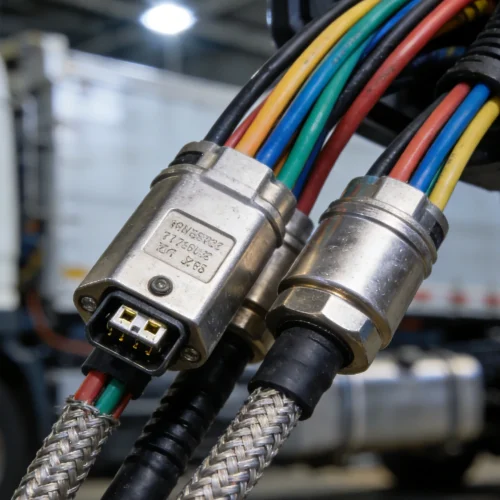
One frequent issue is loose or corroded connections. Dirt, moisture, and vibration can cause electrical connections to weaken, leading to intermittent power loss or component failure. To fix this, regularly clean and tighten connections, and replace corroded terminals promptly.
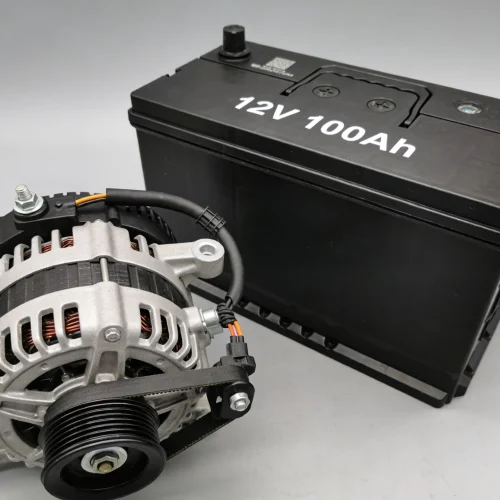
Another common problem is battery drain. If your truck’s battery dies unexpectedly, it may be due to a faulty alternator or a short circuit in the electrical system. Test the alternator regularly and inspect wiring for damage to prevent this issue.
Proactive Maintenance Tips for Heavy-Duty Electrical Parts
Preventive maintenance is the best way to extend the life of your electrical components and avoid unexpected breakdowns. By following these simple tips, you can keep your electrical system in top condition for years to come.
Start with regular inspections. Every month, check wiring harnesses for signs of wear, damage, or fraying. Pay close attention to areas exposed to heat or vibration, as these are more prone to issues. Additionally, clean battery terminals and check for corrosion to ensure a strong connection.
Next, protect electrical components from harsh conditions. For trucks operating in dusty or wet environments, use protective covers for sensitive parts like sensors and wiring. This prevents debris and moisture from causing damage.
Finally, use high-quality replacement parts. When replacing electrical components, always choose parts that meet or exceed OEM standards. This ensures compatibility and reliability, reducing the risk of future issues.
🔌 Electrical System as a Dynamic Power Network
Truck electrical systems should not be understood as isolated components, but as a continuously operating power and signal network. The system connects energy generation, distribution, and communication layers into a single structure that operates in real time.
Power begins at the battery, is regulated by the alternator, and is distributed through wiring harnesses to multiple control units. At the same time, sensors and modules communicate through digital networks such as CAN bus, allowing real-time coordination between engine control, transmission behavior, and onboard electronics.
This means the system is always active and constantly adjusting. Even small instability in voltage or signal quality can influence multiple subsystems simultaneously, which is why electrical issues often appear complex and interconnected.
⚡ Electrical Failure Progression and System Degradation
Electrical system failures in trucks rarely occur suddenly. Instead, they develop gradually through progressive degradation of voltage stability, connection quality, and signal integrity.The earliest stage is usually minor voltage fluctuation or increased resistance in grounding points. At this stage, the vehicle may still operate normally, but internal electrical balance is already affected.
As degradation continues, sensors begin to receive inconsistent power supply, and communication between modules becomes less stable. This leads to intermittent warning signals or irregular system behavior.
In advanced stages, multiple subsystems may fail simultaneously due to communication breakdown or severe voltage instability. This progression explains why electrical issues often appear unpredictable from a driver’s perspective.
🔧 Real-World Diagnostic Logic in Electrical Systems
Diagnosing truck electrical issues requires a structured approach that goes beyond simple part replacement. The process begins with identifying symptoms such as voltage drops, flickering lights, or inconsistent sensor behavior.
Technicians typically start with battery and alternator testing to confirm baseline power stability. If results are normal, attention shifts to grounding points, wiring harness condition, and connector integrity.
When physical inspection does not reveal clear faults, diagnostic tools are used to analyze ECU error codes and communication status across the vehicle network.This layered diagnostic approach is necessary because electrical failures often originate from indirect causes rather than the visibly affected component.
💰 Fleet Operating Cost Impact of Electrical Failures
Electrical system failures can create significant operational costs for commercial truck fleets, often exceeding the direct repair expenses.Unlike mechanical failures, electrical issues frequently require extended diagnostic time to identify the root cause. This increases labor costs and vehicle downtime.
In addition, unstable electrical systems can trigger multiple secondary failures, leading to unnecessary replacement of components that are not actually defective.For fleet operators, these issues directly affect delivery schedules, operational efficiency, and overall profitability, making electrical system stability a critical maintenance priority.
⚠️ Common Misdiagnosis in Truck Electrical Repairs
One of the most common challenges in truck electrical maintenance is incorrect diagnosis of failure sources. Technicians may replace sensors, batteries, or control modules without identifying the underlying electrical instability.
In many cases, the actual root cause lies in hidden issues such as grounding resistance, wiring degradation, or connector corrosion.Because symptoms often overlap across multiple systems, misdiagnosis can lead to repeated failures even after parts have been replaced.This makes system-level diagnosis more important than component-level repair in modern truck electrical systems.
🌐 Intermittent Electrical Failure Behavior
Intermittent electrical failures are among the most difficult issues to diagnose in truck systems because they do not occur consistently.These problems are often influenced by vibration, temperature changes, or load variations during operation. As a result, a vehicle may perform normally during inspection but fail under real driving conditions.
This behavior usually indicates early-stage electrical degradation, particularly in connectors, grounding points, or wiring harnesses.Intermittent faults should always be treated as warning signs of deeper system instability rather than isolated incidents.
🔋 Why Electrical Issues Spread Across Multiple Systems
Modern trucks use integrated electronic architecture, where multiple systems are interconnected through shared communication networks.Because of this structure, a single electrical issue can propagate across different modules. For example, voltage instability may affect both engine control and transmission behavior simultaneously.
Similarly, communication errors within the CAN bus system can trigger false warnings or abnormal system responses in unrelated subsystems.This interconnected behavior explains why electrical failures often appear widespread even when the root cause is localized.
Choose Our Dependable Electrical Components for Peace of Mind
When it comes to electrical components for heavy-duty trucks, quality and reliability are critical. Our products undergo rigorous testing to ensure they meet industry standards, delivering consistent performance even in the toughest conditions.
We also offer comprehensive after-sales support, including technical guidance and compatibility assistance. Whether you need help selecting the right part or troubleshooting an issue, our team is here to help.
If you have specific questions or need personalized assistance, contact our team via our contact page—we’re ready to help you find the perfect truck electrical parts for your needs.
❓ 5. FAQ
Why do truck electrical problems often appear intermittently?
Truck electrical issues often behave intermittently because the underlying faults are sensitive to vibration, temperature changes, and electrical load variations. Unlike mechanical failures that are usually constant, electrical problems may only occur under specific driving conditions.
For example, a slightly loose grounding point or partially corroded connector may still function during idle testing, but once the truck is in motion, vibration and heat expansion can disrupt the connection. This leads to temporary voltage drops or signal interruptions.
Because of this behavior, intermittent electrical faults are often the earliest warning signs of system degradation. They indicate that the electrical system is losing stability even if it still appears functional during inspection.
Why do truck electrical issues affect multiple systems at the same time?
Modern trucks rely heavily on integrated electronic systems where multiple control units communicate through shared networks such as CAN bus.This means that electrical instability in one area is rarely isolated. A voltage fluctuation or grounding issue can affect several systems at once, including engine management, transmission control, lighting systems, and dashboard communication.
For instance, a weak ground connection can cause inconsistent voltage distribution. This may lead the ECU to misinterpret sensor data, triggering false warning lights or abnormal system behavior across different modules.
This interconnected design improves efficiency but also means that a single electrical fault can create a chain reaction across the entire vehicle system.
Why is truck electrical diagnosis more difficult than mechanical repair?
Truck electrical diagnosis is more complex because symptoms do not always match the actual root cause. In many cases, the visible issue is only a secondary effect of a deeper electrical instability.
For example, a malfunctioning sensor may not be defective at all. Instead, it could be receiving unstable voltage due to wiring resistance or poor grounding. Similarly, ECU error codes may appear even when the ECU itself is functioning correctly.
This creates a diagnostic challenge where technicians must trace the entire electrical path rather than focusing on a single component. Without systematic testing, there is a high risk of replacing parts that are not actually faulty.
Can a weak battery cause widespread electrical failures in trucks?
Yes, a weak or aging battery can affect multiple electrical systems because it serves as the primary voltage stabilizer during engine start and low-load conditions.When battery output becomes unstable, voltage levels across the system fluctuate. This can cause sensors to behave unpredictably, ECU communication to become inconsistent, and electronic accessories to malfunction.
Even if the alternator is working properly, a weak battery can still create instability during peak load changes, especially when the engine is starting or idling under electrical demand.Because of this, battery condition is often one of the first checks in electrical system diagnostics.
Why do truck electrical problems return after repair?
Recurring electrical problems usually indicate that the root cause was not fully addressed during the initial repair.In many cases, technicians replace a visible faulty component such as a sensor or alternator without identifying the underlying system issue. However, the actual problem may be related to wiring resistance, grounding degradation, or connector corrosion.
If these hidden issues are not repaired, the system continues to operate under unstable electrical conditions. As a result, the same symptoms reappear even after component replacement.This is why electrical repair in trucks often requires system-level diagnosis rather than part-by-part replacement.
What is the most common hidden cause of truck electrical failure?
One of the most common hidden causes of electrical failure in trucks is grounding deterioration.Over time, grounding points can become corroded, loose, or contaminated. This increases electrical resistance and disrupts stable voltage distribution throughout the system.
When grounding becomes unstable, multiple components may begin to show irregular behavior, including sensor errors, intermittent warnings, and communication failures between control modules.Because grounding issues are not always visible during standard inspection, they are often overlooked, even though they are one of the most frequent causes of complex electrical problems.
Why do truck electrical systems fail more under heavy-duty operation?
Heavy-duty trucks operate under conditions that place continuous stress on the electrical system, including vibration, heat, and long operating hours.These conditions accelerate wear on wiring insulation, connectors, and mounting points. At the same time, increased electrical demand places additional load on the alternator and battery system.
Over time, this combination of mechanical and electrical stress leads to gradual degradation of system stability. Small issues that might not affect light-duty vehicles become significant in heavy-duty applications due to continuous exposure.
How does poor wiring condition affect truck electrical performance?
Poor wiring condition can significantly disrupt electrical performance by increasing resistance and reducing signal quality.When wiring insulation deteriorates or internal conductors become damaged, voltage drops can occur along the circuit. This leads to inconsistent power delivery to sensors and control units.
In addition, damaged wiring can introduce electrical noise or intermittent connections, which may result in false readings or communication errors between modules.Because wiring issues often develop gradually, they can be difficult to detect until system-level symptoms begin to appear.