7 Signs Your Truck Brake Shoes Need Replacement
Why Worn Braking Friction Components Are a Hidden Risk for Truck Fleets
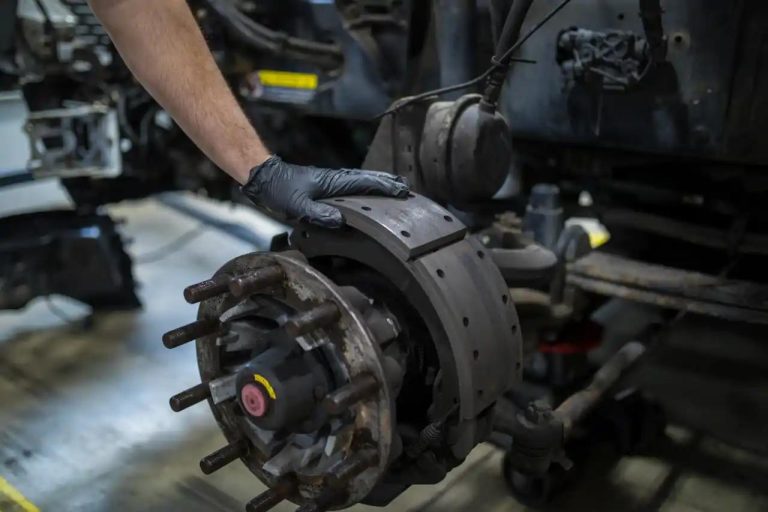
Every heavy-duty truck depends on a deceptively simple part to convert motion into a safe, controlled stop. Inside the drum brake system, the curved friction element known as the brake shoe presses outward against the rotating drum, generating the heat and resistance that slow the vehicle. When that component degrades, stopping distances grow and risk multiplies.
According to crash data published by the U.S. Federal Motor Carrier Safety Administration, brake-related issues remain among the most frequently cited mechanical defects in commercial vehicle inspections, accounting for roughly a quarter of out-of-service violations in recent reporting cycles. For fleet operators, that is not an abstract statistic. It is a maintenance signal that demands attention.
Drawing on more than 15 years of work with truck powertrain and braking components, this guide walks through the seven warning signs that indicate friction shoes are wearing out, explains the underlying causes, and outlines practical fixes. The goal is straightforward: help you act before a small wear issue becomes a roadside breakdown.
How Drum Brake Friction Shoes Actually Work
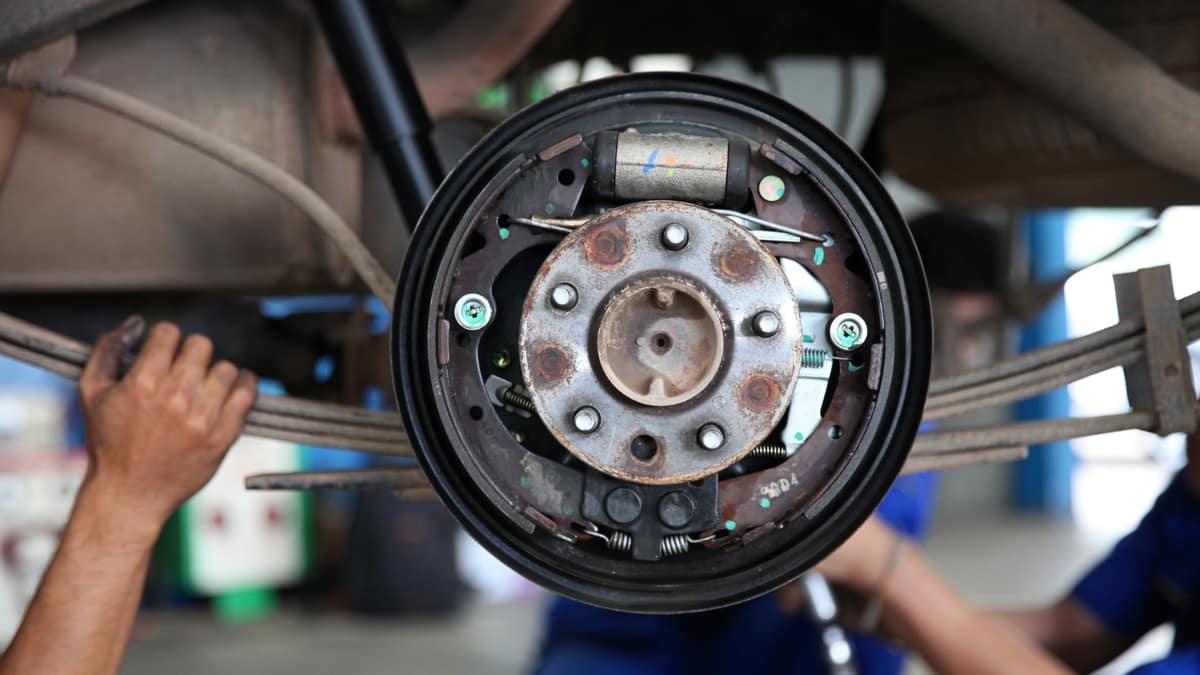
Before diagnosing problems, it helps to understand the mechanics. In a drum brake assembly, hydraulic or air pressure forces a wheel cylinder or actuator to push two friction shoes outward. The bonded or riveted lining on each shoe contacts the inner surface of a spinning drum, and the resulting friction decelerates the wheel.
This design has powered medium and heavy trucks for decades because it handles high loads, dissipates heat across a large surface, and offers a long service life when maintained. The trade-off is that the friction material is a wear item by design. It is engineered to sacrifice itself gradually so the more expensive drum survives.
Because the lining wears slowly, drivers often miss the early indicators. A shoe that has lost 70 percent of its material can still feel acceptable on a light run, then fail to perform when the truck is fully loaded on a long descent. Recognizing the subtle signals early is what separates proactive maintenance from emergency repairs.
The 7 Common Signs Your Truck Friction Shoes Need Replacement
The following symptoms rarely appear in isolation. More often, two or three show up together, and the combination tells a clearer story than any single clue. Treat each one as a prompt to inspect rather than a diagnosis on its own.
1. High-Pitched Squealing or Grinding Noise
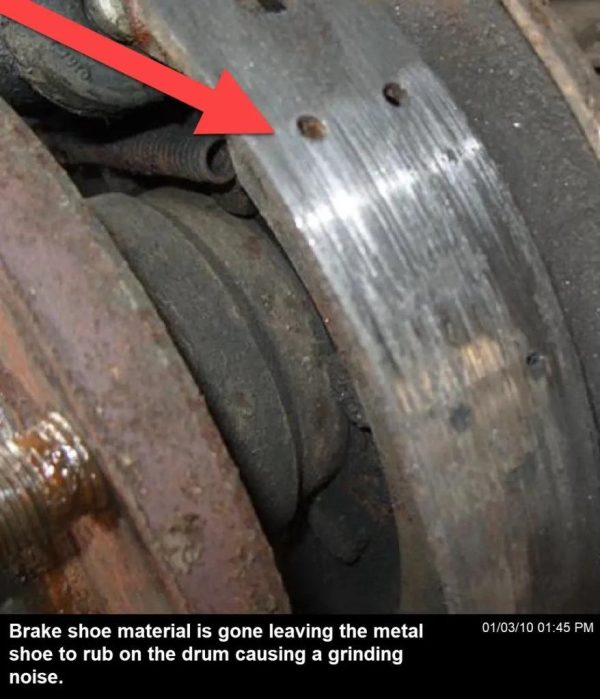
Sound is usually the first messenger. A persistent squeal during braking often points to a hardened or glazed lining surface, while a harsh metallic grinding suggests the friction material has worn down to the steel backing. Once you hear metal on metal, the drum itself is being damaged.
Noise that changes with brake pressure or only appears when the brakes are cold can indicate uneven wear or contamination. Either way, an audible warning is the cheapest diagnostic tool a fleet has. Ignoring it almost always raises the eventual repair bill.
2. Longer Stopping Distances and Weak Braking Response
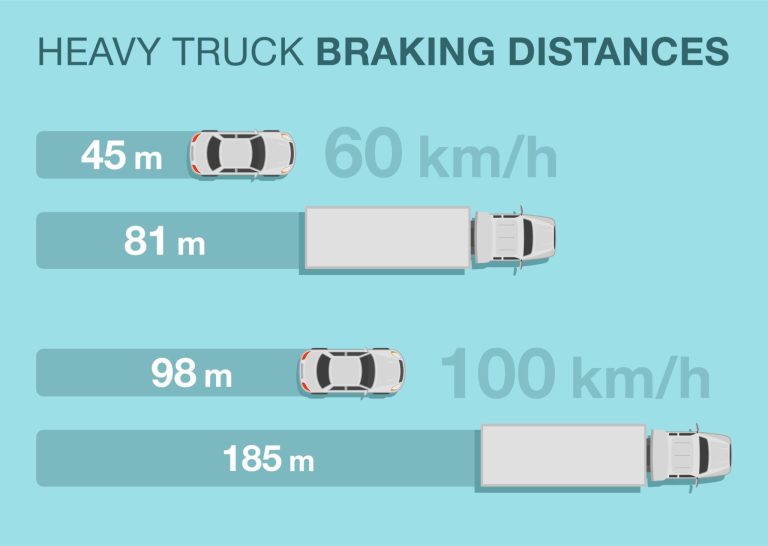
If your drivers report that the truck takes noticeably more road to stop, the friction surface may be too thin or glazed to generate adequate grip. Reduced braking force is one of the most dangerous signs of worn brake shoes because it directlyextends the gap between intent and action.
This degradation is gradual, so drivers adapt without realizing it. Comparing current stopping behavior against a loaded baseline test reveals the difference. When braking confidence drops, the friction components deserve immediate inspection.
3. Vibration or Pulsation Through the Brake Pedal
A pulsing pedal or a shudder through the cab during deceleration frequently traces back to uneven shoe wear or an out-of-round drum. As the lining contacts high and low spots on the drum surface, braking force fluctuates and the pedal transmits that rhythm.
Vibration is not just uncomfortable. It signals that contact pressure is inconsistent, which accelerates wear and reduces overall stopping efficiency. Left unaddressed, the irregular surface can score the drum beyond the point of safe resurfacing.
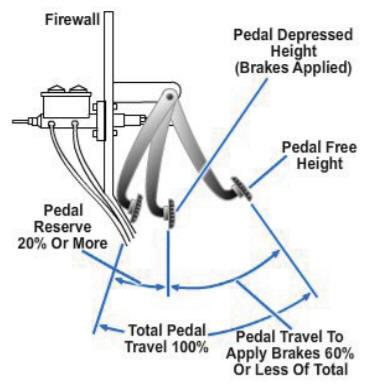
4. A Soft, Spongy, or Sinking Pedal
While a spongy pedal can stem from air in a hydraulic line, it also appears when worn shoes force the actuation system to travel farther to make contact. The extra travel feels like a loss of firmness and undermines driver feedback.
On air-brake trucks, excessive slack adjuster travel reflects the same root cause: the lining has thinned, so the mechanism reaches further to compensate. Restoring a firm, predictable pedal almost always involves servicing or renewing the friction shoes.
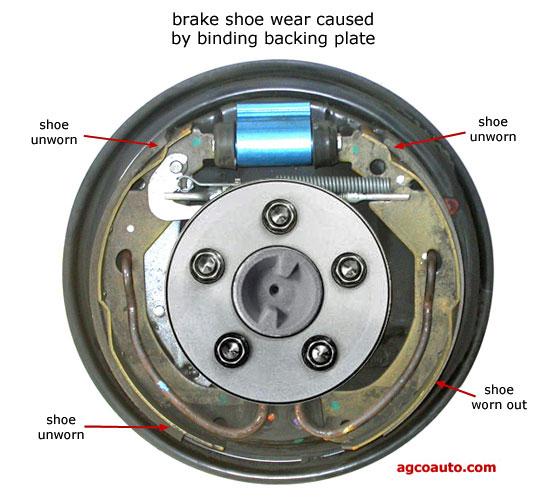
5. Visible Thinning of the Friction Lining
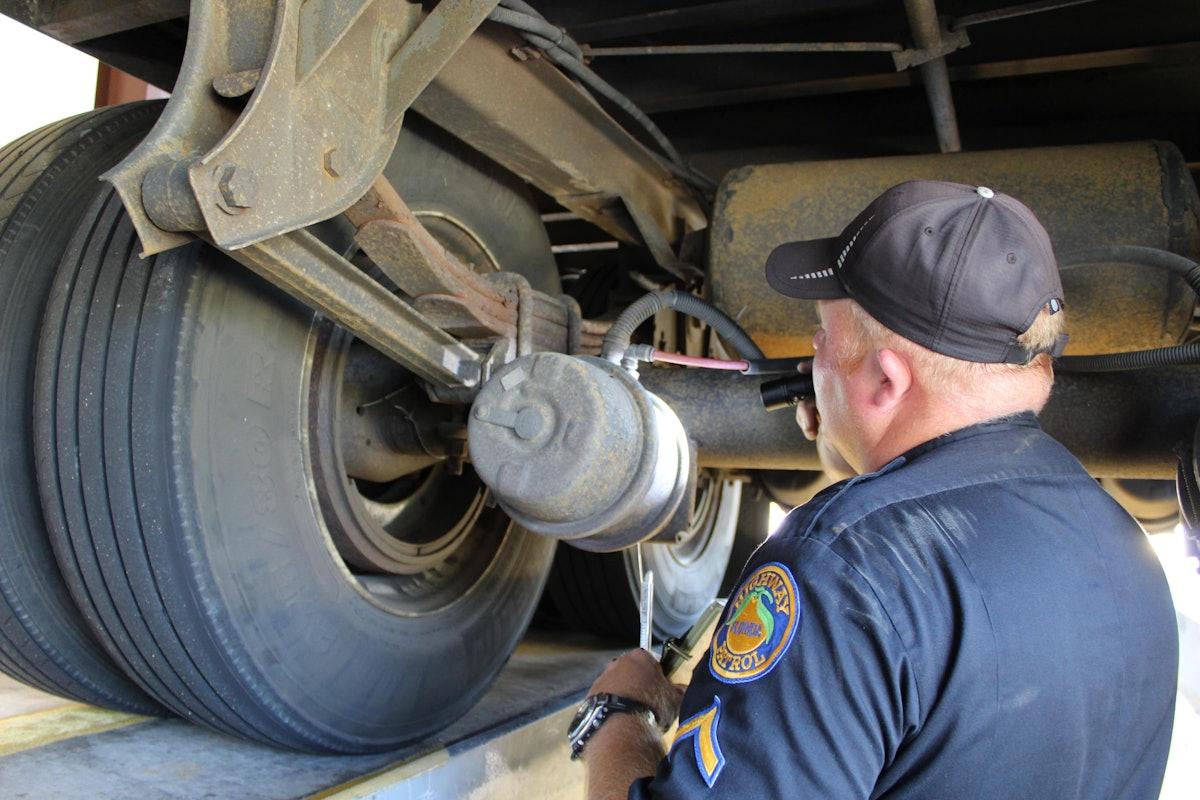
A visual inspection through the inspection port or after pulling the drum is the most direct confirmation. Most manufacturers specify a minimum lining thickness, and anything approaching that limit is a clear replacement trigger.
Look also for cracks, glazing, oil contamination, or chunks of missing material. Any of these compromises the bond between lining and shoe. When the surface no longer looks uniform, the part is no longer doing its job reliably.
6. The Truck Pulls to One Side When Braking
If the vehicle drifts left or right under braking, the friction shoes on opposite wheels are likely worn unevenly or contaminated by grease or brake fluid. Unequal braking force across an axle creates a steering pull that grows worse under heavy load.
This imbalance is both a handling hazard and a wear accelerant, since the harder-working side degrades faster. Addressing it usually means replacing shoes in axle sets rather than one corner at a time, preserving balanced performance.
7. Burning Smell or Excess Heat After Stops
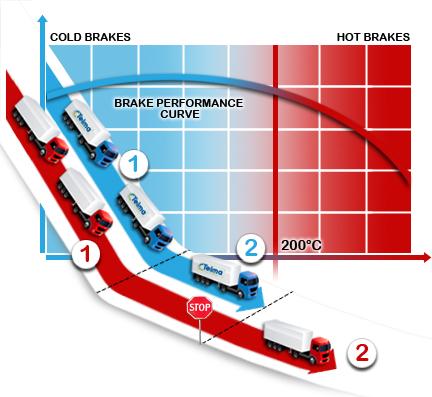
A sharp, acrid odor after a series of stops often means the friction material is overheating, glazing, or dragging. Overheated shoes lose their coefficient of friction, a condition known as brake fade, which is especially dangerous on long grades.
Persistent heat can also indicate a shoe that fails to retract fully, causing constant contact and rapid wear. When drivers smell burning friction material, the truck should be stopped and inspected before continuing.
A Deeper Look at Each Warning Symptom
The seven indicators above set the framework, but each one rewards a closer examination. The notes below expand on the mechanics, the field clues, and the practical thresholds that help a technician decide between watching and acting.
Braking Distance Becomes Longer
When a loaded rig needs extra metres to settle into a full stop, the friction interface is the first place to look. As the lining thins or glazes over, it can no longer convert kinetic energy into heat at the same rate, so the truck coasts further before the wheels slow. On a wet or downhill stretch, that additional gap can erase the safety margin a driver relies on.
A useful field test is to compare a fully laden stop against the fleet's recorded baseline on a known surface. If the recorded distance creeps upward across successive checks, the lining is fading even when no noise or pulsation has yet appeared. Catching this trend early lets a workshop schedule renewal before the deterioration reaches a hazardous point.
Squealing or Grinding Noise During Braking
Audible feedback during deceleration deserves a structured response rather than a habit of turning up the radio. A thin, high squeal usually signals a glazed or hardened surface vibrating against the drum, while a deep, gritty grind indicates the lining has reached or passed the rivets and steel is now scraping steel. The two sounds demand very different urgency.
Pinpointing which wheel produces the noise narrows the inspection quickly. A grind that worsens under firmer application points strongly to terminal lining wear, and continuing to drive at that stage scores the drum and inflates the eventual invoice. Treat any metallic scraping as a directive to take the unit off the road for inspection.
Truck Pulls to One Side While Braking
A steering tug under deceleration tells you the two ends of an axle are no longer working in concert. One side may carry fresh, gripping material while the other has glazed, thinned, or picked up oil from a leaking seal, so the wheels decelerate at different rates and the chassis yaws toward the stronger corner.
Because this pull stresses steering linkages and tyres in addition to the friction parts, the correct fix addresses the whole axle. Renew the linings as a matched pair, trace and cure any contamination source such as a weeping wheel seal, and confirm even drag on both drums before the truck returns to service.
Excessive Brake Pedal Travel
A pedal that sinks deeper than usual before the brakes bite is reporting that the actuation system has to reach further to close the gap. On hydraulic layouts this often coincides with thin linings or trapped air, while on air systems it shows up as slack adjuster travel beyond the specified limit. Either way, the driver loses the crisp, predictable response that builds confidence under load.
Measuring slack adjuster stroke against the manufacturer's figure turns a vague feel into a hard number. When travel exceeds the limit even after correct adjustment, the lining has worn enough that the mechanism can no longer compensate, and renewal of the friction parts is the durable answer rather than repeated readjustment.
Visible Cracks or Damage on Brake Shoes
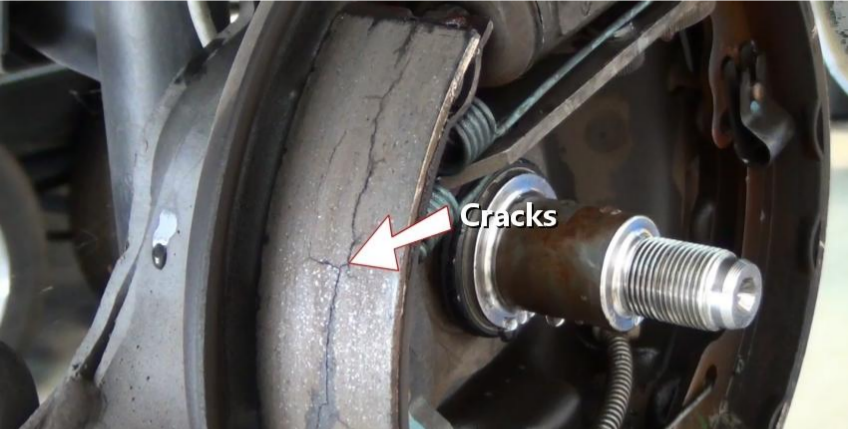
Once the drum is off, the surface of each lining tells its own story. Hairline cracks, crazing, chipped edges, or sections lifting away from the metal platform all point to heat fatigue or impact damage, and any of them undermines the bond that keeps the friction material in place. A cracked lining can shed fragments that jam the assembly or gouge the drum without warning.
Discoloured blue or charred patches reveal where the part has been overheated, often alongside the cracking. Components showing this kind of structural damage should be retired regardless of remaining thickness, because the integrity of the material, not just its depth, governs whether it can be trusted in service.
Burning Smell After Braking
A hot, chemical odour drifting up after a sequence of stops is the nose detecting friction material pushed past its comfortable temperature range. The smell commonly accompanies a shoe that drags because a tired return spring or seized adjuster keeps it in light contact, generating heat even when the driver is off the pedal.
Sustained overheating glazes the surface and erodes grip, so the warning should never be ignored on a long grade. Pull over, allow the assembly to cool, and inspect the return springs, adjusters, and hardware. Replacing fatigued springs alongside the linings usually restores clean release and stops the recurring heat.
Brake Shoe Thickness Below Service Limit
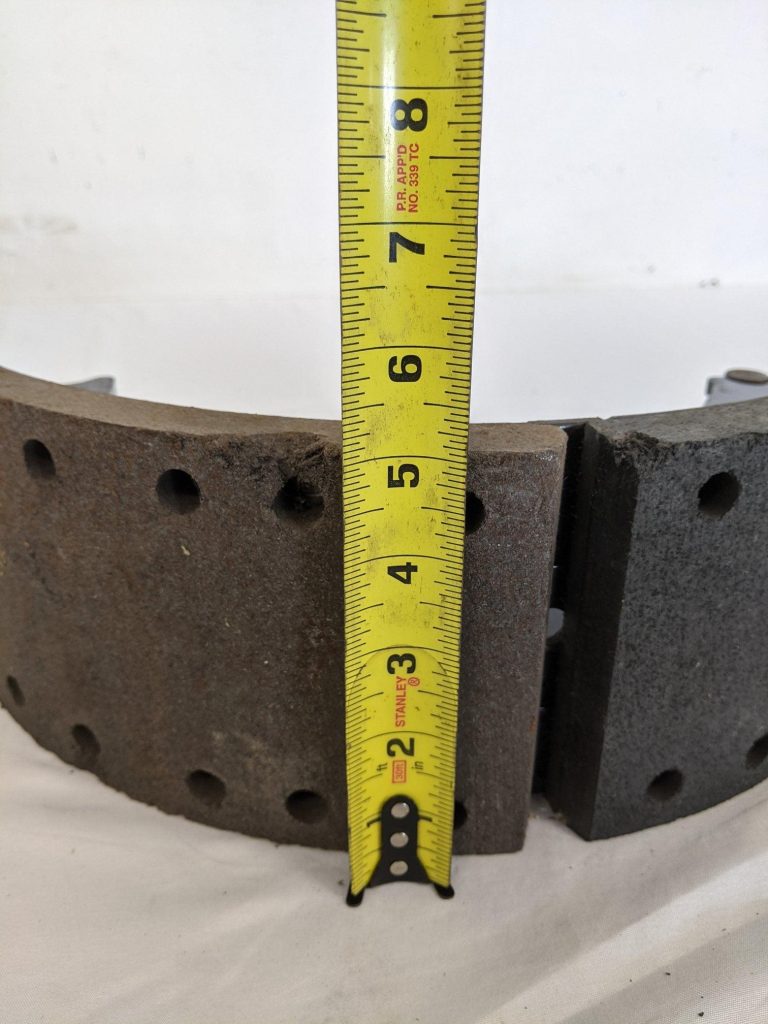
Every manufacturer publishes a minimum lining thickness, and that figure is the objective line between serviceable and scrap. Measuring with a gauge at the most worn point removes guesswork: once the remaining material reaches the stated limit, the part has spent its safe life even if it still stops the truck acceptably on a light run.
Wear rarely progresses evenly across the lining, so check several points and record the lowest reading in the maintenance log. Tracking those numbers across inspections reveals the wear rate for each duty cycle, which lets a fleet predict the next renewal and order parts before a unit is grounded waiting on stock.
Root Cause Analysis: Why These Failures Happen
Symptoms are the surface. Durable maintenance decisions come from understanding the mechanisms that drive them. In our component testing and field support work, the same handful of root causes appears repeatedly across truck fleets operating in demanding conditions.
The table below maps each common sign to its most likely underlying cause and the typical corrective action. Use it as a starting framework, then confirm with a hands-on inspection.
| Warning Sign | Most Likely Root Cause | Recommended Action |
|---|---|---|
| Squealing or grinding | Glazed lining or worn to the backing plate | Replace friction shoes; inspect drum for scoring |
| Longer stopping distance | Thin or contaminated lining surface | Renew shoes in axle sets; check for fluid leaks |
| Pedal pulsation | Uneven wear or out-of-round drum | Replace shoes; resurface or replace drum |
| Spongy or sinking pedal | Excessive actuator travel from thin lining | Service shoes; adjust slack adjusters; bleed system |
| Visible thin lining | Normal wear or aggressive duty cycle | Replace before reaching minimum thickness spec |
| Pulling to one side | Uneven wear or grease contamination | Replace as a pair; correct contamination source |
| Burning smell or heat | Brake fade, dragging shoe, or seized hardware | Inspect return springs and adjusters; replace shoes |
Operating Conditions That Accelerate Wear
Duty cycle matters enormously. Trucks running mountainous routes, urban stop-and-go delivery, or consistently heavy payloads will burn through friction material far faster than long-haul highway units. Heat is the primary enemy, and repeated high-temperature cycles harden and glaze the lining.
Driver behavior compounds this. Riding the brakes on descents instead of using engine braking generates sustained heat that no friction compound handles well. Pairing good components with good driving habits is the most cost-effective wear strategy a fleet can adopt.
Brake Shoe vs Brake Pad: Understanding the Difference
Operators sometimes use the terms interchangeably, but the distinction matters for maintenance planning. The core of the brake shoe vs brake pad difference lies in the braking architecture each one serves and how it applies force.
A pad is a flat friction block that squeezes a disc rotor from both sides in a disc brake system. A friction shoe is a curved component that presses outward against the inside of a drum. Drum systems remain common on truck rear axles and trailers because they deliver strong holding force and integrate cleanly with parking and emergency brake functions.
Neither design is universally superior. Disc brakes shed heat more efficiently and resist fade, while drum assemblies offer cost advantages, excellent load capacity, and simpler integration of secondary braking functions. Many modern trucks combine both, which makes understanding each component essential for accurate diagnosis.
| Characteristic | Drum Brake Friction Shoe | Disc Brake Pad |
|---|---|---|
| Friction surface shape | Curved, contacts drum interior | Flat, clamps rotor |
| Heat dissipation | Slower, enclosed design | Faster, exposed rotor |
| Typical truck use | Rear axles, trailers, parking brake | Front axles, performance applications |
| Relative cost | Generally lower per axle | Often higher |
| Service complexity | More internal components | Faster pad swaps |
How to Replace Friction Shoes on Drum Brakes
For fleets with in-house mechanics, understanding the workflow helps with scheduling and quality control. While procedures vary by axle design, the general process of how to replace brake shoes on drum brakes follows a consistent logic that prioritizes safety and precision.
- Chock the wheels, lift the axle safely, and remove the wheel and hub or drum following the manufacturer sequence.
- Document the spring and adjuster layout with a photo before disassembly so reassembly matches exactly.
- Release the return springs and hold-down hardware, then remove the worn shoes from the backing plate.
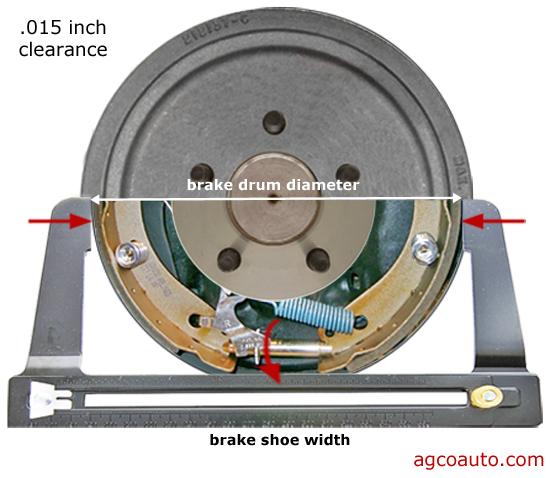
- Inspect the drum for scoring, cracks, and out-of-round wear; measure against the maximum diameter limit.
- Clean the backing plate, lubricate contact points lightly, and install new friction shoes with fresh hardware.
- Reassemble springs and adjusters, set the initial clearance, reinstall the drum, and verify slack adjuster travel.
- Road test at low speed, then under load, confirming even, quiet, and balanced braking.
One detail deserves emphasis: always renew the springs and hold-down clips along with the friction material. Fatigued springs are a leading cause of dragging shoes and premature failure, and they cost a fraction of the labor required to revisit the job.
What Drives the Repair Bill
Budgeting accurately means understanding the variables. The brake shoe replacement cost for a commercial truck axle depends on the friction grade selected, whether drums need replacement, regional labor rates, and how many axles require service in the same visit.
As a planning reference based on typical North American shop rates observed through early 2026, parts for a single drum axle set commonly fall within a moderate range, while labor often equals or exceeds the parts cost. Replacing components in sets and addressing drums proactively reduces the lifetime expense by avoiding repeat visits.
| Cost Factor | Impact on Total | Cost-Control Tip |
|---|---|---|
| Friction material grade | Moderate | Match grade to duty cycle, not just price |
| Drum condition | High when replacement needed | Inspect early to allow resurfacing |
| Labor hours | High | Service multiple axles in one visit |
| Hardware kits | Low | Always replace springs and clips |
| Downtime | Variable, often largest hidden cost | Schedule preventive replacement |
Choosing the Right Friction Components for Your Trucks
Not all friction material performs equally under heavy commercial loads. Selecting the best brake shoes for trucks means looking past the sticker price toward heat resistance, fade stability, consistent friction coefficient, and dimensional accuracy that ensures proper drum contact.
Our engineering experience shows that the difference between an adequate component and an excellent one becomes obvious under sustained high-temperature braking. A premium friction compound holds its grip on long grades where a budget alternative begins to fade. That margin is precisely where safety lives.
We manufacture and supply truck braking components engineered for demanding service, and you can browse the full range of brake shoe options to match your axle specifications. Matching the right grade to your routes is the single most effective way to extend service intervals.
What Sets Our Approach Apart
Quality control begins with raw material selection and continues through precision forming, bonding, and testing. Every batch is checked for consistent thickness, secure bonding, and stable friction performance across the temperature range a working truck encounters.
Beyond the parts themselves, we focus on solving the operational problems behind failures. When a fleet reports rapid wear, we investigate duty cycle, drum condition, and actuation balance rather than simply shipping replacements. You can explore our component families by product category brand and by product category system to find the exact match for your platform.
Our team also provides direct technical support for diagnosis, fitment, and wear-pattern analysis, so buyers are never left guessing. For a closer look at how we have helped operators reduce downtime, review our documented cooperative case studies.
The Bigger Picture: Braking Is Part of a Connected System
A truck is a system of interdependent assemblies, and braking health rarely exists in isolation. The same maintenance discipline that protects friction shoes also protects the components that keep the truck moving in the first place.
Consider the engine's lower end. The reciprocating motion that ultimately drives the wheels passes through the piston connecting rod, which links the piston to the rotating mass below. That rotating mass, the crankshaft assembly, converts linear force into the torque that propels a loaded truck up a grade.
Where the rod meets the crank, the big end bearing manages enormous cyclic loads under a filmof pressurized oil, while the small end bushing supports the wrist pin at the opposite end. Even the rod bolt torque applied during assembly influences whether that lower end survives high-mileage service. The lesson is consistent across the vehicle: precise components, correct installation, and disciplined inspection prevent failures.
Treating braking and powertrain maintenance with the same rigor pays off in uptime and safety. A fleet that inspects friction wear on schedule is usually the same fleet that catches engine issues early, because the underlying culture values prevention over reaction.
Building a Practical Inspection Routine
Knowing the warning signs is only useful when paired with a habit of checking for them. A short, structured routine turns reactive repairs into planned maintenance and keeps trucks legal during roadside inspections.
- Listen during every shift for new squeals, grinding, or scraping when braking.
- Note any change in stopping distance, pedal feel, or steering pull, and log it immediately.
- Visually check lining thickness through the inspection port at scheduled service intervals.
- Measure slack adjuster travel on air-brake units and compare against the specified limit.
- Inspect for oil or grease contamination near the backing plate and seals.
- Replace friction components in matched axle sets, never one corner alone.
Documenting these checks creates a wear history that makes future failures predictable. Over time, that data lets a fleet schedule replacement before symptoms ever reach the driver, which is the most cost-effective position to occupy.
When to Inspect Versus When to Replace
A single mild symptom usually warrants a closer inspection rather than immediate replacement. Two or more symptoms appearing together, or any sign of metal-on-metal contact, moves the decision firmly toward renewal. The cost of a precautionary inspection is trivial next to the cost of a brake failure under load.
The threshold tightens for trucks running severe duty cycles. Mountain routes, heavy haul, and dense urban delivery all justify shorter inspection intervals because friction material simply wears faster under sustained heat and frequent application.
Conclusion: Act on the Signals Early
The seven warning signs covered here, from squealing and longer stopping distances to vibration, soft pedal feel, visible thinning, pulling, and burning odors, all point to the same conclusion. Friction material is a planned wear item, and ignoring its signals trades a small, predictable expense for a large, dangerous one.
The most reliable fleets treat braking maintenance as a routine, data-driven discipline rather than an emergency response. Inspect on schedule, replace in matched sets, address the root cause rather than the symptom, and choose friction components engineered for your actual operating conditions.
If you want help diagnosing a wear pattern or selecting the right friction grade for your routes, our specialists are ready to assist. Learn more about us and how we support operators worldwide, or reach out directly through our contact us page to start a conversation about keeping your trucks stopping safely.
Frequently Asked Questions
How often should truck friction shoes be replaced?
There is no universal mileage figure because wear depends heavily on duty cycle, load, terrain, and driving habits. A long-haul highway truck may run far longer than an urban delivery unit. The practical answer is to inspect at scheduled service intervals and replace when lining thickness approaches the manufacturer's minimum specification or when warning signs appear.
Can I replace the friction shoes on just one wheel?
It is strongly discouraged. Braking force must remain balanced across an axle, so replacing only one side recreates pulling and uneven-wear problems almost immediately. Always renew components in matched axle sets and replace the springs and hold-down hardware at the same time.There is no universal mileage figure because wear depends heavily on duty cycle, load, terrain, and driving habits. A long-haul highway truck may run far longer than an urban delivery unit. The practical answer is to inspect at scheduled service intervals and replace when lining thickness approaches the manufacturer's minimum specification or when warning signs appear.
What happens if I keep driving on worn friction material?
Once the lining wears to the steel backing, metal-on-metal contact rapidly damages the drum, turning an inexpensive repair into a costly one. More importantly, stopping distances grow and brake fade becomes likely under load, which is a serious safety hazard, especially on descents.
Are drum brakes worse than disc brakes for trucks?
Neither is universally better. Disc systems shed heat more efficiently and resist fade, while drum assemblies offer strong load capacity, lower cost, and clean integration of parking and emergency brake functions. Many trucks use both, matched to where each performs best on the vehicle.
How can I make my friction components last longer?
Match the friction grade to your actual duty cycle, use engine braking on descents instead of riding the brakes, keep drums in good condition, and maintain correct adjustment. Pairing quality components with disciplined driving habits is the most effective way to extend service life and control long-term cost.