Why Part Quality Matters More Than You Think
A single substandard component can cascade into catastrophic failure — cracked cylinder liners, seized pistons, or blown turbochargers. According to a 2025 industry report by Transparency Market Research, the global aftermarket for heavy-duty engine components surpassed USD 92 billion, with counterfeit parts accounting for nearly 12% of that volume. The financial damage extends far beyond the replacement cost; unplanned downtime for a fleet truck averages $750–$1,200 per day.
Choosing the right diesel engine spare parts is not merely about price. It is about safeguarding uptime, protecting warranty coverage, and extending overall service life. This guide distills a decade of hands-on sourcing experience into a practical framework you can apply immediately.
Common Failure Patterns and Their Root Causes
Symptom: Premature Wear or Cracking
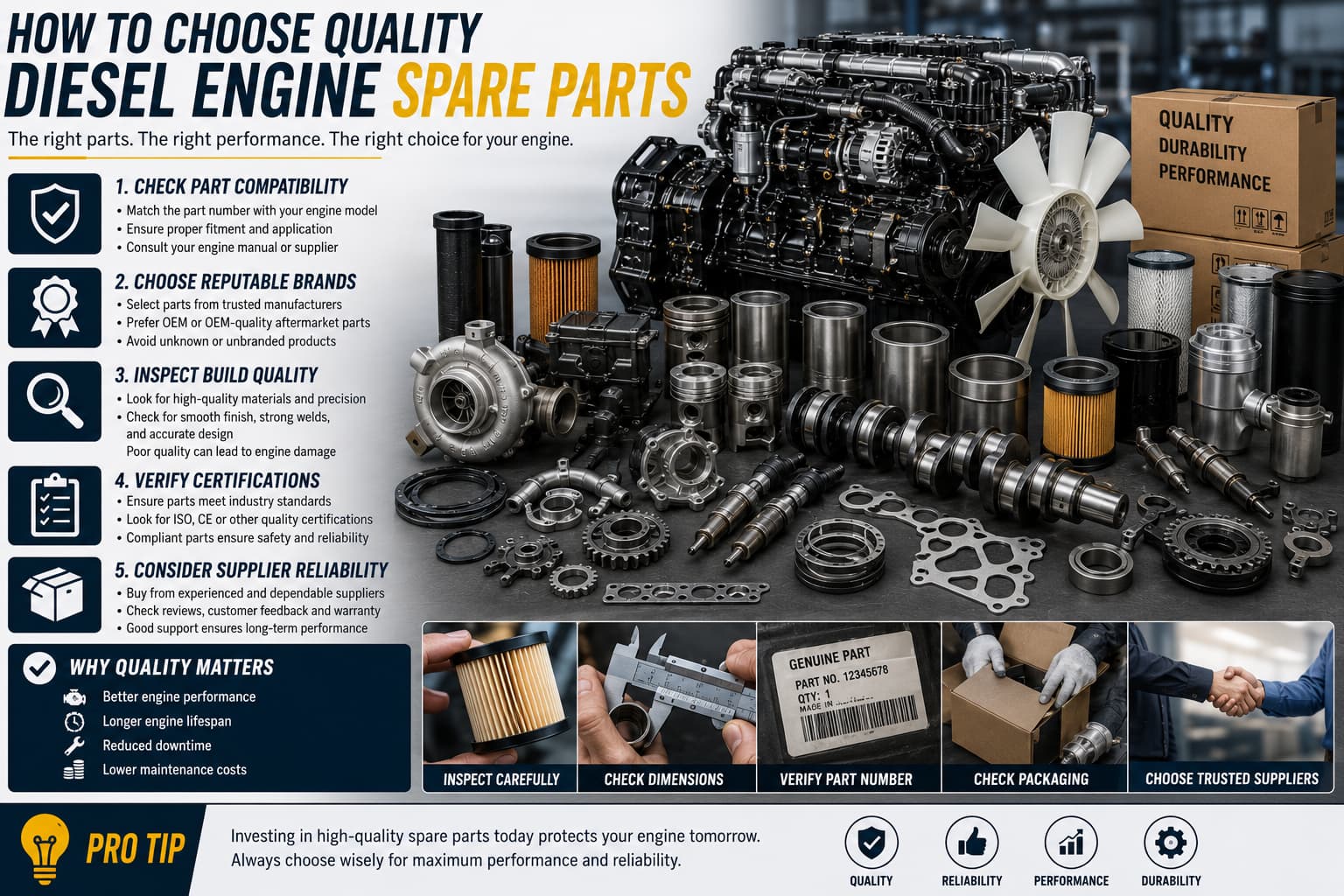
When cylinder heads crack or piston rings wear out within half their expected lifespan, material composition is almost always the culprit. Inferior metallurgy — particularly incorrect carbon or chromium content — leads to thermal fatigue under sustained load. The fix starts at the sourcing stage: demand mill certificates and hardness test reports before committing to a supplier.
Symptom: Fitment Issues and Oil Leaks
Components that “almost” fit are worse than those that obviously do not. Slight dimensional variances in gaskets, seals, or bearing shells create hidden leak paths. Engine part compatibility should be verified against original equipment drawings, not just model numbers. Cross-reference OE part numbers with the manufacturer’s revision history to catch superseded designs.
Symptom: Unexplained Power Loss
Fuel injectors and turbocharger cartridges are frequent targets for counterfeiters due to their high unit cost. Poor-quality nozzles deliver inconsistent spray patterns, reducing combustion efficiency by 8–15%. If you notice gradual performance degradation after installing new injectors, have the flow rate bench-tested against OEM specifications immediately.
A Step-by-Step Framework for Evaluating Parts
Step 1: Verify the Source
Legitimate suppliers maintain verifiable distribution agreements. Ask for authorization letters or check the manufacturer’s official distributor list. When considering where to buy certified diesel engine spare parts near me, prioritize suppliers who openly display certification credentials — ISO 9001, IATF 16949, or brand-specific authorizations.
Step 2: Inspect Packaging and Markings
Genuine OEM replacement parts arrive in branded packaging with consistent typography, holographic seals, and unique serial or batch numbers. Look for QR codes that link to the manufacturer’s verification portal. Blurry logos, misspelled words, or missing batch identifiers are immediate red flags.
Step 3: Examine Physical Characteristics
Weight, surface finish, and machining marks reveal a lot. Counterfeit crankshafts, for example, are often noticeably lighter due to inferior alloy density. Keep a calibrated digital scale and micrometer in your receiving area. Compare against published OE weight tolerances.
Step 4: Request Documentation
Quality suppliers provide test certificates, material traceability documents, and warranty terms without hesitation. If a vendor is reluctant to share paperwork, walk away. Reputable partners like Mettlead supply full documentation sets with every order, including compatibility charts and installation guidelines.
Step 5: Conduct a Trial Order
Before committing to bulk procurement, order a small sample lot. Install under controlled conditions, document baseline performance metrics, and monitor at defined intervals — 250, 500, and 1,000 operating hours. This approach minimizes risk while generating real-world validation data.
OEM vs. Aftermarket: Making the Right Call
| Criteria | OEM Parts | Quality Aftermarket | Low-Cost Unbranded |
|---|---|---|---|
| Material Compliance | Guaranteed to spec | Typically meets or exceeds | Unpredictable |
| Price Range | High | Moderate (20–40% savings) | Low (50–70% savings) |
| Warranty Coverage | Full manufacturer warranty | Supplier warranty (varies) | Rarely offered |
| Availability | Limited to dealer networks | Wide distribution | Widely available online |
| Risk of Counterfeit | Very low | Low (if sourced properly) | High |
High-quality aftermarket diesel parts occupy a sweet spot for fleet operators seeking cost efficiency without compromising reliability. The key is vetting the manufacturer’s production standards — do they reverse-engineer from OE samples, or do they design from original technical drawings? The latter yields far better dimensional accuracy.
How to Identify Genuine Parts When Shopping Online
E-commerce has made procurement faster but also riskier. Here are practical tips for choosing reliable diesel engine replacement parts through online channels:
- Cross-check part numbers — Copy the listed part number and search it on the original manufacturer’s website. Genuine listings match exactly.
- Read verified buyer reviews — Focus on reviews that include photos and mention specific installation outcomes rather than generic praise.
- Evaluate the seller’s history — Established sellers with multi-year track records and responsive customer service are inherently lower risk.
- Use secure payment methods — Platforms offering buyer protection give you recourse if parts fail to meet advertised specifications.
Understanding how to avoid counterfeit diesel engine spare parts when shopping online comes down to discipline: never prioritize price over provenance. A 40% discount means nothing if the injector fails at 200 hours instead of 2,000.
Real-World Case: Fleet Overhaul for a Logistics Company
A mid-size logistics operator in Southeast Asia was experiencing recurring turbocharger failures across their fleet of 45 heavy-duty trucks. Investigation revealed the root cause: replacement cartridges sourced from an unverified marketplace seller contained balancing weights with incorrect mass distribution.
After switching to certified components sourced through a vetted supply chain, mean time between failures improved from 1,800 hours to over 6,500 hours — a 260% increase. Annualized maintenance costs dropped by $38,000. You can explore similar success stories in our cooperative case studies.
This example reinforces a core principle: the best quality diesel engine spare parts for heavy duty trucks deliver measurable ROI that dwarfs their upfront premium.
Maintenance Practices That Extend Component Life
Even the finest components underperform if maintenance fundamentals are ignored. Heavy-duty engine maintenance should follow a structured interval schedule aligned with operating conditions — dust, load, and ambient temperature all influence wear rates.
- Change oil and filters at the manufacturer’s recommended intervals, or sooner in severe-duty applications.
- Monitor coolant chemistry quarterly — silicate depletion accelerates liner pitting.
- Inspect belt tension and accessory drive alignment during every service event.
- Log operating hours and fuel consumption to detect efficiency trends before they become failures.
For detailed maintenance walkthroughs and troubleshooting procedures, visit our technical support library.
Choosing a Supplier You Can Trust
The supplier relationship is as important as the part itself. A trustworthy partner provides consistent quality, transparent communication, and post-sale accountability. Evaluate potential suppliers against these criteria:
- Certification credentials — ISO, IATF, or brand-specific authorizations.
- Inventory breadth — Can they supply across multiple systems (fuel, cooling, drivetrain)? Explore options organized by product category system for efficient one-stop sourcing.
- Brand portfolio — Do they carry recognized brands? A diversified product category brand lineup signals established manufacturer relationships.
- Responsiveness — How quickly do they answer technical questions or process warranty claims?
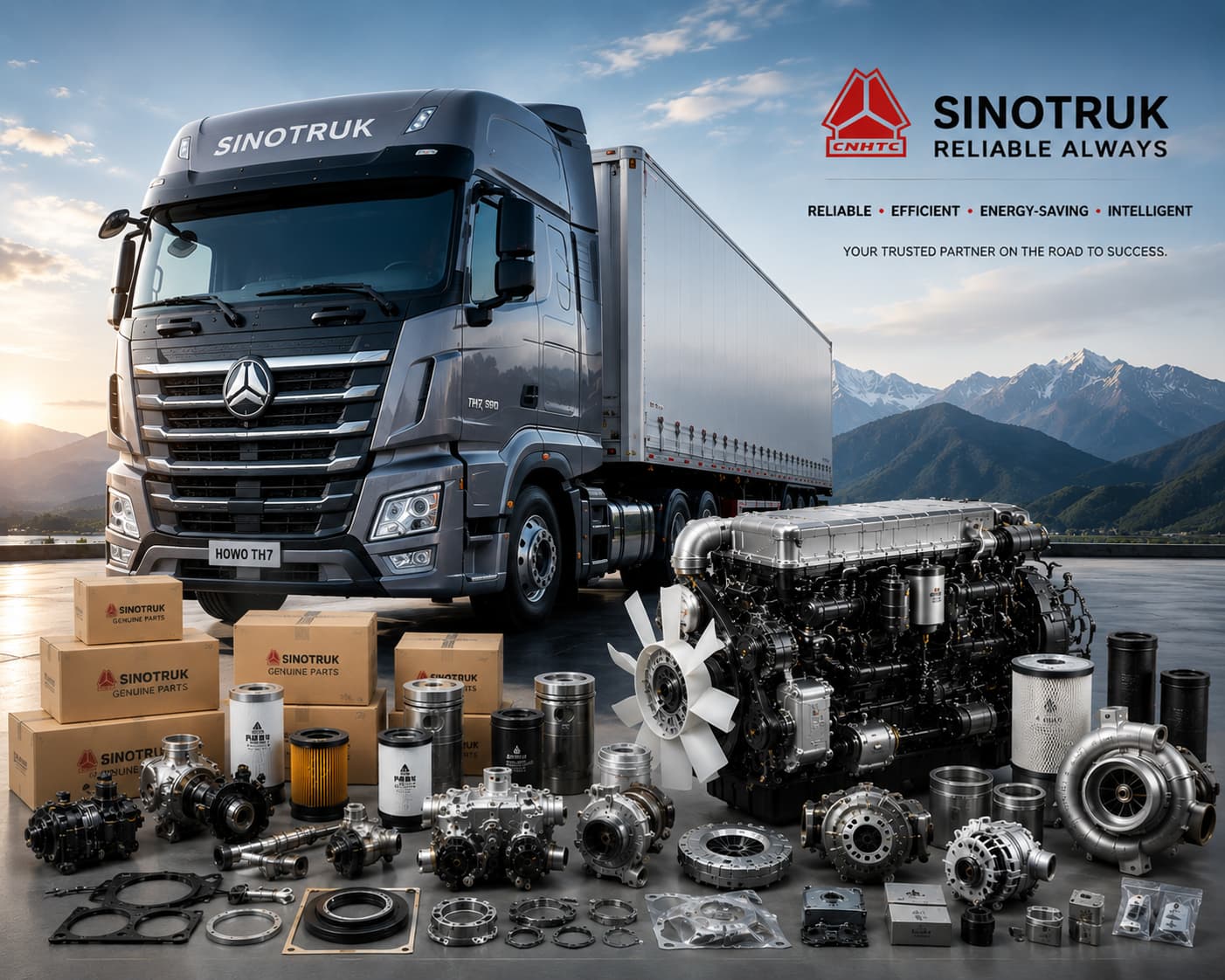
If you are sourcing components for Sinotruk, Shacman, or similar Chinese-manufactured heavy vehicles, dedicated inventories like our Truck parts catalog offer exact-match diesel engine components with full traceability back to the original production batch.
Red Flags That Signal Counterfeit or Low-Quality Parts
| Red Flag | What It Suggests | Recommended Action |
|---|---|---|
| Price 50%+ below market average | Substandard materials or stolen goods | Request material certificates; compare weight |
| No batch or serial number | Cannot be traced to a factory run | Reject immediately |
| Generic or missing packaging | Likely repackaged counterfeit | Contact OEM to verify authorization |
| Seller refuses documentation | No quality management system in place | Source from a different supplier |
| Inconsistent machining finish | Manual or low-tolerance production | Measure critical dimensions before install |
About Our Sourcing Philosophy
With over a decade serving fleet operators, mining companies, and construction firms across 30+ countries, we have built a supply chain rooted in transparency and technical rigor. Learn more on our about-us page, or reach out directly through our contact us portal for personalized sourcing guidance.
Conclusion
Selecting reliable replacement components for your power unit is a systematic process, not a gamble. Verify suppliers, inspect physical characteristics, demand documentation, and validate through controlled trials. The upfront diligence pays dividends in reduced downtime, lower lifecycle costs, and safer operations.
Whether you are maintaining a single machine or managing a fleet of hundreds, the principles remain the same: quality in equals performance out. Invest the time to source correctly, and your equipment will reward you with years of dependable service.
Frequently Asked Questions
How can I tell if a spare part is genuine or counterfeit?
Check for holographic seals, consistent branding, and unique serial numbers on the packaging. Use the manufacturer’s online verification tool if available. Physically, genuine components have uniform surface finishes, correct weight, and precise dimensional tolerances. When in doubt, purchase only from authorized distributors.
Is it safe to use aftermarket parts instead of OEM?
Yes, provided you source from reputable manufacturers who produce to OE specifications. High-quality aftermarket suppliers often use the same raw materials and machining processes as the original factory. Always confirm that the supplier provides material test certificates and warranty coverage.
What documentation should I request from a parts supplier?
At minimum, ask for a Certificate of Conformity, material composition report, hardness or tensile strength test results, and a written warranty statement. Established suppliers also offer installation guides and compatibility cross-reference charts upon request.
How often should critical components be inspected or replaced?
Follow the equipment manufacturer’s service manual for interval guidance. As a general rule, inspect injectors, turbocharger assemblies, and valve train components every 3,000–5,000 operating hours. Replace items showing measurable wear beyond allowable tolerances — do not wait for complete failure.
How do I identify genuine diesel engine spare parts online without physical inspection?
Focus on seller reputation, authorization credentials, and verified buyer feedback that includes installation outcomes. Request high-resolution photos of packaging and part markings before purchase. Use platforms with buyer protection policies, and always cross-reference the listed part number against the OEM’s official catalog for accuracy.


