Why Understanding Your Powertrain Components Matters for Fleet Profitability
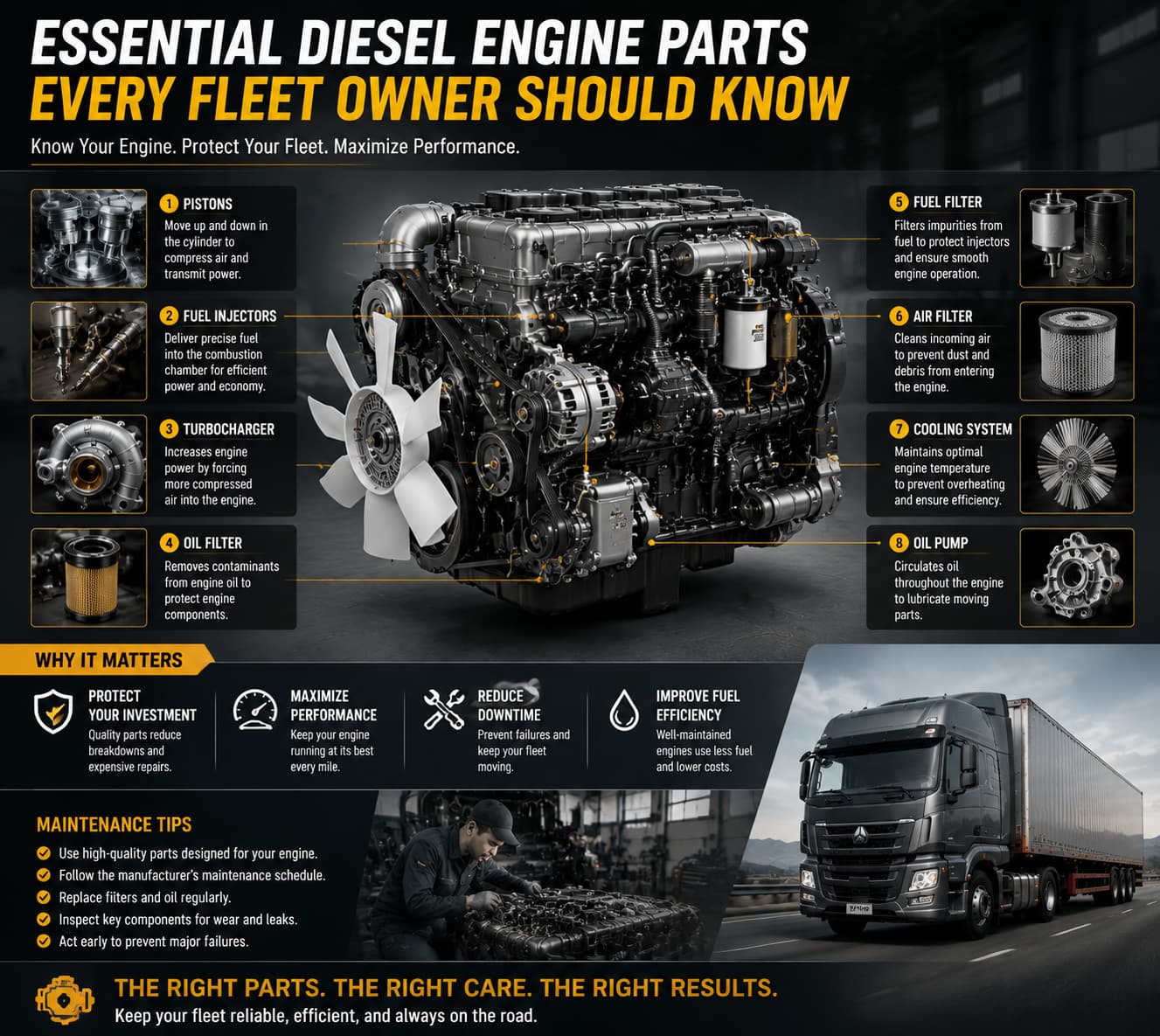
Fleet owners who understand the internal workings of their heavy-duty powertrains make smarter purchasing and maintenance decisions. A diesel engine converts fuel into mechanical energy through high-pressure combustion, and each component plays a role in that process. When one part fails, the cascading effects can sideline an entire vehicle for days. This guide breaks down the most critical components, common failure patterns, and proven solutions drawn from over 15 years of industry experience.
According to fleet maintenance data compiled through early 2026, unplanned downtime costs commercial operators between $450 and $760 per vehicle per day. Knowing which parts to inspect, replace, and source from reliable suppliers is the difference between a profitable quarter and a costly one. The diesel engine working principle 2026 remains fundamentally the same as decades past — compression ignition of fuel — but modern iterations demand higher-quality components to meet tighter performance and emissions standard.
Core Components That Keep Your Fleet Running
The Cylinder Block: Foundation of the Powertrain
The cylinder block houses the pistons, crankshaft, and coolant passages. It must withstand extreme thermal and mechanical stress over hundreds of thousands of kilometers. Cracks in this component typically result from overheating or coolant system failures. Regular thermal inspections can catch micro-fractures before they become catastrophic.
Fuel Injection System
The fuel injection system is arguably the most precision-critical assembly in any compression-ignition powertrain. Modern common-rail injectors operate at pressures exceeding 2,000 bar, atomizing fuel into a fine mist for optimal combustion. When injectors degrade, you see increased fuel consumption, rough idling, and black exhaust smoke. Understanding how the diesel engine fuel injection system explained in service manuals relates to real-world diagnostics helps fleet managers communicate effectively with technicians.
Turbocharger Assembly
The turbocharger forces additional air into the combustion chamber, increasing power output without enlarging the displacement. Turbo failures often stem from oil starvation or contaminated lubricant reaching the bearing surfaces. Symptoms include excessive exhaust emissions, loss of power under load, and unusual whining sounds. Replacing a failed turbo with a quality aftermarket unit restores performance at a fraction of OEM pricing.
Cooling System Components
Water pumps, thermostats, and radiators work together to regulate operating temperature. Overheating is the number-one cause of premature powertrain failure in commercial trucks. Fleet operators should inspect coolant hoses and clamps every 30,000 km and replace coolant according to manufacturer intervals.
Exhaust and Emissions Controls
Modern heavy-duty powertrains include EGR valves, DPF filters, and SCR catalysts to meet emissions regulations. These components require periodic cleaning or replacement. Neglecting them leads to derating — where the engine management system deliberately limits power output to protect itself.
Comparing Power Sources: Why Compression-Ignition Dominates Commercial Fleets
The diesel engine vs gasoline engine efficiency debate is settled in the commercial sector. Compression-ignition powertrains deliver 25–40% better thermal efficiency, translating directly to lower fuel costs per ton-kilometer. Their torque characteristics also suit heavy-load applications far better than spark-ignition alternatives.
| Parameter | Compression-Ignition (Diesel) | Spark-Ignition (Gasoline) |
|---|---|---|
| Thermal Efficiency | 40–45% | 25–30% |
| Torque at Low RPM | High | Moderate |
| Fuel Cost per km (Loaded) | Lower | Higher |
| Typical Lifespan | 800,000–1,500,000 km | 300,000–500,000 km |
| Maintenance Complexity | Moderate-High | Low-Moderate |
Common Failure Patterns and Diagnostic Approaches
Fault: Loss of Power Under Load
Root Causes: Clogged fuel filters, failing injectors, turbo bearing wear, or restricted air intake. Start diagnosis by checking boost pressure readings and fuel rail pressure. Compare live data against manufacturer specifications. If boost is low, inspect the turbo and intercooler piping for leaks.
Fault: Excessive White or Black Smoke
Root Causes: White smoke typically indicates coolant entering the combustion chamber (head gasket failure) or incomplete combustion during cold starts. Black smoke points to over-fueling or restricted airflow. A systematic approach — checking injector spray patterns, compression values, and intake restrictions — narrows the cause efficiently.
Fault: Overheating
Root Causes: Failed water pump, blocked radiator, stuck thermostat, or air pockets in the cooling system. Overheating must be addressed immediately. Even a single severe overheat event can warp cylinder heads or crack the block.
Maintenance Strategies That Extend Component Life
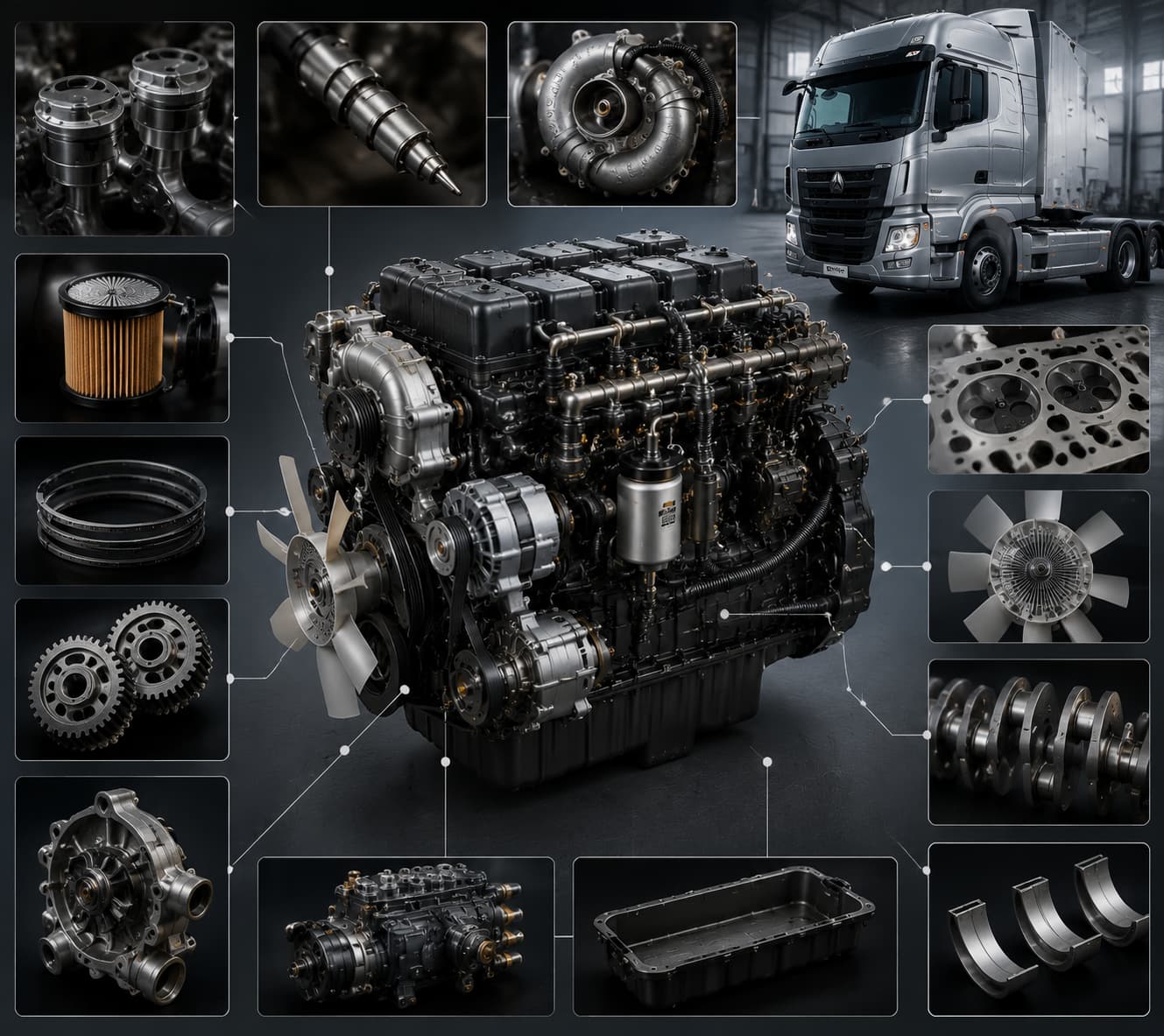
Proactive maintenance is the most cost-effective strategy for fleet longevity. The diesel engine maintenance tips for trucks that yield the highest ROI include oil analysis programs, scheduled injector testing, and coolant chemistry monitoring. These practices catch degradation before it causes failure.
| Maintenance Action | Recommended Interval | Impact of Neglect |
|---|---|---|
| Oil and Filter Change | Every 15,000–25,000 km | Bearing wear, sludge buildup |
| Fuel Filter Replacement | Every 30,000–50,000 km | Injector damage, power loss |
| Coolant Flush | Every 100,000 km or 2 years | Corrosion, overheating |
| Injector Testing | Every 200,000 km | Poor combustion, high fuel use |
| Turbo Inspection | Every 150,000 km | Catastrophic turbo failure |
| Valve Adjustment | Every 250,000 km | Reduced compression, misfires |
The diesel engine lifespan and reliability of modern units can exceed 1.2 million kilometers when these intervals are respected. Cutting corners on maintenance is a false economy that leads to far greater repair bills.
Real-World Case: Reducing Downtime by 38% Through Strategic Parts Sourcing
A logistics company operating 45 Sinotruk HOWO trucks across West Africa experienced chronic downtime due to inconsistent parts quality. Injectors sourced from unverified suppliers failed within 60,000 km — less than half the expected service life. After switching to verified aftermarket components through a structured supply partnership, the fleet achieved a 38% reduction in unplanned maintenance events over 14 months. You can read more examples like this in our cooperative-case archive.
The key takeaway: component quality directly determines fleet uptime. Sourcing from suppliers who provide traceability, warranty coverage, and technical documentation eliminates the guesswork.
How to Source Reliable Replacement Parts
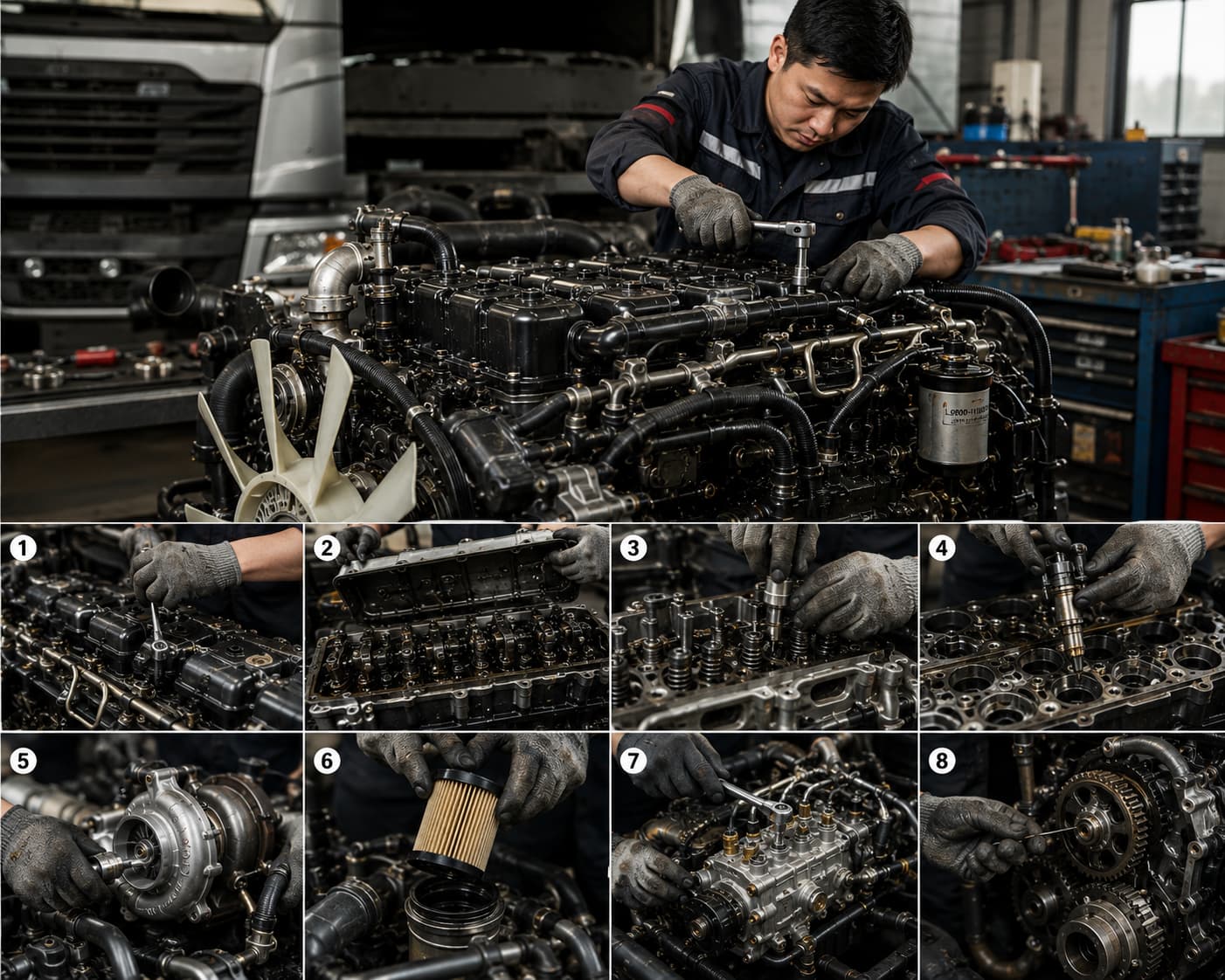
Not all aftermarket components are equal. Fleet owners should evaluate suppliers based on certification, cross-reference accuracy, and after-sales support. Look for vendors who provide OEM part number matching, material specifications, and installation guidance.
For Sinotruk, Weichai, and other Chinese-manufactured heavy-duty platforms, sourcing genuine-quality Truck parts from specialized exporters ensures compatibility and longevity. Browse components by manufacturer through our product category brand page, or search by function using the product category system directory.
If you need guidance on diagnosing a specific fault or selecting the correct replacement component, our technical support resources provide step-by-step instructions for common repair scenarios.
Conclusion: Invest in Knowledge and Quality Parts
Understanding the critical components inside your fleet’s powertrains is not optional — it is a competitive advantage. From injectors and turbochargers to cooling systems and emissions controls, each part contributes to uptime, fuel efficiency, and total cost of ownership. Partnering with a knowledgeable supplier who understands heavy-duty applications ensures you get the right part, the first time.
Ready to improve your fleet’s reliability? Learn more about us and our commitment to quality, or contact us directly to discuss your specific requirements.
Frequently Asked Questions
What are the most failure-prone parts in a heavy-duty powertrain?
Fuel injectors, turbocharger bearings, water pumps, and EGR valves are the components most frequently replaced in commercial fleets. These parts operate under extreme conditions and degrade predictably over time, making scheduled replacement more cost-effective than reactive repair.
How often should injectors be tested or replaced?
Injector testing is recommended every 200,000 km. Replacement timing depends on fuel quality and operating conditions, but most fleets see optimal results replacing injectors between 400,000 and 600,000 km. Poor-quality fuel accelerates wear significantly.
Can aftermarket parts match OEM quality?
Yes — when sourced from reputable suppliers who provide material certifications and OEM cross-references. The key is verifying that the manufacturer uses equivalent materials and tolerances. Low-cost, unverified parts often use inferior metallurgy that leads to premature failure.
What causes a diesel powertrain to consume excessive fuel?
Common causes include worn injectors delivering imprecise fuel quantities, restricted air filters reducing combustion efficiency, dragging brakes, incorrect tire pressure, and faulty engine sensors providing inaccurate data to the ECU. A comprehensive diagnostic approach isolates the root cause.
How do I choose the right parts supplier for my fleet?
Evaluate suppliers on five criteria: part number cross-reference accuracy, material traceability, warranty terms, technical support availability, and logistics reliability. A supplier who can provide installation guidance and troubleshooting support adds value beyond the component itself.


