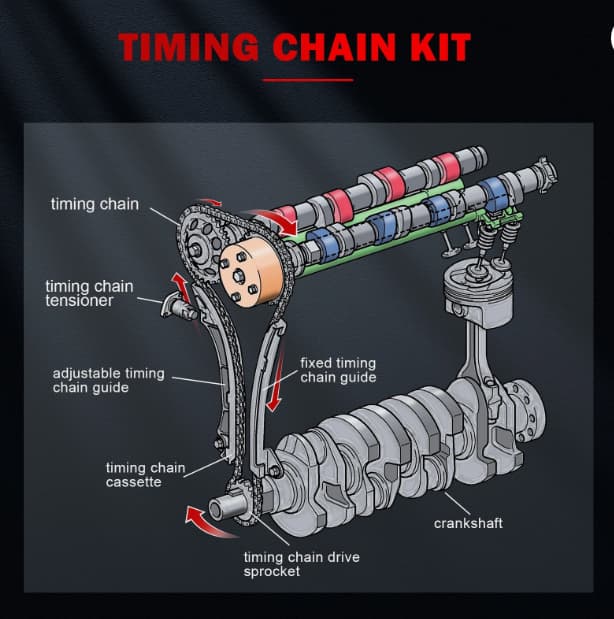
The timing chain kit stands as one of the most indispensable and precision-dependent core components within modern heavy-duty truck diesel engines. Serving as the mechanical synchronization bridge between the engine crankshaft and camshaft assembly, this complete kit undertakes the critical task of coordinating engine internal mechanical movements with extreme precision throughout every engine cycle. Unlike disposable timing belts that require mandatory replacement at fixed mileage intervals, heavy-duty truck timing chain kits are engineered with high-strength alloy materials, designed to deliver long-term durability and ultra-stable operation to adapt to the harsh, high-load working characteristics of commercial transport vehicles. The core function of the timing chain system is to lock and maintain accurate valve timing and fuel injection timing, ensuring that intake stroke, compression stroke, power stroke, and exhaust stroke proceed in strict chronological order. This precise mechanical coordination directly determines diesel combustion efficiency, engine power output stability, fuel economy performance, exhaust emission standards, and overall engine service life.
For mainstream heavy-duty truck brands including SINOTRUK HOWO, SITRAK, SHACMAN X3000/X5000, FAW J6/J7, FOTON Auman and other commercial vehicle models widely used in long-distance highway freight, engineering construction transportation, mountainous area logistics, and urban bulk cargo distribution, the health status of the timing chain kit is the fundamental guarantee for reliable engine operation. Once the timing chain system suffers from wear, elongation, loose tension, guide rail abrasion, tensioner failure or tooth jumping faults, the entire engine timing system will deviate from factory standard parameters. Minor failures will lead to increased fuel consumption, insufficient power, unstable idling and abnormal noise; moderate faults will trigger engine fault codes, difficult cold starts and intermittent power cutoff; severe failures will cause direct collision between engine valves and pistons, resulting in bent valves, broken piston tops, scratched cylinder walls, damaged cylinder heads and even complete engine scrapping, bringing extremely high maintenance costs and long-term vehicle downtime losses for fleet enterprises and individual truck owners.
In the daily maintenance and management of heavy-duty trucks, most drivers and fleet maintenance personnel tend to focus excessively on conventional wearable parts and intuitive fault points, including engine oil replacement, filter element updating, tire wear detection, brake system inspection and coolant replacement. However, the fully enclosed timing chain kit installed inside the engine side cover is often ignored in daily inspection and regular maintenance plans. Due to its hidden installation position and long design service life, many operators mistakenly believe that the timing chain kit is a lifelong maintenance-free component, which is the core reason for most sudden timing chain failures in heavy trucks. In fact, although timing chains are far more durable than timing belts, they are still dynamic wearable components that operate continuously for thousands of hours under high temperature, high pressure, high load and impact working conditions. Long-term cumulative wear, material fatigue, oil pollution erosion and improper use will inevitably lead to performance degradation and functional failure of the entire timing system.
Sudden timing chain kit failures are one of the most terrifying mechanical faults for heavy-duty truck transportation. Most faults do not occur without warning; instead, they are evolved from long-term accumulated minor hidden dangers and early abnormal signs that are not detected and eliminated in a timely manner. Once a sudden tooth jump or chain breakage occurs during high-speed driving or heavy-load climbing, the engine will stall instantly, resulting in vehicle loss of power control, which easily induces traffic accidents and brings huge safety risks to drivers and cargo property. In order to help global truck users and professional maintenance technicians accurately identify early failure signs, thoroughly understand internal inducements, avoid wrong maintenance operations, and formulate scientific daily protection schemes, this professional and comprehensive guide systematically sorts out the complete structure and working principle of heavy-duty truck timing chain kits, summarizes all visible and detectable abnormal failure symptoms, conducts in-depth layered analysis of root causes of failure, standardizes maintenance and replacement specifications, and answers common industry questions. For more professional truck engine fault diagnosis knowledge, systematic maintenance tutorials and commercial vehicle component failure analysis, you can browse our exclusive truck technical support category for in-depth and systematic learning.
Basic Composition & Working Principle of Truck Timing Chain Kit
To accurately judge timing chain kit faults, distinguish abnormal symptoms, and avoid blind disassembly and wrong maintenance operations, it is essential to fully master the complete structural composition and collaborative working principle of the heavy-duty truck timing chain kit. Different from light passenger car timing chain systems with simple structures, heavy-duty diesel truck timing chain kits adopt an enhanced and reinforced design to cope with ultra-high load, strong impact and long-term continuous operation scenarios, with more complete matching accessories and stricter coordination precision standards. A complete original factory matching timing chain kit is not a single chain part, but an integrated accessory combination that includes all wearable and aging components of the entire timing transmission system, ensuring overall matching consistency after replacement.
The complete component list of a standard heavy-duty truck timing chain kit includes: main crankshaft timing chain, auxiliary balance shaft timing chain, hydraulic automatic tensioner assembly, fixed guide rail, movable sliding rail, chain tensioning arm, timing gear set, crankshaft timing gear, camshaft timing gear, balance shaft gear, high-temperature resistant sealing gaskets, anti-loose locking bolts, wear-resistant buffer pads and limit positioning accessories. Every single component in the kit has irreplaceable independent functions, and all components cooperate and restrict each other to form a closed-loop stable transmission system. Any aging, wear or failure of a single component will break the overall balance of the timing system and eventually lead to systemic timing abnormalities and mechanical failures.
The core working logic of the timing chain system is precise mechanical synchronization transmission. The crankshaft outputs power through the engine’s internal piston reciprocating motion, and transmits power to the camshaft and balance shaft synchronously through the timing chain and gear set. The camshaft accurately controls the opening duration, closing time and opening lift of the engine intake and exhaust valves according to fixed timing parameters, while the balance shaft offsets the engine’s internal mechanical vibration generated by high-speed operation. The precise cooperation of the entire system ensures that the intake stroke fully inhales fresh air, the compression stroke completes sufficient gas compression, the power stroke releases maximum combustion power, and the exhaust stroke completely discharges exhaust gas, forming a highly efficient and cyclic diesel combustion system.
Among all components, the hydraulic tensioner is the core pressure control unit that determines the stability of the timing chain. Different from mechanical tensioners with fixed tension, the hydraulic tensioner of heavy-duty truck engines relies on stable engine oil pressure to realize automatic tension adjustment. When the engine is started and runs, the oil pump delivers pressurized engine oil to the internal oil cavity of the tensioner, pushing the internal piston to extend and compress the tensioning arm, so as to provide continuous and stable tension for the timing chain. This automatic adjustment function can adapt to chain length changes caused by thermal expansion and cold contraction of metal materials during engine cold and hot switching, as well as tiny elongation changes caused by slight chain wear, always keeping the chain in a tight and stable running state, effectively preventing shaking, deviation and tooth jumping.
Guide rails and sliding rails are auxiliary limit and wear-resistant components for chain operation. They are made of high-strength wear-resistant nylon and rubber composite materials, with smooth surfaces and high-temperature resistance. Their main functions are to limit the chain running track, reduce metal-to-metal friction between the chain and the engine shell, buffer the vibration and impact of the chain during high-speed operation, and avoid chain deviation and jitter. After long-term operation, the surface of the guide rail will be gradually worn, scratched and even cracked and peeled off. The worn guide rail will lose its limit and buffer effect, resulting in unstable chain operation and further accelerated chain wear.
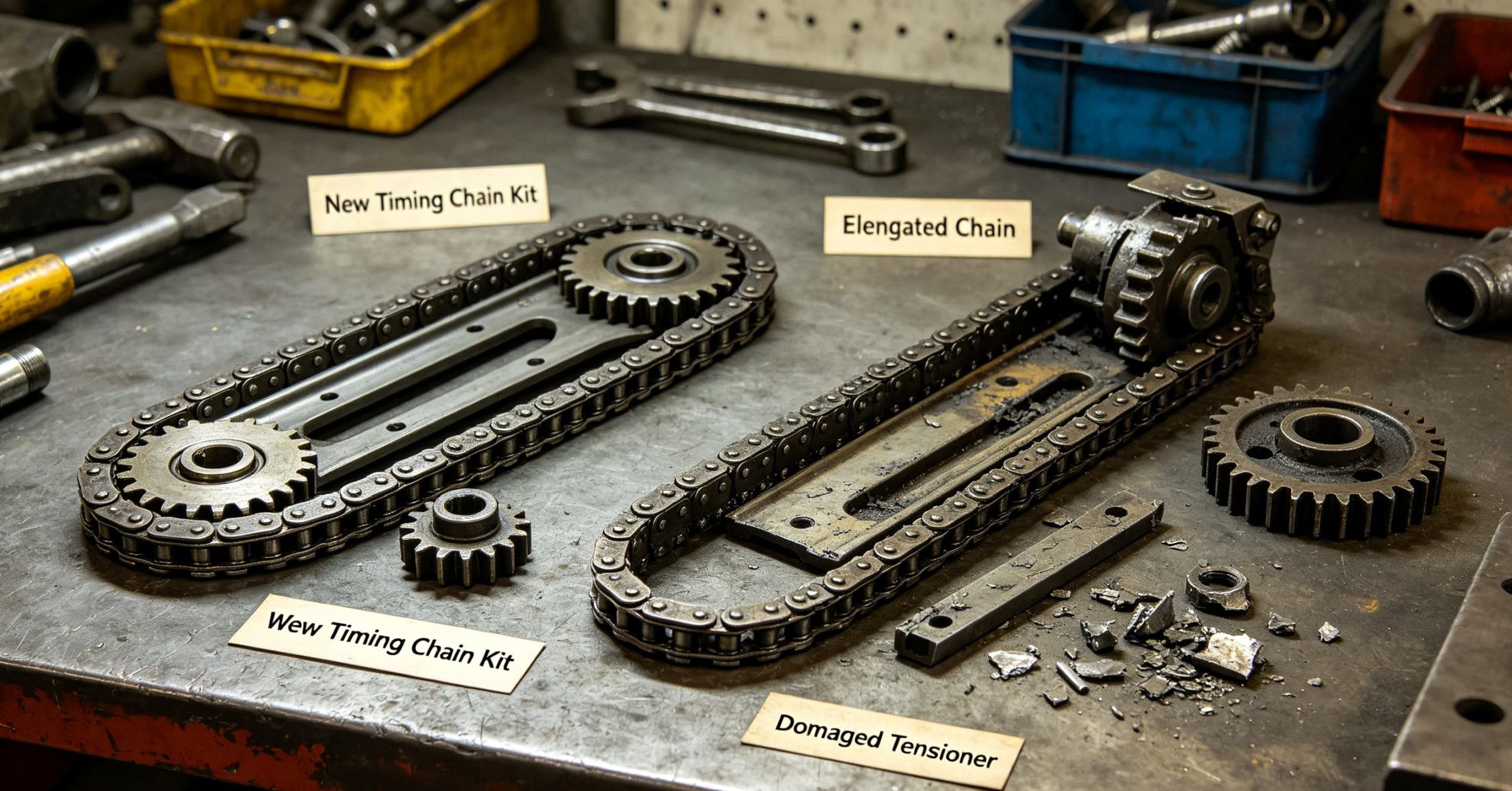
The timing chain itself is composed of high-hardness alloy steel plates, pin shafts and roller components. Through precise industrial forging and heat treatment technology, it has ultra-high tensile strength, wear resistance and fatigue resistance. The closed-loop chain structure ensures synchronous power transmission without slipping. However, under long-term high-load operation, the pin shaft and gap of the chain will produce tiny wear, leading to overall chain elongation. When the elongation exceeds the factory standard tolerance range, the chain will become loose, the timing accuracy will decrease, and a series of failure symptoms will appear.
The entire timing chain system is installed in a fully enclosed engine timing cover, isolated from the external dust and muddy water environment, and relies entirely on internal engine oil for lubrication, cooling and wear reduction. Therefore, the cleanliness, viscosity, pressure and quality grade of engine oil are the key external factors that determine the service life of the timing chain kit. Good lubrication conditions can minimize component wear and maintain long-term stable operation of the timing system; poor lubrication conditions will directly cause accelerated aging and failure of the entire kit. For matched engine accessory selection, model matching and original accessory procurement, you can check our professional truck chassis system parts product library to obtain full-specification original accessories that meet factory standards, ensuring perfect matching and stable operation.
Typical Timing Chain Kit Failure Signs in Heavy-Duty Trucks
The failure and aging process of heavy-duty truck timing chain kits is a typical gradual progressive fault, which can be divided into three stages: early latent failure, middle obvious abnormal failure and late irreversible severe failure. Each failure stage corresponds to distinct and recognizable vehicle abnormal symptoms. Early failure signs are mild and easy to be ignored by drivers, but they are the best time for maintenance and hidden danger elimination; mid-stage abnormal symptoms are obvious, which will affect vehicle use performance; late-stage failures are irreversible, which will cause serious engine mechanical damage. Professional drivers and maintenance technicians can accurately judge the wear degree and fault stage of the timing chain kit through comprehensive judgment of sound, vibration, power, fuel consumption, startup state and exhaust state, so as to arrange targeted maintenance and replacement plans in advance.
1. Abnormal Engine Rattling & Knocking Noise (Earliest Warning Sign)
Abnormal mechanical noise from the engine side cover is the earliest, most intuitive and most common early warning signal of timing chain kit failure. This kind of abnormal noise is completely different from engine valve clearance noise, piston knocking noise, injector working noise and bearing friction noise, with obvious regional fixed-point characteristics and working condition linkage rules. When the timing chain is slightly worn and elongated, or the hydraulic tensioner has insufficient oil pressure and delayed tension supply, the chain cannot be completely tightened and will produce tiny jitter and deviation during engine operation. The loose chain will continuously collide and rub with the guide rail, sliding rail and timing cover inner wall, producing a regular low-frequency continuous rattling noise.
The noise has obvious cold-start characteristics: it is the loudest and most obvious when the engine is started at low temperature, and the noise lasts for a long time during cold idling operation. As the engine water temperature and oil temperature rise gradually, the engine oil viscosity decreases, the oil circuit circulation becomes smooth, the tensioner oil pressure is stable, and the chain tension increases slightly, so the abnormal noise will be significantly weakened or even temporarily disappear. However, during vehicle acceleration, climbing load increase and high-speed operation, the engine operating load increases, the chain bearing tension rises, and the loose state reappears, accompanied by obvious aggravated rattling noise.
With the continuous aggravation of chain wear and tensioner aging, the early mild rattling noise will gradually evolve into harsh metal knocking noise. This indicates that the chain elongation has exceeded the safe tolerance range, the guide rail has been severely worn or peeled off, and the chain has obvious deviation and violent collision. At this stage, the risk of chain tooth jumping is extremely high, and continuous driving is extremely dangerous. It is necessary to stop the vehicle immediately for inspection and maintenance. Many truck owners easily confuse timing chain noise with other engine noises. It is worth noting that timing chain abnormal noise is always concentrated on the engine timing side cover position, with regular vibration resonance, which can be accurately distinguished through stethoscope detection and manual listening comparison. This abnormal state is similar to the fault caused by common rail injector abnormal work, so professional inspection is required to distinguish the fault source accurately and avoid misjudgment.
2. Unstable Idle Speed & Engine Jitter
Stable idle speed is the basic standard for normal engine operation, and accurate timing system is the core premise of stable idle operation. After the timing chain is worn and elongated, the matching clearance between chain pin shafts increases, resulting in overall chain elongation and reduced transmission synchronization accuracy. The tiny deviation of crankshaft and camshaft transmission angle will directly lead to inaccurate valve opening and closing timing and inconsistent fuel injection cycle, destroying the balance of engine internal intake, compression, combustion and exhaust cycle.
In the early stage of failure, the idle speed floating range is small, and the engine jitter is extremely subtle, which is difficult for drivers to perceive in daily driving. As the wear degree deepens, the timing deviation increases continuously, the engine idle speed will appear obvious irregular floating, the rotation speed fluctuates up and down abnormally, and the engine body produces obvious regular jitter. When parking and idling, the jitter can be clearly felt through the cab seat and steering wheel. In severe cases, the engine will experience intermittent flameout and automatic stalling during idling, which seriously affects vehicle startup stability and low-speed driving safety.
Different from engine jitter caused by insufficient cylinder combustion, injector blockage or air intake leakage, the jitter caused by timing chain failure has no obvious cylinder misfire phenomenon, and the jitter state is more stable and regular. After cleaning the injector, replacing the spark plug and cleaning the air intake system, the jitter fault still cannot be eliminated, which means the core fault source lies in the abnormal timing system. Timely inspection of the timing chain wear degree and tensioner working state is required to solve the fundamental problem.
3. Weak Power Output & Increased Fuel Consumption
Accurate timing coordination is the key to efficient diesel combustion. When the timing chain is loose and worn, the valve timing and fuel injection timing are delayed or advanced abnormally, resulting in incomplete engine intake and insufficient exhaust discharge. The fresh air intake volume of the engine cannot reach the standard value, and the diesel fuel injected by the injector cannot be fully mixed with air for full combustion, forming incomplete combustion state. This combustion abnormality directly leads to the decline of engine power performance and economic performance, which is the core reason for insufficient power and increased fuel consumption of many aging heavy trucks.
In actual driving scenarios, vehicles with faulty timing chains show obvious acceleration weakness: the accelerator response is delayed, the vehicle speed rises slowly, the power reserve is insufficient during heavy-load climbing, and it is impossible to maintain stable speed during long-distance uphill driving. When overtaking and accelerating urgently, the power burst is insufficient, and the engine speed rises slowly with obvious idle speed dragging feeling. At the same time, incomplete combustion causes a large amount of diesel fuel to be wasted, and the comprehensive fuel consumption per 100 kilometers increases significantly, which directly increases the daily transportation operating cost of fleets and individual car owners.
Most truck drivers will mistakenly attribute power weakness and increased fuel consumption to engine aging, tire pressure abnormality, brake dragging, air filter blockage or injector failure, and blindly replace conventional wearable parts for maintenance, resulting in repeated maintenance and unsolved faults. In fact, timing chain hidden failure is a high-frequency hidden fault that is easily overlooked. When conventional maintenance cannot solve power and fuel consumption problems, priority inspection of the timing system status is required to eliminate hidden dangers at the source.
4. Engine Error Code & Difficult Cold Start
Modern heavy-duty truck diesel engines are equipped with high-precision electronic control units and multiple sensor monitoring systems, including crankshaft position sensors and camshaft position sensors. These two sensors are responsible for real-time collection of engine rotation angle and timing data, and feed back signals to the ECU to control fuel injection and valve operation. When the timing chain is worn and elongated, the transmission angle deviation between crankshaft and camshaft exceeds the factory allowable error range, the signal data collected by the two sensors is mismatched, and the ECU will immediately capture the abnormal timing signal and store the corresponding fault code.
The common fault codes of timing chain failure include camshaft and crankshaft signal inconsistency, timing system deviation exceeding standard, camshaft position sensor signal abnormal and other prompt codes. After the fault code appears, the engine will enter the electronic protection mode in severe cases, limit engine speed and power output, resulting in vehicle power limitation and inability to drive at high speed.
In addition, inaccurate timing will seriously affect the engine cold start performance. In low-temperature environments in winter, the diesel viscosity increases and the engine cranking resistance increases. The abnormal timing will lead to delayed fuel injection and unbalanced valve opening and closing, resulting in prolonged startup time, multiple cranking failures, intermittent startup failure and even complete inability to start the vehicle. This fault is more obvious in alpine regions and low-temperature environments, which seriously affects the normal operation of vehicles.
5. Abnormal Exhaust Smoke & High Engine Temperature
When the timing chain wear is serious and slight tooth jumping occurs, the engine intake and exhaust cycle is completely disordered, and the original balanced combustion system is completely broken. The intake valve cannot be closed in time, and the exhaust valve cannot be opened completely, resulting in a large amount of unburned diesel fuel entering the exhaust pipeline with exhaust gas. In the process of vehicle acceleration and load increase, the exhaust pipe will discharge obvious black smoke, accompanied by pungent unburned diesel odor. In individual severe cases, blue smoke will appear due to abnormal combustion and oil gas mixing.
Long-term incomplete combustion will generate a large amount of carbon deposits inside the engine cylinder and exhaust system, further blocking the exhaust channel and affecting heat dissipation. At the same time, abnormal friction of the loose timing chain and increased engine operating load will generate additional mechanical heat, resulting in continuous abnormal rise of engine water temperature. The vehicle is prone to high water temperature alarm during long-distance driving and heavy-load operation. Long-term high-temperature operation will not only aggravate timing system wear, but also induce various auxiliary system faults, such as emulsified engine oil, radiator blockage and thermostat failure, bringing more complex maintenance problems.
6. Severe Mechanical Impact & Engine Stalling (Late Failure)
This is the most dangerous and destructive late failure manifestation of the timing chain kit, which is completely caused by long-term accumulation of hidden dangers and untimely maintenance. When the timing chain is severely elongated, the tensioner fails completely, the guide rail is completely worn and peeled off, or the chain is fatigued and deformed, tooth jumping or even chain disengagement will occur during engine operation. Once the timing chain jumps teeth or falls off, the synchronization relationship between the crankshaft and camshaft is completely disordered, the valve opening and closing law is completely confused, and the piston moving up and down will collide with the open valve violently.
This violent mechanical impact will produce a huge dull knocking sound inside the engine, accompanied by instantaneous engine power cutoff and sudden stalling. Once this fault occurs during vehicle driving, the vehicle will lose power instantly, which is extremely easy to cause rear-end collision and traffic accidents. At the same time, the internal mechanical damage of the engine is irreversible: the intake and exhaust valves are bent and broken, the piston top is cracked and damaged, the cylinder wall is severely scratched, the cylinder head is deformed, and in extreme cases, the crankshaft is bent and the engine cylinder body is damaged. The maintenance cost of such faults is extremely high, often requiring engine overhauls or direct replacement of the engine assembly, resulting in huge economic losses and long-term vehicle downtime for fleet users.
Main Root Causes of Truck Timing Chain Kit Failure
Many truck users have a wrong cognition that timing chain failure is mainly caused by natural aging and service life expiration. In fact, after sorting out a large number of heavy truck maintenance cases, more than 95% of timing chain kit premature failures are caused by human factors, improper use habits, irregular maintenance, inferior accessories and harsh working environments, rather than natural aging. The service life of qualified original factory timing chain kits can fully meet 150,000 to 200,000 kilometers of normal driving demand under standard working conditions. All premature failures have clear traceable root causes. The following is a detailed layered analysis of all core inducements of timing chain kit failure, helping users avoid wrong operation and formulate scientific vehicle use and maintenance schemes.
1. Use of Inferior Engine Oil & Long Overdue Oil Change Cycles
Engine oil is the lifeblood of the timing chain system, undertaking three core functions of internal component lubrication, friction heat dissipation and hydraulic tension supply for the tensioner. The quality grade, cleanliness, viscosity and anti-wear performance of engine oil directly determine the wear speed and service life of the timing chain kit. This is the primary cause of premature timing chain failure in most heavy-duty trucks.
Many individual truck owners and small fleets choose low-price inferior engine oil and unqualified auxiliary oil products to save short-term operating costs. Such inferior engine oil has poor high-temperature stability, insufficient anti-wear additives, uneven viscosity, and is prone to oil deterioration, thinning and carbon deposition after high-temperature operation. After the oil quality deteriorates, the lubricating oil film on the surface of timing chain components cannot be formed stably, resulting in direct dry friction between chain pin shafts, gears and guide rails, accelerating component wear and chain elongation.
At the same time, long-term overdue oil replacement and long-term non-replacement of oil filter elements will lead to a large number of metal wear debris, dust particles and carbon deposition impurities accumulated in the engine oil circuit. These hard impurities will circulate with the engine oil to the timing chain working area, forming abrasive wear on the chain and guide rail, causing rapid scratch and wear of precision components. In addition, blocked oil filters and dirty oil circuits will lead to insufficient oil supply pressure of the hydraulic tensioner, unable to provide stable tension for the chain, resulting in long-term loose chain operation and accelerated fatigue deformation.
2. Long-Term Overload Operation & Frequent Harsh Driving Habits
Heavy-duty trucks are mainly used for commercial cargo transportation, and long-term overload operation is a common working state in the industry. Long-term overloaded driving makes the engine work under ultra-high load for a long time, the internal operating tension of the timing chain increases sharply, and the chain bears far beyond the design load pressure. Long-term ultra-load tension will cause fatigue deformation of the chain metal structure, continuous elongation of the chain gap, and accelerated wear of guide rails and tensioners.
In addition, frequent harsh driving behaviors will bring instantaneous strong impact load to the timing chain system. Frequent rapid acceleration, sudden deceleration, emergency braking, high-speed crossing of road potholes and curb stones, and long-term low-speed climbing will cause instantaneous sharp changes in engine speed and load. The instantaneous impact force will be directly transmitted to the timing chain, resulting in repeated stretching and shaking of the chain, aggravating metal fatigue and component wear. Similar to the damage mechanism of heavy-duty truck cylinder head failure, long-term overload and harsh driving will greatly shorten the service life of engine core precision components, including timing chain kits.
3. Aging & Fatigue of Matching Supporting Accessories
The timing chain kit is an integrated matching system, and all components wear and age synchronously. However, in actual maintenance work, many maintenance personnel and car owners have wrong maintenance habits: only replace the obviously worn and elongated timing chain, and continue to reuse the aging tensioner, worn guide rail, deformed sliding rail and aging sealing gaskets. This single-part replacement method is the main cause of secondary failure of the new timing chain in a short time.
The aging hydraulic tensioner has insufficient oil pressure regulation capacity, weakened telescopic sensitivity and poor pressure stability, which cannot provide stable tension for the new chain. The worn guide rail has lost its wear-resistant and limiting effect, and the surface is uneven, which will cause abnormal friction and deviation of the new chain. The aging sealing gasket is prone to oil leakage, resulting in insufficient internal oil pressure and dirty oil circuit. The mismatch between new chain and old accessories will lead to repeated loosening, wear and abnormal noise of the newly replaced timing chain, resulting in secondary maintenance failure and increased maintenance costs.
4. Installation of Refurbished & Unqualified Timing Chain Kits
In order to reduce short-term maintenance costs, many small repair shops and individual car owners choose ultra-low-price refurbished timing chain kits, disassembled second-hand parts and inferior imitation accessories. These unqualified products have serious quality defects in material selection, processing precision, heat treatment process and size standard, which cannot meet the working requirements of heavy-duty truck high-load engines.
The alloy material of inferior chains has low hardness and poor fatigue resistance, which is prone to rapid elongation and deformation after short-term high-load operation. The gear tooth pitch size is inaccurate, resulting in poor meshing accuracy and easy tooth jumping. The tensioner has unstable pressure regulation and easy failure. The guide rail has poor high-temperature resistance and is easy to crack and peel off at high temperature. The failure recurrence rate of such unqualified accessories is extremely high, which not only cannot solve the original fault, but also easily induces more serious engine mechanical failures. It is recommended that users choose formal and qualified channels for core engine accessory replacement. You can consult reliable Sinotruk spare parts suppliers to purchase original matching timing chain kits to ensure installation quality and long-term stable operation.
5. Improper Installation & Unstandard Timing Calibration
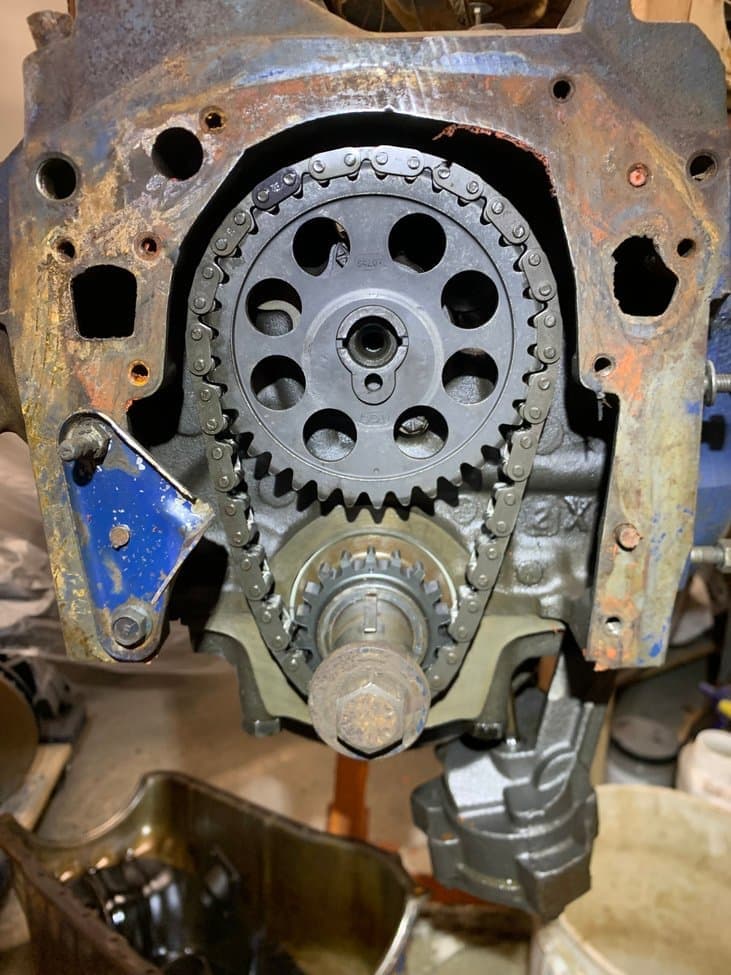
Timing chain replacement and timing calibration are highly professional and precise maintenance operations, which require professional tools, standardized operation processes and rich maintenance experience. Any irregular operation in the installation process will leave hidden dangers for premature chain failure. Common unstandardized operations include inaccurate timing gear alignment, improper chain tension adjustment, incomplete installation of tensioner limit pins, distorted guide rail fixation, and unbalanced bolt tightening torque.
If the chain tension is adjusted too tightly during installation, the internal running friction of the chain will increase sharply, the operating resistance will rise, and the chain and guide rail will be worn rapidly, resulting in high-temperature burnout failure in severe cases. If the adjustment is too loose, the chain will shake and deviate during operation, and the risk of tooth jumping is extremely high. Inaccurate gear calibration will directly lead to timing deviation, power decline and abnormal noise. These artificial installation errors are common hidden causes of early failure of newly replaced timing chains, which are often ignored in daily maintenance.
6. Severe Working Environment & Long-Term Idling Operation
The working environment of heavy-duty trucks varies greatly according to transportation scenarios. Vehicles engaged in mining transportation, construction site material handling and mountainous area gravel road transportation are in high-dust and high-pollution environments for a long time. Floating dust, fine sand and gravel impurities in the air will invade the engine timing cover through aging seals and tiny gaps, enter the timing chain working area, form abrasive impurities with engine oil, and continuously polish and wear precision chain components.
In addition, many drivers are used to long-term idle operation when waiting for loading and unloading goods and resting. Long-term low-speed idling makes the engine run at low speed for a long time, the oil pump output pressure is insufficient, the hydraulic tensioner cannot obtain stable working oil pressure, the chain tension is insufficient, and the chain is in a long-term jitter and loose state. Long-term idle wear will cause cumulative fatigue damage of the chain, gradually inducing timing system abnormal noise and wear failure.
Effective Prevention & Daily Maintenance Tips
Most timing chain kit failures are preventable through standardized daily maintenance and scientific vehicle use habits. Adhering to long-term standardized maintenance can effectively delay the aging speed of timing chain components, avoid sudden failures, reduce vehicle downtime and save a large amount of repeated maintenance costs for fleet enterprises and individual truck owners. The following targeted maintenance and protection schemes are summarized for the failure causes of heavy-duty truck timing chain kits, which are suitable for all mainstream heavy-duty truck models and harsh transportation scenarios.
First, strictly control engine oil quality and standardize oil replacement cycle. Always use brand-qualified high-grade diesel engine oil and matching genuine oil filter elements that meet the engine factory standards. Never use inferior oil, blended oil and unqualified filter elements. Formulate a scientific oil replacement cycle according to the vehicle working environment: replace engine oil and filter elements every 50,000 kilometers for vehicles working in good highway environments; shorten the cycle to 30,000 to 40,000 kilometers for vehicles working in mining areas, construction sites and muddy road environments to ensure clean oil circuit, stable oil pressure and good lubrication effect, and fundamentally reduce abrasive wear of timing chain components.
Second, standardize driving habits and avoid long-term overload and harsh operation. Strictly abide by the vehicle rated load standard, refuse long-term overload and over-speed operation, and reduce the ultra-load pressure of the timing chain system. In the process of driving, try to avoid frequent rapid acceleration, sudden deceleration and emergency braking. Slow down in advance when passing road potholes, uneven road surfaces and curb stones to reduce instantaneous impact load on engine internal precision components. Avoid long-term idle parking operation, turn off the engine in time when waiting for loading and unloading, and reduce idle wear of the timing chain.
Third, establish regular timing system inspection mechanism. Take the engine side cover abnormal noise, idle jitter, power weakness and cold start difficulty as key daily inspection items. Before starting the vehicle every day, listen carefully to the engine operating sound during cold start and idling; observe the idle speed stability and engine jitter state; pay attention to the vehicle acceleration response and fuel consumption changes during driving. Once abnormal signs are found, arrange professional inspection and hidden danger elimination in time, and never drive with faults to avoid minor faults evolving into severe mechanical failures.
Fourth, adhere to full-kit integrated replacement and refuse single-part replacement. When the timing chain kit reaches the replacement cycle or has obvious wear failure, the full set of matching accessories including chain, tensioner, guide rail, sliding rail, gear and sealing gasket must be replaced uniformly. Completely eliminate the problem of mismatched wear of new and old parts, ensure the overall coordination and stability of the timing system, and avoid secondary failure of the newly installed chain.
Fifth, choose professional maintenance teams for disassembly and installation. Timing chain replacement and timing calibration are precision operations, which must be completed by professional technicians with professional tools and standardized processes. Avoid informal maintenance workshops and inexperienced personnel for blind disassembly and installation, to prevent timing deviation, improper tension adjustment and installation errors, and ensure the long-term stable operation of the timing chain system after replacement.
Frequently Asked Questions (FAQ)
Q1: Can I continue driving with a noisy timing chain? It is not recommended to drive continuously for any distance with a noisy timing chain. Slight early cold-start noise allows only extremely short-distance low-speed driving to drive the vehicle to the maintenance point, but long-distance driving, high-speed driving and heavy-load driving are absolutely prohibited. Early noise means the chain is loose and worn, and the hidden danger of tooth jumping already exists. Long-term running will aggravate chain wear, cause timing deviation, and eventually lead to tooth jumping and valve-piston collision faults, causing irreversible and costly engine damage.
Q2: What is the normal replacement cycle of heavy truck timing chain kits? Under standard load, good road conditions and standardized oil maintenance, the service life of original heavy-duty truck timing chain kits is 150,000 to 200,000 kilometers. For vehicles working in long-term overload, high-dust, muddy and mountainous road environments, or vehicles with irregular oil maintenance, the replacement cycle needs to be shortened to 100,000 to 120,000 kilometers to ensure driving safety.
Q3: What is the difference between timing chain noise and valve noise? Timing chain noise is concentrated on the engine timing side cover, obvious during cold start and idle operation, weakened after engine warming up, and aggravated with load increase; valve clearance noise is uniform and stable during all engine operating conditions, with no obvious difference between cold and hot vehicles, and the sound source is concentrated on the engine cylinder head position. Professional technicians can quickly distinguish the two kinds of noise through sound source positioning and working condition comparison.
Q4: Is it necessary to replace the full kit instead of a single chain? Yes, full-kit replacement is the only standard maintenance method. The timing chain system is an integrated matching structure with synchronous wear and aging of all components. Replacing only the single chain and reusing aging tensioners, guide rails and gaskets will lead to mismatched wear of new and old parts, unstable tension and poor limit effect, resulting in repeated abnormal noise and wear failure of the new chain in a short time.
Q5: Will timing chain failure cause engine scrapping? Early and mid-stage timing chain wear will only cause abnormal noise, power decline and increased fuel consumption without permanent engine damage. However, late-stage tooth jumping, chain disengagement and severe collision faults will cause valve bending, piston damage, cylinder wall scratching and cylinder head deformation, which are irreversible mechanical damages. Without timely and professional overhaul, the engine will be completely scrapped.
Article Summary
The timing chain kit is the core synchronization precision component of heavy-duty truck diesel engines, and its stable working state is directly related to engine power performance, fuel economy, operation stability and driving safety. Different from sudden accidental faults, most timing chain kit failures are progressive faults evolved from long-term accumulated minor hidden dangers, and 95% of premature failures are caused by irregular maintenance, improper driving habits, inferior accessory matching and harsh working environments, rather than natural aging and quality problems of original parts.
For fleet managers and individual truck drivers, establishing standardized full-cycle maintenance awareness is the key to avoid timing chain failures. It is necessary to abandon the wrong cognition of “timing chain maintenance-free”, pay attention to daily abnormal symptom monitoring, strictly control engine oil quality and replacement cycle, standardize driving and vehicle use habits, and adhere to full-kit original accessory replacement and professional standardized installation. These scientific operation and maintenance methods can effectively reduce the failure rate of timing chain kits, avoid costly engine overhaul costs and long-term vehicle downtime losses, and maximize the service life and operation stability of heavy-duty truck engines.
Timely detection, accurate judgment and scientific solution of timing chain kit hidden faults can thoroughly eliminate engine driving safety hazards, ensure the stable and efficient operation of transport vehicles, and create stable and sustainable economic benefits for freight transportation work. If you need to purchase original high-precision truck timing chain kits, full-series engine accessories and chassis supporting parts, Mettlead provides one-stop full-specification product matching and professional technical support services for global heavy truck users, helping fleet vehicles reduce failure rate and operating costs.


