7 Common Heavy Duty Truck Repair Problems Every Driver Should Know
Introduction
Heavy-duty trucks are the backbone of global logistics, construction transportation, mining operations, and long-distance freight networks. These vehicles operate continuously under extreme conditions such as heavy payloads, long driving hours, poor road surfaces, and extreme weather environments.
Because of this demanding working environment, mechanical wear, system fatigue, and component failure are inevitable over time. Even high-quality trucks like SINOTRUK, SHACMAN, FAW, Dongfeng, Volvo, and Scania will experience operational degradation without proper maintenance.
Unlike passenger vehicles, heavy-duty trucks rely on multiple interconnected systems including engine, transmission, braking, suspension, electrical, and fuel systems. A failure in one system often affects overall vehicle performance.
For professional diagnostic guidance and structured repair solutions, you can visit our technical support resources.
Engine Overheating
Engine overheating is not a single-point failure but a systemic issue that develops over time. In heavy-duty trucks, the engine generates extremely high combustion temperatures due to continuous high-load operation.
The cooling system must continuously regulate this heat through a combination of coolant circulation, airflow management, and thermal exchange. When any component in this chain becomes inefficient, thermal imbalance begins to occur.
In real fleet operations, overheating is most frequently observed in mountainous routes, desert logistics corridors, and long-distance highway transport during summer seasons. These conditions significantly reduce the cooling system’s efficiency.
Another overlooked factor is coolant degradation. Over time, coolant loses its anti-corrosion and heat-transfer properties, leading to internal rust formation and reduced thermal conductivity inside the radiator and engine block.
If engine overheating continues without intervention, it may cause progressive damage: starting from gasket micro-leaks, followed by cylinder head warping, then combustion chamber distortion, and finally catastrophic engine failure.
Proper preventive maintenance includes radiator flushing, fan clutch inspection, coolant replacement cycles, and water pump efficiency testing.
Brake System Problems
Brake systems in heavy-duty trucks are engineered for extreme load conditions, but they are also one of the most failure-sensitive systems due to continuous stress.
Air brake systems depend on a stable compressed air network. Even a minor leak in the air circuit can result in reduced braking force distribution, delayed response time, and uneven braking performance across axles.
Brake fade is one of the most dangerous phenomena in long downhill driving. It occurs when repeated braking generates excessive heat that exceeds the friction material’s thermal threshold, causing a temporary or permanent reduction in braking efficiency.
Another critical issue is brake imbalance, where different wheels experience different braking forces. This can lead to vehicle instability, especially during emergency braking situations at high speed.
In real-world logistics operations, brake system reliability directly determines driver safety. That is why periodic inspection of brake pads, air tanks, valves, and compressors is essential.For system-level brake components, visit truck system solutions.
Proper preventive maintenance includes radiator flushing, fan clutch inspection, coolant replacement cycles, and water pump efficiency testing.
Transmission System Failure
Transmission systems operate as the central torque management unit in heavy-duty trucks. They must continuously adjust power output according to load, speed, and terrain conditions.
When transmission performance begins to degrade, early symptoms are often subtle. Drivers may notice slight delays in gear engagement, small vibration during shifting, or inconsistent acceleration response.
The root causes are usually cumulative. Lubrication breakdown is one of the most common factors. When transmission oil loses viscosity or becomes contaminated with metal particles, friction increases dramatically inside the gearbox.
Another major factor is synchronizer wear. Synchronizers are responsible for matching gear speeds during shifting. When they degrade, gear engagement becomes rough and unstable.
In long-haul operations, continuous torque stress leads to micro-fractures in gear teeth. Over time, these micro-damages accumulate until full mechanical failure occurs.Proper maintenance includes oil condition monitoring, temperature control, and scheduled gearbox inspection.
Clutch System Failure
The clutch system plays a critical role in transferring engine torque to the transmission. It is also one of the most frequently replaced components in heavy-duty trucks.Clutch slipping is the earliest and most recognizable symptom. However, many drivers fail to detect it early because the vehicle can still operate normally in mild conditions.
Clutch wear is influenced not only by mechanical stress but also by driver behavior. Improper habits such as riding the clutch, excessive half-pedal use, and aggressive shifting significantly accelerate friction material degradation.
In heavy-load scenarios, clutch systems experience even higher stress during starting and low-speed operation. Repeated engagement under high torque creates excessive heat buildup, which reduces friction efficiency.
Oil contamination is another hidden cause. Even small leaks from engine seals can reduce clutch grip and lead to unstable torque transfer.For replacement components, check OEM truck parts brands.
Electrical System Failures
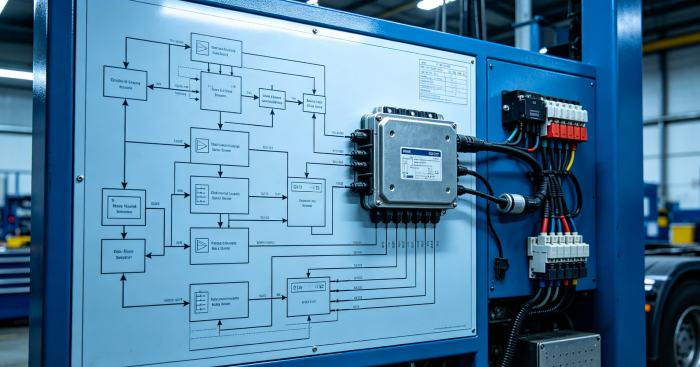
Modern heavy-duty trucks rely on complex electrical architectures that integrate engine control, transmission management, braking assistance, and diagnostic systems.
Because of this high level of integration, electrical failures rarely occur in isolation. A single fault in voltage regulation or signal transmission can affect multiple systems simultaneously.
Battery degradation is one of the most common issues, especially in cold climates or long idle periods. Alternator instability can further amplify voltage fluctuations.
Sensor failures are increasingly common due to environmental exposure such as vibration, dust, and moisture. These sensors provide critical data to the ECU, and even minor inaccuracies can disrupt engine performance.
Wiring harness damage is often caused by vibration fatigue over time, especially in off-road or construction environments.Accurate diagnosis requires structured scanning procedures and multi-point electrical testing.
Suspension and Steering System Issues
Suspension systems are designed to absorb road impact and maintain tire-road contact under varying load conditions.Over time, continuous heavy loading leads to fatigue in leaf springs, shock absorbers, bushings, and mounting brackets. These components gradually lose elasticity and damping performance.
Steering system degradation is often linked to hydraulic pressure loss, steering pump inefficiency, or mechanical linkage wear.In real-world applications, suspension failure does not only affect comfort but also directly impacts braking distance, tire wear rate, and vehicle stability during cornering.
Heavy-duty trucks operating in mining and construction environments are particularly vulnerable due to constant exposure to uneven terrain and extreme load variations.
Fuel System Problems
Fuel systems are responsible for delivering clean, pressurized fuel into the combustion chamber with precise timing.Any disruption in fuel delivery directly affects engine efficiency. Common issues include clogged fuel filters, injector blockage, pump wear, and contamination from low-quality diesel.
Fuel contamination is especially problematic in global logistics operations where fuel quality standards vary significantly between regions.When injectors become partially blocked, fuel atomization becomes inconsistent, resulting in incomplete combustion. This leads to power loss, increased fuel consumption, and higher emissions.Over time, untreated fuel system issues can also damage piston rings and combustion chambers due to carbon buildup.
Preventive Maintenance Strategy
Preventive maintenance is the foundation of efficient fleet management. Instead of reacting to failures, it focuses on predicting and preventing system degradation.
A structured maintenance program should include engine diagnostics, brake system testing, transmission inspection, electrical system scanning, and cooling system evaluation.Fleet operators should also adjust maintenance cycles based on operating conditions. Trucks operating in mining or construction require more frequent servicing than highway-only vehicles.Digital monitoring systems and telematics can further enhance predictive maintenance capabilities.
Company Support System
As a professional supplier of heavy-duty truck components in China, we provide integrated solutions covering engine systems, drivetrain components, braking systems, and electrical parts.Our goal is to support global fleet operators with stable, reliable, and cost-effective solutions that improve vehicle uptime and reduce maintenance risks.
Learn more on our about us page.For real operational case studies, visit cooperative case section.For direct technical consultation, contact us via contact us page.
❓ Frequently Asked Questions (FAQ)
What are the most common causes of heavy-duty truck breakdowns?
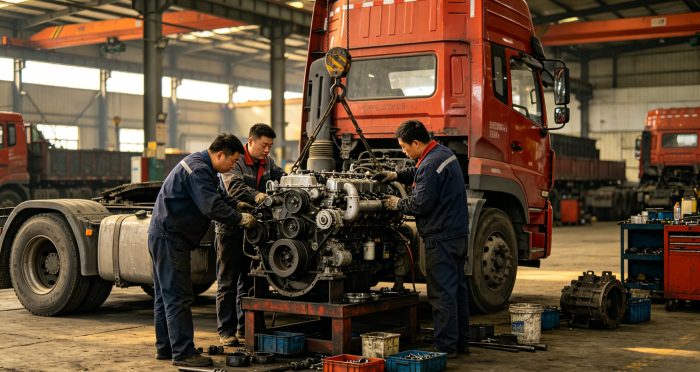
Heavy-duty truck breakdowns are usually caused by a combination of mechanical wear, poor maintenance practices, and harsh operating environments. The most common root causes include engine overheating, brake system failure, transmission wear, clutch degradation, electrical system faults, suspension fatigue, and fuel contamination.
In real-world logistics operations, trucks often run under continuous heavy load conditions with limited downtime. This accelerates wear across multiple systems simultaneously. For example, overheating can damage engine gaskets, while poor lubrication can lead to gearbox failure.Environmental factors such as dust, humidity, extreme temperatures, and road vibration further increase the likelihood of system failure.
How can drivers identify early signs of truck problems?
Early detection is critical for preventing major breakdowns. Drivers should pay attention to warning signs such as unusual engine noise, reduced power output, delayed gear shifting, brake response delay, vibration during driving, or dashboard warning lights.
In many cases, these symptoms appear gradually before full failure occurs. For example, clutch slipping starts as a minor loss of acceleration efficiency but can eventually lead to complete power transmission failure if ignored.Regular vehicle inspection and real-time monitoring of temperature, oil pressure, and braking performance are essential for early diagnosis.
Why is engine overheating so dangerous in heavy-duty trucks?
Engine overheating is extremely dangerous because it directly affects the structural integrity of the engine. When temperature exceeds safe operating limits, metal components expand unevenly, leading to deformation and internal stress.
If overheating continues, it may cause cylinder head warping, gasket failure, coolant leakage into combustion chambers, and piston damage. In severe cases, the engine may become completely unusable.Heavy-duty trucks are especially vulnerable because they often operate under full load for extended periods, which generates excessive thermal stress.
What causes clutch failure in heavy-duty trucks?
Clutch failure is mainly caused by friction material wear, overheating, oil contamination, and improper driver behavior. One of the most common symptoms is clutch slipping, where engine RPM increases without corresponding vehicle acceleration.
Driving habits such as riding the clutch, excessive half-pedal use, and aggressive gear shifting significantly shorten clutch lifespan.Heavy-load starting conditions also place extreme stress on clutch components, especially in urban logistics or construction transport scenarios.If not addressed early, clutch failure can also damage the flywheel and gearbox system, increasing repair costs significantly.
How important is preventive maintenance for fleet operations?
Preventive maintenance is one of the most important strategies in fleet management. It helps detect early-stage wear and prevents minor issues from developing into major failures.A proper maintenance system includes regular engine diagnostics, brake system inspection, transmission oil checks, electrical system scanning, and cooling system evaluation.
Fleet operators who implement structured maintenance schedules typically experience lower downtime, reduced repair costs, and longer vehicle lifespan.Modern fleets also use telematics systems to monitor vehicle health in real time, improving predictive maintenance accuracy.
Are heavy-duty truck repairs expensive?
Yes, heavy-duty truck repairs can be expensive, especially when major systems such as the engine, transmission, or braking system are involved. The cost depends on the severity of damage and how early the issue is detected.
Minor repairs such as filter replacement or sensor repair are relatively affordable. However, delayed maintenance often leads to secondary damage, which significantly increases total repair costs.For example, ignoring brake system issues can lead to rotor and air system damage, while ignoring transmission problems can result in full gearbox replacement.
Conclusion
Heavy-duty truck repair problems are unavoidable due to extreme working conditions. However, with proper preventive maintenance, early fault detection, and high-quality replacement components, most failures can be significantly reduced.
Understanding these systems not only improves safety and reliability but also enhances overall fleet profitability and operational efficiency.