Bad Clutch Symptoms Every Truck Driver Should Know
Introduction
The clutch is one of the most critical components in a heavy-duty truck’s transmission system. It allows the driver to smoothly engage and disengage the engine from the drivetrain, enabling gear changes and power transfer. Despite its importance, many truck operators underestimate the impact of clutch wear or failure. In Chinese heavy-duty trucks such as SINOTRUK HOWO, FAW J6, or SHACMAN X3000, the clutch operates under extreme load conditions, including fully loaded long-haul transport, construction site duty cycles, and high-torque maneuvering.
A failing clutch can compromise vehicle performance, fuel efficiency, and safety. Symptoms often appear gradually, making early detection critical to avoid costly repairs such as pressure plate replacement, clutch disc damage, or even transmission failure. Understanding the most common bad clutch symptoms, their causes, and preventive measures is essential for drivers, fleet managers, and maintenance teams.
Fleet operators can leverage professional guidance through our Technical Support and select high-quality compatible parts via Brand and System pages to extend clutch life and reduce operational downtime.
Ignoring early clutch symptoms often leads to cascading failures in the transmission system. For example, a slipping clutch under load generates excessive heat, which can warp the pressure plate and damage the flywheel. The resulting repair costs are exponentially higher than a proactive inspection and replacement program. This makes early detection and maintenance not just operational best practice but a critical risk management strategy for fleets worldwide.
Symptom #1 – Slipping Clutch
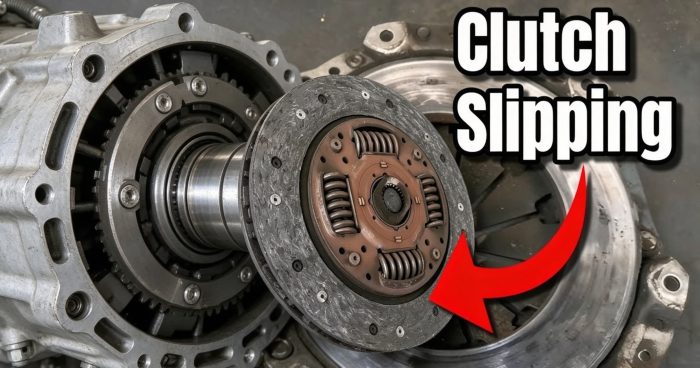
A slipping clutch is one of the earliest and most noticeable indicators of clutch wear in heavy-duty trucks. When the clutch disc cannot fully transmit engine torque to the transmission, drivers will notice a loss of power during acceleration, especially when hauling heavy loads or climbing inclines. The engine may rev higher without a corresponding increase in vehicle speed, indicating the friction surface has worn down or become contaminated.
The primary causes include worn clutch discs, oil contamination from leaking engine seals, and glazing of the friction material due to overheating. Over time, a slipping clutch increases stress on the transmission and can lead to premature wear of other drivetrain components. Fleet data shows that high-load urban and highway operations accelerate clutch wear, making monitoring critical for trucks like SINOTRUK and FAW models.
Early detection methods involve observing engine RPM during acceleration, checking for unusual heat around the bell housing, and inspecting the clutch disc and pressure plate during scheduled maintenance. Using OEM-quality replacement components is highly recommended to ensure proper friction characteristics and long-term durability.
In real-world fleet operations, detecting clutch slippage early can prevent secondary component damage. Operators should monitor engine RPM vs. vehicle speed under various load conditions. Slippage is often more pronounced during uphill climbs or when the truck is fully loaded. Additionally, technicians can perform a “load test” by applying moderate throttle in different gears while observing wheel response and engine revs. Installing clutch wear sensors or using ECU diagnostic tools, when available, allows fleet managers to monitor clutch health in real-time, preventing unexpected failures and optimizing replacement intervals.
Symptom #2 – Difficulty Shifting Gears
Difficulty in shifting gears is a common symptom of a worn or failing clutch. Drivers may experience grinding noises, resistance when moving the gear lever, or complete inability to engage certain gears. In modern heavy-duty trucks, this often correlates with insufficient disengagement of the clutch, which can be caused by worn friction material, weak pressure plate springs, or air bubbles in hydraulic clutch systems.
In Chinese heavy-duty trucks operating under fully loaded conditions, frequent gear changes exacerbate wear on the clutch components. A compromised clutch can also lead to accelerated wear in synchronizers within the gearbox, increasing the likelihood of transmission failure.
Diagnosis involves performing a test drive under varying load conditions, checking pedal travel, and inspecting the hydraulic system (if applicable). Timely replacement of worn components, along with proper clutch adjustment, helps prevent secondary damage to the gearbox.
Difficulty in shifting gears is often a symptom of partial clutch disengagement. When the clutch does not fully release, the synchronizers inside the transmission must compensate, leading to accelerated wear on gear teeth and synchronizer rings. Over time, repeated gear grinding can create permanent damage, resulting in costly repairs. For heavy-duty trucks in export fleets, inconsistent maintenance and driver habits such as riding the clutch exacerbate this issue. A structured diagnostic procedure, including measuring pedal free play, inspecting hydraulic pressure, and evaluating synchronizer condition, can identify the root cause before severe gearbox damage occurs.
Symptom #3 – Unusual Noise When Clutch Engages
Noises such as squealing, rattling, or chattering during clutch engagement often indicate mechanical issues within the clutch assembly. Common sources include a failing release bearing, warped pressure plate, or uneven wear on the clutch disc. These noises often increase with engine load or prolonged highway driving.
In Chinese heavy-duty trucks, vibration and high-torque load cycles can worsen these conditions, leading to accelerated wear of bearings and friction surfaces. Ignoring unusual noise can result in catastrophic failure, making early detection critical.
Maintenance involves a visual inspection of the release bearing, checking for uneven clutch disc wear, and ensuring proper lubrication of moving parts.
Different types of noise can indicate specific faults within the clutch assembly. Squealing often points to a failing release bearing or insufficient lubrication, while chattering indicates uneven wear of the clutch disc or warped pressure plate. Rattling noises may occur when the flywheel surface develops micro-cracks under prolonged heavy load. Fleet technicians should correlate driver-reported noises with component inspections, using stethoscopes or thermal cameras to pinpoint hotspots. Understanding these correlations allows precise repairs, prevents secondary damage, and ensures continued operational efficiency.
Symptom #4 – Spongy or High Clutch Pedal
A spongy, soft, or unusually high clutch pedal is a clear indicator of hydraulic or mechanical issues in the clutch system. In modern heavy-duty trucks, most clutch systems rely on hydraulics for smooth operation. Over time, air may enter the hydraulic lines, or fluid may leak, leading to insufficient pressure to fully disengage the clutch.
Drivers will notice that the pedal requires excessive travel to achieve disengagement, making gear changes difficult. In manual hydraulic systems, pedal softness may fluctuate depending on engine temperature or load. Trucks like SINOTRUK HOWO or FAW J6 operating under heavy loads for extended periods are particularly vulnerable to these symptoms.
Proper diagnosis includes inspecting hydraulic lines for leaks, checking the master and slave cylinder operation, and bleeding the system to remove trapped air. In cable-operated clutches, worn cables or stretched linkages can produce similar symptoms. Fleet maintenance teams should schedule regular checks and replace worn components using OEM-approved parts for long-term reliability.
In heavy-duty truck clutch systems, hydraulic delay is often overlooked but plays a critical role in pedal feel and engagement performance. When hydraulic fluid degrades or air enters the system, the clutch response becomes inconsistent under different load conditions.
For example, a truck may feel normal when empty, but when fully loaded, the clutch pedal becomes noticeably heavier or slower to respond. This is because hydraulic pressure is no longer being transmitted efficiently through the master and slave cylinders.
In Chinese heavy-duty trucks operating in logistics fleets, this issue is often misdiagnosed as clutch disc wear. However, in many cases, the friction components are still usable, and the real problem lies in hydraulic inefficiency.
If ignored, hydraulic delay leads to uneven clutch engagement, which gradually accelerates wear on the pressure plate and clutch disc, shortening overall system lifespan.
Symptom #5 – Vibrations or Judder
Clutch vibrations or judder are usually noticed during takeoff or when engaging the clutch under load. This phenomenon is often caused by uneven wear on the clutch disc, a warped pressure plate, contamination of friction surfaces, or misalignment of the clutch assembly.
Heavy-duty trucks that frequently carry maximum payloads or operate in stop-and-go urban traffic experience increased mechanical stress. Vibrations not only affect driver comfort but can also accelerate wear on bearings, shafts, and transmission components.
Technicians can diagnose clutch judder by performing controlled takeoff tests, inspecting the clutch disc and pressure plate surfaces, and checking for contamination such as oil or grease. Regular preventive inspection and correct installation are key to reducing judder-related failures. OEM-quality components are strongly recommended for replacement.
Clutch vibration or judder is not only a mechanical issue but also closely related to thermal stress accumulation. During repeated heavy-load starts, especially in construction or mining trucks, excessive heat builds up on the friction surface.
When the temperature exceeds the optimal operating range, the friction coefficient between the clutch disc and flywheel becomes unstable. This creates uneven grip during engagement, which drivers experience as vibration or shaking.
Another hidden factor is flywheel surface micro-deformation. Even slight surface irregularities, invisible to the naked eye, can amplify vibration under torque load.
In long-term fleet operation, ignoring judder symptoms often leads to complete clutch failure, requiring full assembly replacement instead of partial repair.
Symptom #6 – Burning Smell
A burning odor emanating from the engine compartment during clutch engagement often indicates excessive heat generated by a slipping or overworked clutch. Causes include prolonged clutch slipping, frequent high-load operation, or contamination from oil and grease.
If ignored, excessive heat can damage the clutch friction material, warp the pressure plate, and even affect adjacent transmission components. Truck operators may notice this smell most prominently during heavy hauling or hill climbing.
Fleet operators are advised to inspect the clutch system immediately upon detecting burning odors and to check for proper pedal adjustment, friction material condition, and pressure plate integrity.
A burning smell from the clutch is not just a surface symptom—it indicates an advanced stage of thermal degradation inside the friction system.
When the clutch is partially engaged for extended periods, friction energy is converted into heat. If this heat cannot dissipate efficiently, the friction material begins to glaze. Once glazing occurs, the clutch loses its designed friction coefficient.
At this stage, even normal driving causes slippage, which further increases heat generation in a destructive feedback loop.
In fleet vehicles, this is one of the most common causes of “sudden clutch failure,” where the driver reports normal performance one day and complete failure shortly after.
Symptom #7 – Clutch Pedal Sticking or Returning Slowly
If the clutch pedal does not return promptly after release, or sticks at the top or bottom of its travel, this indicates mechanical binding or hydraulic problems. Common causes include worn release bearings, damaged return springs, hydraulic fluid contamination, or improperly adjusted linkages.
Such issues can compromise safe gear changes and increase wear on the clutch and transmission. Trucks operating in dusty or wet conditions, typical for Chinese heavy-duty construction or mining fleets, are especially susceptible.
Fleet maintenance teams should routinely inspect pedal mechanisms, bleed hydraulic lines, and replace worn components using OEM parts.
A spongy or high clutch pedal often leads to delayed gear engagement, especially under full load or during urban stop-and-go operations. This can cause repeated slippage, overheating of the clutch disc, and uneven wear on the pressure plate. In extreme cases, the clutch may fail completely mid-route, causing delivery delays and increased downtime. Similarly, clutch judder during takeoff often results from combined mechanical and thermal stress. Repeated minor vibrations accelerate disc surface glazing, pressure plate warping, and flywheel micro-deformation, all of which require expensive repairs if ignored. Proper monitoring, early detection, and driver training are essential preventive measures.

Common Causes of Clutch Failure in Heavy-Duty Trucks
Clutch failure generally results from a combination of normal wear, operational stress, environmental factors, and improper maintenance:
- Normal wear and tear: Friction surfaces degrade over time. Heavy-load trucks experience accelerated wear.
- Overloading and aggressive driving: Frequent full-load starts, improper gear selection, or riding the clutch increases stress.
- Poor maintenance or contamination: Oil or grease contamination on clutch components reduces friction efficiency.
- Installation or adjustment errors: Misaligned clutch discs, improperly torqued bolts, or incorrect pedal free play can lead to premature failure.
Preventive inspection and timely replacement of worn components, preferably with OEM-quality parts, are essential to maintain fleet reliability.
Clutch lifespan is not only determined by mechanical quality but also by usage patterns. In fleet operations, driving behavior has a direct impact on clutch degradation speed.
Frequent stop-and-go driving, improper gear selection, and riding the clutch pedal significantly increase friction wear. Over time, even high-quality OEM clutch assemblies will degrade faster under poor operating habits.
In Chinese logistics fleets, especially in urban distribution trucks, clutch replacement intervals are often 30%–50% shorter than highway-only trucks due to continuous engagement cycles.
This makes driver training a critical part of clutch system maintenance strategy.
Normal wear and tear, aggressive driving, poor maintenance, and environmental factors all contribute to clutch failure. Each cause affects the friction material, pressure plate, and release bearing differently. For example, frequent stop-and-go urban driving accelerates wear on the clutch disc, while high payload highway driving stresses the pressure plate. Diagnostic procedures should include load simulation tests, pedal travel analysis, hydraulic line pressure measurements, and component inspections. Fleet managers can integrate these diagnostics with ECU and ABS systems to monitor clutch health proactively.
How to Diagnose a Failing Clutch
Diagnosis involves systematic checks:
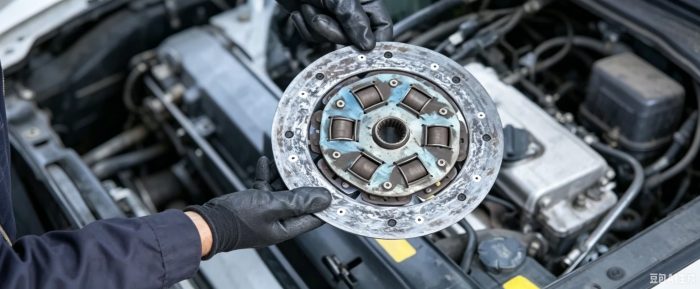
- Visual inspection: Check for wear on clutch disc, pressure plate, release bearing, and signs of oil contamination.
- Test drive: Evaluate pedal feel, slippage, noise, and vibrations under load.
- Hydraulic or cable system check: Inspect for leaks, air bubbles, or mechanical binding.
- Fleet-level integration: Combine diagnostic data with ECU, transmission, and ABS/traction systems to identify early-stage issues.
Following these steps allows technicians to prevent catastrophic clutch failures before they affect operations.
Early detection of clutch problems can significantly reduce maintenance costs. Fleet operators should not rely only on driver feedback but implement structured inspection routines.
One effective method is monitoring clutch engagement point consistency. If the engagement point gradually moves higher over time, it usually indicates wear on the friction material.
Another key indicator is heat accumulation around the bell housing after long-distance driving. Excessive heat suggests slipping or incomplete disengagement.
Modern fleet systems integrate clutch condition monitoring with transmission diagnostics, allowing early intervention before full failure occurs.
Preventive Maintenance for Truck Clutches
Preventive measures extend clutch life and improve reliability:
- Regular inspection schedule: Check friction surfaces, pedal travel, and hydraulic system integrity.
- Driver training: Educate drivers on proper clutch engagement techniques and avoiding unnecessary slipping.
- OEM replacement parts: Use certified components for pressure plates, discs, and release bearings.
- Systematic fleet checks: Integrate clutch checks with other vehicle systems during routine maintenance.
Delaying clutch maintenance can significantly increase total repair costs. A worn clutch disc is relatively inexpensive to replace, but if failure progresses to the pressure plate, flywheel, or transmission synchronizer, the cost increases exponentially.
In heavy-duty trucks, clutch failure is one of the most expensive drivetrain-related repairs due to labor intensity and component integration complexity.
Fleet operators who implement preventive maintenance strategies consistently report lower downtime rates and reduced total operating costs.
Preventive maintenance should include scheduled inspection of friction surfaces, pedal travel measurement, hydraulic line integrity, and OEM part replacement cycles. Driver education on proper clutch usage, avoiding riding the pedal, and smooth engagement can extend clutch lifespan by up to 30%. Integrating this maintenance with fleet management software ensures all trucks are consistently inspected, reducing unexpected downtime and repair costs.
FAQ – Expanded Version
1. How can I tell if my truck clutch is slipping?
A slipping clutch is usually noticeable when the engine revs increase but the truck does not accelerate proportionally, especially under load or when climbing a slope. In heavy-duty trucks, slipping is often caused by worn clutch discs, glazing of the friction surface due to overheating, or contamination from oil or grease. Over time, this not only reduces vehicle performance but also increases fuel consumption and puts extra stress on the transmission system.
For fleet operators, early detection is critical. Signs to monitor include higher RPM with normal throttle input, difficulty maintaining speed under full load, and unusual noise from the clutch assembly. Technicians can perform a controlled acceleration test to identify slippage and visually inspect the clutch disc for wear patterns or contamination. Replacing worn components promptly with OEM-quality parts ensures reliable torque transfer and prevents downstream transmission damage.
2. Why is my clutch pedal high or soft?
A high or soft clutch pedal is a common symptom of hydraulic or cable system issues. In hydraulic clutches, trapped air, fluid leaks, or worn master/slave cylinders can cause inconsistent pressure, leading to a spongy or high pedal feel. In cable-operated systems, stretched or misaligned cables can create similar behavior.
In Chinese heavy-duty trucks operating under heavy loads, this symptom often becomes more apparent when the vehicle is fully loaded. Drivers may notice that the pedal requires extra travel to disengage the clutch, making gear changes difficult. Fleet maintenance should include bleeding hydraulic systems, inspecting for leaks, and checking the condition and routing of clutch cables. Addressing pedal irregularities early prevents uneven clutch engagement, premature friction wear, and potential damage to the transmission.
3. Can a bad clutch damage my truck transmission?
Yes. A malfunctioning clutch can cause severe damage to a truck's transmission. If the clutch fails to disengage fully, the synchronizers and gears within the gearbox endure abnormal stress during gear changes. Over time, this can lead to accelerated wear of gear teeth, synchronizer rings, and bearings.
In fleet operations, transmission damage due to a faulty clutch is often more expensive than replacing the clutch itself. To avoid such outcomes, operators should conduct regular inspections, monitor clutch engagement performance, and replace worn components with OEM-quality parts. Additionally, driver training on correct clutch operation—avoiding riding the pedal and engaging gears smoothly—can significantly reduce transmission wear and extend the service life of the drivetrain.
4. What causes clutch judder or vibration?
Clutch judder, characterized by shaking or vibration during engagement, is typically caused by uneven wear on the clutch disc, warped pressure plates, contamination of friction surfaces, or misalignment of the clutch assembly. This problem is most noticeable when starting from a stop or driving under heavy load conditions.
In real-world fleet scenarios, such as long-haul or construction operations, repeated high-load starts can exacerbate vibration issues. Technicians diagnose judder by inspecting the disc surface, pressure plate, flywheel flatness, and release bearing. Environmental factors like oil or grease contamination further amplify vibrations. Addressing these causes promptly prevents damage to the flywheel and pressure plate, ensures smooth engagement, and improves vehicle safety and driver comfort.
5. Why do I smell burning when using the clutch?
A burning smell indicates that the clutch is overheating. Common causes include prolonged slipping, excessive load, or contamination from engine oil or hydraulic fluid. Overheating reduces the friction coefficient between the clutch disc and flywheel, which can lead to glazing or even permanent damage to the friction material.
Drivers should pay attention to the smell during heavy-load operation or hill climbing. Immediate inspection is advised to check for clutch disc wear, pressure plate condition, and hydraulic system performance. Ignoring a burning smell can result in total clutch failure, leading to costly replacement of the clutch assembly and potential transmission damage. Preventive measures include proper driving technique, regular inspection.
6. How often should I replace the clutch in heavy-duty trucks?
Clutch replacement intervals depend on truck model, operating conditions, and load cycles. For Chinese heavy-duty trucks like SINOTRUK, FAW, and SHACMAN, OEM guidelines typically recommend replacement between 300,000–500,000 km under normal operation. However, trucks operating under harsh conditions—such as stop-and-go urban deliveries, mountainous terrains, or fully loaded long-haul routes—may require earlier inspection and replacement.
Routine checks of clutch pedal free play, engagement point consistency, and friction material condition help fleet managers anticipate clutch life. Replacing components proactively with OEM-quality parts minimizes unexpected downtime, reduces the risk of transmission damage, and ensures fleet reliability. Additionally, driver training to avoid riding the clutch and excessive load engagement can significantly extend clutch life.