If your truck’s engine is the heart, then the gearbox is the tireless middleman who never clocks out. It translates raw engine power into usable wheel movement — quietly, reliably, and without complaint. Yet most drivers only think about their truck gear boxes when something goes wrong.
That ends today. Whether you’re a fleet manager trying to reduce downtime or a driver who wants to understand what’s happening beneath the cab floor, this guide walks you through every function your gearbox performs, the problems it can develop, and exactly how to keep it running for hundreds of thousands of miles.
Understanding the Heart of Your Truck Transmission System
A truck gearbox sits between the engine and the driveshaft, acting as a translator. The engine speaks in rotational speed (RPM), but the wheels need torque — especially when you’re hauling serious weight. The gearbox converts high-speed, low-torque engine output into the low-speed, high-torque force that actually moves a loaded truck forward.
Think of it this way: your engine is a sprinter who can only run at certain speeds. The gearbox is the coach who tells the sprinter exactly when to push harder and when to ease off, depending on the terrain ahead. Without that coach, the sprinter burns out fast.
How a Truck Gear Box Differs from a Car Gearbox
Your sedan’s 6-speed automatic and a commercial truck’s transmission live in completely different worlds. A typical heavy vehicle drivetrain manages loads that can exceed 40 tons, which means the gearbox needs far more gear ratios — often 10 to 18 speeds — to keep the engine in its optimal power band across wildly different conditions.
Moreover, the physical components are significantly larger and built from harder-wearing materials. The gear shifting mechanism must handle exponentially greater forces without flexing or failing. In short, a truck gearbox is engineered for endurance under punishment that would destroy a passenger car transmission in minutes.
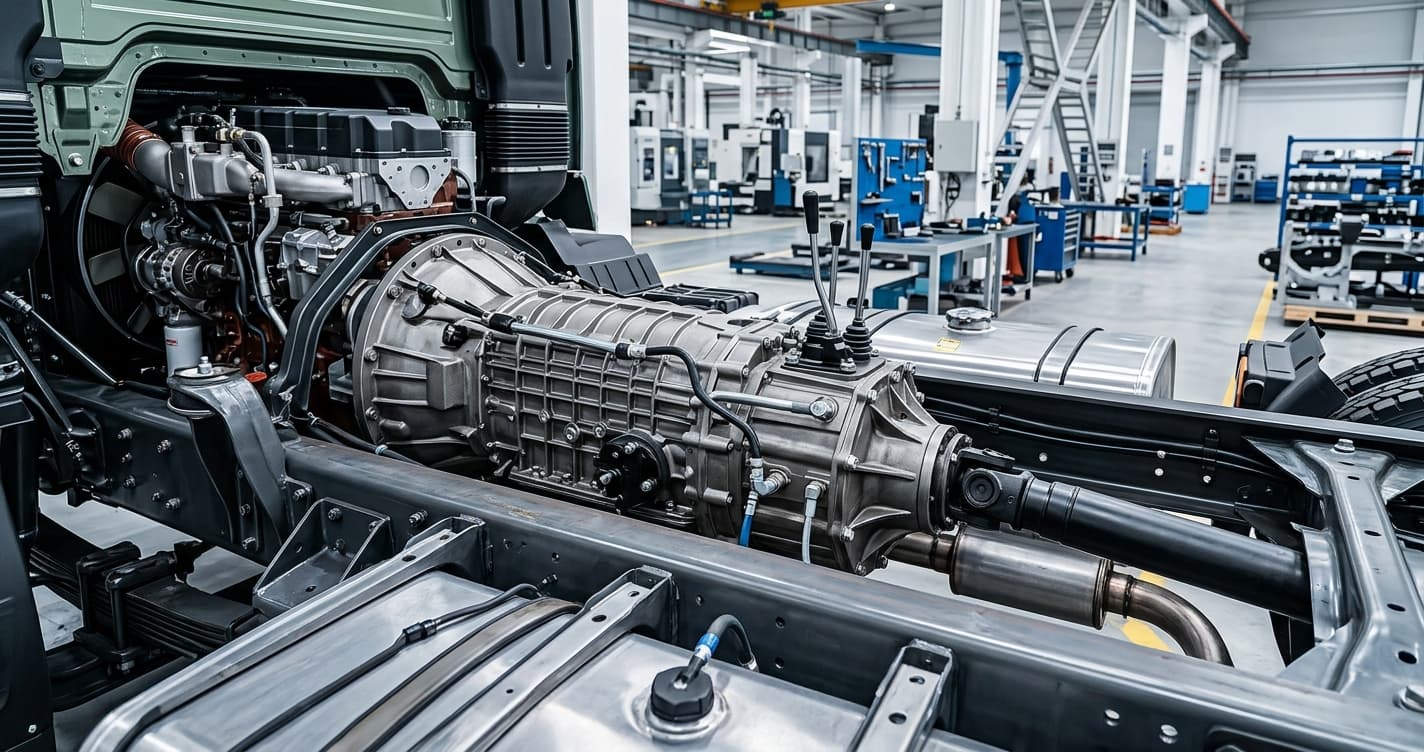
Key Components Inside a Truck Gear Box
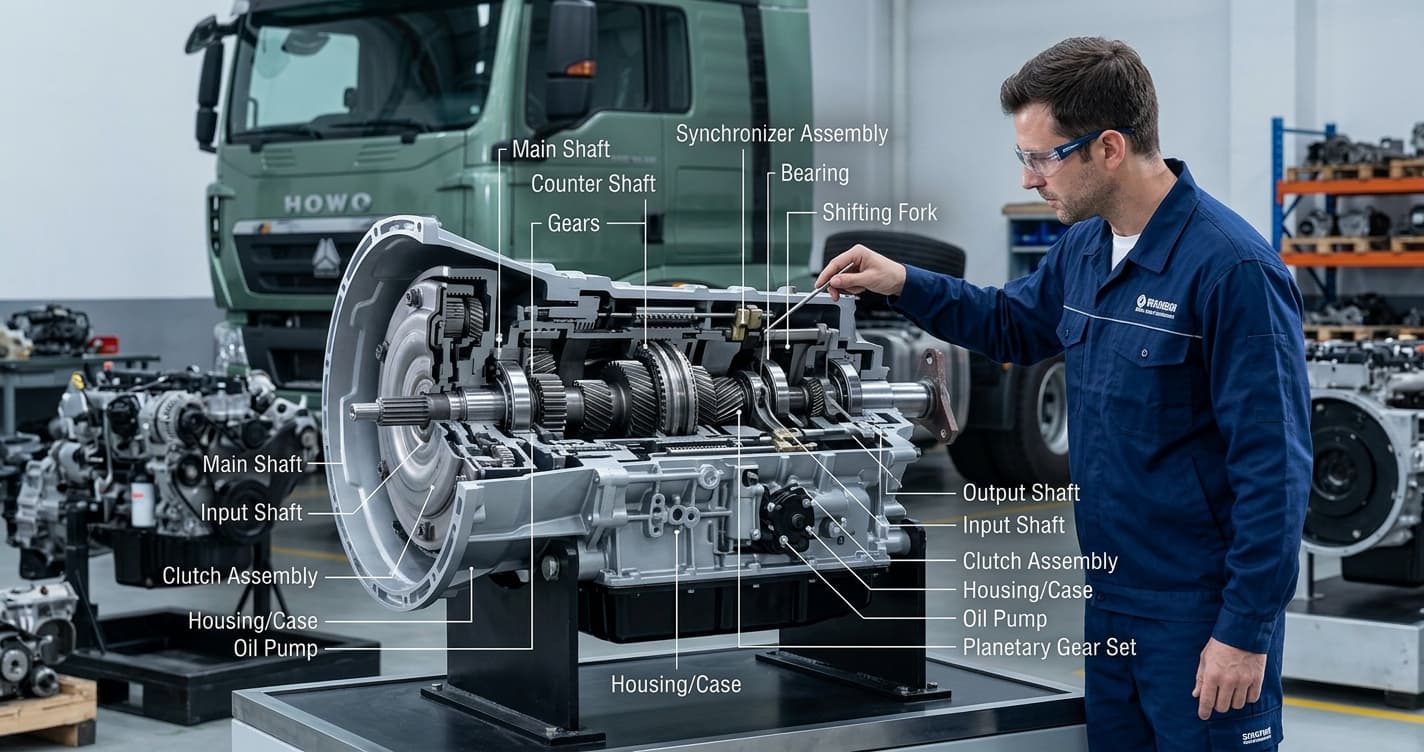
Inside that heavy cast-iron housing, a well-choreographed dance team is performing thousands of times per minute. Each member has a specific role, and when they’re all in sync, the result is smooth, powerful motion. Here’s who’s on the team:
| Component | Function | Why It Matters |
|---|---|---|
| Input Shaft | Receives power from the engine via the clutch | The starting point of all motion transfer |
| Output Shaft | Delivers converted power to the driveshaft | Connects the gearbox directly to the wheels |
| Countershaft | Holds intermediate gears for ratio changes | Enables multiple gear ratios in one housing |
| Synchronizers | Matches gear speeds during shifts | Prevents grinding and ensures smooth transitions |
| Gear Sets | Provide various speed and torque ratios | Adaptability across all driving conditions |
When any single component wears beyond tolerance, the entire system suffers. Understanding these parts helps you recognize early warning signs before a minor issue becomes a roadside breakdown.
The Primary Functions of Truck Gear Boxes
Now let’s get to the core question: what does a truck gearbox actually do all day? The answer involves six distinct functions, each solving a specific problem that would otherwise make heavy transport impossible.
Function 1 — Torque Multiplication for Heavy Loads
Picture this: your truck is fully loaded at a distribution center, 40 tons of cargo sitting behind you, and you need to pull away from the loading dock. Your diesel engine produces impressive power, but at idle speed, it’s nowhere near enough to overcome that inertia.
Lower gears multiply the engine’s torque output — sometimes by a factor of 10 or more — giving the wheels enough rotational force to get all that weight moving from a dead stop. Without this multiplication, your engine would stall every time you tried to pull away under load. It’s the gearbox’s most physically demanding job, and it performs it dozens of times daily.
Function 2 — Speed Regulation Across Driving Conditions
Crawling through congested city streets requires a completely different gear ratio than cruising at highway speed. The gear shifting mechanism allows drivers to match engine RPM to road speed efficiently, keeping the engine in its sweet spot regardless of external conditions.
At low speeds, higher gear ratios keep the engine from over-revving. At highway speeds, lower ratios (higher gears) let the engine loaf along at economical RPMs. This constant matching is what makes a commercial truck powertrain versatile enough to handle both a crowded port terminal and an open interstate.
Function 3 — Protecting the Engine from Overload
Your gearbox acts as a buffer between the engine and the road’s demands. Select too high a gear on a steep grade, and the engine lugs dangerously. Select too low a gear at speed, and the engine over-revs toward its redline. Either scenario causes accelerated wear or outright damage.
By providing the correct ratio for each situation, the gearbox keeps engine stress within safe limits. This protective function ties directly into truck engine maintenance tips — proper gear selection is one of the simplest ways to extend engine life without spending a cent on parts.
Function 4 — Enabling Reverse Movement
Simple but essential: trucks need to back up. At loading docks, in tight yards, and during parking maneuvers, reverse gear is non-negotiable. Inside the gearbox, a reverse idler gear inserts between the output and countershaft, reversing the direction of rotation.
Although it seems basic, the reverse mechanism must handle the same heavy loads as forward gears while operating at low speeds where torque demands are highest. It’s a small engineering marvel hiding in plain sight.
Function 5 — Power Interruption for Safe Stops
Neutral gear disconnects the engine from the wheels entirely. This allows the truck to idle without moving, enables safe braking without fighting engine torque, and provides a safety state during parking or mechanical checks.
Additionally, this disconnection function is critical during emergency stops. The ability to instantly remove engine power from the drivetrain gives the braking system full authority over the vehicle’s deceleration.
Function 6 — Fuel Efficiency Optimization
Selecting the right gear at the right moment directly impacts how much diesel your truck burns per mile. Running in too low a gear wastes fuel through excessive RPM. Running in too high a gear forces the engine to work harder than necessary, also increasing consumption.
A well-operated gearbox keeps the engine in its most efficient operating range consistently. Over thousands of miles, this translates into significant fuel savings — a factor that connects to broader diesel engine care practices and overall operating cost management.
Manual vs. Automatic Truck Gear Boxes — Which Does the Job Better?
This debate has been running in truck stops and fleet offices for years. Manual gearbox operation gives experienced drivers complete control, while automated transmissions promise consistency and reduced fatigue. Neither is universally superior — the best choice depends on your specific operation.
| Factor | Manual Gearbox | Automated/Automatic Gearbox |
|---|---|---|
| Driver Control | Full control over gear selection | Computer-managed shifting |
| Fuel Efficiency | Depends heavily on driver skill | Consistently optimized by software |
| Maintenance Cost | Lower parts cost, higher skill needed | Higher parts cost, less frequent issues |
| Driver Fatigue | Higher in stop-and-go traffic | Significantly reduced |
| Durability | Proven long-term reliability | Improving rapidly with each generation |
| Best For | Experienced drivers, off-road, heavy haul | City delivery, fleet standardization |
For fleets running Chinese brand trucks like Sinotruk HOWO, Shacman, FAW, Dongfeng, or Foton, both options are available across model ranges. The key is matching the transmission type to your route profile and driver experience level. Explore our product brands page to see which configurations are available for your preferred manufacturer.
Common Truck Gear Box Problems and How to Solve Them
We’ve all heard that grinding noise and felt our stomach drop. Gearbox problems rarely fix themselves, but catching them early can mean the difference between a fluid top-up and a full rebuild. Here are the issues that show up most often — and what to do about each one.
Hard Shifting or Gear Grinding
When shifts become difficult or you hear metal-on-metal grinding, the usual suspects are worn synchronizers, low transmission fluid, or linkage that’s fallen out of adjustment. Before assuming the worst, check your fluid level and condition first — it’s the easiest diagnostic step and solves the problem surprisingly often.
If fluid levels are fine but shifting remains rough, the linkage may need adjustment. Persistent grinding after both checks typically points to synchronizer wear, which requires professional attention. Don’t ignore this symptom — continued grinding accelerates damage to the gear teeth themselves.
Slipping Out of Gear
Few things are more alarming than your truck popping out of gear under load. Worn detent springs, shift fork wear, or internal misalignment are the common causes. This isn’t just an inconvenience — it’s a genuine safety hazard, especially on grades or in traffic.
Temporary workarounds like holding the shifter in place are dangerous and mask a worsening condition. Schedule a professional inspection immediately. Visit our support page if you need guidance on diagnosing this issue with your specific truck model.
Unusual Noises in Neutral
A healthy gearbox in neutral should be nearly silent. Whining, humming, or clicking sounds with the truck stationary and in neutral typically indicate bearing wear or insufficient lubricant. These noises often worsen gradually, making them easy to dismiss until failure occurs.
Addressing bearing noise early is far less expensive than waiting for a bearing to disintegrate inside the housing. This is precisely why following a preventive maintenance schedule matters — scheduled inspections catch these issues before they cascade.
Overheating Transmission
Transmission overheating manifests as a burning smell, erratic shifting, or fluid discoloration. Causes include sustained overloading, insufficient fluid, failed cooling circuits, or towing beyond the truck’s rated capacity.
If you detect overheating, stop driving immediately. Continuing with overheated fluid causes rapid seal degradation and accelerated wear across all internal components. Related systems matter here too — components like durable diesel fuel tank materials and cooling systems all work together to keep the entire truck operating within safe temperatures.
| Symptom | Likely Cause | Recommended Action |
|---|---|---|
| Grinding during shifts | Worn synchronizers or low fluid | Check fluid level; inspect synchros if fluid is fine |
| Pops out of gear | Worn detents or shift forks | Professional inspection needed immediately |
| Whining in neutral | Bearing wear or low lubricant | Schedule bearing replacement |
| Burning smell | Overheated transmission fluid | Stop driving; check fluid level and cooling system |
| Vibration at speed | Worn gears or driveline misalignment | Full driveline inspection required |
Maintaining Your Truck Gear Box for Maximum Lifespan
Good gearbox maintenance isn’t complicated — it just requires consistency. Think of it as part of a holistic truck care philosophy that includes engine oil change frequency awareness and knowing when heavy duty engine repair becomes necessary versus preventive care.
Transmission Fluid — The Lifeblood of Your Gearbox
Transmission fluid lubricates, cools, and cleans internal components simultaneously. When it degrades — turning dark, smelling burnt, or losing viscosity — every moving part inside the gearbox suffers increased friction and heat.
Use only the fluid specification recommended by your truck manufacturer (Sinotruk, Shacman, FAW, Dongfeng, or Foton each have specific requirements). This single maintenance habit prevents the majority of gearbox failures. Check our product systems page for compatible fluids and filters.
Driving Habits That Save (or Kill) Your Gearbox
Your right foot and left foot have more influence on gearbox longevity than almost any other factor. Fully engaging the clutch before shifting, avoiding gear changes under maximum load, and never riding the clutch on hills all dramatically extend component life.
Rushing shifts under heavy load is particularly destructive. Those extra half-seconds of patience between gears allow synchronizers to do their job properly, preventing the metal-on-metal contact that chews through gear teeth prematurely.
Inspection Intervals and What to Look For
Daily walk-around checks should include a glance under the truck for fresh fluid spots. Monthly, listen for any new noises during operation. At mileage milestones, professional inspections catch internal wear before it becomes external failure.
| Interval | Action | Notes |
|---|---|---|
| Daily | Check for leaks under the truck | Catch problems at their earliest stage |
| Every 15,000 miles | Inspect fluid level and condition | Top up or replace if dark or burnt-smelling |
| Every 30,000–50,000 miles | Full fluid change | Use OEM-specification fluid only |
| Every 100,000 miles | Professional internal inspection | Check gears, bearings, and synchronizers |
| As needed | Linkage and clutch adjustment | Whenever shifting feel changes noticeably |
How the Gearbox Connects to the Bigger Picture
Your gearbox doesn’t operate in isolation. It’s one critical link in the complete commercial truck powertrain chain, and its health affects — and is affected by — every connected system. Understanding these relationships helps you maintain the whole truck more intelligently.
Gearbox and Engine — A Partnership
The engine and gearbox share a symbiotic relationship. Proper gear selection keeps the diesel engine operating efficiently, which reduces carbon buildup, maintains fuel system cleanliness, and extends overhaul intervals. Conversely, engine problems like misfires or irregular power delivery stress gearbox components unnecessarily.
Even seemingly unrelated factors matter. Fuel quality, influenced by diesel tank corrosion resistance and proper storage, affects combustion smoothness — which in turn affects how evenly power reaches the gearbox input shaft. Everything connects.
The Role of the Driveshaft and Differential
Once the gearbox has done its job of converting engine speed into usable torque, the driveshaft carries that power rearward to the differential. The differential then splits it between the drive wheels while allowing them to rotate at different speeds during turns.
This completes the heavy vehicle drivetrain chain: engine to gearbox to driveshaft to differential to wheels. A problem anywhere in this chain affects everything downstream. Supporting systems like heavy-duty truck fuel storage and aluminum vs steel diesel tanks keep the fuel supply clean and consistent, ensuring the engine feeds smooth, reliable power into the gearbox continuously.
Frequently Asked Questions
How many gears does a typical truck gearbox have?
Most commercial trucks use between 10 and 18 speeds. Lighter-duty trucks may have fewer, while heavy-haul applications sometimes use even more. Chinese brand trucks from manufacturers like Sinotruk, Shacman, and FAW typically offer 10, 12, or 16-speed configurations depending on the model and intended application.
How long does a truck gearbox last?
With proper maintenance and sensible driving habits, a quality truck gearbox can last 500,000 to over 1,000,000 miles. However, neglecting fluid changes, overloading, or aggressive driving can cut that lifespan dramatically — sometimes to under 200,000 miles.
What causes a truck gearbox to fail prematurely?
The top culprits are low or contaminated transmission fluid, aggressive driving habits, consistent overloading beyond rated capacity, and skipping scheduled maintenance intervals. Any single factor accelerates wear; combined, they can cause failure in a fraction of the expected lifespan.
Can I drive with a damaged gearbox?
This is strongly discouraged. A failing gearbox can leave you stranded without warning, and continued operation often causes secondary damage to the driveshaft, differential, or clutch — turning a single repair into multiple expensive ones.
Is rebuilding a gearbox worth it vs. replacing?
In many cases, yes. A professional rebuild can restore full function and reliability at a fraction of complete replacement cost. The decision depends on the extent of internal damage — if the housing and main shafts are intact, rebuilding is usually the smarter financial choice. Check our customer success cases to see how other fleet operators have handled this decision.
How do I know when my transmission fluid needs changing?
Dark coloration, a burnt smell, or visible particles in the fluid are clear indicators. Shifting difficulties or unusual noises also suggest degraded fluid. Rather than waiting for symptoms, follow a preventive maintenance schedule and change fluid at recommended intervals for proactive protection.
Keep Your Gearbox Happy — It’ll Return the Favor
Your truck gearbox asks for very little: clean fluid, reasonable driving, and periodic attention. In return, it delivers hundreds of thousands of miles of reliable service, protecting your engine, saving fuel, and keeping your cargo moving on schedule.
Taking gearbox maintenance seriously isn’t just about avoiding breakdowns — it’s about optimizing your entire operation. A healthy transmission system means lower fuel costs, fewer unplanned stops, happier drivers, and trucks that hold their value longer.
Ready to take the next step? Browse our comprehensive resources on long-lasting fuel tanks for trucks and related drivetrain components to keep your entire fleet in peak condition. If you need genuine parts for Chinese brand trucks including Sinotruk HOWO, Shacman, FAW, Dongfeng, and Foton — at globally competitive pricing — contact our team today. We’re here to help you find exactly what your trucks need, when they need it.
Explore our company information to learn why fleet operators across the globe trust us as their parts partner, or visit our brands page to find components matched to your specific truck models.


