
How to Choose a Durable Truck Diesel Tank
Picture this: you’re hauling a full load across a remote highway, the sun is setting, and your truck diesel tank is quietly doing what it does best — feeding your engine without complaint. It never asks for a raise. It never calls in sick. Yet most drivers barely give it a second thought until something goes wrong.
Your diesel tank works harder than a Monday morning coffee machine. It endures road vibrations, temperature extremes, chemical exposure from fuel additives, and the occasional pothole that feels like a small earthquake. Despite all that abuse, it’s expected to perform flawlessly for years.
Here’s the thing — choosing the right truck diesel tank isn’t just a purchase. It’s a long-term investment in your livelihood. A poorly chosen tank can lead to fuel contamination, unexpected downtime, and repair bills that make your accountant cry. On the other hand, a well-selected, durable tank becomes a silent partner in your success.
Heavy-duty truck fuel storage demands more than just “a box that holds diesel.” It requires engineering that accounts for the brutal realities of commercial trucking. Whether you’re running long-haul routes across continents or navigating rough construction sites, your tank needs to match your mission.
In this guide, we’ll walk through everything you need to know — from material science to maintenance schedules — so you can make a confident, informed decision. Let’s give your diesel tank the attention it truly deserves.
What Makes a Truck Diesel Tank Truly “Durable”?
Durability isn’t just about surviving a single bad day on the road. A truly durable truck diesel tank must withstand years of cumulative stress without compromising fuel integrity or structural safety. Think of it as the difference between a tank that merely exists and one that thrives under pressure.
Several factors determine whether a tank earns the “durable” badge. Material strength sets the foundation, but corrosion resistance, weld quality, mounting design, and vibration tolerance all play critical supporting roles. A long-lasting fuel tank for trucks must also handle temperature swings — from freezing winter mornings to scorching summer afternoons — without warping or cracking.
Additionally, the chemical composition of diesel fuel itself is mildly aggressive over time. Sulfur compounds, water contamination, and microbial growth inside the tank create an environment that tests every square inch of your tank’s interior surface. True durability means surviving all of these challenges simultaneously, year after year.
The Role of Material Composition
Not all durable diesel fuel tank materials are created equal. The three primary contenders — aluminum, steel, and cross-linked polyethylene — each bring distinct advantages and trade-offs to the table.
Aluminum offers an excellent strength-to-weight ratio and natural corrosion resistance. Steel delivers unmatched impact strength and repairability. Cross-linked polyethylene provides chemical inertness and lightweight flexibility. Understanding how each material responds to stress, environmental exposure, and long-term fatigue is essential before making your choice.
We’ll break down the full comparison shortly, but keep this in mind: the best material depends entirely on your specific operating conditions.
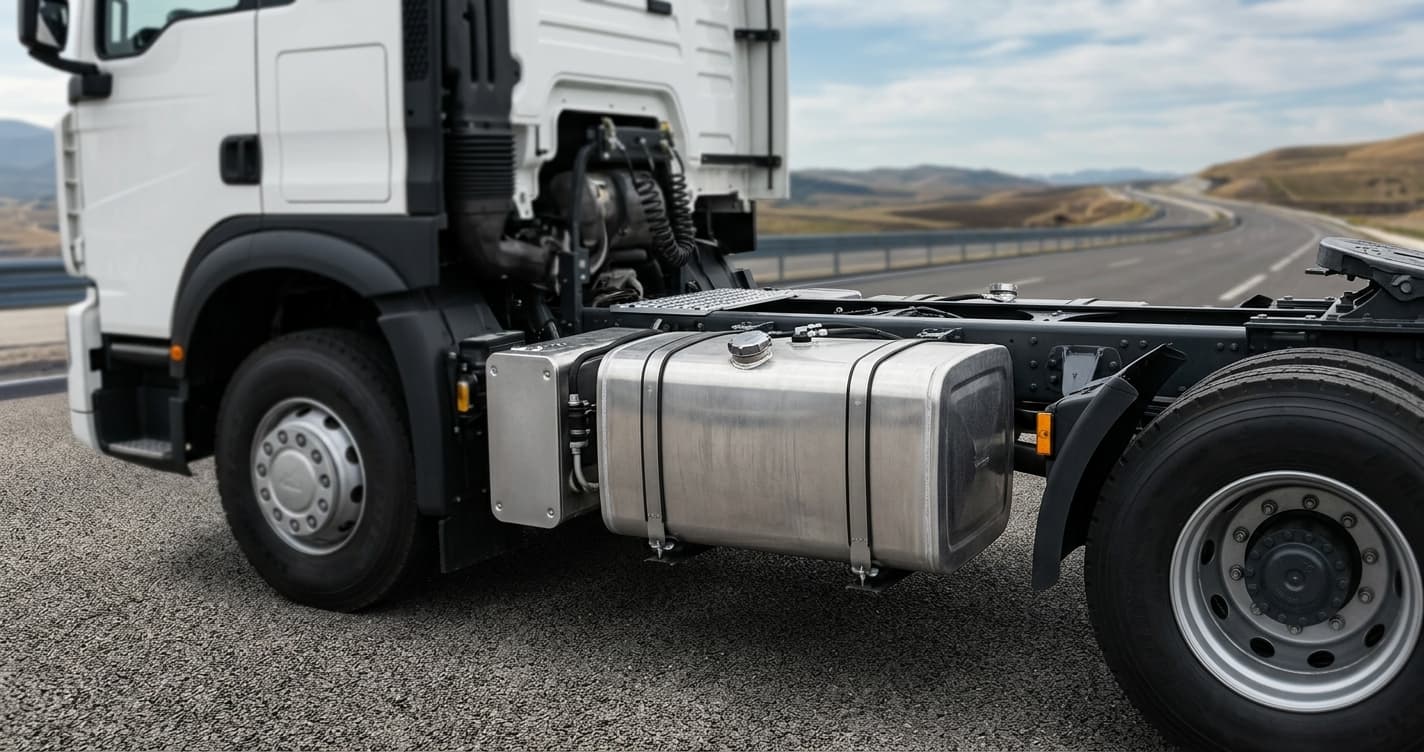
Corrosion Resistance — The Silent Tank Killer
Rust doesn’t knock before entering. It creeps in quietly through microscopic scratches, condensation droplets, and compromised coatings. Before you notice anything, diesel tank corrosion resistance has already been tested — and failed.
Moisture is the primary villain here. Water naturally accumulates inside diesel tanks through condensation, especially when tanks aren’t kept full overnight. That trapped moisture combines with sulfur compounds in diesel fuel to form sulfuric acid — a slow but relentless destroyer of unprotected metal surfaces.
Road salt accelerates external corrosion dramatically. Drivers operating in northern climates or coastal regions face an especially aggressive timeline. Without proper protective coatings or inherently corrosion-resistant materials, even a well-built tank can deteriorate within a few seasons. This is why material choice matters so deeply for heavy-duty truck fuel storage applications.
Aluminum vs Steel Diesel Tanks — The Great Debate
If you’ve ever searched for a replacement truck diesel tank, you’ve likely encountered this question: aluminum or steel? It’s the classic debate in the trucking world, and honestly, both sides have legitimate arguments.
Aluminum tanks are significantly lighter — often saving 30–40% in weight compared to steel equivalents. That weight reduction translates directly into payload capacity and fuel efficiency over thousands of miles. Moreover, aluminum naturally forms a protective oxide layer that resists surface corrosion without additional coatings.
Steel tanks, however, offer superior impact resistance and are generally easier to repair in the field. A skilled welder can patch a damaged steel tank roadside, whereas aluminum requires specialized TIG welding and cleanliness standards that aren’t always achievable outside a shop. For drivers operating in environments where physical damage is likely — think construction sites, logging roads, or mining operations — steel’s toughness provides genuine peace of mind.
Then there’s the third option that many overlook: cross-linked polyethylene. These polymer tanks eliminate corrosion entirely, resist chemical degradation, and absorb impacts through flexibility rather than rigidity. However, they have limitations in extreme heat and aren’t as easily repaired as metal alternatives.
The real answer to the aluminum vs steel diesel tanks debate? It depends on your priorities. Let’s compare them side by side.
Comparison Table — Aluminum vs Steel vs Poly
| Feature | Aluminum | Steel | Cross-Linked Polyethylene |
|---|---|---|---|
| Weight | Lightweight (best ratio) | Heavy | Very lightweight |
| Corrosion Resistance | Excellent (natural oxide layer) | Moderate (requires coating) | Superior (immune to rust) |
| Repairability | Requires specialized welding | Easily field-repaired | Difficult (often replaced) |
| Lifespan | 15–25 years | 10–20 years (with maintenance) | 10–15 years |
| Fuel Compatibility | Excellent | Good | Excellent |
| Impact Resistance | Moderate | Excellent | Good (flexes on impact) |
| Temperature Tolerance | Wide range | Wide range | Limited in extreme heat |
| Best For | Long-haul, weight-sensitive routes | Off-road, heavy-impact environments | Regional, corrosion-prone climates |
Which Material Wins for Long-Haul Trucking?
For long-haul applications where every kilogram affects fuel consumption and payload margins, aluminum consistently emerges as the preferred choice. Its combination of light weight, corrosion resistance, and longevity makes it ideal for drivers covering vast distances on paved highways.
Off-road operators, however, should lean toward steel. The punishing impacts from rocks, debris, and uneven terrain demand a material that absorbs force without cracking. Steel’s repairability also matters when you’re far from specialized service centers.
Regional fleets operating in high-humidity or salt-heavy environments might find cross-linked polyethylene surprisingly practical. Since corrosion is eliminated entirely, maintenance costs drop significantly over the tank’s service life. Ultimately, matching your tank material to your operating reality ensures you get the most value from your heavy-duty truck fuel storage investment.
5 Common Problems Drivers Face with Low-Quality Diesel Tanks (And How to Fix Them)
Even experienced drivers sometimes inherit or purchase substandard tanks without realizing it. The consequences range from annoying to genuinely dangerous. Here are five problems that show up repeatedly — along with practical solutions you can implement today.
1. Seam Leaks: Poorly welded seams are the most common failure point. Vibration from road travel gradually fatigues weak welds until micro-cracks develop into visible leaks. The fix? Inspect seams regularly and address any weeping immediately. For chronic leakers, replacement with a properly welded tank is the only permanent solution. Our support page covers diagnostic steps for identifying leak sources.
2. Rust Contamination in Fuel Lines: Internal corrosion flakes off and travels downstream, clogging filters and injectors. This directly impacts engine performance and can cause costly damage. Installing a quality fuel-water separator and switching to a corrosion-resistant tank material solves this at the source. Proper truck engine maintenance tips include regular fuel filter inspections specifically for this reason.
3. Mounting Bracket Failures: Cheap mounting systems fatigue and crack under constant vibration. A failing bracket allows the tank to shift, stressing fuel lines and potentially causing catastrophic separation. Upgrading to heavy-gauge mounting straps with rubber isolation pads prevents this. Check bracket torque during every preventive maintenance schedule interval.
4. Fuel Gauge Inaccuracy from Tank Warping: Thin-walled tanks can deform over time, causing the sending unit to give false readings. Drivers end up running unexpectedly low or overfilling. The solution involves either replacing the tank with a properly baffled, thick-walled unit or recalibrating the sending unit to match the tank’s actual geometry.
5. Condensation Buildup: Temperature fluctuations cause moisture to form inside partially filled tanks. That water settles at the bottom, promoting microbial growth and corrosion. Keeping your tank as full as practical, using fuel additives that absorb moisture, and draining water traps regularly all help. For persistent issues, consult our heavy duty engine repair resources for downstream damage assessment.
Problem-Solution Table
| Problem | Cause | Solution |
|---|---|---|
| Seam leaks | Poor weld quality + road vibration fatigue | Regular inspection; replace with quality-welded tank |
| Rust contamination | Internal corrosion from moisture and sulfur | Fuel-water separator + corrosion-resistant tank upgrade |
| Mounting failure | Thin brackets + constant vibration stress | Heavy-gauge straps with rubber isolation pads |
| Gauge inaccuracy | Tank wall deformation affecting sending unit | Replace tank or recalibrate sending unit |
| Condensation buildup | Temperature swings in partially filled tanks | Keep tank full; use moisture-absorbing additives; drain regularly |
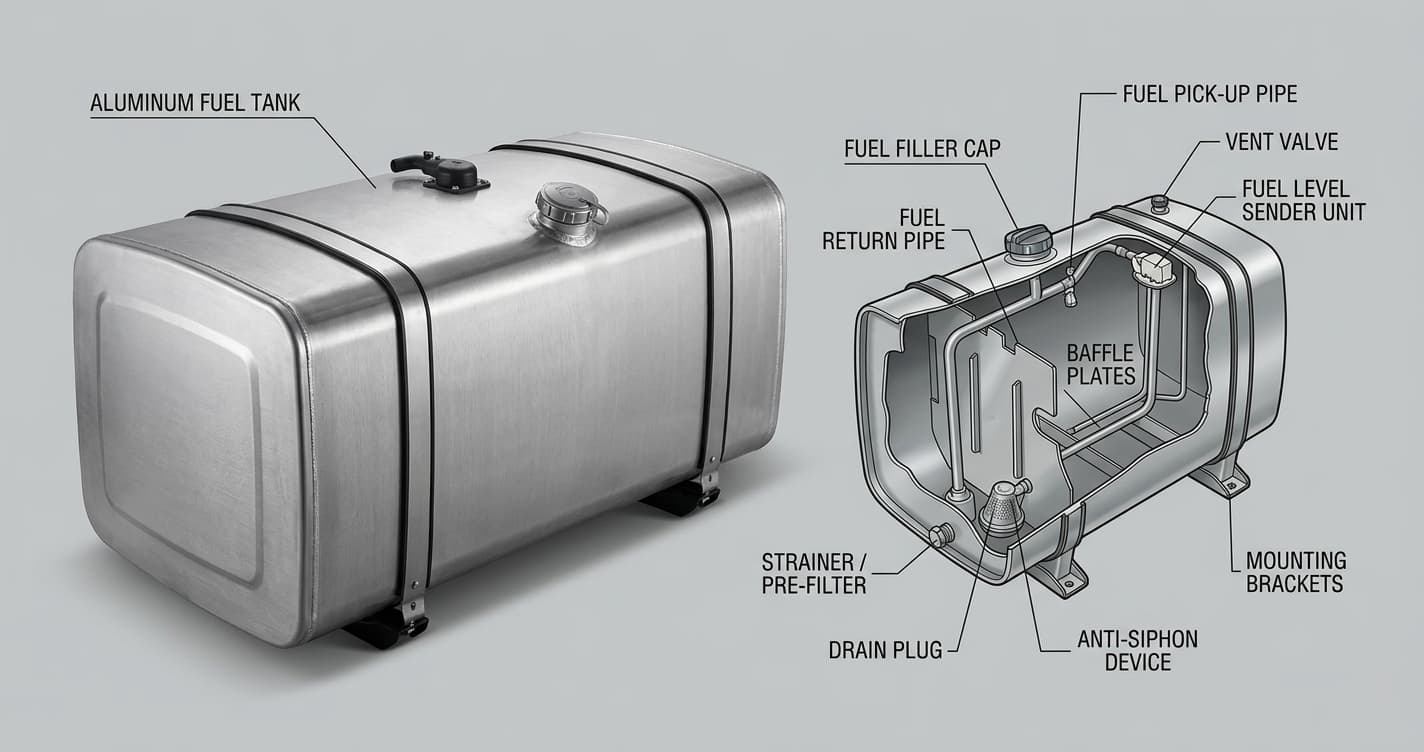
How to Inspect and Maintain Your Truck Diesel Tank for Maximum Lifespan
A quality truck diesel tank can last decades — but only if you treat it with consistent care. Neglect accelerates every failure mode we discussed above. Fortunately, diesel tank maintenance isn’t complicated. It just requires discipline and a simple schedule.
Visual inspections catch problems early. Look for discoloration, bubbling paint (indicating corrosion beneath), wet spots around fittings, and any physical dents or deformation. Run your hand along seams to feel for moisture that your eyes might miss. These quick checks take minutes but save thousands in potential repairs.
Beyond the tank itself, remember that diesel engine care is holistic. Your tank’s condition directly affects injector health, filter life, and combustion efficiency. Integrating tank inspections into your broader preventive maintenance schedule ensures nothing falls through the cracks. Similarly, tracking your engine oil change frequency alongside tank maintenance creates a complete picture of your truck’s health.
Seasonal Maintenance Checklist Table
| Frequency | Task | Why It Matters |
|---|---|---|
| Weekly | Visual inspection of tank exterior and fittings | Catches leaks, damage, and loose connections early |
| Monthly | Check mounting bracket torque and strap condition | Prevents bracket fatigue and tank shifting |
| Quarterly | Drain water separator; inspect fuel quality sample | Removes accumulated moisture; detects contamination |
| Annually | Full internal inspection or professional cleaning | Removes sediment, identifies internal corrosion, extends lifespan |
Sticking to this schedule transforms your tank from a ticking time bomb into a reliable, long-lasting component. Consistency is the key — small efforts compound into major savings over your truck’s lifetime.
Key Features to Look for When Buying a New Truck Diesel Tank
Shopping for a replacement truck diesel tank can feel overwhelming. Dozens of options exist, and marketing language doesn’t always tell the full story. To cut through the noise, focus on these essential features that separate quality tanks from disposable ones.
First, capacity must match your operational needs. A tank that’s too small forces unnecessary fuel stops, while an oversized tank adds weight you don’t need. Calculate your typical route distance, fuel consumption rate, and preferred refueling buffer to find the sweet spot.
Second, internal baffling is non-negotiable for heavy-duty truck fuel storage. Baffles prevent fuel surge during acceleration, braking, and cornering. Without them, the sloshing force stresses tank walls, mounting brackets, and fuel pickup tubes. Quality baffled tanks also provide more accurate fuel gauge readings because the sending unit operates in calmer fluid.
Third, pay attention to the filler neck design, venting system, and sending unit compatibility. These “small” details determine daily usability and integration with your truck’s existing systems. A tank with the wrong sending unit thread pattern or vent configuration creates headaches that no amount of adapters can fully solve.
Pairing the right tank with good diesel engine care habits multiplies your investment. A clean, well-maintained tank feeds clean fuel to your engine, reducing injector wear, improving combustion efficiency, and extending time between major services.
Quick-Reference Buyer’s Checklist
- Correct capacity for your typical route length and fuel consumption
- Internal baffles to control fuel surge and protect mounting hardware
- Quality filler neck with proper sealing and venting
- Compatible sending unit matching your truck’s gauge system
- Adequate venting system to prevent vacuum lock during fuel draw
- Certified mounting system rated for your tank’s full weight
- Material appropriate for your climate and operating conditions
- Smooth internal finish to minimize sediment accumulation
- Warranty coverage from a reputable manufacturer
- Availability of replacement parts and accessories from your supplier
Browse our product brands page to explore trusted Chinese truck brands like Sinotruk, Shacman, FAW, Dongfeng, and Foton. Each brand offers tank solutions engineered for specific applications. You can also filter by system type on our product systems page to find fuel storage components that integrate seamlessly with your existing setup.
Frequently Asked Questions About Truck Diesel Tanks
How long should a quality truck diesel tank last?
A well-manufactured aluminum truck diesel tank typically lasts 15–25 years with proper maintenance. Steel tanks average 10–20 years depending on coating quality and environmental exposure. Regular inspections and prompt attention to minor issues significantly extend service life regardless of material choice.
Can I repair a diesel tank myself or do I need a professional?
Minor external repairs like bracket tightening or fitting replacement are manageable for experienced mechanics. However, welding repairs — especially on aluminum — require professional equipment and certified skills. Improper repairs risk fuel leaks and fire hazards. Visit our support page for guidance on when professional help is necessary.
What’s the biggest threat to diesel tank durability?
Internal moisture is the single greatest threat. Water condensation promotes corrosion, encourages microbial growth, and degrades fuel quality simultaneously. Keeping tanks full when parked and using moisture-displacing additives are the most effective preventive measures against this silent destroyer.
How do I know when it’s time to replace my truck diesel tank?
Replace your tank when you observe recurring leaks despite repairs, significant internal corrosion visible during cleaning, persistent fuel contamination issues, or structural deformation affecting mounting stability. Multiple simultaneous symptoms indicate the tank has reached end-of-life rather than needing another patch.
Does fuel quality affect tank lifespan?
Absolutely. Low-quality diesel with high sulfur content, water contamination, or particulate matter accelerates internal degradation. Sourcing fuel from reputable suppliers and using appropriate filtration protects both your tank and downstream engine components. Good fuel is cheap insurance for expensive hardware.
Are aftermarket diesel tanks as good as OEM?
Many aftermarket tanks from reputable Chinese manufacturers like Sinotruk, Shacman, and Dongfeng meet or exceed OEM specifications at more competitive pricing. The key is verifying material certifications, weld quality standards, and dimensional accuracy. Check our customer success cases to see real-world performance from aftermarket upgrades.
How does tank material affect my truck’s fuel efficiency?
Tank weight directly impacts fuel consumption. Switching from steel to aluminum can save 20–40 kg depending on capacity, which compounds into measurable fuel savings over hundreds of thousands of kilometers. For weight-sensitive operations, this difference pays for itself relatively quickly.
What certifications should I look for in a diesel tank?
Look for tanks meeting ISO quality management standards, relevant DOT or transport authority certifications for your region, and pressure testing documentation. Reputable manufacturers provide test reports and material certificates upon request. Our company information page details the certification standards our partner brands maintain.
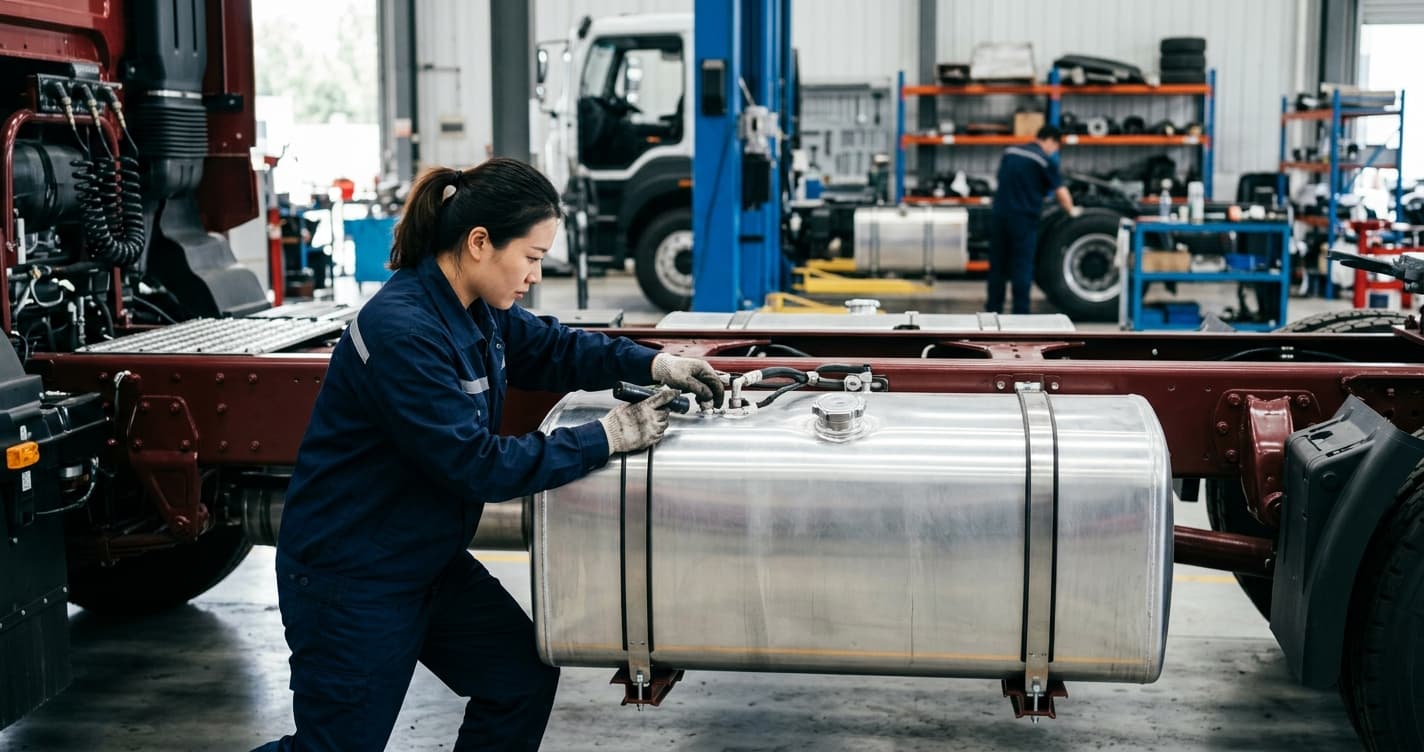
Ready to Upgrade Your Truck Diesel Tank?
Choosing a durable truck diesel tank comes down to three pillars: selecting the right material for your operating conditions, maintaining it consistently, and buying smart from the start. When these three elements align, your tank becomes a decades-long asset rather than a recurring expense.
Whether you’re running Sinotruk, Shacman, FAW, Dongfeng, or Foton trucks, finding the right fuel storage solution at globally competitive pricing doesn’t have to be complicated. We specialize in connecting drivers and fleet managers with genuine Chinese brand truck parts that deliver reliability without the premium markup.
Explore our truck engine maintenance tips for more ways to protect your investment. Review our preventive maintenance schedule guides to build a complete care routine. And if you’re dealing with existing damage, our heavy duty engine repair resources can help you assess next steps.
Ready to find the perfect tank for your truck? Browse our product brands, check out real results on our customer success cases page, or contact us directly to discuss your specific needs. Your truck deserves a tank that works as hard as you do — let’s make that happen.


