
Something interesting happened while the logistics world was busy debating whether electric trucks would ever be “ready.” Chinese manufacturers quietly built them, tested them across millions of kilometers on some of the world’s most demanding roads, and then started shipping them globally. No fanfare, no waiting for permission — just relentless engineering and scale.
Today, the Chinese electric truck isn’t a prototype sitting in a showroom. It’s hauling containers at ports, delivering parcels in European cities, and running regional distribution routes across Southeast Asia, the Middle East, and Latin America. If your fleet hasn’t encountered one yet, it probably will soon.
This guide breaks down what these vehicles actually deliver in terms of performance, where the real financial benefits hide, and how to evaluate whether a Chinese electric truck fits your operation. More importantly, we’ll address the honest concerns fleet managers lose sleep over — because no technology is perfect, and pretending otherwise helps nobody.
Why the Chinese Electric Truck Is Turning Heads in Global Logistics
Call it the quiet achiever of zero emission freight transport. While legacy truck manufacturers announced timelines and concept vehicles, Chinese OEMs were already iterating on second and third-generation production models. The result? A head start measured not in months, but in real-world operational data.
Furthermore, this wasn’t accidental. It was the product of deliberate industrial strategy, massive domestic demand, and a battery supply chain that no other region can currently match at scale.
The Global Shift Toward Electric Commercial Vehicle Efficiency
Fleet operators aren’t switching to electric trucks because it sounds nice in a press release. They’re switching because the economics are shifting beneath their feet. Emissions regulations in the EU, North America, and parts of Asia are tightening on predictable schedules — and diesel compliance costs only move in one direction.
Meanwhile, fuel cost volatility makes budgeting a nightmare. One quarter your fuel line item is manageable; the next, it’s eating into margins. Battery powered heavy duty truck technology matured faster than most industry analysts predicted, largely because Chinese manufacturers invested aggressively during the period when Western competitors were still hedging their bets.
The convergence is clear: regulatory push, economic pull, and technology readiness all arrived at roughly the same time. Fleets that recognized this early are already capturing the advantages.
What Makes Chinese Manufacturers Competitive
Three structural advantages explain why Chinese electric truck manufacturers consistently deliver competitive products. First, vertical integration — many of these companies manufacture their own batteries, motors, and control systems rather than sourcing from third parties. This compresses costs and accelerates iteration cycles.
Second, battery supply chain dominance. China processes the majority of the world’s lithium, cobalt, and nickel into battery-grade materials. When your supply chain is next door rather than across an ocean, lead times shrink and costs stay predictable.
Third, the domestic market itself serves as an enormous testing ground. With millions of commercial vehicles operating across extreme climate zones — from tropical Guangdong to frigid Heilongjiang — Chinese manufacturers accumulate operational data at a pace that’s difficult to replicate elsewhere. By the time these trucks reach international markets, they’ve already been stress-tested at scale.
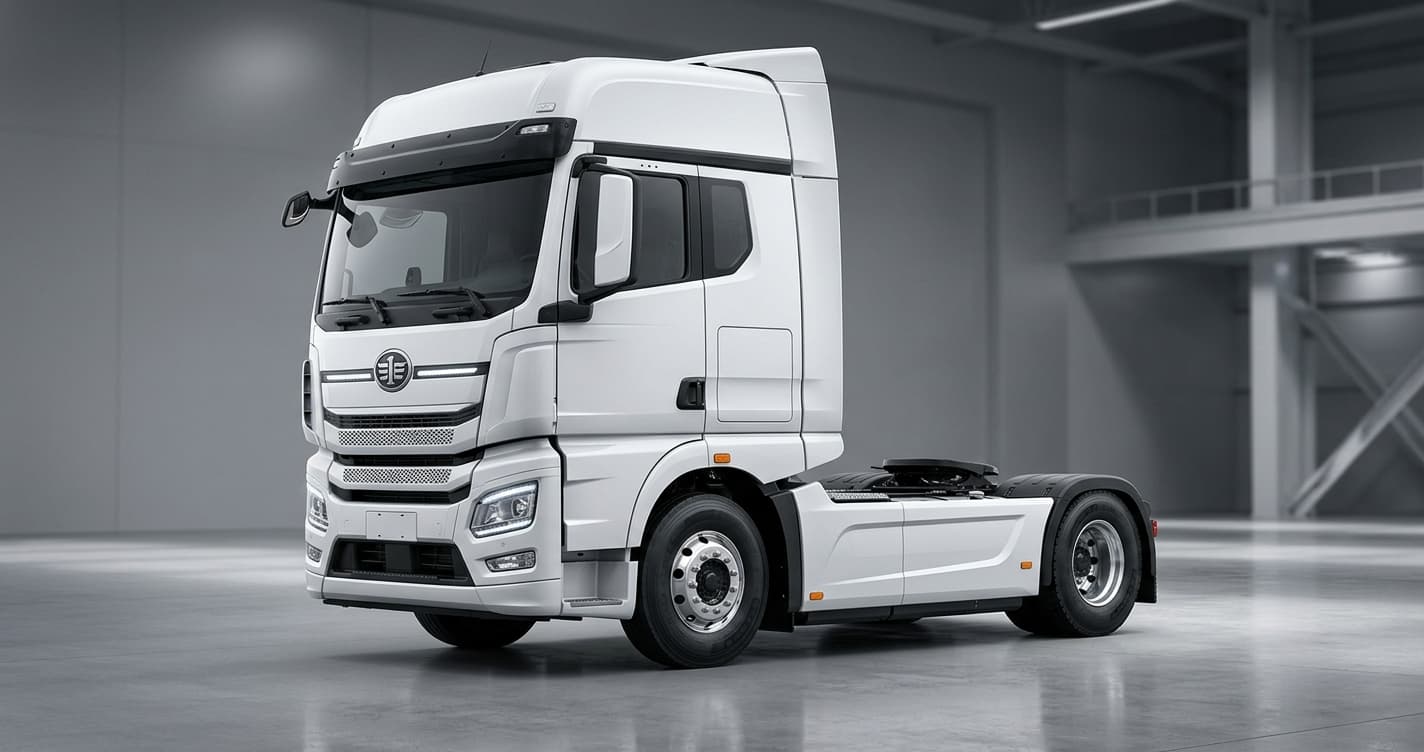
Performance Breakdown — What a Chinese Electric Truck Actually Delivers
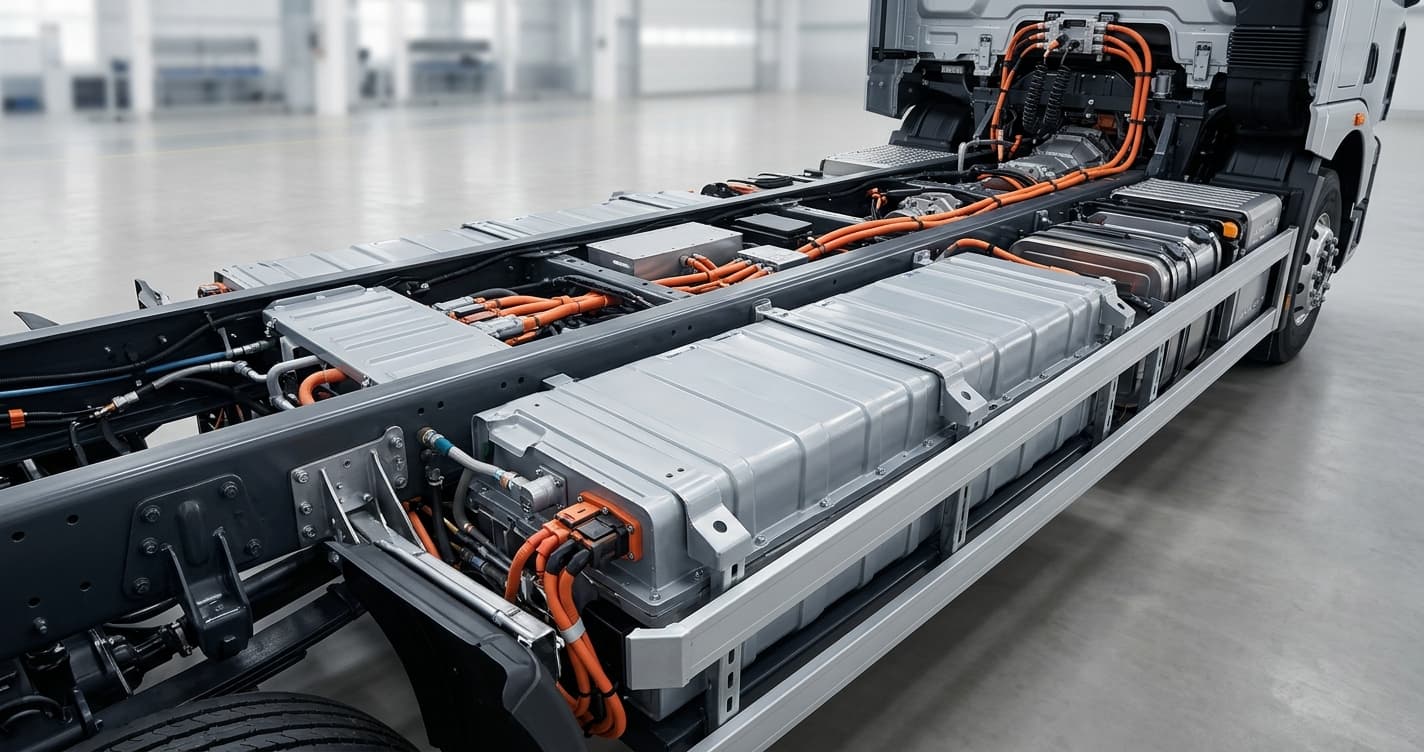
Let’s pop the hood — metaphorically speaking, since there’s no diesel engine rumbling underneath. Instead, what you’ll find is a remarkably clean commercial truck powertrain architecture built around integrated electric drive systems, advanced battery management, and software-defined vehicle controls.
However, specs on paper only matter if they translate to real-world performance. So let’s look at what these vehicles actually deliver on the road.
EV Truck Range and Payload — The Numbers That Matter
Range anxiety is real, and dismissing it doesn’t help anyone make better decisions. The honest truth is that a Chinese electric truck won’t match a diesel truck’s theoretical range on a single fill-up. But here’s what most people miss: the vast majority of commercial truck routes don’t require 1,000+ km of uninterrupted driving.
When you map actual route profiles against available EV truck range and payload capabilities, the overlap is far larger than skeptics assume. Urban delivery, regional distribution, and port drayage operations — which collectively represent the majority of commercial truck movements — fit comfortably within current battery technology.
| Model Category | Typical Range (km) | Max Payload (tons) | Charging Time (DC Fast) | Best Use Case |
|---|---|---|---|---|
| Light-duty urban | 200–280 | 2–4.5 | 1–1.5 hrs | Last-mile delivery |
| Medium-duty regional | 250–350 | 8–12 | 1.5–2 hrs | Regional distribution |
| Heavy-duty long-haul | 300–500+ | 18–31 | 1.5–2.5 hrs | Port drayage, corridor freight |
Route optimization software, combined with strategic charging placement, resolves most remaining gaps. The question isn’t whether the range is “enough” in absolute terms — it’s whether it’s enough for your specific routes.
Battery Technology and Charging Infrastructure
Most Chinese electric truck manufacturers have standardized on LFP (lithium iron phosphate) battery chemistry for commercial vehicles. The reasoning is straightforward: LFP cells offer superior thermal stability, longer cycle life, and lower cost per kilowatt-hour compared to NMC alternatives. They’re also less dependent on cobalt, which reduces supply chain risk.
In practical terms, LFP batteries tolerate more charge-discharge cycles before degradation becomes noticeable. For a vehicle that might charge daily for a decade, that longevity matters enormously.
Additionally, battery swap stations represent a uniquely Chinese approach to eliminating downtime. Rather than waiting for a charge, a truck pulls into a swap station and exchanges its depleted battery pack for a fully charged one in under five minutes. This model is already operational at scale in China and expanding to international corridors.
Heavy Vehicle Drivetrain and Powertrain Design
Traditional diesel trucks rely on complex drivetrain architectures: engine, clutch, multi-speed transmission, driveshaft, differential, and axles — each component adding weight, maintenance requirements, and potential failure points. The truck transmission system alone contains hundreds of precision-machined parts subject to wear.
Chinese electric truck manufacturers have largely adopted the integrated e-axle approach. This design combines the electric motor, reduction gear, and differential into a single compact unit mounted directly at the drive axle. The result eliminates the need for a traditional gear shifting mechanism entirely.
Fewer moving parts means fewer things that can break. There’s no clutch to slip, no gearbox oil to change, and no driveshaft to balance. This simplicity advantage compounds over the vehicle’s lifetime, translating directly into reduced maintenance costs and higher uptime.
Benefits That Go Beyond Zero Tailpipe Emissions
Yes, a Chinese electric truck produces zero tailpipe emissions. That matters for regulatory compliance and air quality. But if that were the only benefit, adoption would be much slower. The real momentum comes from operational advantages that hit the bottom line every single month.
Total Cost of Ownership — Where the Savings Hide
Fleet managers who’ve run diesel trucks for decades know exactly where the money goes: fuel, engine oil changes, transmission servicing, brake replacements, fuel tank inspections, and the labor hours to perform it all. A preventive maintenance schedule for a diesel truck reads like a novel.
Electric trucks rewrite that story dramatically. No engine oil change frequency to track. No manual gearbox operation wear to monitor. No diesel engine care routines consuming workshop time. Regenerative braking extends brake component life by two to three times. The savings aren’t theoretical — they’re measurable from month one.
| Maintenance Item | Diesel Truck (Annual) | Chinese Electric Truck (Annual) | Savings |
|---|---|---|---|
| Engine oil & filter changes | 4–6 services | Not applicable | 100% |
| Transmission/gearbox service | 1–2 services | Not applicable | 100% |
| Brake system (regen braking extends life) | Full replacement cycle | Extended 2–3x | 50–65% |
| Fuel tank inspection (corrosion, seals) | Annual | Not applicable | 100% |
| Overall maintenance labor hours | High | Significantly reduced | 40–60% |
When you eliminate heavy duty engine repair from your risk profile entirely, the financial predictability of your fleet improves substantially. Budgeting becomes less about hoping nothing breaks and more about planned, minimal interventions. For a deeper look at how maintenance differs across powertrain types, visit our Support & Troubleshooting Page.
Driver Experience and Recruitment Advantage
Ask any driver who’s spent years wrestling with a 12-speed manual gearbox in stop-and-go traffic: simplicity matters. A Chinese electric truck delivers instant torque from zero RPM, smooth acceleration without gear changes, and dramatically reduced cabin noise and vibration.
Consequently, driver fatigue decreases measurably on identical routes. Training time for new drivers shrinks because there’s no complex gear shifting mechanism to master. In a market facing chronic driver shortages, offering a quieter, smoother, easier-to-operate vehicle becomes a genuine recruitment advantage.
Sustainability Credentials and Contract Wins
Large shippers increasingly require their logistics partners to demonstrate measurable emissions reductions. Operating a Chinese electric truck fleet provides verifiable Scope 3 emissions data that satisfies ESG reporting requirements.
Moreover, some jurisdictions offer carbon credits for zero emission freight transport operations. These credits represent real revenue — or at minimum, cost offsets — that improve the business case further. Fleets with proven sustainability credentials consistently win contracts over diesel-only competitors. Explore how other operators have leveraged this advantage on our Customer Success Stories Page.
Addressing Common Concerns — Honest Answers to Real Questions
Skepticism isn’t a character flaw — it’s good fleet management. Every new technology deserves scrutiny, and the Chinese electric truck is no exception. Here are the questions your fleet manager is definitely asking at 2 AM, answered without spin.
Durability and Build Quality in Demanding Conditions
Perceptions about durability take time to shift, and that’s fair. Consider a parallel: the debate over durable diesel fuel tank materials — aluminum vs steel diesel tanks, diesel tank corrosion resistance, long-lasting fuel tank for trucks — played out over decades before the industry settled on proven solutions. Chinese EV battery enclosures face similar scrutiny today.
The evidence, however, is accumulating quickly. Battery packs are sealed to IP67 or IP68 standards, protecting against dust and water ingress. Enclosures undergo salt spray testing, vibration testing, and impact resistance validation that meets or exceeds international standards. Chinese manufacturers approach component durability with the same rigor that established the benchmarks for heavy-duty truck fuel storage systems.
Real-world data from fleets operating in tropical humidity, desert heat, and coastal salt air environments shows these vehicles holding up. The question is shifting from “will they last?” to “how long will they last?” — and early indicators suggest the answer is “longer than the diesel trucks they’re replacing.”
Resale Value and Battery Degradation
Battery degradation follows a predictable curve, not a cliff. Most Chinese electric truck batteries retain 80% or more of their original capacity after 500,000 km of operation. Manufacturers typically offer warranties covering 8 years or a specified mileage threshold, whichever comes first.
Beyond their vehicle life, batteries enter second-life applications — stationary energy storage being the most common. This residual value supports stronger resale pricing than early skeptics predicted. As the secondary market for used electric trucks matures, resale data will become more robust.
Cold Weather and Extreme Climate Performance
Let’s be direct: cold weather reduces battery range. Depending on severity, expect 10–25% range reduction in temperatures below -10°C. Chinese manufacturers address this through active thermal management systems that pre-condition batteries during charging and maintain optimal operating temperatures during operation.
Fleets operating in Nordic conditions or Canadian winters should factor this reduction into route planning. Nevertheless, the impact is manageable when anticipated — and it’s worth noting that diesel trucks also suffer efficiency losses in extreme cold, though this is rarely discussed with the same urgency.
How to Evaluate a Chinese Electric Truck for Your Fleet
Choosing the right electric truck isn’t about finding the “best” model in absolute terms. It’s about finding the best match for your specific operational profile. Here’s a practical framework for making that assessment.
Matching Vehicle Specs to Your Route Profile
Start with data you already have: daily mileage per vehicle, payload requirements per route, dwell time at depots, and available charging windows. Map these against the range and payload specifications of available Chinese electric truck models.
In most cases, you’ll find that 60–80% of your fleet’s routes are immediately suitable for electrification without any infrastructure changes. The remaining routes may require charging infrastructure investment or phased transition planning. For detailed guidance on this matching process, visit How to Choose the Right Electric Truck for Your Operations.
Understanding the Powertrain Warranty and Service Network
After-sales support determines whether your electric truck investment succeeds long-term. Evaluate warranty coverage for the battery pack, electric motor, and power electronics separately — they often carry different terms.
Equally important: confirm parts availability and service center coverage in your operating region. Chinese manufacturers have expanded their global service networks significantly, with parts warehousing in key markets and remote diagnostics capabilities that resolve many issues without a workshop visit. Learn more about maintaining mixed fleets on our Truck Engine Maintenance Tips for Mixed Fleets page.
Charging Infrastructure Planning
Your charging strategy should match your fleet size and daily range requirements. Smaller fleets with predictable routes can often rely entirely on overnight depot charging using AC chargers — the lowest-cost infrastructure option. Larger operations benefit from DC fast charging at depots combined with opportunity charging at customer sites or public networks.
Smart charging software optimizes energy costs by scheduling charge sessions during off-peak electricity periods. This alone can reduce energy costs by 20–40% compared to unmanaged charging. For comprehensive planning resources, explore our Sustainable Logistics Technology: Fleet Electrification Guide.
| Fleet Size | Daily Range Need | Recommended Strategy | Infrastructure Investment Level |
|---|---|---|---|
| 1–10 trucks | Under 200 km | Overnight depot AC charging | Low |
| 10–50 trucks | 200–350 km | Depot DC fast + opportunity charging | Medium |
| 50+ trucks | 350+ km | Depot + battery swap + public network | High |
The Road Ahead — What’s Coming Next for Chinese Electric Trucks
The current generation of Chinese electric trucks already serves the majority of commercial use cases effectively. But the technology trajectory suggests the next five years will bring capabilities that make today’s models look like early drafts.
Solid-State Batteries and Next-Gen Range
Solid-state battery technology promises higher energy density, faster charging, and improved safety compared to current lithium-ion cells. Several Chinese manufacturers have announced production timelines between 2026 and 2028 for commercial vehicle applications.
In practical terms, this could push heavy-duty range beyond 800 km on a single charge — effectively eliminating range as a barrier for all but the longest intercontinental routes. While timelines may shift, the direction is clear and investment is substantial.
Vehicle-to-Grid and Smart Fleet Integration
Chinese electric truck platforms are increasingly designed for bidirectional energy flow. This means parked trucks can feed stored energy back to the grid during peak demand periods, generating revenue for fleet operators while supporting grid stability.
Additionally, AI-driven fleet management systems optimize charging schedules, route assignments, and energy consumption in real time. These platforms treat the fleet as an integrated energy and logistics system rather than a collection of individual vehicles. To explore available platforms and brands, visit our Product Brands Page.
Frequently Asked Questions (FAQ)
How long does a Chinese electric truck battery last before needing replacement?
Most Chinese electric truck batteries are designed to last 8–15 years or 600,000+ km before reaching end-of-life thresholds. Warranty structures typically guarantee 70–80% capacity retention over the warranty period. Actual degradation depends on charging habits, climate, and duty cycle — but real-world data consistently shows batteries outlasting initial conservative estimates.
Can a Chinese electric truck handle the same payload as a diesel equivalent?
In light and medium-duty categories, Chinese electric trucks match or exceed diesel payload capacities. In the heavy-duty segment, battery weight does consume some payload allowance — typically 1–3 tons depending on battery size. However, many jurisdictions grant weight exemptions for zero-emission vehicles, and advancing battery energy density is steadily closing this gap.
What happens if a Chinese electric truck breaks down — is service available outside China?
Chinese manufacturers have invested heavily in global service infrastructure. Major brands maintain parts warehouses, authorized service centers, and trained technician networks across key markets including Southeast Asia, the Middle East, Europe, Africa, and Latin America. Remote diagnostics allow many issues to be identified and sometimes resolved without physical intervention. For specific service coverage in your region, Contact Our Team directly.
How does the heavy vehicle drivetrain in an electric truck differ from a traditional diesel setup?
A traditional diesel drivetrain includes an engine, clutch, multi-speed transmission, driveshaft, and differential — hundreds of components subject to wear and requiring regular servicing. An electric truck’s integrated e-axle combines the motor, single-speed reduction gear, and differential into one unit. This eliminates the complex truck transmission system entirely, removes the gear shifting mechanism, and reduces potential failure points by roughly 60%. The complexity of heavy duty engine repair simply doesn’t exist in this architecture.
Are Chinese electric trucks compatible with standard charging networks?
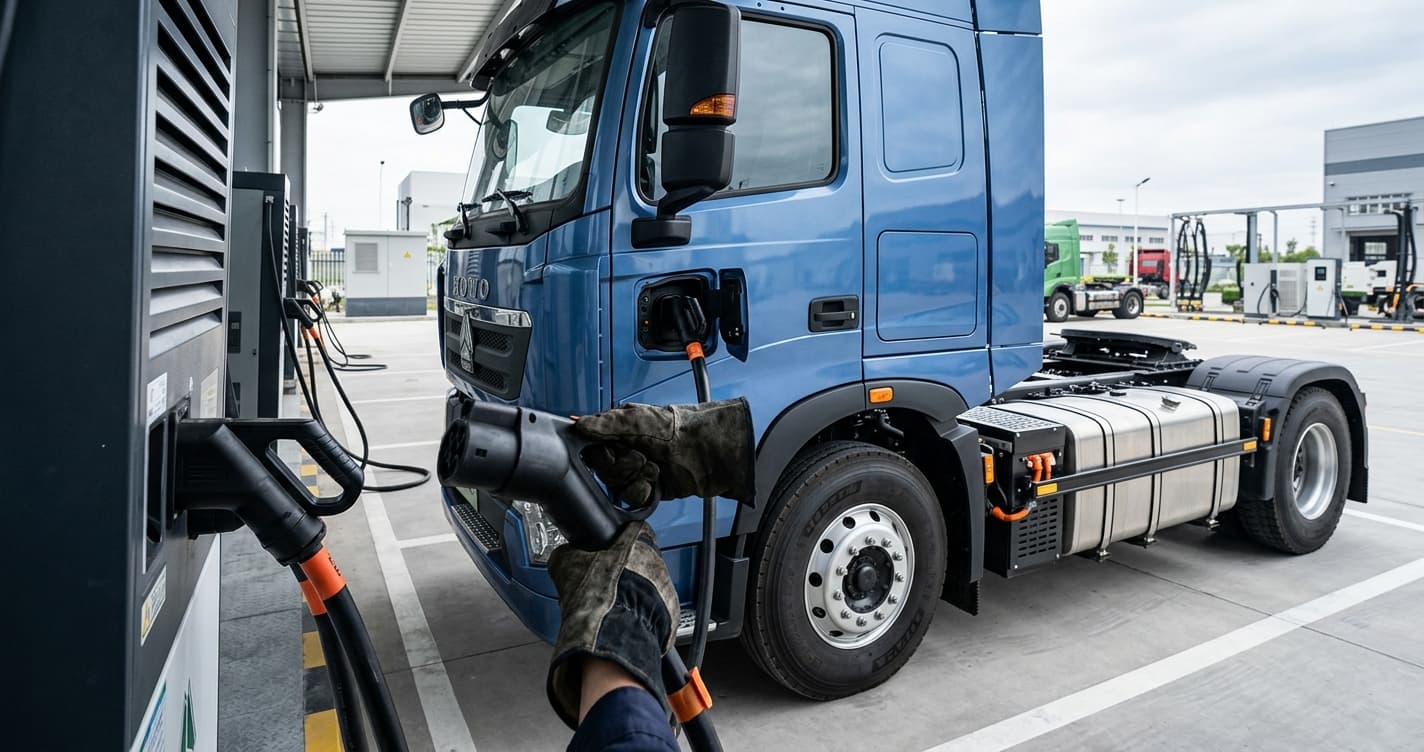
Yes. Most Chinese electric trucks destined for international markets support CCS2 (Combined Charging System) for DC fast charging, which is the dominant standard in Europe and many other regions. Models for the Chinese domestic market use GB/T connectors. Adapter solutions exist for cross-compatibility, and several manufacturers have established charging partnerships with major network operators globally. Visit our Product Systems Page for detailed compatibility information.
What is the typical ROI timeline when switching from diesel to a Chinese electric truck?
Most fleet operators report payback periods of 3–5 years, depending on daily utilization, local energy costs, available government incentives, and the diesel price environment. High-utilization routes with predictable schedules typically achieve faster payback. Total cost of ownership modeling — which accounts for fuel savings, maintenance reduction, and potential carbon credit revenue — consistently favors electrification over a 7–10 year vehicle life.
Ready to Explore Chinese Electric Truck Options for Your Fleet?
Choosing the right truck for your operation shouldn’t feel like a gamble. It should feel like a well-informed decision backed by data, real-world performance evidence, and a partner who understands your specific routes and requirements.
Our team specializes in matching Chinese electric truck specifications to actual fleet operations — not theoretical scenarios, but your roads, your payloads, your schedules. Whether you’re electrifying your first vehicle or scaling an existing EV fleet, we provide route-specific recommendations and total cost modeling with no pressure and no obligation.
Explore Our Full Range of Chinese Electric Trucks to browse available models, compare specifications, and request detailed spec sheets. Alternatively, Contact Us to connect directly with a fleet solutions advisor who can walk you through the options that make sense for your business.
The quiet achiever is


