
Truck brake pads are one of the most critical safety components in any commercial vehicle. When a truck weighing close to 35,000 pounds needs to come to a stop, the braking system must perform with absolute reliability. The brake pads are the friction material that directly converts the kinetic energy of the moving wheels into heat, allowing the driver to control and stop the vehicle safely.[1]
For fleet managers, truck drivers and maintenance professionals, understanding truck brake pads is essential. The right brake pad selection, combined with proper maintenance practices, can significantly impact vehicle safety, operational costs and overall fleet performance. This comprehensive guide covers everything you need to know about truck brake pads, from material types and performance characteristics to maintenance schedules and purchasing considerations.
Truck Brake Pads?
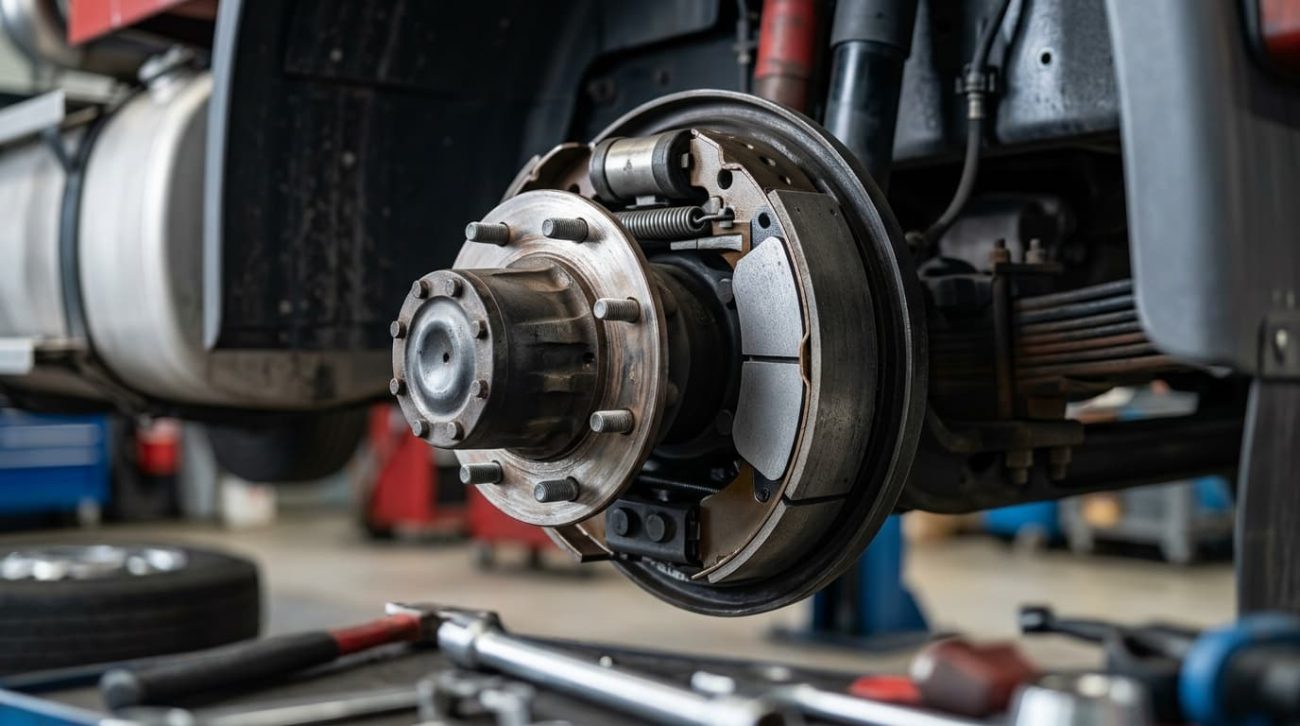
Truck brake pads are friction material components that are pressed against brake rotors to create the friction needed to slow or stop the wheels. In a commercial truck’s braking system, brake pads absorb the kinetic energy of the wheels and create friction against the rotors, which slows or stops the wheel’s rotations, allowing drivers to control the vehicle.[1]
The brake pad assembly typically consists of the friction material bonded to a metal backing plate. When the driver applies the brake, hydraulic pressure pushes the brake caliper, which in turn presses the brake pads against the rotor. This friction action generates the stopping force that brings the truck to a halt. Because truck brake pads operate under extreme conditions—heavy loads, frequent braking, high temperatures and challenging terrain—they must be engineered to withstand these demands while maintaining consistent performance.
Unlike passenger vehicle brake pads, truck brake pads for commercial vehicles must meet higher durability standards and perform reliably over extended service intervals. The material composition, manufacturing process and design specifications all play critical roles in determining how well the brake pads will perform in real-world fleet operations.
Types of Truck Brake Pads
Not all truck brake pads are created equal. The material composition of brake pads directly affects their performance characteristics, durability, noise level and cost. Understanding the different types helps fleet operators and maintenance teams select the most appropriate brake pads for their specific operating conditions.[1]
Organic Brake Pads
Organic brake pads are made from a blend of organic materials such as rubber, glass and Kevlar fibers. These pads are designed primarily for everyday driving conditions and are the most affordable option available.
Characteristics:
- Low noise and minimal brake dust generation
- Comfortable braking feel with good initial bite
- Faster wear compared to other materials
- Lower heat tolerance
Best For: Light-duty applications and urban driving; generally not recommended for heavy-duty commercial trucks due to rapid wear under demanding conditions.
Semi-Metallic Brake Pads
Semi-metallic brake pads contain both organic materials and metal fibers, typically steel or copper. These pads offer a significant improvement in braking performance compared to organic pads and are widely used in commercial truck applications.
Characteristics:
- Superior stopping power and heat dissipation
- Better performance under heavy loads and frequent braking
- Higher durability and longer service life
- Increased noise and vibration compared to organic pads
- Potential for faster rotor wear if not properly matched to the vehicle
Best For: Heavy-duty trucks, towing operations, steep terrain driving and commercial fleet applications where consistent braking performance is essential.[1]
Ceramic Brake Pads
Ceramic brake pads are manufactured from ceramic compounds and copper fibers. These premium pads represent the highest performance tier and are increasingly popular in modern commercial truck applications.
Characteristics:
- Longest service life among all brake pad types
- Excellent stopping power across a wide temperature range
- Lower noise and dust compared to semi-metallic pads
- Reduced rotor wear due to rotor-friendly formulations
- Higher initial cost but superior long-term value
- Consistent performance in urban traffic, steep terrain and heavy towing scenarios
Best For: Premium fleet operations, long-haul trucking, vehicles operating in varied conditions and applications where minimizing total cost of ownership is a priority.[1]
Low-Metallic Brake Pads
Low-metallic brake pads combine organic materials with a lower percentage of metal fibers than semi-metallic pads. They represent a middle ground between organic and semi-metallic options.
Characteristics:
- Better performance than organic pads with moderate cost
- Increased noise and dust generation
- Moderate heat tolerance and durability
- Suitable for mixed-duty applications
Best For: Budget-conscious fleet operators seeking better performance than organic pads without the premium cost of ceramic alternatives.
The following table summarizes the key characteristics and best applications for each truck brake pad type.
| Brake Pad Type | Material Composition | Stopping Power | Durability | Noise Level | Cost | Best Application |
|---|---|---|---|---|---|---|
| Organic | Rubber, glass, Kevlar | Good | Low | Low | Low | Light-duty, urban |
| Semi-Metallic | Organic + steel/copper fibers | Excellent | High | High | Moderate | Heavy-duty, towing |
| Ceramic | Ceramic compounds + copper fibers | Excellent | Very High | Low | High | Premium, long-haul |
| Low-Metallic | Organic + lower metal content | Good-Excellent | Moderate | Moderate | Low-Moderate | Mixed-duty |
How Truck Brake Pads Perform Under Extreme Conditions
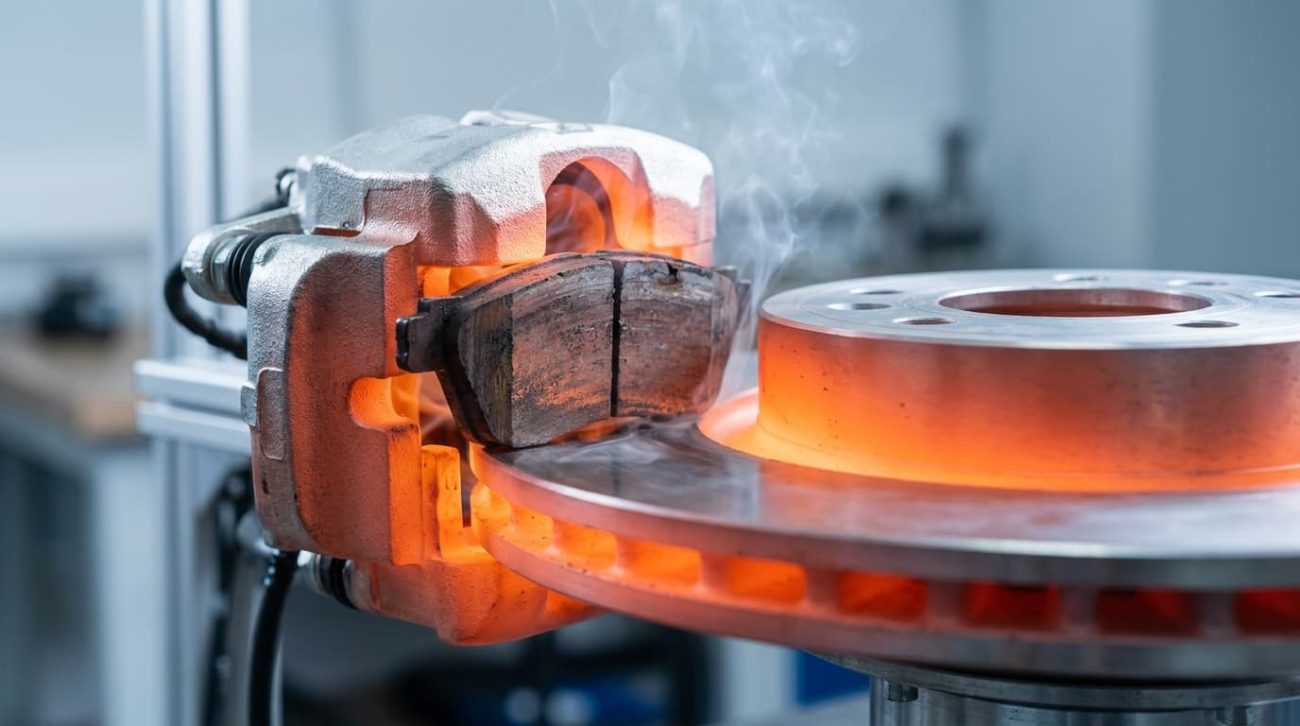
Modern truck brake pads for heavy-duty applications are engineered to deliver consistent performance in the most challenging operating environments. Premium brake pad manufacturers employ advanced manufacturing techniques and material science to ensure their products meet the demanding requirements of commercial trucking.
Manufacturing Excellence
Leading brake pad manufacturers use advanced processes to ensure quality and consistency. These processes include 100% post-curing of the friction material to ensure stable friction performance across temperature ranges, scorching to remove uncured bonding agents and minimize break-in periods, and precision assembly with specialized shims for improved noise, vibration and harshness (NVH) control.[2]
The result is brake pads that deliver strong, predictable friction levels regardless of temperature, speed or axle load. This consistency is critical for fleet safety and driver confidence, especially during long-haul operations where braking performance must remain reliable mile after mile.
Temperature and Load Stability
Premium truck brake pads are engineered to withstand extremely high operating temperatures while maintaining consistent friction characteristics. Whether operating in frequent braking environments, high-speed highway conditions, heavy traffic, steep gradients, towing scenarios or off-road applications, quality brake pads deliver predictable stopping power.[2]
This thermal stability is achieved through advanced friction material formulations that resist fade—the temporary loss of braking power that occurs when brake temperatures exceed the material’s design limits. For commercial trucks that operate under severe duty cycles, thermal stability directly translates to safer operations and reduced accident risk.
Environmental Compliance
Modern truck brake pads increasingly incorporate copper-free or low-copper formulations to comply with environmental regulations. California and Washington have implemented regulations restricting copper content in brake pads, and manufacturers are responding with eco-friendly alternatives that maintain performance while reducing environmental impact.[2]
These environmentally responsible brake pads deliver long pad wear, low noise and low dust while adhering to regulatory requirements. Fleet operators can feel confident that choosing compliant brake pads supports both safety and environmental stewardship.
Truck Brake Pad Performance Comparison
When evaluating truck brake pads, several key performance metrics help determine which option offers the best value for your fleet’s specific needs.
| Performance Metric | Measurement | Why It Matters |
|---|---|---|
| Rotor Wear | g/1,000 stops | Lower rotor wear reduces replacement costs and extends brake system life |
| Pad Wear | mm/1,000 stops | Lower pad wear means longer service intervals and reduced maintenance costs |
| Noise Level | % stops > 90 dB | Lower noise improves driver comfort and reduces noise pollution |
| Stopping Power | Friction coefficient | Higher stopping power ensures reliable braking in emergency situations |
| Temperature Range | Operating temperature | Wider temperature range ensures consistent performance in varied conditions |
| Durability | Service life | Longer durability reduces replacement frequency and fleet downtime |
Premium brake pad manufacturers provide detailed performance data demonstrating how their products compare to competitors. For example, advanced ceramic brake pad formulations can deliver rotor wear as low as 0.02 g/1,000 stops compared to higher levels in competing products, resulting in significant long-term cost savings.[3]
When to Replace Truck Brake Pads
Knowing when to replace truck brake pads is essential for maintaining fleet safety and preventing unexpected breakdowns. While most truck brake pads are rated for approximately 40,000 miles of service, the actual replacement interval depends on several factors including driving conditions, load characteristics, terrain and driver behavior.[1]
Warning Signs of Brake Pad Wear
Drivers and maintenance teams should watch for several indicators that brake pads need replacement:
- Reduced braking response: If the truck requires longer distances to stop or the brake pedal feels softer than normal, brake pad wear may be the cause
- Grinding noises: A metallic grinding sound during braking indicates that brake pads have worn through the friction material and metal backing is contacting the rotor
- Vibration during braking: Pulsing or vibration in the brake pedal or steering wheel may indicate uneven pad wear or rotor damage
- Warning lights: Many modern trucks have brake wear sensors that illuminate a warning light when pads reach minimum thickness
- Visual inspection: During routine maintenance, technicians can visually inspect brake pads and measure remaining thickness
Maintenance Inspection Schedule
Regular brake system inspections should be part of every fleet’s preventive maintenance program. Drivers should be trained to inspect brakes before each journey and report any changes in braking feel or performance. Professional maintenance teams should conduct comprehensive brake inspections at regular intervals, checking not only brake pad thickness but also rotor condition, brake fluid quality and the entire braking system for proper operation.
For heavy-duty commercial trucks operating under severe duty cycles, more frequent inspections may be warranted. Trucks used for towing, mountain driving or frequent stop-and-go urban delivery may require brake inspections every 20,000 to 30,000 miles rather than waiting for the standard 40,000-mile interval.
Brake Pad Maintenance Is Critical to Safety
The importance of proper brake pad maintenance cannot be overstated. Commercial trucks are the heaviest vehicles on the road, and their braking systems must be maintained to the highest standards to ensure the safety of the driver, passengers and other road users.[1]
Fleet Safety Culture
Developing a strong safety culture that prioritizes brake system maintenance is essential for fleet operations. This includes regular driver training on brake system inspection, clear communication about brake performance changes, and a maintenance schedule that never compromises on brake system work. When drivers understand that brake maintenance is non-negotiable, they are more likely to report issues promptly and follow pre-trip inspection procedures.
Cost of Ownership Considerations
While premium truck brake pads may cost more initially, they often provide superior long-term value. Brake pads that last 40% longer than competitors reduce replacement frequency and associated labor costs. Rotor-friendly formulations minimize rotor wear, reducing the need for expensive rotor replacement. Lower noise levels improve driver comfort and reduce fatigue on long hauls.
When calculating total cost of ownership, fleet managers should consider not only the initial purchase price but also service life, rotor compatibility, maintenance requirements and the cost of fleet downtime. In many cases, investing in premium brake pads delivers significant savings over the life of the truck.
How to Choose the Right Truck Brake Pads
Selecting the appropriate truck brake pads for your fleet requires careful consideration of several factors. The right choice depends on your specific operating conditions, budget constraints and performance requirements.
Assess Your Operating Environment
Consider the typical conditions your trucks encounter. Long-haul highway operations have different brake pad requirements than urban delivery routes or mountain terrain. Trucks that frequently tow heavy loads or operate in mountainous regions require brake pads engineered for sustained high-temperature performance. Vehicles operating primarily in cities may benefit from ceramic pads that offer low noise and dust characteristics.
Evaluate Performance Requirements
Determine what performance characteristics matter most for your fleet. If minimizing total cost of ownership is the priority, ceramic brake pads with their extended service life may offer the best value despite higher initial cost. If noise reduction is important for driver comfort and community relations, ceramic or low-metallic options may be preferred. For maximum stopping power in demanding conditions, semi-metallic pads remain an excellent choice.
Consider Regulatory Compliance
Ensure that any brake pads you select comply with current environmental regulations in your operating regions. Low-copper or copper-free formulations are increasingly mandatory, and selecting compliant products ensures your fleet remains within legal requirements.
Verify Compatibility and Quality
Always verify that brake pads are compatible with your specific truck models and brake system configurations. Purchase from reputable manufacturers with established track records in commercial truck applications. Quality brake pads from trusted suppliers provide better performance, longer service life and superior customer support.
The following checklist can guide your brake pad selection process:
| Selection Factor | Considerations |
|---|---|
| Operating Conditions | Highway, urban, mountain, towing, off-road; frequency and intensity of braking |
| Truck Models | Compatibility with your specific fleet vehicles; OEM specifications |
| Performance Priorities | Stopping power, durability, noise reduction, cost efficiency |
| Environmental Requirements | Copper content limits, regulatory compliance in your regions |
| Supplier Reputation | Manufacturer track record, customer reviews, technical support availability |
| Total Cost of Ownership | Initial cost, service life, rotor compatibility, maintenance requirements |
| Warranty and Support | Warranty coverage, technical assistance, replacement availability |
FAQ: Truck Brake Pads
How often should truck brake pads be replaced?
Most truck brake pads are designed to last approximately 40,000 miles, but actual replacement intervals depend on driving conditions, load characteristics and terrain. Trucks operating under severe duty cycles may require more frequent replacement. Regular inspections help determine when replacement is needed.
What is the difference between semi-metallic and ceramic truck brake pads?
Semi-metallic brake pads offer excellent stopping power and heat dissipation, making them ideal for heavy-duty applications. Ceramic brake pads provide longer service life, lower noise and reduced rotor wear. Ceramic pads typically cost more initially but often deliver superior long-term value for fleet operations.
Can I mix different types of brake pads on the same truck?
It is generally recommended to use the same type of brake pads on all wheels for consistent braking performance. Mixing different pad types can result in uneven braking and potential safety issues. Always follow manufacturer recommendations for your specific truck model.
What does brake pad wear mean?
Brake pad wear refers to the gradual reduction in friction material thickness as the pads are used. As pads wear, they become thinner and eventually reach minimum safe thickness, at which point they must be replaced. Wear rates depend on driving conditions and pad material composition.
Are low-copper brake pads as effective as traditional brake pads?
Modern low-copper and copper-free brake pad formulations are engineered to deliver performance equivalent to or exceeding traditional brake pads while meeting environmental regulations. Leading manufacturers have invested significantly in developing advanced friction materials that maintain performance while reducing copper content.
How can I extend the life of my truck brake pads?
Proper driving techniques, regular maintenance, avoiding excessive braking when possible and maintaining proper vehicle weight distribution all help extend brake pad life. Additionally, using high-quality brake pads designed for your specific operating conditions and maintaining your entire braking system in good condition supports longer pad life.
Conclusion
Truck brake pads are far more than a simple replacement part—they are a critical safety component that directly impacts fleet safety, operational reliability and long-term costs. By understanding the different types of brake pads available, recognizing warning signs of wear, implementing a robust maintenance program and selecting the right pads for your specific operating conditions, fleet managers and truck operators can ensure their vehicles remain safe and reliable.
Whether you operate a small fleet or manage hundreds of vehicles, prioritizing brake pad quality and maintenance is an investment in safety, efficiency and cost control. The right truck brake pads, combined with proper maintenance practices and driver training, create the foundation for a safe and productive commercial trucking operation.


