It is a core component of heavy-duty vehicles, responsible for transferring engine power to the wheels. Additionally, it adjusts speed and torque to adapt to different road and load conditions.
A well-functioning system directly improves fuel economy and driving safety; moreover, it extends the overall service life of the vehicle. For fleet operators, proper maintenance of this component minimizes downtime and reduces repair costs.
Understanding its basic structure and working principle helps drivers and maintenance teams identify potential issues early. For more foundational knowledge, visit our truck gearbox knowledge center.
Key Components of Truck Gearbox
The gearbox system is composed of multiple interconnected key parts, and each part plays an irreplaceable role in ensuring smooth power transmission. Furthermore, these components work together to maintain the stability of the entire system.
Gear Set
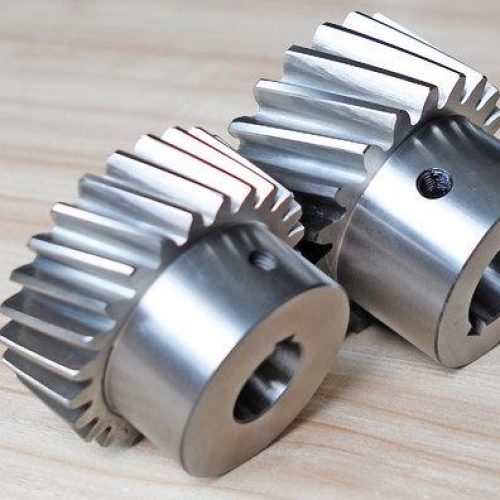
The gear set is the core of the gearbox, consisting of multiple gears with different ratios. Specifically, it adjusts power output by switching gears, matching engine performance to driving scenarios such as climbing or cruising.
Our gear sets are made of high-strength alloy steel, featuring precision machining and strong wear resistance. To find reliable replacement options, explore our premium truck gearbox gear set.
High-quality Truck Gearbox Gear Set
Synchronizer
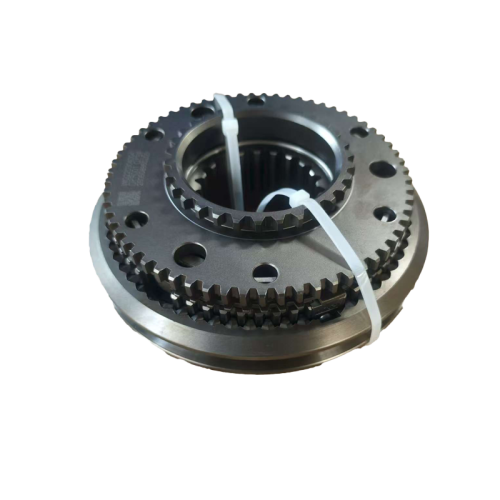
The synchronizer is crucial for smooth gear shifting. It synchronizes the speed of the gear to be engaged with the output shaft, thereby avoiding gear grinding and reducing component wear.
Worn synchronizers often cause difficult or noisy shifting. Therefore, regular inspection and timely replacement are essential to ensure normal operation.
High-quality Truck Gearbox Gear Set
Gearbox Housing
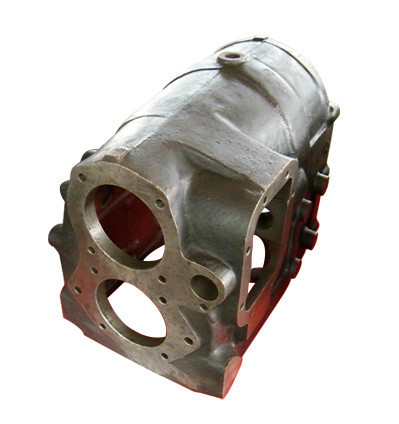
The gearbox housing serves as the protective shell of the entire system, safeguarding internal components from external impacts and dust. Besides, it provides a stable installation base for all parts.
Our gearbox housings are designed with strong structural rigidity, ensuring they can withstand heavy loads and harsh working environments. Check our truck gearbox housing for compatible options.
Truck Gearbox Housing
Common Gearbox Problems & Solutions
Due to long-term heavy loads and harsh operating conditions, the gearbox is prone to wear and failures. However, most issues can be resolved effectively with early detection and proper handling.
Gear Grinding During Shifting
This issue is usually caused by worn synchronizers or insufficient transmission fluid. First, check the fluid level and condition; if the fluid is contaminated, replace it promptly.
If the problem persists, inspect the synchronizer for wear and replace it if necessary. For professional assistance, consult our truck gearbox repair service.
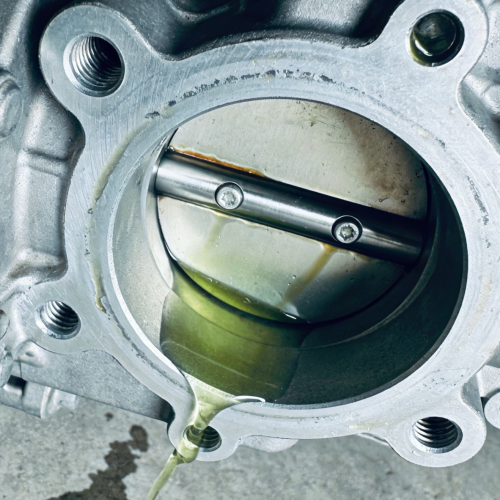
Oil Leakage
Oil leakage often occurs at seals or gaskets, which can lead to insufficient fluid and overheating of the gearbox. Consequently, this may cause severe damage to internal components.
Regularly inspect seals and gaskets, and replace worn ones with high-quality products to prevent recurring leaks.
🟡How Truck Gearbox Works
The truck gearbox plays a critical role in controlling engine power output and transferring torque to the driving wheels under different load and speed conditions.When the engine generates power, the gearbox adjusts the torque and speed ratio through different gear sets. At low speeds or heavy-load conditions, lower gears are used to increase torque, while higher gears are engaged during highway driving to improve fuel efficiency.
Inside the gearbox, multiple gear sets interact with synchronizers and shafts to ensure smooth gear shifting. Synchronizers help match rotational speeds between gears before engagement, reducing mechanical shock and preventing damage.Without a properly functioning gearbox, the engine would be unable to operate efficiently across different driving conditions, leading to poor performance and excessive mechanical stress.
🔍 Gearbox Failure Mechanism
Truck gearbox failure usually develops gradually due to long-term mechanical stress, lubrication issues, and heat accumulation.One of the most common starting points is oil degradation. When gearbox oil loses its lubricating properties, friction between gears increases, leading to accelerated wear on gear teeth and synchronizer components.
At the same time, overheating caused by heavy load or aggressive driving conditions can further reduce oil viscosity, making it less effective in protecting internal components.As wear progresses, gear shifting becomes more difficult, and abnormal noise may appear during operation. In advanced stages, gear slippage or transmission failure can occur, severely affecting vehicle performance.
🔧 Diagnostic Process
Diagnosing gearbox issues requires both operational observation and technical inspection.One of the first indicators is difficulty in shifting gears or delayed engagement during driving. This often suggests synchronizer wear or internal friction issues.
Technicians also evaluate gearbox oil condition, checking for contamination, metal particles, or burnt smell, which indicate internal wear or overheating.In more advanced diagnosis, gearbox disassembly may be required to inspect gear teeth condition, bearing wear, and synchronizer ring performance. This helps determine whether the issue is related to lubrication failure or mechanical damage.
💰 Cost Impact on Fleet Operations
Gearbox failure can lead to significant operational costs, especially in commercial fleet environments where vehicle uptime is critical.When gearbox performance declines, fuel efficiency decreases and driving becomes less smooth, increasing operational strain on both the engine and transmission system.
In severe cases, gearbox failure can lead to complete loss of vehicle mobility, requiring costly repairs or full transmission replacement.For fleet operators, this not only increases maintenance costs but also results in vehicle downtime and delivery delays, making preventive maintenance highly important.
Essential Maintenance Tips for Gearbox
Proper maintenance is the key to extending the gearbox’s service life and ensuring stable performance. Below are practical tips that are easy to implement.
Regularly Check Transmission Fluid
Check the fluid level and condition monthly. Clean, sufficient fluid can lubricate components and cool the system; otherwise, it may cause excessive wear.
Avoid Aggressive Shifting
Shift gears smoothly and match the gear to the vehicle’s speed and load. Aggressive shifting will put excessive stress on the gearbox, accelerating component wear.
Why Choose Our Gearbox Solutions
As a professional heavy-duty truck parts supplier, we specialize in high-quality gearbox components, maintenance services, and technical support. Moreover, our products are designed to meet the demands of harsh commercial operations.
All our components undergo strict quality testing, ensuring durability and reliable performance. Additionally, we offer a full range of parts and one-stop procurement solutions for fleets.
Our experts provide professional advice and after-sales support. For personalized solutions, visit our truck gearbox solutions pageor contact us directly.
❓ Frequently Asked Questions (FAQ)
What is a truck gearbox and why is it important?
A truck gearbox is a critical mechanical system responsible for controlling how engine power is transmitted to the wheels by adjusting torque and speed ratios. It allows the vehicle to operate efficiently under different driving conditions such as heavy-load transportation, uphill driving, and highway cruising.
Without a gearbox, the engine would produce a fixed output that is not suitable for varying road and load conditions. The gearbox solves this limitation by providing multiple gear ratios, enabling the engine to operate within its optimal performance range.
Inside the gearbox, different gear sets work together with shafts and synchronizers to ensure smooth and controlled power transfer. This system not only improves driving efficiency but also reduces unnecessary engine stress and fuel consumption over time.
What causes truck gearbox failure?
Truck gearbox failure is usually caused by long-term mechanical stress combined with lubrication issues and thermal buildup. In most cases, failure does not happen suddenly but develops gradually through continuous wear.
One of the most common causes is oil degradation. When gearbox oil loses its viscosity or becomes contaminated, it can no longer provide sufficient lubrication between moving components. This increases friction between gears and accelerates surface wear.
Overheating is another major factor. Heavy-load operation or extended driving under high temperature conditions can cause internal heat buildup. When temperature rises, oil performance decreases further, creating a cycle of increased friction and accelerated wear.As these conditions continue, internal components such as gears, bearings, and synchronizers begin to degrade, eventually leading to shifting problems or complete gearbox failure.
What are the early symptoms of gearbox problems?
Early gearbox problems often appear gradually and may initially be mistaken for normal driving variations. One of the first signs is difficulty in shifting gears, especially when engaging lower or higher gears under load.
Drivers may also notice delayed gear response, where the transmission does not engage smoothly or takes longer than usual to shift. This is often caused by wear in synchronizers or internal friction buildup.
Another common symptom is unusual noise during operation, such as grinding, whining, or humming sounds. These noises typically indicate internal wear between gear teeth or insufficient lubrication.In more advanced stages, vibration during acceleration or gear slippage may occur, indicating that internal components are no longer maintaining proper mechanical engagement.
Can a damaged truck gearbox be repaired?
Yes, a damaged truck gearbox can often be repaired, but the feasibility depends on the severity of internal damage. In cases where the issue is related to oil degradation, minor wear, or synchronizer problems, repair is usually possible through component replacement and maintenance.
However, if gear teeth are heavily damaged, shafts are worn, or internal structural failure has occurred, a full gearbox overhaul or replacement may be required. This is because damaged gear geometry cannot be restored to its original precision through simple repairs.
Early diagnosis is critical because repairing minor issues is significantly more cost-effective than replacing the entire transmission system after severe damage has occurred.
How often should gearbox oil be changed?
The frequency of gearbox oil changes depends on driving conditions, load intensity, and manufacturer recommendations. Under normal operating conditions, gearbox oil is typically changed at regular service intervals to maintain lubrication efficiency.
However, in heavy-duty trucking operations where vehicles are exposed to continuous load, high temperatures, and long driving hours, oil degradation occurs faster. In such cases, more frequent oil changes are necessary to ensure stable performance.
Regular inspection of gearbox oil condition is also important. Signs such as darkened oil color, burnt smell, or presence of metal particles indicate internal wear and require immediate attention.Maintaining clean and high-quality gearbox oil is essential for extending transmission lifespan and preventing premature failure.
What happens if gearbox problems are ignored?
If gearbox problems are ignored, small issues will gradually escalate into serious mechanical failures due to continuous internal stress and friction.As lubrication becomes insufficient, internal components such as gears and bearings begin to wear more rapidly. This increases heat generation inside the gearbox, which further reduces oil efficiency and accelerates damage.
Over time, gear shifting becomes more difficult, and transmission performance becomes unstable. In severe cases, complete gearbox failure may occur, resulting in vehicle immobilization.For commercial fleets, ignoring gearbox issues not only increases repair costs but also leads to unexpected downtime, delivery delays, and operational inefficiency.
Why does gearbox performance degrade over time in trucks?
Gearbox performance naturally degrades over time due to continuous exposure to mechanical load, heat cycles, and friction between internal components.Every gear shift involves contact and separation between metal surfaces, even with synchronizer assistance. Over time, this repeated mechanical interaction leads to gradual wear.
In addition, high-load transportation increases internal stress, while temperature fluctuations affect lubrication stability. These combined factors slowly reduce gearbox efficiency and smoothness.Without proper maintenance, these small efficiency losses accumulate, eventually leading to noticeable performance decline and potential mechanical failure.