
Introduction
Heavy-duty diesel truck engines generate continuous internal pressure during daily operation. As pistons move and combustion occurs, small amounts of gas leak past piston rings into the crankcase. These leaked gases are known as blow-by gases.
Without a functional ventilation system, blow-by buildup creates positive crankcase pressure. In turn, excessive pressure pushes oil past seals, disrupts combustion, and gradually damages core engine components. For this reason, the crankcase breather stands as one of the most critical ventilation parts on modern diesel trucks.
The crankcase breather, also called a CCV (Crankcase Ventilation) system, filters oil mist and releases trapped pressure safely. Additionally, it recirculates clean air back into the intake system to maintain balanced engine airflow. When this system fails, minor problems quickly escalate into expensive mechanical failures.
Unfortunately, many fleet operators overlook breather maintenance. Unlike obvious faults such as brake wear or tire damage, breather issues develop gradually. They produce subtle early symptoms that most drivers ignore until severe engine damage occurs.
Furthermore, faulty crankcase breathers do not trigger obvious emergency alerts. Instead, they slowly reduce fuel economy, increase oil consumption, and weaken engine power over thousands of miles. As a result, repeated minor issues accumulate and cause unplanned downtime.
This complete guide explains everything about truck crankcase breather issues. It covers system working principles, early warning symptoms, root failure causes, step-by-step troubleshooting, professional fixes, and long-term preventive care. Moreover, it matches all mainstream diesel engines, including Cummins, Detroit, Caterpillar, Weichai, and Sinotruk.
To keep your engine ventilation system stable, always pair genuine breather components with reliable truck chassis system parts. Proper system coordination prevents secondary vibration and pressure-related engine damage.
How Does a Truck Crankcase Breather System Work?
Before troubleshooting faults, it is important to understand normal system operation. In short, the crankcase breather balances internal engine pressure and cleans blow-by gases.
During engine combustion, tiny gas particles slip past piston ring gaps and enter the crankcase. These gases carry fine oil mist, carbon particles, and unburned diesel residue. If trapped inside the crankcase, they create pressure buildup and contaminate internal lubrication.
Therefore, the breather system serves two core functions. First, it vents excess crankcase pressure to protect gaskets, seals, and rotating parts. Second, it separates oil mist from blow-by gases to avoid oil entering the intake manifold.
Most modern heavy-duty trucks use a closed CCV system. Specifically, this design routes filtered gases back into the engine intake. As a result, it reduces emissions and improves fuel combustion efficiency. Older trucks use open breathers that release gases directly into the atmosphere.
In addition, the system relies on three key components. These components include a breather filter, rubber ventilation hoses, and pressure check valves. Each part works together to maintain consistent airflow and pressure balance.
Notably, crankcase breather problems differ greatly from truck cylinder head failures. Head faults stem from overheating and gasket damage. On the other hand, breather failures mostly come from clogging, aging hoses, and pressure imbalance.
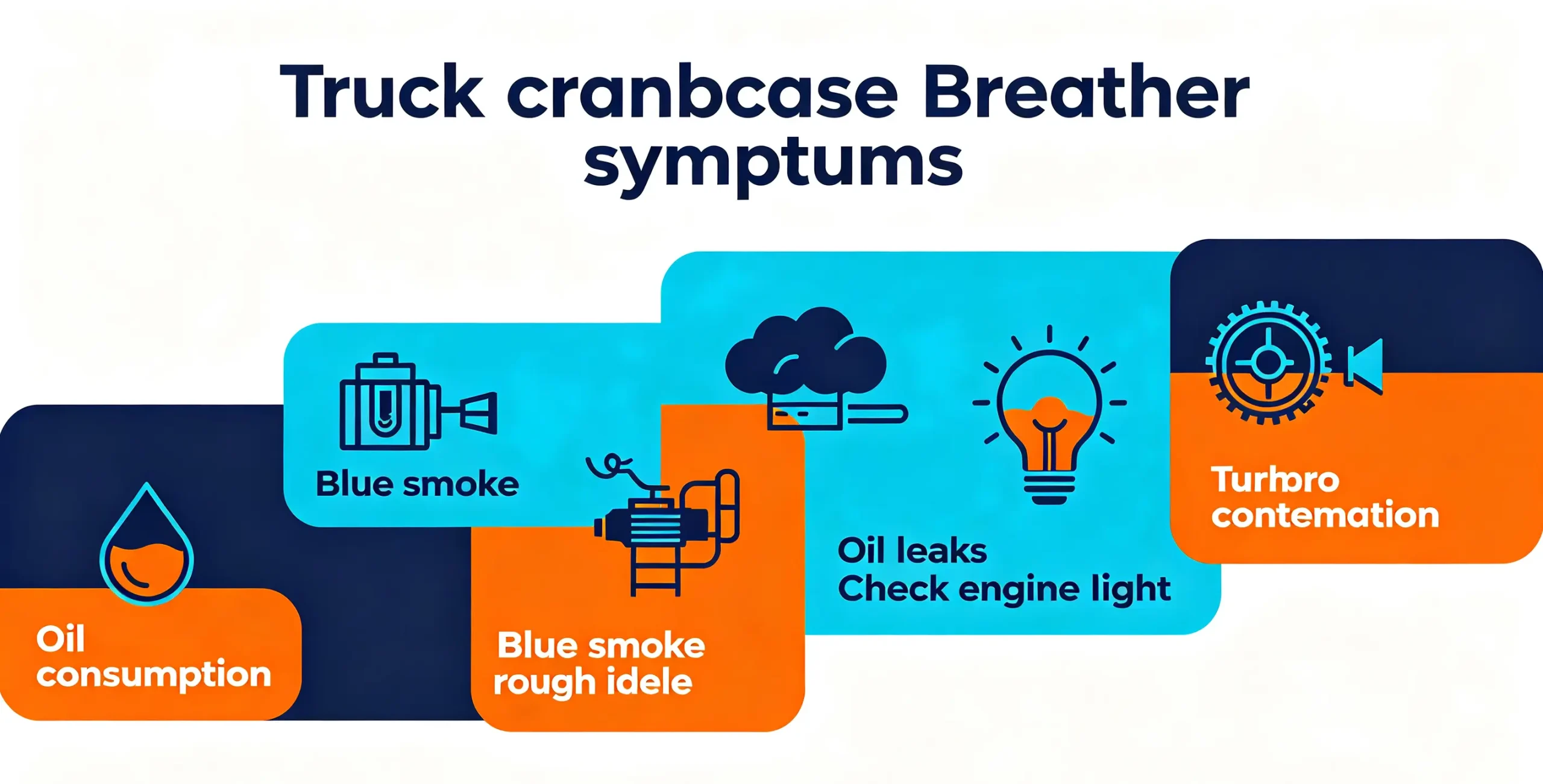
8 Common Symptoms of Failing Truck Crankcase Breather
Breather system failures produce clear, repeatable symptoms. However, these signs often mimic other engine faults. Thus, many technicians misdiagnose the problem. To avoid incorrect repairs, you must recognize these eight key warning signs.
1. Excessive Oil Consumption
Increased oil burn is one of the earliest breather failure symptoms. When the breather filter clogs, crankcase pressure cannot release normally. Gradually, built-up pressure forces fine oil mist into the intake system.
As a result, the engine burns more oil during combustion. Drivers will notice frequent oil level drops between scheduled maintenance cycles. In severe cases, oil consumption rises sharply and requires constant refilling.
2. Visible Oil Leaks Around Engine Seals
Excessive crankcase pressure searches for weak points to escape. Engine gaskets, main seals, valve cover seals, and oil pan gaskets become vulnerable under abnormal pressure.
Therefore, faulty breathers commonly cause oil leakage around the crankshaft seal and valve cover. Many technicians replace gaskets repeatedly without fixing the root breather blockage. Naturally, leaks return quickly after each repair.
3. Rough Idle and Unstable Engine RPM
The CCV system directly affects engine air-fuel balance. When the breather clogs or hoses crack, unmetered air enters the combustion system. This situation creates a vacuum leak.
In turn, the engine ECU cannot maintain steady idle speed. You will notice shaking, fluctuating RPM, and uneven idle performance. This symptom becomes more obvious during cold startup and low-load operation.
4. Blue or White Exhaust Smoke
Blue smoke indicates oil entering the combustion chamber. When the breather fails to separate oil mist properly, oil vapor flows into intake runners and burns inside cylinders.
Meanwhile, severe clogging may cause white smoke during startup. This happens because trapped pressure pushes residual oil and moisture into hot engine sections. Continuous blue smoke always confirms ventilation system malfunction.
5. Reduced Engine Power and Slow Acceleration
Imbalanced crankcase pressure creates internal engine drag. Moreover, contaminated intake air disrupts normal combustion quality.
For this reason, trucks with bad breathers feel sluggish during acceleration. They also struggle to maintain power under heavy loads or climbing conditions. This power loss worsens as blockage accumulates over time.
6. Frequent Check Engine Light and Fault Codes
Modern diesel engines monitor CCV airflow and pressure values. When the breather clogs or leaks, pressure sensor data falls outside factory parameters.
As a result, the dashboard illuminates a check engine light. Common fault codes include P04DB, P04DC, and other ventilation-related trouble codes. Clearing codes without repairing the breather will cause immediate recurrence.
7. Oil Sludge and Dirty Intake Manifold
A failing breather allows unfiltered oil mist and carbon particles to circulate through the intake system. Over time, these residues build up inside the manifold, turbo inlet, and intake pipes.
Eventually, thick oil sludge forms and restricts airflow. This issue further reduces engine efficiency and creates more carbon buildup inside combustion chambers.
8. Turbo Oil Contamination and Premature Turbo Wear
Surprisingly, many turbo failures link back to bad crankcase breathers. When oil mist continuously enters the intake system, it flows directly into the turbocharger assembly.
Consequently, turbo blades accumulate oil residue and carbon. This imbalance causes shaft wear, slow turbo response, and even turbo seal leakage. In serious cases, it leads to early turbo replacement.
Primary Root Causes of Crankcase Breather Failure
To permanently fix breather issues, you must address root causes instead of only replacing parts. In general, breather failures stem from six main factors.
1. Long-Term Filter Clogging
The breather filter collects oil mist, carbon dust, and fine metal particles during operation. Over thousands of miles, these contaminants block filter pores.
If operators skip scheduled cleaning or replacement, full blockage occurs. Once blocked, pressure cannot vent normally, which triggers all the symptoms listed above. This is the most common cause of diesel breather failure.
2. Aging, Brittle, or Cracked Vent Hoses
Breather hoses endure extreme engine heat, constant vibration, and pressure cycling. After years of operation, rubber materials gradually harden and become brittle.
As a result, small cracks and air leaks appear on hose surfaces. Even tiny leaks disrupt system vacuum balance and cause unstable idle and oil vapor escape.
3. Damaged or Stuck CCV Valves
Check valves inside the breather system control one-way airflow. They prevent intake pressure from flowing backward into the crankcase.
However, carbon buildup and oil residue often cause valves to stick open or closed. Stuck valves break pressure balance and create either positive pressure buildup or vacuum leaks.
4. Poor Maintenance Habits
Many fleets only change engine oil and filters while ignoring breather service. Unlike engine oil, breather filters do not require frequent replacement. Yet they still need periodic inspection and cleaning.
Neglected maintenance allows minor clogging to develop into severe system failure. In addition, delayed oil changes increase carbon and sludge formation, which accelerates breather blockage.
5. Inferior Aftermarket Breather Parts
Low-cost generic breather filters and hoses use low-grade materials. These parts lack heat resistance and precise structural design.
Inferior filters clog rapidly. Meanwhile, cheap hoses degrade quickly under high engine temperatures. Although they save short-term costs, they lead to repeated failures and higher long-term repair expenses.
6. Excessive Engine Blow-By
In some cases, breather issues are secondary symptoms. Worn piston rings, cylinder wall wear, and damaged connecting rod bearings create excessive blow-by gas.
Extreme blow-by overwhelms the breather system. Even fully functional breathers cannot process excessive gas volume, which causes pressure buildup and oil leakage.
Step-by-Step Crankcase Breather Troubleshooting Process
Accurate diagnosis prevents unnecessary part replacement. Follow this standardized step-by-step process to locate breather system faults quickly.
Step 1: Confirm Symptom Matching
First, verify whether your truck matches typical breather failure signs. Check for oil leaks, smoke, unstable idle, rising oil consumption, and fault codes. This step eliminates unrelated engine faults.
Step 2: Visual Inspection of Breather Assembly
Turn off the engine and allow full cooling. Then inspect the breather housing, filter cover, and connecting hoses. Look for cracks, loose connections, oily residue, and physical deformation.
Step 3: Check Hose Sealing and Clamp Tightness
Loose clamps and misaligned hoses cause invisible vacuum leaks. Press and twist each hose connection gently. Confirm all clamps stay fixed and no gaps exist at joint points.
Step 4: Remove and Inspect Breather Filter
Take out the filter element for direct observation. A healthy filter appears clean and breathable. A failed filter looks dark, saturated with oil, or completely blocked by thick carbon deposits.
Step 5: Test CCV Valve Function
Check whether the one-way valve opens and closes freely. Remove carbon buildup on valve surfaces. Replace valves that stick, fail to seal, or cannot move smoothly.
Step 6: Measure Crankcase Pressure
Use a professional pressure gauge to test idle and running crankcase pressure. Abnormally high pressure confirms system blockage or insufficient ventilation capacity.
Step 7: Inspect Intake and Turbo Oil Residue
Check intake manifold interiors and turbo inlet areas. Heavy oil sludge and carbon accumulation prove long-term breather system failure.
Targeted Fixes for Every Crankcase Breather Problem
Different breather faults require different repair methods. Below are precise, field-verified solutions for all common issues.
1. Clogged Breather Filter Solution
For mild clogging with partial airflow restriction, remove the filter and clean it with professional engine degreaser. Rinse thoroughly and allow full air drying before reinstallation.
For severe oil saturation, thick carbon blockage, or aged filter deformation, direct replacement is mandatory. Always install high-quality filters matching your engine model.
After replacement, test engine idle and check for residual oil leakage. This ensures normal pressure release.
2. Cracked, Leaking, or Aging Hoses Fix
Never repair cracked breather hoses with glue or tape. Temporary fixes fail quickly under engine heat and vibration.
Instead, replace all brittle, cracked, or loose hoses completely. Use heat-resistant rubber hoses with original dimensional standards. After installation, tighten all clamps evenly to avoid vacuum leaks.
3. Stuck or Malfunctioning CCV Valve Repair
Clean minor carbon deposits on valve surfaces to restore flexible movement. Test valve sealing performance after cleaning.
If the valve sticks continuously, fails to seal, or cannot maintain one-way airflow, replace the CCV valve immediately. Faulty valves cause recurring pressure imbalance.
4. Excessive Crankcase Pressure Resolution
First, clean the entire ventilation pipeline to remove sludge and blockages. Then replace worn filters and faulty valves.
If pressure remains high after full breather service, inspect piston ring sealing and cylinder wall conditions. Excessive blow-by requires engine internal maintenance rather than simple breather repair.
5. Intake Sludge and Oil Contamination Cleanup
Disassemble the intake manifold and turbo inlet pipe. Remove all oil sludge and carbon deposits with dedicated cleaning agents.
Cleaning restores normal airflow and prevents secondary combustion problems. After cleaning, install new breather components to avoid repeated contamination.
6. Fault Code P04DB / P04DC Troubleshooting
These codes mostly indicate CCV system airflow mismatch. Inspect hose routing, filter condition, and valve operation.
Replace damaged components, reset fault codes, and test road performance. If codes return, check for incorrect part matching or hidden pipeline blockages.
Professional Breather Replacement Best Practices
When full replacement is necessary, follow these professional standards to avoid post-repair failures.
First, always replace complete kits instead of single parts. Replacing filters alone while keeping old hoses and valves leads to rapid new-part contamination.
Second, clean the entire ventilation system before installation. Residual sludge and old carbon will damage new components within short mileage.
Third, verify part compatibility. Different engine generations use different breather sizes and valve specifications. Mismatched parts cause airflow errors and pressure faults.
Fourth, standardize installation torque. Over-tightening cracks plastic housing; loose torque creates air leaks.
Fifth, perform post-installation testing. Check idle stability, exhaust condition, and crankcase pressure to confirm repair effectiveness.
Long-Term Fleet Maintenance Tips to Avoid Breather Failures
Most crankcase breather issues are preventable with regular maintenance. Use these strategies to extend system service life and cut fleet repair costs.
First, set fixed inspection cycles. Check breather condition every 10,000 to 20,000 miles. Clean light deposits and replace aging parts regularly.
Second, strictly follow engine oil change schedules. Clean lubricating oil reduces carbon and sludge generation, which protects the breather system.
Third, avoid long-term idle operation. Extended idling increases blow-by accumulation and accelerates filter saturation.
Fourth, maintain stable chassis and engine conditions. Damaged truck chassis system parts cause persistent vibration, which worsens hose fatigue and connection looseness.
Fifth, always use genuine or high-quality aftermarket breather components. Premium parts maintain stable airflow, heat resistance, and pressure tolerance.
Frequently Asked Questions About Truck Crankcase Breather Issues
Q1: Can I drive with a bad crankcase breather?
You can drive short distances temporarily. However, long-distance operation causes severe oil leakage, turbo damage, and accelerated engine wear. Immediate repair is strongly recommended.
Q2: How often should I replace the truck breather filter?
Generally, replace breather filters every 50,000 to 100,000 miles. Harsh working environments require shorter replacement intervals.
Q3: Will a faulty breather cause turbo failure?
Yes. Continuous oil mist intake contaminates turbo components, causes carbon buildup, and leads to premature turbo seal failure and shaft wear.
Q4: Why do breather hose cracks keep recurring?
Repeated cracking usually comes from inferior hose quality or excessive engine vibration. Upgrade heat-resistant hoses and check chassis vibration sources.
Conclusion
The crankcase breather system plays a vital role in balancing diesel engine pressure, cleaning blow-by gases, and protecting core components. Although it appears simple, minor faults can trigger a chain of serious engine problems.
Excessive oil consumption, seal leakage, rough idle, exhaust smoke, power loss, and turbo damage all relate to unmaintained breather systems. Therefore, fleet managers and drivers must prioritize regular inspection and timely repair.
By identifying early symptoms, targeting root causes, following standardized troubleshooting steps, and implementing scientific maintenance routines, you can effectively eliminate recurring breather faults. In turn, you will extend engine service life, reduce unplanned downtime, and improve overall fleet operational efficiency.


