
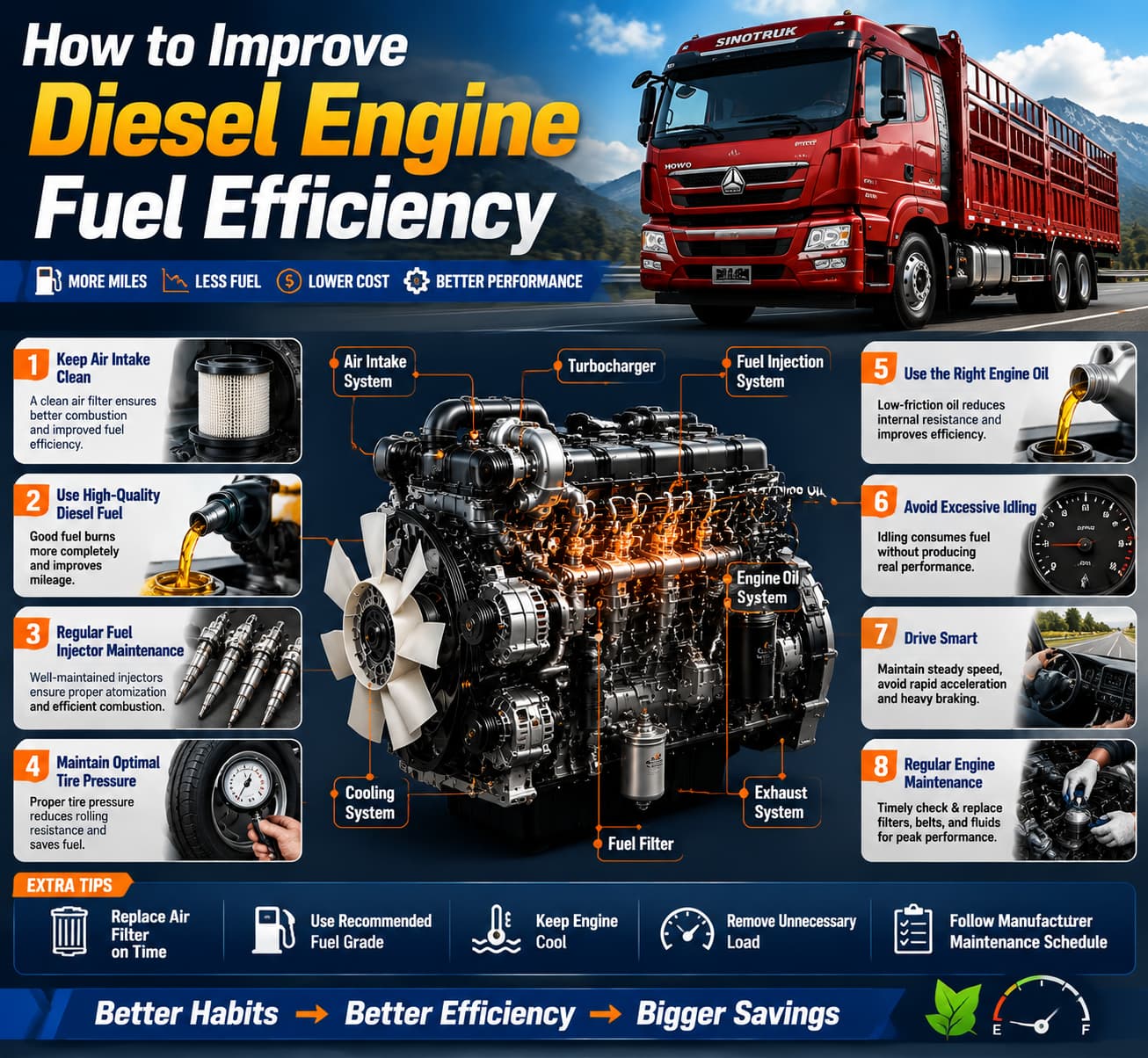
Why Your Diesel Engine Is Consuming More Fuel Than It Should
Excessive fuel consumption is one of the most common complaints among fleet operators and truck owners. The root causes often hide in overlooked maintenance gaps, degraded components, or incorrect operating parameters. According to a 2025 study by the American Transportation Research Institute, fuel accounts for approximately 24% of total trucking operational costs—making even small efficiency gains financially significant.
As an analyst who has spent over 15 years evaluating heavy-duty powertrain systems, I can confirm that most cases of poor fuel economy stem from identifiable, correctable faults. This guide walks you through the diagnostic process, root causes, and practical solutions to restore optimal combustion performance.
Common Fault Causes Behind Poor Fuel Economy
Clogged or Worn Fuel Injectors
Fuel injectors degrade over time due to carbon deposits, contaminated fuel, and mechanical wear. When injectors fail to atomize fuel correctly, incomplete combustion occurs—wasting energy and increasing exhaust emissions. Proper injector calibration ensures each cylinder receives the precise volume of fuel at the exact timing required.
Symptoms include rough idling, black smoke, and a noticeable power loss under load. If left unchecked, a single faulty injector can increase consumption by 10–15% across the entire engine.
Degraded Turbocharger System
The turbocharger forces additional air into the combustion chamber, allowing more fuel to burn efficiently. When bearings wear, seals leak, or carbon buildup restricts the impeller, turbocharger performance drops significantly. The engine compensates by injecting more fuel to maintain power output.
Watch for excessive exhaust smoke, whining noises from the turbo housing, and sluggish acceleration. These signs indicate the turbo system needs immediate inspection.
Air Intake and Exhaust Restrictions
A restricted air filter forces the engine to work harder to draw in combustion air. Similarly, a blocked diesel particulate filter (DPF) or malfunctioning exhaust gas recirculation valve creates excessive backpressure. Both conditions directly reduce thermal efficiency and increase fuel burn rates.
Cooling System Failures
Engines running outside their optimal temperature range consume more fuel. A faulty thermostat that keeps the engine too cool prevents efficient combustion. Overheating, conversely, causes pre-ignition and detonation issues that waste energy.
Systematic Troubleshooting Approach
Effective diagnosis requires a structured methodology rather than guessing. Follow this sequence to isolate the source of excessive consumption efficiently.
| Step | Inspection Area | Key Checks | Tools Required |
|---|---|---|---|
| 1 | Fuel System | Injector spray pattern, fuel pressure, filter condition | Fuel pressure gauge, nozzle tester |
| 2 | Air Intake | Filter restriction, boost pressure readings, intercooler leaks | Manometer, boost gauge |
| 3 | Turbo System | Shaft play, seal integrity, wastegate operation | Dial indicator, visual inspection |
| 4 | Exhaust System | DPF loading, EGR valve function, backpressure levels | Backpressure gauge, scan tool |
| 5 | Engine ECU | Fault codes, sensor readings, fuel trim values | OBD diagnostic scanner |
Begin with the simplest checks first. A clogged fuel filter is far more common than a failing ECU. Work from the outside in, and always verify sensor data against physical measurements before replacing expensive electronic components.
Proven Solutions to Restore Optimal Performance
Replace and Upgrade Fuel System Components
Installing high-quality injectors and fuel filters is the single most impactful improvement for reducing consumption. OEM-specification components ensure proper atomization pressure and filtration capacity. When sourcing replacement parts, choose suppliers that offer components organized by product category system for easy identification of compatible items.
For fleets running Sinotruk or similar Chinese heavy-duty platforms, access to genuine-equivalent truck parts is critical. Substandard aftermarket injectors often fail within months and cause further engine damage.
Service the Turbocharger Assembly
Turbo reconditioning or replacement restores proper boost pressure. Ensure the oil feed and drain lines are clear of restrictions before installing a new unit—many premature turbo failures result from inadequate lubrication rather than manufacturing defects.
Optimize Engine Timing and Calibration
Modern diesel engines rely on precise ECU programming to balance power output against consumption. A professional recalibration—sometimes called remapping—can recover efficiency lost to sensor drift or outdated factory maps. However, only trust experienced technicians with proper diagnostic equipment for this procedure.
Implement a Preventive Maintenance Schedule
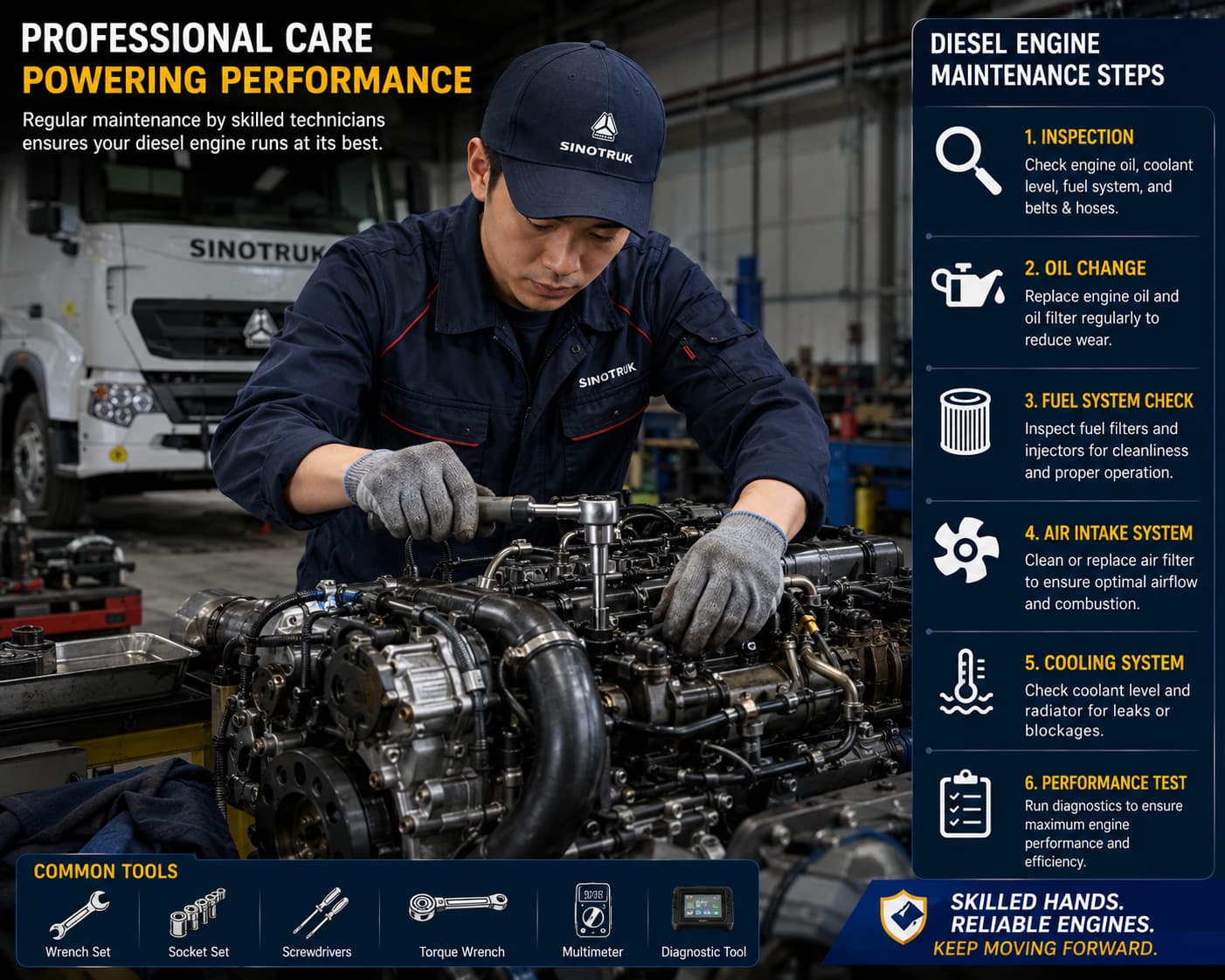
Consistent diesel engine maintenance prevents most efficiency-related problems before they escalate. Follow manufacturer-recommended intervals for oil changes, filter replacements, and valve adjustments. Data from fleet management platforms shows that trucks on strict preventive schedules achieve 8–12% better fuel economy than reactively maintained units.
Fuel Consumption Benchmarks: What to Expect
| Engine Condition | Typical Consumption (L/100km) | Efficiency Loss vs. Baseline |
|---|---|---|
| Well-maintained baseline | 28–32 | 0% |
| Clogged air filter only | 30–35 | 5–9% |
| Worn injectors | 33–38 | 12–18% |
| Turbo fault + injector wear | 36–42 | 20–30% |
| Multiple system failures | 40–48 | 30–50% |
These figures apply to typical 6-cylinder heavy-duty trucks operating at highway speeds under load. Your specific results will vary based on terrain, cargo weight, and driving behavior. The key takeaway: compounding faults multiply losses rapidly.
Operational Tips for Maximizing Economy
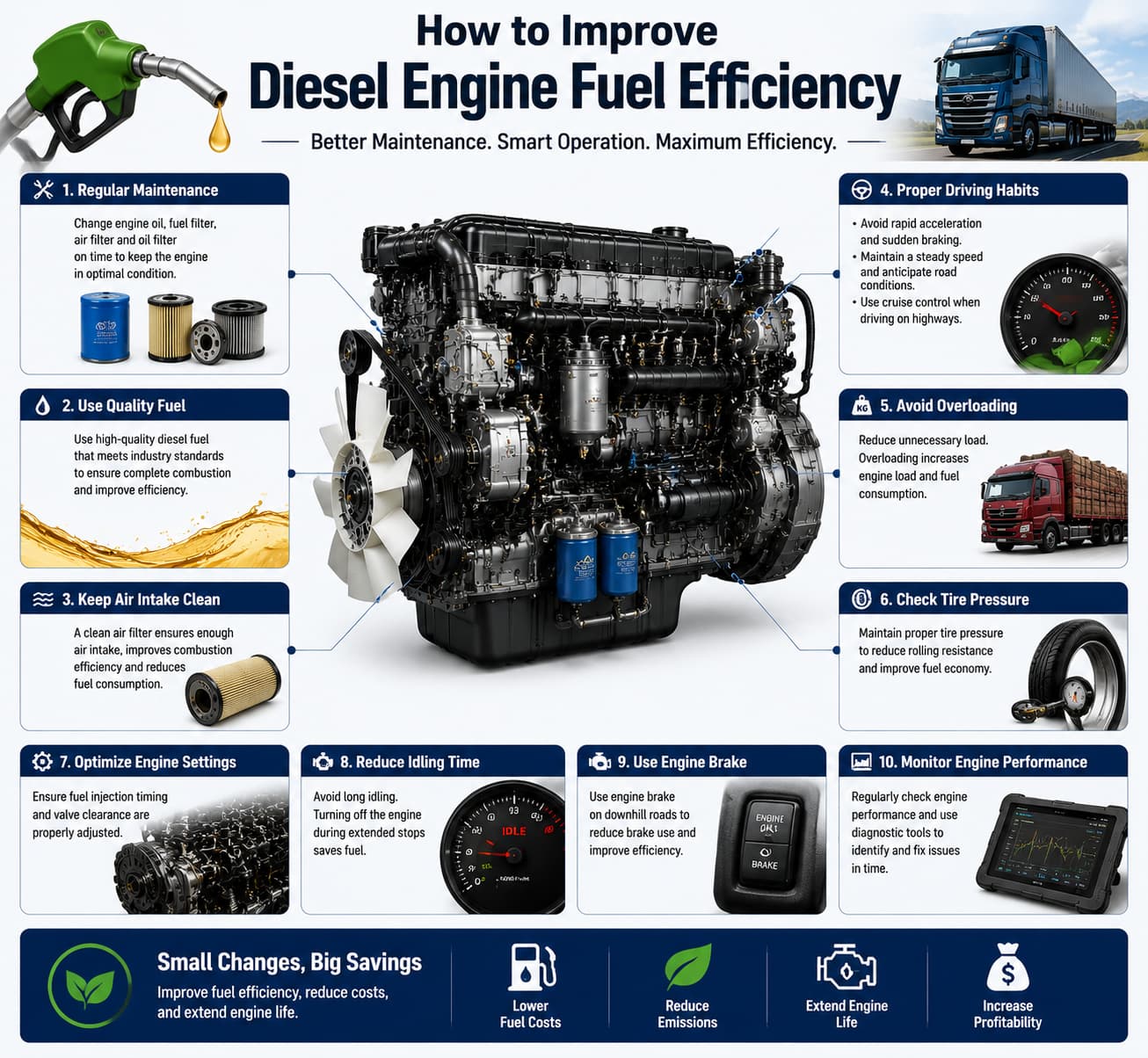
- Maintain steady speeds and avoid aggressive acceleration—cruise control saves 5–7% on highway routes.
- Check tire pressure weekly; underinflated tires increase rolling resistance and fuel burn.
- Reduce idling time. Modern diesels consume 3–5 liters per hour at idle with no productive work.
- Use manufacturer-recommended oil viscosity grades to minimize internal friction losses.
- Monitor coolant temperature and ensure the thermostat opens at the correct threshold.
Achieving meaningful fuel consumption optimization requires combining mechanical repairs with operational discipline. Neither alone delivers maximum results.
When to Seek Professional Support
If basic maintenance does not resolve consumption issues, the problem likely involves internal engine wear, ECU faults, or complex system interactions that require specialized diagnostic equipment. In such cases, working with experienced suppliers who provide technical support alongside parts supply ensures you get accurate diagnosis—not just random part replacements.
Reviewing a cooperative case from other fleet operators facing similar challenges can also provide practical insight into which solutions delivered measurable results in real-world conditions.
Choosing the Right Replacement Components
Not all replacement parts perform equally. The market is flooded with low-cost alternatives that meet dimensional specifications but fail under sustained thermal and mechanical stress. Prioritize suppliers who offer transparent sourcing, quality certifications, and organized catalogs by product category brand so you can verify compatibility with your specific engine platform.
If you need help identifying the correct components for your application, do not hesitate to contact us for personalized recommendations based on your engine model and operating conditions.
Conclusion
Reducing diesel consumption is not a single fix—it is the cumulative result of proper maintenance, quality components, correct diagnostics, and disciplined driving habits. Start with the high-impact items: injectors, air filtration, and turbo health. Then refine with operational improvements and scheduled servicing. Fleet operators who adopt this comprehensive approach consistently report 15–25% reductions in per-kilometer fuel costs.
Frequently Asked Questions
What is the most common cause of high fuel consumption in diesel trucks?
Worn or clogged fuel injectors are the single most frequent cause. They disrupt atomization, leading to incomplete combustion and wasted fuel. Regular inspection and timely replacement prevent this issue from escalating.
How often should I replace fuel filters to maintain efficiency?
Most manufacturers recommend replacing primary and secondary fuel filters every 20,000–40,000 km, depending on fuel quality in your operating region. In areas with poor-quality diesel, shorten this interval to 15,000 km.
Can driving habits really make a significant difference?
Yes. Studies consistently show that smooth driving techniques—gradual acceleration, steady cruising speeds, and minimal idling—reduce consumption by 8–15% compared to aggressive driving patterns, with no mechanical changes required.
Is engine remapping safe for improving economy?
When performed by qualified professionals using reputable calibration software, remapping is generally safe and effective. However, aggressive tunes that prioritize power over longevity can accelerate component wear. Always choose economy-focused maps from trusted providers.
How do I know if my turbocharger needs replacement versus reconditioning?
If shaft play exceeds manufacturer tolerances (typically more than 0.05mm axial play) or the compressor wheel shows physical damage, replacement is the safer option. Minor seal leaks and light carbon buildup can often be addressed through professional reconditioning at lower cost.


