Picture this: you’re staring at a broken-down truck, the local dealer just quoted you a price that made your coffee go cold, and somewhere in the back of your mind you know — you know — that the same part exists in China for a third of the cost. But between you and that savings sits a fog of customs forms, supplier directories, and shipping jargon that feels like learning a new language on a Monday morning.
Your truck isn’t going to fix itself, and your wallet isn’t going to fill itself either. Let’s bridge that gap together.
This china truck parts import guide walks you through every step — from finding a trustworthy china vehicle parts supplier to clearing customs without breaking a sweat. No fluff, no jargon without explanation, just a clear path from “I need parts” to “they’re on my shelf.”
Why China Is the World’s Go-To Source for Truck Parts
The Numbers Don’t Lie — China’s Dominance in Auto Parts Manufacturing
In 2023, China exported over $70 billion worth of auto parts globally, cementing its position as the undisputed factory floor of the world’s vehicle component industry. That’s not a fluke — it’s the result of decades of manufacturing infrastructure investment, a massive skilled labor pool, and supply chain ecosystems that cluster entire industries within a single city.
For truck parts specifically, China supplies everything from engine blocks to brake drums to markets across Africa, Southeast Asia, the Middle East, and Latin America. Whether you’re running a fleet of Sinotruk HOWOs or maintaining legacy European models, chances are the parts you need are being manufactured within a 50-kilometer radius of Shiyan, Weifang, or Guangzhou.
| Truck Parts Category | Estimated Annual Export Volume (USD) | Average Cost Savings vs. Western Suppliers |
|---|---|---|
| Engine Components (pistons, liners, gaskets) | $12.5 billion | 40–60% |
| Brake Systems (pads, drums, calipers) | $8.2 billion | 50–65% |
| Suspension Parts (leaf springs, shock absorbers) | $6.8 billion | 45–55% |
| Filters (oil, air, fuel, cabin) | $5.1 billion | 55–70% |
| Body Parts (bumpers, mirrors, panels) | $9.4 billion | 35–50% |
Key Advantages of Sourcing Truck Parts from China
The benefits of importing auto parts from china go far beyond price tags. Here’s what gives Chinese suppliers a structural edge that’s difficult for other markets to replicate:
Unmatched product range. Need a piston ring for a 1998 Dongfeng and a turbocharger for a 2023 Sinotruk? The same industrial district can supply both. China’s manufacturing ecosystem covers virtually every truck brand, model year, and component category — OEM, aftermarket, and everything in between.
Scalability on demand. Whether you need 50 brake pads or 50,000, Chinese factories are built for volume flexibility. Most suppliers can scale production up or down without the lead time penalties you’d face with Western manufacturers.
Rapid prototyping and customization. Need a non-standard dimension or a modified mounting bracket? Chinese factories routinely handle custom specifications that would require months of back-and-forth elsewhere. Many offer in-house engineering teams that can work from your drawings or samples.
Mature export infrastructure. Decades of global trade have built a logistics backbone — freight forwarders, port facilities, export documentation specialists — that makes shipping from China smoother than from almost any other manufacturing country.
Continuous quality improvement. The “cheap and unreliable” stereotype is outdated. Top-tier Chinese factories now hold IATF 16949 certification (the automotive quality standard), invest in CNC machining and automated inspection, and supply directly to global OEMs. The quality ceiling has risen dramatically.
Step 1 — Define What You Need (Before You Google Anything)
OEM vs. Aftermarket vs. Replacement — Know the Difference
Before you type a single search query, you need clarity on what grade of part you’re actually after. This decision shapes everything — your supplier pool, your budget, your warranty expectations, and ultimately whether that part lasts 100,000 km or 10,000 km.
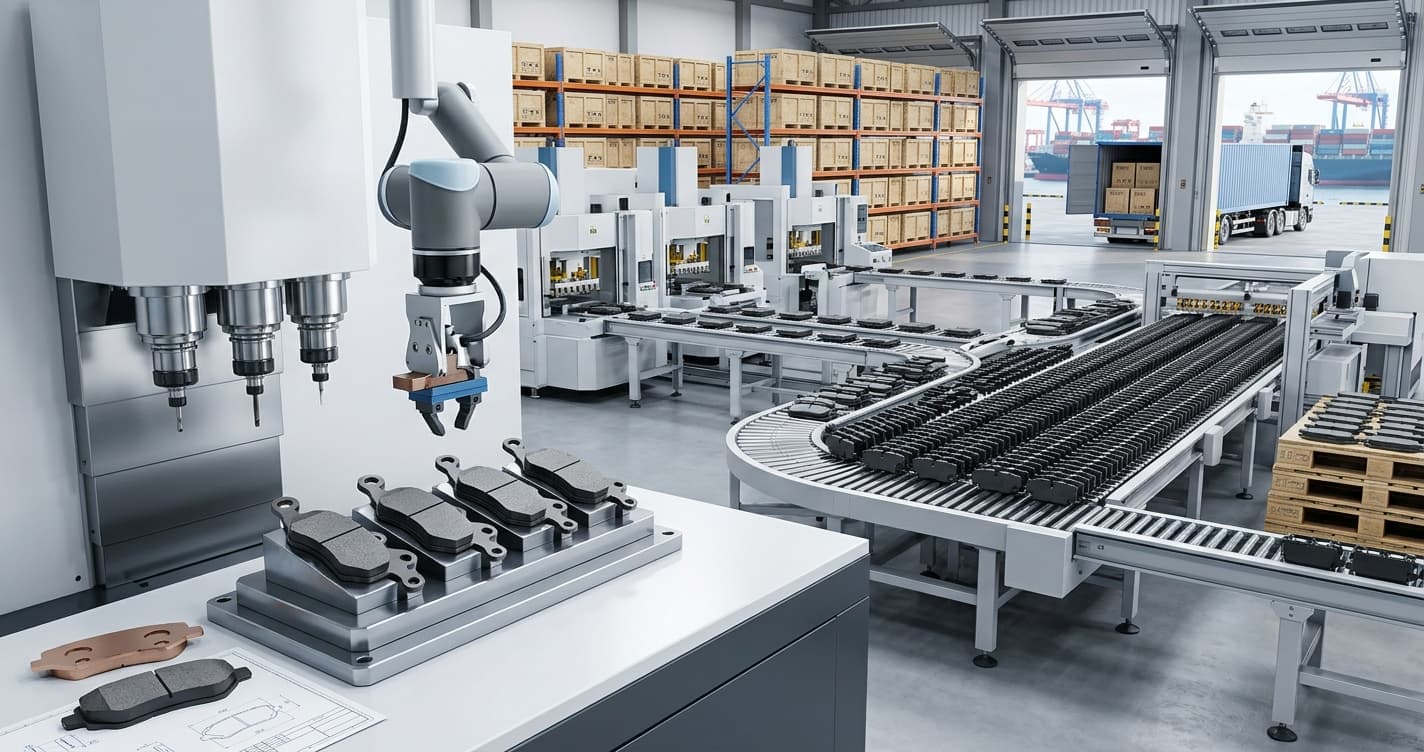
OEM (Original Equipment Manufacturer) parts are made by the same factory that supplies the truck manufacturer. They carry the brand logo and meet exact factory specifications. They cost more, but they’re a known quantity.
Aftermarket parts are produced by third-party manufacturers to match OEM specs. Quality ranges from “indistinguishable from original” to “you get what you pay for.” This is where your vetting skills matter most.
Replacement parts (sometimes called “pattern parts”) are budget-tier components designed to fit but not necessarily match OEM durability. Fine for non-critical applications, risky for safety components.
Ordering the wrong brake pad is like buying shoes online without checking the size — except the consequences are considerably heavier. A mismatched clutch plate doesn’t just waste money; it can sideline a truck for weeks while you source the correct one.
Build Your Parts List Like a Pro
A well-prepared parts list is your single most powerful tool when importing auto parts from china. It eliminates ambiguity, speeds up quoting, and immediately signals to suppliers that you’re a serious buyer — not a tire-kicker.
Here’s what your list should include for each item:
- OEM part number (the manufacturer’s reference code)
- Vehicle model and year (e.g., Sinotruk HOWO A7 2019)
- Engine model (e.g., WD615, Cummins ISBe)
- Exact specifications (dimensions, material, voltage where applicable)
- Quantity needed (including buffer stock)
- Acceptable quality grade (OEM, aftermarket, or either)
Use VIN decoding tools to extract exact specifications when part numbers aren’t available. Cross-reference databases like TecDoc, PartsPro, or even the truck manufacturer’s online parts catalog can help you confirm compatibility before you ever contact a supplier.
Step 2 — Find a Reliable China Vehicle Parts Supplier
Where to Search (And Where to Avoid)
The internet is full of suppliers. The challenge isn’t finding them — it’s filtering signal from noise. Here are your primary hunting grounds for truck spare parts wholesale china sourcing:
- Alibaba — The largest B2B platform. Massive selection, but quality varies wildly. Use “Verified Supplier” and “Trade Assurance” filters as starting points, not guarantees.
- Made-in-China.com — Slightly more manufacturing-focused than Alibaba. Good for factory-direct connections.
- Global Sources — Tends to attract more established exporters. Smaller pool, but generally higher floor on quality.
- Canton Fair (online and offline) — China’s largest trade fair. Excellent for meeting suppliers face-to-face and seeing physical samples.
- Direct factory outreach — If you know the manufacturing cluster (Shiyan for Dongfeng parts, Weifang for engines), you can contact factories directly via WeChat or their websites.
Red flags to watch for: brand-new company profiles with no transaction history, prices that are 50%+ below every other quote (they’re either bait-and-switch or selling rejects), suppliers who can’t provide a business license when asked, and anyone who pressures you to pay 100% upfront via personal bank transfer.
Vetting Suppliers — The Non-Negotiable Checklist
Finding a china truck parts supplier is step one. Trusting them with your money is step two — and it requires homework. Here’s the checklist that separates a reliable partner from an expensive lesson:
| Criteria | What to Look For | Red Flags |
|---|---|---|
| Business License | Valid, matches company name, registered for export | Refuses to share, or details don’t match website |
| Factory vs. Trader | Clear about their role; traders aren’t bad but should be transparent | Claims to be a factory but can’t show production photos |
| Export Experience | Ships to your region, understands your country’s standards | No export history, unfamiliar with basic trade terms |
| Sample Availability | Willing to send paid samples before bulk order | Refuses samples or demands bulk order first |
| Communication | Responds within 24 hours, answers technical questions clearly | Vague answers, avoids specifics, disappears for days |
| References/Reviews | Can provide contacts of existing buyers; positive platform reviews | Zero reviews, no references, or only generic testimonials |
| Certifications | ISO 9001, IATF 16949, or relevant product certifications | Claims certifications but can’t produce certificates |
Order samples before committing to bulk. Yes, it adds a few weeks and a few hundred dollars. But it’s the cheapest insurance policy you’ll ever buy in this business.
Step 3 — Common Problems When Sourcing from China (And How to Solve Them)
Problem 1: Receiving Parts That Don’t Match Specifications
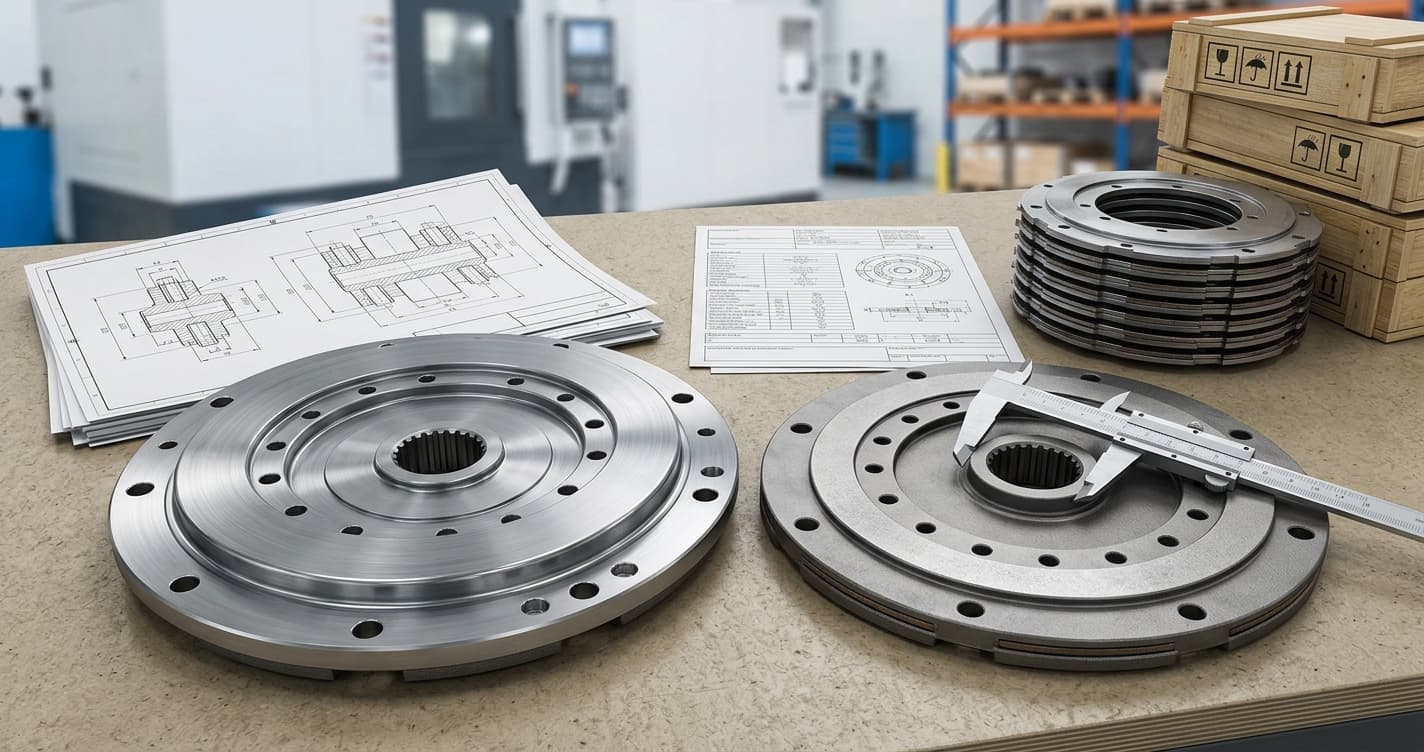
This is the number-one headache for first-time importers. You ordered a 430mm clutch plate and received a 420mm one. Or the material is cast iron when you specified forged steel. The part looks right in photos but fails on the truck.
Solution: Never rely on product listings alone. Send your exact OEM part number, a dimensioned drawing, and — if possible — a photo of the original part. Request a production sample before bulk manufacturing begins. Include a written specification sheet in your purchase order that both parties sign. If a dispute arises, that document is your leverage.
Also specify in your contract that parts must pass a pre-shipment inspection against your spec sheet. This shifts the burden of proof to the supplier and gives you a clear exit if quality doesn’t match.
Problem 2: Communication Breakdowns and Misunderstandings
Language barriers are real. A supplier saying “yes” often means “I heard you,” not “I agree.” Technical terms get lost in translation. Dimensions get confused between metric and imperial. Urgency gets lost in polite phrasing.
Solution: Use visual communication wherever possible — annotated photos, CAD drawings, comparison tables. Confirm every critical detail in writing (WeChat messages count). After verbal discussions, send a summary email: “To confirm, we agreed on X, Y, and Z. Please reply to confirm.” Keep a shared document or spreadsheet that both sides update.
If your supplier’s English is limited, consider hiring a sourcing agent or bilingual assistant who understands automotive terminology. The cost is minimal compared to a container of wrong parts.
Problem 3: Inconsistent Quality Between Batches
Your first order was perfect. The second was acceptable. The third had a 15% defect rate. This pattern is more common than suppliers will admit — and it usually happens when factories substitute materials or subcontract to cheaper workshops during peak season.
Solution: Implement ongoing quality checks, not just first-order inspections. Require material certificates (mill certs) with each shipment. Specify in your contract that any subcontracting requires your written approval. Schedule random inspections — not just final inspections — so the factory knows quality is being monitored throughout production.
Building a long-term relationship with one or two reliable suppliers is more effective than constantly chasing the lowest price across dozens of factories.
Problem 4: Shipping Delays and Logistics Surprises
Containers get bumped. Ports get congested. Chinese holidays (especially Chinese New Year) shut down factories for 2–4 weeks. A “15-day production time” can quietly become 30 days without warning.
Solution: Build buffer time into every order. If you need parts by March 1, work backward assuming worst-case transit and production times. Get production milestones in writing — “materials purchased by Day 3, production complete by Day 12, inspection by Day 14, shipped by Day 16.” Follow up at each milestone rather than waiting until the ship date passes.
Plan major orders around the Chinese holiday calendar. Place orders at least 6–8 weeks before Chinese New Year (late January or early February) to avoid the annual shutdown bottleneck.
Problem 5: Intellectual Property and Counterfeit Concerns
If you’re sourcing branded OEM parts, counterfeits are a real risk. Some suppliers sell parts with fake brand markings. Others produce genuine-spec parts but stamp them with logos they have no right to use. Either scenario can create legal liability for you as the importer.
Solution: If you need genuine branded parts, buy only from authorized distributors and request proof of authorization. If you’re buying unbranded aftermarket parts (which is perfectly legal and common), make sure they arrive without any OEM logos or trademarks. Specify “neutral packaging, no brand markings” in your purchase order. This protects you from customs seizures and trademark infringement claims.
Step 4 — Quality Control Before Shipping
Pre-Shipment Inspection — Your Insurance Policy
Here’s a truth that experienced importers learn (sometimes the hard way): quality control happens before the container is sealed, not after it arrives at your warehouse 6,000 miles away.
Third-party inspection services act as your eyes and hands on the ground in China. The major players include:
- SGS — The world’s largest inspection company
- TÜV — German precision applied to Chinese manufacturing
- Bureau Veritas — Strong in automotive components
- CCIC — China’s own inspection body, cost-effective for routine checks
A typical pre-shipment inspection costs $250–$400 per man-day and covers visual inspection, dimensional checks, functional testing, packaging verification, and quantity confirmation. Compare that to the cost of receiving 2,000 brake pads that don’t meet spec — the math is obvious.
Leveraging Smart Technology for Quality Assurance
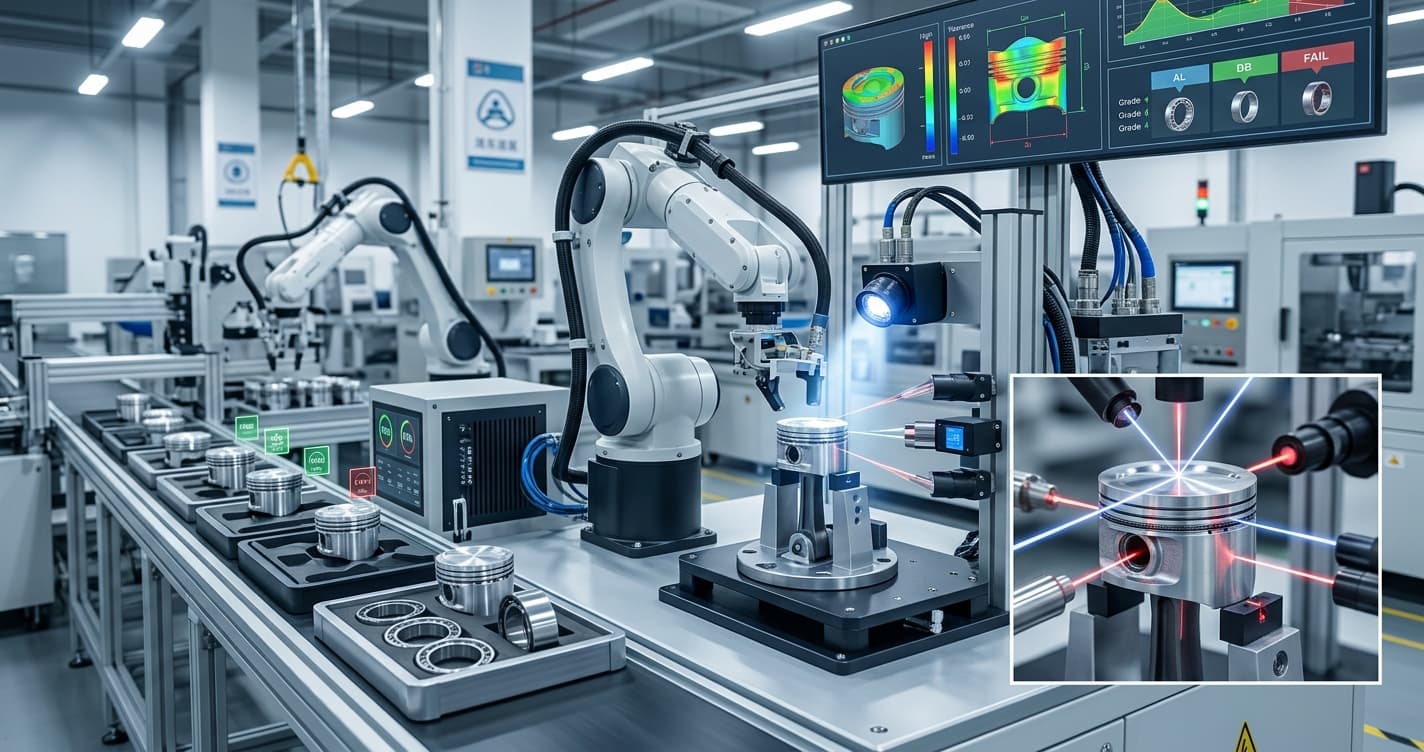
The quality control landscape is evolving rapidly. Artificial intelligence applications are now embedded in many Chinese factories’ production lines, catching defects that human inspectors might miss during long shifts.
Machine learning automation in quality sorting means that components like pistons and bearings are being measured and graded by AI-powered vision systems that check tolerances to the micron level. These systems learn from every defect they catch, getting sharper over time.
For importers, this means you can ask suppliers whether they use automated inspection systems — and request the data outputs as part of your quality documentation. Predictive analytics tools can also flag patterns in supplier quality over time, helping you identify when a factory’s output is drifting before it becomes a shipment-wide problem.
Think of it as having a quality inspector who never blinks, never gets tired, and remembers every measurement from every batch. That’s the direction the industry is heading.
Step 5 — Shipping and Logistics
Sea Freight vs. Air Freight vs. Rail — Choosing Your Lane
Truck parts are typically heavy, bulky, and not urgently needed tomorrow — which makes sea freight the default choice for most importers. But there are situations where air or rail makes sense. Here’s the breakdown:
| Shipping Mode | Transit Time | Cost Estimate | Best For | Typical Lead Time (Door-to-Door) |
|---|---|---|---|---|
| Sea Freight (FCL) | 20–40 days | $1,500–$4,000 per 20ft container | Heavy/bulky orders, full containers | 35–55 days |
| Sea Freight (LCL) | 25–45 days | $50–$80 per CBM | Smaller shipments sharing container space | 40–60 days |
| Air Freight | 3–7 days | $4–$8 per kg | Urgent/lightweight/high-value parts | 7–14 days |
| Rail (China-Europe) | 15–20 days | $2,500–$5,000 per container | Europe-bound, time-sensitive but cost-conscious | 25–35 days |
Rule of thumb: if your shipment weighs over 500 kg and isn’t urgently needed, sea freight wins on cost. If a single critical part is holding up a $50,000 truck, air freight pays for itself in avoided downtime.
Incoterms Decoded — FOB, CIF, DDP and What They Mean for You
Incoterms define who pays for what, who bears the risk, and at what point responsibility transfers from seller to buyer. Here are the three you’ll encounter most when importing auto parts from china:
FOB (Free On Board) — The supplier delivers goods to the port and loads them onto the ship. From that moment, you own the goods and bear all costs and risks. Most common for experienced importers who have their own freight forwarder.
CIF (Cost, Insurance, Freight) — The supplier arranges and pays for shipping and basic insurance to your destination port. You take over once the ship arrives. Convenient, but you have less control over shipping costs and carrier choice.
DDP (Delivered Duty Paid) — The supplier handles everything — shipping, insurance, customs clearance, duties — and delivers to your door. Most expensive per unit, but simplest for beginners. You pay one price and wait for delivery.
For first-time importers, CIF offers a good balance of simplicity and cost control. As you gain experience and volume, FOB with your own logistics partner typically saves 10–15% on shipping costs.
Step 6 — Customs Clearance for Truck Components
HS Codes, Duties, and Documentation
Customs clearance truck components is where many beginners feel the most anxiety — and honestly, it’s where the most expensive mistakes happen. But it’s not rocket science. It’s paperwork science, and paperwork can be mastered.
Every truck part has an HS (Harmonized System) code — a 6-to-10-digit number that tells customs exactly what the product is and what duty rate applies. Getting this right is non-negotiable.
| Truck Part | HS Code | US Duty Rate | EU Duty Rate | Africa (avg.) | Required Certificates |
|---|---|---|---|---|---|
| Brake Pads | 6813.20 | 2.5% | 3.2% | 10–25% | Certificate of Origin, test report |
| Engine Pistons | 8409.99 | 2.5% | 2.7% | 5–20% | Certificate of Origin |
| Oil Filters | 8421.23 | Free–3.9% | 1.7% | 10–20% | Certificate of Origin |
| Leaf Springs | 7320.10 | 3.8% | 2.7% | 10–25% | Certificate of Origin, material cert |
| Turbochargers | 8414.80 | 2.3% | 2.2% | 5–15% | Certificate of Origin |
| Clutch Assemblies | 8708.93 | 2.5% | 3.0% | 10–25% | Certificate of Origin, FMVSS (US) |
| Radiators | 8708.91 | 2.5% | 3.0% | 10–20% | Certificate of Origin |


