Heavy-duty truck engines rely on dozens of precision mechanical parts to stay running reliably on long hauls and tough job sites. Most drivers and fleet teams keep a close eye on basic maintenance. They change oil regularly, swap out filters, clean injectors, and check tires before every trip.
One small yet critical component often slips under the radar though, the valve rocker arm assembly. Minor wear and tear on this part builds up slowly over thousands of miles. What starts as a tiny hidden flaw eventually snowballs into noticeable engine trouble.
Most unexplained cylinder head noise, shaky idling, rising fuel costs, and random engine misfires on heavy-duty trucks trace back to rocker arm damage. What makes this issue so frustrating is how easy it is to misdiagnose.
Rocker arm failure symptoms overlap with dozens of other engine problems. Many repair shops only fix surface-level issues like gaskets or valve clearance. They never address the actual damaged rocker components, so the same fault pops back up soon after service.
Truck owners and fleet maintenance managers can avoid costly downtime and repeated repairs by learning to spot rocker arm warning signs early. Understanding exactly what causes this part to fail lets you tackle issues before they turn into full engine overhauls.
This guide focuses solely on heavy-duty commercial truck rocker arm systems. It skips generic light vehicle advice and sticks to real-world truck maintenance knowledge. Every symptom and cause shared here comes from actual field repair cases, written in simple, easy-to-follow language for better Google readability and practical use.
What Is a Truck Valve Rocker Arm & Its Core Function
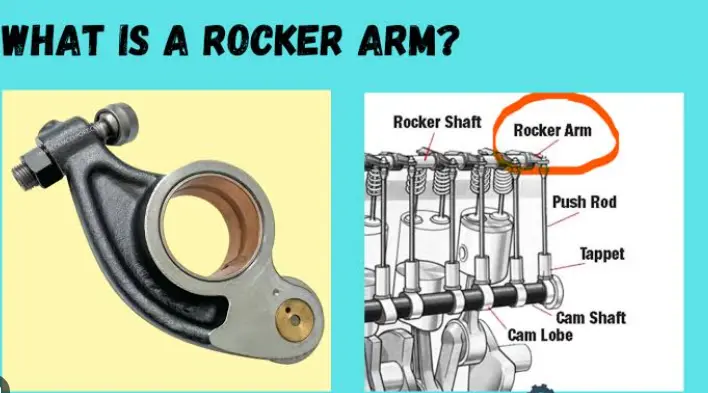
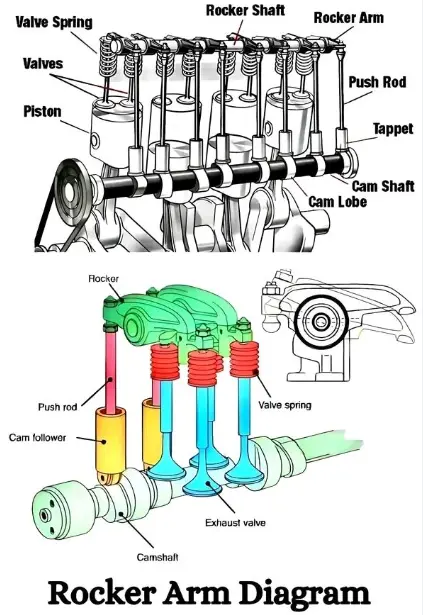
To understand rocker arm failure, it helps to first know what this part does inside your truck’s engine. The valve rocker arm is a simple lever-style component mounted inside the cylinder head. It sits right between the camshaft and the engine’s intake and exhaust valves.
This part does not stay static while the engine runs. It moves constantly in a swinging motion. The camshaft spins and creates upward force. The rocker arm pivots on its shaft, converts that upward push into downward pressure, and opens or closes the engine valves with precise timing.
Three key jobs fall to the rocker arm in every diesel truck engine. It controls accurate valve timing for intake and exhaust strokes. It ensures the engine pulls in enough fresh air and pushes out all burnt exhaust gas. It also keeps combustion balanced evenly across every cylinder.
Even if every other engine part works perfectly, a faulty rocker arm ruins overall performance. Stiff, worn, or deformed rocker arms throw off the entire valve train sync. This leads to incomplete combustion and noticeable power loss right away.
Heavy-duty truck rocker arms endure far more stress than those in passenger cars. Commercial trucks run nonstop for hours, carry extreme loads, and travel on rough roads. Constant high-speed friction, heavy impact, and extreme heat wear down these parts much faster.
Choosing durable, genuine-grade truck chassis system parts lowers valve train failure risks significantly. Quality components hold up better under tough operating conditions and extend your engine’s overall service life.
Why Rocker Arm Failures Are So Easy to Misdiagnose
Rocker arm issues rank among the most misdiagnosed engine problems for heavy-duty trucks. A few key factors create this common repair mistake.
Symptoms never point exclusively to rocker arm damage. Shaky idling, black exhaust smoke, and weak acceleration can stem from clogged injectors, low-quality diesel, or incorrect valve clearance. Cylinder head ticking noise also matches symptoms of worn valve springs or degraded engine oil.
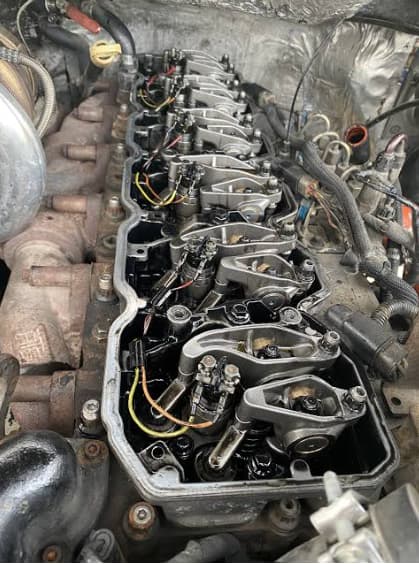
Most rocker arm damage stays hidden from plain sight. You cannot spot micro-wear, slight bending, or stiff movement without removing the cylinder head cover. Unlike oil leaks or broken external parts, these internal flaws stay invisible until they worsen drastically.
Symptoms also develop gradually. Early-stage issues only show up during cold starts or heavy-load climbing. Most drivers brush off these small abnormalities as normal engine behavior. By the time problems become impossible to ignore, secondary engine damage has already occurred.
Learning to tell rocker arm failure apart from other engine faults saves you from unnecessary repairs and repeated breakdowns. Below, we break down symptoms by failure stage, so you can diagnose issues accurately at every progression level.
Truck Valve Rocker Arm Failure Signs (Stage-by-Stage Symptoms)
Rocker arms do not fail suddenly out of nowhere. Wear builds slowly over time, moving through three distinct stages. Each stage brings unique symptoms you can watch for.
Catching issues in the early latent stage stops minor wear from turning into expensive, full-scale engine damage. Every truck operator should familiarize themselves with these progressive warning signs.
1. Early Stage Failure Signs (Latent & Easy to Ignore)
In the earliest wear stage, rocker arms still function well enough for normal driving. Their surface smoothness and flexible movement already start to decline though. Symptoms remain subtle and only appear under specific conditions.
The most common early warning sign is faint ticking noise from the cylinder head during cold starts. When a truck sits idle overnight or for hours at a time, engine oil drains back into the oil pan. Rocker arms and their supporting shafts lose the protective oil film that prevents metal friction.
Right as you fire up the cold engine, insufficient lubrication creates soft metal-on-metal ticking. This noise usually fades completely once the engine warms up and oil circulates fully through the cylinder head.
Most drivers write this off as standard cold engine behavior. It is actually one of the clearest early alerts of developing rocker arm wear and poor lubrication.
Slightly unstable idling is another easy-to-miss sign. You might feel faint, sporadic shaking while the truck sits in idle. The tachometer needle may also shift slightly up and down without obvious cause. This minor jitter happens when worn rocker arms move unevenly and disrupt consistent valve operation.
You may also notice a tiny delay in accelerator response. Pushing the gas quickly does not deliver instant power. The brief lag comes from rocker arms failing to push valves fully open on time, cutting down immediate air intake for combustion.
2. Mid-Term Failure Signs (Obvious Performance Degradation)
Unfixed early wear continues accumulating with every mile driven. Eventually, the problem moves into the mid-stage failure zone. Symptoms become consistent and do not disappear after engine warm-up.
Cylinder head ticking turns into permanent noise. You will hear the tapping sound during cold starts and hot operation alike. The noise grows louder when accelerating or climbing hills under load, as increased engine pressure amplifies worn rocker arm friction and shaking.
Fuel consumption rises noticeably at this stage. Many truck owners notice higher fuel bills even with identical routes and load weights. Worn, stiff rocker arms prevent valves from opening and closing fully.
Partial valve movement limits air intake and traps burnt exhaust gas inside cylinders. Diesel fuel cannot burn completely, so the engine burns more fuel just to maintain regular power output.
Random black smoke from the exhaust is another typical mid-stage symptom. Sharp acceleration or steep hill climbs often trigger this smoke. Most people blame faulty injectors, but restricted valve motion from rocker arm wear is a very common hidden cause.
Overall engine power drops significantly too. The truck feels sluggish while hauling heavy loads or climbing inclines. Speed builds slowly, and the engine cannot produce its usual torque, cutting into daily transport efficiency.
3. Late Stage Failure Signs (Dangerous & Prone to Major Faults)
Late-stage rocker arm failure means severe structural damage to the entire assembly. Small wear issues turn into destructive mechanical faults that threaten full engine failure at any moment.
Frequent engine misfires are the most serious red flag here. You will feel violent, constant engine shaking during operation. The check engine light activates repeatedly. Cleaning fuel systems or replacing electrical parts will not fix the issue, as the root cause lies in damaged valve train mechanics.
In extreme cases, the engine can stall suddenly while idling or driving at low speeds. This creates major safety hazards for highway travel and heavy-load hauling.
Exhaust backfire is another dangerous late-stage symptom. Severely worn or stuck rocker arms throw off valve timing entirely. Unburnt diesel fuel lingers in cylinders and ignites abnormally on the next combustion cycle, creating loud backfires.
The worst-case scenario is piston-to-valve collision. Failed rocker arms cannot reset properly, leaving valves partially open. Moving pistons crash into stationary valves, bending valves, damaging piston tops, and even warping the cylinder head. This damage requires a full engine overhaul and costs thousands in repairs, all avoidable with early inspection.
Advanced rocker arm damage often triggers heavy-duty truck cylinder head failure. This creates a chain reaction of engine issues that drastically shorten your vehicle’s working lifespan.
Core Causes of Truck Valve Rocker Arm Failure (Detailed Analysis)
Most truck owners assume rocker arms fail purely from old age and natural wear. Real fleet maintenance data tells a different story. Over 95% of premature rocker arm failures stem from improper vehicle use and inconsistent maintenance. Natural aging only accounts for a tiny fraction of issues.
We break down the six most common root causes of rocker arm damage below. Every cause includes clear failure mechanics and simple, actionable ways to avoid repeated problems based on real truck repair cases.
1. Poor Lubrication & Unqualified Engine Oil (No.1 Cause)
Bad lubrication ranks as the top cause of rocker arm wear, jamming, and fatigue failure. Rocker arms and their support shafts depend entirely on clean, high-quality engine oil to form a protective lubricating film. Without this film, metal parts grind directly against each other nonstop.
Many individual drivers and small fleets cut costs by using cheap, low-grade engine oil. This inferior oil breaks down quickly at high engine temperatures. It loses viscosity and cannot form the thick, durable oil film needed to protect high-friction valve train parts.
Cheap oil also carries large amounts of carbon residue and tiny hard debris particles. These contaminants circulate through the cylinder head and scratch rocker arm surfaces and shafts. This creates abrasive grooves and permanent wear over time.
Waiting too long to change oil causes identical problems. Old, expired oil oxidizes and forms sludge and sticky deposits. These thick residues clog tiny oil feed holes on rocker shafts, cutting off lubrication to individual rocker arms.
Starved of oil, affected rocker arms experience rapid dry friction wear. In severe cases, overheating seizes the rocker arm in place, causing immediate engine performance failure.
Cooling system malfunctions also lead to emulsified engine oil. Milky, contaminated oil loses all lubricating properties. It wears down the entire valve train assembly in a very short time if left unaddressed.
2. Long-Term Engine High-Temperature Operation
Consistent engine overheating wears and deforms rocker arms faster than almost any other environmental factor. The cylinder head operates at extremely high temperatures during regular engine use, putting constant thermal stress on rocker arm components.
Cooling system problems disrupt normal heat dissipation. Clogged radiators, low coolant levels, weak water pumps, and faulty thermostats all cause sustained engine overheating. Rocker arm metal expands and contracts repeatedly under these extreme temperature shifts.
After thousands of thermal cycles, the alloy steel material fatigues. Invisible micro-deformations form on rocker arms, warping their natural swinging path. Even undetectable warping ruins precise valve timing and creates consistent performance issues.
Trucks working in hot, dusty environments like open mines, summer highway routes, and construction zones face far higher rocker arm failure rates. Maintaining a fully functional cooling system is one of the easiest ways to protect your valve train long-term.
3. Severe Engine Overload & Bad Driving Habits
Most commercial trucks operate under consistent overload to maximize hauling profits. Extra load weight spikes engine combustion pressure and creates violent instantaneous impact loads. Rocker arms bear the brunt of this excess stress, far exceeding factory-designed load limits.
Long-term overloading accelerates metal fatigue and surface wear on rocker arms. Poor driving habits compound this damage even further.
Aggressive acceleration, abrupt braking, fast hill climbing, and low-speed high-load dragging create unstable impact forces. These uneven stresses wear down rocker arm surfaces and create hidden internal fatigue cracks.
Extended idling is another overlooked harmful habit. When engines idle for hours, oil pump pressure drops and oil circulation slows. Rocker arms receive minimal lubrication, letting subtle wear accumulate steadily over time.
4. Use of Inferior & Refurbished Rocker Arm Accessories
The truck spare parts market is flooded with cheap replica rocker arms and second-hand refurbished components. These low-cost parts have major flaws in material quality and manufacturing precision.
Genuine factory rocker arms use high-strength forged alloy steel with professional heat treatment. This process gives them strong hardness, flexible toughness, and excellent deformation resistance. Cheap aftermarket parts use basic carbon steel that wears out and bends easily under heat and load.
Low-quality parts also have sloppy manufacturing tolerances. The gap between rocker arm bushings and shafts does not meet factory standards. This causes binding movement or excessive shaking right after installation, leading to quick failure and repeated engine issues.
Sourcing parts from reliable, professional Sinotruk spare parts suppliers eliminates quality risks. Genuine compatible valve train parts match original equipment specs and deliver reliable long-term performance.
5. Non-Standard Maintenance & Disassembly Operations
Many recurring rocker arm failures stem from human error during maintenance. Cylinder head and valve train work requires precision and standardized procedures, which many entry-level technicians overlook.
Rough disassembly practices cause hidden damage. Technicians often use metal tools to pry or hammer rocker arms and shafts loose. Sudden brute force creates micro-deformations and internal structural damage you cannot see with the naked eye.
Improper reinstallation causes even more problems. Uneven bolt torque, mixed-up component installation order, incorrect valve clearance adjustment, and missing limit parts all create unbalanced rocker arm stress. The parts move irregularly and wear out rapidly after service.
Most trucks that face repeated rocker arm failure right after repairs suffer from bad installation work, not defective parts.
6. Long-Term Dust & Harsh Working Environment
Construction, mining, and mountain route trucks operate in extremely harsh conditions. Constant dust, sand, and road debris easily enter the engine through the air intake system.
Fine airborne dust mixes with engine oil inside the cylinder head to form abrasive sludge. This gritty mixture scuffs rocker arms, shafts, and valve components every time the engine runs. Humid, dusty conditions also speed up oil degradation and clog small oil holes, worsening lubrication issues.
Practical Tips to Prevent Truck Rocker Arm Failure
Understanding failure signs and causes lets you build simple, effective daily prevention habits. These basic practices extend rocker arm lifespan and cut down unnecessary maintenance costs drastically.
Always run certified, high-quality engine oil and genuine filter elements. Never sacrifice part health for short-term cost savings. Adjust your oil change frequency based on working conditions, and shorten intervals for dusty, high-load, or high-temperature operation.
Avoid consistent overloading and aggressive driving. Smooth, steady acceleration and deceleration reduce sudden impact stress on the entire valve train system.
Inspect your cooling system regularly. Keep radiators clear of debris, replace aging coolant on schedule, and fix minor cooling faults before they cause sustained engine overheating.
Pay attention to small engine changes during daily operation. Address cold start noise, shaky idling, and rising fuel consumption immediately. Catching minor issues early stops them from escalating into major failures.
Trust professional, experienced technicians for cylinder head disassembly and valve train adjustments. Precise, standardized work prevents artificial secondary damage to precision engine components.
FAQ About Truck Valve Rocker Arm Failure
Q1: Can a slightly worn rocker arm continue to work normally?
Even minor wear should never be ignored. While slight damage won’t trigger obvious failures right away, wear accelerates rapidly over time. It quickly leads to binding movement, persistent noise, and power loss. Early inspection and replacement remain the safest approach.
Q2: Why does cylinder head noise return quickly after rocker arm replacement?
Most repeat issues happen when technicians only replace worn rocker arms and ignore damaged or clogged rocker shafts. Old worn shafts will scuff and damage brand-new rocker arm bushings in no time. Always inspect the full shaft assembly during rocker arm service.
Q3: What is the service life of a genuine truck rocker arm?
Genuine rocker arms last 200000 to 250000 kilometers with standard maintenance and regular load use. Harsh working conditions, poor oil quality, and irregular upkeep can drop lifespan to around 100000 kilometers.
Q4: Is rocker arm failure related to engine oil emulsification?
The two are closely connected. Emulsified, milky engine oil loses all lubricating properties. It causes rapid dry friction wear on rocker arms and shafts, leading to fast valve train breakdown.
Q5: How to distinguish rocker arm faults from fuel system faults?
Rocker arm issues come with cold start noise, gradual idle instability, and slow fuel consumption increases. Fuel system faults usually trigger sudden power drops and black smoke without any cold-start abnormal noise.
Conclusion
The valve rocker arm is a tiny yet indispensable precision component in heavy-duty truck engines. Its working condition directly shapes engine power, fuel efficiency, and overall driving stability. Unlike sudden electrical faults, rocker arm damage develops slowly, with clear progressive warning signs every step of the way.
Cold start ticking, faint idle shaking, and delayed throttle response are all early alerts of impending failure. Poor lubrication, sustained overheating, regular overloading, low-quality parts, and sloppy maintenance are the top triggers of premature rocker arm damage.
Simple daily habits make a huge difference. Consistent inspections, standardized maintenance, and careful driving prevent over 90% of rocker arm failures. Small proactive checks save fleets and individual drivers from expensive overhauls and unplanned vehicle downtime.
If you need genuine truck engine valve train parts and professional fault diagnosis support, you can visit Mettlead to obtain one-stop commercial truck parts matching and technical solutions.


